culture

Photo by Adrian V. Floyd, Flickr CC

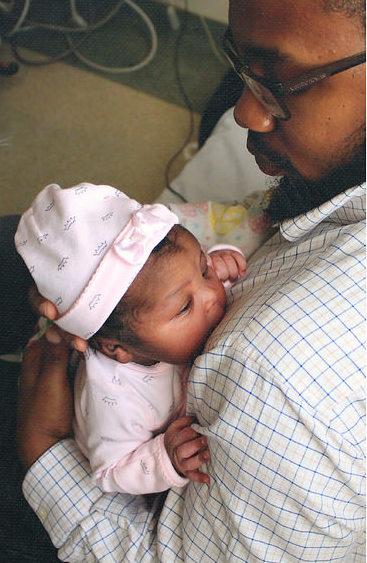
In the United States, the media often portrays marginalized groups through tropes and stereotypes, but these depictions rarely represent the diversity inherent in any group.  A recent article in Slate demonstrates that queer parents are no exception. The author draws on sociological work to examine how the gay-parenting community may reinforce this uniform image of gay parents in their social circles.  

Sociologist Suzanna Walters argues that the gay community has limited its own image, members, and freedom in exchange for social acceptance. In her book, she explains,

“Media evinces a form of homophobia…focusing on acceptance of gay parents as heterosexual clones,” — in particular, the “ideal heterosexual”(white, upper-middle class, etc.). Parents who didn’t fit a certain mold were sidelined to present a comforting image to straight society.”

Megan Carroll noticed a similar pattern after attending gay parent groups in Texas, California, and Utah. Carroll noticed that fathers of color were severely underrepresented in these groups, and many parents of color told Carroll they felt “isolated” and without a space to “help their children connect to their race as well as their father’s sexuality.”  

Gay dads with kids from previous heterosexual marriages faced a similar feeling of “otherness.” Gay dads by divorce were perceived as “relics of a bygone era,” while adoption or surrogacy were viewed as modern forms of parenting. Even groups that advertised themselves as being inclusive often fell short, including a group in Texas. Carroll remembers,

“when you showed up in person, the community was very insular towards adoption and surrogacy dads.”

Parenting groups and resources are an important tool for any caregiver, and as Carroll’s work outlines, parenting communities need to consider how to make these spaces more inclusive for all types of parents. She concludes,

“Segregation of gay fathers by pathway to parenthood is not an accident…It’s very much rooted in these networks fostered within the gay parenting community. If we’re not creating resources specifically for gay fathers from different backgrounds…it’s very unlikely they’re going to benefit from the resources already in place.”

Photo by Ben Sutherland, Flickr CC

From the Super Bowl to March Madness, sporting celebrations raise questions about rioting every year. After their Super Bowl victory in February, Eagles fans took to the streets, looting and toppling light poles. A recent article in the Washington Post delves into the sociological and psychological explanations for why fans are often violent and destructive after a massive victory.

Sociologist Jerry M. Lewis has studied fan violence for decades, looking at the statistics on sport fan riots since the 1960s . He notes that fan violence in the United States usually consists of people destroying inanimate objects, while in other countries, and especially Europe, violence is directed toward opposing fan bases. Lewis explains that the sports rioting in the US almost always happens after a major victory rather than a loss, as a form of identification with the victorious team.

In the US, sports rioters tend to be young, white males. These passionate fans react excitedly to their favorite teams, reveling in victory and adrenaline which, in this case, results in destruction of city property. Lewis expands,

“They can’t throw a football 60 yards like the quarterback can, but they can throw a rock through the window or pull down a light pole. To them, it becomes their feat of strength and skill.”

Lewis provides an interesting contrast in the public perceptions of sports rioters compared to those who protest or riot because of social upheaval. Media and public understandings of riots seem to depend on who participates, and what is often described as a riot is defined along racial lines. Because of this, sports fans can celebrate while they cause destruction, but protesters often reap the disadvantages.

Photo by Rob Kall, Flickr CC

Since the 2016 presidential election, the gulf between the political left and right has become increasingly dramatic. Issues of gender equality often take center stage in these political debates. In a recent New York Times article, sociologists looked at how the #MeToo movement — focused on sexual harassment and assault — may affect that divide in future elections.

 Many researchers believe the movement will increase contentions between the two sides. Some think it could push less-active voting groups, like young women, to the left and ensure more votes for the Democratic party. However, other sociologists like Musa al-Gharbi believe ideological separation will do more harm than good. He says,

“Progressives have done a great job framing racial inequality, feminism and LGBTQ rights as part of the same basic struggle. However, this association works both ways. Accusations of misogyny, for instance, are often heard in the context of a fundamentally anti-white, anti-Christian culture war — a zero-sum campaign waged against ordinary hard-working Americans by condescending and politically-correct liberal elites.”

In other words, organizing political campaigns around the movement likely will alienate some voters. Research from Joanna Pepin and David Cotter finds evidence of a backlash against the #MeToo movement in recent survey data. Cotter writes,

“We can already see the beginnings of a backlash against #MeToo. There’s a large reservoir of gender traditionalism and misogyny as shown in the Trending towards Traditionalism paper — and it persists among youths so may be part of our social fabric for some time.”

Using gender inequality and sexual harassment as a motive for political organizing could prove successful. The #MeToo movement provides personal, relatable, and moving stories that could spur political change. However, views on gender are also deeply rooted in partisan identities, so support may not come as certainly as the Democrats hope. In order to be effective enough for a political victory, these tactics also need to appear inviting to new members, rather than divisive and polarizing.  

Photo by Kyle Pearce, Flickr CC

In the 1950s and 60s, middle-class White families moved from cities across the United States into suburbs. Today, we see movement in the opposite direction. Middle-class families are moving to previously neglected inner-city neighborhoods, a process known as gentrification.  While gentrification provides middle and upper-class families with more urban living options, previous residents in those neighborhoods are often forced to move out when they can no longer afford the rising cost of living. In a recent NPR article, sociologist John Schlichtman discusses negative consequences of gentrification. Schlichtman explains, 

“The reason gentrification has a bad rap is due to the inequity between race and housing. Race is, at its heart, a class issue…The devaluing of lower-class neighborhoods, usually residents of color, is the result of a history of unjust policies, including government defunding and redlining.”

According to Schlichtman, those who move into gentrifying neighborhoods may feel guilty because they benefit from “an unjust gap.” At an individual level, Schlichtman suggests investing in businesses that already exist in the community, instead of new ones. But to really create social change, action must go beyond the individual:

“We need to put pressure on our city governments as a community to not put profit and investment as the number one priority. It can be balanced with other priorities of community.”

In short, gentrification can reinforce racial and class inequalities in the United States. And while gentrification is not only about individual choices, individuals — especially those moving into gentrifying neighborhoods — can take steps to counter its negative effects.

Photo by Yandle, Flickr CC

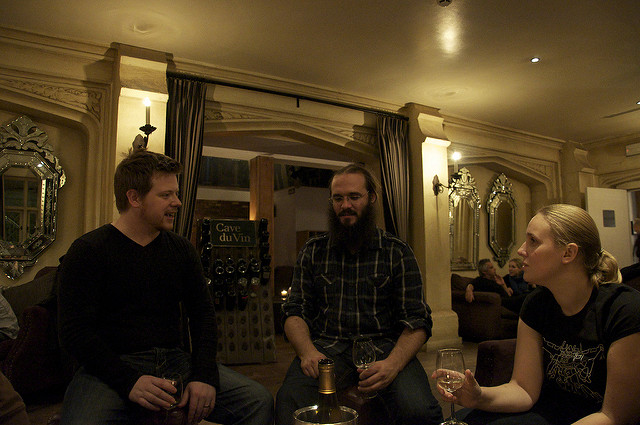
Around this time of year — when many people are focusing on their romantic partners — it’s easy to forget how important our friendships are. In fact, spending more time with friends may actually improve romantic relationships. In a recent article in The New York Times, Stephanie Coontz reviews social science research demonstrating that a flourishing social life can lead to a better marriage. Coontz writes,

“Socializing with friends and family and participating in clubs, political organizations, teams, unions and churches are essential components of what sociologists call social integration. And health researchers report that maintaining high levels of social integration provides as much protection against early mortality as quitting smoking.”

There are multiple ways social integration can be beneficial. For example, sociologist Kristi Williams suggests that difficulties of those divorced and widowed may be based in their lack of self-reliance skills and smaller social networks, rather than the end of their marriages. Additionally, one experiment showed that couples who went on double dates reported more passionate feelings toward their partners than those who went on a date only as a couple. So, when you’re planning your next date night, consider inviting your friends.

Photo by futureatlas.com, Flickr CC

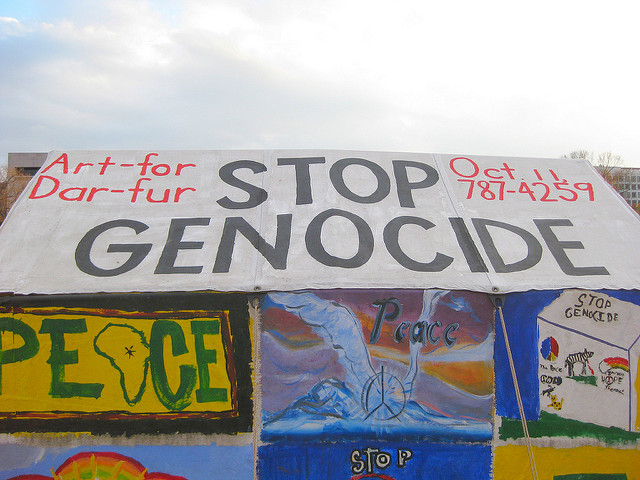
In the decades since the Holocaust, the international community created mechanisms like the 1951 Genocide Convention in order to ensure that the world would “never again” experience such tragedy. Even so, genocide and mass violence continue to occur across the world. Recent AP reports provide even more evidence of a genocide in Myanmar, yet military response and global governance are again lacking. In a recent article in The Washington Post, Aliza Luft addresses these failings and suggests that economic tactics may succeed where others have failed.

Many factors can influence violent behavior, like prejudice and propaganda, but for many who commit violence, economic considerations are essential. For example, some governments use poverty to motivate civilians to engage in violence, offering resources in exchange for participation. According to Luft:

“Thus, one strategy for intervention is to even the economic playing field: to lower the capital of the génocidaires while increasing that of their potential recruits. Responses can include targeted financial measures such as asset freezes and economic divestment from major firms that help fund genocidal governments. Additionally, non-governmental relief efforts might focus not only on food, medicine, and housing for the displaced, but also on creating economic opportunities to reduce the potential for recruitment by genocidal authorities.”

Economic strategies can take many forms, including organizations that guide companies towards pro-human rights policy, as well as online campaigns that have dissuaded companies from working with genocidal regimes. Luft argues that anyone can aid in genocide prevention through personal spending choices, outreach, and activism. She suggests civilians use financial strategies that may influence politics and policy:

“To deepen the link between investment or operations abroad and commitments to human rights, civilians can emply boycotts and social media campaigns to pressure these companies over their complicity in genocide. Research has shown that economic and reputational concerns can motivate a company to change its policies. It is time to mobilize on behalf of the Rohingya, and to target businesses whose taxes and revenue fund violence.”

Photo by Maryland GovPics, Flickr CC

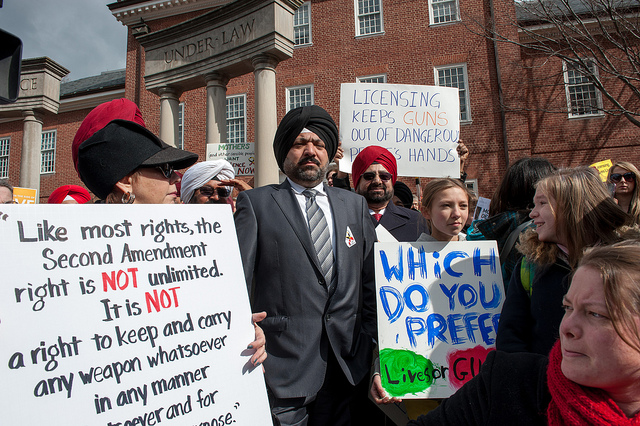
In the wake of tragically-familiar mass shootings, the media and concerned citizens understandably look to a perpetrator’s background to understand why they would carry out a shooting and whether it could have been prevented. Many of these investigations identify mental illness as blameworthy.

There’s a problem with this routine, however. It assumes that mental illness is the root cause of violent acts. New research from Miranda Lynne Baumann and Brent Teasdale shows this assumption is not valid. Writing in The Conversation, Baumann and Teasdale detail their findings from a project that followed people who received treatment for mental illnesses and compared them to a demographically-similar group of people who did not. Results demonstrated that respondents with mental illness did not pose a significant threat to their communities. In fact, the authors write that:

“People with serious mental illness who have access to firearms are no more likely to be violent than people living in the same neighborhoods who do not have mental illnesses…the reality of firearm-related risk among individuals with mental illness lies not in the potential for harm to others, but in the risk of harming oneself.”

In other words, the only significant difference between these groups was the suicide rate, not rates of violence against others. These trends suggest that we should also pay attention to other factors, such as access to firearms, emergency response practices, and cultural assumptions about violence and masculinity, in our attempts to limit the impact of mass violence, rather than singularly focusing on mental illness.

Photo by Shawn Henning, Flickr CC

I’m sure few people were surprised by The Washington Post‘s recent headline, Women Rate the Strongest Men as the Most Attractive, Study Finds.” However, not everyone agrees on how to interpret these findings. While the authors of the study believe participants rated strong men as most attractive for evolutionary reasons, sociologist Lisa Wade argues we should look to culture for the answer.

“We value tall, lean men with strong upper bodies in American society,” she said. “We’re too quick to assume that it requires an evolutionary explanation…We know what kind of bodies are valorized and idealized. It tends to be the bodies that are the most difficult to obtain.”

Wade was not the only academic to express skepticism of the study’s causal claims. Holly Dunsworth, an anthropologist, argued that the methodology of the study was unable to support the author’s evolutionary explanation. “They made no link between any of those responses of those women to any sort of ancient, deep-seated evolutionary traits,” she said. Wade agreed, noting that much of this type of research has similar methodological problems. 

Photo by Pierre-Selim, Flickr CC

The #MeToo movement and high-profile sexual harassment and assault cases recently brought greater media attention to sexual violence. With this increased attention, however, comes new questions regarding the language used to talk about and write about various forms of sexual violence. This is not only a question of what specific words to use, but also how much detail to give about the act of violence or the victims’ experiences. Using vague or all-encompassing terms like “sexual violence” can flatten and sanitize victims’ experiences. However, when descriptions of sexual violence are not sanitized, they tend to be sensationalized.

In a recent Vox article on the complicated language of sexual violence, sociologist Heather Hlavka argues that sensationalizing violence can be a serious problem.

“Are we, as a culture, so titillated by the extremities of violence — the types, the details, the comportments — that we would like to ingest each sensationalized bit of people’s experiences?” asks Hlavka. “What is the ultimate goal? To better understand? To discredit the experience or mitigate the offense because it fell low on a range of horrors? To discredit the victim by dissecting her actions, her composure, her silence, or her resolve?”

People who experience sexual violence also struggle with language. According to Hlavka, many do not recognize or name their experiences as such, but this does not mean the problem is a lack of words to use to describe sexual violence. Instead, she argues that a broader culture of sexism has the power to reshape the meaning behind such terms, causing them to lose their power. 

Girls do not name their experiences as rape or sexual assault, despite very clearly fitting within established legal categories. Boys, too, struggle to understand, define, and identify as a victim of sexual violence but for different reasons. I would argue that we do not lack a language of sexual violence and harassment…It’s there — it’s a feminist language of power and control and abuse and consent — we just aren’t integrating it in truly meaningful ways, and thus our experiences will not neatly map onto law.”

Photo by Dean Hochman, Flickr CC

Originally posted Jan. 26, 2017

Prospective college students consider a wide variety of factors when deciding on a university. While academics and career opportunities are often high on the list, colleges known as top party schools have a special appeal. Everyone loves a good time, but as Occidental College sociologist Lisa Wade describes in her new book, American Hookup: The New Culture of Sex on Campus, this idea of college as “fun” is a fairly recent trend some troubling consequences.

In a feature with Time Magazine, Dr. Wade explains how American universities changed from predominantly strict, formal institutions to environments known for casual hookups and wild parties. Whereas in colonial America, colleges were highly regulated places, as the student body underwent a shift, so did campus culture. Wade explains,

“They [colonial college students] were generally obedient, but as the eighteenth century came to a close, colleges were increasingly filled with wealthy sons of elite families. These young men weren’t as interested in higher education as they were in a diploma that would ratify their families’ hoarding of wealth and power. Predictably, they had a much lower tolerance for submission.”

This rebellious attitude led to widespread expulsions across many elite universities, as well as the early foundations of Greek life. Fraternities became hubs for parties, alcohol, and casual sex, a legacy that still holds strong on many college campuses across the United States. And while the party scene can be tempting for many, American Hookup highlights how this emphasis on noncommittal and unemotional sex also sets the stage for widespread rape and sexual assault.

“Thanks to the last few hundred years, most colleges now offer a very specific kind of nightlife, controlled in part by the same set of privileged students that brought partying to higher education in the first place, and designed to promote, as much as possible, the ‘big four-year org’ that students both desire and dread.”