culture

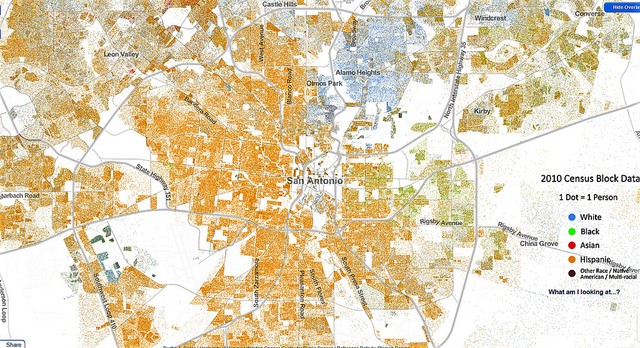
U.S. Census, 2010. Photo by Joe Wolf, Flickr CC

Recent celebrations of National Hispanic Heritage Month call our attention to the growing importance of Hispanic culture, histories, and contributions in the United States. As the Hispanic population has grown, so too has the interest in defining what exactly it means to be “Hispanic.”  Research suggests that administrative agencies, particularly the U.S. Census Bureau, played a significant role in unifying different identities under this single pan-ethnic umbrella category. In a conversation with sociologist Cristina Mora, NPR’s Code Switch uncovers the complicated history behind the term “Hispanics.”

Prior to the 1960 census, Latin communities did not have an identifiable option or category matching their ethnic identity. Initial attempts in the 1960 and 1970 census resulted in a massive undercount. Following these largely unsuccessful efforts, Mexican and Puerto Rican communities mobilized to come up with a sufficient term for the 1980 census. Terms were heavily contested, agencies and experts debated various phrasings, and, with reservations, they eventually decided on Hispanic. And the importance of finding a proper category cannot be underestimated — having “Hispanics” as a category in the census enabled communities to address pressing political issues. Mora told NPR,

“Once the category was made, everything from political groups to civic organizations to every other media group that would emerge, would draw on census data. As soon as the census numbers came out, Latino lobby groups could then run the numbers and say, ‘Look, this is what Latino poverty looks like; this is what Latino educational attainment looks like.’ They could go up to the Department of Education, for example, and say, ‘Latinos are the second-largest minority group. And yet, our educational attainment pales to that of whites. Send money to our schools.’”

Despite its contested nature, the use of the ethnic category of Hispanic and its incorporation into administrative counts has proven to be an effective tool for mobilization of Latinx populations. Mora’s research indicates that defining ethnic categories in this way may create opportunities to increase political representation and power among minorities in the U.S.


For the past twenty-five years, Oklahoma has seen some of the highest levels of female incarceration in the United States. In a recent article from Reveal, research by sociologist Susan Sharp demonstrates that incarceration rates and sentence severity varies between different counties within the state, where courtroom cultures and access to legal resources vary.   

Across the state, harsh drug sentencing leading to lengthy prison sentences for women is the norm, and Sharp argues that women in Oklahoma have become “collateral damage” in the War on Drugs. This is in large part due to the cultural norms surrounding women’s roles as mothers. Sharp explains,

“I think the general population of the state feels that a woman – particularly a woman who has children who uses drugs – violates all the norms in a way that they find unacceptable . . . and they would rather see those children grow up in foster care than to be with a mother who had a drug problem.”

However, Sharp has found that rural counties with more “get tough on crime” district attorneys and judges will typically send more people to prison, and poor women in these areas often experience the “wrath of judges and prosecutors.” In urban areas, women have access to more resources — money for private attorneys and specialty courts for drug addiction and mental health issues — which often keeps them from serving a sentence or helps reduce their time served.  The case of Oklahoma demonstrates how local differences influence punishment, as external and situational factors play a central role in shaping personal experiences with the criminal justice system.

Photo by Matthew Romack, Flickr CC

Popular media sometimes makes it seem as though college students are inundated with sex now more than ever. However, in a recent NPR podcast, “Hookup Culture: The Unspoken Rules Of Sex On College Campuses,” sociologist Lisa Wade argues that college students having frequent sex is nothing new. What has changed are the rules that govern these hookups. Wade’s work shows that hookup culture isn’t just about having any kind of sex — it’s about having meaningless sex. While it may sound rather simple, having meaningless sex often takes a great deal of emotional work for students. Wade explains,

“…to show themselves and other people that it was meaningless, they have to find a way … to perform meaningless. It’s not automatic. And they do that by, for example, making sure that they’re drunk. Or they appear to be drunk when they hook up … Sober sex is very serious, but if the students have been drinking then that helps send the message that it’s meaningless.”

Meaningless sex is tied to assumptions about women’s desperation for serious romantic relationships with men. Since serious relationships disrupt the flow of hookups, many women feel as though they need to show that they are not “desperate” and do not care as much about relationships as men think they do. On the other hand, women who do want serious relationships often feel as though they must engage in hooking up so that they can eventually develop a serious relationship. Wade explains further,

“So women’s options are either opt out of hookup culture altogether, or expose herself to this period where she’s treated disrespectfully in the hopes that it translates into something better on the other end.”

Male students, in turn, also keep their distance from the women they hook up with so that they do not appear to be seeking a serious relationship. At the same time, both male and female students alike revealed that they are interested in serious relationships at some point down the road.

Photo by madebyWstudio, Flickr CC

In the past 50 years, marriage rates among U.S. adults have declined significantly. Social science suggests that financial success may play an central role in this trend. For example, in 2015 65% of adults 25 and older with a four year degree were married, while only 50% of those with a high school education were married. In a recent article in The New York Times, sociologists Sharon Sassler and Andrew Cherlin weigh in on this divergence in marriage rates.  

According to social scientists, some of the change has to do with economic trends. The decline in manufacturing jobs in the United States has made men without college educations less “marriageable.” According to Sassler, “women don’t want to take a risk on somebody who’s not going to be able to provide anything.” This decline has not, however, corresponded to a decline in births — births are just happening outside of marriage more often now. The article explains, 

“In reality, economics and culture both play a role, and influence each other, social scientists say. When well-paying jobs became scarce for less educated men, they became less likely to marry. As a result, the culture changed: Marriage was no longer the norm, and out-of-wedlock childbirth was accepted. Even if jobs returned, an increase in marriage wouldn’t necessarily immediately follow.”

On the other hand, those with college degrees are more likely to postpone marriage and children until after they feel financially stable, but then they do get married. They also may benefit from their own parents’ help in paying for education, birth control, and rent, allowing them the advantages of achieving stability not often available to lower and working class adults. Privilege, therefore, can play a key role in the decision to get married.

Photo by Patriot Stones, Flickr CC

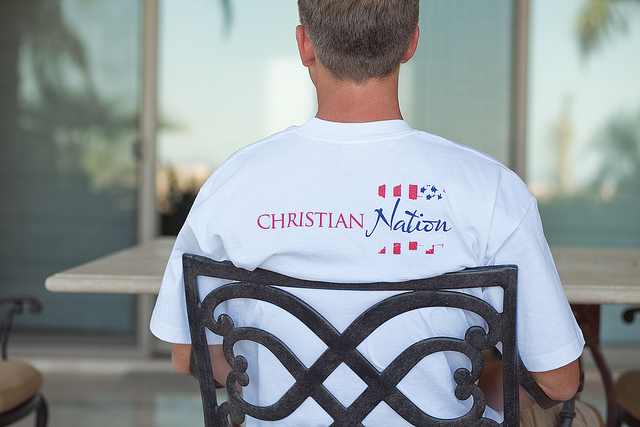
It’s been well documented that religion played an important role in the 2016 presidential election, as well as recent state elections. ThinkProgress.org recently contributed a new analysis of this relationship, highlighting preliminary research from a number of sociologists on the role of “Christian nationalism” in President Trump’s victory. Their findings indicate that the belief that America is a Christian nation may both predict support for Trump and be connected to intolerant views of other groups.

Sociologists Andrew Whitehead, Samuel Perry, and Joseph Baker found that Christian nationalism was “strongly and positively associated with voting for Trump,” and they emphasized that Christian nationalism is not simply another measure of religiosity. Whitehead told ThinkProgress,

“For this study, when we look at a lot of the normal ways we measure religiosity, at the end of the day, none of them really predict a vote for Trump except Christian nationalism. It didn’t matter if you were evangelical or mainline [Christian], it didn’t matter if you went to church a lot or a little, what mattered was whether you think America is a Christian nation.”

Whitehead notes that an important part of this research regards findings about the ways Christian nationalism interacts with other ideologies, and ThinkProgress reached out to sociologist  Penny Edgell for further development of this connection. Edgell’s ongoing work with Evan Stewart and Jack Delehanty indicates that support for “public religious expression,” a variable that measures the belief that religion should be an integral part of public life and deliberation, is associated with intolerance against a variety of groups. Edgell emphasized the need for more analysis of white Christian nationalism, especially its role in propagating ideologies like Islamophobia and xenophobia. She told ThinkProgress,

“Certain white Christian institutions house and foster and bundle these attitudes all together, and link them to politics in systematic ways.”

Photo by Jon Skilling, Flickr CC

Where does Washington D.C. get its policy? For nearly a century, think tanks have churned out the research that drives the political agendas of the day. Often hiring specialists from universities, we think these organizations bring the facts to politicians who, of course, can add the spin.

But recent shakeups in the think tank world call this narrative into question. NPR reports on a controversial decision at the New America Foundation to close a project studying monopolies. Critics allege that funding from Google swayed the decision, but blatant bribery isn’t necessarily the whole story. Sociologist Thomas Medvetz traces bigger structural changes in think tank organizing over the years that make these groups more susceptible to partisan interests, because they aren’t just doing research. From the article:

[Medvetz] said think tank experts now need skills not commonly found on college campuses: “Skills that one would use in a PR firm, for example, or a lobbying firm, as an aide on Capitol Hill, as a scholar, or a journalist.”

This is a key sociological insight about organizations: when groups have to draw on a wide variety of skills and resources to survive, there is a higher chance that conflicts of interest will arise even without explicit corruption.

Photo by Veld Music Festival, Flickr CC

Music festivals are a popular part of the summer experience and can often last days at a time. As the seasons change and real life comes crashing back, however, some people find themselves feeling depressed after leaving their favorite festival atmospheres. Vice’s Noisey talked to Lindfield College’s Rob Gardner, a sociologist who has studied music concerts, festivals, and traveling fans extensively, about why post-festival blues are not an simply an individual phenomenon, but a social one.

As Gardner describes, music festivals are about more than simply the music or the atmosphere — they provide a sense of community for a lot of people from different walks of life. Gardner says,

“We may be incredibly connected to people via social media, but there’s something missing there. That intimate, visceral experience of sharing the same physical space with another human being, or thousands of human beings is something that’s missing from our daily lives … I think that there’s something that people are trying to get back in touch to, whether consciously or unconsciously, through that festival experience.”

These spaces provide a unique opportunity for individualism, expression, and freedom from mundane, everyday life. So, when someone leaves the festival environment and returns to constraints such as work, school, and family, it’s unsurprising that they hit a low note. Gardner notes,

“I think it has a lot to do with the structure of these events. Because festivals create this temporary community that is physically, socially, and experientially separate from our daily lives, when we enter them they allow us to do things and meet people we wouldn’t otherwise encounter. When we leave and re-enter our normal lives, it throws certain features of our lives into relief.”

Be sure to check out the full interview in which Dr. Gardner discusses other aspects of festival-going, including drugs, crowd dynamics, and partying on ships!

Photo by Joka Madruga, Flickr CC

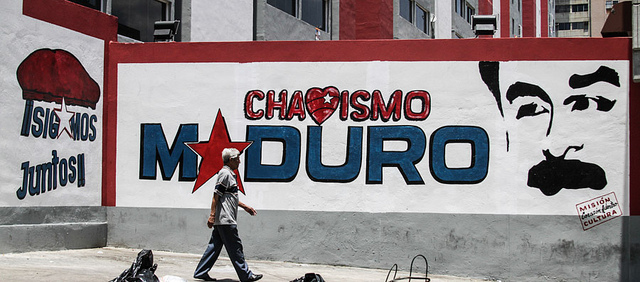
Following food shortages and civil unrest in Venezuela, President Trump has vocalized the possibility of US military intervention in the South American country, and has also taken steps to impose harsh sanctions on Venezuela as part of a general critique of Venezuela’s President Maduro. In an article in The News Observer, Tulane sociologist David Smilde explains how the costs and benefits of sanctions aren’t just economic, they are also social  — a large part of the Venezuealan story involves Maduro’s supporters’ ability to rally the general populace against perceived enemies. From the article:

David Smilde, a Tulane University sociologist who has spent decades researching Venezuela, said blanket economic sanctions that cut off the government’s cash flow and hurt the population are likely to strengthen Maduro in the short-term.

“They would bolster his discourse that Venezuela is the target of an economic war,” said Smilde.

However … action from an increasingly concerned international community represents the best chance of reining in Maduro, he added.

Photo by Ted Eytan, Flickr CC. Mural by Anieken Udofia in Adams Morgan Neighborhood, Washington, DC

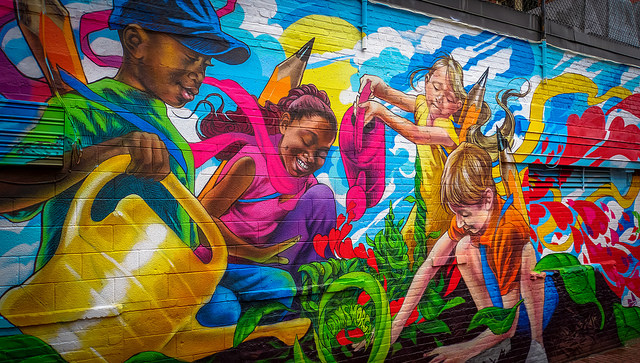
“White flight” describes the uncomfortably common phenomenon in the mid-to-late 20th century wherein whites would quickly move out of a neighborhood once blacks started moving in. This would often lead to neighborhoods that were mostly-white, but quickly ended up mostly-black. Today, American neighborhoods are not as mono-ethnic as they once were, and the picture has expanded beyond blacks and whites to other populations, such as Latinos and Asians.

That said, however, segregation within neighborhood contexts is still present. A recent article in Slate detailed research showing that at the aggregate level, neighborhoods and residential areas are becoming more diverse in the U.S. However, this diversity does not necessarily mean that multicultural, cross-racial social relationships are thriving. Derek Hyra conducted research in parts of Washington, D.C. and found that even in a diverse neighborhood, people’s social associations—such as choice of church, schools, and restaurants—is often in a mono-ethnic context, leading to microsegregation or “diversity segregation.” 

This isn’t to necessarily suggest, however, that diverse neighborhoods have no potential to become more integrated.  Camille Z. Charles tells Slate that consistent exposure and contact with people of different races can foster integration. Places like public schools and community centers provide the opportunity for these kinds of relationships to develop and lead to diverse neighborhoods where people have diverse friends. Charles explains,

“We are often friendlier with people we actually interact with. We do find there is lasting benefit to that, which is why we think it is important to have [diversity] in schools because kids spend so much time in classrooms and on school campuses.”

Photo by Helen Alfvegren, Flickr CC

Veganism is a common practice in countries like France, Israel, and the U.S., and a recent article in Harvard Magazine looked to Nina Gheihman to detail how recent shifts in rhetoric surrounding veganism are taking place in each of these countries. Gheihman—a vegan herself and president of the Harvard Vegan Society—describes how the narratives and norms associated with veganism are culturally specific and constantly evolving. 

In the U.S., Gheihman describes, veganism was originally rooted in activism and debates surrounding animal rights, particularly in the face of modern agricultural practices and the worsening conditions for livestock. These ideas have shifted, however, and now veganism in the U.S. is promoted not just for animal rights’ sake, but as a healthier lifestyle choice in general. This has meant a noticeable shift away from debates about the ethical treatment of animals towards conversations about health and the body. Furthermore, we are seeing a transformation of the images associated with veganism, including messages of veganism as macho and masculine. Consider that New England Patriots quarterback Tom Brady—a prominent vegan himself—is involved with a meal-order shipment service that mails vegan meals to your home; this service, known as Purple Carrot, advertises better physical performance on the football field as one of the benefits of the vegan diet.

Gheihman finds that the meanings of and motivations for veganism are different across the globe, and her research promises to uncover some of the ways veganism has evolved in different contexts.