
culture

Photo by USAG- Humphreys, Flickr CC

All parents want the best for their children, but what happens when the best for their own child means disadvantaging many more? In an article recently published in The Atlantic, sociologist Margaret Hagerman shares the story behind her new book, White Kids: Growing Up With Privilege in a Racially Divided America. She spent two years interviewing and observing upper-middle-class suburban white families in a midwestern city in the United States with one goal: to find out how white children learn about race. Hagerman spent a significant amount of time with 36 children between the ages of 10 and 13, and analyzed how homework, games, and conversations with friends and family members influenced their interpretations of race. Hagerman says,

“One of the things I was really struck by was how frequently some of these children used the phrase That’s racist or You’re racist. They were using this word in contexts that had nothing to do with race: They were playing chess, and they would talk about what color chess pieces they wanted to have, and then one of them would say, “Oh, that’s racist”—so things that had to do with colors, but also sometimes just out of the blue, instead of saying, “That’s stupid.” These kids have taken this phrase, That’s racist, and inverted it in a way such that it’s become meaningless.”

Hagerman also observed affluent parents calling schools to demand the best teachers in certain topics and pulling their students out of a public school to enroll them in a private one after a “racist incident.” These actions serve as reinforcing agents, propagating the idea that “your own child is the most important thing”a belief that Hagerman thinks should be reconsidered by all.

“When affluent white parents are making these decisions about parenting, they could consider in some way at least how their decisions will affect not only their kid, but other kids. This might mean a parent votes for policies that would lead to the best possible outcome for as many kids as possible, but might be less advantageous for their own child…I don’t have any grand answer, but I think people could think in bigger ways about what it means to care about one another and what it means to actually have a society that cares about kids.”


Photo by Steve Rainwater, Flickr CC

Supreme Court nominee — now associate justice — Brett Kavanaugh gave an interview to Fox News where he claimed that he could not have assaulted Dr. Christine Blasey Ford because he did not have sex until many years after high school. In a recent op-ed for Huffington Post, sociologist Sarah Diefendorf argues that this ‘good guys’ defense perpetuates an erroneous belief that rapists are fundamentally bad people who are incapable of becoming successful and accomplished people, like Brett Kavanaugh. Diefendorf explains,

When Kavanaugh or other men respond to allegations of sexual assault by making themselves look like good guys, they’re trying to pin the blame on other “bad” men as failures of masculinity. This good guy defense is brilliant. It allows men to make the problem of sexual assault and rape about being an individual ― the work of bad men, not a bad culture ― when we know that it is actually a widespread cultural problem.

Instead of a binary where there are ‘good’ and ‘bad’ guys, Diefendorf cites social science research about how young men learn that masculinity means exerting dominance. This can mean symbolic domination, like calling another man a ‘fag’ or bragging about sex with women, or physical domination, like sexual assault. Citing her own research, Diefendorf points out that dominance work is a show for other men. She writes,

My research suggests that masculine bonding at the expense of women might be even stronger among men who are virgins. I spoke to men ages 19 to 25 who were virgins to understand how virginity affected how they saw themselves as men. Male virginity is often stigmatized, so the men I spoke to had to find other ways to be accepted as manly. They would talk to other men about sex frequently to show how hard it was to keep themselves from doing it.

Social science can remind us that masculinity carries assumptions of domination and is a powerful cultural force in shaping behavior — a force that can affect even those who present themselves as ‘good guys.’

Photo by The Preiser Project, Flickr CC

While political unrest in the United States and in the Middle East may look very different on the surface, social media plays a key role in both contexts. In an article published by MIT Technology Review, Zeynep Tufekci uses her research on political upheaval and social media to show how digital connectivity can enable large-scale movements — like the one in Egypt that ousted an autocratic leader during the Arab Spring — but also has a “dark side” that includes things like online infighting among activists. 

Tufekci’s research further illustrates how traditional gatekeepers including mainstream media and NGOs have been removed from their positions of power by the swift rise of new, digital gatekeepers like Google, Facebook and Twitter. Politicians including Barack Obama and Donald Trump have used digital connectivity to bypass mainstream media and reach the public directly. While digital connectivity is useful to coordinate protests and create social communities, it can also polarize opinions — as was the case with Russian operatives who created fake local media brands and published polarizing content on social media during the 2016 presidential campaigns in the United States. Tufecki argues that social media is a double-edged sword: Both an instrument for spreading democracy and as a weapon that attacks it. Tufekci’s forward-looking proposition in the face of this reality is:

The way forward is not to cultivate nostalgia for the old-world information gatekeepers or for the idealism of the Arab Spring. It’s to figure out how our institutions, our checks and balances, and our societal safeguards should function in the 21st century — not just for digital technologies but for politics and the economy in general. This responsibility isn’t on Russia, or solely on Facebook or Google or Twitter. It’s on us.

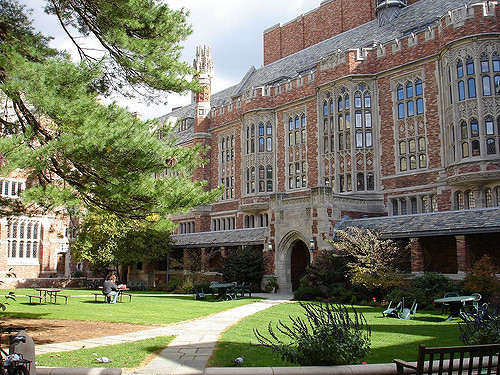
Photo of Yale Law School courtyard. Photo by stepnout, Flickr CC

More than 20 million people tuned in to the Ford-Kavanaugh hearing on Thursday. Many sociologists provided perspectives on the hearing, outlining everything from the myths about rape to the connections (and differences) with the Anita Hill and Clarence Thomas case. In an op-ed for The Washington Post, Shamus Khan provides his take on how class privilege shaped many of Brett Kavanaugh’s actions.

In his book Privilege, Khan followed students at St. Paul’s, an elite private school in New Hampshire. He describes how elite institutions, including the ones Kavanaugh attended, like Yale, foster privilege among their predominantly upper-class student bodies. This privilege includes ideas that students are “exceptional” and that the “rules don’t really apply to them.” As Khan explains in the article,

“What makes these schools elite is that so few can attend. In the mythologies they construct, only those who are truly exceptional are admitted — precisely because they are not like everyone else…Schools often quite openly affirm the idea that, because you are better, you are not governed by the same dynamics as everyone else. They celebrate their astonishingly low acceptance rates and broadcast lists of notable alumni who have earned their places within the nation’s highest institutions, such as the Supreme Court.”

These narratives of privilege among the elite can have some pretty nasty implications. Khan cites research by economist Raj Chetty demonstrating that admission to an Ivy League school is rarely the result of educational aptitude, but rather extreme family wealth. He asserts that this class privilege, masked by notions of “exceptional qualities,” is tied to beliefs about special treatment among the elite. For example, Kavanaugh’s supporters argue that he deserves the Supreme Court nomination and accountability for actions he committed years ago doesn’t really apply to him. Khan illustrates further how this privilege also shaped Kavanaugh’s actions on Thursday:

“This collective agreement that accountability doesn’t apply to Kavanaugh (and, by extension, anybody in a similar position who was a youthful delinquent) may help explain why he seems to believe he can lie with impunity — a trend he continued Thursday, when he informed senators that he hadn’t seen the testimony of his accuser, Christine Blasey Ford, even though a committee aide told the Wall Street Journal he’d been watching.”

In short, Khan’s research demonstrates how class privilege has shaped Kavanaugh’s actions from the outset, and how this privilege is cemented by the institutions and social circles around him.

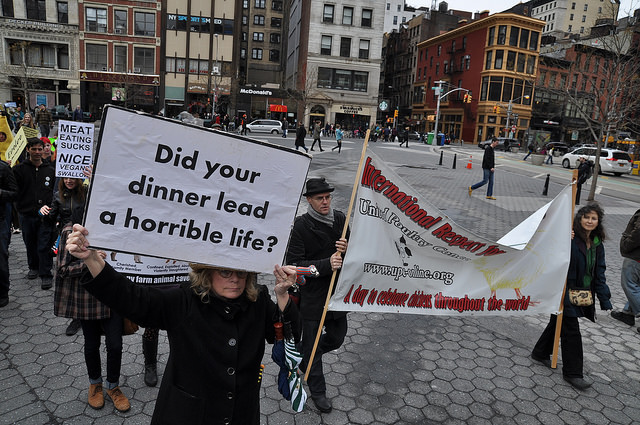
Protester holding a sign that says “did your dinner lead a horrible life?” Photo by Alan & Pamela Rice, Flickr CC

The devastation of Hurricane Florence is not limited to the loss of human lives. It is estimated that millions of chickens and thousands of pigs died in North Carolina from the flooding. Vegan social movements have pointed to this major loss of animal life as one of the many reasons to reduce our reliance on meat and the consumption of other animal products. However, these groups face a difficult path ahead as factory farming is a massive U.S. industry. A recent article in The Atlantic highlights research by sociologists Corey Wrenn, Nina Gheihman, and Elizabeth Cherry on the many obstacles that can thwart veganism from blossoming into a large-scale social movement.

According to Wrenn, one of the main barriers to mobilization of any social movement is that they allow “free-riders”, or individuals who may identify with the movement but do not change their behavior. In the case of veganism, including “flexitarians” — people who are interested in vegetarianism or veganism but still eat meat and other animal products — waters down the cause’s overall message. Wrenn argues that including flexitarians “maintain[s] the illusion of mass support, [while] real power is reserved for core members.” Wrenn suggests that smoking cessation campaigns provide a key example of how an “all or nothing” approach can bring about meaningful change in consumption behaviors.

In the same article, Elizabeth Cherry and Nina Gheihman push back against Wrenn’s claims, advocating that incrementalism and inclusion of those who aren’t strictly vegan may lead to more success for vegan social movements. Cherry, who has a book comparing animal rights activism in France and the United States, argues that vegan social movements promoting meat reduction rather than complete elimination parallels the often incremental shift by many vegans into a plant-based diet. Gheihman agrees with Wrenn that flexitarianism may damage vegan social movements in the long-term, but also believes that including those at the margins of the movement accounts for the multiple motivations people may have for going vegan. Gheihman expands further,

“I do believe that flexitarianism as an initial approach is worthwhile, as there are many people who are not willing to adopt the ideological stance of the animal-rights movement within a society that does not yet embrace it. As well, they may have alternate motivations for following a plant-based diet, including health and environmentalism, and I believe these motivations are as valid as that of animal rights.”

Two people sitting on a bench in New York City at night, and another person sitting off to the side. Photo by Guian Bolisay, Flickr CC

Few would disagree that the internet — through online dating apps and websites — has significantly changed how people meet romantic and sexual partners. Sociologists have been on the forefront of studying how online dating has changed relationships, and sometimes even working for the companies behind this change. A recent article in The Economist explores some of this research.

Using online dating apps, individuals are able to choose which commonalities they want to share with a partner, while searching through a more diverse pool of applicants than they might find at their neighborhood bar. And research by sociologists, Reuben Thomas and Michael Rosenfeld, shows that this really matters — married people who met their partners online reported significantly higher relationship quality than those who met their partners offline. Jess Carbino, the in-house sociologists at Bumble, explains why this might happen:

Offline, people meet others who are like them in various ways—who know the same people and work in the same places. Online they can meet people not like them in those ways, but like them in other ways that may matter more. You can meet people who aren’t like you and select those who are.

However, not all online daters benefit equally. Research by Elizabeth Bruch and Mark Newman shows that women are generally more desirable than men, but women’s desirability drops with age and the more degrees they have, while men’s desirability generally increases with age and education level. And certain groups — especially Asian men and Black women — get fewer responses than others.

In short, while the internet has increased the diversity of the dating pool for many — and with it, relationship quality — it still reinforces many of the same sexist and racist patterns we see in other forms of dating.

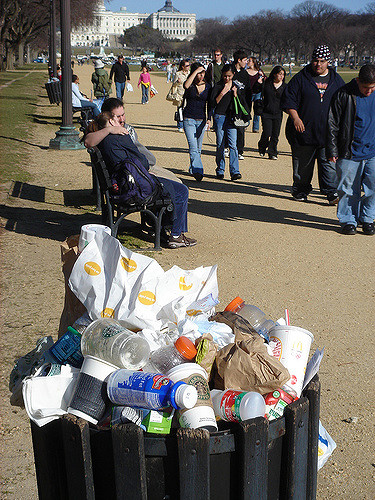
Photo of a Trash Bin in Washington D.C. by David Lisbona, Flickr CC

Today, the term “white trash” is used colloquially to identify white people who do not conform to the established ideas about what it means to be “white,” usually indicating they are poor, uneducated, unemployed, or backwards. This term emerged as a racial slur for white indentured servants — poor whites from England and other European countries that came to the United States in search of citizenship in exchange for labor. In a recent segment on NPR’s podcast Code Switch, sociologist Matt Wray discusses why “white trash” remains a powerful insult against poor whites and people of color alike.

Wray argues that although the term is meant to disparage poor whites, it simultaneously demeans other races by maintaining that there is something about being white that is superior to other racial groups. This is why the modifier “trash” is used. Code Switch news assistant Leah Donnella sums up Wray’s argument well:

“. . . ‘white’ is the only racial group that needs a modifier for it to become a slur. There’s no ‘black trash’ or ‘Hispanic trash’ or ‘Native American trash,’  presumably, because for most of American history, those people were assumed by those in power to be poor, uneducated and criminal.”

Wray also suggests that the term is used to reinforce the long-standing idea that poor whites are more racist than middle class or white elites. This allows affluent whites to escape criticism as racists, while stereotyping poor whites as representative  of “real” racism. Accordingly, Wray states:

“Whites who use the term are saying, ‘Look, I’m not racist. The person down the road is racist. The one who drops the N-word, or has the Confederate flag flapping off the back of their truck. That’s real racism.’ “

In short, Wray’s research shows how the term “white trash” reinforces ideas of white superiority, today and throughout history.  Since it first emerged in the colonial era, the term symbolized how important the intersection of race and class was — and still is — for personal belonging and worth in the United States.

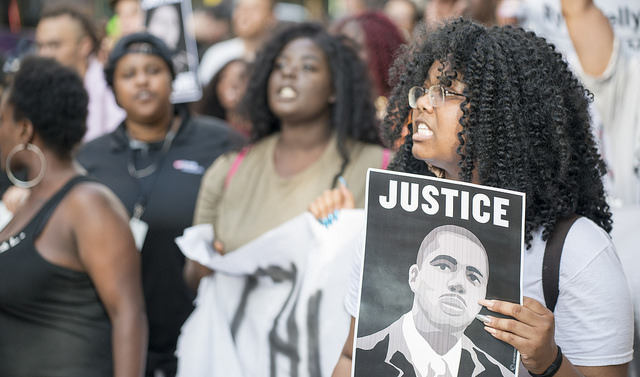
Protesters in Minneapolis express their anger at the death of Thurman Blevins at the hands of police. Photo by Fibonacci Blue, Flickr CC

August 12th marked the anniversary of last year’s Charlottesville riots, and White supremacists are organizing once again. When comparing their own beliefs to such overt racism, many White Americans feel comfort in their (supposed) lack of prejudice. But even if Whites believe they are not racist, their attitudes and actions may prove to be so. These forms of implicit bias, though often less pronounced, can be equally harmful. In a recent article in the Washington Post, Megan R. Underhill calls for Whites to take their own implicit racial prejudices seriously and speak up against such bias.

According to previous research, Whites are more likely to trust other Whites and distrust people of color. Both the negative portrayal of Black people from the media and high segregation of the White American population can heighten this implicit bias. Structural inequality and misguided understandings of white victimization may also contribute. According to Underhill,

“Whites’ sense of having been ‘left behind’ has manifested in the emergence of an overtly angry white identity rooted in feelings of victimization. Empirically, whites’ racial anger is misguided. Black Americans continue to lag behind whites on almost every indicator, including but not limited to income, wealth and education. Further, though federal programs like affirmative action have opened doors for people of color, it was actually white women who benefited most from these policies.”

Further, police’s reactions to Black individuals have proven fatal on a number of occasions. Though these issues are vast, Underhill suggests some constructive steps forward:

“White people who feel triggered by the sight of an unfamiliar black person in a space they consider theirs should understand that what they’re feeling is implicit bias. Think about the repercussions of picking up the phone and calling the police. White people who witness needless harassment of people of color should speak up and try to de-escalate the situation. Blackness is not criminal.”

Photo by mathiaswasik, Flickr CC

As debates about gun control continue amid mass shootings, compromise continues to be elusive. One step toward compromise is understanding what drives attitudes about gun control. Conventional wisdom suggests attitudes about gun control are closely tied to other political views, party affiliation, or past experiences with using firearms for hunting or personal protection. Sociologists have shown that attitudes about guns are also cultural, tapping into deep assumptions about what it means to protect and provide for loved ones. Now, a new study finds an even more surprising link: attitudes about guns are closely associated with core assumptions about religion in society.

In a recent article for the Washington Post, Andrew Whitehead, Landon Schnabel, and Samuel Perry summarize the findings from their study:

“Americans who subscribe to Christian nationalism believe that America has always been ― and should always be ― distinctively Christian in its national identity, sacred symbols and public policies…the connection between Christian nationalism and gun control attitudes proves stronger than we expected. It turns out that how intensely someone adheres to Christian nationalism is one of the strongest predictors of whether someone supports gun control. One’s political party, religiosity, gender, education or age doesn’t matter.”

These findings highlight how attitudes about guns are connected to some Americans’ core sense of social identity. This makes the policy debate a proxy for arguing about who we are as a country, and such a high stakes argument invites deeply entrenched positions.

Photo by Brandon Atkinson, Flickr CC

The procedure for the Marshmallow Test is simple: give a child one marshmallow, and promise them one more if they can resist the first. This test, originally conducted by psychologist Walter Mischel, is intended to measure self-discipline and future success, and is arguably one of the most well-known studies in social science research. But in a recent article in The Atlantic, sociologist Jessica Calarco argues that success never stemmed from the ability to “delay gratification” — in this case, by not eating the marshmallow — but from one’s social and economic background.

A new study replicating the marshmallow test, which also accounts for mother’s education level and household income, finds a child’s capacity for self control does not influence their achievement later on. What does matter is socioeconomic standing and the opportunities that come with it. Children of lower socioeconomic standings have fewer opportunities for success and are less motivated to wait due to the conditions of their daily lives. Calarco explains,      

“For them, daily life holds fewer guarantees: There might be food in the pantry today, but there might not be tomorrow, so there is a risk that comes with waiting. And even if their parents promise to buy more of a certain food, sometimes that promise gets broken out of financial necessity.”

Amidst today’s “replication crisis,” the Marshmallow Test is just one of many classic social science studies to falter. In this case, social environment proves to reveal much more about a person and their future than impulsivity. Calarco concludes,

“The failure to confirm old assumptions pointed to an important truth: that circumstances matter more in shaping children’s lives than Mischel and his colleagues seemed to appreciate.”