culture

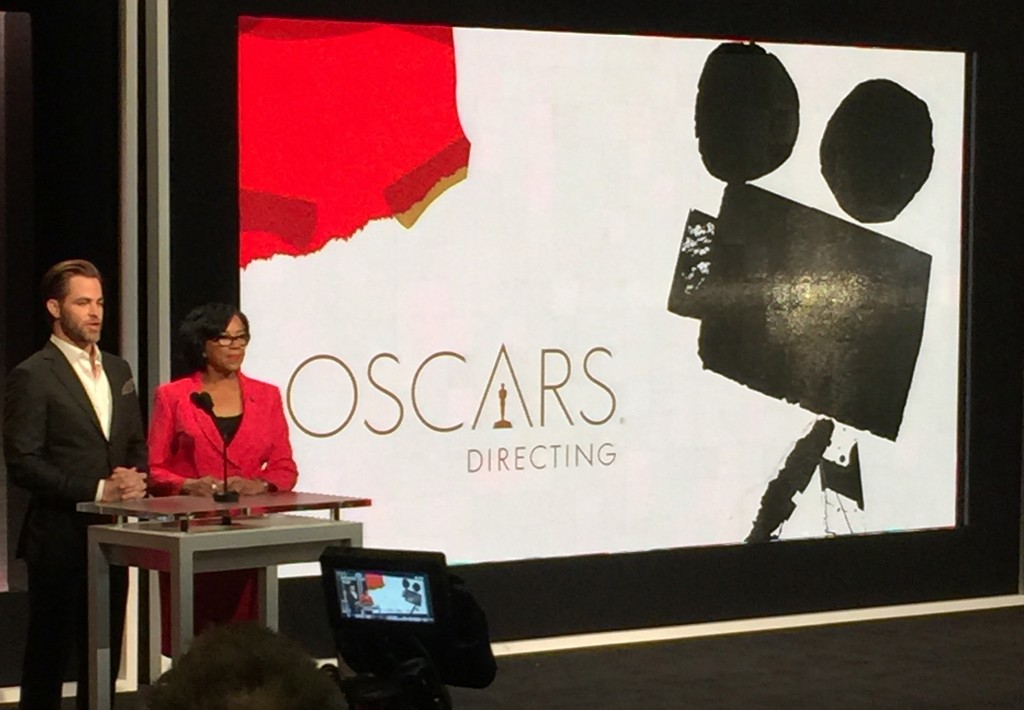
The 2015 Oscar nominees are announced. Photo by RedCarpetReport via flickr cc. https://flic.kr/p/qwEuL7
The 2015 Oscar nominees are announced. Photo by RedCarpetReport via flickr cc.


Following the whitest Academy Awards in nearly 20 years, UCLA’s Ralph J. Bunche Center for African American Studies released its 2015 Hollywood Diversity Report. Sociologist and center Director Darnell Hunt described the findings to The Hollywood Reporter: “Hollywood is not progressing at the same rate as America is diversifying.”

The study, which surveyed the top 200 worldwide box office films and 1,105 television series in 2012 and 2013, found that racial minorities and women were substantially underrepresented in both acting and directing roles. Those films with at least 30% diversity, however, did best in the worldwide box office tallies.

Study co-author Ana-Christina Ramon believes these numbers show that, “audiences, regardless of their race, are clamoring for more diverse content.” So what’s the holdup?

“It’s a high-risk industry,” says Hunt. “People want to surround themselves with collaborators they’re comfortable with, which tends to mean people they’ve networked with—and nine times out of 10, they’ll look similar. It reproduced the same opportunities for the same kind of people: You’re surrounding yourself with a bunch of white men to feel comfortable.”

Hunt suggests that emerging digital platforms like Netflix and Amazon could create more opportunities for on-screen diversity. Still, he is hesitant to make grand claims about progress: “It’s getting better, but it’s not getting better fast enough. And it’s still a big problem.”

The Preiser Project, Flickr CC.

Who doesn’t love a four (or five!) day weekend? An extra day or two away from the desk means more time for leisure activities and to disengage from work. But Scott Schieman, sociology professor at University of Toronto, warns that consistently short work weeks may not help work-life balance in the long run. In an interview on CBC’s Daybreak South, Schieman said,

I think what we have to really look at are the nature or the demands of the job—and how those demands can either be compressed in particular time periods, or whether they actually need to be spread out, and that’s when you get to some of the cons.

When the same amount of work needs to be done in three days instead of five, it means longer hours. It’s like cramming for a college exam, when it’s physically tiring and harder to process information. Even if three days of intense work seems like a good trade for four days at home, it’s still unlikely that “days off” mean not working, Schieman points out: “What if there’s a deadline, what if there’s an ongoing project? Can you really break from that fully?” Additionally, people with families may find the long hours associated with shorter work weeks incompatible with obligations like carpool, and non-stop work is unlikely to happen in a house with a demanding toddler. Savoring the occasional holiday might provide a better balance, aligning with kids’ school days and taken-for-granted “business hours,” while adding in a “bonus” day of leisure intermittently.

Photo by Ed Yourdon via Flickr CC

Seven years after the New England Patriots were caught cheating by video taping other NFL teams’ game signals, football fans are wondering if the team intentionally deflated the footballs in the AFC championship game that qualified them for the Super Bowl they went on to win. The controversy brings into question a long-held idea that sports foster teambuilding, hard work, and integrity.

Sociologist Eric Carter tells the Huffington Post that, although sports teach characteristics valued in American society to youth across the country, as the stakes become higher, players are more likely to exhibit unethical behavior. The desire to win at all costs can stem from arrogance or self-importance, but cheating often has less to do with players’ self-perceptions and more to do with the behaviors of others. For instance, when players think other teams cheat, they are more likely to break rules to “stay competitive.” Additionally, coaches who frequently reward star players and emphasize winning over technique and skill create an environment that may push athletes to bend or break the rules.

“The NFL has a great responsibility to check itself,” Carter said. “It’s one of the most powerful entities in American society.” Because millions look to professional football players, NFL stars become role models for young athletes, he explains. If officials turn a blind eye to cheating in the big leagues, high school and college athletes may internalize a culture of dishonesty that runs contrary to the ideals Americans value and believe are built in sports.

Image via US Army Corps of Engineers.

California’s measles outbreak  has refueled heated debates about mandated childhood vaccinations. With little known about the political leanings of anti-vaxxers, many politicians are carefully toeing the line to avoid alienating potential voters. In a recent Star Tribune article, though, sociologist Kent Schwirian said:

There is a long history to the fight against vaccination, and it does seem to break down along liberal versus conservative lines.

Schwirian argues that political conservatives are more likely to be anti-vaxxers than their liberal peers. The Ohio State University professor bases his claim on his own 2009 study of the swine flu scare, in which he found that conservatives who distrusted government were more likely to oppose vaccinations than were others with higher levels of trust or more progressive politics.

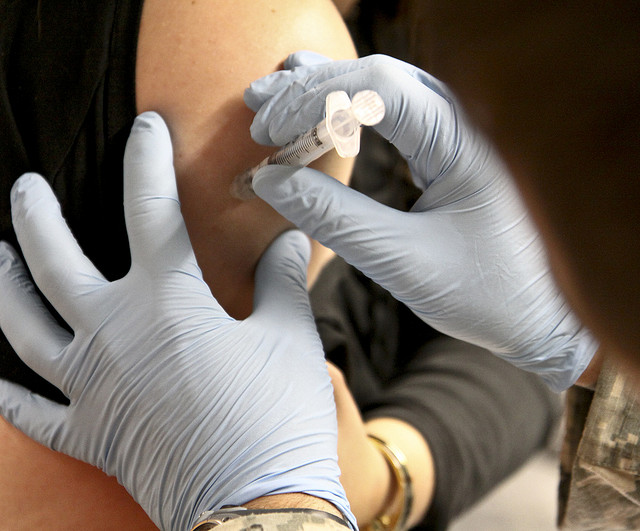
For more, see “There’s Research on That!

Photo from Persephone's Birth by eyeliam on flickr.com
Photo by eyeliam via Flickr CC.

Pregnancy can be stressful. Friends and family may have good intentions, giving informal support to expecting mothers, but their helpful hints sometimes come across as critical. A doula, however, provides emotional support before, during, and after birth, and helps women make informed health decisions.

Sociologist Lisa Hall talked to Missouri State News about her research on doula services and how these workers’ contribute women’s well-being. Hall reflected on one interview:

The client’s words were, “if it had not been for my doula, I think I might have just left my baby with my husband and moved away.” She had no confidence that she could be a good mom—especially in the midst of criticism—and the doula empowered her.

Many doula clients receive WIC (Women, Infants, and Children) services and lack access to adequate healthcare due poverty or homelessness. Furthermore, lack of education and connections (part of what social scientists call “social capital”) prevents many low-income and young women from asking questions or expressing health concerns. And, for all women, a doula can serve as a liaison to health service providers. Hall elaborates, “It’s a major view shift for some of these [expectant mothers] who haven’t been taken seriously or hadn’t been treated like an adult …”.

Taking a client’s physical and emotional needs seriously is just one aspect of doula services. The Doula Foundation teaches effective parenting, helps with healthcare access, and encourages breastfeeding, all of which benefit mothers and their children by providing a tool kit of positive health practices. Other groups, like the Isis Rising Prison Doula Project, bring doula services into spaces where birth may have even further complications.

Photo by Christopher Pacquette via Flickr CC.

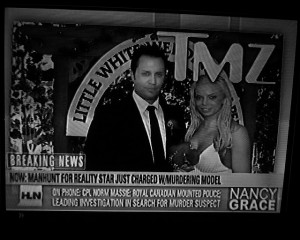
From OJ Simpson to Casey Anthony, America has no shortage of highly anticipated and hotly discussed trials. At the moment, Boston is a hive of judicial, legal, and media activity surrounding the trials of two infamous, if unrelated defendants: Boston Marathon bombing suspect Dzhokhar Tsarnaev and New England Patriots tight-end and homicide suspect Aaron Hernandez. An article from ABCNews by Denise Lavoe uses sociology to explain why some trials can gain so much attention and how that affects the ideal of trial by a jury of peers. In each of the Boston cases, jury pools reached well over 1,100 people until a group of potential jurors who hadn’t already reached a conclusion about the case could be found.

Quoted in the article, Northeastern University sociologist Jack Levin explains that each trial attracts interest and media attention in a specific way. People are interested in the Tsarnaev case because of “a widespread feeling that people have that they are vulnerable.” The fear of terrorism drives public interest rather than the fame of the defendant. The Hernandez case is different, as Levin explains, because the trial of a popular sports figure attracts its own kind of attention. Society, he says, places “tremendous value on athletes, and when one of them commits a serious crime like homicide, it shocks the public.” The trial of a disgraced, once-popular player draws public attention partially because the narrative seems to run so counter to prevailing perceptions of sport and athletes, as well as the gloss of fame. Tsarnaev is felt keenly as a physical threat to everyone, while Hernandez represents a more abstract threat to assumptions and values. Both cases will likely remain front-page news well into the future, but different social processes lay beneath their infamy.

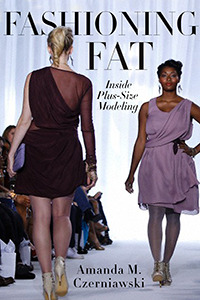
Fashioning Fat coverIn December, thousands watched tall, thin models parade bedazzled bras, panties, and angel wings down the runway at the Victoria’s Secret fashion show. In the U.S., however, these “standard size” models aren’t representative of either the female population (an average size 10-14) or of the entirety of the modeling population.

Sociologist Amanda Czerniawski, who worked as a plus-size model in researching her book  Fat: Inside Plus-Size Modeling, was featured in a Pacific Standard article about the opportunities and limitations for plus-size models in the fashion industry. She explained that featuring plus-size models can be considered an “act of resistance” against the fashion industry’s standard ideals. Still, while plus-size models contribute to a more inclusive idea of beauty, Czerniawski said the status quo is hard to change:

Though plus-sized models want to change notions of beauty and glamour, she argues, the industry restricts their efforts and their effectiveness. Plus-sized models are not really all that free; though they do not have to be a size zero, their bodies are still regulated and policed.

The article goes on to explain how some plus-size models find themselves labeled too small, too big, or not the right type for a given job. Further, though plus-size models continue to gain visibility in the fashion industry, they still have fewer opportunities than “straight” (that is, willowy) models.

In the end, all modeling is about capitalism:

Many of the indignities that Czerniawski details—lack of benefits, arbitrary management decisions, exploitative contracts—are typical of many (most?) labor relationships under capitalism.

This means including a wider range of sizes among models is unlikely to change the regulation of their bodies; it’ll just mean more women in a glamorous and restrictive sector of sales.

Photo by Ed Yourdon via Flickr CC

Bill Cosby is a household name, once associated with a long and illustrious career, now with an infamous string of sexual assault allegations dating as far back as 1965. After new rape charges arose in late 2014 and became the subject of pop-culture discussion, TVLand dropped The Cosby Show from its rerun schedule and Netflix postponed a Cosby comedy special. A sitcom he had in development was canned. Notably, Cosby had weathered such accusations for decades without losing the support of networks and business partners. This time has been different.

University of Texas-Austin sociology professor Ari Adut lends his thoughts in a New York Times article. When public knowledge about a scandal is limited rather than widespread, entertainment businesses are less likely to take action. Once an allegation leveled against a public figure and becomes common knowledge, though, businesses are compelled to respond: “[w]hen everyone knows that everyone else knows about the claim (and so on), society can judge people and groups that do not act on that knowledge.” So, though rape and assault accusations had followed Cosby for nearly a half-century, the latest set of allegations have been hotly discussed in the media, and groups like Netflix moved to distance themselves from the performer so as to avoid public perceptions of Inaction.

This sociological explanation for how businesses assess public opinion regarding scandals and act accordingly helps us understand many other occurrences in the entertainment industry. For example, after actor Charlie Sheen had a run-in with the NYPD regarding drugs in 2010, CBS soon dropped the star from Two and a Half Men, despite the fact that Sheen had notoriously faced drug issues before. Once Sheen’s 2010 crime became public knowledge, the axe fell swiftly. For the famous, what the public doesn’t know—or mobilize around—needn’t be a worry. When it hits the front pages, though, anything from “dirty laundry” to felony assault is likely to tarnish a even a star’s brand image (and paychecks).

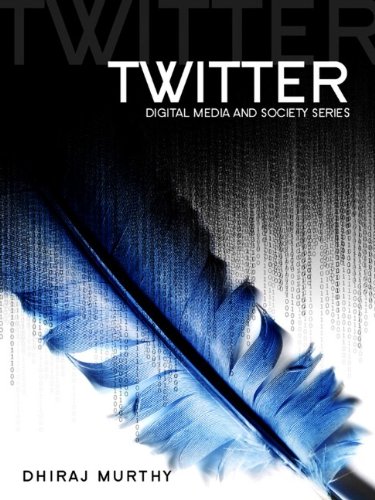
Twitter coverAlthough some research emphasizes the negative impacts of social media on well-being, a recent Smithsonian article highlights a specific benefit: social media platforms allow individuals to connect across thousands of miles. Further, despite anecdotal evidence, social media usage does not actually result in higher stress for users.

Dhiraj Murthy, sociologist and author of the book Twitter, told the Smithsonian Magazine about how social media lets people keep up with friends and family members, whether it’s communication about big events such as births or weddings, or every day things like food or funny cat videos. By fostering a sense of connectedness, Murthy says, this communication can reduce stress and increase happiness.

Still, Murthy warns, “Increased social awareness can of course be double edged.” Connectedness can mean feelings of stress, sadness, or anger when the interactions relate to death, job loss and other heavy topics. This means it’s the content viewed on social media, not social media itself that affects stress levels.

While the relationship between social media and stress is complex, many such studies focused on heavy users, Murthy says. In general, the common perception of most social media users as gadget-addicted stress cases doesn’t hold up to scrutiny. 

Busy schedules coupled with near constant access to technology contribute to people becoming more social via social media. While sharing a cup of coffee takes coordination and time, a quick scroll through an album or a post about a promotion allows users to participate in communal behaviors that benefit mental health. If the trick is focusing on the good content without ignoring the bad, it seems our online interactions are an awful lot like the in-person ones.

The Hunger Games Trilogy by Suzanne Collins. Image via Marci's Blog.
The Hunger Games Trilogy by Suzanne Collins. Image via Marci’s Blog.

The Hunger Games books are often brought into sociology classrooms, where they are used to discuss anything from economic inequality to capital punishment. In a recent interview with Flavorwire, Mari Armstrong-Hough, a professor in the sociology department at Davidson College, described the social theory behind the books as a model of total resistance:

We see politicking, corruption, and unjustified violence from both the guardians of the status quo in the Capitol and the architects of the rebellion. Katniss, whom we naturally align ourselves with, rejects both these systems.

Armstrong-Hough went on to expand on the idea of resistance, stating that docility is bred by violence:

The Games institutionalize a political docility not so much because they threaten violence to the districts’ children, but because they create a society in which people think they must choose survival over solidarity. I think a lot of people, regardless of their political affiliation, feel like there has been a lot of being forced to choose survival over solidarity going around in the US.