culture

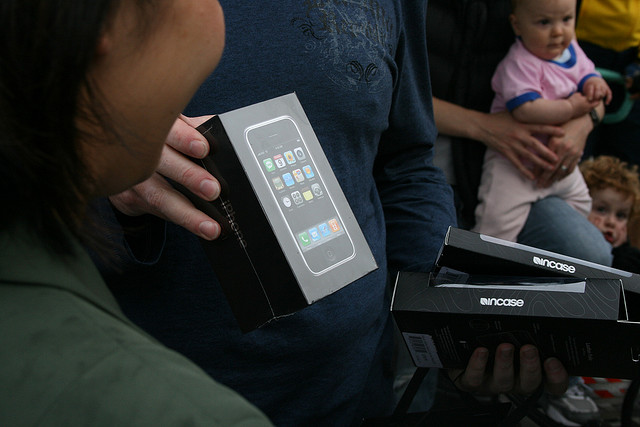
Seattle's first-in-line for the 2007 iPhone release. Eli Duke, Flickr CC.
Seattle’s first-in-line for the 2007 iPhone release. Eli Duke, Flickr CC.

Black Friday is around the corner… as will be the long lines of people waiting for hot retail deals. This queuing up isn’t uncommon; we see people line up for grand openings, new gadgets, concert tickets, and even for free burritos and ice cream. Americans stand in line (often voluntarily) for approximately 37 billion hours a year. Why?

David Gibson, a sociologist at Notre Dame, draws our attention to the human desire to be part of a niche community,

these are people whose identities and stories about themselves are very much tied to being foodies, on being on the cutting edge of fashion and style, or being Apple device lovers. They get recognition, status, and buzz among their friends by showing up at these places and being the first person with a new iPhone.

Additionally, Gibson told CityLab that humans are more concerned with the length of the line than with how fast it is moving. To pass the time, he suggested that people should try to make friends with others; “If you’re actually queuing up for something which is coveted and exciting, then you’re kind of a member of a community to start with.” It would be easy to strike up a conversation because you already know what you have in common.

When it comes to cutting the line and saving spots, Gibson adds,

The important thing is that [others] see that you are tied to someone, and they’re willing to think that person was standing there on behalf of you. If there’s a limited number of devices or seats, and the people behind you think that an addition of a person is going to make a difference [in the wait time], that’s the only time that it will matter.
Erik Ingram via flickr.com.

Public opinion polling in America dates back to the 1930s, and religious beliefs and behaviors have always been topics of interest. However, polls do not produce perfect measurements and their results can both shape and misrepresent the reality of public beliefs and behaviors. Religion Dispatches recently interviewed sociologist Robert Wuthnow about his new book Inventing American Religion: Polls, Surveys, and the Tenuous Quest for a Nation’s Faith in which he details the ways in which polls have shaped the religious makeup of the American population.  

Wuthnow explains that in the 1970s, the Gallup poll’s overly broad and vague questions about evangelical identity resulted in a huge overestimation of the number of evangelicals in America at the time. He explains:

The year of the evangelical was 1976, when Jimmy Carter achieved election to the White House and the role of polling was to greatly expand the number of Americans who were evangelicals… How is that possible that a poll could do that? …Gallup said there might be 50 million Americans who are evangelicals, and journalists ran with that… The way they got 50 million was basically inventing a new question that said something to the effect of, “Have you ever had a born-again religious experience, or something similar to a religious awakening?” And that was pretty much it… There was a lot of diversity among evangelicals themselves that got masked by being lumped together in the polls as if they were all the same thing.

The results of that 1976 poll influenced not only perceptions of the number of evangelicals among journalists, but also political perceptions of evangelicals as a voting bloc. If there were that many evangelicals in America, then politicians could cater to them to gain votes. Evangelicals began to be treated as one homogenous group instead of the highly heterogenous group that they really were.

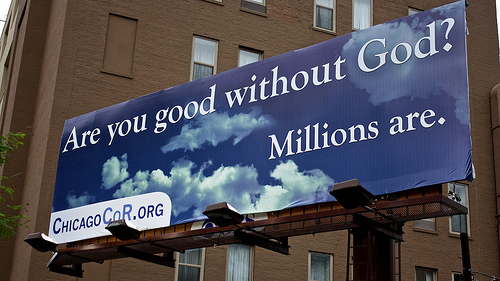
Wuthnow explains how a similar phenomenon is happening with the rise of the non-religious in America—commonly known as the “nones.” Polls and surveys are reporting an increase in those who are saying they are not religious, but these general trends can mask huge variation among the non-religious. Many, for instance, still believe in a god and go to church, and only a very small percentage actually identify as atheist. Further, Wuthnow says, people often change their beliefs and opinions over time, and poll data glosses over that fact:

Polls have always assumed that whatever a person says is reliable, and that they really mean it and stick with it. So if you find any changes over time, that’s significant because polls are measuring stable opinions—if those change, that’s important.

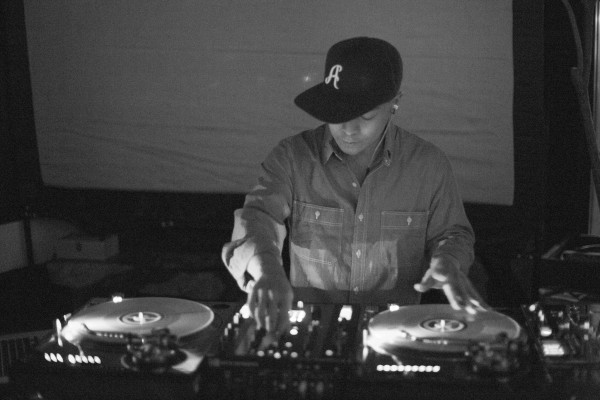
World famous Filipino turntablist DJ Qbert. Photo by Scott Schiller via Flickr
World famous Bay Area-raised Filipino DJ and turntablist DJ Qbert. Photo by Scott Schiller via Flickr

Long Beach State assistant professor of sociology and hip hop journalist Oliver Wang “remixed” his dissertation on the cultural phenomenon of predominantly Filipino Bay-Area mobile DJs of the ’70s, ’80s, and ’90s into the book Legions of Boom: Filipino American Mobile DJ Crews in the San Francisco Bay AreaWang discussed the particular social and cultural context that these crews developed in an interview with Vice:

I was used to thinking about how hip-hop crews were often very identify-focused—I came up during the era of pro-black/political hip-hop after all—and so my assumption was that this would be a major part of their identity as well. It wasn’t, though. Their self-awareness/pride in being Filipino was very individualistic but not reflected in the scene as a whole. If you just look at the names of the crews or the parties, there’s almost never an indication that these were predominantly Filipino American crews. There are any number of ways to possibly explain this: It was their age, it was their generation, it was the overall climate around race/ethnicity and music, it was because, as Filipinos, they’ve historically been treated as invisible. I do think, had this scene taken off in the 1990s, we may have seen a different dynamic because of the influence of hip-hop.

Read the whole interview here.

Pressure's on, kid! Isabelle Plante, Flickr CC.
Pressure’s on, kid! Isabelle Plante, Flickr CC.

Upcoming award ceremony? You may consider joining the growing number of non-politicians hiring “toast whisperers” to write public speeches.

Sociologist Lisa Wade recently explained to News4Jax: “I think people that purchase a speech for an event might want to impress others, and that drives them to do it.” The growing importance of social media also likely contributes, as it increases “the expectation that other people will see everything we do.” And if some people will see it, we want it to be good—maybe even worthy of viral video status.

Guess we can add “Did you even write that speech?” to our array of ways to “throw shade” in the comments sections.

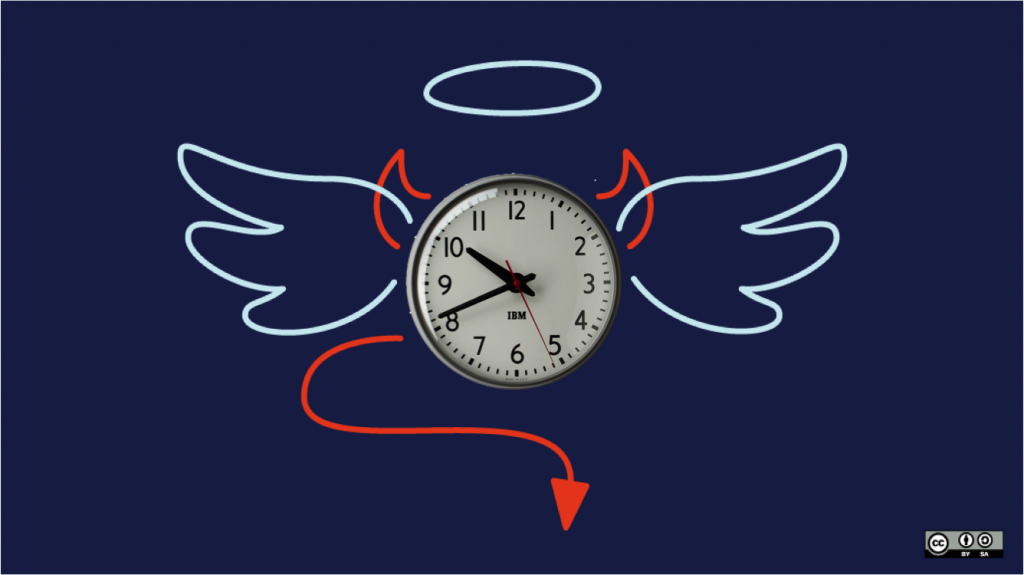
Image via opensource.com/Flickr CC, modified to include clock face.

A recent study of spiritual awareness is receiving international attention. Presented at the Annual Meeting of the American Sociological Association (ASA), it finds that one’s spiritual awareness fluctuates throughout the day, affected by music, work, exercise, and even video games all have effects.

Co-author Bradley R.E. Wright told Suffield Times that he was surprised: “There’s a complicated interaction between religious consciousness and the state of affairs. Typically, the state of affairs you’re in impacts your religious consciousness. Different occasions, your religious consciousness impacts the state of affairs you are in.”

PsychCentral and IBC World News have also featured the study.

Even the show cringed at its title, making new jokes every week. Image via Slacktory.

Television and movie relationships between a middle-aged woman and younger man, like those on TBS’s Cougar Town often appear glamorous and dramatic, but are they accurate depictions? Milaine Alarie and Jason Carmichael tell Pacific Standard that the stereotype of wealthy “cougars” who “have been able to surgically turn back time with their looks… or literally buy young men’s attention” is more a myth popularized by shows like Sex and the City than reality. First, they find in a survey of Americans that “roughly 13 percent of sexually active women between ages 35 and 44 had slept with a man who was at least five years younger,” meaning that sexual relationships between middle-aged women and younger men are not rare. The bigger surprise is that women sporting diamonds and Chanel are less likely to be in that 13 percent than low-income women are. Additionally, rather than a steamy fling, these relationships tend to be long-term, with most lasting at least two years. “[A] sizable share of ‘cougars’ are married to their younger partners.”

Media portrayals of a woman’s midlife crisis or frantic clamor to cling to youth do not represent most women’s experiences, highlighting a cultural problem: a stereotype like the “cougar” “encourages aging women to doubt themselves.” Alarie and Carmichael hope that dispelling the cougar myth will “motivate us to reflect on our society’s tendency to (re)produce sexist and ageist conceptions of women’s sexuality, and women’s value more broadly.”

Photo via Joe Loong via Flickr.

In a recent excerpt from her book The Tumbleweed Society: Work and Caring in an Age of Insecurity featured in Salon, sociologist Allison Pugh discusses how the insecure economy has made employees feel wary of their employers but also like they must rush to their defense. Employees often bend over backward to identify with their bosses and meet their needs, but employers are much less likely to reciprocate. What do employers and employees owe each other?

The move away from the old social contract, in which employees traded loyalty and effort for job security, has resulted in real and perceived job insecurity among may adults for whom full-time work is a central piece of identity. Pugh says the result of the opposing trends of increased job insecurity and increased cultural importance of full-time employment is lots of anxiety for employees and a “one-way honor system.” Employees still feel obligated to uphold their end of the social contract by demonstrating loyalty and hard work, they don’t expect the same commitment from their employers. Even those with the lowest-skill and lowest-paying jobs empathize with the employers’ needs for good workers and expect little beyond dignity, respect, and a paycheck.

Part of the reason for the one-way honor system is the perception that intense work commitment is an integral part of being an honorable, moral person:

Survey researchers report, for example, that about the same percentage of women as men—70 percent of full-time working women (both white-collar and blue-collar workers)—say they would continue to work if they suddenly had enough money to live comfortably for the rest of their lives, known as the “lottery question” (and used by researchers as a rough proxy for a work ethic). A strong work ethic was part of good character, part of being fully human, no matter your gender, people maintained.

In other words, it’s not the job itself that’s the source of dignity, it’s the work ethic. So as jobs get more precarious, many people work longer and harder instead of slacking off, partially because they fear those who don’t work hard enough or produce enough will be the first ones to lose those coveted jobs.

Photo by Mark Morgan, Flickr CC.

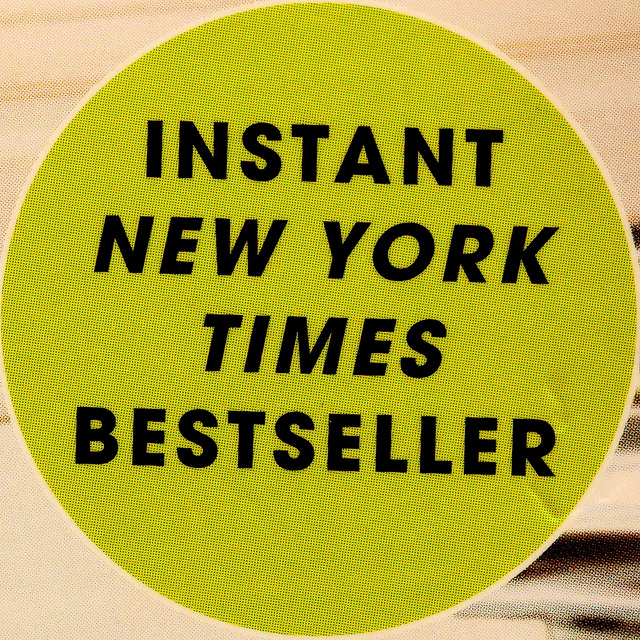
In the literary world, New York Times Bestseller is a coveted and sought-after label. When that gold sticker is slapped on the cover of a book, authors and publishers alike are likely to be happy campers, and there are few surefire ways to create buzz about a particular work than Bestseller status.

Brandeis sociology professor Laura Miller weighs in on a piece in Hopes&Fears where the stickiness of the New York Times Bestseller label is discussed. Miller states “People assume that if everyone else is reading a book then it ought to be good.”

Indeed, this peer-pressure style marketing is what makes the Bestseller label so desired. It’s basically an endorsement from a huge number of everyday people—but the formula isn’t that simple. As explained in the article, the New York Times Bestseller label was created in 1931, when editors would take random samples of book sales from undisclosed vendors to gauge the popularity of particular manuscripts. In the modern era, the process has become murkier. Discussing the process in determining Bestseller status today, Miller explains:

Once you got online bookselling, anyone and everyone was selling a book… you can’t have millions of retail establishments giving data to the Times. That means they have to ask for a sample of the different kinds of places that are selling books… While the actual reporting of sales from those particular places might be more accurate than in the past, the ability to get an accurate sample is actually more difficult.

In the past, while the accuracy of the data from book vendors was imperfect, gathering a representative sample of book market transactions was easier—there were fewer potential vendors. Today, though, selection process of specific vendors for Bestseller sampling purposes is tightly controlled, so that publishers and authors can’t artificially inflate their book sales at particular stores or retailers in order to boost their likelihood of Bestseller status. Whatever the process, however, it will have to further contend with new forms of book purchases, such as e-book and Kindle sales. Either way, authors and publishers will still wait with bated breath: Is it a Bestseller?

Chicago's "Overpass Light Brigade." Photo by Mikasi, Flickr CC.
Chicago’s “Overpass Light Brigade.” Photo by Mikasi, Flickr CC.

San Francisco recently passed legislation which will eventually increase the minimum wage to $15 an hour in incremental, planned hikes. On the heels of the “Fight for 15” movement, this seems like good news for those living on or near the minimum wage. As explained by an article on NBC online, with help from CUNY Graduate Center’s Ruth Milkman, a sociologist of labor and labor movements, people may not start celebrating just yet.

Many people working on the minimum wage at the moment, for example, work multiple jobs. As Milkman states, “[I]f you’re working at the current minimum wage in a lot of places, you’re still in poverty, especially if you’re supporting other people.” When the wage is going to be increased in gradual increments, those gradual changes may not make much of a dent in what it takes to support oneself or dependents, especially in areas experiencing gentrification. Consequentially, as Milkman explains, this can create a “lot of discontent in a lot of the working population.”

Indeed, as basic struggles of living on the minimum wage continue after slight increases, there can be downsides as well. Businesses which rely on a greater proportion of minimum-wage workers can be more likely to operate in low-income areas, such as fast-food restaurants. Therefore, if businesses raise prices to handle paying a higher wage, the minimum-wage-hike could be hurting the people it was meant to help. At the moment, San Francisco is leading the way on raising the minimum wage, but don’t wager that the discussions are over just yet.

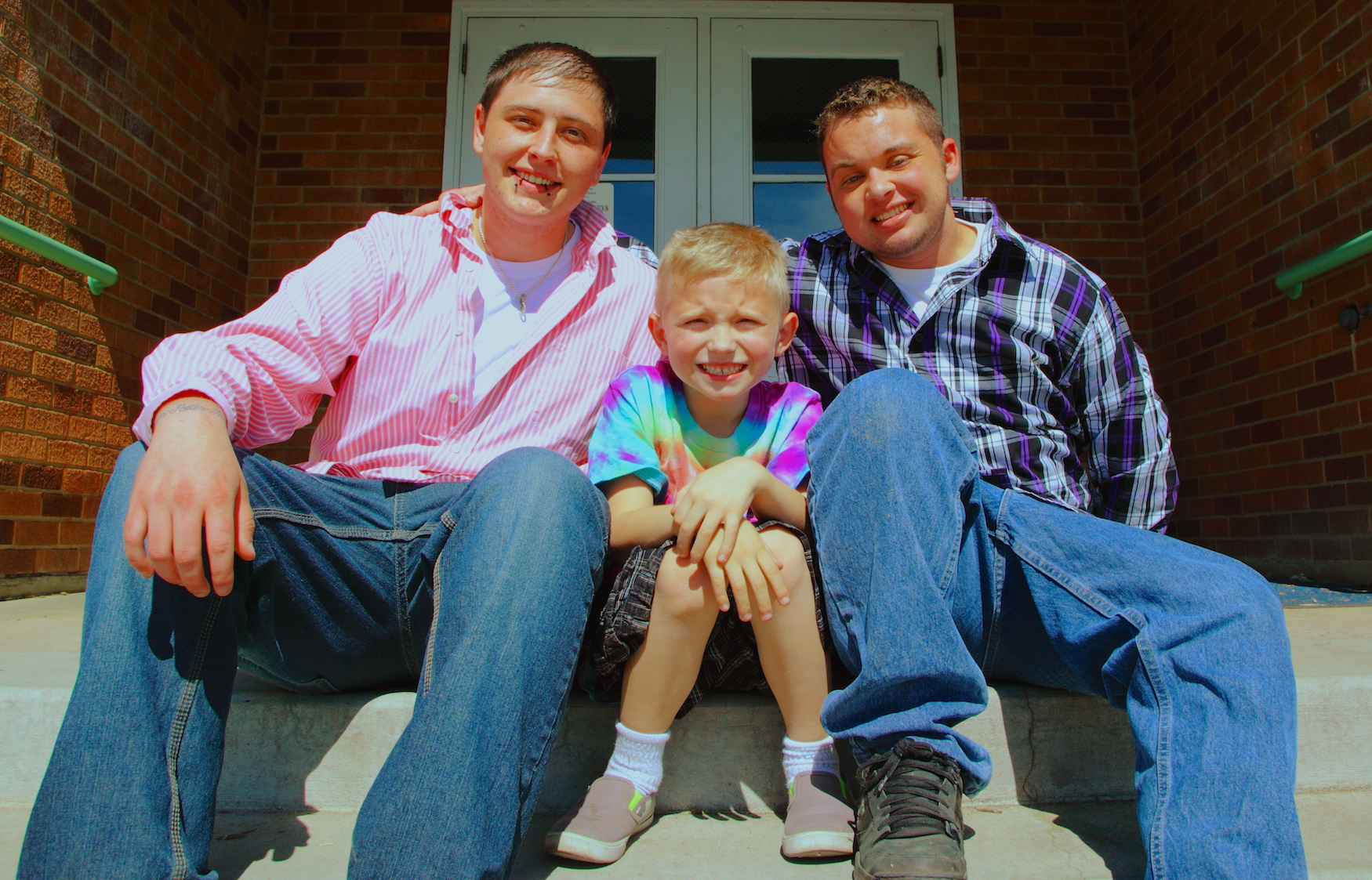
Utah couple Liam and Curtis pose with their son. Creative Commons photo by Sharon Mattheson-McCutcheon.


Between the high costs of adoption and surrogacy, same-sex parents face many more obstacles than most heterosexual couples when it comes to adding a child to the family photo. Among those couples who go the distance, lesbians have been much more likely than gay men to parent, but the number of male couples seeking adoption is on the rise. “They have to go out of their way to become fathers,” Nancy Mezey, a sociology professor at Monmouth University in West Long Branch, New Jersey told New York Times about the dedicated men making the long and complicated journey to parenthood.

Such two-father families fill specific niches and tend to foster inclusivity in more than one way. “They’re adopting children that other people don’t want to adopt. They’re teaching their children tolerance and expanding definitions of gender roles,” according to Mezey. “They are helping to redefine what it means to be a real man.”

One interesting twist is the division of household labor same-sex parent homes. Among heterosexual couples, cultural norms have long encouraged women to raise children while men bring home the bacon. This means stay-at-home gay dads also quietly “challenge dominant beliefs that dads are primarily breadwinners and can’t be the primary nurturers,” Mezey told the Times.