
culture

Image via Camilla Eriksson.


Swedish nursery school teachers and LGBT groups have banded together over the addition of a gender-neutral pronoun to the official Swedish language. It all started five years ago. These two groups were among the first to use the gender-neutral hen as an alternative to the female pronoun hon and the male han. Now the common, conversational use of hen has led the Swedish Academy to include it in the newest edition of the country’s official.

In the Washington Post, linguist Sofia Malmgård explains that there are two ways to use the new pronoun:

First, if the gender is unknown or not relevant (as in: “If anyone needs to smoke, ‘hen’ may do so outside”). Second, it can be used as a pronoun for inter-gender people (as in: “Kim is neither boy or girl, ‘hen’ is inter-gender”).

In other words, the pronoun provides a way to talk about someone and disregard hen’s gender when it doesn’t matter or doesn’t conform to the traditional masculine/feminine binary.

In Sweden, ranked fourth on the World Economic Forum’s 2014 gender equality report, gender-neutral education is in vogue. Nurseries, kindergartens, and preschools have been at the forefront of the movement to help children grow up without feeling the impact of gender biases. At Egalia, a preschool in Stockholm, traditionally gendered toys and games are placed side-by-side to encourage children to choose by preference rather than convention; students are not referred to as male or female; and gender-neutral books line the shelves.

LGBT groups have also embraced the new pronoun as a way to raise awareness. Experts are cautiously optimistic that officially recognizing the word will encourage more people to use it., Lann Hornscheidt, a professor of Scandinavian languages and gender studies, believes hen really will help fight sexism and gender biases. As he told the Post,

The introduction of a pronoun which challenges binary gender norms has been an important step, following a more thorough debate over the construction of gender within the last 10 years.


Screen Shot 2015-04-09 at 12.34.39 PM


In debates about whether to ban porn, it’s interesting to consider what a world without legal “adult entertainment” would look like. Sociologist Chauntelle Tibbals, author of the forthcoming book Exposure: A Sociologist Explores Sex, Society and Adult Entertainment, talked to MTV after the show “Guy Code” made a video called “Life Without Porn.” The video, embedded below, mocked the mundane situations that often serve as the opening for pornographic films—a visit to the auto repair shop, a pizza delivery, or a visit from the TV cable provider—where, instead of ending in an erotic encounter, the actors’ teasing dialogue ultimately ends with advice on how to reheat pizza or another item to add to the car repair bill.

Tibbals argues that a world completely devoid of porn is not possible. From cave drawings and carvings to Renaissance paintings to avant-garde photography, humans create images of sex and sexuality:

“Us wanting to visually represent sex has been around since humans have been around, and porn is just another medium to do that. I don’t think it’s possible for there to be no erotic representation,” Tibbals told MTV.

But what if we bracketed erotic representation and just eliminated commercial porn? Tibbals says it’s not so simple. Billions of people watch billions of dollars worth of porn:

…if you limit other people’s capacity to professionally produce and legally produce that content, the demand for it is not going to go away.

Instead of disappearing, she believes a black market would expand, putting people who work in pornographic film creation at higher risk of sexual exploitation:

Right now, when people watch porn legally made, they know that they’re watching consensual sex on a safe set run by professionals. That’s not to say that every set is perfect, but consumers can watch that content and know that the people working on it want to be there.

Photo by JD via Flickr. Click for original.


Parents often equate good parenting with spending as much time with their children as possible. The idea is that, in those hours, parents will cultivate particular characteristics in their children that will contribute to bright futures. But is helicopter parenting really worth it? Sociologists Melissa Milkie and Kei Nomaguchi share the findings of their recent study with the Washington Post: “I could literally show you 20 charts, and 19 of them would show no relationship between the amount of parents’ time and children’s outcomes. . . . Nada. Zippo,” says Milkie.

It’s not the number of hours, but quality of time spent together that matters. Interactive activities like reading to a child, sharing a meal, and talking one-on-one benefit kids, while just watching TV together may be detrimental, as Amy Hsin found. Still, Milkie and Nomaguchi’s study did find that teenagers who engaged with a parent for six hours per showed lower levels of delinquent behavior and drug use than peers who spent less time with their parents.

The authors dug deeper, finding that when a parent was overly-tired, stressed, cranky, or feeling guilty, spending time with their children could lead to more behavioral problems and lower math scores. Nomaguchi says, “Mothers’ stress, especially when mothers are stressed because of the juggling with work and trying to find time with kids, that may actually be affecting their kids poorly.” This particularly impacts parents from low-income households who often lack access to social resources for improving mental health, but still feel the pressure to be “good” parents by spending time with their children. In fact, Milkie and Nomaguchi found that the biggest indicators of child success were mothers’ income and education levels:

“If we’re really wanting to think about the bigger picture and ask, how would we support kids, our study suggests through social resources that help the parents in terms of supporting their mental health and socio-economic status. The sheer amount of time that we’ve been so focused on them doesn’t do much,” says Milkie.

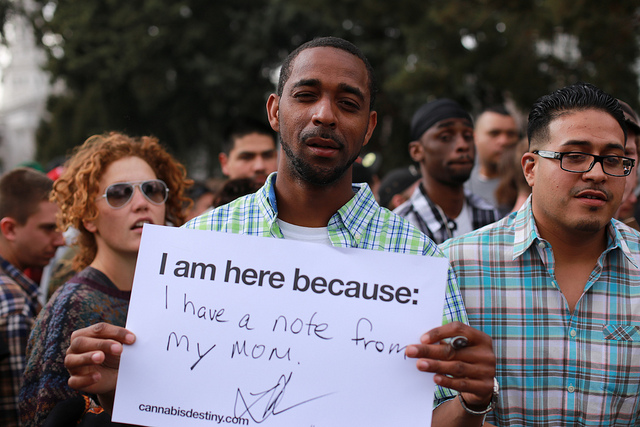
This 2013 Denver rally attendee probably still needs that note from his mom. Photo by Cannabis Destiny, Flickr.


“Spark it up!” Sure, next time you’re in Colorado, you might want to stock up on Cheetos and take advantage of the state’s legalized marijuana. That is, if your skin’s the right color.

According to a new report by the Drug Policy Alliance, a pro-legalization collective, it’s already apparent that there are still racial disparities in the enforcement of the new drug laws in CO. As explained in an Associated Press article, laws that penalize carrying amounts in excess of 1oz of marijuana and the public use of the substance have disproportionately affected blacks compared to whites. Total marijuana arrests have dropped by nearly 95% since legalization, but blacks are twice as likely as whites to face sanctions under laws that criminalize illegal cultivation, public use, and excess possession. In Washington, the same phenomenon can be seen at work, the report states. In Seattle in 2014, one-third of the marijuana citations were issued to blacks, who only make up 8% of the city’s population.

According to University of Wisconsin sociologist Pamela E. Oliver, this discrepancy is indicative of African Americans’ overall treatment under the law, even after policy shifts: “Black communities, and black people in predominantly white communities, tend to be generally under higher levels of surveillance than whites and white communities… this is probably why these disparities are arising.” This discrepancy shows up in nearly all crime policing, from homicide to drug laws to robbery. In Colorado, it’s really killing the buzz.

Purple Sherbet Photography via Creative Commons


Sociologists are quite familiar with the combination of marginalized identities that can lead to oppression, inequalities, and “double disadvantages.” But can negative stereotypes actually have positive consequences?

Financial Juneteenth recently highlighted a study showing that gay black men may have better odds of landing a job and higher salaries than their straight, black, male colleagues. Led by sociologist David Pedulla, the study sent resumes and a job description to 231 white employers nationwide, asking them to suggest starting salaries for the position. Resumes included typically raced names (“Brad Miller” for white applicants and “Darnell Jackson”) and listed participation in “Gay Student Advisory Council” to imply the applicant’s sexuality. Pedulla found that gay Black men were more likely to receive the same starting salaries as straight white men, whereas gay white men and straight black men were offered lowered salaries.

Pedulla’s findings have sparked a conversation among scholars and journalists about the complexity of stereotypes surrounding black masculinities and sexualities. Organizational behavior researcher and Huffington Post contributor Jon Fitzgerald Gates also weighed in on the findings, arguing that the effeminate stereotypes of homosexuality may be counteracting the traditional stereotypes of a dangerous and threatening black heterosexual masculinity.

Read Pedulla’s entire study, published in Social Psychology Quarterly, here: The Positive Consequences of Negative Stereotypes: Race, Sexual Orientation, and the Job Application Process.

Photo by Sharon Mollerus via Flickr CC.
Minneapolis photo by Sharon Mollerus via Flickr CC.


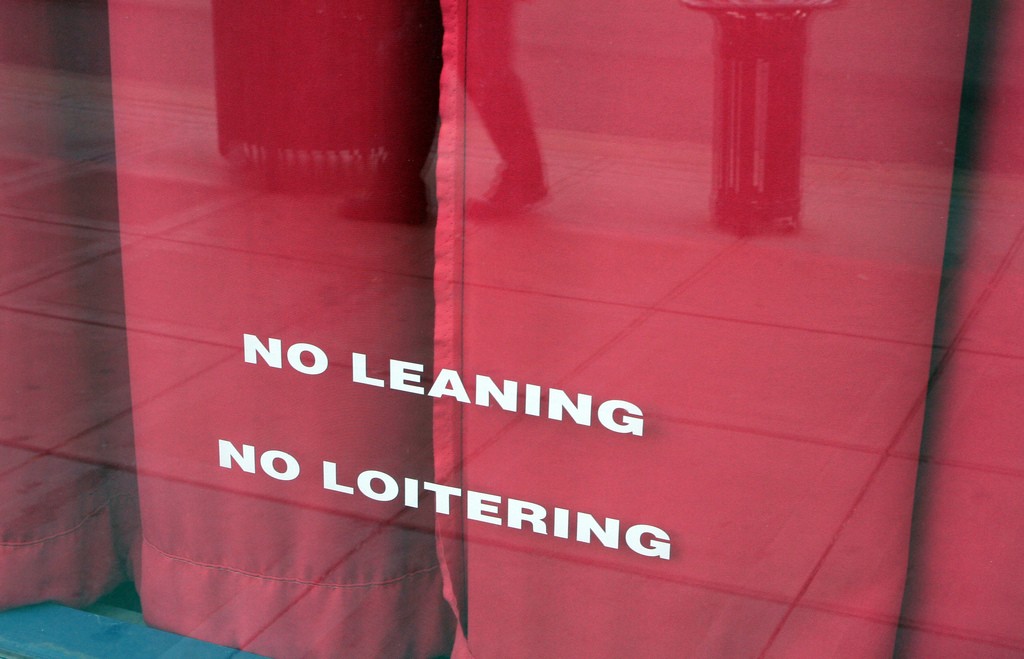
Sociologist Nancy Heitzeg collaborated with community consultant William W. Smith IV for a piece in the Star Tribune about the racial policing of low-level crimes in Minneapolis. African Americans, they write, have experienced disproportionately high arrests for minor offenses such as loitering, spitting, lurking, depositing tobacco, congregating on the street or sidewalk, and violating juvenile curfews. A black person in Minneapolis is 7.54 times more likely to be arrested for vagrancy than a white person, and black youth are 16.39 times more likely than their white peers to be arrested for loitering or breaking curfew. It’s unlikely that African Americans commit more of these crimes, Heitzeg and Smith write; instead, racial profiling and the policing specific neighborhoods are bigger drivers of the disparity.

Some question whether more arrests for low-level offenses actually matter in the grand scheme of things. Community organizations including Black Lives Matter Minneapolis, the Coalition for Critical Change, and Community Justice Projects have initiated petitions charging that many of these ordinances are vague and unconstitutional. Additionally, according to Heitzeg and Smith “The overpolicing of our communities of color contributes to unequitable outcomes in multiple social arenas, including education and employment.” Even having been arrested for a minor violation can negatively affect college admissions or getting a job.

Heitzeg and Smith highlight the history of racialized policing and the withholding of civil rights in the detainment of African Americans. They connect low-level offenses to the post-abolition Slave Codes transformation into Black Codes that circumscribed the lives of African Americans in the Jim Crow era. As the authors put it, “Low-level and ‘livability’ crimes were central features of the old Jim Crow era, and remain today—in the New Jim Crow era—as pretextual police tools in racial profiling.”

To listen to a TSP Office Hours interview with the author of The New Jim Crow, Michelle Alexander, click here. Our book Crime and the Punished includes an excerpt from the interview.

Photo by Alan Levine via Flickr Creative Commons.

In years following the 2008 recession, many Americans are still scrambling to find enough work hours to make ends meet. One emerging trend is “clopening,” when an employee works the closing shift, then opens the same business a few hours later. Piled on top of commuting, trying to get some sleep, and attending to family duties, the few remaining precious hours between shifts are overbooked. That can have negative consequences on health. Sociologist Gerhard Bosch tells the New York Times about the European Union’s required 11-hour rest period between shifts: ““If a retail shop closes at midnight, the night-shift employees are not allowed to start before 11 o’clock the next morning.”

Even though some unions in the United States have negotiated similar required “between shifts” time, there is not yet a national labor law. However, several states have taken steps toward Right to Work laws some hope will alleviate the long, inconsistent hours many employees face.

Some business owners claim that some employees prefer “clopening” to working 9 to 5, pointing, for example, to students with busy daytime class schedules. However, one student worker told the Times that working on the clopening schedule meant quitting his pursuit of a master’s degree—he’d lost focus and developed chronic exhaustion.

Photo by Anita Hart via Flickr CC


Sociologists Jamie Seabrook and William Avison’s research shatters the myth that children from single parent homes have worse outcomes than kids living with both parents. They told Northumberland Today that other factors better predict the future than whether a child lives with one versus two parents. “Instability really is the risk factor,” said Avison. “When there is a lot of transitioning in the family environment, that kind of instability doesn’t seem good for kids’ educational development and growing up to be adults.” They found that family structure had no impact on a child’s educational achievement or income, as long as the family structure remained consistent over time. When single mothers partnered and re-partnered several times, the researchers saw negative impacts on child outcomes compared to kids whose single mothers consistently single. Another interesting finding of the study is that children who grew up in stable single parent homes are less likely to divorce or separate than children who grew up in two-parent homes.

“The overarching conclusion is we have to be very careful saying the type of family you grow up in predicts kids’ success,” Seabrook said. Even if single parent homes are economically less advantaged than two-parent households, less money does not translate to differences in child education.

Click to pre-order the book.Sociology and stand-up comedy have a lot in common: both reveal deep truths about life experiences and reveal the connections and disconnections of humanity. One just has more citations.

For his upcoming book Modern Romance, stand-up comic and Parks and Rec star Aziz Ansari teams up with sociologist Eric Klinenberg to tackle modern dating in the age of technology. Klinenberg is well known for his work on culture and media, as well as his recent book Going Solo: The Extraordinary Rise and Surprising Appeal of Living Alone. Ansari’s stand-up often pokes fun at the cultural shifts in relationships, but he recently told Time that academic research, including that of MIT sociologist Sherry Turkle, inspired him to delve deeper into the science behind modern relationships:

“I thought it would be kind of interesting to take my point of view and a conversation with someone from an academic field and put that together. If I could do that as a book, I would be able to go deeper into this area than I can in my stand-up.”

For the study, Ansari and Klinenberg interviewed hundreds of people worldwide about relationships, marriage, social networks, and technology. The end result uses Ansari’s comedic spin to explore the sociology behind the changing course of modern relationships. And on stage, it means getting to see Ansari act out a line graph of relationship intensity. How could you resist?

Click here to listen to an Office Hours interview with humorist and story-teller Dylan Brody about his work as “stand-up sociology”.

By Thomas8047 via flickr cc.


Picture a family holiday dinner. Food is on the table, everyone is gathered together, and a high school or college student is text messaging under the table. Upon prodding questions about the recipient—“Are you dating?”—the irritated adolescent might glance up just long enough to mumble, “We’re just talking.”

Sociology professor Kathy Hull shares her thoughts about the changing relationship landscape with the Star Tribune. A generation or two ago the word “dating” often meant a casual, nonexclusive relationship involving the occasional dinner and movie without commitment. That idea has changed. Hull explains,

“Going on a date now has more significance, when the option of hooking up or just hanging out in a group-friend setting is more prevalent. When people say they’re dating someone, it usually means they’re in a relationship.”

Hull suggests the shift in terms has come out of an extended transition to adulthood, with more young adults pursuing college and delaying marriage and family until they’ve secured a stable job. After graduation, Hull says, many millennials decide to start dating in the traditional sense.

“It’s not until they leave college that some people go back to the idea of using dates as a way to check out potential partners, rather than a way to get into a committed relationship.”

With so many waiting to play the game of love, it appears they may, to some degree, forget how—perhaps one more driver behind the rise of online dating.