
culture

Research suggests women and girls are more likely than men and boys to self-identify as "multiracial." Photo by Javcon117* via Flickr.
Research suggests women and girls are more likely than men and boys to self-identify as “multiracial.” Photo by Javcon117* via Flickr.

As the number of children born to racially diverse parents in the U.S. increases, the country faces the difficult task of exploring multiracial identities. Biracial children bear the brunt of the challenge, as they are often pressured to select a single racial category to which they identify. In the past, mixed ­raced persons had little say concerning their label due to such formalized policies as the “one­-drop rule,” which assigned the newborn child the racial category of the non­White parent. While such notions continue to exist, a new study reveals that “multiracial” is becoming an increasingly popular identification, especially for mixed ­raced women.

Recently on NPR’s CodeSwitch, Lauren Davenport at Stanford University provided insight from her new American Sociological Review research. Examining the racial self ­identifications of 37,000 incoming freshmen with combinations of Asian­-White, Black-­White, and Latino­-White parents, Davenport reported that in each of the three racial combinations, women self ­identified as multiracial more than their male counterparts. For example, only 64% of men with Black-­White parents self­ identified as multiracial in comparison to 76% of women. Further research indicates that both women and men with Black­-White parents were more likely to self ­identify as multiracial than those with Asian­-White and Latino­-White parents and less likely to self ­identify as White only. Additional factors included the person’s religion and socioeconomic status; as those who were less religious and those from affluent backgrounds were more likely to describe themselves as multiracial.

Davenport suggests that women may be more inclined to employ the multiracial label because they are often perceived as racially ambiguous, while men are generally viewed as minorities. According to Davenport, “It would seem that, for biracial women, looking racially ambiguous is tied to racial stereotypes surrounding femininity and beauty.” Davenport hypothesizes that biracial children from Black­-White parents in particular may describe themselves as multiracial to challenge traditional rules that place them in one category. Thus, the multiracial identity provides them the opportunity to formally recognize multiple racial lineages. Others may opt for multiracial because it allows them to disassociate with Black heritage.

A couple in Tehran. Photo by Kamyar Adl, Flickr CC.

Some Iranian officials are increasingly worried about what they call “white marriage” or sometimes “black coupling.” These terms refer to cohabitation between unmarried men and women. Officials deem the trend “worrisome” and “a serious blow to the family,” and some insinuate that women who cohabitate will become prostitutes when they are no longer viewed as beautiful by their partners. The Iranian news outlet Payvand recently featured a sociologist who spoke anonymously to the International Campaign for Human Rights about why cohabitation, despite the disparagement, seems to be on the rise.

One reason to engage in “white marriage” is that it allows couples to avoid the bureaucracy and gender inequalities that come with legal marriage in Iran. The sociologist notes that marriage contracts overwhelmingly favor men. For instance, men can control their wives’ travel, decide where the couple lives, and have more rights in divorce.

An earlier BBC article noted that cohabitation is also a result of the loosening of some traditional morals in Iranian society:

“Of course cohabitation is not accepted by the more religious parts of society,” says sociologist Mehrdad Darvishpour, who is now based in Sweden. “But just like in the rest of the world, the middle class in Iran is starting to prefer this type of life to traditional marriage. Sex before marriage isn’t taboo anymore.”

While it seems progressive, however, the unnamed sociologist in Payvand also highlighted potential negative consequences for a woman in a “white marriage”:

“If a woman is attacked by her male partner, she would have no legal protection,” the sociologist told the Campaign. “Instead she would be asked by the police and judicial authorities about her marital status and if she is not legally married, she will be in a lot of trouble.”

Since most cohabitation is hidden from the woman’s parents, she may lose the support of her family should she experience and try to escape emotional or physical abuse. Couples also risk accusations of adultery—an offense punishable by death—since Iranian Sharia Law requires all marital unions be registered.

For more on cohabitation in the U.S., check out this post from the Council on Contemporary Families.

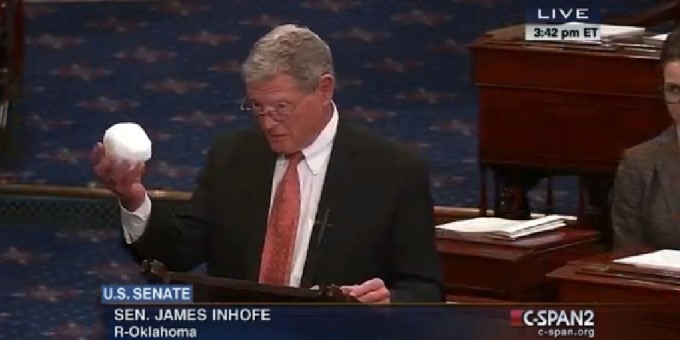
CSPAN screenshot via Washington Post.

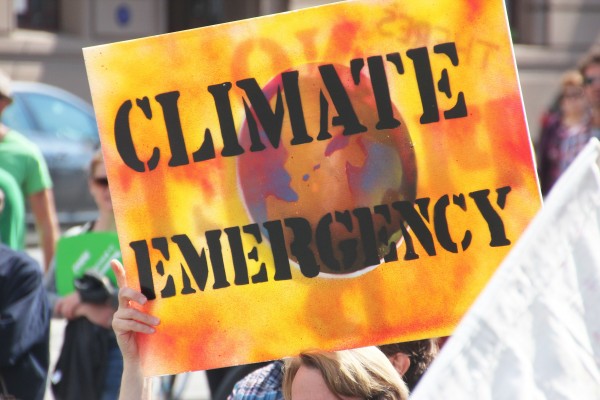
Alongside the U.N. Framework Convention on Climate Change, the media and presidential candidates have been making a lot of small talk about weather. Though there’s nothing new about the issue “climate change,” and the preceding term “global warming,” not everybody is on board. Republican candidates including Donald Trump, Chris Christie, and Ben Carson continue to deny climate change, even as the evidence mounts. Often, these candidates state they don’t place much stock in “science.”

An article on Huffington Post discusses this dynamic with help from environmental sociologists Riley Dunlap from OSU and Aaron McCright of MSU. They describe how, particularly among conservative voter bases, people are more likely to seek out information that they agree with while, ignoring what challenges their preexisting ideas. In addition, high-profile skeptics such as political figures can generate an “echo chamber.” In essence, people hear their beliefs reinforced within their social networks; groups can normalize and strengthen particular beliefs or ideologies by simply listening to each other instead of finding new information. As the article describes, even in the face of increasing scientific evidence of climate change, some will remain cold to the idea.

15121150847_8c49b89d8d_o
Climate Change has reached scientific consensus, so why and how do people still deny it? Photo via Takver, Flickr CC.

Even with nearly a hundred percent consensus within the scientific community, the notion that humans are not causing climate change is still widespread amongst the public. A new study in Nature Climate Change by sociologist Justin Farrell of Yale University aimed to find out how climate doubt is manufactured, and was covered in The Washington Post.

Farrell, the sole author of the study, is quoted at length about his findings. Unsurprisingly, his motivation for research was grounded in a genuine curiosity as to how there is such an extraordinary gap between scientific and public consensus:

“I’ve personally been interested in understanding how a social movement can spread such uncertainty and doubt in the general public on an issue that has achieved near scientific consensus.”

What he found is that the organizations that promote these contrarian views are connected in a network. Those organizations that are central to the network, received funding from larger corporate interests, in this case either ExxonMobil or the Koch Brothers. Farrell isn’t anti-corporate funding, but he is pro-transparency.

“Of course, the solution is not to forbid corporate funding of this or that issue, but to start by providing better access to who is funding who, so that folks are not kept in the dark, making it hard to know who to trust, if anybody.”

“I hope people read these findings in the light of the bigger picture, and not just ExxonMobil or Koch, but more broadly these two entities are simply a very strong indicator of the larger types of financial interests that are behind the movement,” he said.

In addition to Farrell, the article quotes Robert Brulle, professor of sociology and environmental science at Drexel University, who served as a reviewer for the study. Brulle had interesting advice for how climate change activists can shift the narrative and persuade public opinion:

“When you look at comparative strategies, the climate science community or the climate advocacy community does not have as much of a media-centered focus as does the conservative movement,” Brulle said. “I think that that’s what this paper starts to push on. You have to move more toward a media-centered influence—the influencers’ strategy—rather than trying to convert individual by individual.”

Read the full article by Chelsea Harvey here, and learn more about sociological studies of how echo chambers work to limit the amount of climate change science that enters political debates with this article in the Fall 2015 issue of Contexts, the public outreach journal of the American Sociological Society.

ER photo via MilitaryHealth, Flickr CC.

In a recent piece for The Atlantic, sociologist Adia Harvey Wingfield explains how sexual innuendo can create hostile work environments for black men. As part of her research for her book about gender and race in men’s work, Wingfield interviewed Emergency Room doctors about their workplace experiences. Several recounted that sexual jokes and innuendo are commonplace between doctors and nurses. But these everyday jokes and comments, Winfield argues, create difficult situations for black male doctors.

Most of the black male doctors I interviewed for my research were the only black men in their work environments. They felt sensitive to that fact, and said they moderated their behavior when innuendo entered the conversation.

Black male doctors in these situations, Winfield explains, must navigate upholding a professional working identity while avoiding any link to the long history of black men stereotyped as dangerously hypersexual.

Responding to these interactions tactfully can be essential for black men to navigate their work environment, and the black male doctors I spoke to described feelings of deep discomfort and awkwardness. While some black male ER doctors do experience unique discomfort on the job, what these men encounter is similar to the plight of some black professionals more generally.

For many, the "American Dream" seems beyond possibility. Zhang Yu, Flickr CC.
For many, the “American Dream” seems beyond possibility. Zhang Yu, Flickr CC.

Immigration is a hot topic, especially with elections coming up. Donald Trump has called immigrants “rapists” and “criminals”, perpetuating anti-immigration rhetoric. Common immigration myths include that immigrants are taking Americans’ jobs, burden the economy, and refuse to speak English. The Washington Post covers a report written by a group of Harvard professors, led by sociologist Mary Waters.

  1. “Immigrants are picking up English just as quickly as their predecessors”
In fact, today’s immigrants are learning English faster than their predecessors. This is partially due to how global English is, which means that immigrants are more likely to have been exposed to it or to have taken English classes already. Additionally, American schools are becoming better at teaching English to immigrant students.
  1. “Immigrants tend to have more education than before”
Historically, immigrants were low skilled workers from southern and eastern Europe in the early 1900s. Recently, however, immigrants are more likely to have four years of education on average. Approximately, 28% of recent immigrants hold a bachelor’s degree or higher, which is a 19% increase since 1980.
  1. “Immigrants are much less likely to commit crimes—but they soon learn”
In fact, immigrant neighborhoods are considered to be some of the safest neighborhoods as immigrants are least likely to commit crimes. Native-born men aged 18-39 are 5 times more likely to end up in jail than immigrants. While immigrants are initially fearful of picking up criminal influences, by the second and third generation, they are more likely to engage in criminal behavior.
  1. “Immigrants are more likely to have jobs than the native-born”
Immigrants are determined to find employment, and they are more likely to be employed than their native-born counterparts. Between 2003-2013, 86% immigrants were employed compared to 82-83% native-born Americans. This also holds true for men who have not earned a high-school diploma, where 84% immigrants are employed compared to 58% native-born Americans.

While the report combats common myths about immigration, it does not give a concrete answer as to whether today’s immigrants have the same opportunities as earlier generations of new Americans, despite being educated, staying away from crime, holding jobs, and paying taxes.

Via Netflix.
Via Netflix.

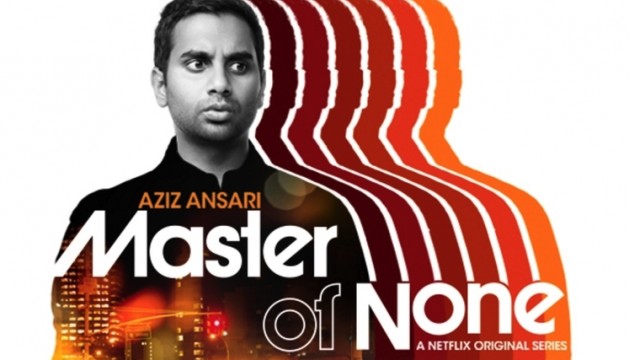
It’s an exciting day when a sociologist and a comedian write a book together, and even more so when that book turns into a Netflix series. To be clear, Aziz Ansari recently stated that his new series, Master of None (which premiered November 6th on Netflix) is not simply Modern Romance (the book he wrote with sociologist Eric Klinenberg) on the small screen. However, a recent Vogue review highlights how the show incorporates many of the ideas Ansari and Klinenberg present in their book.

Master of None is brilliant, insightful, and hilarious, the perfect vehicle for Ansari to animate the ideas and sociological concepts that he wasn’t quite able to make jump off the page earlier this year.

The show explores the dating world of New York City through the main character Dev, a 30-year-old actor. Readers of Modern Romance will notice overlaps, including when Dev takes a cue from a study cited in the book’s section, “The Effects of Non-Boring-Ass Dates,” by flying a date to Nashville. He confronts questions about monogamy when a woman wants to hook up with him to get back at her husband. And he laments that he is not “just a bubble in a phone” when he is blown off by a potential date.

Read the full article here.

Read a TSP Clipping on Modern Romance.

Mizzou's players have power on the field and off. Photo by Mitch Bennett, flickr.
Mizzou’s players have power on the field and off. Photo by Mitch Bennett, flickr.

Social science can help us make sense of activism and the dynamics behind it and within it as protests break out at schools across the country. One article by Dave Zirin in The Nation borrows concepts from sport sociology to discuss Mizzou’s football player protests in particular.

As described in the article, University of Missouri President Tim Wolfe resigned after weeks of racial tension on campus, including a hunger strike and protest, was met with institutional denial of lived realities. The pivotal moment came when the school’s football team refused to practice until Wolfe was gone. It’s estimated that their refusal to play could have cost the school up to a million dollars. Zirin highlights how often student athletes are characterized as powerless or exploited, and so their capability for activism can be overlooked. At Missouri, however, the players showed their power to affect change as agents rather than mere actors for change.

Zirin’s article draws on research from UC-Berkeley emeritus professor Harry Edwards, a pivotal name in sport sociology, on the racial dynamics of college football, in which teams are often much more black than their fan bases. As #BlackLivesMatter and similar initiatives continue, Zirin believes we can expect more activism in such sites, where institutional racism is stark.

15-052 S16-1.4
Photo via Flickr

“Sketchfactor,” “Nextdoor.com,” “GhettoTracker.com,” and “Operation GroupMe” are just a few of the digital services available to city dwellers hoping to monitor their neighborhood’s crime rates and connect business owners and community members to law enforcement with greater ease. But are they just a more efficient method of racial profiling and criminalization?

That’s the question that Leslie Hinkson, associate professor of sociology at Georgetown University, grapples with in a recent interview in a Washington Post article that investigates the effect of these surveillance applications in D.C.’s Georgetown neighborhood:

The group has codified its own language and operating culture. African Americans are referred to as “aa.” Hundreds of images of unaware African Americans circulate in the group.

“We should be honest here,” Hinkson continued:

Crime does occur in Georgetown. And quite often when people describe the perpetrators of those crimes, they’re usually young men of color. But that doesn’t mean every person of color is an automatic suspect.

Read the article here.

3835018716_4d03a3b0c7_o
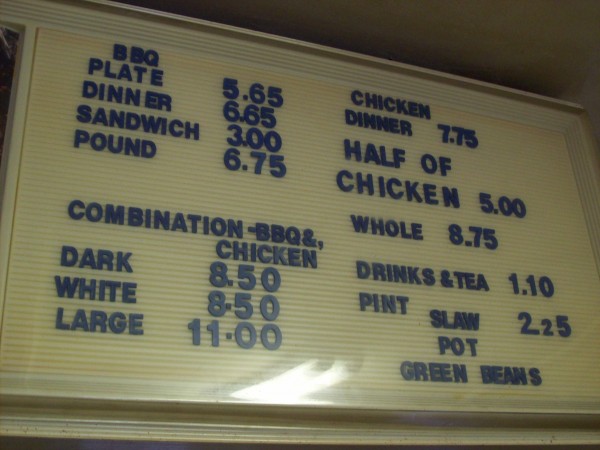
A barbecue restaurant menu in Greenville, NC. Photo via Flickr, Alan Pike for the Southern Food Alliance.


Barbecue is to the American south what wine and cheese are to Europe. That is, a deeply ritualistic cultural practice that differs greatly by region and, more subtly, by micro-locality. Travel across the south and one will find different cuts of meat, cooking techniques, sauces, side dishes and beverages. Or so says John Shelton Reed, Sociology Professor Emeritus at the University of North Carolina, Chapel Hill, in Calvin Trillin’s recent article “In Defense of the True ‘Cue,” for The New Yorker. The article zeroes in on the “Campaign For Real Barbecue,” an effort to preserve traditional North Carolina barbecue and what Professor Reed believes to be it’s vital role in North Carolina social life.

In his darker moments, he sees his beloved barbecue joints being replaced by the soulless outposts of some franchise operation he calls the International House of Barbecue, which uses “barbecue” to mean meat with bottled barbecue sauce on it—your choice of meat, your choice of sauce. Just as the Campaign for Real Ale believes in “well run pubs as the centres of community life,” John Reed believes that the traditional barbecue joint is a place in the South where people from all walks of life and all races, from the sheriffs’ deputies to the construction workers to the town bankers, gather to eat the local specialty at a price just about anybody can afford. (A barbecue sandwich at Stamey’s goes for three dollars and twenty-five cents.) A passage in “Holy Smoke” [one of Reed’s books] says, “North Carolina barbecue is an edible embodiment of Tradition. For many of us, barbecue symbolizes Home and People.”

Read the full article here.