culture

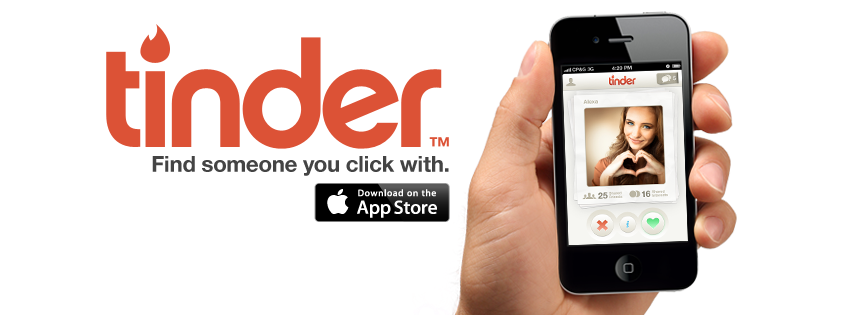
tinder-app-logo

Every “single” person in the world enjoys traveling to exotic locations, eating at new restaurants, and generally trying new things according to Tinder. The dating app shows users a dating profile that takes seconds to view and is mostly photographs. However, Tinder analyst and sociologist Jessica Carbino explains that there’s a lot more nuance involved in Tinder swiping.

The app has a simple premise: it shows the user a photograph and short biography of a potential partner. The user can swipe right or swipe left. If both the user and the person whose profile is shown swipe right, a match is made and the users have a chance to exchange messages.

While the app is streamlined, the behavior of the users is quite complex. Los Angeles Magazine interviewed the UCLA PhD about her role as a sociologist for Tinder and her role in deciphering what leads to matches between users. Carbino explains “I think Tinder is far more complex than simply physical attractiveness… With photos, people are not simply looking at whether someone has a nice smile or a nice face per se.”

Through coding Tinder profiles, running focus groups, and creating surveys for people who do and do not use Tinder, Carbino has found a lot of sociology imbedded in the process. She proposes that many sociological factors, like socioeconomic status, contribute to a successful match. Simply dividing users as ‘hot and not hot’ is too simplistic and does not provide a useful or nuanced definition of what other users are looking for. Whether or not users are consciously making these distinctions Carbino notes that men with softer jawlines are perceived as kinder, women wearing make up get more matches, and that a group photo is never a good choice for a user’s first picture.

Another interesting find of Carbino’s is what users are trying to get out of the app. She found that about 80% of Tinder users are looking for long-term relationships. Given the speed of the first step of the dating process on Tinder, this high percentage seems surprising on the surface. However, finding the reasons why is precisely what Carbino is trying to figure out by casting a sociological lens over Tinder data. With a glance at a smart phone and a swipe of the thumb, the 21st century relationship is just getting started.


Frank and Claire Underwood House of Cards Promo

Spoiler alert! This season the popular Netflix series “House of Cards” got a bit more radical. Main characters and power couple Claire and Frank Underwood are unapologetically, consensually non-monogamous. In fact, sociologist Mimi Schippers says the show portrays “one of the best television representations of an open/poly relationship I’ve seen.” In the fourth season, Claire, married to the President of the United States, becomes sexually involved with Thomas Yates, a writer. While many shows depict “extramarital affairs” as inherently negative, “House of Cards” Frank affirms that Tom can “give” Claire things he can’t.

In a blog post for NYU Press, Schippers argues that the Underwoods go “beyond” marriage, monogamy, and dominant gender norms. According to research she conducted for her upcoming book, men in polyamorous relationships tend to shift their understanding of masculinity because they must forgo jealousy and control over the women in their lives. The openly non-monogamous relationships on “House of Cards” thus challenge more than just ideas about what relationships should look like. It confronts gendered expectations for men to be competitive and possessive and grants women sexual autonomy, independent of men.

[T]he Underwoods distinguish themselves from society’s ideas of the “perfect couple” by being both child-free and consensually non-monogamous. They are something else–something beyond “perfect”, beyond marriage, and beyond traditional gender arrangements. Rather than representing bad character or immorality, Claire’s increasingly intimate relationship with Tom and Frank’s enthusiastic acceptance of it (the very definition of polyamory) punctuates and solidifies the strength of their marriage as one between equals.

Virtual reality still sees sexism. Photo by Nan Palmero, Flickr CC.

Star Wars conventions: one place where everyone is equal (if they hate Jar-Jar Binks). Or maybe not. As it turns out, even Star Wars has become a controversial area for discussing the place of feminism and powerful women in society. Work by sociologists CJ Pascoe and Tristan Bridges sheds more light on how sexism has infiltrated nerd culture. Following their recent book release, Pascoe and Bridges were interviewed by Broadly to help explain sexism in an unlikely arena.

Pascoe explains that “nerds” are consistently emasculated in society because they don’t participate in the same types of gendered dominance displays expected of young men. That might make it seem they exist away from expected dichotomies of gender roles. Bridges adds, however, that nerdy activities have become more mainstream due to popular television and media, so now the traditional nerd versus jock relationship is more nuanced.

Bridges said,

Nerds are, as a cultural “type,” emasculated… But it’s also true that there is a lot of toxic masculine behavior in nerd cultures. Think about it: #GamerGate happened among the nerds, not the jocks.

Pascoe agreed, explaining that fandom cultures create a space for men to be dominant even if they do not follow mainstream masculine pressures. The presence of women in these spaces might constitute a threat to the men within them. Still, Pascoe concludes that feminism is still a benefit for nerd culture overall. She says hopefully,

Increasing including and visibility of women, trans folk, and LGBQ folk in fandom communities will result in less damaging gender socialization for everyone—men included—and will help to change the way in which nerds themselves are placed on the bottom rung of some masculinity hierarchy.

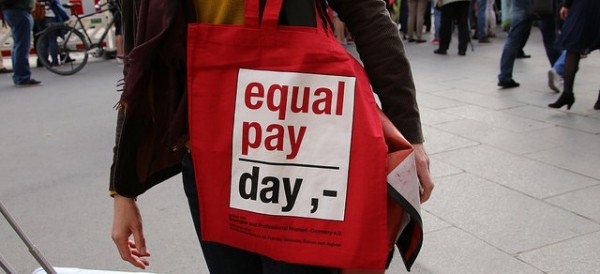
Equal Pay Day is marked around the world as the day on which women have officially made as much as their male peers did in the previous year. This year's was April 12, 2016 in the U.S. Photo by metropolica.org, flickr.com
Equal Pay Day is marked around the world. It shows how far into the next year women must work to make as much as their male peers did in the previous calendar year. This year’s was April 12, 2016 in the U.S. Photo by metropolico.org, flickr.com

Recently, I reviewed research showing that women in leadership roles may contribute to decreasing gender segregation at lower positions in the same firm. I also noted that gender segregation is a large contributor to the wage gap between men and women. Unfortunately, while a small number of women moving into top positions may help those below, when large numbers of women enter traditionally male-dominated fields, the results are not so rosy. Why? Women’s work simply isn’t valued as highly as men’s.

The Washington Post recently featured a study by sociologists Paula England and Asaf Levanon demonstrating this trend. When occupations employing mostly men shifted to employing most women, these jobs started to pay employees considerably less, even when the researchers took employees’ education, work experience, skills, race, and geography into account. For instance, wages for a ticket agent dropped 43 percentage points after the position shifted from mainly male to female. Stereotypically “female” jobs that involve caregiving pay less, regardless of whether men or women hold those jobs:

[T]here was substantial evidence that employers placed a lower value on work done by women. “It’s not that women are always picking lesser things in terms of skill and importance,” Ms. England said. “It’s just that the employers are deciding to pay it less.”

Taller men get the taller stacks. TaxCredits.net.

According to British researchers, tall men and thin women are most likely to make the big bucks. Meanwhile, they found evidence to suggest overweight workers, especially women, are likely to get paid less. Still, sociologist Amy Blackstone says companies probably aren’t intentionally penalizing employees based on height and weight.  

In an interview with Broadly, Blackstone points to gender biases that extend beyond the workplace. Culturally, Americans associate thinness with beauty and self-discipline in women and tallness with authority for men. “For women, being thin means taking up less space, something that is expected of women both literally and symbolically,” Blackstone says. Thus, it’s no surprise that pay reflects societal views about gender, power, and the body. Nor is it a surprise that other gender inequalities make their way into work spaces, like limitations on contraception coverage in employer provided health care and a lack of paid maternity leave. As contributing editor Diana Tourjee points out, “paying certain men and women less in relation to the way they look is obviously disturbing, but worse is the realization that this data is part of a broader system of oppression that structures the lived experiences of us all.”

When it comes to love, we needn't fear tech advances. Jimmy McIntyre, Flickr CC.
When it comes to love, we needn’t fear tech advances. Jimmy McIntyre, Flickr CC.

Between the increased screen-time, decreased personal contact, and evaluating strangers through profile pages, is online dating bad for society? Rest assured, everyone; these ideas are founded on exaggerated fictional fears rather than actual facts, as described by a Washington Post article with help from Stanford sociologist Michael Rosenfeld.

As Rosenfeld describes through his analysis of a massive dataset regarding online dating activity, there are a lot of myths about online dating. People who meet online don’t break up as frequently as you may have been told, and online dating does not promote hookup culture over long-term relationships (as in the real world, you can find whichever you’d like). Overall, online dating seems to be working for people; Rosenfeld says societies have always been fearful of new technologies but generally come around. Can’t you feel the love?

The poster for "global warning" film "An Inconvenient Truth."
The poster for “global warning” film “An Inconvenient Truth.”

Beliefs about climate change are not so much about social demographics, but about what else you believe in–your values, worldviews, and political affiliations. The Washington Post recently featured a new analysis reviewing all existing literature on climate change beliefs. They found that people who vote for more liberal political parties are more likely to believe in climate change. In addition, those who are more concerned with the environment–measured by something called the New Ecological Paradigm (NEP)–were also more likely to believe in global warming. Finally, the trustworthiness of scientists was also a strong predictor in individuals’ beliefs in climate change.

Beliefs, though, do not always translate into action. The researchers found that even those who believe in climate change sometimes do not support policies to remedy it. This occurs more as the policies asked about get more specific. According to sociologist Aaron McCright, this disconnect may simply reflect how people feels about those policies regardless of how they help the environment. He says, “even people who are pretty environmental don’t like taxes still.”

So how do these findings help fight climate change? Sociologist Riley Dunlap suggests that since it may not be possible to change people’s minds, activists should focus their resources on mobilizing voter support for politicians who recognize the importance of climate change. Additionally, McCright suggests that conservative leaders who believe in climate change should be more outspoken about their positions. Psychology professor Matthew Hornsey add that the key, to his mind, is making messages about climate change fit with the worldviews of people who generally do not support climate change. Painting environmentalism as patriotic, for instance, may spur support for mitigation policies.

A recent comic and sociological exploration of heterosexual norms in the U.S. today.

In one of the most iconic scenes in sitcom television history, Friends’ character Monica bends down on one knee and proposes to her long-time boyfriend, Chandler, in a romantic, candlelit, rose-filled apartment. Over fifteen years later, scholars suggest the reality of heterosexual marriage proposals is far less progressive. A recent article in The New York Times discusses why men remain more likely to propose marriage and why this tradition will likely not change in the near future.

Even as the traditional image of marriage has changed and the number of working and college-educated women continues to rise (studies show that men and women tend to marry spouses from comparable educational backgrounds), according to Amanda Miller, “Though women have more power to move the relationship closer to marriage, they still want the man to ask. That’s considered his job.”

Bradford Wilcox concurs, noting that women may also view their partner’s proposal as reassurance that he truly wants to get married (indeed, men often view their formal proposals as demonstrations of love and commitment to their future wives). A woman who proposes may face social consequences, though: Beth Montemurro adds that such women may be viewed as more masculine (and men who are proposed to may be viewed as more feminine). To avoid stigma, male-female couples generally stick to the script: men propose marriage.

R/DV/RS via Flickr. https://flic.kr/p/P22Ry
R/DV/RS via Flickr.

“Work-family balance” is a phrase that many of us are all too familiar with, and competition between workplace and family demands are a “given” for many people, but particularly for parents. Flexibility is key—and it’s a luxury that many workers don’t have when office culture and workplace norms prioritize “work” over “family” in self-presentation and conduct.

Research by U of MN sociologist Phyllis Moen and MIT sociologist Erin Kelly, whose work with five coauthors was published in the most recent issue of the American Sociological Review, shows how consciously changing such workplace culture is a win for families and offices, as explored in a New York Times article by Claire Cain Miller.

Miller describes how the team’s innovative experiment simulated a new type of workplace culture for those in the experimental group, while it was business as usual for the control group:

Workers in the experimental group were told they could work wherever, and whenever, they chose so long as projects were completed on time and goals were met; the new emphasis would be on results rather than on the number of hours spent in the office. Managers were trained to be supportive of their employees’ personal issues and were formally encouraged to open up about their own priorities outside work—an ill parent, or a child wanting her mom to watch her soccer games. Managers were given iPods that buzzed twice a day to remind them to think about the various ways they could support their employees as they managed their jobs and home lives.

In the study, both the experimental employees and their children were sleeping better than those in the control group. Employers might also be interested to know that retention rates and desire-to-stay were higher in the experimental group.

Though having management and bosses openly discuss and respect the struggles of work-family balance goes against the grain of office norms, this research shows that these boundaries aren’t doing anyone favors. Shifting toward a conceptualization of this dynamic with vocabularies like “work family fit”—which doesn’t treat work and family as competitors in a zero-sum-game—could help workers and companies alike.

Courtesy the Boston Public Library.

Primary season already feels interminable, and it looks like, among Republicans, Donald Trump is pulling ahead with wins in Nevada, South Carolina, and New Hampshire. The results are perplexing for our typical narratives about conservative politics for a number of reasons, but one of the most striking is that he appears to be doing pretty well with evangelical Christian voters, despite being not terribly religious himself (including a recent flub over “two Corinthians”).

Ted Cruz is a much more committed evangelical candidate. A recent piece in New Republic looks at “How Ted Cruz Lost the Evangelical Vote,” and draws on research from sociologist Lydia Bean on how a simple narrative about conservative religion and conservative politics doesn’t quite fit the reality of contemporary evangelicalism. According to the article:

Bean points out that evangelicals differ not only in their politics—with some identifying as more conservative and others as more moderate—but in their religiosity.

“Evangelicals who don’t go to church very much but identify as Christian, with Christian nationalistic rhetoric, but aren’t very well formed or advised by Christian community leaders—they’re going for Trump,” Bean says. “I think Ted Cruz is picking up the older, more observant people who are theologically and politically conservative, the people who actually go to church every week.” Rubio, meanwhile, “is picking up the younger, more cosmopolitan evangelicals…”

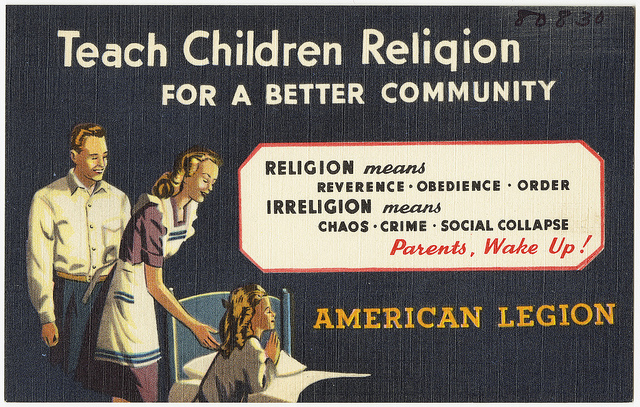
The relationship between religion and politics is complicated, just like any other ideological system. The most interesting sociological point in Bean’s research, though, is how different styles of practice within similar religious communities can teach people to look at politics and their choices in different ways.