
culture

Photo by Tina Franklin, Flickr CC

Though “hookup culture” is a term that gets thrown around a lot these days, an article in the Washington Post describes a recent report that finds Americans are having less sex. Published in Archives of Sexual Behaviorthe study authors find that Americans of all races, religions, and education levels are having less sex than in the past. While in the 1990’s people were having sex about 60 times a year on average, that number dropped by 53 times on average by 2014.

Apart from other factors, such as the rise in depression and declining rates of marriage and cohabitation, the tightening wallets of two-income-families may also be a factor driving this change. As explained by sociologist Pepper Schwartz of University of Washington, a product of the 2008 recession is that both people in partnered couples are more likely to be working. The resulting stress from these economic concerns could be behind the overall drop in sexual activity. Schwartz explains,

“You have many more women and men working to create a two-income family to stay middle class or above … People’s minds are occupied with things other than the physical connection, and that has increased in modern life, and especially from the ’80s and ’90s and forward.”
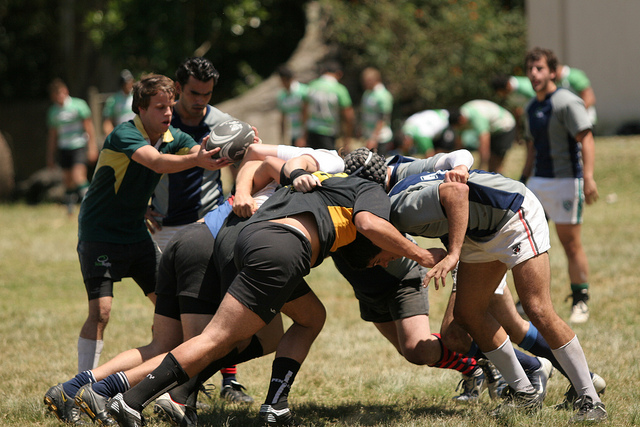

Photo by Mariana Amaro, Flickr CC

Chants and songs are common in sports, but where do these chants and songs come from? A recent article in the New York Times explores how an African-American spiritual that illustrates the evils of slavery became a sports anthem for the English Rugby Team.

The song in question is “Swing Low, Sweet Chariot,” which has become a sporting, drinking anthem that unites the English in the world of rugby.  The song can be traced back to a famous comeback victory against Ireland in 1988 where the fans joyfully sang the song to celebrate the performance of Chris Oti, the first black rugby player to represent England in almost a century.

Scholars in African-American studies have mixed feelings about this appropriation. For example, Josephine Wright, a professor at College of Wooster in Ohio, believes that there is a complete lack of understanding regarding the complex history of “Swing Low.” In England, there are a fair amount of writers who have discussed putting an end to singing the song in rugby contexts. Wright explains,

“Such cross-cultural appropriations of U.S. slave songs betray a total lack of understanding of the historical context in which those songs were created by the American slave.”

However, John M. Williams, the director of the center for the Sociology of Sport at the University of Leicester, doesn’t think that telling people the song is American will change very many minds. He explains,

“The typical crowd that goes to watch the English national rugby team is not likely to be an audience that’s going to think hard about these types of questions or spend much time worrying about political correctness.”

James W. Cook, a historian at University of Michigan, noted that the United States has a long history of this kind of cultural exportation. He argued that it is often accompanied by a “historical amnesia” in which the history or cultural contexts of a song are forgotten. And while he thinks more education around “Swing Low” would be great, he admits that it may not change any minds. He states,

“When there’s any kind of boundary policing, that’s not a realistic understanding of how these cultural products move and adapt and morph as they move from place to place.”

Photo by Alisdare Hickson, Flickr CC

Following the election of Barack Obama, there was an uptick in right-wing political movements, especially with the development of the Tea Party. Obama himself recently claimed to be the “father of the Tea Party.”  Much like his predecessor, President Trump is inspiring a new wave of political activism, but this time from both the left and the right. In a recent piece from NPR, sociologists Dana Fisher and Sara Sobieraj explain this recent rise in political activism.

Fisher and Sobieraj explain that unprecedented numbers of people on the left are mobilizing, which brings many newcomers to the political scene. Recently, Fisher conducted a survey of 500 participants at the Women’s March on Washington and found that a third had never protested before. Progressives are driven by an array of different issues, but they are all rallying around their dislike of Trump. Fisher says,

“Everybody’s pissed off, and they’re pissed off for different reasons. Trump is helping everybody to find common ground.”

Trump supporters, organized by the conservative group Main Street Patriots, held rallies around the country last week in solidarity for the new president. Many in this group appear to be energized newcomers, who are inspired by Trump’s “John Wayne” style of politics. Sobieraj notes that Trump’s brusque rhetoric and “no-prisoners” attitude is what drives both anti-Trump activists and Trump supporters:

“Saying those things and acting that way brought people out because they felt validated by someone who sees the world the way they see it, feeling at last as though someone was really telling the truth without apology. And on the left, that way of speaking was absolutely objectionable and mobilizing, because they were viewed as abhorrent.”

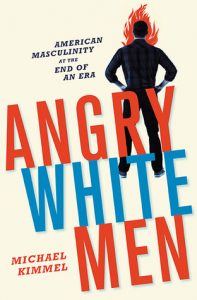
Trump received more support from white men than any other group in the presidential election, but this was expected, at least according to sociologist Michael Kimmel. His research is part of the new but growing field of “masculinity studies,” and in a recent interview with The Guardian, he talks about his book Angry White Men: American Masculinity at the End of an Era. His research specifically looks at how people join, and leave, white-supremacist or neo-Nazi groups, and he states that masculinity is an important part of the process.

Kimmel talks at length about many parts of this picture, including the men’s rights movement on the Internet, the role of testosterone (or the lack thereof) when it comes to men being disproportionately aggressive, and why “men are naturally aggressive” is a poor argument to defend domestic abuse.

In the interview, Kimmel explains how feelings of “aggrieved entitlement,” a sense of a loss for masculine power and tradition, can stimulate feelings of humiliation. In turn, this can drive men to join local neo-Nazi groups. There, the camaraderie and sense of community can validate a neophyte’s masculinity, convincing him to stay. In essence, masculinity is very tied up in how people join and leave hate groups and extremist enclaves. As Kimmel states,

“The camaraderie of the community validates their masculinity, and – even more importantly than that – gives them a sacred mission. That is really powerful for these guys … If you ignore masculinity in understanding how these guys get into these movements, you will not be able to help them get out.”

Photo by Valentin Ottone, Flickr CC

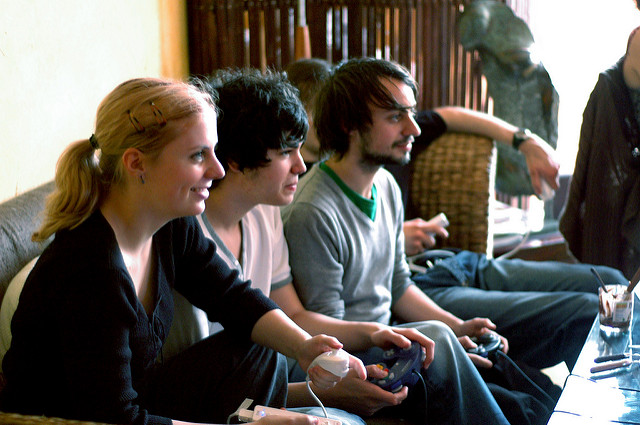
The release of the video game Resident Evil 7: Biohazard represents a greater renewed interest in horror media. While horror films are the best return on investment in Hollywood, horror video games have also seen a resurgence in more recent years. The popularity of this gaming genre is explored by sociologist Margee Kerr, as she explains to The Observer:

“If we were really running for our life, we’re not thinking critically … It’s really the ability to know that we’re safe while we’re doing this, we can enjoy these reactions. It feels invigorating — like we’re primal. Like we’re in that animal state again. A good scary game can hit that sweet spot where the stress is advantageous to gameplay. We hyperfocus on the game. It can be really rewarding.”

In other words, we like to be scared in horror games; and more importantly, we like to be scared with others. One of the most popular ways of consuming horror games is with other people, and this is often achieved by watching Let’s Play videos on YouTube. The idea behind these videos is that you’re watching a content creator’s gameplay as they played it — often accompanied with a recording of their face for all of their reactions. It essentially allows people to experience these horror games with other people, regardless of their access to gaming consoles or other players. This fulfills an important aspect of horror games — getting through struggles. As Kerr explains: 

“The goal-directed behavior and having a common goal — we bond closely with others when we’re in stressful situations … We feel more united with people we go through tough times with. I’ve heard from a lot of people that playing a game with someone opens them up. They do end up talking to their friends on a deeper level.”

So next time you pop that disc into your game system, go ahead and invite some people over — you might get more out of it if you share your scare with friends. 

Photo by Sɨℓνεя Sɦɨɳε, Flickr CC

February is Black History Month (now African-American History Month), a celebration of black Americans and the ways they have shaped American society. But critics have often posed the question, “Why is there no white history month?” Brown University sociologist Daniel Hirschman explains to Vox that this question ignores the already pervasive white privilege in U.S. society. Hirschman states,

“We celebrate whiteness every day. Calls to celebrate whiteness ignore the institutionalized celebration of whiteness that’s built into the very fabric of our day-to-day lives … such calls imply that, absent such a specified month, we would somehow have a state of equality.”

In other words, calling for “White History Month” implies that whites are on the same footing as other ethnic and racial identities that have a specific “history month.” These calls ignore the fact that the vast majority of American history already focuses on white individuals and faces. Furthermore, demands for a “White History Month” work to normalize the idea that whiteness in America is under siege, or that white people are the new target of institutional racism.

However, Hirschman does not think we should stop talking about whiteness. In fact, he praises a “Whiteness History Month” event at Portland Community College which highlighted how race is a social construction and whiteness is tied to particular forms of historical and contemporary racism. After all, race and racism may only be “social constructions,” but their consequences are real when it comes to people’s lives. Unfortunately, ignoring race won’t make it go away, and this goes for whiteness as well. Instead of a “White History Month,” we should talk openly about the historical power of whiteness and ways we can construct a more racially equitable society today.  

Photo by Mobilus In Mobili, Flickr CC

The first few weeks of the Trump presidency have been eventful, most notably because many of the political actions taken by his administration have been met with widespread protests and marches. With some help from social scientists, a recent article from Vox reviews some of the ways to make protesting more effective.

Though protests can be invigorating, they often fail to influence those in power, says Indiana University sociologist Fabio Rojas. That’s not to say that protesting isn’t worthwhile, however; it just has to be done well. As U-Penn professor Daniel Q. Gillion explains, protest can make a change, but it’s not easy. Some conditions have to be met, including persistence and a significant threshold of people.

First, ensure that that the message is as prominent as possible. The way protests normally go, things can be chaotic or confusing. U-Wisconsin sociologist Pamela E. Oliver states that it’s like having a dozen different sports teams on one field. Research does show, however, that longer and more salient protests predict more change than short-lived and unfocused ones.

Next, try to gather similar causes under one banner. U-Maryland sociologist Dana Fisher describes how the recent Women’s March was not just about women’s issues; many people were there to protest Trump’s comments regarding immigrants or LGBT groups as well. Holding separate protests for each individual issue would dilute their impact, and one large and multifaceted demonstration is more effective. Remember that protesting itself is just a small part of the puzzle. We often turn to the Civil Rights movement as a comparable, historical example of protests in action, but even the Civil Rights movement was about more than protest alone. Boycotting businesses and the bus system was also instrumental in bringing about change, for example, something today’s protestors may want to keep in mind.

Finally, remember that proactive protesting is also important; demonstrating to prevent something from happening is more effective than doing so after the fact. As movements continue to resist discriminatory policies, they would do well to recognize some of these sociological suggestions.   

Photo by mosaic36, Flickr CC

Serving in the military can lead to an array of physical injuries or psychological traumas. But the media most often focuses on one particular trauma when veterans commit violent crimes — Post Traumatic Stress Disorder (PTSD). Sociologist Ardath Whynackt talked to CBC Radio about how the media’s focus on PTSD can be counterproductive. 

To start, Whynackt points out that there is no evidence that PTSD makes an individual dangerous, despite the number of movies, TV shows, and characters wherein “PTSD” leads characters to do something crazy. The media’s obsession with PTSD often obscures deeper issues, like the way we socialize men to be aggressive in the first place. For example, news broke in early January that a Canadian veteran murdered his family and committed suicide afterwards; it was later revealed that this man was suffering from PTSD and the media focused solely on that aspect of the case. Whynackt explains,

“When we talk about PTSD and we frame the conversation in really narrow terms around a lack of care for veterans – and I do agree there is a lack of care for veterans and we do need more – but we end up talking only about him as if he wasn’t accountable for his actions … If we want to talk about programs and services to prevent incidents like this, we need to be talking about not only trauma supports for all men, not just veterans, but we also need to be talking about the ways in which we socialize young men to take their distress out on others using anger and violence.”

Photo by Matt Montagne. Flickr CC

“How long do you bake chicken?”

“Do whales sleep?”

“How many yards are in a league?”

The all seeing, all-knowing Google search engine has helped many of us find answers to our many questions. When we need something answered, we simply “Google it.” This popular search engine uses a complicated algorithm to generate results, but last year it’s legitimacy was questioned when it was revealed that the top link provided for the query, “Did the Holocaust happen?” was a neo-Nazi website run by white-supremacists denying its existence.

In a recent article on The Conversation, sociologist Thomas Maher describes the struggle that the Holocaust Museum had to go through in order to combat the false information online generated by the neo-Nazi website. Maher provides insight on how Google’s search engine, which tries to pinpoint the answers users are looking for, can be manipulated to spread false information, especially in the conspiracy theory community.

“(I)t’s clear to me that sites intentionally presenting misinformation and propaganda are preying upon Google’s eagerness to answer questions. These sites, peddling what is sometimes called ‘fake news,’ capitalize on people’s tendency to ask those questions directly on Google.”

Maher suggests that the best way for experts to respond to false information is to participate in public writing and blogging themselves, using relevant and searchable key words and phrases to ensure their research-based writing is seen. Maher points out that this will not stop false information from being presented, but the existence of credible facts alongside misleading information is a start.

Photo by Mike Liu, Flickr CC

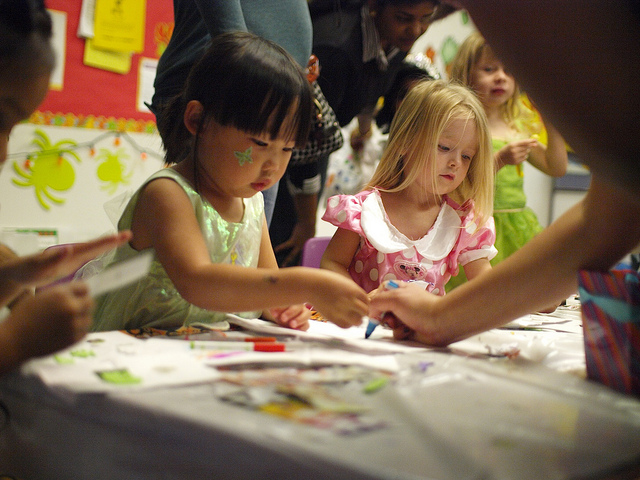
Everyone knows that having kids is expensive, and the dollars really start adding up when you consider lost wages or salary which comes with having to be a stay-at-home parent. Furthermore, even if you enroll in a daycare, the best facilities are often quite expensive and highly selective. What are parents to do? Though it rubs against the grain of conventional American wisdom, Germany offers an interesting model. Recently, as described in the Atlantic, a German court ruled that parents can sue for lost wages if they are unable to find a daycare facility for their children.

In the U.S., where families are considered a more private matter, this seems like a big move for the government to make. Remember, however, that Germany is one of many countries where the state is more involved in such matters; in fact, Germany has taken steps to ensure universal, low-cost daycare. Here in the U.S., where families looking for child care providers have to turn to a market with very little regulation, cheaper options are often imperfect solutions. The cheaper option — home daycare — can be risky. Research by sociologists Julia Wrigley and Joanna Dreby shows that the mortality rate for infants is seven times higher in home day cares versus daycare facilities.

Though the German model of daycare as a public interest seems removed from American norms, the day care system in the U.S. seems ripe for renovation.