culture

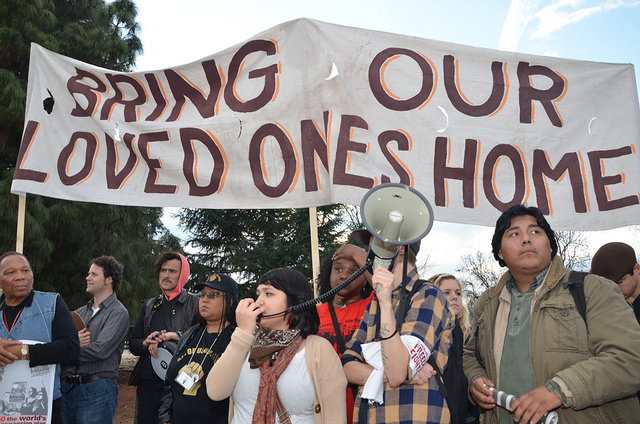
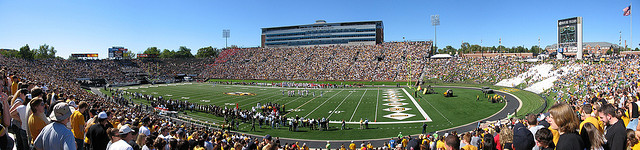
Mizzou's players have power on the field and off. Photo by Mitch Bennett, flickr.
Mizzou’s players have power on the field and off. Photo by Mitch Bennett, flickr.

Social science can help us make sense of activism and the dynamics behind it and within it as protests break out at schools across the country. One article by Dave Zirin in The Nation borrows concepts from sport sociology to discuss Mizzou’s football player protests in particular.

As described in the article, University of Missouri President Tim Wolfe resigned after weeks of racial tension on campus, including a hunger strike and protest, was met with institutional denial of lived realities. The pivotal moment came when the school’s football team refused to practice until Wolfe was gone. It’s estimated that their refusal to play could have cost the school up to a million dollars. Zirin highlights how often student athletes are characterized as powerless or exploited, and so their capability for activism can be overlooked. At Missouri, however, the players showed their power to affect change as agents rather than mere actors for change.

Zirin’s article draws on research from UC-Berkeley emeritus professor Harry Edwards, a pivotal name in sport sociology, on the racial dynamics of college football, in which teams are often much more black than their fan bases. As #BlackLivesMatter and similar initiatives continue, Zirin believes we can expect more activism in such sites, where institutional racism is stark.

15-052 S16-1.4
Photo via Flickr

“Sketchfactor,” “Nextdoor.com,” “GhettoTracker.com,” and “Operation GroupMe” are just a few of the digital services available to city dwellers hoping to monitor their neighborhood’s crime rates and connect business owners and community members to law enforcement with greater ease. But are they just a more efficient method of racial profiling and criminalization?

That’s the question that Leslie Hinkson, associate professor of sociology at Georgetown University, grapples with in a recent interview in a Washington Post article that investigates the effect of these surveillance applications in D.C.’s Georgetown neighborhood:

The group has codified its own language and operating culture. African Americans are referred to as “aa.” Hundreds of images of unaware African Americans circulate in the group.

“We should be honest here,” Hinkson continued:

Crime does occur in Georgetown. And quite often when people describe the perpetrators of those crimes, they’re usually young men of color. But that doesn’t mean every person of color is an automatic suspect.

Read the article here.

3835018716_4d03a3b0c7_o
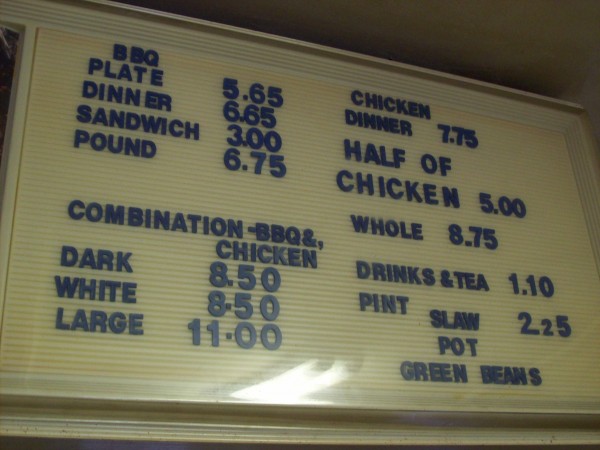
A barbecue restaurant menu in Greenville, NC. Photo via Flickr, Alan Pike for the Southern Food Alliance.


Barbecue is to the American south what wine and cheese are to Europe. That is, a deeply ritualistic cultural practice that differs greatly by region and, more subtly, by micro-locality. Travel across the south and one will find different cuts of meat, cooking techniques, sauces, side dishes and beverages. Or so says John Shelton Reed, Sociology Professor Emeritus at the University of North Carolina, Chapel Hill, in Calvin Trillin’s recent article “In Defense of the True ‘Cue,” for The New Yorker. The article zeroes in on the “Campaign For Real Barbecue,” an effort to preserve traditional North Carolina barbecue and what Professor Reed believes to be it’s vital role in North Carolina social life.

In his darker moments, he sees his beloved barbecue joints being replaced by the soulless outposts of some franchise operation he calls the International House of Barbecue, which uses “barbecue” to mean meat with bottled barbecue sauce on it—your choice of meat, your choice of sauce. Just as the Campaign for Real Ale believes in “well run pubs as the centres of community life,” John Reed believes that the traditional barbecue joint is a place in the South where people from all walks of life and all races, from the sheriffs’ deputies to the construction workers to the town bankers, gather to eat the local specialty at a price just about anybody can afford. (A barbecue sandwich at Stamey’s goes for three dollars and twenty-five cents.) A passage in “Holy Smoke” [one of Reed’s books] says, “North Carolina barbecue is an edible embodiment of Tradition. For many of us, barbecue symbolizes Home and People.”

Read the full article here.

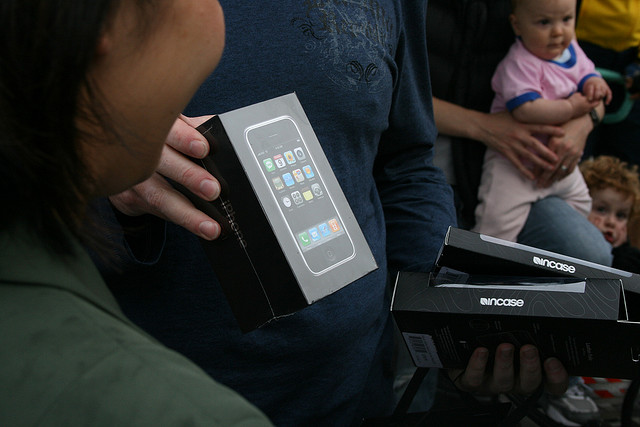
Seattle's first-in-line for the 2007 iPhone release. Eli Duke, Flickr CC.
Seattle’s first-in-line for the 2007 iPhone release. Eli Duke, Flickr CC.

Black Friday is around the corner… as will be the long lines of people waiting for hot retail deals. This queuing up isn’t uncommon; we see people line up for grand openings, new gadgets, concert tickets, and even for free burritos and ice cream. Americans stand in line (often voluntarily) for approximately 37 billion hours a year. Why?

David Gibson, a sociologist at Notre Dame, draws our attention to the human desire to be part of a niche community,

these are people whose identities and stories about themselves are very much tied to being foodies, on being on the cutting edge of fashion and style, or being Apple device lovers. They get recognition, status, and buzz among their friends by showing up at these places and being the first person with a new iPhone.

Additionally, Gibson told CityLab that humans are more concerned with the length of the line than with how fast it is moving. To pass the time, he suggested that people should try to make friends with others; “If you’re actually queuing up for something which is coveted and exciting, then you’re kind of a member of a community to start with.” It would be easy to strike up a conversation because you already know what you have in common.

When it comes to cutting the line and saving spots, Gibson adds,

The important thing is that [others] see that you are tied to someone, and they’re willing to think that person was standing there on behalf of you. If there’s a limited number of devices or seats, and the people behind you think that an addition of a person is going to make a difference [in the wait time], that’s the only time that it will matter.

Protest at the closing of the Chowchilla Valley State Prison for Women in CA, 2013. Daniel Auraz, Flickr CC.

Women account for about 7% of the U.S. prison population. Compared to men, they are much more likely to experience poverty, mental health issues, and various forms of victimization prior to being incarcerated. And while they’re in prison, women are more likely to experience mental health problems, chronic medical conditions, and sexual misconduct by staff members. These issues do not disappear after release, but are coupled with difficulty finding adequate employment, public assistance, and health care.

Sociologist Susan Sered was recently featured in Sojourners, which explored her advice to faith communities helping formerly incarcerated women. Drawing on eight years of research with criminalized women in the Boston area, Sered suggests churches and communities of faith can provide shared knowledge and support in the form of information about housing, employment, health systems, and social networks. She believes faith communities can help women make meaning out of their suffering by reframing their incarceration as experience that can provide them with special insight, rather than a reason to blame or ostracize them. Sered says, “criminalized women need to hear these powerful messages from religious communities.”

Read the full article here.

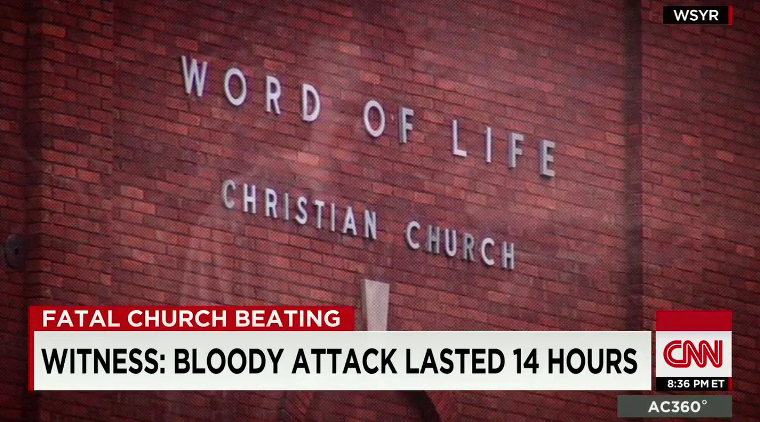
CNN covers the Word of Life death in upstate NY. Click for report.

Recently in New York, two siblings were severely beaten—one to death—by their parents and other members of the congregation of the Word of Life for wanting to leave the “faith.” This cult is based in a former school building in which members of the church live and congregate in isolation from the greater community.

Sociologist Bernadette Barton told Broadly Vice:

When a group is isolated, they’re not beholden to a larger organization. If they’re part of a hierarchy, they’ll answer to other folks, so there are more likely to be other eyes on abuse and interventions into it. The more isolated a group is, the more likely violence can emerge.

Barton describes a “sin/fall” paradigm, where members of the cult are faced with psychological, emotional, and physical threats if they deviate from church ideology. She elaborates:

It excludes people, creates a climate of fear, scares participants, makes people monitor their own and other’s behaviors and thoughts, enables physical and sexual abuse, while absolving all individuals of wrong-doing since all of this is done (presumably) by divine order.

Poster by Mitch Rosenberg via zazzle.com
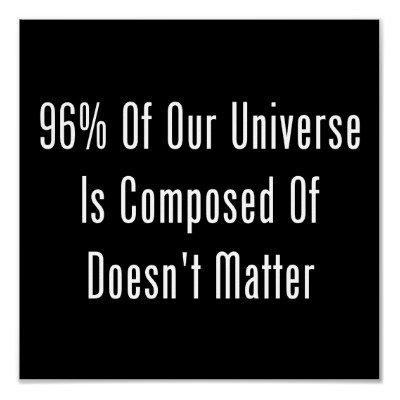
Academics could be forgiven for phoning one in. Poster by Mitch Rosenberg via zazzle.com

Publish. Publish. Publish.

Academics are expected to regularly publish in highly regarded journals as a measure of productivity, and therefore success. Whether as a graduate student hoping to land the perfect job or an early-career professor tackling the demanding process to earn tenure, academics experience a lot of stress.

According to a recent study published in the American Sociological Review, research that delves deeper into already known concepts (what the authors call traditional research) is more likely to get published than research that contributes new connections and ideas to the field (innovative work). But researchers writing innovative studies are more likely to be awarded for their work, as their research has a higher impact. So, if academics are more likely to publish traditional work at a higher rate than risk no publications coming out of innovative research, we can see where the tension arises.

Jacob Foster, one of the authors of the study, told the UCLA Newsroom,

Published papers that make a novel connection are rare but more highly rewarded. So what accounts for scientists’ disposition to pursue tradition over innovation? Our evidence points to a simple explanation: Innovative research is a gamble whose payoff, on average, does not justify the risk. It’s not a reliable way to accumulate scientific reward.

Sure, sure. It's good for them. A&E promo image.
Sure, sure. It’s good for them. A&E promo image.

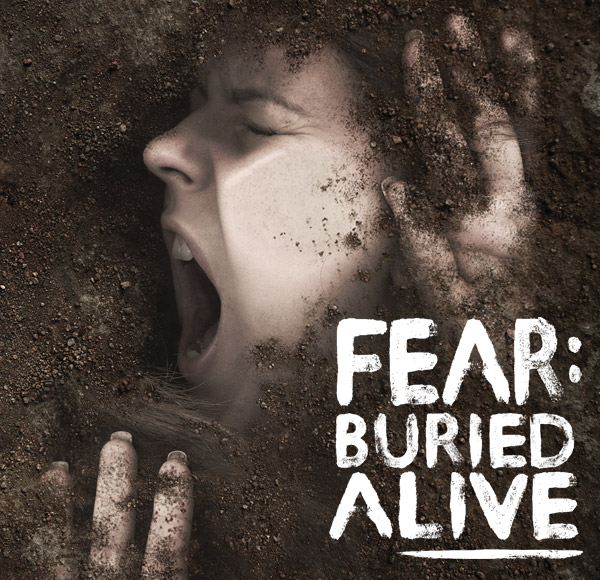
As Halloween rolls around, all things spooky and scary are on everyone’s mind. Alongside height and public speaking, being buried alive is a pretty common fear. As explained by an ABC news article, an upcoming event on A&E will feature three contests who, on live television, will be held in buried coffins equipped with cameras. According to the network, the stunt is meant to help people confront fear and depression, and it is already generating a lot of hype.

Magee Kerr, a sociologist who studies fear, explains that when we confront our worst fears head-on, it can bring out the best in us. Kerr says that the physical reactions to triumphing in a fearful situation, such as endorphin release and a sense of accomplishment, can have a positive effect and make conquering a fear a good experience. The next time you find yourself at a scary horror movie, try to get all the way through; it may be good for you.

Erik Ingram via flickr.com.

Public opinion polling in America dates back to the 1930s, and religious beliefs and behaviors have always been topics of interest. However, polls do not produce perfect measurements and their results can both shape and misrepresent the reality of public beliefs and behaviors. Religion Dispatches recently interviewed sociologist Robert Wuthnow about his new book Inventing American Religion: Polls, Surveys, and the Tenuous Quest for a Nation’s Faith in which he details the ways in which polls have shaped the religious makeup of the American population.  

Wuthnow explains that in the 1970s, the Gallup poll’s overly broad and vague questions about evangelical identity resulted in a huge overestimation of the number of evangelicals in America at the time. He explains:

The year of the evangelical was 1976, when Jimmy Carter achieved election to the White House and the role of polling was to greatly expand the number of Americans who were evangelicals… How is that possible that a poll could do that? …Gallup said there might be 50 million Americans who are evangelicals, and journalists ran with that… The way they got 50 million was basically inventing a new question that said something to the effect of, “Have you ever had a born-again religious experience, or something similar to a religious awakening?” And that was pretty much it… There was a lot of diversity among evangelicals themselves that got masked by being lumped together in the polls as if they were all the same thing.

The results of that 1976 poll influenced not only perceptions of the number of evangelicals among journalists, but also political perceptions of evangelicals as a voting bloc. If there were that many evangelicals in America, then politicians could cater to them to gain votes. Evangelicals began to be treated as one homogenous group instead of the highly heterogenous group that they really were.

Wuthnow explains how a similar phenomenon is happening with the rise of the non-religious in America—commonly known as the “nones.” Polls and surveys are reporting an increase in those who are saying they are not religious, but these general trends can mask huge variation among the non-religious. Many, for instance, still believe in a god and go to church, and only a very small percentage actually identify as atheist. Further, Wuthnow says, people often change their beliefs and opinions over time, and poll data glosses over that fact:

Polls have always assumed that whatever a person says is reliable, and that they really mean it and stick with it. So if you find any changes over time, that’s significant because polls are measuring stable opinions—if those change, that’s important.

Photo by Gideon Tsang via flickr.com

Following yet another mass shooting, social scientists and the American community at large are engaging in some familiar conversations. While some folks are looking at mental illness as a trigger to violence and others are asking for gun laws that would put restrictions on gun ownership, sociologist Tristan Bridges wants to draw some focus on the role of masculinity in violence.

Bridges told The Christian Science Monitor that he believes the mass shooters are “over-conforming to masculinity, because they perceive themselves, in some way or another, as emasculated… It’s a terrible statement about American masculinity, to say that when you’re emasculated, one way to respond is to open fire.”