culture

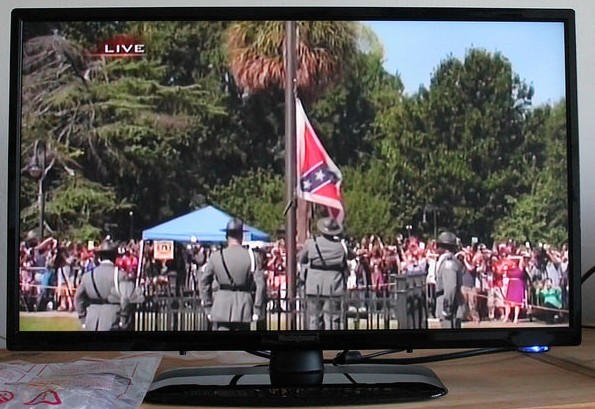
The Confederate Flag is lowered at the South Carolina state capitol building. Elvert Barnes, Flickr CC.


After flying over the South Carolina state capitol for 54 years, the Confederate flag was lowered on the morning of Friday, July 10. Before it was removed from the statehouse, the flag and products bearing its image were also eliminated from the store shelves and online marketplaces of major retailers, including WalMart, Amazon, Sears, and Ebay. The flag’s sudden withdrawal from publicly visible spaces public and private was sparked by a bevy of activism in the wake of the June 17 massacre of worshippers at Emanuel AME Church in Charleston, but complaints about the flag are not new. Why was this push to remove it from prominent display venues successful, when so many others had failed?

Sociologist Brayden King told the San Francisco Chronicle that the important of online media to the way companies make decisions today was central. Corporations who pulled Confederate merchandise from sale were more concerned with their brands’ images on Facebook and Twitter and with investors’ impressions of their management than with being politically correct or doing the right thing. Drawing on findings from studies he published in 2007 and 2013, King said that “Business is always responding to consumer demand and what might be reputational issues as well. If a company isn’t able to quickly resolve the turmoil, then investors may start thinking that the management isn’t very good.”

King argues that social media “makes these issues salient by being a megaphone for activists, and it serves as a large public forum for information.” By linking social issues with companies’ online reputations and managerial competencies, online media may be accelerating the attachment of concrete financial ramifications to cultural debates that corporations may have previously wished to stay out of.


Looks like a practical type. Photo by Nic McPhee, Flickr Creative Commons.

“What’s your major?”

Often the reasons for choosing engineering or English extend beyond the student’s enthusiasm for the subject. Sociologist Kim Weeden explains to The Atlantic that parental income can play a part: students from wealthy families are more likely to study humanities and fine arts, while their lower-income peers tend to choose more “practical” majors like physics, engineering, or computer science. Weeden says:

It’s … consistent with the claim that kids from higher-earning families can afford to choose less vocational or instrumental majors, because they have more of a buffer against the risk of un- or under-employment.

In other words, if wealthy students cannot get lucrative jobs with a ceramics or history degree, they have a monetary safety net. NYU’s Dalton Conley elaborates:

It might seem like there’s a lot of social mobility that the offspring of doctors are artists, or what have you, but maybe they traded off occupational autonomy and freedom … They still have a high education level and they still have wealth.

Future employment is not the only explanation for why students from different income brackets choose their courses of study. Often, students from higher-income families have more prior exposure to arts, music, and literature, sparking an interest in these areas before college. Furthermore, according to Conley, the prestige of a major and its associated careers may matter more than the size of the actual paycheck:

There’s a notion that what people are maximizing is not income, per se, or wealth, per se, or prestige, per se, but just there’s a general sense of social class, and people in each generation make trade-offs.

A fine arts degree may have fewer career opportunities, but it also has an association with high socioeconomic status that a law enforcement degree does not.

Chicago's "Overpass Light Brigade." Photo by Mikasi, Flickr CC.
Chicago’s “Overpass Light Brigade.” Photo by Mikasi, Flickr CC.

San Francisco recently passed legislation which will eventually increase the minimum wage to $15 an hour in incremental, planned hikes. On the heels of the “Fight for 15” movement, this seems like good news for those living on or near the minimum wage. As explained by an article on NBC online, with help from CUNY Graduate Center’s Ruth Milkman, a sociologist of labor and labor movements, people may not start celebrating just yet.

Many people working on the minimum wage at the moment, for example, work multiple jobs. As Milkman states, “[I]f you’re working at the current minimum wage in a lot of places, you’re still in poverty, especially if you’re supporting other people.” When the wage is going to be increased in gradual increments, those gradual changes may not make much of a dent in what it takes to support oneself or dependents, especially in areas experiencing gentrification. Consequentially, as Milkman explains, this can create a “lot of discontent in a lot of the working population.”

Indeed, as basic struggles of living on the minimum wage continue after slight increases, there can be downsides as well. Businesses which rely on a greater proportion of minimum-wage workers can be more likely to operate in low-income areas, such as fast-food restaurants. Therefore, if businesses raise prices to handle paying a higher wage, the minimum-wage-hike could be hurting the people it was meant to help. At the moment, San Francisco is leading the way on raising the minimum wage, but don’t wager that the discussions are over just yet.

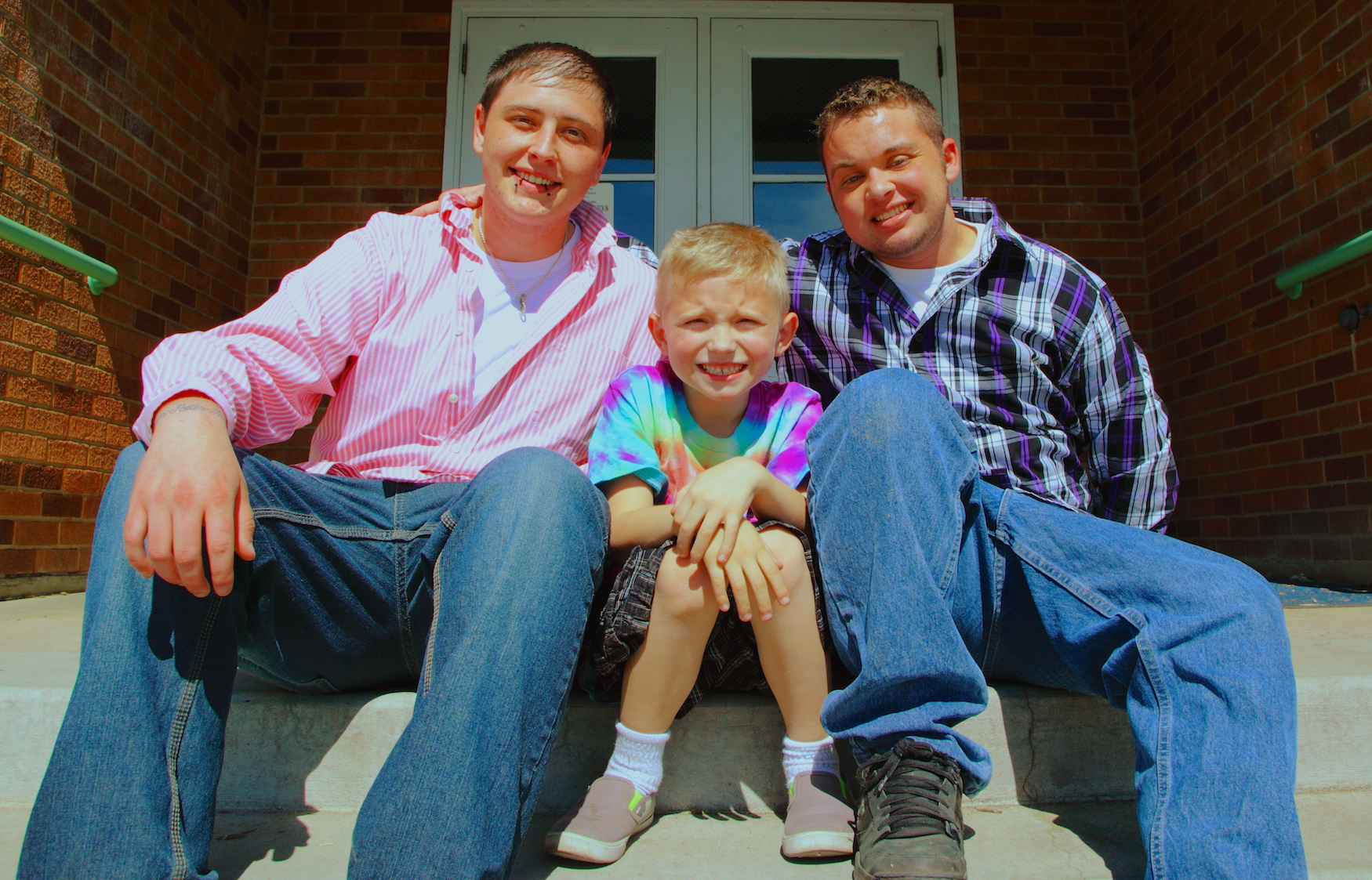
Utah couple Liam and Curtis pose with their son. Creative Commons photo by Sharon Mattheson-McCutcheon.


Between the high costs of adoption and surrogacy, same-sex parents face many more obstacles than most heterosexual couples when it comes to adding a child to the family photo. Among those couples who go the distance, lesbians have been much more likely than gay men to parent, but the number of male couples seeking adoption is on the rise. “They have to go out of their way to become fathers,” Nancy Mezey, a sociology professor at Monmouth University in West Long Branch, New Jersey told New York Times about the dedicated men making the long and complicated journey to parenthood.

Such two-father families fill specific niches and tend to foster inclusivity in more than one way. “They’re adopting children that other people don’t want to adopt. They’re teaching their children tolerance and expanding definitions of gender roles,” according to Mezey. “They are helping to redefine what it means to be a real man.”

One interesting twist is the division of household labor same-sex parent homes. Among heterosexual couples, cultural norms have long encouraged women to raise children while men bring home the bacon. This means stay-at-home gay dads also quietly “challenge dominant beliefs that dads are primarily breadwinners and can’t be the primary nurturers,” Mezey told the Times.

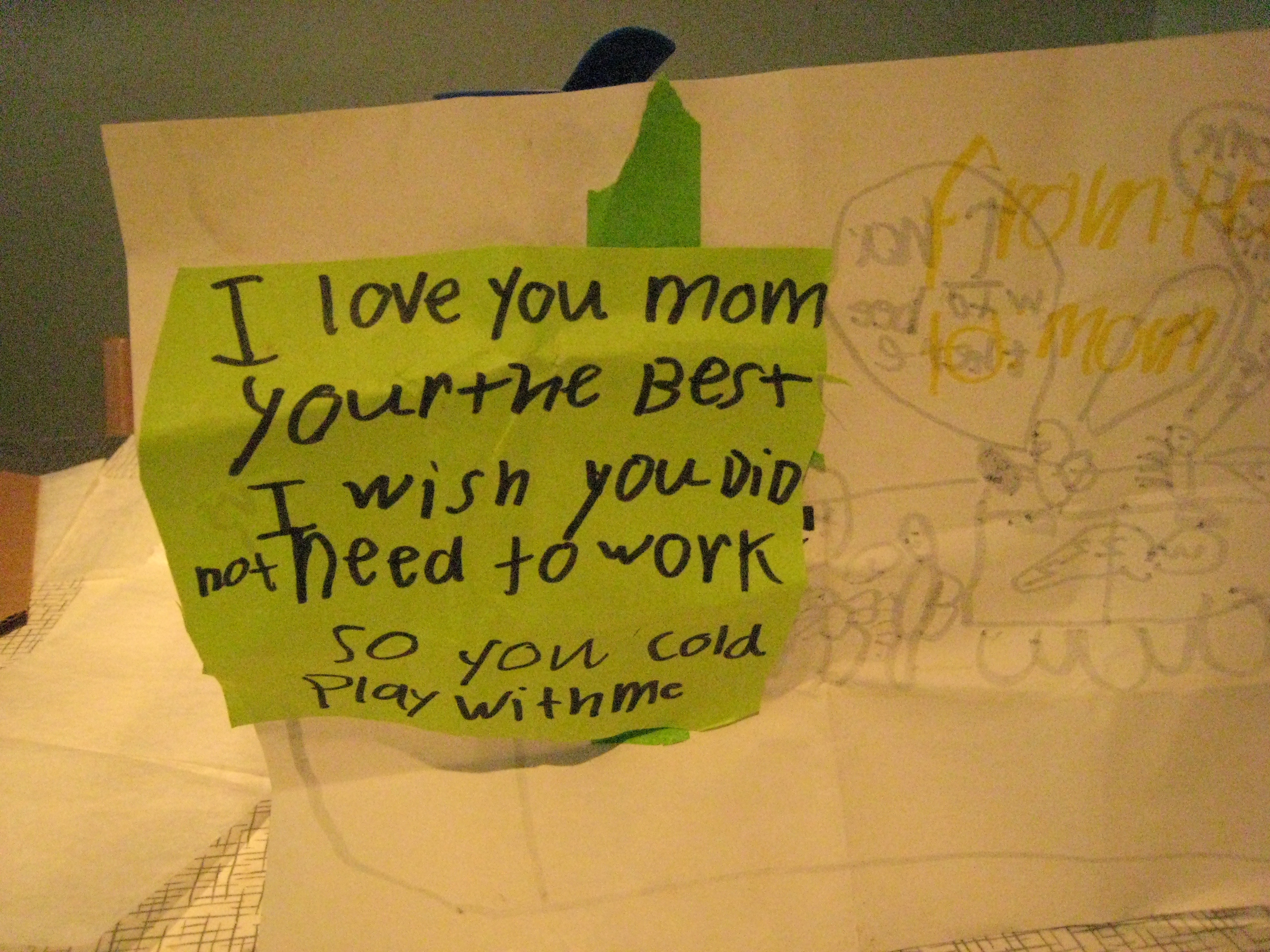
Well, that oughta help her feel good about her time-use choices. Photo by Beth Kanter, Flickr CC.


Men and women who are lawyers, consultants, or hold other prestigious jobs find themselves answering late night emails and weekend phone calls. Even when they’re “off the clock,” trying to relax with their families, highly paid professionals often attend to work.

Still, men and women tend to cope with demands for their time differently, and it boils down to men working as much as possible, while women try to negotiate their careers to accommodate rearing their children. Sociologist Mary Blair-Loy from the University of California, San Diego told the New York Times that these differences come from broader, gendered cultural expectations: “It’s not really about business; it’s about fundamental identity and masculinity,” Ms. Blair-Loy said. “Men are required by the culture to be these superheroes, to fulfill this devotion and single-minded commitment to work.” For women, carpool, soccer games, and dance recitals are seen as more acceptable reasons for leaving work, “because they have an external definition of morality or leading the good life, which is being devoted to their children.”

However, being a “good mom” isn’t a “free pass,” and it certainly isn’t a route to career advancement. Coworkers often interpret only working 9-to-5 to mean that a woman is not fully invested in her career. And when the moms put their careers “before their kids”—say, taking calls during a T-ball game or staying at the office until 9pm—they’re likely to lose the respect of their colleagues, judged for bucking others’ ideas of what a nurturing mom really looks like. In careers and elsewhere, cultural tropes, from boardroom bosses to soccer moms, have real consequences.

Click to pre-order the book.

And Other Notes on Online Dating

If you’re coming across this post sometime between checking your morning email and logging into your favorite online dating apps, then this piece is for you. And with nearly 22% of straight couples and 70% of gay and lesbian couples meeting online, you’re in good company.

Using findings from their recent book collaboration, Modern Romance, sociologist Eric Klinenberg and comedian Aziz Ansari offer their advice for navigating the demanding, and often confusing, world of online dating. Among their findings highlighted in a New York Times op-ed, they learned that certain profile pictures are more successful for landing dates than others. Women baring cleavage in a flirty selfie, unsurprisingly, have high success rates, but strangely, so do men holding animals while looking away from the camera with serious facial expressions.

With all those cleavage-filled, serious pet owner profile pictures, the fast-paced world of online dating often allows users to either exclude a potential date too quickly or feel overwhelmed by perceived options. Klinenberg and Ansari reference several psychology studies to explain indecisiveness among online daters, but clear things up with a rap analogy:

Think about it in terms of pop music. When a new song featuring Drake comes on the radio, you’re like, “What is this song? Oh another Drake song. Big deal. Heard this before. Next please!”

Ideally, they argue, “you keep hearing it and you think, ‘Oh Drake, you’ve done it again!’” In non-Drake terms: online dating works a lot better if users are patient and get to know one another instead of being quick to dismiss based on photos of superficial profile information. So before you swipe from profile to profile, consider forgoing the comfort of your couch and instead meet someone in person for a better chance of establishing a real connection.

Everyone likes a slice of wedding cake, but our opportunities to munch on the delicious dessert might be shrinking. According to an article in the Dallas Morning News, new research shows millennials aren’t getting married. Even though millennials are a large generation (by some accounts, bigger than the Baby Boom cohort) and are at prime marriage ages, rates of marriage are dropping across the U.S. Some projections suggest it could drop to 6.7 in 1,000 in 2016—a historic low. Why are heterosexual millennials delaying or forgoing marriage?

University of Maryland sociologist Philip Cohen’s research shows that the proportion of people getting married for the first time at older ages has risen in America, as economic and educational pressures encourage people to wait to wed. In addition, the U.S. has become less religious and more comfortable with unwed parents and cohabitation. W. Bradford Wilcox, a University of Virginia sociologist, adds, however, that there are some upticks in marriage trends, such as a rise in the proportion of educated persons who wed and an influx of Hispanic immigrants that could have positive impacts on American marriage rates, if not in the immediate future.

Most people have favorite food memories—maybe a favorite holiday dish or fresh local fruit at its peak. Sociologist Jennifer Jordan talks to The Lake Effect about her new book Edible Memory, all about how food shapes culture, culture shapes food, and collective memory forms around what we grow, cook, and eat.

Jordan says that collective memories come from pieces of the material world, and that food memories are both personal and social. A personal memory about kitchens, food, and gardens often speaks to broader patterns of those things at a particular point in history or regional/local space because food is so often communal. Large groups may share similar food memories, revealing how food brings people together (and sometimes divides).

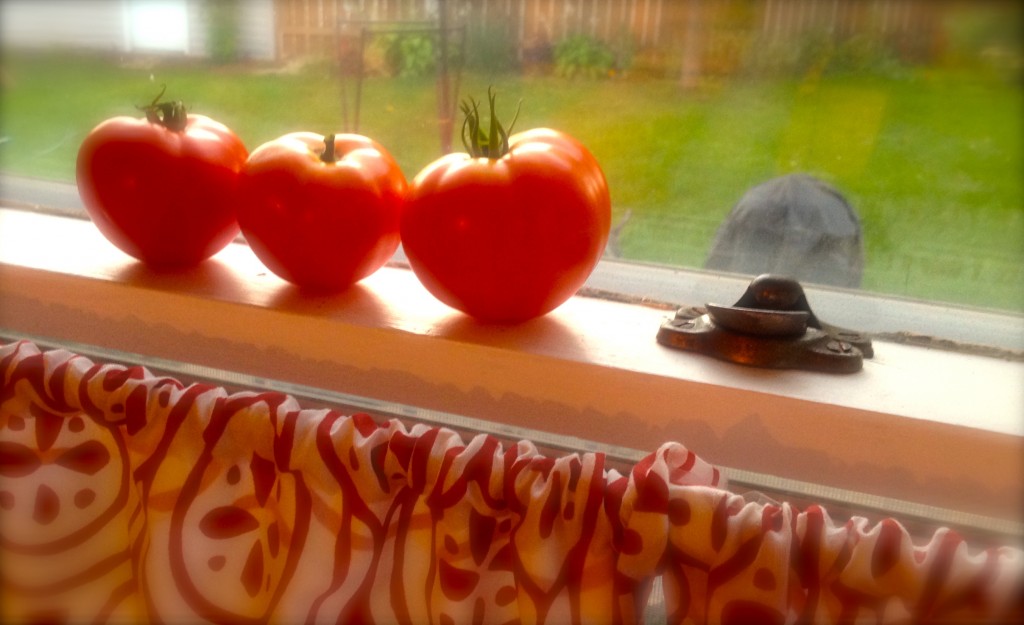
Tastes in foods change over time, too. Jordan says just as the broccoli florets people tried to feed to the dog as children become adulthood favorites, a similar phenomenon occurs on a much grander scale. The tomato, for instance, is technically a “new world” food from South America. When it reached Europe in the 15th and 16th centuries, people feared the fruit was toxic. Only recently has it become an essential part of the identity of food cultures including Italian and Spanish fare.

Meanwhile, in United States and elsewhere, we see the standardization of foods and genetic strains of produce. Instead of highly local heirloom tomato, a more mass-produced “beefsteak” variety better lends itself to feeding whole populations because of its hardiness during transport. Food, thus, becomes more homogenous on a national level, while, on the regional and local level there remains a more vibrant array of products: individual families and small-scale farmers preserve older genetic strains of plants and older family recipes that use regional produce. Consider okra in the American South, rhubarb in the upper Midwest, springtime fiddlehead ferns in the Northeast, or fresh avocados right off a Southern California tree—can’t you just taste them now?

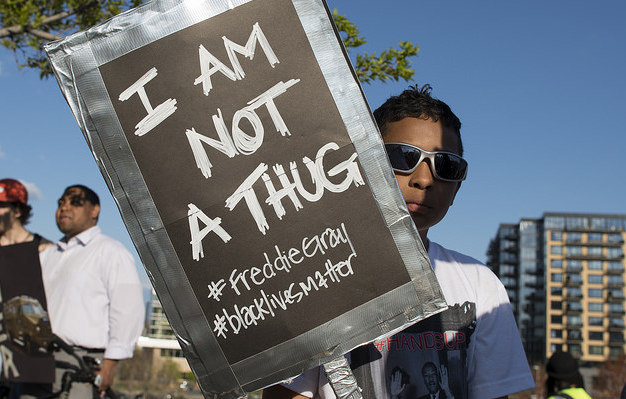
Photo by Fibonacci Blue, Minneapolis, MN, April 29, 2015. Click for original.


As the nation’s gaze is set on Baltimore, sociologists have begun to talk to the press about the massive peaceful protests, outbreaks of rioting and violence, and media depictions of the city as it mourns the death of Freddie Gray (as of today, Friday, May 1, ruled a homicide and under investigation). Much of the emerging public criticism is aimed at media sources and public officials depicting protests as nothing but violent, unfounded riots led by “thugs.” Stefanie DeLuca sees these language choices as important, telling the Washington Post,

I thought the governor calling Baltimore a “state of emergency” was a colossal fail. These framings don’t help us—they take away from the humanity of the people here who have grievances. It takes away from the incredible potential of a city that has been struggling and fighting for everything it has.

Paul Bagguley, whose work focuses on race and social movements, also spoke to the Washington Post, contributing to a piece on looting during riots. He focused specifically on how small outbreaks of crime can happen once large-scale, otherwise civil protests become riots:

During riots, the normal rules of behavior are suspended—participants often describe a sense of freedom—so that normal respect for private property is suspended. In addition, contemporary societies are consumer societies where one’s status and participation in society is defined by consumer goods, hence those excluded from consumption—the poor—are during riot conditions able to obtain valued items.

Other sociologists spoke more broadly to the systemic inequalities that have long divided Baltimore and put men like Freddie Gray in increasingly subjugated, vulnerable positions. In a recent article at Mother Jones, Peter J. Cookson explained how it’s not just physical segregation that creates and reifies inequalities in health, wealth, education, and incarceration, but also disparities in housing safety, extracurricular activities, and educational programs in schools.

In an Op-Ed for The Tennessean, Tony Brown suggests paying closer attention to the evidence of ongoing racism in everyday American life:

We must document the significance of race and racism before we can address it. Make it routine to collect evidence that allows us to address it. Otherwise, we are bound to run in circles debating whether a problem exists, while things get worse.

There was a time when Coors was the contraband. Nowadays, Bandit'll be hauling some Surly Furious.
There was a time when Coors was the contraband. Nowadays, Bandit and the Snowman probably haul Surly Furious.


Here in Minneapolis, the frozen but lively home of the University of Minnesota and TSP, you can’t throw a rock without hitting a microbrewery. That’s true for most of the northern U.S., but as discussed in the Atlantic, “the nine states with the fewest breweries are all in the South.” What’s the difference? One sociologist says it’s religion.

Across the country, big beer companies contribute to candidates who aren’t likely to support policies that enable local breweries to get a foothold. That investment helps curtail competition. In the South, Baptists form an important voting bloc with strong cohesion around social and moral issues, as do Methodists. Together, says Boston University sociologist Nancy Ammerman, “they account for a very large proportion of the population in the South.” Since alcohol is one of the hot-button issues, candidates who keep small breweries from operating gain an extra boost at the ballot box.

Interestingly, Ammerman points out that, in old Methodists and Baptists communities, payment in whiskey was fairly common. This might explain why independent whiskey distilleries are not as frowned upon as small breweries (and large whiskey companies are less invested in preventing boutique distilleries). Either way, if you’re hoping for a microbrew in Mississippi, you’ll want to road-trip it (humming “Eastbound and Down” along the way).