culture

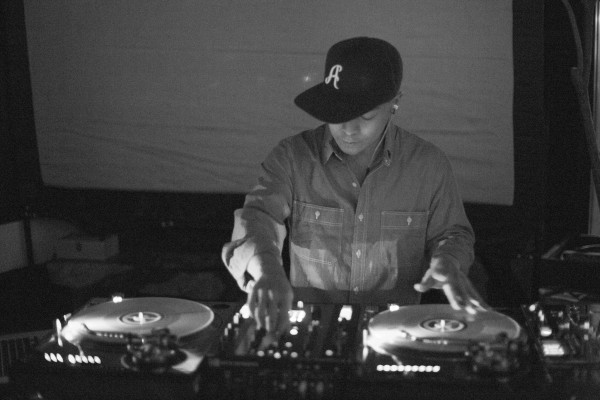
World famous Filipino turntablist DJ Qbert. Photo by Scott Schiller via Flickr
World famous Bay Area-raised Filipino DJ and turntablist DJ Qbert. Photo by Scott Schiller via Flickr

Long Beach State assistant professor of sociology and hip hop journalist Oliver Wang “remixed” his dissertation on the cultural phenomenon of predominantly Filipino Bay-Area mobile DJs of the ’70s, ’80s, and ’90s into the book Legions of Boom: Filipino American Mobile DJ Crews in the San Francisco Bay AreaWang discussed the particular social and cultural context that these crews developed in an interview with Vice:

I was used to thinking about how hip-hop crews were often very identify-focused—I came up during the era of pro-black/political hip-hop after all—and so my assumption was that this would be a major part of their identity as well. It wasn’t, though. Their self-awareness/pride in being Filipino was very individualistic but not reflected in the scene as a whole. If you just look at the names of the crews or the parties, there’s almost never an indication that these were predominantly Filipino American crews. There are any number of ways to possibly explain this: It was their age, it was their generation, it was the overall climate around race/ethnicity and music, it was because, as Filipinos, they’ve historically been treated as invisible. I do think, had this scene taken off in the 1990s, we may have seen a different dynamic because of the influence of hip-hop.

Read the whole interview here.

For many, the “American Dream” seems beyond possibility. Zhang Yu, Flickr CC.

Work by Harvard University’s Robert Putnam and Princeton’s Doug Massey was featured in a recent article in The Atlantic, which discusses the need for policy changes to fight poverty and begin a new “civil-rights movement” for the poor. As the article describes, through policies in housing, employment, and education, the poor are at an inherent disadvantage in America, one that is often outside their control.

Putnam, in his work Our Kids: The American Dream in Crisis, states that poor children are often less prepared than their middle-class counterparts to develop skills and succeed. Communities and families within poor contexts are less likely to have the same resources and starting platform with which to help their kids participate in “The American Dream.” The article presents arguments to suggest potential change within housing, educational, and employment contexts. Doug Massey’s research, for example, is cited in support of housing policies that enable the poor to live in better-resourced communities. The article makes multiple suggestions for ways to empower the poor and increase their life chances, and research shows that such policies can effect positive change.

Pressure's on, kid! Isabelle Plante, Flickr CC.
Pressure’s on, kid! Isabelle Plante, Flickr CC.

Upcoming award ceremony? You may consider joining the growing number of non-politicians hiring “toast whisperers” to write public speeches.

Sociologist Lisa Wade recently explained to News4Jax: “I think people that purchase a speech for an event might want to impress others, and that drives them to do it.” The growing importance of social media also likely contributes, as it increases “the expectation that other people will see everything we do.” And if some people will see it, we want it to be good—maybe even worthy of viral video status.

Guess we can add “Did you even write that speech?” to our array of ways to “throw shade” in the comments sections.

Image via opensource.com/Flickr CC, modified to include clock face.

A recent study of spiritual awareness is receiving international attention. Presented at the Annual Meeting of the American Sociological Association (ASA), it finds that one’s spiritual awareness fluctuates throughout the day, affected by music, work, exercise, and even video games all have effects.

Co-author Bradley R.E. Wright told Suffield Times that he was surprised: “There’s a complicated interaction between religious consciousness and the state of affairs. Typically, the state of affairs you’re in impacts your religious consciousness. Different occasions, your religious consciousness impacts the state of affairs you are in.”

PsychCentral and IBC World News have also featured the study.

Tinder's promise.
Tinder’s promise.

In Vanity Fair, a piece by Nancy Jo Sales discusses “hook up culture” and its potential causes, including the infamous app Tinder. Sales’ accounts of dating in New portray a “dating apocalypse,” wherein some of her interviewees see men, in particular, moving away from “relationships” altogether. To them, Tinder has forever changed how people date and how they perceive dating. As explained by John Birger in The Washington Post, however, Tinder and its ilk may be better understood of symptoms of “hookup culture” rather than causes. The real problem, Birger asserts, is plain old math.

Birger describes how today’s college-educated demographics mean three men for every four available women. For him, the surplus of women is shaping the narrative of non-committal “hook up culture” detailed in Vanity Fair. And it wouldn’t matter so much if people were more likely to date across socioeconomic or educational lines. Birger uses research from UCLA sociologists Christine Swartz and Robert Mare to show that marriage between individuals of unequal education at its lowest point in fifty years. Since college-educated women outnumber college-educated men, the former inevitably exclude a greater population of potential partners if they overlook men with different educational trajectories—and they replicate the idea that relationships are harder to come by for female college grads. Those interviewed in Sales’ article provide testimonials of the ways Tinder can affect interpersonal communication and relationships, but as Birger shows, demographics and mathematics paint a more accurate picture of how “hook up culture” lasts beyond college.

For more on marriage across class and education lines, see Jessi Strieb’s “Marrying Across Class Lines.” For more on “hook up culture,” see Elizabeth Armstrong, Laura Hamilton, and Paula England’s “Is Hooking Up Bad for Young Women?”

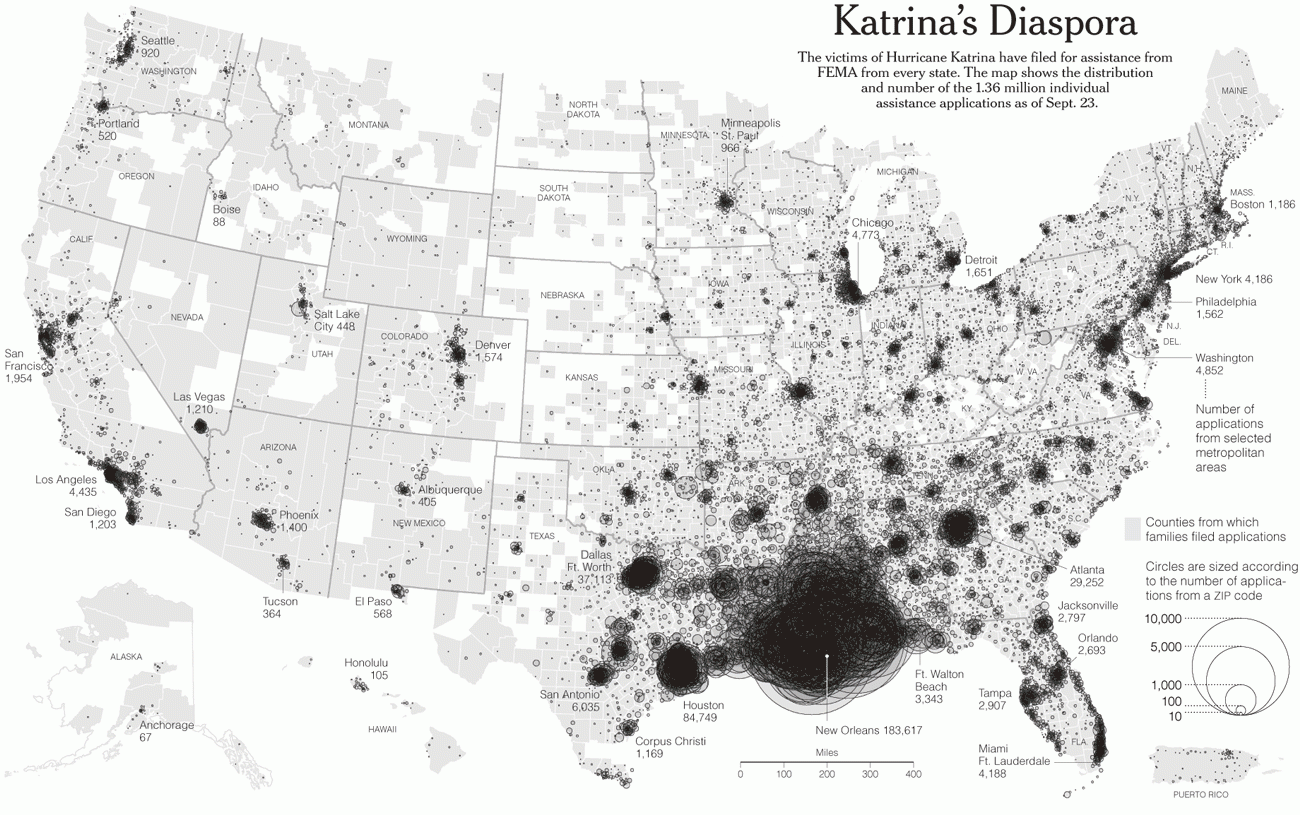
The New York Times, Katrina displacement as of 9/23/2005.
The New York Times, Katrina displacement as of 9/23/2005. Click for original.

The New Yorker recently featured several sociologists in a piece about what has happened to residents of New Orleans’s Lower Ninth Ward in the aftermath of Hurricane Katrina:

  • David Kirk, who studies neighborhood effects, focused on recidivism, or likelihood of ending up in prison again after release, based on whether individuals stayed in the same neighborhood or moved elsewhere. He found that those who returned to their former neighborhoods in New Orleans had a 60% recidivism rate compared to those who. While, historically African Americans have been more likely to move, often for economic mobility, since 1970 the pattern has flipped, and more African Americans tend to stay put.
  • Patrick Sharkey says that in recent decades white Americans more frequently engage in “contextual mobility,” or moves significant enough to change opportunities and circumstances. Instead of major moves, African-American families in urban areas tend to make more frequent, minor moves to places similar to their previous living arrangement.
  • According to Stefanie DeLuca, these moves are not voluntary. Rising rent, eviction, breakups, or changing in housing subsidies spark moves within the same areas—not the better schools or job opportunities that middle-class Americans cite as reasons to relocate.

Following the severe damage from Hurricane Katrina in 2005, going “home” wasn’t possible for many poor black families. As it turns out, those who had to leave found their new homes offered more opportunity:

  • Houston, Texas, has become a hot spot of upward mobility for those displaced by Katrina, Corina Graif found: “The fact that they were all of a sudden thrown out of that whirlpool gives them a chance to rethink what they do. It gives them a new option—a new metro area has more neighborhoods in better shape,” she says of the 700 mostly black women she tracked.

Sharkey cautions optimistic readers that relocation could become a game of cat and mouse. If too many poor people move into middle-class areas, the middle-class may move, taking some of the neighborhood’s higher resources and leaving new families in circumstances that mimic a minor move.

Even the show cringed at its title, making new jokes every week. Image via Slacktory.

Television and movie relationships between a middle-aged woman and younger man, like those on TBS’s Cougar Town often appear glamorous and dramatic, but are they accurate depictions? Milaine Alarie and Jason Carmichael tell Pacific Standard that the stereotype of wealthy “cougars” who “have been able to surgically turn back time with their looks… or literally buy young men’s attention” is more a myth popularized by shows like Sex and the City than reality. First, they find in a survey of Americans that “roughly 13 percent of sexually active women between ages 35 and 44 had slept with a man who was at least five years younger,” meaning that sexual relationships between middle-aged women and younger men are not rare. The bigger surprise is that women sporting diamonds and Chanel are less likely to be in that 13 percent than low-income women are. Additionally, rather than a steamy fling, these relationships tend to be long-term, with most lasting at least two years. “[A] sizable share of ‘cougars’ are married to their younger partners.”

Media portrayals of a woman’s midlife crisis or frantic clamor to cling to youth do not represent most women’s experiences, highlighting a cultural problem: a stereotype like the “cougar” “encourages aging women to doubt themselves.” Alarie and Carmichael hope that dispelling the cougar myth will “motivate us to reflect on our society’s tendency to (re)produce sexist and ageist conceptions of women’s sexuality, and women’s value more broadly.”

Photo via Joe Loong via Flickr.

In a recent excerpt from her book The Tumbleweed Society: Work and Caring in an Age of Insecurity featured in Salon, sociologist Allison Pugh discusses how the insecure economy has made employees feel wary of their employers but also like they must rush to their defense. Employees often bend over backward to identify with their bosses and meet their needs, but employers are much less likely to reciprocate. What do employers and employees owe each other?

The move away from the old social contract, in which employees traded loyalty and effort for job security, has resulted in real and perceived job insecurity among may adults for whom full-time work is a central piece of identity. Pugh says the result of the opposing trends of increased job insecurity and increased cultural importance of full-time employment is lots of anxiety for employees and a “one-way honor system.” Employees still feel obligated to uphold their end of the social contract by demonstrating loyalty and hard work, they don’t expect the same commitment from their employers. Even those with the lowest-skill and lowest-paying jobs empathize with the employers’ needs for good workers and expect little beyond dignity, respect, and a paycheck.

Part of the reason for the one-way honor system is the perception that intense work commitment is an integral part of being an honorable, moral person:

Survey researchers report, for example, that about the same percentage of women as men—70 percent of full-time working women (both white-collar and blue-collar workers)—say they would continue to work if they suddenly had enough money to live comfortably for the rest of their lives, known as the “lottery question” (and used by researchers as a rough proxy for a work ethic). A strong work ethic was part of good character, part of being fully human, no matter your gender, people maintained.

In other words, it’s not the job itself that’s the source of dignity, it’s the work ethic. So as jobs get more precarious, many people work longer and harder instead of slacking off, partially because they fear those who don’t work hard enough or produce enough will be the first ones to lose those coveted jobs.

Photo by Mark Morgan, Flickr CC.

In the literary world, New York Times Bestseller is a coveted and sought-after label. When that gold sticker is slapped on the cover of a book, authors and publishers alike are likely to be happy campers, and there are few surefire ways to create buzz about a particular work than Bestseller status.

Brandeis sociology professor Laura Miller weighs in on a piece in Hopes&Fears where the stickiness of the New York Times Bestseller label is discussed. Miller states “People assume that if everyone else is reading a book then it ought to be good.”

Indeed, this peer-pressure style marketing is what makes the Bestseller label so desired. It’s basically an endorsement from a huge number of everyday people—but the formula isn’t that simple. As explained in the article, the New York Times Bestseller label was created in 1931, when editors would take random samples of book sales from undisclosed vendors to gauge the popularity of particular manuscripts. In the modern era, the process has become murkier. Discussing the process in determining Bestseller status today, Miller explains:

Once you got online bookselling, anyone and everyone was selling a book… you can’t have millions of retail establishments giving data to the Times. That means they have to ask for a sample of the different kinds of places that are selling books… While the actual reporting of sales from those particular places might be more accurate than in the past, the ability to get an accurate sample is actually more difficult.

In the past, while the accuracy of the data from book vendors was imperfect, gathering a representative sample of book market transactions was easier—there were fewer potential vendors. Today, though, selection process of specific vendors for Bestseller sampling purposes is tightly controlled, so that publishers and authors can’t artificially inflate their book sales at particular stores or retailers in order to boost their likelihood of Bestseller status. Whatever the process, however, it will have to further contend with new forms of book purchases, such as e-book and Kindle sales. Either way, authors and publishers will still wait with bated breath: Is it a Bestseller?

Katie Cannon, Flickr CC

After months of abuse and harassment from users, Reddit CEO Ellen Pao resigned from the website. Unfortunately, Pao’s experience is far from unique. Many female chief executives face character assassination based in large part on their gender; the anonymity of the Internet allows harassment to escalate as far as death threats. For many experts, Pao’s resignation is an example of the “glass cliff,” a point where women rise to higher positions only to be forced out through excessive personal attacks and abuse.

Sociologist Marianne Cooper of Stanford University’s Clayman Institute for Gender Research isn’t surprised by this gendered bias, telling The Guardian, “I haven’t seen this kind of reaction to egregious things male CEOs have done.”

As lead researcher for Lean In: Women, Work, and the Will to Lead, Cooper is familiar with the gendered biases of the workplace and the use of female leaders as scapegoats for larger company problems: “Oftentimes, the women who inherit the problems are put in precarious positions, and if they fail, they are blamed for it.”