politics

Photo by Peretz Partensky, Flickr CC

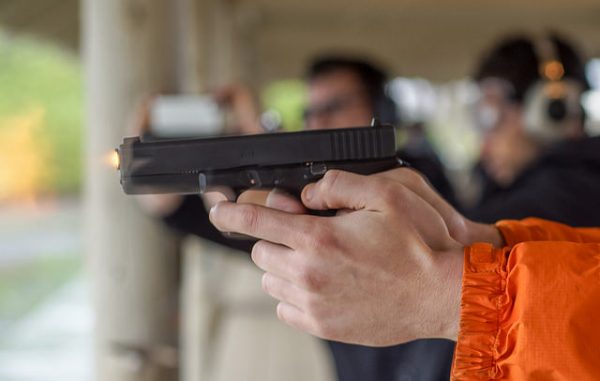
With police use of force and mass shootings occupying the center of the public’s discourse on public safety, single incident homicides and suicides, which comprise the majority of gun violence, fly relatively under the radar. Social science sheds light on the rates and distribution of gun violence, as well as the most effective strategies to reduce it.  

In 2012, there were over 32,000 deaths by firearms in the United States, which is a significantly higher rate compared to similar countries like Great Britain. Although homicides commitment with firearms are declining overall (though the suicide firearm rate is increasing), the risks for homicide violence vary among demographic groups. In terms of homicide, young African American males and females are at increased risk of firearm homicide compared to other racial groups, but this gap declines with age.
Research shows that targeted gun seizures can lead to reductions in gun crimes. Additionally, background checks, of both those who have criminal records and those deemed “high risk,” are shown to decrease gun violence and arrests. Gun buyback programs – when the government offers to buy privately owned firearms — have been shown to have no effect on gun homicide or suicide rates.
Research also indicates that homicidal gun victimization clusters within small groups that are concentrated in particular neighborhoods. Intervention in these networks has been linked to both reduced shooting behavior, as well as reduced firearm victimization. For example, the Violence Reduction Strategy, pioneered in Boston, is a procedural justice initiative that brings gang members together with community members and law enforcement officials for hour long meetings of focused deterrence.
Photo by Ryan Godfrey, Flickr CC

During a political season in which very little has gone according to script, one thing has been fairly predictable: the demand on all sides for “media objectivity.”

Advocates for objective political reporting are typically referring to journalistic conventions that include using direct quotes, presenting “both” sides of the story, and focusing on the presentation of “material facts.” These facts, we are often told, speak for themselves. But as intuitive and appealing as the call for neutral, unbiased reporting might sound, however, sociologists have been both cautious and critical.

One reason for sociological skepticism is that the notion of objectivity in political journalism is actually a fairly recent historical invention. It has less to do with balance or fairness than it does with ritualized procedures journalists use to protect themselves from the pressures they face in the day-to-day reporting of complex issues. Objectivity, in this sense, emerged as a kind of protective blanket for political journalists.
Not only are the ritualized practices of objectivity in political journalism relatively new, sociologists have shown that they are fraught with problems and limitations. For example, basic standards of media objectivity are typically less consistently applied to female political candidates and candidates of color.
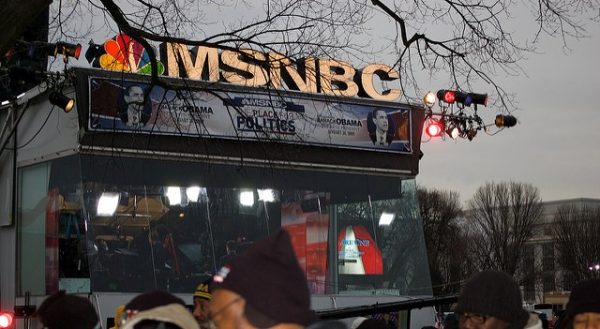
Another strand of sociological scholarship suggests that most standards of objectivity are strongly linked to social context, personal experiences, and the types of conversations that people have with their peers. In other words, journalists and media organizations tend to define objectivity in relation to their target audience and frame their coverage to appease this group. This approach suggests that although MSNBC and Fox News typify the seemingly bifurcated nature of political journalism in the United States, they epitomize two sides of the same coin and may represent the “new normal” in political journalism.
Photo by ThoseGuys119, Flickr CC

Charter schools are public schools that are meant to provide more choices for students and their families–at least, that’s what federal law says. Yet, sometimes charter schools reject students based on academic performance. Does that make them less public? Other times, charter schools forbid teachers from unionizing and the National Labor Relations Board gets involved. Such competing and confusing legal definitions of “public” only complicate the debate over charter schools’ legitimacy. Do these cases make charter schools any less public if the U.S. Department of Education insists otherwise? Certainly the NLRB thinks so, having recently argued that teachers in two separate charter schools do not have the right to unionize because, “charter schools are not public schools but private corporations.

One way scholars of education parse out the difference is by comparing charter schools’ behavior and organization with more traditional, unquestionably public schools. Scholars find that as long as these practices exist in a legal gray area and the school follows some institutional norms for public schools–such as not charging tuition and grading homework–charter schools are public.
Advocates for charter schools claim that this flexibility fosters innovation and helps close the achievement gap–everybody wins. That is, until regulatory agencies respond to the more abnormal facets of charter schools. This prompts a serious conversation about what “real” public schools should be. In the social world, the boundary shifts with popular perception, and the charter schools of yesterday can no longer be as public as they once were.
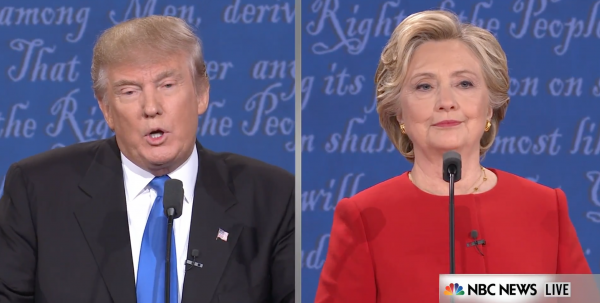
Trump interrupted Clinton 51 times at the first of three 2016 presidential debates.

If you didn’t notice the rampant interruptions during this week’s first presidential debate between Hillary Clinton and Donald Trump, don’t worry – several sources ranging from Vox to The New York Times and even U.S. Weekly took note. While estimates vary as to the exact number of times each candidate interrupted the other, some estimate that Clinton interrupted Trump about a dozen times while Trump interrupted both Clinton and debate moderator Lester Holt over 50 times. As this is likely a moment we will teach in Sociology of Gender courses for years to come, we can look to prior studies of speech patterns and gender to contextualize the demeanor of the debate.

Both men and women engage in all types and styles of interruption; however, men are more likely to engage in intrusive interruption — that is, when someone interrupts “the speaker’s turn at talk with the intent of demonstrating dominance.” Additionally, men interrupt women more often than they do other men, using sex as a status characteristic in group discussion.
Gender also plays a role in interruptions among deliberating bodies, particularly when women are the minority within the group. When outnumbered, women experience higher rates of dismissive interruption and lower rates of approval when speaking.
Interruption, regardless of gender, has social consequences. Someone who interrupts is often seen as more successful, though less socially acceptable and reliable.
Photo by G20 Voice, Flickr CC

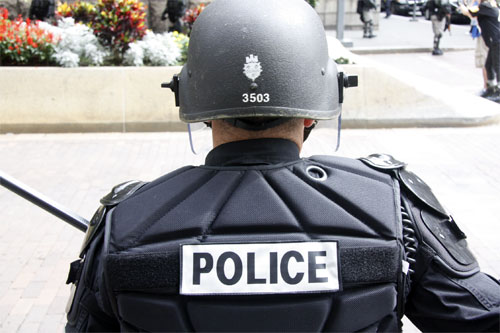
In lieu of the recent fatal police shootings in cities such as Tulsa, Charlotte, and most recently, El Cajon, California, communities are coming together to demand changes in law enforcement interactions. Of particular concern is police surveillance and the subsequent criminalization of minor offenses. “Problem-oriented policing” – which focuses on a community’s “hot spots” and requires police to be more proactive in identifying where crime might happen, as opposed to just reacting after a crime takes place – has been offered as a possible solution. But does problem-oriented policing actually reduce crime? Social science research helps us sort out the potential benefits and pitfalls to problem-oriented policing.

The research record is mixed. Studies evaluating problem-oriented policing programs in Jersey City and Los Angeles showed reductions in serious crimes, such as property crime, robbery, and drug selling, as well nuisance crimes associated with homelessness. Others, however, show no signs of decrease in the number of reported crime rates. Scholars suggest that problem-oriented policing may only have an impact in areas of severe crime and distrust of law enforcement.  
Additional concerns with problem-oriented policing is its effect on marginalized communities. Both observed environmental cues and implicit racial and ethnic biases affect people’s perception of neighborhood disorder. As such, neighborhoods with high concentrations of racial/ethnic minorities are perceived as having more disorder, and consequently viewed as more dangerous and violent. Residents living in neighborhoods marked by perceived disorder are themselves labeled as threats by law enforcement, perpetuating and reproducing urban inequality and cultural stereotypes.
Photo by Lee Coursey, Flickr CC

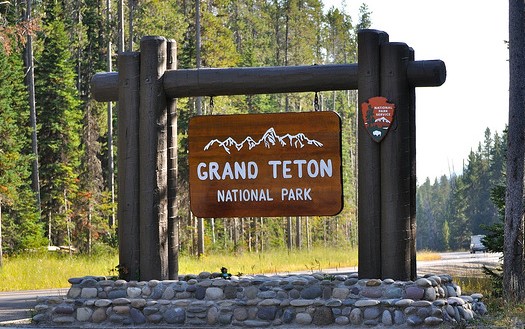
Last month marked the centennial of the National Park Service, which is tasked with preserving natural and cultural resources and protecting outdoor spaces for recreation, like Yellowstone, the Grand Canyon, and Yosemite. The most recently designated park is an ocean park where 4,900 square miles of deep sea volcanoes and canyons in the Atlantic ocean are now prohibited from commercial fishing and other types of resource extraction. While the idea behind the national park system is that everyone should be able to enjoy nature, the reality is that the working class and people of color are less likely to use national parks and the history of the parks has involved the displacement and exclusion of Native American, African American and immigrant communities.

Unequal access to resources – including money for entrance fees and transportation, equipment for exploring the parks, and leisure time – have resulted in race and class differences in who can actually enjoy the national parks.
Beyond access, there are a variety of cultural definitions of “the wilderness,” “the outdoors,” and recreation that are shaped by race. Racial norms and ideologies impact how people perceive leisure time and values of natural beauty, and activities like hiking and camping are often seen as “white hobbies.” Yet, these differences are largely due to a history of exclusion, discrimination, and segregation that kept people of color from using public outdoor space, particularly in the Jim Crow South.
The parks themselves were created through colonialism, as much of the land that is now “protected” was of course taken from Native Americans. The idea of a pristine wilderness is historically linked to white racial purity and the need for Europeans to save the land, which justified U.S. expansion into the West. The conservation movement was also led by white men, such as John Muir, who often overlooked the struggles of racial minorities and issues of equity.
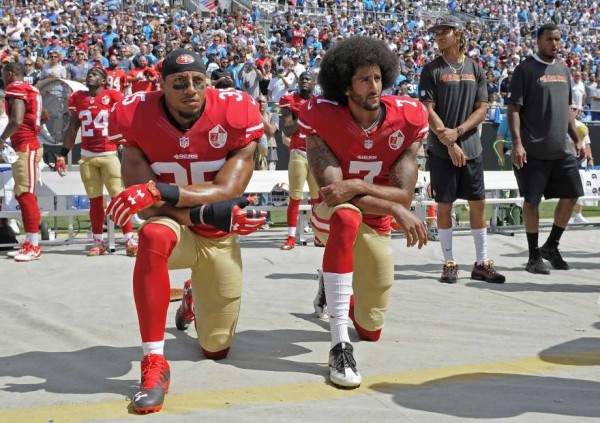
San Francisco 49ers' Colin Kaepernick and Eric Reid kneel during the national anthem. Mike McCarn, Associated Press.
San Francisco 49ers’ Colin Kaepernick and Eric Reid kneel during the national anthem. Mike McCarn, Associated Press.

More and more athletes are joining the San Francisco 49ers’ Colin Kaepernick in kneeling during the “Star Spangled Banner” at the beginning of sporting events. Though this phenomenon has spurred controversy and heated exchanges, sports stars using their celebrity for civic action is not entirely new. After the police shootings of Eric Gardner, Michael Brown, Tamir Rice, and other unarmed black people, numerous members of the NBA and NFL wore hoodies that read “I Can’t Breathe,” (Eric Gardner’s last words); others entered the game while making the “Hands Up, Don’t Shoot!” gesture championed by #BlackLivesMatter. Indeed, today we are witnessing a resurgence of athlete advocacy.

A common criticism of these athletes is that “they should just stick to sports!” or that “they aren’t supposed to talk about politics!” In reality, however, athletes have been at the forefront of protests and civic action for some time now, particularly in the 1960s. TSP Editor Doug Hartmann’s popular book describes how the Civil Rights Movement provided the context for athletes to begin using their celebrity for greater causes. Similarly, Ben Carrington describes how racism has shaped the international black-athlete-experience. Colonialism and contemporary globalization have made sports a site where racism is enacted and solidified, meaning athletes have had to think about these concepts–and fight against them–for a long time.
After the Civil Rights movement, athlete protests became less common, especially as athletes expanded into areas like merchandising and marketing, which meant that they were more likely to avoid “rocking the boat” and jeopardizing their business. But because of #BlackLivesMatter and a greater national focus on police killings of unarmed black people, athletes are once again getting into the fray. As Herbert Ruffin describes, politicizing college sports has led student athletes to protest for their own rights and demands — remember the events at Ole Miss last year? Similarly, Emmett Gill describes actions (and reactions) surrounding the “Ferguson Five” — the St. Louis Rams football players who showed solidarity with protesters in Ferguson, Missouri. 

This research shows that while athlete activism is often met with criticism, it does not mean that their tactics will prove unsuccessful. If history or recent events have shown us anything, the opposite may be truer. One thing is for sure — athlete protest in the contemporary era is just warming up.

For even more readings on race, sports, and athlete activism, check out the  #ColinKaepernickSyllabus created by NewBlackMan (in Exile).

Photo by John Duffy, Flickr CC

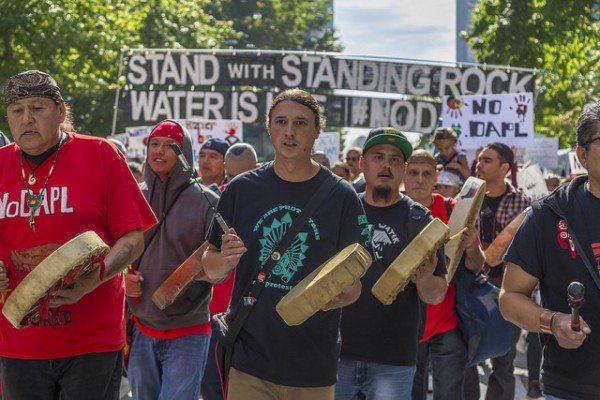
Thousands led by Native Americans from across the country have converged on rural North Dakota over the past month to stop construction of the Dakota Access pipeline near the Standing Rock Sioux reservation. Opponents say the pipeline is a threat to culturally and spiritually sacred sites as well as vital drinking water sources. Protesters have erected an encampment and are leading daily marches to the construction site demanding that the company and federal government halt construction in order to protect water and adhere to treaties with Native American tribes.

The protest over the Dakota Access pipeline reflects the social and political tensions that often emerge around resource extraction projects and potentially hazardous infrastructure, and sociologists have been at the forefront of research and analysis. Mining development led by large multinational companies often brings social dislocation, environmental problems, and a loss of livelihoods for native communities. Yet, indigenous communities have had some success in preventing development and maintaining control over land and natural resources partially through direct action, transnational coalitions, and public campaigns against corporations.
In the U.S., Native American reservations have often been used as sites for hazardous mining and disposal of toxic waste – what scholars call “national sacrifice zones” and environmental racism. Hooks and Smith find that Native Americans struggle with environmental injustices and are more likely to live near toxic waste sites, largely because the U.S. military has used reservations and nearby land for testing and disposing of weapons.
Protest is also driven by group identities and culture. Mobilization against industrial development is shaped by historical and social differences in how people relate to the land. Indigenous philosophy, spirituality, and land claims can provide legitimacy to environmental opposition and are a source of inspiration and motivation for movement participants. This highlights the role of culture, place-based identity, and values in motivating people to participate in protest.
Environmentalists have joined the effort to stop the pipeline as part of a wider movement against fossil fuel extraction and climate change mobilization. Coalitions of environmentalists and indigenous peoples often develop in response to environmentally harmful projects, such as dams or pipelines, which have been important for generating public attention to issues of Native American rights while also building environmental movements. Protests over particular local industrial development can be used strategically by social movements to attract new participants and link people’s immediate concerns about health and safety to broader environmental issues.
Screenshot via getreligion.org.

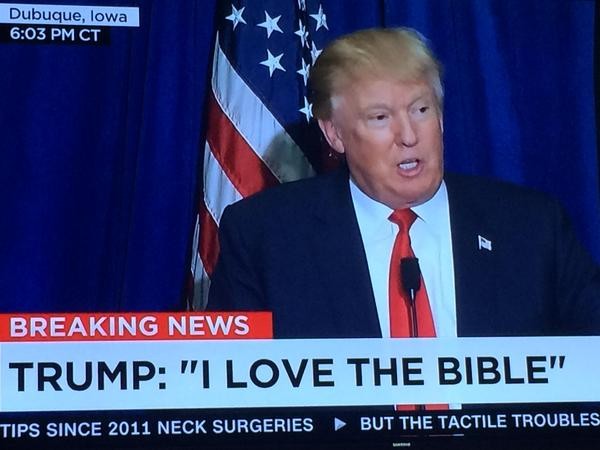
At this week’s Republican National Convention, Donald Trump will accept the party’s nomination for president. Social scientists explain Trump’s primary success by looking at his supporters, especially at their racial biases and class grievances. The nomination is still surprising, though, because Trump has managed to win reluctant support from party leaders, influence the GOP platform, and gain traction among Evangelical Christians (despite not seeming all that pious himself). Sociological research on political parties and organizing show how an unlikely leader can win institutional favor even when they seem to clash with the individuals who run the show.

How is Trump winning over party elites? We often think about political parties as groups of savvy leaders who design the system to keep themselves in office (and challengers out). A longstanding sociological take, however, shows how parties represent deep divisions in the public along race, class, and ideology. This means that emerging public interest groups can and do swing party politics, such as the Democrats’ shift toward a civil rights agenda or the rise of the Tea Party coalition among Republicans.

And how did a man quoting “Two Corinthians” win over leaders in the Religious Right? This group’s political influence doesn’t just come from the pulpit. Instead, shared beliefs allow lay leaders to build networks among influential people in government, business, and entertainment. Much of their success comes from “unobtrusive organizing”—the way the networks, in turn, work within existing power structures to acquire political influence. Thus, the Religious Right can fall in line with a candidate who does not seem to fit their public agenda if it means even more power and access behind the scenes.

There are those who contend that it does not benefit African Americans… to get them into the University of Texas where they do not do well, as opposed to having them go to a less­ advanced school… a slower-track school where they do well.

During oral arguments for Fisher v. University of Texas-Austin (in which the Supreme Court just upheld UT Austin’s use of race in their admissions policies), Justice Antonin Scalia’s comments caused quite an uproar. Did a member of the Supreme Court actually say that African Americans aren’t capable of success at competitive colleges? He was drawing from the so-called “mismatch hypothesis,” which suggests that affirmative action places people into positions they can’t handle—that is, that affirmative action could hurt African Americans by placing them in schools where they may not succeed or from which they may not graduate.

A significant amount of academic work debunks “mismatch theory,” deeming it both wrong and “paternalistic.”

Fischer and Massey use the National Longitudinal Survey of Freshman to analyze college outcomes and test the mismatch hypothesis; they find no evidence in its favor. Alon and Tienda use two different longitudinal datasets to run similar analyses, again finding no proof that ethnic minority students fare badly in advanced institutions. Replication results have been consistent over time; Kurlaender and Grodsky piece, for instance, find that students placed in programs considered “out of their league” performed just as well as those in less demanding programs.
In a twist, scholars find that affirmative action may place a different group of people in schools for which they are not equipped. In many schools, particularly prestigious ones, “legacy” students—whose family members graduated from the same school—benefit from affirmative action in admissions. Bowen and Bok show this has disproportionately affected white students, and Massey and Mooney show that legacy students earn lower grades than their peers and have lower graduation rates. If affirmative action is doing a disservice to some students, it is not in the way Justice Scalia suggested.