politics

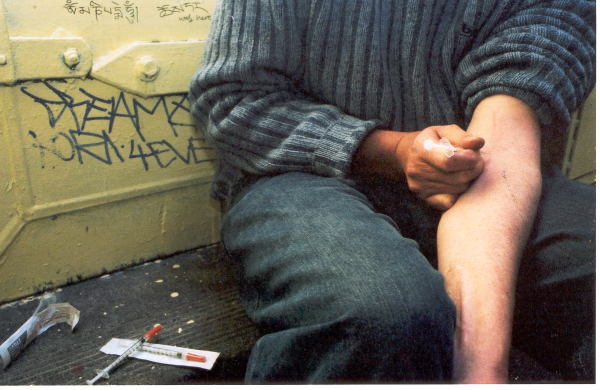
Urban Seed, an Australian organization, considers harm reduction programs part of their mission to help disadvantaged communities. Flickr CC.

The mayor of Ithaca, New York recently proposed a facility for people to use heroin and other injected drugs safely. It’s part of a larger plan to focus on prevention and treatment of drug use, and the facility’s trained medical staff would provide clean needles, referrals to treatment programs, and naloxone, an opioid overdose antidote. Today’s opioid epidemic—which kills an estimated 78 Americans every day—has shocked many, given that other forms of illicit drug use have generally declined in prevalence and mortality during recent decades. Ithaca’s plan falls under the umbrella of “harm reduction” approaches, which attempt to mitigate personal and societal harm from drug and alcohol use. Social science shows us how and why these programs work.

Supervised injection facilities are relatively recent, originating in the Dutch and Swiss harm reduction movements of the 1970s and ‘80s. The first site in North America opened in Vancouver in 2003 and is linked to drastic declines in public injection and overdose deaths. Today a number of supervised drug consumption rooms operate throughout northern Europe, Canada, and Australia. Ithaca’s would be the first in the U.S.
Substance use was once a popular element of social events, like election day, but by the 20th century, “drug scares” stigmatized drug use, associating it with racial stereotypes, immigration, and crime. Smoking opium was first outlawed in the U.S. in the 1870s, for instance, as a result of anti-Chinese sentiments in California. Non-smoking opioid use remained popular among the white middle class—for supposed medical reasons, but by the turn of the century though, users who preferred injection became the stigmatized face of opiate addiction.
Stigma remains a critical issue in drug treatment, preventing users from accessing clean injection tools, uncontaminated opiates, information about safe injection practices, and life-saving overdose antidotes. Harm reduction efforts, like needle exchanges, have the potential to restore self-respect and autonomy to populations generally believed to lack these characteristics. Programs that provide work to formerly incarcerated individuals who have undergone drug treatment has been shown to reduce certain crimes, like robberies. Harm reduction communities also offer a space for drug users to empathize with and support each other, creating networks that bolster success.
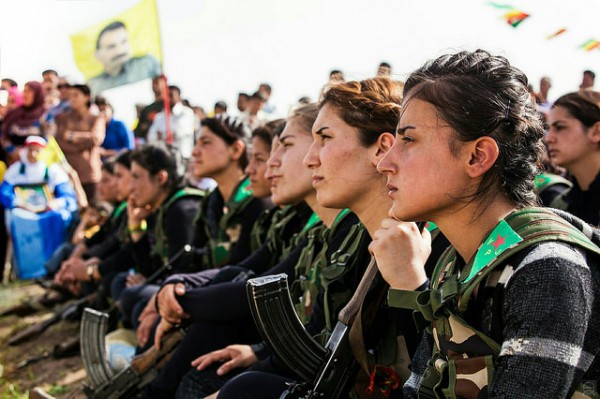
Kurdish YPG fighters in Syria have skirmished with ISIS/ISIL militants said to especially fear death at the hands of a woman. The unofficial militias have been reluctantly accepted as allies in global attempts to destroy terror cells. Photo: Flickr CC https://flic.kr/p/qkxigM

From last year’s attacks in Paris to recent bombings in Ankara, Brussels, and Lahore, transnational terrorism is at the forefront of public concern. The media often gravitates toward focusing on who the perpetrators are and what drove them to commit these heinous acts. There is a wealth of research on the individual and psychological factors that may be at play, but sociological studies highlight the strong influence of social context and institutions in turning people toward terror, challenging easy explanations that focus on individual ideology alone.

Quantitative analysis shows how radical Islamic groups are motivated by many of the same social and political factors as older radical groups. Social and political change, especially international development, urbanization, and western military dependency, is associated with more frequent attacks. Higher foreign investment associates with a lower frequency of attacks, however, and research on terror in Israel shows this kind of conciliatory action may do more to limit terror than repressive strategies alone.
Research also shows that individual attackers are actually fairly “normal.” They are not more likely to be poor or poorly educated, and, often, they are not psychologically pathological. Instead, scholars look to the social arrangements of the institutions and networks that recruit and empower individuals. These terror groups are rarely centralized, hierarchical organizations that train bombers from on high; attacks stem from struggles for power among fractured organizations, local splinter groups, and state forces. As these conflicts escalate, local groups mobilize network relationships to recruit attackers and build the autonomy to develop their own motivational strategies to spur attacks. These local relationships and networks matter much more than individuals’ beliefs alone.
Photo by Faris Algosaibi, Flickr CC. https://flic.kr/p/j7hLsu
Photo by Faris Algosaibi, Flickr CC.

The FBI now says they may not need Apple’s help to break into a terrorist’s iPhone, but for months they have insisted Apple’s programmers must write a program enabling them to bypass security on this and other Apple devices. The demand raised questions about security and surveillance in a time of rapid technological change. Apple’s refusal to comply stemmed from both a philosophical stance on privacy and concerns that such a program could easily be exploited. The company and its programmers further argued that code should be covered by free speech protections—no one can be forced to write code against their will. Sociological research shows how assumptions about the objectivity of computer code work against arguments like Apple’s and how these assumptions are often used to legitimize the policing of already marginalized populations.

Apple’s concerns about controlling how and when a “break-in” program gets used are valid. Not only can it fall into the hands of hackers and the like, technologies like this can be used by law enforcement to maintain social inequalities and reinforce harmful stereotypes. Sociologists show how computer code and surveillance technologies are not value-neutral, but are instead composed of the values and opinions of those who write and use them. The result is that the police often use these presumably objective technologies to justify intrusive policing of the already at-risk.
From this perspective, it becomes easier to understand code as speech. Codes are the expression, intentional or otherwise, of the values and beliefs of the programmer. What makes code in some ways more powerful than speech is that it is also highly functional. Jennifer Peterson explains that code is at once the writing of a program as well as the program’s execution—it is both expressive and functional—but the legal system overlooks the functional capacity of code as speech and the ways that it can be used to protest, dissent, and discriminate.

And for a great read on surveilling sociologists, check out Stalking the Sociological Imagination: J. Edgar Hoover’s FBI Surveillance of American Sociology by Mike Forrest Keen.

Job application via PBS.org.

Conservative and liberal legislators alike are calling for criminal justice reform. Last November, President Obama proposed a “ban the box” initiative that prevents federal agencies from inquiring about an applicant’s criminal history during the initial stages of the hiring process. The plan mirrors similar policies in over 100 U.S. cities that seek to reduce employment discrimination against people with criminal records and alleviate the socioeconomic burdens they often face as they reenter the job market. Social science highlights the scope of this problem and how ban the box policies may help.

Employers often dismiss applicants with criminal records, which disproportionately affects black men. A Milwaukee study revealed employers contacted only 5% of black men who disclosed a record; even black men without a criminal record were less likely to receive a callback than their white male peers with a criminal record. Thus, even in the absence of criminal background checks, employers may use racial indicators, education levels, and gaps in employment to evaluate potential criminality among job applicants.
Among candidates with a record, employers may consider the severity of the crime, the time since the crime was committed, and the outcome of the crime. Felony crimes and convictions appear to create the most barriers, while job applicants with misdemeanor arrests face lower hurdles. Since interviews with employers show that making personal contact with job applicants can help overcome the negative effects of a criminal record, “ban the box” measures that delay consideration of the criminal record until the interview process could make a real difference in individuals’ job prospects.
Photo by Jennifer Boyer, Flickr CC. https://flic.kr/p/bFDYuM
Photo by Jennifer Boyer, Flickr CC.

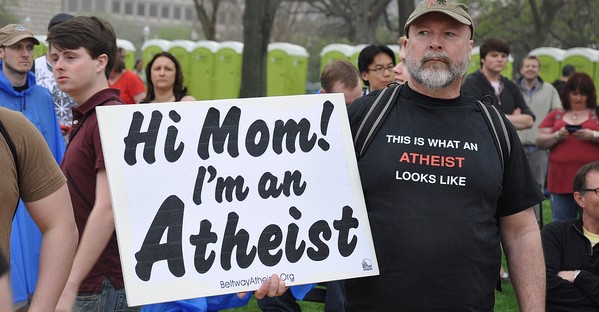
A recent study by the Pew Research Center suggests that “Nones”—people who are unaffiliated with any organized religious institution or belief system—now make up the single largest religious group in the Democratic party. Organizations like the American Atheists launched the #AtheistVoter campaign, and members of this growing voting bloc assembled at the recent Republican presidential debate in Iowa, questioning the candidates’ ability to represent non-religious Americans and demanding they “Keep Your Theocracy out of Our Democracy.” Sociologists of non-religion detail how the Nones are increasingly diverse, and their social and political agendas sometimes conflict.

The history of non-religious and atheist politics in the U.S. is one of constant tension. The non-religious take varying stances on the role of religion in social and political life, and the movement has had to balance “accommodationist” approaches to religion in the public sphere that support religion as a social good and “confrontational” approaches that position religion as a danger to democracy and progress.
Tensions among the Nones can be a barrier to success as a cohesive political group, but their diversity can also be an advantage. Secular groups often define “the secular” differently depending on the context, which allows for a wider net to be cast over the variety of individual, non-religious identities. This enables more inclusive political agendas.
Mashrou' Leila performs in Paris. Photo by Hinda Zahra via femmesdetunisia.com.
Mashrou’ Leila performs in Paris. Photo by Hinda Zahra via femmesdetunisia.com. Click to read an interview with the band.

The Middle East and North Africa (MENA) is a contested space for queer folks. Persecution is common in Egypt, where gay men are continuously subjected to mass arrests, and queer Palestinians are often blackmailed. In contrast, Lebanon has led the LGBT*Q movement with a recent court ruling that homosexuality is not “unnatural or a crime. Celebrities like Hamed Sinno, the gay lead singer of Mashrou’ Leila, can even use music to address gender expression and gay love there. Research on the origins of queerness and homophobia in the region and why governments repress queer communities can help us understand such conflicting trends.

Contrary to beliefs that queerness is un-MENA, un-Islamic, or un-African, Abu Nawas (756-814) wrote uninhibited erotic poetry about men and, in the 18th and 19th centuries in Egypt, homosexual and homosocial relations were quite common. Lesbianism is documented in the 9th century throughout the region.
Contemporary state repression often involves torture, surveillance, and harassment of gays and lesbians by state actors. After the Arab Spring revolutions, social science sheds light on how such politically unstable governments attempt to maintain and enforce social stability and societal moral. This larger sense of a need for control could fuel queer community repression.

For more on sexuality in the MENA, see lectures from the ““Sexualities and Queer Imaginaries in the Middle East/North Africa’ conference at Brown University.

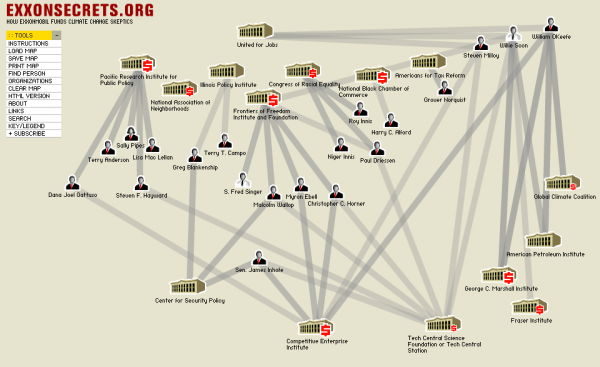
ExxonSecrets.org uses data visualizations to trace the company's influence on legislation and scientific research groups.
ExxonSecrets.org uses data visualizations to trace the company’s influence on legislation and scientific research groups.

New York’s State Attorney has opened an investigation into whether ExxonMobil lied to the public and investors about the risks of climate change and funded outside groups to question climate science, even as the company’s own expert researchers found that fossil fuel emissions do, indeed, contribute to rising temperatures.

The Exxon investigation reflects the broader politicization of climate change and the role of corporations in shaping public perceptions. Surveys have found that the U.S. public is poorly informed about the science of climate change. A climate change countermovement flush with funds from business and conservative organizations works to create skepticism and distort public understanding. These efforts mirror other controversies over science and risk, and past corporate campaigns to create doubt about the harmful impacts of chemicals such as tobacco, DDT, or holes in the ozone layer.
Climate change denial is not simply the result of well funded public relations campaigns, however. It also reflects collective and individual anxieties and the difficulties of coming to terms with abstract and long-term risks. Everyday experiences, cultural norms, political beliefs, and religion shape how people come to terms with problems like climate change.

For more on echo chambers and how climate change denial narratives gain credibility, check out this new piece over at Contexts!

Twitter screenshot.
Twitter screenshot.

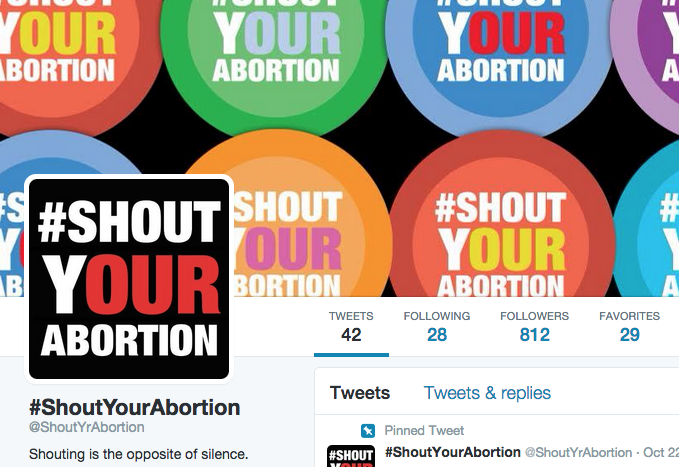
In the ongoing battles around whether to defund Planned Parenthood, Lindy West and Amelia Bonow created the Twitter hashtag #ShoutYourAbortion to encourage women to share their abortion stories, express their experiences, and recognize the stigma that often silences women who have an abortion. Consequently, many have criticized the hashtag and attacked the women involved. Supporters of #ShoutYourAbortion argue that sharing real women’s stories on social media produces cultural change around an issue surrounded by legal rhetoric. Sociological research details why women have generally felt compelled to stay silent about having abortions and the potential benefits of speaking up.

Many women believe that disclosing their abortion experiences will lead to negative responses from relatives and friends, due to widely held norms of femininity and motherhood that assert women are “natural nurturers” and the idea that having an abortion negates those qualities. In a classic study of pro-life and pro-choice activists, Kristin Luker notes that abortion is often seen as a “referendum on the place and meaning of motherhood.” For pro-life activists, terminating a pregnancy may be the ultimate example of being a “bad mother.” Rather than face anticipated judgment and condemnation around moral codes of appropriate feminine behavior, women then choose to conceal their procedures.
A major source of stress and frustration women experience centers on the gendered imbalance of responsibility for contraception and abortion decisions. Research finds that women are often expected be responsible for providing or taking contraception, but are heavily criticized when they take responsibility by choosing to have an abortion. Thus, Sally Brown argues, where women are held responsible for reproductive decisions, “decision making, if ‘decisions’ happen at all, is bound up with notions of hegemonic masculine and feminine roles.”
Stigma, however, does not reduce the likelihood that a woman will have an abortion. Cockrill and Nack write that even women who “believe abortion is morally wrong and that women who have abortions are careless and irresponsible will still have abortions.” Instead, the primary consequences of abortion stigma are decreased mental and physical health, strained relationships, and loss of social status. Spaces of affirmation and support like the #ShoutYourAbortion campaign allow women to engage in “collective stigma management,” offering a supportive network where their public presence can work to change social attitudes and shatter the silence surrounding abortion experiences.
Elvert Barnes, Flickr CC

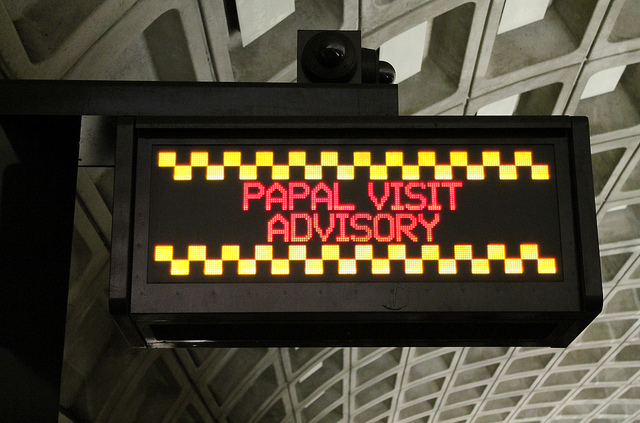
Since his election in March 2013, Pope Francis has gained attention for his efforts to refocus the Catholic Church on issues of social justice. His recent visit to the U.S. was met with acclaim from religious leaders and political liberals, but also sparked consternation among cultural and political conservatives. U.S. Rep. Paul Gosar (R-AZ), a Catholic himself, boycotted Francis’s address to Congress and accused him of adopting “socialist talking points presented to guilt people into leftist politics.”

The cultural divisions within American Catholicism exposed by Pope Francis’s visit are not new. While Gosar may be more vocal than most conservative Catholics, his protest reveals a split between interpretations of the Catholic faith that have been simmering for generations.

Mary Ellen Konieczny shows that the narratives American Catholics use to construct their religious identities have profound political consequences. Some congregations use the language of community to structure their worship, while others structure their activities around the concept of family. In parishes where community talk is dominant, social justice is usually the focus of ministry, but in congregations where family is the main narrative, concerns about personal and sexual morality get more attention. Neither model is more Catholic than the other: both types of congregations draw upon doctrines and use ritual practices central to the Catholic tradition. Hence, the variation Konieczny observes has less to do with texts or doctrines than with the ways people interact in group settings.

The ideological divide in Catholicism also has historical roots in the relationships between the papacy and states. Gene Burns argues that as European states liberalized in the 19th century, Popes struggled to retain political influence for the church. Attempts to engage questions of poverty were seen as intrusions into government affairs, but through discussions of personal morality, the Church could carve out a space where its authority still dominated. As a result, the Church’s ideological emphases turned toward sexual morality and family issues, while sociopolitical concerns grew peripheral.
The postwar period saw a revitalization of Catholic religious activity in the politics of economic justice. Jose Casanova shows how the Solidarity movement in Poland and letter-writing campaigns among American nuns after Vatican II helped to steer church activity back toward social justice work, and John O’Brien charts the influence of labor activist-priest George G. Higgins on Catholic social thought in the 20th century.

Pope Francis’s return to social justice issues does not necessarily make him a “liberal” pope. We might better view him as interested in returning the Catholic church to a language of social justice, firmly rooted in Church history, despite being obscured by previous Popes’ focus on other issues.

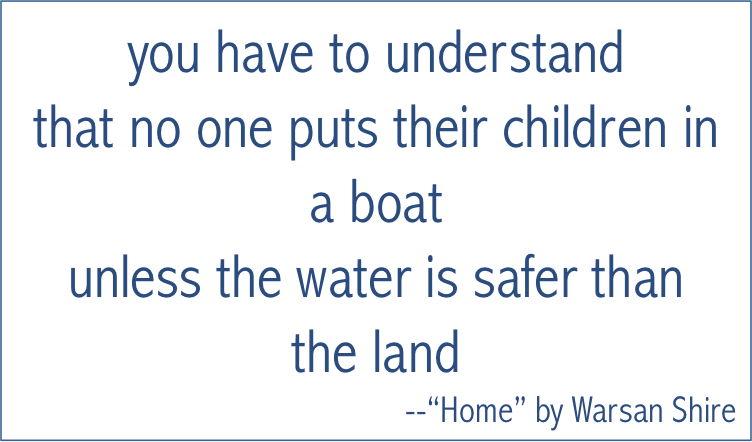
Click for full poem.

Europe is facing a major refugee crisis. Some nations welcome refugees, some do not. Much of the media attention is focused on how these countries are dealing with large populations fleeing from Syria. There is ongoing debate as to whether the Syrians fleeing war are “migrants” or “refugees”. We usually think “migrants” move for economic reasons, while “refugees” move during temporary political crises. Social science on the motives and meaning of migration shows a clear difference in why these two groups travel, but also how the places where they move can blur the lines between them.

Syria has faced civil unrest since 2011, when civilians took to the streets to protest against Bashar Al Assad’s regime. The unrest escalated quickly to a civil war with a total of 220,000 deaths as of January 2015. Approximately 4,000,000 Syrians have been displaced. This has ignited international conversation on the future of Syria and its refugees.

Refugees have a distinct set of reasons for leaving their home countries. In many cases, they are highly skilled workers forced out by extreme violence and social instability. They are more likely to request asylum from countries that have passed domestic refugee laws or ratified more human rights treaties than countries that are economically affluent.

Refugees are looking for a society in which to build a new life, but public policy in destination nations shapes those cultural opportunities. Receiving countries often have their own foreign policy interests at heart when they decide to accept some people as refugees and deny others as migrants. These labels affect future outcomes. Studies of second-generation migrants show that they do better in countries that have many different ways to integrate new-comers, including cultural, economic, and social supports.