politics

Photo by Stephen Melkisethian, Flickr CC

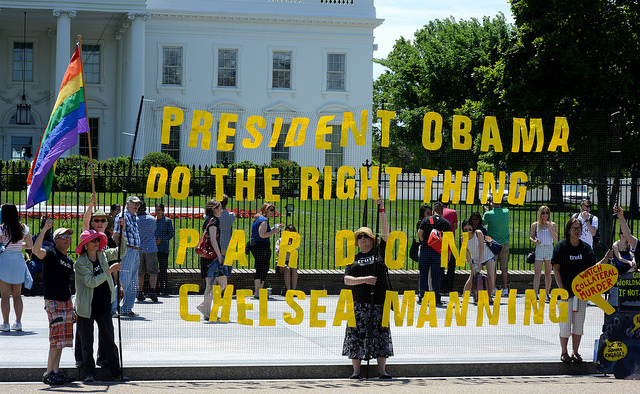
Barack Obama issued 78 pardons and 153 commutations before leaving office, including commuting the sentence of Chelsea Manning. While commutations shorten the sentences of incarcerated individuals, but do not alter their criminal record, pardons remove the conviction from the individual’s record. Obama’s latest string of clemency decisions brings his administration’s total to 1,324, the majority of which were commutations.

Research on federal executive clemency shows that rates of clemency are highest when Democratic presidents are in power, when crime rates are lower, and during periods of war. Legal research also highlights variation between states, with certain governors utilizing clemency measures more than others, though not necessarily along party lines. While executive clemency was once a practice commonly employed by U.S. presidents, its use has declined in recent decades. This decreased use of executive clemency has coincided with a sharp increase in arrests, both of which have contributed to the substantial rise in incarcerated individuals across the U.S. 
Scholarship also hints at who is likely to receive a commutation or pardon. Analyses of death sentences shows that women, youth, the elderly, and those who have spent a significant amount of time on death row are more likely to have their death sentences commuted. Additionally, death penalty commutations are more common among governors who are not returning to office (lame duck) and when the death row population is particularly old. However, even though female prisoners are more likely to receive clemency, recent qualitative investigations of commutation hearings suggest that women encounter a systemic gender bias when applying for a pardon or commutation.
Welfare office. Photo by Jacob Norlund, Flickr CC

The New York Times recently faced criticism after publishing a factually incorrect op-ed about how much money people receiving SNAP benefits (food stamps) spend on soda and other sweetened beverages. In a piece challenging the findings, Professor of Public Policy Joe Soss revisits the numbers and finds no substantial difference in spending between people who receive these benefits and people who don’t. Non-SNAP households spend about four cents on soft drinks for every dollar on groceries, and SNAP households spend about five cents per dollar. Soss points out that this error perpetuates stereotypical moral judgments about the poor. Research finds time and time again that these moral judgments often miss the facts, but they nevertheless have a big impact on our social safety net policies.

Historical work finds that aid to the poor in the United States developed to be highly conditional — political leaders often justified policies by focusing on certain “deserving” categories of people like soldiers and mothers. As a result, moral narratives about who deserves aid became central to the policymaking process and continue to shape attitudes about helping the poor.
These moral narratives bias our thinking about people who are poor and hide the fact that they are often no different from people who aren’t. For example, despite efforts to drug test welfare recipients, substance use rates are not much higher among the poor. And single motherhood in poor communities does not come from different sexual behavior — it happens because poor mothers value family just as much as everyone else. By treating poor people as morally deviant, our public policy can do more harm than good.
Photo by Mobilus In Mobili, Flickr CC

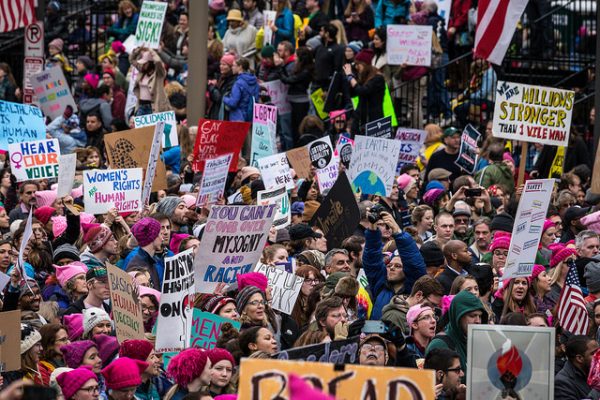
In one of the largest days of protest in recent history, the Women’s March on Washington and its sister marches drew millions of people out into the streets of major American cities to protest the inauguration of Donald Trump and to call for protecting the rights of women, immigrants, and other groups that are likely to be further marginalized by the Trump administration. A look at research on past women’s movements sheds light on the ways that gender shapes when and how women protest, and the important roles they have played in social movement history.

While some argue that women are too diverse to constitute an “issue group,” women’s social mobilization around issues of reproductive, labor, and voting rights has had an important impact on movement culture in the United States. In fact, women’s groups were some of the first to work outside of the existing political system by relying on changing public opinion, rather than voting, as a movement strategy.
But women have to contend with a social movement culture that is structured around already pervasive gender norms, which means that the strategies used by women’s movements, and women’s roles in social movements more generally, are in many ways reflective of existing gender norms. For example, women’s movements are more likely to rely on nonviolent strategies, like marches, and women are more likely to be recruited into movement groups to perform nonviolent, gendered tasks, such as canvassing or managing the movement’s social networks.
Though women are often relegated to the subordinate roles and more menial tasks of political organizing, research finds that these roles have been a key ingredient to social movement success. A historical analysis of the Civil Rights Movement in the U.S. reveals that African American women acted as “bridge leaders,” making the necessary connections between movement leaders and constituents that helped grow the movement. Women have also played a vital role in the U.S. environmental justice movement and drawn on their grievances and experiences as mothers to challenge pollution and toxic waste.


The success of the recent Women’s March is further evidence that when women mobilize, they can be a powerful force for change. 

Photo by Karl-Ludwig Poggemann, Flickr CC

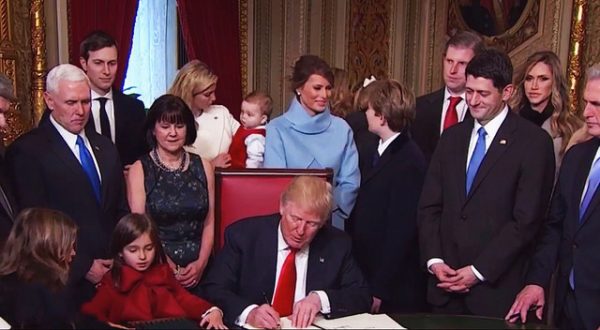
President Trump has made several high-profile picks for his cabinet, but he has one of the least diverse cabinets in recent history; there are no Latinos and very few other minorities or women. This has drawn criticism, but why is diversity a good thing for governments and other organizations? Social science research shows how diversity helps, but also how organizations often limit diversity by warping what it means to their members.  

Diversity can be quite beneficial for organizations. For example, schools with a more diverse student body experience superior educational outcomes. Similarly, in business, employee racial or gender diversity predicts higher sales revenue and market share.   
White House Press Secretary Sean Spicer responded to questions regarding the lack of diversity by stating that this cabinet is diverse; it has a “diversity of thinking…diversity of ideology.”  This is an example of how diversity acts as “Happy Talk,” a way people can show off their affections for modern equality without any attention to existing inequality. In short, many people talk about “diversity” in abstract ways, but avoid any real discussion of race, gender, and the like.
This inattention toward issues of race, gender, sexuality, and other axes of oppression can take the “oomph” out of claims to diversity and misses its original intent: increasing access for marginalized groups. Ellen Berrey succinctly describes the effects of watered down, amorphous diversity as “taming demands for racial justice.” As the remaining 5,000 cabinet sub-positions are filled, pay attention to whether these selections are diverse and what kind of “diversity” they really represent.
Photo by The Kingsway School, Flickr CC

From climate change to stem cell research, public discourse in the United States is highly divided about the legitimacy and authority of science. Depending on your views, it’s easy to dismiss the other side as uninformed or uneducated, but sociologists know that views about science are more complicated than that.

Despite common misconceptions that climate change skepticism is linked to education, trust in science has only a small correlation with educational attainment or scientific literacy.
Rather, distrust of science is closely linked to political and religious affiliations. Conservatives have the lowest level of trust in science; this holds true even among highly educated conservatives. As for religious folks, studies find that it is not necessarily that religious people completely distrust the scientific method, but rather they reject science’s influence on issues they see as a moral concern.
However, research cautions against thinking about trust in science as simply a liberal versus conservative binary. A recent study offers a more complicated analysis, arguing that a third perspective defies this binary. This group, labeled “postseculars,” have more complicated views — they often trust science in certain domains, but distrust it in others, reflecting a much more complicated picture of how cleavages in social, political, and economic attitudes influence public opinion of scientific authority.
Media Missionary Day, San Diego, 2008. Pamla J. Eisenberg, Flickr CC

The recent U.S. presidential election has everyone thinking about the role of media and religion in political life. From fake news to mainstream media spectacle, both the left and the right have been criticizing American journalism. White evangelical Christians also overwhelmingly broke for Trump, despite concern that he was not particularly pious himself. The intersection of politics, media, and religion is clear, but what can research tell us about how they interact?  Some of the best work suggests we can learn a lot by making an unexpected comparison: the role of religion and politics in the media in the United States and Africa.

First, political leaders across the globe use religious media in similar ways. Religious programming and discourse in the media creates new ways for people to use religion to signal their social status. Politicians in both the U.S. and countries like Nigeria have harnessed the power of these shows and their large audience numbers as a tool to publicly cultivate their spiritual image by integrating administrative goals with images of divine will.
Second, religious leaders also use secular media outlets in similar ways. The political economy of the media both in Africa and the U.S. means that secular media organizations are willing to broadcast religious programs because they garner large audience numbers. Additionally, religious leaders embed themselves in the elite, administrative networks that run secular media outlets, political groups, and academic organizations to disseminate their messaging to both religious and non-religious audiences. This also means that religious media personalities are firmly ensconced in today’s globalized media and public culture that is characterized by a focus on media icons, spectacle, and a penchant for dramatization.
Studying media as a central category across different international cases provides fresh perspectives on religion, citizenship, authority, and political engagement.
Photo by oatsy40, Flickr CC

A major point of discussion after the 2016 U.S. election has been the fact that while many polls predicted a win for Hillary Clinton, she ultimately lost the electoral college. Numerous estimates showed a commanding lead for the Democratic candidate, but they were decidedly off when it came to calling the results on election night. People were quick to blame the pollsters for misinterpreting the results or collecting bad data, but social scientists point to methodological issues that plague almost every poll and survey that can help explain some of what happened in November. 

Often, issues with sample distribution are part of the problem. A common method within polling circles is “Random Digit Dialing” (RDD), where researchers make a list of potential phone numbers and take a random sample from that set. Next, they call those numbers and ask people to take their survey by phone. This method can create a coverage bias, which can exclude some groups or people from being part of the respondent pool — not everyone has a phone or is able to stop and take a survey via phone in the middle of the day. This means that any conclusions drawn from that sample cannot be used to make conclusions about the general population because it is not truly representative. To correct for this, some researchers use address-based sampling (ABS) to make a respondent pool by sending mail invites to randomly selecting home addresses. Sometimes, this method can elicit a higher response rate than RDD, but the research shows that both RDD and ABS tend to over-represent non-Hispanic whites and people with college educations. In short, it is difficult to get a representative sample. 
Another common set of problems with polling is with respondents themselves. Social desirability bias occurs when participants provide answers that they feel are more socially acceptable, even if they are not necessarily their true beliefs. Krumpal provides an overview of the various forces that drive social desirability bias and the impacts it can have on both survey results and the ways that researchers interpret the data. Another prominent issue is panel conditioning, which happens when a survey respondent is asked the same questions repeatedly overtime. Respondents will often change their answer each time, revealing how fleeting survey responses can be.
Photo by Robert Couse-Baker, Flickr CC

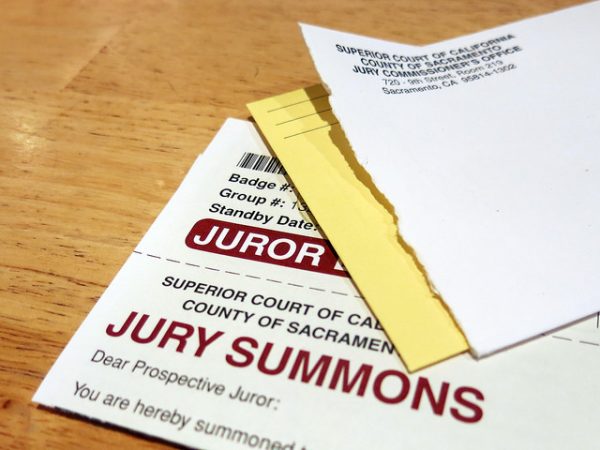
The U.S. Supreme Court is currently hearing arguments for Peña-Rodriguez v. Colorado, a case concerning allegations of racial bias in jury deliberations. Many states prohibit hearing juror testimony following the conclusion of a trial; however, following the deliberations of Peña-Rodriguez’s case, two jurors signed affidavits attesting to racial bias by a fellow juror. They allege that the juror referred to an alibi witness as discreditable because he was “an illegal,” and asserted that the defendant was guilty “because he’s Mexican.” After initially being struck down by both the trial judge and the Colorado Supreme Court, Peña-Rodriguez is now making his case to the highest court, a task which research suggests may prove extremely challenging.

In her book The New Jim Crow, Michelle Alexander illustrates why challenging racial bias in juries is so difficult. Despite the passage of laws such as Batson v. Kentucky, which prohibits prosecutors from discriminating on the basis of race when selecting juries, both prosecutors and defense attorneys are allowed peremptory strikes, or the ability to strike potential jurors for just about any reason they choose. Challenging instances of racial bias is even more difficult following the Supreme Court decision in Purkett v. Elm, which ruled that even if there is a pattern of striking a particular racial group by a prosecutor, providing any race-neutral reason (the prosecutor in this case used hair length) is enough to justify that the decision is not based on race.
Moreover, it is not just legal precedents that solidify racial bias, but also the initial selection process itself that is discriminatory. Potential jurors are drawn from registered voters or Department of Motor Vehicle lists, which contain fewer minorities. Forty-seven states also restrict the rights of felons to serve on juries, which disproportionately limits the presence people of color. Most states and the federal government place a lifetime exclusion for felonies, which automatically bans nearly 30 percent of adult black men from jury service.
In short, jury selection is not only inherently racially biased, but many Supreme Court decisions appear to support a system of racial discrimination rather than dismantle it. As a result, legal precedents such as the rules of evidence may bolster, or at the very least shield, racial bias within jury deliberations.
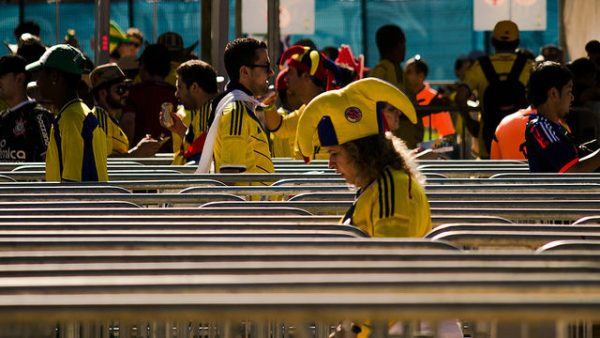
2014 FIFA World Cup in Brazil. Photo by paulisson miura, Flickr CC

Done and dusted. Brazil’s run of hosting global sporting events has officially ended. From the opening game of the FIFA Confederation Cup in 2013, to the closing ceremony of the Paralympics on September 18, it has been quite a ride. Spectacles of the grandest of scales were to be portrayed on television with mostly smiles and laughs, but also some sadness. In the eyes of the world, Brazil’s sporting exploits look to be a success, but was it worth it?  Was the estimated $30 billion the Brazilian government spent hosting these events a good investment? It is probably too early to say for sure, but sociological research can give us a sense of what kind of analyses need to be done to find out. 

In the past, economic growth has often been seen as the primary reason for hosting major sporting events for developing nations. But when even economists acknowledge that little economic revenue will be produced, we must look to other rationales. The hope of breaking into the upper-echelon of nations with positive news coverage and prestige has emerged as one of the justifcations for hosting global sports spectacles today. For example, South Korea, who co-hosted the 2002 World Cup, used the event to promote itself as a modern state, just like its neighbors Japan and China.

Other countries like Brazil, China, and Russia have used their recent Olympic and World Cup events to help build positive public opinion around the globe. Who knows if Brazil’s exploits will make a lasting impact on the world stage, but this criteria will surely be among the most important in how these Games are judged in the future.

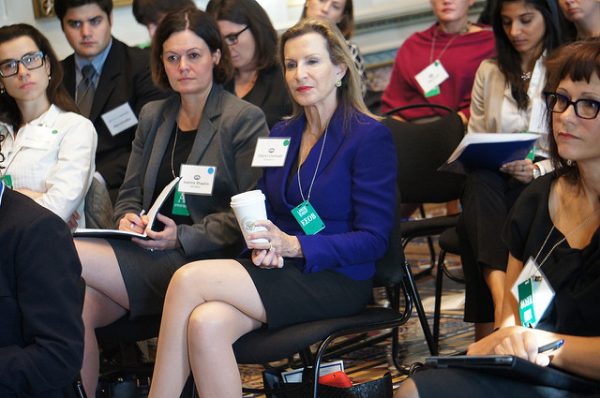
Women in Business at the White House. Photo by BusinessForward, Flickr CC

It’s no secret that the U.S. lags behind many other countries in terms of the number of women in politics. In Congress and state legislatures, women occupy less than a quarter of available positions. Hillary Clinton enters this arena, hoping to be the first female president in the US (but not first in the world: see Mindy Fried’s “Global Women at the Top”). Sexist critiques of Clinton range from criticizing her voice for being too loud, too shrill, and too naggy, to anti-Clinton merchandise that reads, “Don’t be a pussy. Vote for Trump,” or “Hillary sucks but not as hard as Monica.”

While there is some incentive for women to enter male-dominated fields–the pay and status is often greater–there are also negative consequences. Sexual harassment may function as a form of backlash against powerful women who challenge gender norms by entering male-dominated fields or positions. Many women report sexual harassment at work and female supervisors report especially high levels. These consequences occur on a much broader scale, as well. For instance, when women enter occupational fields traditionally dominated by men in large numbers, the average pay for those jobs decreases over time. To explain this phenomenon, scholars point to society’s devaluing of women’s work more generally.
So, what happens when men enter fields traditionally dominated by women? In workplaces where women often outnumber men, such as nursing, men actually advance much faster and to higher positions than their female counterparts. This mechanism is known as “the glass escalator.” Moreover, when men are outnumbered by women in a workplace, they perceive more support from coworkers and supervisors than women who work in male-dominated jobs.

Overall men benefit from working in female-dominated fields, while women face greater burdens when they work in male-dominated fields. It is no surprise that Hillary Clinton is experiencing her fair share of harassment and critique: Not only is she pursuing a position dominated by men, but one that has only been occupied by men.

For more on this, check out our TROTs on female leaders and sexual harassment in law professions, as well as this Soc Images post, “Why Aren’t There More Women in Politics?”