politics


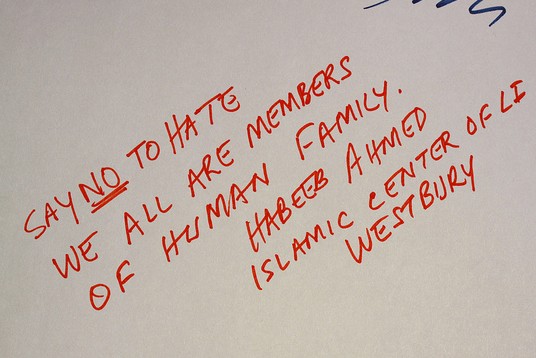
A message left at a memorial for Marcelo Lucero, a Hispanic victim of a hate crime on Long Island. Photo by Long Island Twins via Flickr.

The Emmanuel AME shootings in Charleston, South Carolina have reignited public discussion of both terrorism and hate crimes. While the media often focuses on foreign religious extremism as a motivation for domestic attacks, data show more radicalization has taken place on the political far-right (independent of religion or race) than among Muslims in the United States. Since 9/11, only 25 recorded attacks have been committed by Muslim extremists, while 65 attacks were driven by right-wing extremists at home. So what’s the difference between terror and a hate crime? Is there a difference? Sociological research shows how public discourse and community differences can change the story.

Words like “terrorism” and “hate crime” change across social contexts. In the U.S., acts of violence perpetrated by minority populations are more likely to be defined as acts of terrorism, whereas “home-grown” offenders are likely to be dismissed as crazy, deranged, or evil—“bad apples” rather than people motivated by hate or politics. For hate-crimes, the pattern is reversed. Hate crimes that involve majority perpetrators, particularly in interracial incidents, are linked to higher seriousness ratings. In both cases, the social position of both perpetrator and victim changes how we interpret the violence.
American anti-black hate crimes are most prevalent in communities with a high concentration of white residents that are undergoing black in-migration. This suggests that majority members may try to “defend turf” from the perceived threat of “outsiders”. Compliance with hate crime law is less likely in high-percentage black communities, particularly in the southern U.S. Within these black communities, past lynchings (between 1882-1930) are associated with lower compliance with hate crime law in the present and a lower likelihood of prosecution of hate crime cases.

For more on this issue, check out our other TROT! post, “How Hate Crimes Count.”
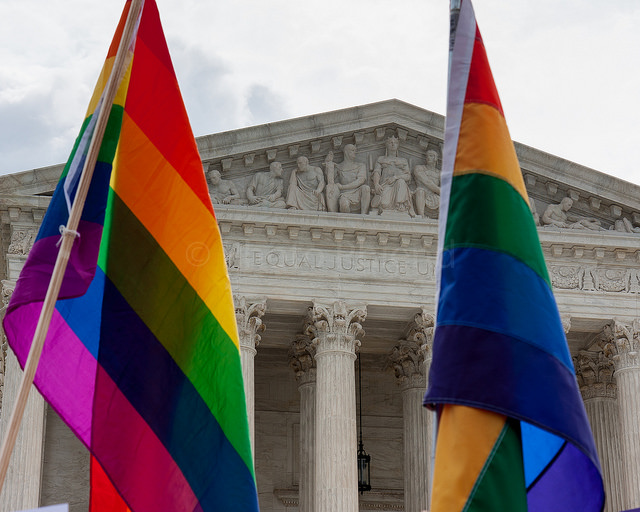
Photo Phiend, Flickr Creative Commons

With the Supreme Court’s ruling in Obergefell v. Hodges, states must legally recognize same-sex marriage nationwide. The fight for equality isn’t over, however, as many states do not have explicit protections for same-sex couples against practices like hiring discrimination. The Texas Attorney General also ruled that individual county clerks can refuse to offer marriage licenses to same sex couples on the grounds of their religious beliefs, even if the clerks’ office must ultimately grant the license. This is the challenge with nationwide legislation: laws on the books often differs from the law in action. History shows inequality can thrive in low level bureaucracy, sometimes in spite of national policy.

Policy changes take time to wind through organizations, especially those with large bureaucratic structures like the U.S. government. Autonomous managers in the middle construct their own reasons for adopting policies, often distancing themselves from big changes at the top of the chain. An institutional culture affects the implementation of a policy as much as the policy itself.
We can see these institutional boundaries in broader patterns of hiring discrimination against LGBT citizens that appear in experimental studies, even when employers don’t intend to discriminate. The history of federal regulation in immigration, the military, and welfare policies shows that the U.S. slowly built a bureaucratic system interested in measuring and controlling sexuality long before public battles over LGBT rights came on the scene.
Similar bureaucratic patterns happen around race. When the Supreme Court repealed laws against interracial marriage in Loving v. Virginia, for example, mixed-race couples still faced clerks who were often unwilling to grant them licenses. While the GI Bill was a sweeping national effort in which many U.S. citizens got better housing and education, veterans of color often had trouble registering for those benefits in uncooperative local offices.
Via aclu.org.
Via aclu.org.

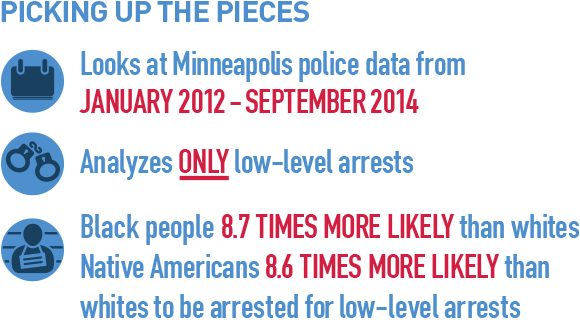
A recently released ACLU investigation a found that black residents of Minneapolis were 8.7 times more likely to be arrested for low-level offenses than white residents between January 2012 and September 2014. The report is the latest in eight city case studies, all of which “describe police departments that reserve their most aggressive enforcement for people of color.” The Minneapolis City Council also recently repealed spitting and lurking ordinances, two examples of the low level offenses cited by the report. Recent sociological research strikes a similar chord; it demonstrates how modern law enforcement isn’t just about crime, but controlling groups of people with minor rules and regulations.

Public discussion about crime tends to focus on felonies, but the majority of law enforcement activity today is geared toward misdemeanors. Even without conviction and sentencing, these minor offenses bring more people into the criminal justice system. The procedural hassle of dealing with a minor criminal record means more people are under this systematic control at any given time, regardless of their guilt or innocence.
The ACLU report finds people experiencing homelessness are the most vulnerable to this system, and many are charged for minor offenses that directly result from being homeless (like panhandling or sleeping outside). Many cities criminalize these behaviors as a way to control space, even to the point that those with criminal records are barred from entering certain neighborhoods.
This law enforcement isn’t just about crime, but also about power in communities of color. Neighborhood-level analysis shows that the stereotypical relationship between race and violent crime rates disappears for communities with more African Americans politically organizing and serving, either in office or on civilian review boards for the police. One of the ACLU’s recommendations to improve the situation in Minneapolis is to establish such review boards.

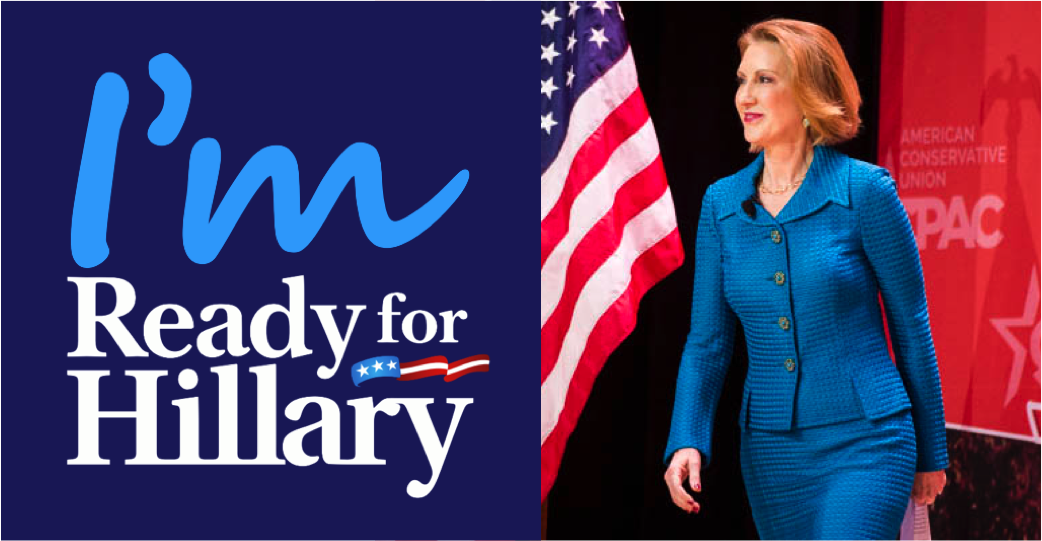
Most of the buzz around Hillary Clinton and Carly Fiorina’s candidacies are about getting into the White House as the first woman president, but what will life be like if one actually makes it?

Just winning the election won’t make politics more female friendly. Studies show that when women enter male-dominated fields, they find it difficult to work in an arena designed by men for men. For example, some jobs involve networking in masculine spaces like bars and golf courses that traditional and symbolically exclude women. When they hit the glass ceiling or find themselves undervalued, many women attribute limited opportunities or personal difficulties at work to problems with individual sexists or difficult personalities rather than a gendered workplace structure. However, restructuring the work environment to center more on teamwork than individual success may help women by giving them more contact with others at work, thus weakening gender stereotypes, providing more networking opportunities, and leading to more promotions.

Hillary Carly


With Hillary Clinton’s official announcement of her presidential candidacy—and now Carly Fiorina’s GOP candidacy—we have seen the immediate and constant sexism that will undoubtedly plague the campaign coverage until election day. Time Magazine, for example, ran a piece focusing on Clinton’s presumed post-menopausal estrogen levels as an asset to her presidential leadership skills (we have yet to spot an article on the testosterone levels of Jeb Bush or Bernie Sanders).

Media outlets often pay a disproportionately higher rate of attention to female candidate’s wardrobe, appearance, and age than to that of male candidates, treating women as novelties rather than serious contenders. The focus on appearance objectifies and sexualizes, delegitimizing their authority.
People evaluate “appropriate” roles for women in public office based on gender stereotypes about policy and issue competency more than on personality traits. Public opinion survey respondents indicate that they find female candidates more capable of handling “feminine” topics like education and healthcare, while male candidates are more qualified to deal with “masculine” issues like terrorism and the economy.
Contrary to expectations, neither higher numbers of educated women nor the type of political system translates to more women in national office. In fact, female congressional candidates win at similar rates to men in general elections. Instead, ideologies about women’s roles and positions in societies influence women’s abilities to enter politics as candidates and survive the primary process.

For more on this topic, check out Scholars Strategy Network and Sociological Images

workers of the world

Workers of the World, Unite!

Since the late 1800s May Day—the first of May and a traditional European spring celebration—has been recognized as International Workers Day. It’s a time to celebrate working people and the possibilities for international solidarity. On May Day 2015, the state of workers looks rather grim: expanding inequality, increasing fiscal austerity, and degrading working conditions. Amid these negative trends, though, there are glimmers of hope as global workers organize and mobilize to assert their rights, curtail corporate power, and create a more equitable world.

To mark May Day, we are exploring issues of inequality, labor, and social movements in a three-part series.

Part I: The U.S. & Inequality

Deregulation, privatization, and declining unionization have exacerbated the gulf between rich and poor in the past 50 years. Researchers have documented how much of the increase in wage inequality is due to the weakening of policies and institutions that have historically protected and empowered workers—unions, minimum wage laws, unemployment insurance, and labor law—in addition to structural changes in the economy and labor market.

Read May Day Part II: Global Labor. There’s Research on That!

Read May Day Part III: Social & Political Movements. There’s Research on That!

California is facing record drought, water restrictions, and threats of wildfires. The solution seems simple—just find more water through increased pumping or desalination—but these quick fixes ignore deeper questions about how we turn public necessities into commodities and determine who can lay claim to natural resources. These issues can lead to cultural conflict, but struggles for water can also renew solidarity across different social groups.

Sociological case studies remind us that professional environmental responsibilities to the land, its residents, owners, and governments change over time and through particular institutional cultures. Power and inequality shape who is exposed to environmental problems and how we address solutions.
Water conflicts also bring up commodification—the way we turn public necessities like water and health into market goods. Research on commodification examines everything from how the water industry actively competes with the tap to how insurance markets change the culture of life and death in the United States.
Water resources—even when scarce—do not inevitably lead to conflict. Environmental concern is not only high in affluent nations; even in places as tense as the Middle East, local activists regularly use the environment to bridge cultural, political, and religious tensions.

Rebecca Farnum is a 2012 EPA Marshall Scholar researching for a PhD in Geography at King’s College London, where she explores environmental conflict and cooperation around food and water resources in the Middle East and North Africa. She has an LLM in International Law on environmental and human rights law, an MSc in Water Security and International Development, and undergraduate degrees in anthropology, interdisciplinary humanities, international development, and international relations.

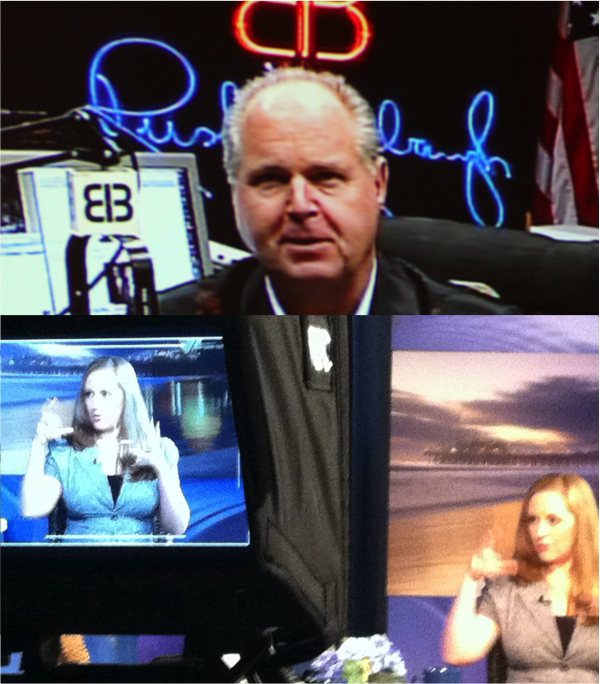
Limbaugh WadeDuring his April 1 on-air radio show, Rush Limbaugh cited a recent SocImages post titled, “Are Economics Majors Anti-Social?” In debating the content of the post, Limbaugh frequently referred to author and editor Lisa Wade as “professorette.” In making up this word, he intentionally gendered the gender-neutral title “professor.” Given the cultural devaluation of femininity, the unnecessary gendering of Wade’s profession signals a discounting of her position and expertise. While Wade is, notably, the author (with Myra Marx-Ferree) of the new book, Gender, women of all professions face challenges to their legitimacy.

Education, prestige, and capital do not exempt women from sexist stereotypes about incompetency. Female researchers and professors are often viewed as less competent than their male colleagues, and male-dominated academic disciplines are perceived to draw more innately brilliant and talented practitioners than female-dominated disciplines.
Even when women occupy high status positions of expertise they are more likely to be interrupted than men. Furthermore, men are more likely to interrupt women even when women occupy a higher professional prestige, suggesting that the gender hierarchy can be more influential to power dynamics than professional status.
Women are also limited in the range of emotions and behaviors they can exhibit in the workplace without being judged negatively. Emotional displays of anger, for example, are interpreted differently if exhibited by men or women, to the likely disadvantage of women. Additionally, displays of dominance by agentic (that is, self-organizing and proactive) female leaders are subject to dominance penalties, backlash, and prejudice.

Curious what our friends in sociolinguistics have to say about gendered titles? Consider listening to Lexicon Valley’s exploration of feminine word endings here.

Indiana’s recently passed Religious Freedom Restoration Act (not to be confused with the 1993 Federal RFRA), faced widespread public controversy and brought a number of high profile boycotts against the state. The law allows private businesses to use the free exercise of religion as a defense in court should they face a lawsuit for discrimination, raising concern about whether businesses are allowed to discriminate against clients on religious grounds. Similar laws are under debate in other states, while in Madison, Wisconsin, officials have signed the first legislation that includes the “non-religious” as a legally protected category. The laws illustrate the importance of religion in shaping social and political issues in American lives.

While religion often works as an inclusive, community-building institution, it also has the potential to reinforce existing social boundaries and inequalities. Cultural and historical contexts shape the ways that religious beliefs are interpreted, and in the American context, religious beliefs are often used to exclude religious and sexual minorities.
Even if these laws are repealed or amended, these social boundaries underlie deeper issues in the workplace. Despite being prohibited by the Employment Non-Discrimination act, audit studies find discrimination against religious minorities and openly gay men in the hiring process.

For more on this issue, check out our post from last year: Religious Freedom and Refusing Service.

The Canadian Senate recently passed an amendment that excludes transgender people from using public restrooms of their choice. Transgender rights are facing similar challenges domestically, as Florida, Texas, Kentucky, and Minnesota consider bills that would limit or restrict the use of restrooms based on one’s sex assigned at birth. Additionally, Missouri State Rep. Jeff Pogue is pushing to ban gender-neutral bathrooms. As trans activists take to Twitter, sharing powerful photographs of themselves in bathrooms that do not fit their gender identity, some may be wondering: when did the loo become so political?

Gender policing is by no means new; in fact, regulating and upholding the gender binary has long been key to social and legal organization. Upon meeting someone new, it is common to make assumptions about their gender based on their body and presentation.
Assumptions about gender vary based on context. Whereas gender identity and presentation may be used as criteria for gender-integrated social spaces, biological sex and genital appearance is emphasized in sexualized situations (e.g. dating) and gender-segregated spaces (e.g. bathrooms). Culturally held beliefs that men are dangerous and women are vulnerable exacerbate the policing of women’s only spaces like restrooms, while gender nonconformity may create ‘gender panics’ for nontransgender people.
The policing of gendered bathrooms can include anything from strange looks and verbal challenges to interpersonal violence and arrest. As a result, transgender and gender nonconforming people may avoid public restrooms or alter their presentation substantially to avoid harassment and conflicts.
Legislation that seeks to regulate bathroom use must first venture down the slippery slope of legally defining sex. This is no small task. In the absence of any federal definition of sex, dozens of judicial gender determination cases demonstrate the variety of factors courts use to determine gender, including personal identity, physical presentation, medical history, and genital appearance and function.