inequality

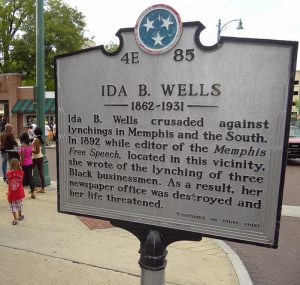
Photo of a plaque commemorating Ida B. Wells. Photo by Adam Jones, Flickr CC

As Black History month draws to a close, it’s important to celebrate the work of Black scholars that contributed to social science research. Although the discipline has begun to recognize the foundational work of scholars like W.E.B. DuBois, academia largely excluded Black women from public intellectual space until the mid-20th century. Yet, as Patricia Hill Collins reminds us, they leave contemporary sociologists with a a long and rich intellectual legacy. This week we celebrate the (often forgotten) Black women who continue to inspire sociological studies regarding Black feminist thought, critical race theory, and methodology.

Ida B. Wells (1862-1931) was a pioneering social analyst and activist who wrote and protested against many forms of racism and sexism during the late 19th and early 20th century. She protested Jim Crow segregation laws, founded a Black women’s suffrage movement, and became one of the founding members of the NAACP. But Wells is best-known for her work on lynchings and her international anti-lynching campaign. While Wells is most commonly envisioned as a journalist by trade, much of her work has inspired sociological research. This is especially true for her most famous works on lynchings, Southern Horrors (1892) and The Red Record (1895).
In Southern Horrors (1892), Wells challenged the common justification for lynchings of Black men for rape and other crimes involving white women. She adamantly criticized white newspaper coverage of lynchings that induced fear-mongering around interracial sex and framed Black men as criminals deserving of this form of mob violence. Using reports and media coverage of lynchings – including a lynching of three of her close friends – she demonstrated that lynchings were not responses to crime, but rather tools of political and economic control by white elites to maintain their dominance. In The Red Record (1895), she used lynching statistics from the Chicago Tribune to debunk rape myths, and demonstrated how the pillars of democratic society, such as right to a fair trial and equality before the law, did not extend to African American men and women.
Anna Julia Cooper (1858-1964) was an avid educator and public speaker. In 1982, her first book was published, A Voice from the South: By A Black Woman of the South. It was one of the first texts to highlight the race- and gender-specific conditions Black women encountered in the aftermath of Reconstruction. Cooper argued that Black women’s and girls’ educational attainment was vital for the overall progress of Black Americans. In doing so, she challenged notions that Black Americans’ plight was synonymous with Black men’s struggle. While Cooper’s work has been criticized for its emphasis on racial uplift and respectability politics, several Black feminists credit her work as crucial for understanding intersectionality, a fundamentally important idea in sociological scholarship today.
As one of the first Black editors for an American Sociological Association journal, Jacquelyn Mary Johnson Jackson (1932-2004) made significant advances in medical sociology. Her work focused on the process of aging in Black communities. Jackson dismantled assumptions that aging occurs in a vacuum. Instead, her scholarship linked Black aging to broader social conditions of inequality such as housing and transportation. But beyond scholarly research, Jackson sought to develop socially relevant research that could reach the populations of interest. As such, she identified as both a scholar and activist and sought to use her work as a tool for liberation.

Together, these Black women scholars challenged leading assumptions regarding biological and cultural inferiority, Black criminality, and patriarchy from both white and Black men. Their work and commitment to scholarship demonstrates how sociology may be used as a tool for social justice. Recent developments such as the #CiteBlackWomen campaign draw long-overdue attention to their work, encouraging the scholarly community to cite Wells, Cooper, Jackson, and other Black women scholars in our research and syllabi.

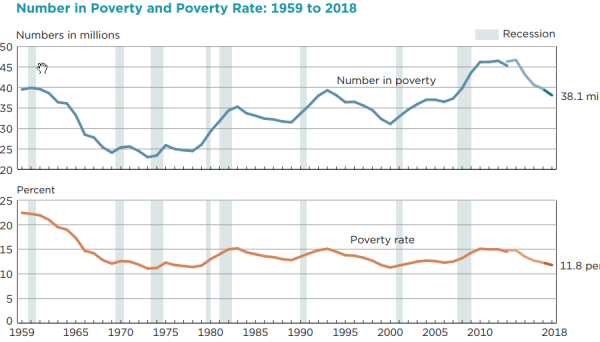
Photo by Andrew Turner, Flickr CC

Originally posted July 8, 2019.

On July 4th, 1776, signers of the Declaration of Independence declared their intent to “dissolve the political bands” holding the United States and Great Britain together. That subtle language quells the imagery of violent revolution — over nearly a decade of warfare, thousands died in the conflict. Today, in the midst of flags and cookouts, the violence of the revolution may yet again fade to the background. But many social scientists examine such violence deeply, and in doing so showcase the power of violence to remake identity, redraw state boundaries, and bring power to marginalized groups.

Acts of violence can redefine the boundaries of groups. During crises like civil war or political upheaval, political elites may seek to unite ethnic, racial, or religious groups to consolidate power. Threats of violence may motivate these groups, for fear or for self-protection, to mobilize. Historically, these changing groups have influenced national boundaries — indigenous groups were often targeted for violent elimination in order to conquer a space for a particular identity group, or areas were conquered to make more space for a group in power. In these ways, many of the symbolic and physical boundaries in the world around us carry traces of violence.
Violence and conflict can also create opportunities for those with limited political power. Elisabeth Jean Wood, for example, analyzed how insurgent groups of impoverished and exploited workers could use organizing and sometimes violent tactics to convince powerful leaders to negotiate, thus installing democratic governments. Marie Berry examines political power in the aftermath of conflict, showing how the participation of women in traditionally male spaces after violence enabled political organizing and gains in power. Though the extent and longevity of these changes differ between conflicts, violence and its aftermath have the capacity to result in political change.
While the transformative power of violence looks different across cases, its power doesn’t exist in a vacuum — global norms and regulations around violence often impact its destructive and constructive capacities. Today’s belligerents are often aware of laws surrounding the use of violence, like regulations about who or what can be targeted and what types of strategies are permitted. To garner favor with powerful international actors, many combatants abide by these regulations. Others abide selectively, like signing onto treaties in order to partake in other forms of violence with less oversight.

In the centuries that have passed since the revolution, many Americans now think of July 4thas a day of parades and parties, as representations of conflict have faded over time. But amongst the fireworks, social science shows the centrality of violence in national histories, international relations, and the relative power of social groups. 

Source: U.S. Census Bureau, Current Population Survey, 1960 to 2019 Annual Social and Economic Supplements

In the United States, poor people are judged harshly — especially when they receive government assistance or “welfare.” Yet, over 38 million people live in poverty. What people often forget, though, is that poverty itself is expensive. Social science research demonstrates that the poor pay more for necessities like housing and food, and debt can have serious consequences beyond just financial.

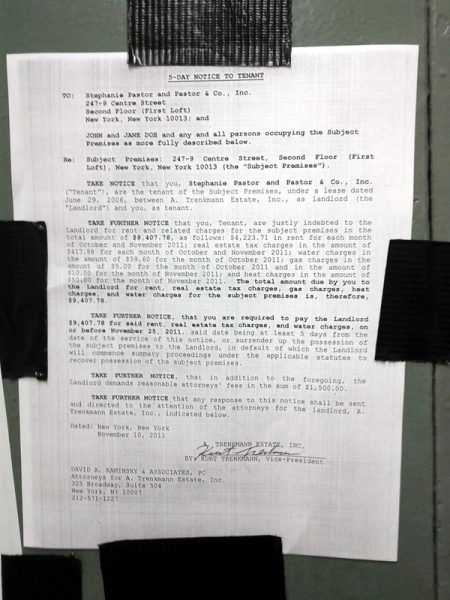
Eviction notice. Photo by Corey Doctorow, Flickr CC

The poor pay significantly more for housing than others — sometimes 70% or 80% of their income. In 2018, low-income households paid over half their income for rent or lived in substandard housing. Further, landlords overcharge tenants in high poverty neighborhoods and those with higher concentrations of African Americans relative to the market value of the property. When families cannot afford basic needs they will make calculated tradeoffs to keep their housing, paying for rent instead of utilities to avoid eviction. Such tradeoffs often lead to compounded costs from late fees, and families living without water, electricity, or heat. 

Poor families tend to pay more for food, too. Families with precarious housing situations especially struggle — If they do not have a stove or oven to cook with, or space to prepare meals, they must rely on food that can be prepared quickly, like microwave meals or fast food. And even when families are equipped to prepare meals at home, they often do not have the money upfront to buy in bulk, meaning they pay more for food in the long run. According to the USDA, a “thrifty meal plan”– choosing the cheapest options — costs a family between $567 and $651 per month, and this cost does not include home labor. One study estimates families of four would need to spend almost $400 on top of their food stamps to meet guidelines for a healthy diet. 

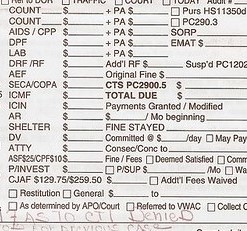
Fines on a court appearance document. Photo by Elle Ko,
Flickr CC

When poor people face fines and fees, their inability to pay or keep up with payments means they go further into debt. When these fees are part of the criminal justice system, failure to pay can also result in jail time. Anyone convicted of any type of crime is subject to fines and fees, from traffic tickets to felony convictions. And sometimes, these fees are not even dependent on a conviction: In North Carolina all felony defendants pay a “cost of justice” fee ($151.50) whether they are convicted or not. Until the costs are paid off, that person is tied to the criminal justice system — for the poor, this can be a lifetime.

In the wake of the most recent proposed cuts to food stamps — a blip in a long U.S. history of cutting benefits for its poorest citizens — it is important to remember that poverty is not cheap. 

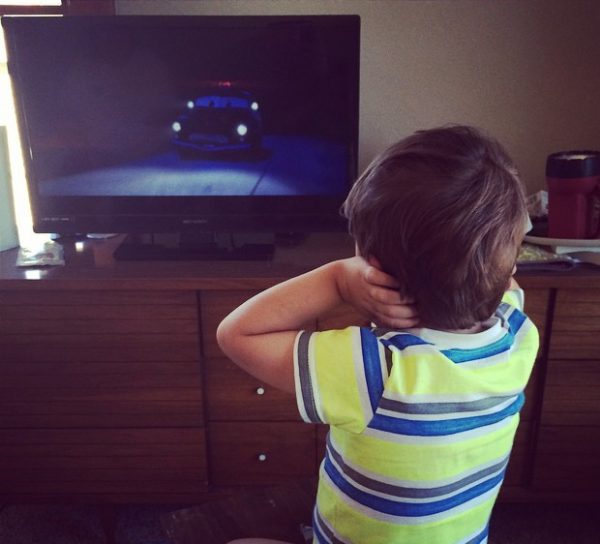
Photo is shows a child covering their ears while watching tv
Photo by Miles Bannan, Flickr CC

This post was created in collaboration with the Minnesota Journalism Center

Obstruction, quid pro quo, impeachment. The tweets, the news alerts, the endless headlines. This political landscape, and the overall media news landscape, can be exhausting, and news consumers are showing they are tired of it all. A June 2019 Digital News Report explained that this news fatigue has turned into news avoidance: 41 percent of respondents in the United States (and 32 percent worldwide) said they “often or sometimes” avoid the news. 

Scholars are exploring the reasons for news avoidance, with some readers finding news “too negative,” “frustrating” or “annoying.” Other research shows that women are more likely than men to avoid the news, a gap explained by structural inequalities, like family commitments and household responsibilities.
One of the first journalism studies on this topic found that participants avoided the news but counted on the news finding them. The study from Stephanie Edgerly identified participants who did not follow any news accounts or journalists on social media but relied on Facebook to notify them of significant news and events.
These news avoiders are less inclined to vote, a troubling fact to University of Minnesota researcher Benjamin Toff:

“I do have concerns about whether our news environment is all that conducive to creating an electorate of people who actually hear the other side, can think through complicated political debates and issues, and understand a variety of different perspectives.”

Women’s news avoidance is intertwined with a lack of political engagement. This can lead to women facing difficulty advocating for themselves in the political sphere and fewer women involved in the political process or even running for office.
One way to decrease the number of news avoiders is to improve the quality of news itself and make news consumption more appealing. “Solutions journalism” explores sociological problematic issues in communities (homelessness, childhood obesity, etc) and critically examines problem-solving efforts. This goes beyond more straight-forward traditional reporting of the facts and, instead, offers ideas on how to resolve issues important to community members. Research demonstrates that readers are more likely to engage with (share, like, etc) solutions-oriented content than traditional news content. In addition, findings reveal readers report more favorable attitudes towards the news story and news organization when news discussed solutions.

Another important avenue in combating this news avoidance issue is media literacy. For more on media literacy, click here.

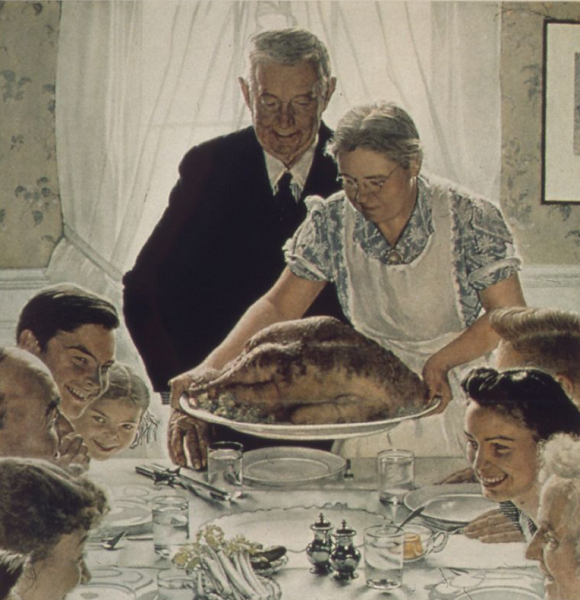
Peaceful holiday meals may still be the ideal, but they are not the norm. The image shows part of a World War II propaganda poster by Norman Rockwell, proclaiming, “OURS… to fight for: Freedom from want,” via Wikimedia Commons.

As we prepare for Thanksgiving, many people look forward to sharing a warm meal with their family and friends. Others dread the holiday, gearing up to argue with their relatives or answer nosey questions. TSP has written about the political minefield that holiday meals can be in the past. This year we want to point out that the roots of difficult dinners actually run deep in everyday family mealtime. Thanksgiving, like any family mealtime, has the potential for conflict. 

Scholars have documented how important meal time can be for families in terms of cultivating relationships and family intimacy. However, they also show that despite widespread belief that families should share “happy meals” together, meals can be emotionally painful and difficult for some families and family members.
Disagreements between parents and children arise at mealtime, in part, because of the meal itself. Some caregivers go to battle with “picky eaters.” Migrant parents struggle to pass cultural food traditions to children born in the United States. Low income parents worry that their children will not like or eat the food they can afford.
Family meals also reproduce conflict between heterosexual partners. Buying, preparing, and serving food are important ways that women fulfill gendered expectations. At family meal-times men continue to do less work but hold more power about how and when dinner is served.
Thanksgiving, or any big holiday meal, can involve disagreements. However, that is not altogether surprising considering that everyday family meals are full of conflicts and tension.
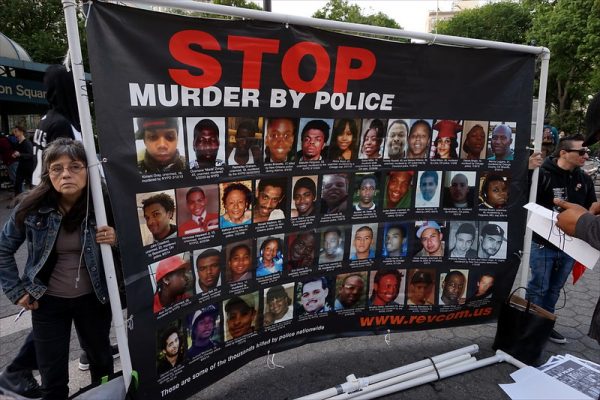
Photo shows a large sign that reads, Stop Murder by Police, and shows pictures of women and girls killed by police.
Photo by The All-Nite Images, Flickr CC

Earlier this month another Black American, Atatiana Jefferson, was fatally gunned down by a Fort Worth police officer in her own home. In the weeks since her death, community activists and residents have called for law enforcement accountability and reform of the police department’s use of force policies. As the Fort Worth community continues to grieve and fight for justice, Jefferson’s death reminds us Black women must be included in conversations around police violence, reform, and accountability. After a decades long struggle for visibility, Black women activists created the hashtag #SayHerName to bring awareness to the growing number of Black cis- and transgender women killed by law enforcement — a list Jefferson has now joined at just 28-years-old. A small but impressive group of sociological works have highlighted Black women’s experiences with police and the racialized and gendered challenges that lie ahead in developing police-community trust.

Similar to Black men and boys, Black women and girls also hold higher levels of legal cynicism (distrust) in law enforcement than whites. They report being stopped and facing verbal harassment for traffic incidents or, in the case of Black girls, breaking curfew — especially when in the presence of Black male peers. Black women and girls also distrust police due to their unresponsiveness to serious calls involving interpersonal, domestic, and sexual violence. For many Black women and girls living in low-income communities, police violence is simply one form of a larger “matrix of violence,” where they must also navigate interpersonal and neighborhood violence. At times, police are the perpetrators of these gender-specific forms of violence. These matrices remain interconnected, as cynicism towards law enforcement hinders reliance on police to address other forms of violence.
Motherhood also brings distinct challenges that shape Black women’s attitudes towards police. Black women are targeted through “family criminalization,” where they fear law enforcement will target both their children and themselves for being “bad mothers.” Since motherhood places Black women responsible for the safety of their children, they attempt to protect Black youth from police suspicion by sharing cautionary tales, sheltering them, and teaching them to comply with police demands. Black women’s cautionary tales, however, often emphasize the police assaults against Black sons, while treating police violence against Black daughters as improbable and less violent. While Black mothers often view police as illegitimate and unresponsive, they may also use police services to help (mostly male) loved ones when other resources remain scarce.

Photo by the euskadi 11, Flickr CC

Originally posted April 2017. We’re reposting this in light of California’s recent decision to prevent the renewal of contracts with for-profit prison companies.

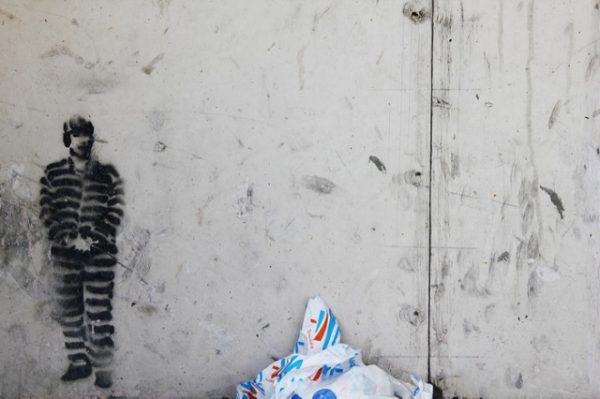
Last month, Attorney General Jeff Sessions reinstated the use of private prisons in the federal system. This move is welcome news to top corrections corporations such as CoreCivic, but human rights activists are concerned about this shift. Opponents claim that these corporations bring in large profits while their prisons remain rife with safety and healthcare deficiencies, as well as underpaid employees. While these concerns are important to consider, the private prison industry represents a small segment of the American correctional system. According to the Bureau of Justice Statistics, only 17% of inmates in federal prisons and 7% in state prisons were held in private facilities in 2015.

During their initial inception, private prisons were believed to be a cost-effective option that could provide better services than government facilities. Despite these goals, much of the current evaluative research suggests that private facilities are no more cost effective than public facilities. Likewise, private prisons appear to perform worse in reducing recidivism than public correctional facilities and have similar (and sometimes worse) conditions than public facilities. In contrast, some evidence suggests that private prisons may be less overcrowded. Due to these ambiguities, scholars of the privatization debate are calling for more research into the qualitative differences between the private and public sector of prisons.
Regardless of their effectiveness, research suggests that the demographic composition of private prisons is racially disparate. In an analysis of adult correctional facilities in 2005, private prisons had significantly fewer white and more Hispanic populations when compared to their public counterparts. As to why racial and ethnic disparities exist, research points to the role of private prisons in immigrant detention, which has lead some scholars to argue that the private prison industry is just a small segment of a massive immigrant industrial complex. This line of research posits that this complex perpetuates the criminalization and stigmatization of immigrants, especially among Latinos, and as a result comes at a significant cost to immigrant families and communities.

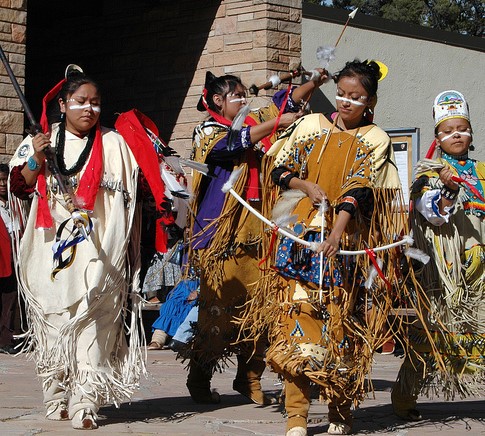
The Dishchii’ Bikoh’ Apache Group from Cibecue, Arizona, demonstrates the Apache Crown Dance. Photo by Grand Canyon National Park, Flickr CC

Originally posted October 9, 2017

In recent years,  an increasing number of Americans are celebrating Indigenous People’s Day to honor those who suffered at the hands of explorers like Christopher Columbus. Social science research helps us understand the underlying gender and racial components of colonial settlement in the United States.

In what is now the United States, Andrea Smith argues that sexual conquest — the rape of native women — was closely tied to the conquest of land. Europeans perceived the indigenous people that inhabited the Americas as uncivilized. Ideas of white civility deemed native women as hypersexual and uncontrollable, unlike white women, whose perceived purity they could not match. These ideas of native women’s sexuality allowed for European males to rape native women without consequence.
Ideas about native men’s and women’s  inferiority were also important for white men’s identities. In the U.S., white settlers believed themselves to be superior to indigenous peoples, bringing enlightenment to an empty wilderness. White, male identity was thus closely tied to the control of land and ownership of property.  
Colonizers viewed land as a metaphor for women’s subjugation. Land – similar to women – was something to be taken and possessed by European men. For example, Europeans who colonized parts of Africa referred to the continent as “virgin land.” Just as virginity was used to describe young women who are perceived as pure and untainted by sex, referring to unconquered land as “virgin” reflects the European’s beliefs that it was also pure, untainted, and ripe for European colonization.

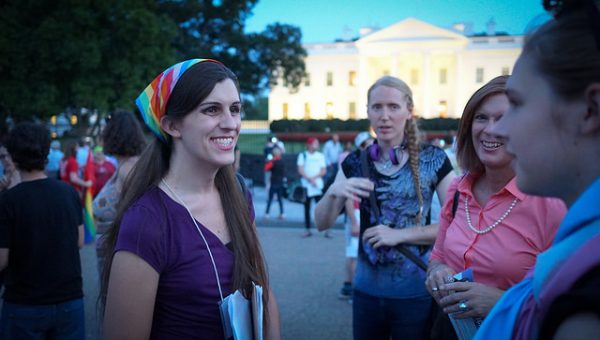
Candidate for Virginia Delegate (elected November 7) Danica Roem, at Protest Trans Military Ban. Photo by Ted Eytan, Flickr CC

Originally posted November 28, 2017.

American attitudes towards transgender and gender nonconforming persons might be changing. Earlier this month, voters elected six transgender officials to public office in the United States, and poll data from earlier this year suggests the majority of Americans oppose transgender bathroom restrictions and support LGBT nondiscrimination laws. Yet, data on attitudes toward transgender folks is extremely limited, and with the Trump administration’s assault on transgender protections in the military and workplace, the future for the trans community is unclear. Despite this uncertainty, a close examination of the social science research on past shifts in attitudes towards same-sex relationships can provide us insight for what the future may hold for the LGBTQ community in the coming decades.

Attitudes about homosexuality vary globally. While gay marriage is currently legal in more than twenty countries, many nations still criminalize same-sex relationships. Differences in attitudes about homosexuality between countries can be explained by a variety of factors, including religious context, the strength of democratic institutions, and the country’s level of economic development.
In the United States, the late 1980s witnessed little acceptance of same-sex marriage, except for small groups of people who tended to be highly educated, from urban backgrounds, or non-religious. By 2010, support for same-sex marriage increased dramatically, though older Americans, Republicans, and evangelicals were significantly more likely to remain opposed to same-sex marriage. Such a dramatic shift in a relatively short period of time indicates changing attitudes rather than generational differences.
Americans have also become more inclusive in their definition of family. In 2003, nearly half of Americans emphasized heterosexual marriage in their definition of family, while only about a quarter adopted a definition that included same-sex couples. By 2010, nearly one third of Americans ascribed to a more inclusive understanding of family structures. Evidence suggests that these shifts in attitudes were partially the result of broader societal shifts in the United States, including increased educational attainment and changing cultural norms.
Despite this progress for same-sex couples, many challenges remain. Members of the LGBTQ community still experience prejudice, discrimination, and hate crimes — especially for trans women of color. Even with support for formal rights for same-sex couples from the majority of Americans, the same people are often uncomfortable with informal privileges, like showing physical affection in public. Past debates within LGBTQ communities about the importance of fighting for marriage rights indicates that the future for the LGBTQ folks in the United States is uncertain. While the future can seem harrowing, the recent victories in the United States and Australia for same-sex couples and transgender individuals would have been unheard of only a few decades ago, which offers a beacon of hope to LGBTQ communities.

Want to read more?

Check out these posts on TSP:

Review historical trends in public opinion on gay and lesbian rights (Gallup)

Check out research showing that bisexual adults are less likely to be “out” (Pew Research Center)

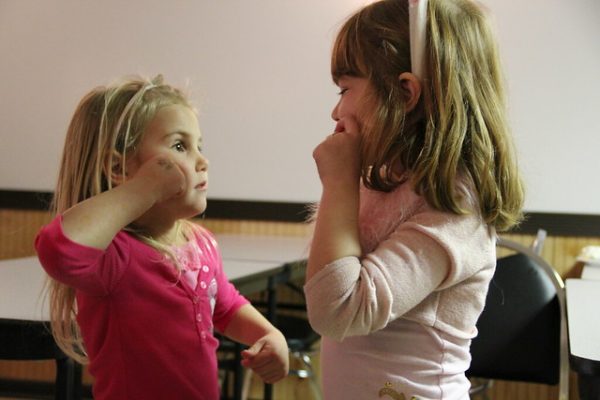
An elementary school student shows her younger friend how to sign using American Sign Language. Photo by daveynin, Flickr CC.

Since the passage of the Education for All Handicapped Children Act (EHA) in 1975 and the more comprehensive Individuals with Disabilities Education Act (IDEA) in 1990, the number of children receiving special education services has increased dramatically. Today, seven million children in the United States receive special education to meet their individual needs, with more than ever attending their neighborhood schools as opposed to separate schools or institutions.

Because special education has become so institutionalized in schools over the past three decades, we often take for granted that the categories we use to classify people with special needs are socially constructed. For instance, Minnesota has thirteen categorical disability areas, ranging from autism spectrum disorders to blind-visual impairment to traumatic brain injury. But these categories differ from state to state, as do states’ definitions for each category and their protocols for determining when a child meets the diagnostic criteria in a given area. A more sociological take suggests that the “special ed” label does more than just entitle children to receipt of services. For better or worse, it also helps to establish their position within the structure of the mass education system, and to define their relationships with other students, administrators, and professionals.
Research suggests that children of color are overdiagnosed and underserved. They are more likely to be referred for special education testing and to receive special education services than others. This disproportionality occurs more often in categories for which diagnosis relies on the “art” of professional judgment, like emotionally disturbed (ED) or learning disabled (LD). It occurs less often in categories that require little diagnostic inference like deafness or blindness. The attribution of labels can be particularly concerning for children of color, as these labels can be associated with lower teacher and peer expectations and reduced curricular coverage. Even when appropriately placed in special education classes, children of color often receive poorer services than disabled white children. Some research suggests that this happens because the culture and organization of schools encourages teachers to view students of color as academically and behaviorally deficient.
Given the disproportionate representation of students of color in special education, sociologists have investigated whether a child’s race or ethnicity elevates their likelihood of special education placement. By controlling for individual-, school-, and district-level factors, researchers have found that race and social class are not significant predictors of placement. However, school characteristics — like the overall level of student ability — play a role in determining who gets diagnosed. And, because children of color tend to be concentrated in majority-minority schools, they are less likely to be diagnosed than their white peers.

You may also be interested in a previous article: “Autism Across Cultures.”

For more information on children and youth with disabilities, check out the National Center for Education Statistics.