gender

Photo by Edward Kimmel, Flickr CC

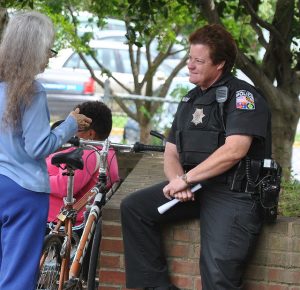
Protests broke out throughout Tulsa, Oklahoma the night an unarmed black man, Terence Crutcher, was shot and killed by a white female police officer, Betty Shelby. Police killings have surged in mainstream media since the 2014 shooting deaths of young black men like Michael Brown and Eric Garner, shootings that have overwhelmingly involved male law enforcement officials. As a result, female police officers and the likelihood that they will use unnecessary force have largely been excluded from the conversation.

Findings in this area, however, are mixed. Some report that there are no significant differences between use of force by men and women when making arrests, except for the fact that use of force encounters for women were slightly less likely to employ a weapon and produce injury. Others, however, noted that female police officers are less likely to use force and suggest that a greater female presence may reduce violent interactions with citizens.
The last several decades have witnessed a rise in female officers in law enforcement agencies. Consequently, social scientists have addressed the gendered assumptions about women’s competence in handling tasks traditionally considered masculine. Institutional norms in policing often require a great deal of “emotional labor” that differ based on an officer’s gender. Women officers are expected to display little outward signs of emotion in their interactions with citizens, and yet are commonly still assigned policing tasks that tend to be devalued as feminized and judged as appropriate for women officers, such as administrative duties and community policing. 
Some research suggests that female officers are more likely to be victimized themselves. One study finds that female police officers are not at an increased risk of experiencing victimization during police-citizen interactions, but that incidents involving interpersonal violence along with alcohol and/or drugs increases risks for women on the job.
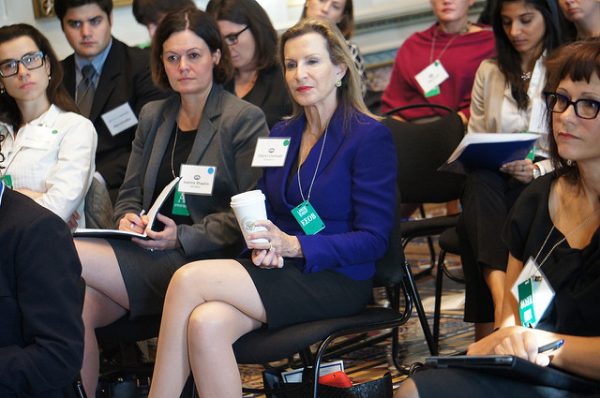
Women in Business at the White House. Photo by BusinessForward, Flickr CC

It’s no secret that the U.S. lags behind many other countries in terms of the number of women in politics. In Congress and state legislatures, women occupy less than a quarter of available positions. Hillary Clinton enters this arena, hoping to be the first female president in the US (but not first in the world: see Mindy Fried’s “Global Women at the Top”). Sexist critiques of Clinton range from criticizing her voice for being too loud, too shrill, and too naggy, to anti-Clinton merchandise that reads, “Don’t be a pussy. Vote for Trump,” or “Hillary sucks but not as hard as Monica.”

While there is some incentive for women to enter male-dominated fields–the pay and status is often greater–there are also negative consequences. Sexual harassment may function as a form of backlash against powerful women who challenge gender norms by entering male-dominated fields or positions. Many women report sexual harassment at work and female supervisors report especially high levels. These consequences occur on a much broader scale, as well. For instance, when women enter occupational fields traditionally dominated by men in large numbers, the average pay for those jobs decreases over time. To explain this phenomenon, scholars point to society’s devaluing of women’s work more generally.
So, what happens when men enter fields traditionally dominated by women? In workplaces where women often outnumber men, such as nursing, men actually advance much faster and to higher positions than their female counterparts. This mechanism is known as “the glass escalator.” Moreover, when men are outnumbered by women in a workplace, they perceive more support from coworkers and supervisors than women who work in male-dominated jobs.

Overall men benefit from working in female-dominated fields, while women face greater burdens when they work in male-dominated fields. It is no surprise that Hillary Clinton is experiencing her fair share of harassment and critique: Not only is she pursuing a position dominated by men, but one that has only been occupied by men.

For more on this, check out our TROTs on female leaders and sexual harassment in law professions, as well as this Soc Images post, “Why Aren’t There More Women in Politics?”

The new anti-bullying emoji.

Fans of the movie Mean Girls will vividly recall the scenes when Regina George’s friends banish her from the lunch table for wearing sweatpants and when she distributes the hurtful pages of the “Burn Book” through the halls of the school. Other movies such as Heathers, Carrie, and Dazed and Confused portray how kids at school can be cruel. However, there are some new measures being taken to curb bullying, both in person and online. A new app aimed to help bullied students find a friendly place to sit in the cafeteria has launched just in time for National Bullying Prevention Month. And there is also a new emoji you can use when you witness bullying online. 

It is estimated that over 3 million, or 30%, of middle and high school students experience bullying each year.  Not surprisingly, Nansel and colleagues find that poor relationships with classmates and loneliness are associated with being bullied. Research from Miller shows that much of what teen girls call “drama” is actually bullying, although they tend to understand it as a regular part of life rather than bullying.  Girls’ bullying behavior is more likely to involve spreading sexual rumors, slut-shaming, and dishing out homophobic labels and is less likely to involve physical violence.
Who gets bullied is tied closely to status in the social hierarchy, but not in a way most people expect. Faris and Felmlee find that youth with higher statuses and more network ties, the popular kids, are more likely to face bullying; that is, until they reach the very top of the social pyramid where they find a sort of immunity to bullying.  Rather than the popular mean girl picking on the nerd, bullying is more likely to happen within friend groups, particularly online. Attacks online may happen more frequently between friends or former friends because of competition around romantic partners.
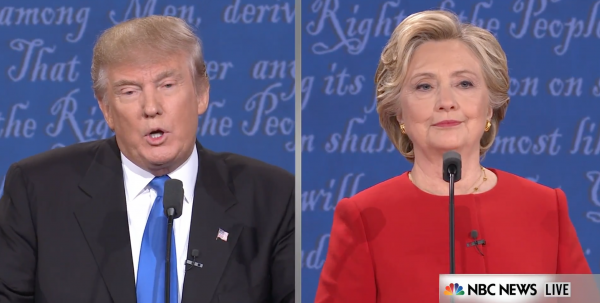
Trump interrupted Clinton 51 times at the first of three 2016 presidential debates.

If you didn’t notice the rampant interruptions during this week’s first presidential debate between Hillary Clinton and Donald Trump, don’t worry – several sources ranging from Vox to The New York Times and even U.S. Weekly took note. While estimates vary as to the exact number of times each candidate interrupted the other, some estimate that Clinton interrupted Trump about a dozen times while Trump interrupted both Clinton and debate moderator Lester Holt over 50 times. As this is likely a moment we will teach in Sociology of Gender courses for years to come, we can look to prior studies of speech patterns and gender to contextualize the demeanor of the debate.

Both men and women engage in all types and styles of interruption; however, men are more likely to engage in intrusive interruption — that is, when someone interrupts “the speaker’s turn at talk with the intent of demonstrating dominance.” Additionally, men interrupt women more often than they do other men, using sex as a status characteristic in group discussion.
Gender also plays a role in interruptions among deliberating bodies, particularly when women are the minority within the group. When outnumbered, women experience higher rates of dismissive interruption and lower rates of approval when speaking.
Interruption, regardless of gender, has social consequences. Someone who interrupts is often seen as more successful, though less socially acceptable and reliable.

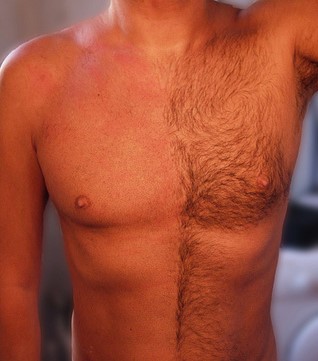
As a woman, summer means more than just bike rides and swimming at the lake. It also means deciding whether or not to shave my body hair. In 2014, some declared that “the bush was back,” and in 2015 armpit hair had its moment in the spotlight as women sported photos of their hair on Twitter and Instagram. While the stigma of being a hairy lady does not seem to be waxing, it is certainly far from over.

Photo by Luca Vanzella, Flickr CC
In the U.S., mass armpit hair removal began only after the introduction of the first women’s body razor in 1915, and shaving pubic hair took off after the bikini was popularized in the late 1940s. Since the 1960s, women’s body hair has come in and out of fashion. For many women in countries like the US and the UK, removal of leg, underarm, and pubic hair is an everyday practice. A recent US survey shows that 84% of women surveyed engaged in some form of pubic hair removal. Women who choose not to shave these areas often face policing from family and friends that reinforces heterosexuality and homophobia. For instance, family and friends promote heteronormativity when they voice concerns over whether potential male partners would find unshaved women attractive.
While people often view men’s body hair as more natural than body hair for women, they also express disgust for “gorilla like” male body hair. Many men–both gay and straight–report removing body hair, citing appearance and attractiveness as primary motivations. Media outlets like men’s lifestyle magazines promote body hair removal as a way to increase sexual appeal, appear healthy, and control nature by controlling the body. Thus, for both men and women, constructions of acceptable and unacceptable body hair are closely linked to cultural norms surrounding sexuality.
"Drinking for Two" via Edmonton Fetal Alcohol Network
“Drinking for Two” via Edmonton Fetal Alcohol Network

Pregnant women are under attack—or so it seems. Actually, according to the Center for Disease Control (CDC), all women who might become pregnant ever are at risk. In February, the CDC released a report estimating that around 3 million women “are at risk of exposing their developing baby to alcohol because they are drinking, sexually active and not using birth control to prevent pregnancy.” Since then, many have bashed the CDC for advising women to live as though they are “pre-pregnant,” abstaining from drinking if they are not on birth control or if they are even considering getting pregnant. Coupled with growing threat of the Zika virus and its links to birth defects, such suggestions have propelled discussions of women’s roles in preventing catastrophic disability. Sociologists suggest that perceptions of women’s behavior are closely tied to ideas about the morality of motherhood. In particular, women who appear to resist common conceptions of what it means to be a “good” mother are subject to greater social control.

In American culture, motherhood is inextricably tied to morality. Moral arguments against abortion often rely on particular conceptions of sexual behavior, family life, and care for children. The ideology of “intensive mothering” demands that women be self-sacrificing and devote extensive time and energy to their children’s wants and needs — time and energy that many working women cannot afford.
This emphasis on mothers’ devotion to their children places them under considerable scrutiny, not only while raising children, but also during pregnancy. For instance, the “discovery” of Fetal Alcohol Syndrome heightened concerns over drinking during pregnancy. This made pregnant women the individual bearers of responsibility for the well-being of future children, and made them susceptible to moral outrage for behaviors like drinking. (Bucking the trend, the New York City Human Rights Commission has just recommended that visibly pregnant women cannot be discriminated against if, for instance, they order a glass of wine in a bar.)
Poor women, especially poor women of color, face a greater burden under dealized conceptions about what it means to be a “good” or “fit” mother. Not only are they regularly depicted as immoral or unfit, they are also criminalized and sanctioned at higher rates. Historical analyses show pregnant women are arrested for stillbirths, miscarriages, using drugs while pregnant, as well as incarcerated to prevent abortion. Poor women labeled “high risk” are prosecuted for failing to comply with medical advice when their fetus or baby dies, thus they are ironically discouraged from seeking care during pregnancy. Just as the “crack baby” became a symbol of the irresponsibility of poor, black women in the 1980s and ‘90s, Zika exposure and alcohol use are invoked today to place mothers and potential mothers under continued scrutiny.
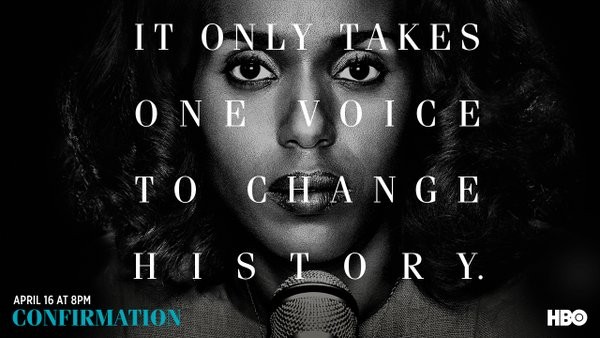
Actress Kerry Washington portrays Anita Hill in an ad for "Confirmation."
Actress Kerry Washington portrays Anita Hill in an ad for “Confirmation.”

In April, HBO premiered “Confirmation,” the story of Supreme Court Justice Clarence Thomas’s 1991 confirmation hearings. In those hearings, a former colleague, lawyer Anita Hill, testified about the ongoing sexual harassment she endured while working for Thomas. HBO’s film, some 25 years after the hearings that Thomas famously called a “high-tech lynching,” reminds us of the murky waters women must drudge through when facing and reporting sexual harassment—as well as how complicated the intersections of race, gender, law, and work can be.

Hill testified that Thomas sexually harassed her as her supervisor at the Department of Education and the EEOC. Various studies find that at least 40% of all women report experiencing sexual harassment at work during some point of their lives. Women of color experience higher rates of both sexual and ethnic workplace harassment.
Hill testified that she continued working for Thomas despite the ongoing harassment because she had no other job alternatives. This is unsurprising given that women in law professions encounter a glass ceiling that limits upward mobility, often pushing women to pursue a limited track of jobs when seeking promotions. Further, women in law professions report hearing sexist jokes, having their authority questioned, and being complimented on looks rather than achievements—all at higher rates than their male colleagues.
Even women in power are subject to sexual harassment. One study finds that sexual harassment can actually increase when some women occupy supervisory positions. Sexual harassment has much more to do with power than simple workplace hierarchies.
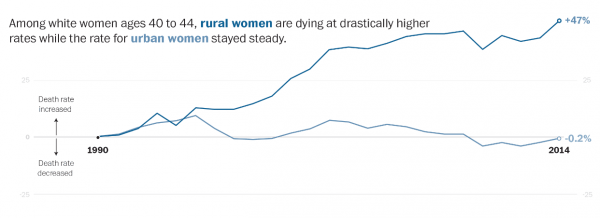
Graphic via Washington Post. Click for original and animation.

The Washington Post highlights the growing morbidity and mortality rates of rural white women. The rates of sickness and death for white women have climbed steadily over the past couple of decades, but the most dramatic increase is in rural areas. Sociologists and demographers have long investigated these trends. Poverty, stress, and timing of childbirth all matter for mortality, but the combination of these factors have stronger effects on rural, white women—surprising, because poverty confounds our typical understandings of race and inequality.

Mortality rates have decreased overall since the latter half of the 20th century, though several factors, many related to poverty and education, contribute to the increasing death rates of certain groups. Those with less education tend to have higher mortality rates and rates of heart disease and lung cancer.
Less education tends to correlate with lower socioeconomic status and difficulty finding employment. Sociologists Link and Phelan point to poverty as a “fundamental cause” of mortality and morbidity. Low socioeconomic status means difficulty is accessing resources: not only do poor people have trouble obtaining the means to maintain a healthy life, they also tend to lack the time, transportation, social networks, and money to help them recover from sickness.
Some of the health issues tied to poverty affect women more than men. Women with high stress levels are more likely than men to die from cancer-related illnesses. Other health patterns related to social class, such as the timing of childbirth, matter, too. Poorer women are more likely to have children before age 20, which correlates with increased risk of death, heart and lung disease, and cancer.
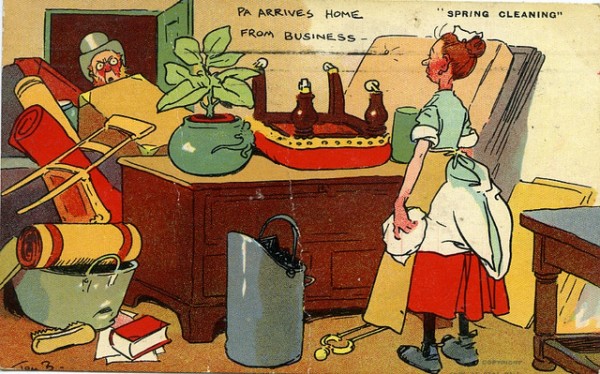
Vintage postcard via Blue Mountains Library, Flickr CC.

This is the time of year that many people throw open their windows and begin their yearly spring cleaning. Long ago, springtime cleaning had religious significance and coincided with holidays such as Passover and Easter. By the 19th century, spring cleaning had become more about practicality than piety. Particularly in places that suffered cold, wet winters, March and April were a perfect time for dusting because it was warm enough to open windows, but still too chilly for bugs to fly in the house. Ideally, the wind would help blow the dust out of the home instead of swirling it around the rooms.

The blame for a dusty shelf tends to fall on women’s shoulders because the home has traditionally been “her place” in society. Although the 1950s vision of June Cleaver has shifted and more women now participate in the labor force, women still tend to take on the bulk of the housework. Women employed outside the home have a “second shift” of cooking, cleaning, and childcare when they come home from work.
Women who work in more masculinized jobs tend to do more cooking and cleaning, and men with feminized professions engage in more “manly” tasks like yard work and auto repair to neutralize their gender-atypical occupations. Even in couples that are not comprised of a cis-man and a cis-woman, the gendered division of household labor persists. In couples consisting of trans*-men and cis-women, the women end up taking on the “Cinderella roles,” which they often link to personal preference rather than socialization or gender roles.
And what of the sociological significance of dust? A dusty book can show a lack of interest in the material, and the old adage “cleanliness is next to godliness” speaks to the moral implications of a dust-free, spotless home. Dust and dirt are out of place in the well-tended home, and their presence highlights a lack of control over the environment. Additionally, a lack of cleanliness has long served as a social indicator of moral disorder in Western Culture, acting as rallying point of social solidarity over what is socially acceptable.
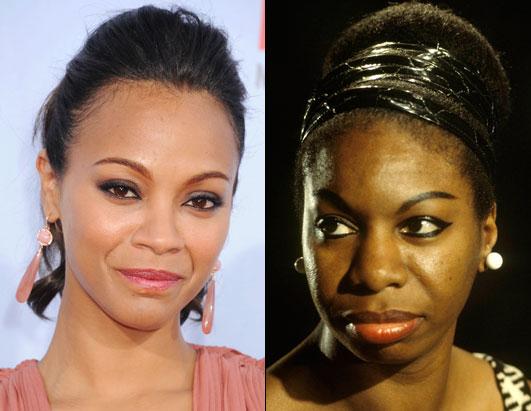
Zoe Saldana, left, and Nine Simone, right. Image via ABC News Entertainment.

Zoe Saldana’s portrayal of singer and activist Nina Simone in an upcoming biopic has proven controversial, even before the film’s premiere. In press photos, Saldana, a light-skinned woman of color, is clearly wearing dark makeup and a prosthetic nose to appear more like the late singer. Some argue using “blackface” in order to cast Saldana is particularly troubling considering Nina Simone’s own life-long dedication to encouraging the acceptance and embrace of dark skin tones. It also ignores the realities of colorism, which reproduces social inequalities and hierarchies among people of color.

Several studies address the benefits that accrue to light-skinned women. Employers, for example, often evaluate women applicants on physical attractiveness, regardless of job skills. This includes privileging physical features that suggest lighter-skinned women are friendlier and more intelligent. Lighter skin tones also make their female bearers more likely to marry spouses with higher incomes, report less perceived job discrimination, and earn a higher income. In schools, studies find that teachers expect their lighter-skinned students to display better behavior and higher intelligence than their darker peers, and public health research shows lower rates of mental and physical health problems among lighter-skinned blacks.
Colorism may provide socioeconomic, educational, and health benefits to light-skinned women, but it also challenges their identity as black women. Other blacks may perceive them as not “black enough,” assuming that they are more assimilated into white culture and lack awareness of black struggles. Those with lighter skin may feel isolated as members of their ethic group openly question their authenticity and belonging.