
gender

Photo by Mike Beltzner, Flickr CC

Spring is here, and for many that means it’s time for a spring break! However, taking time off work can be a big deal, and taking a break can affect earnings and productivity. Research shows that vacation and leave time are largely shaped by a countries social and political context, but taking time off work can have serious consequences no matter where you live, especially for women.

To start, vacations take place in the context of larger structures of gender inequality and work/family policies. Mothers’ time in and out of work is shaped by institutional and cultural contexts, including paid-leave policies, state support for childcare, and cultural expectations around maternal employment. When women are supported by well-paid leave, affordable childcare, and a cultural expectation that mothers work, women with children ultimately work more weekly hours than those living in countries without these factors. Even so, time off is not without penalty. Country-specific policies also help predict the penalty women face for taking a break from employment to care for children. For instance, in a comparison between Germany, Sweden, and the U.S. — countries with distinct leave policies — researchers found that long leaves meant career penalties for all women. Unsurprisingly, in the U.S., a country known for lagging behind in parental leave, even short periods of time spent away from work can hurt womens’ careers.
When women take vacation days, they tend to take more than men, but this doesn’t mean that women are lounging on the beach or in the ski lodge while the men toil in the office.  Part of the reason for the gender difference is men use fewer vacation days because of anxieties about job security and supervisory responsibilities. Comparisons between nurses’ unions (mostly women) and firefighters’ unions (mostly men) shows that women prioritize negotiating scheduling, including vacation time, while men emphasize the importance of fairness in access to overtime among co-workers. Women who have unused vacation days tend to be more worried about the success of their families, but research shows that family concerns don’t necessarily lead women to take more vacation days.
Photo by NASA, Flickr CC

With the recent discovery of numerous Earth-like planets orbiting the same star, Elon Musk’s promise to send citizens to the moon, and increased politicization surrounding the science of climate change, many Americans are looking to the stars for potential solutions and possible new homes. And the nascent NewSpace movement — made up of entrepreneurs and advocates looking to commercialize outer space — promises to push space exploration forward at a rapid pace. While it certainly requires rocket science to get to space, social science is beginning to weigh in on what it might mean for social life.

The privatization and commodification of public spaces is now moving beyond Earth as governments struggle over control of the atmosphere and outer space. And as new entrepreneurial space companies seek to privatize the sky and profit from new resources and new planets, some worry that existing structures of class and racial inequality will be repeated or even intensified with space colonization. Others, like anthropologist David Valentine, see potential for progressive re-imaginings.
Sociologists highlight how inequalities shape the way people are experiencing this increasing “humanization of the universe.” Wealthy elites relate to the universe as an object to dominate, funding new “space tourism” programs and hoping to extend the workings of capitalism to the Moon and beyond. Less wealthy and marginalized communities, however, experience the universe as a dominating and mystifying force, and many feel that space colonization will only make them more powerless.
Since women and people of color are still less likely to pursue careers in science or technology, they are less likely to have a voice in these new projects. But this is not the only thing keeping them from the conversation. For example, women have historically had a difficult time qualifying for space travel. Fears about menstruation, pregnancy, and hormones in outer space have significantly hindered research into how women’s bodies are affected by space travel. The result is that women’s bodies are constructed as problematic and essentialized in opposition to male bodies, keeping many women from successfully joining space missions.
Photo by Falcon® Photography, Flickr CC

The United States and the United Nations have had a closely intertwined relationship since the organization’s founding in 1945. The UN deals with a broad range of issues around the globe, and its widespread influence is often controversial. However, the influence of the United Nation continues to be instrumental in promoting crucial human rights causes, and the reach of its aid is arguably beyond compare. Despite its numerous shortcomings, the UN plays a crucial role in promoting human rights norms across the globe.

Throughout the 1990s in particular, the United Nations took on a central role in the global justice process. It organized and funded international courts following episodes of mass violence, such as the International Criminal Tribunal for Rwanda, and it made indictments for egregious crimes possible for the first time (including the crime of genocide).  Sociologists find that the existence of these courts have a global impact in providing justice, and the trials seem to have a positive effect in reducing human rights violations in the long run.
The judicial process alone cannot adequately address global human rights issues — humanitarianism and diplomacy also play key roles. The United Nation arguably plays the most dominant global role in these initiatives, with monumental campaigns addressing topics like hunger, refugee needs, and climate change. The UN has been criticized for showcasing Western ideals and not taking into account cultural contexts, such as early endeavors to reduce female genital cutting. However, the UN has made improvements and when programs are approached as an opportunity for partnership and not dominance, the outcomes can be quite positive. For example, the agency has taken great strides in promoting gender equality and access to education.
Photo by Automobile Italia, Flickr CC

Uber has been having a bad time. From reports that venture capital has been propping up a flawed business model, to evidence of racial bias in pickups, rate cuts during a New York taxi strike leading to the #DeleteUber movement, and recent accounts of sexual harassment alongside conflicts with drivers, the romance of Silicon Valley innovation and “disruption” in the company is on the decline. But while this may seem like a fall from grace, research shows these problems are tragically normal. They often plague a wide range of companies because of their organizational structures, and tech start-ups are no exception.

Classic research shows that when a founder also acts as the CEO, it can cause trouble for a company. While they may have a knack for developing innovative products or services, founders don’t always have the management skills to run a large, successful business as a complex organization.
While teams of entrepreneurs can start a businesses together, they often choose who will ultimately run the company. This process is not neutral. Gender inequality in business leadership can emerge from these decisions because friends and family members in these teams often take gendered assumptions for granted.
Racial and gender discrimination in hiring and promotions plagues a wide range of organizations, especially because opportunities for promotion tend to favor homogeneous social networks. These problems also plague organizations and could indicate other organizational troubles, as firms that engage in hiring discrimination are more likely to go out of business.     
Photo by John Nakamura Remy, Flickr CC

A recent study in the medical community has shown a decrease in teen suicide, particularly among high schoolers who are sexual minorities, since same-sex marriage was legalized. This is evidence that change in social policy impacts health outcomes among those who experience discrimination. This is important because social science has documented the negative impacts of gender and racial discrimination on mental and physical health.

A person’s status as a racial or sexual minority impacts their exposure to stress through perceived discrimination — a key way that racial, gender, and class inequalities in physical and mental health occur. The centrality and/or visibility of racial or sexual differences in a person’s life affects if and how often discrimination is perceived — the higher the salience or visibility of one’s racial or sexual identity, the higher level of perceived discrimination and the higher level of stress that person experiences.
Those who are disadvantaged in multiple ways, like being both a racial minority and a sexual minority, find themselves at higher levels of exposure to discrimination and have higher rates of depression and worse self-rated health.
NO MORE: Domestic Violence Awareness event in Hawaii. Photo by University of Hawaii, Flickr CC

Russian President Vladimir Putin recently signed a new law that decriminalizes domestic violence. Perpetrators of domestic violence against children and spouses will only face charges if injuries require a hospital visit, and the punishment will take the form of fines rather than jail time. While this is certainly troubling, policies and laws concerning domestic violence in the United States are far from perfect — they are often limited in how much they change the way perpetrators think of domestic violence, even if they sometimes keep abusers from repeating violent behavior.

Often, particularly in the context of welfare policy, a mismatch tends to exist between low-income abused women’s actual needs and the assumptions about those needs that inform policies on domestic violence. While policies and services can help victims to exit abusive relationships and offer protection and material support, they can also come with constraints that make leaving abusers difficult, such as requirements for teen parents to live with a parent, to complete a GED or job training programs, and fear of deportation for immigrants. “One-size fits all” policy approaches, such as those common in state welfare policies, make it hard for victims to make decisions about what works best for their individual situations because their individual experiences get trumped by blanket procedures.
When it comes to arresting and prosecuting perpetrators, abusers often think of their punishments as evidence of an unfair legal system rather than consequences for their own actions. And while abusers who are arrested and serve jail time are less likely to commit subsequent acts of domestic violence than those who are arrested but not charged with abuse, the affect of arrest on subsequent domestic violence is often contingent on whether or not someone has something to lose — research finds that being arrested deters people with jobs from subsequent domestic violence, but does not deter those without a “stake in conformity.”
Photo by NASA Kennedy, Flickr CC

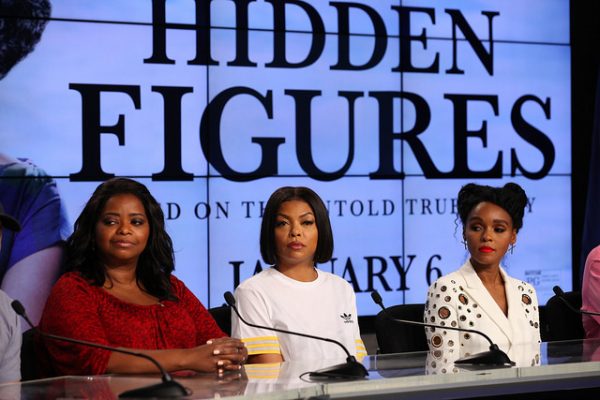
The popularity of the movie Hidden Figures has brought attention to the issues that women, and women of color in particular, face when they enter STEM fields (science, technology, engineering, and math). The film has also had what some are calling a “Hidden Figures effect” — it is providing positive female role models and inspiring young girls to pursue their interests in math and science. Actress Taraji P. Hensen stated, “The movie is important, and I don’t want another young girl thinking that math and science is not for her.” Social science shows that positive role models are indeed a significant predictor of interest and success in STEM for women, and that movie stars are not the only ones who can fill those roles.

The term “role model” dates back to sociologist Robert K. Merton, who coined the term to describe the ways that people model sets of behaviors they admire in others. More recent research finds that women rely on and benefit from same-gender role models more than men do. For example, a longitudinal study of high school students found that an increased presence of female faculty and staff had positive impacts on the educational attainment of female students, but there were no gendered effects for males. And while girls often report that they are inspired by female role models, boys are less likely to attribute their career aspirations to a role model of either gender.
More specifically, women who are exposed to successful females in STEM fields are more likely to do well in STEM classes, feel a greater sense of belonging among their STEM classmates and colleagues, and are more likely to have pro-science career aspirations. When women see other women in science, math, technology, and medical fields, they are less likely to associate these fields with masculinity and more likely to have confidence in their own skills.
However, movie stars and career idols are not the only ones who act as positive roles models. Peer groups are especially important for females in STEM. Girls who develop relationships with peers who are interested and successful in STEM classes are more likely to do well in those classes and are more likely to pursue STEM careers. And while males have been found to be less influenced by participation in educational communities like science camps or extracurriculars, the networks and social supports built in these environments help buffer females from the stereotypes and cultural norms surrounding women in STEM.
Photo by William Garrett, Flickr CC

Trump’s rise to the presidency still has many people wondering why large numbers of whites with low to moderate incomes voted for a candidate who supports policies that are likely to have a negative impact on them. In other words, how is a millionaire real estate developer from New York City seen as an average Joe and a champion of white workers? Two prominent sociological explanations involve the racist attitudes of whites’ and feelings of anger and abandoment in economically struggling rural communities.

Racially coded, and racially explicit, language is particularly powerful for tapping into white Americans’ feelings of displacement, loss, and resentment. Sociological research suggests that racialized attacks on “undeserving” immigrants and people of color who benefit from government “handouts” provide a target for anger and a rationale for why white working class communities are struggling economically (while ignoring the privileges that go along with whiteness). Thus, the emotional appeals of racist and xenophobic campaign rhetoric can contribute to lower income people voting against their economic self-interest.
Much of the public commentary about white working class voters has focused on folks in cities and industrial sectors, but another important population to consider is rural residents. People in rural areas are disproportionately white, are struggling economically due to declines in commodity prices, and are confronting rapid demographic changes. Rural citizens, especially white men, perceive their religious and nationalist beliefs as being looked-down upon by liberals, and they draw on a strong rural identity when they describe feeling ignored and abandoned by politicians and elites who devalue their lifestyles. They see the government as creating policies that favor cities and help undeserving minorities and state bureaucrats, all while ignoring rural people. Thus, conservative politicians like Trump have tapped into people’s anger and resentment through emotional appeals to masculinity and male dignity, American nationalism, and Christian morals.

For more on why working class whites voted from Trump, see here, here, and here.

Photo by woodleywonderworks, Flickr CC

A recent study found that by age six, girls perceive themselves as less intelligent than boys. The study consisted of an experiment asking girls and boys if they wanted to play a game for smart kids, then telling them a fictional story about a smart person. At the end of the story, the kids had to decide if the “really, really smart” person in the story was a man or woman. The girls were less likely to identify the character as a woman than boys were to identify the character as a man. Social science research shows that stereotypes and childhood socialization shape a person’s understanding of gender norms.

The classic stereotype that boys are better at math and science still persists, even though more women are entering STEM fields. Teachers often perceive that boys are better at math than girls are, which girls and boys both internalize as early as second grade. Students, in turn, stereotype men as smarter than women, as evidenced by student evaluations of college professors. Students refer to male professors as “brilliant” more often than female and minority professors, and the “brilliant” professors are more likely to be in fields, such as math and science, with fewer female professors.
In addition to just thinking boys are better at certain subjects, teachers also treat girls and boys differently. In preschools, teachers tend to let boys be rowdier, louder, and allow them to move around the classroom more freely. Later in school, after kids have learned what behaviors are gender-appropriate in the classroom, teachers associate boys with troublemaking and girls with good behavior, which they in turn translate into beliefs about academic achievement; they tend to view boys as underachievers and girls as high achievers, meaning that girls who struggle in school often get overlooked.
Despite the stereotypes that boys and girls have different intellectual capacities, studies show that they are not really psychologically different, but at certain ages in development they may seem different. In actuality, girls and boys do not have unequal math and science abilities.
Photo by Stephen Melkisethian, Flickr CC

Barack Obama issued 78 pardons and 153 commutations before leaving office, including commuting the sentence of Chelsea Manning. While commutations shorten the sentences of incarcerated individuals, but do not alter their criminal record, pardons remove the conviction from the individual’s record. Obama’s latest string of clemency decisions brings his administration’s total to 1,324, the majority of which were commutations.

Research on federal executive clemency shows that rates of clemency are highest when Democratic presidents are in power, when crime rates are lower, and during periods of war. Legal research also highlights variation between states, with certain governors utilizing clemency measures more than others, though not necessarily along party lines. While executive clemency was once a practice commonly employed by U.S. presidents, its use has declined in recent decades. This decreased use of executive clemency has coincided with a sharp increase in arrests, both of which have contributed to the substantial rise in incarcerated individuals across the U.S. 
Scholarship also hints at who is likely to receive a commutation or pardon. Analyses of death sentences shows that women, youth, the elderly, and those who have spent a significant amount of time on death row are more likely to have their death sentences commuted. Additionally, death penalty commutations are more common among governors who are not returning to office (lame duck) and when the death row population is particularly old. However, even though female prisoners are more likely to receive clemency, recent qualitative investigations of commutation hearings suggest that women encounter a systemic gender bias when applying for a pardon or commutation.