gender

A sculpture in Bangladesh commemorates atrocities of wartime rape. Photo via Wikimedia Commons.

Nadia Taha, a Yezidi woman, recently spoke to the UN about her horrendous experience as a sex slave for ISIS. The so-called Islamic State has also exploited Christian, Turkmen, and Shia women. Wartime rape is an age-old weapon, seen still in conflicts in Sierra Leone, Bosnia-Herzegovina, and Rwanda. Social scientists reveal the power dynamics at play by studying both the victims and perpetrators.

Rape is an individual crime as well as a weapon of war that enforces social power. Social groups use it to help carry out genocide, instilling fear, and force displacement. Rape also alters the racial and ethnic demographics of the targeted group and intimidates groups where women are considered to be bearers and keepers of culture.
Women and men are victims of rape during conflict. Women are targeted according to their cultural beliefs, desirability, reproductive ability, and virginity. Rape is used against men to “feminize” them, emasculating and implying homosexuality and weakness.
Perpetrators of rape during conflict include agents of the state (military, police, etc.), political groups (paramilitaries, terrorist groups, etc.), and politicized ethnic groups (e.g., Rwanda’s Hutu). As such, the International Criminal Tribunal for Rwanda decided that perpetrators of rape can be punished as individuals and states would be held responsible for either perpetrating sexual crimes or for failing to protect their citizens from such terror.
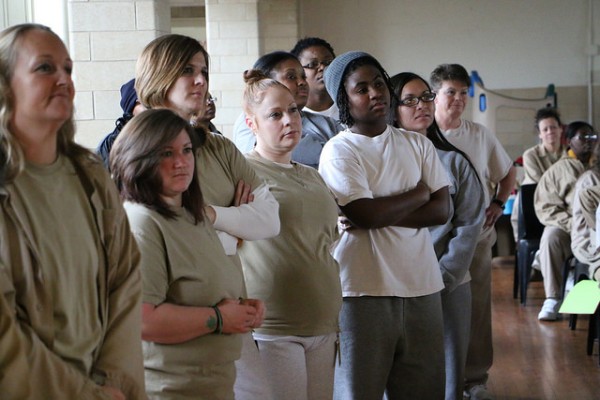
At the Indiana Women's Prison. Lwp Kommunikáció, Flickr CC.
At the Indiana Women’s Prison (established in 1873, the first adult women’s correctional facility in the U.S.). Lwp Kommunikáció, Flickr CC.

Many more men are incarcerated than women, but from 1980 to 2014, the number of women in state and federal prisons rose from just over 13,000 to more than 106,000, making women the fastest growing prison population in the U.S. This drastic increase is due in part to the War on Drugs and the shift to a “tough-on-crime” logic in the 1970s and ‘80s. For women, the mass incarceration era doesn’t just exert tougher penalties; it also carries over an earlier, paternalistic way of disciplining women.

Before mass incarceration, women’s prisons operated under rehabilitative models. These viewed women’s criminal behavior as a result of their vulnerability or dependency, rather than dangerousness. Inmates were sometimes called “girls” and referred to the warden as “daddy.” Later tough-on-crime policies increased security, abolished mandatory counseling, and emphasized order and control in women’s prisons. Still, some contemporary prisons maintain a paternalistic attitude by offering women “treatment” that focuses exclusively their perceived inability to make good choices in the face of challenges from men, drugs, or a history of abuse.

In other words, incarcerated women are hit with a double bind. Strict sentencing policies ignore social context and drastically increase the number of women in prison, while the paternalism of the past shapes how the criminal justice system interprets and judges their behavior and prospects for rehabilitation.

In September 2015, the hashtag #masculinitysofragile first swept across the greater twitter community—even gaining its own twitter account. Tweeters use the hashtag to point out how masculinity and expectations for men to be “manly” are not only unattainable, but also harmful to both men and women. Some posts called out the gendered marketing of men’s products like man-sized soap bars, and others the need to qualify affection between two men with “no homo” and the way boys are taught to reserve, rather than express, emotions.

So, is #masculinitysofragile? Luckily for all of us, there’s research on that!

Scholars define masculinity as more than just an individual trait. It involves social practices that privilege men over women and some men over other men. Traits associated with the “ideal” man—what scholars refer to as “hegemonic masculinity”—include sexual aggression, violent behavior, and lack of outward emotion, as well as whiteness, middle-class status, and heterosexual desire for women. Men actively work to maintain a spot in the dominant gender group. Sometimes this involves demonstrating masculinity through behaviors like fighting discrediting women at work.
Masculinity faces crises when the dominant status of manhood is threatened. For instance, during periods when women’s rights and freedoms expand—like during the three waves of American feminism—men felt their advantages as the more powerful group were threatened. Men also police other men by calling out their lack of toughness using homophobic language. In this case, one man is deemed feminine or weak, while the other’s straightness and dominance is affirmed. Finally, parents may participate in constructing their sons’ masculinity by limiting access to feminine toys and clothing. Men with privilege—those who are white, straight, and/or middle- or upper-class—can afford to be more flexible with their masculinity.
Fantasy sports have gained coverage as a sport of their own.

You’ve probably seen more than an ad or two this fall for DraftKings or FanDuel, two massive online fantasy sports websites valued at over $1 billion each. Since 2009, the number of fantasy sports players has doubled, and, as of August, 56.8 million participated in the United States and Canada (according to the Fantasy Sports Trade Association). It’s not all fun and games, though. The New York Attorney general launched an investigation into these sites, and a recent feature in The New York Times highlights how deep the rabbit hole goes for illegal online gambling on fantasy sports. It is easy to focus on scandalous stories of crime rings, big winnings, and crushing losses, but these sites are not just about gaming the system. Sociologists emphasize that they are also powerful social communities driven by cultures of masculinity and fandom.

Eric Leifer argues that the history of sports fandom in the U.S. is place- and team-based—fans supported the team in their town or region as a marker of community membership. Fantasy leagues and social media challenged this by shifting the focus from entire teams to individual athletes’ performance.
Sociologists, especially, focus on the racialized and gendered nature of sport-based communities. Members often forge strong social ties in male-dominated spaces that emphasize knowledge and expertise, and the groups can privilege racial stereotypes and racialized assumptions about athletic performance.
Fantasy sites (and the betting that ensues on them) are in line with other case studies that show how online socialization is not “less real” or consequential than offline social interaction—both teach everything from harmless play to deviant behavior. We see the power of online interaction in everything from hackers developing their own open-source political theory to online peers teaching others how to download music for free and sport message boards reinforcing racial stereotypes.
Of course, gambling is tied up in these social structures. While American society has “medicalized” compulsive gambling, treating it as an individual and treatable problem, more recent work shows how social environments create what gamblers want most: a chance to be in the “zone” and play for long periods of time. The strong communal aspect of fantasy sports websites makes them a perfect space for sustained play.
Twitter screenshot.
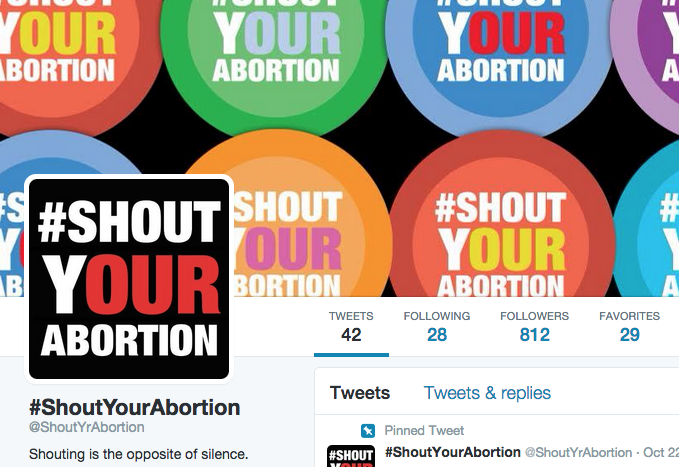
Twitter screenshot.

In the ongoing battles around whether to defund Planned Parenthood, Lindy West and Amelia Bonow created the Twitter hashtag #ShoutYourAbortion to encourage women to share their abortion stories, express their experiences, and recognize the stigma that often silences women who have an abortion. Consequently, many have criticized the hashtag and attacked the women involved. Supporters of #ShoutYourAbortion argue that sharing real women’s stories on social media produces cultural change around an issue surrounded by legal rhetoric. Sociological research details why women have generally felt compelled to stay silent about having abortions and the potential benefits of speaking up.

Many women believe that disclosing their abortion experiences will lead to negative responses from relatives and friends, due to widely held norms of femininity and motherhood that assert women are “natural nurturers” and the idea that having an abortion negates those qualities. In a classic study of pro-life and pro-choice activists, Kristin Luker notes that abortion is often seen as a “referendum on the place and meaning of motherhood.” For pro-life activists, terminating a pregnancy may be the ultimate example of being a “bad mother.” Rather than face anticipated judgment and condemnation around moral codes of appropriate feminine behavior, women then choose to conceal their procedures.
A major source of stress and frustration women experience centers on the gendered imbalance of responsibility for contraception and abortion decisions. Research finds that women are often expected be responsible for providing or taking contraception, but are heavily criticized when they take responsibility by choosing to have an abortion. Thus, Sally Brown argues, where women are held responsible for reproductive decisions, “decision making, if ‘decisions’ happen at all, is bound up with notions of hegemonic masculine and feminine roles.”
Stigma, however, does not reduce the likelihood that a woman will have an abortion. Cockrill and Nack write that even women who “believe abortion is morally wrong and that women who have abortions are careless and irresponsible will still have abortions.” Instead, the primary consequences of abortion stigma are decreased mental and physical health, strained relationships, and loss of social status. Spaces of affirmation and support like the #ShoutYourAbortion campaign allow women to engage in “collective stigma management,” offering a supportive network where their public presence can work to change social attitudes and shatter the silence surrounding abortion experiences.
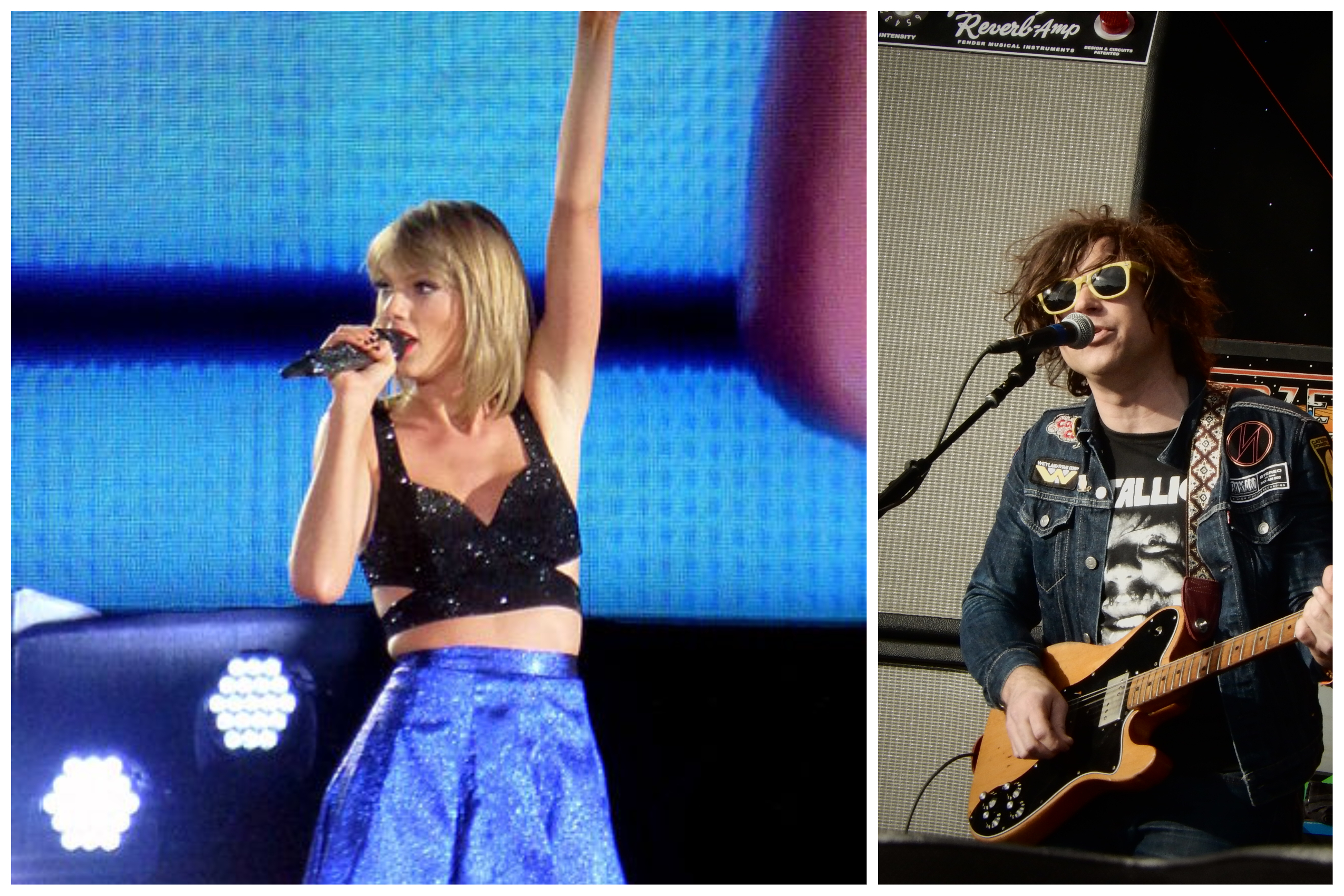
Right: Taylor Swfit performing. Right: Ryan Adams performing. “Taylor Swift 007” by GabboT is licensed under CC BY-SA 2.0. “Ryan Adams, Clapham Common, Calling Festival, London” by Drew de F Fawkes is licensed under CC BY 2.0)

In 2019, after this post was published, Ryan Adams was accused of engaging in a pattern of manipulative behavior including verbal, emotional, and sexual harassment. You can read more of this coverage here.  (Updated, October 26, 2022)


The release of Ryan Adams’ cover of Taylor Swift’s 1989 resulted in a media frenzy about which album is “better” and who deserves credit for the “depth and complexity” that many say Adams brought to Swift’s poppier original. Some reviews argue Adams “vindicated” Taylor Swift as an artist; others argue that emotional depth was already present in Swift’s songwriting and reviews of Adams’ cover operate under gendered understandings of emotions and legitimacy in pop music. Many publications that reviewed Adams’ version did not review Swift’s original. Ironically, the albums will be competing for a Grammy this year, and many think Adams will take it over Swift. Sociological studies of popular music show how gender affects who gets credit for creativity in the industry.

Research finds that male musicians, regardless of genre, are more likely to receive critical recognition and be “consecrated” into the popular music canon. Women are less likely to be seen as “legitimate” artists and are more often judged on their emotional authenticity and connections with “more” legitimate, male artists. Further, newspapers and music critics are more likely to cover music written and produced by male artists.
Style doesn’t stem from the artist’s creative mind alone. Musical genres are gendered, as well as raced and classed. Industry norms require women and men to adopt different styles depending on the music genre in which they work. For example, women are more often expected to be sexual and/or emotional in their presentation of self and their music.

For more on gender in culture industries, check out this Discovery on fashion design.

Caitlyn Jenner in Vanity Fair, via Celebuzz.

You may have heard that Caitlyn Jenner’s Vanity Fair cover broke the Internet. The feature publicly introduced Caitlyn’s name and correct gender pronouns, as well as gender presentation. Within hours of the cover photo’s debut, Jenner’s new Twitter account amassed over one million followers, setting the record for the fastest growing Twitter account (knocking previous record-holder President Obama down to second).

The general public has varying attitudes about trans*, lesbian, gay, and bisexual people, both as the LGBT group and as distinct identities. Sexual orientation, beliefs about sexuality, adherence to a binary conception of gender, religiosity, and personal contact with sexual and gender minorities best predict attitudes towards lesbians, gays, bisexuals, and trans* individuals, but also vary based on the distinct group(s) being considered. For example, heterosexual females are more likely to hold positive opinions about gay men and trans* individuals, but are also more likely to hold negative opinions about lesbians.
Though increasing visibility is promising, researchers argue that media representations and discourses of trans* people often still conform to a rigid gender binary that reinforces cultural norms of masculinity and femininity. Jenner’s style choices are already under the microscope, and media outlets are labeling her a “diva” for her Diane von Furstenburg-clad appearances in New York City.
Limiting the hype about Caitlyn’s cover to her newly revealed gender identity overlooks other reasons why her photo shows up on so many Facebook and Twitter feeds. People already know Jenner as a celebrity, and celebrities arguably fall into a special category when it comes to class, status, and power. Fame can heavily influence individual opinions, but those effects depend on the celebrity in question and a person’s context within the larger population.

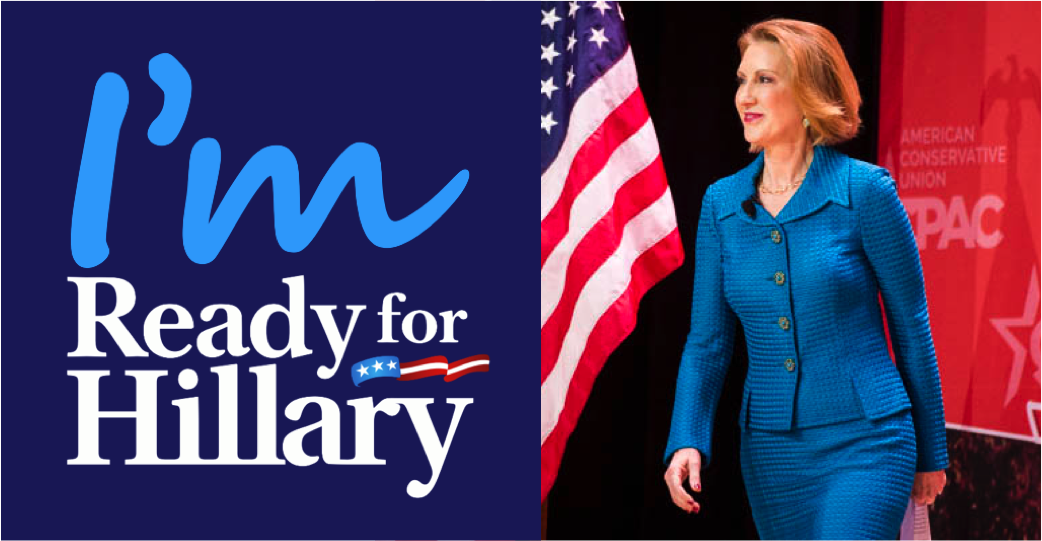
Most of the buzz around Hillary Clinton and Carly Fiorina’s candidacies are about getting into the White House as the first woman president, but what will life be like if one actually makes it?

Just winning the election won’t make politics more female friendly. Studies show that when women enter male-dominated fields, they find it difficult to work in an arena designed by men for men. For example, some jobs involve networking in masculine spaces like bars and golf courses that traditional and symbolically exclude women. When they hit the glass ceiling or find themselves undervalued, many women attribute limited opportunities or personal difficulties at work to problems with individual sexists or difficult personalities rather than a gendered workplace structure. However, restructuring the work environment to center more on teamwork than individual success may help women by giving them more contact with others at work, thus weakening gender stereotypes, providing more networking opportunities, and leading to more promotions.

Hillary Carly


With Hillary Clinton’s official announcement of her presidential candidacy—and now Carly Fiorina’s GOP candidacy—we have seen the immediate and constant sexism that will undoubtedly plague the campaign coverage until election day. Time Magazine, for example, ran a piece focusing on Clinton’s presumed post-menopausal estrogen levels as an asset to her presidential leadership skills (we have yet to spot an article on the testosterone levels of Jeb Bush or Bernie Sanders).

Media outlets often pay a disproportionately higher rate of attention to female candidate’s wardrobe, appearance, and age than to that of male candidates, treating women as novelties rather than serious contenders. The focus on appearance objectifies and sexualizes, delegitimizing their authority.
People evaluate “appropriate” roles for women in public office based on gender stereotypes about policy and issue competency more than on personality traits. Public opinion survey respondents indicate that they find female candidates more capable of handling “feminine” topics like education and healthcare, while male candidates are more qualified to deal with “masculine” issues like terrorism and the economy.
Contrary to expectations, neither higher numbers of educated women nor the type of political system translates to more women in national office. In fact, female congressional candidates win at similar rates to men in general elections. Instead, ideologies about women’s roles and positions in societies influence women’s abilities to enter politics as candidates and survive the primary process.

For more on this topic, check out Scholars Strategy Network and Sociological Images

Limbaugh WadeDuring his April 1 on-air radio show, Rush Limbaugh cited a recent SocImages post titled, “Are Economics Majors Anti-Social?” In debating the content of the post, Limbaugh frequently referred to author and editor Lisa Wade as “professorette.” In making up this word, he intentionally gendered the gender-neutral title “professor.” Given the cultural devaluation of femininity, the unnecessary gendering of Wade’s profession signals a discounting of her position and expertise. While Wade is, notably, the author (with Myra Marx-Ferree) of the new book, Gender, women of all professions face challenges to their legitimacy.

Education, prestige, and capital do not exempt women from sexist stereotypes about incompetency. Female researchers and professors are often viewed as less competent than their male colleagues, and male-dominated academic disciplines are perceived to draw more innately brilliant and talented practitioners than female-dominated disciplines.
Even when women occupy high status positions of expertise they are more likely to be interrupted than men. Furthermore, men are more likely to interrupt women even when women occupy a higher professional prestige, suggesting that the gender hierarchy can be more influential to power dynamics than professional status.
Women are also limited in the range of emotions and behaviors they can exhibit in the workplace without being judged negatively. Emotional displays of anger, for example, are interpreted differently if exhibited by men or women, to the likely disadvantage of women. Additionally, displays of dominance by agentic (that is, self-organizing and proactive) female leaders are subject to dominance penalties, backlash, and prejudice.

Curious what our friends in sociolinguistics have to say about gendered titles? Consider listening to Lexicon Valley’s exploration of feminine word endings here.