culture

Photo by Andres Juarez, Flickr CC

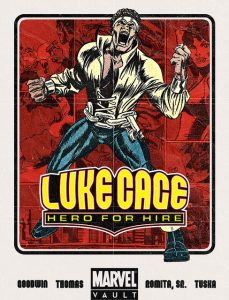
Marvel’s new series focusing on superhero Luke Cage debuted on Netflix in late September to critical acclaim. The show boasts a 95% rating on RottenTomatoes and was called “one of the most socially relevant and smartest shows on the small screen you will see this year,” by Deadline.com’s Dominic Patten. Aside from its artistic merits, commentaries also praise the prominence of Luke Cage as a “bulletproof black man in a hoodie,” with the show’s star Michael Colter telling The Huffington Post: “It’s a nod to Trayvon, no question … Trayvon Martin and people like him. People like Jordan Davis, a kid who was shot because of the perception that he was a danger. When you’re a black man in a hoodie all of a sudden you’re a criminal.”

Comic books and comic book culture have slowly become more diverse as companies like Marvel have begun prioritizing the inclusion of racial minorities in their stories. Kamala Khan, a Muslim teen, has replaced the white hero Carol Danvers as Ms. Marvel. The hero replacing Iron Man is a black teen named Riri Williams. And Miles Morales, a black Hispanic teen, replaced the white Peter Parker as Spider-Man. Yet despite its recent progressive slant, Marvel and other comic companies have had issues with racial stereotyping, particularly with their black heroes. Marc Singer describes how the medium of comics relies on racialized representations, with appearance being a major way to distinguish characters from one another. 
This is also heavily tied up in the portrayal of superheroes as super-masculine. When the racial aspect of this dynamic is uncovered, we see a complicated history. Rob Lendrum traces these heroes to the “blaxploitation” era of film/media in the 1970s, arguing that many superheroes were influenced by this culture, including Luke Cage. Jeffrey A. Brown sees these images as one-note and compares them to the black-owned works of Milestone Media Inc. comics.
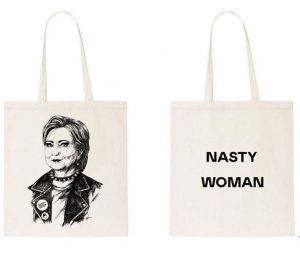
Nasty Woman Tote Bag

Donald Trump’s “nasty woman” comment during the third presidential debate has ignited a veritable “nasty woman economy.” Just two weeks later, there are numerous hashtags and a growing diversity of merchandise, including a tote bag, that reclaim “nasty woman” as a positive and empowering label. Elizabeth Warren capitalized on this at a recent Clinton rally when she said, “nasty women are tough, nasty women are smart, and nasty women vote.” As The Atlantic details in their feminist history of the word, “nasty” was reappropriated as a “badge of honor” some time ago, and they point to songs like Janet Jackson’s Nasty as an example of women using the word in a positive way. The reappropriation of stigmatized labels is not new, though social scientists find that this strategy has both strengths and weaknesses.

Psychologists have found that when a group reclaims a derogatory label, perceptions of that group’s power increases. And once a group is perceived as powerful, individuals feel more empowered to self identify with that reappropriated label. However, this strategy only works for derogatory terms like “queer” and “bitch,” not for descriptive terms like “woman” or majority-group terms like “straight.”
Some sociologists argue that this power is merely a “false power.” The fact that terms like “bitch” are still sometimes used as derogatory terms, often by the very people who claim to be reappropriating them for good, leads some to the conclusion that reclaiming terms in this way only hides oppression by making it acceptable and keeping the term alive in the lexicon. Scholars like Mariam Frasier also point out that class, race, and gender inequality shapes if and when someone can identify with a reappropriated label.
This contested and often flexible nature of reappropriated labels is what others see as their strength. Generational and political differences often result in conflicts surrounding reappropriation of a term. These debates have been found among many groups, including feminists, atheists, and African Americans. But some social scientists argue that these negotiations and disagreements give members of stigmatized social groups the agency to evaluate their own labels and to make determinations about when and whether to accept or reject them on their own terms.
Photo by niteprowl3r, Flickr CC

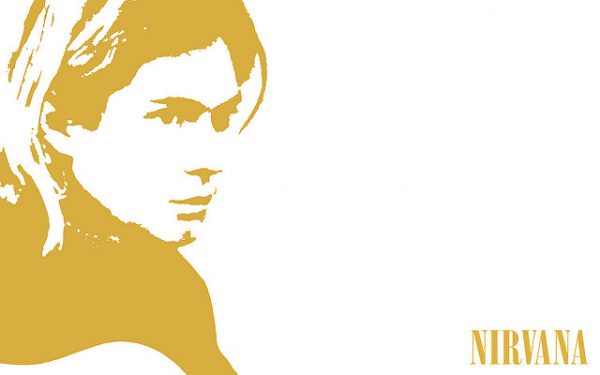
In 1990, the popular rock music scene was in total disarray — not a single rock album topped the charts. By January of 1992, Nirvana’s Nevermind surpassed Michael Jackson’s Dangerous to the top spot of the Billboard 200, transforming the state of rock music forever and defining the 90s teen generation. On its recent 25th anniversary, the album remains one of the highest selling rock albums of all time, and is thought to represent not only a shift in music, but in commercial entertainment as well.

Sociologist Ryan Moore notes that the rise of Nirvana and other “grunge” bands demonstrated to major music labels that notions of anti-corporatism, rebellion, and authenticity could be co-opted into a larger marketing campaign to sell a variety of products to youth. Bands like Nirvana were so successful because they personified a collective feeling in the 1990s and once advertisers and marketers capitalized on this notion, expressions of deviance permeated mainstream culture.
Why did bands like Nirvana resonate so well with teenagers during the 1990s? Musical tastes can serve as a form of identity construction and the exclusivity of a collective of people, and Nirvana’s image of rebellion was a resource for youth to distinguish themselves from other generations. Although grunge developed originally as an avant-garde or experimental genre, once it seeped into the local music scene of Seattle and evolved into its industry form, it was already well established in the collective identity of youth in the United States.  
Why do albums like Nevermind still resonate in the modern day? Research shows that people tend to view their memories from adolescence as especially important. At the same time, representations of major events or famous people change or develop with each new generation. Abraham Lincoln, for example, was commemorated as a “self-made man” in the years following emancipation; yet, in the rise of the civil rights movement, newer generations viewed him as the “Great Emancipator.”  Thus, we can expect Nirvana’s significance to be much different for teens today than in the early 1990s.
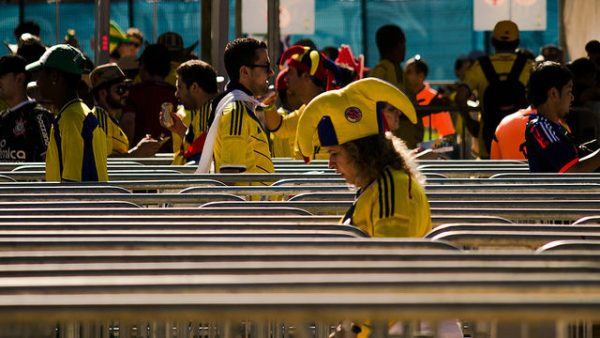
2014 FIFA World Cup in Brazil. Photo by paulisson miura, Flickr CC

Done and dusted. Brazil’s run of hosting global sporting events has officially ended. From the opening game of the FIFA Confederation Cup in 2013, to the closing ceremony of the Paralympics on September 18, it has been quite a ride. Spectacles of the grandest of scales were to be portrayed on television with mostly smiles and laughs, but also some sadness. In the eyes of the world, Brazil’s sporting exploits look to be a success, but was it worth it?  Was the estimated $30 billion the Brazilian government spent hosting these events a good investment? It is probably too early to say for sure, but sociological research can give us a sense of what kind of analyses need to be done to find out. 

In the past, economic growth has often been seen as the primary reason for hosting major sporting events for developing nations. But when even economists acknowledge that little economic revenue will be produced, we must look to other rationales. The hope of breaking into the upper-echelon of nations with positive news coverage and prestige has emerged as one of the justifcations for hosting global sports spectacles today. For example, South Korea, who co-hosted the 2002 World Cup, used the event to promote itself as a modern state, just like its neighbors Japan and China.

Other countries like Brazil, China, and Russia have used their recent Olympic and World Cup events to help build positive public opinion around the globe. Who knows if Brazil’s exploits will make a lasting impact on the world stage, but this criteria will surely be among the most important in how these Games are judged in the future.

Photo by Ryan Godfrey, Flickr CC

During a political season in which very little has gone according to script, one thing has been fairly predictable: the demand on all sides for “media objectivity.”

Advocates for objective political reporting are typically referring to journalistic conventions that include using direct quotes, presenting “both” sides of the story, and focusing on the presentation of “material facts.” These facts, we are often told, speak for themselves. But as intuitive and appealing as the call for neutral, unbiased reporting might sound, however, sociologists have been both cautious and critical.

One reason for sociological skepticism is that the notion of objectivity in political journalism is actually a fairly recent historical invention. It has less to do with balance or fairness than it does with ritualized procedures journalists use to protect themselves from the pressures they face in the day-to-day reporting of complex issues. Objectivity, in this sense, emerged as a kind of protective blanket for political journalists.
Not only are the ritualized practices of objectivity in political journalism relatively new, sociologists have shown that they are fraught with problems and limitations. For example, basic standards of media objectivity are typically less consistently applied to female political candidates and candidates of color.
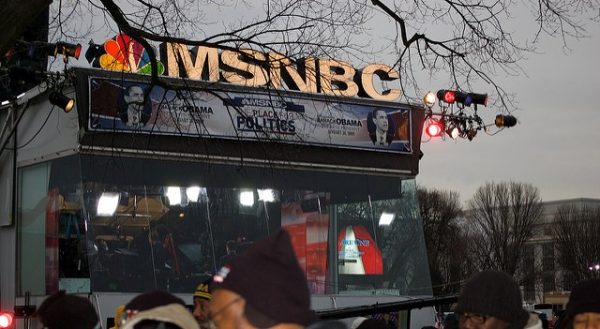
Another strand of sociological scholarship suggests that most standards of objectivity are strongly linked to social context, personal experiences, and the types of conversations that people have with their peers. In other words, journalists and media organizations tend to define objectivity in relation to their target audience and frame their coverage to appease this group. This approach suggests that although MSNBC and Fox News typify the seemingly bifurcated nature of political journalism in the United States, they epitomize two sides of the same coin and may represent the “new normal” in political journalism.
The new anti-bullying emoji.

Fans of the movie Mean Girls will vividly recall the scenes when Regina George’s friends banish her from the lunch table for wearing sweatpants and when she distributes the hurtful pages of the “Burn Book” through the halls of the school. Other movies such as Heathers, Carrie, and Dazed and Confused portray how kids at school can be cruel. However, there are some new measures being taken to curb bullying, both in person and online. A new app aimed to help bullied students find a friendly place to sit in the cafeteria has launched just in time for National Bullying Prevention Month. And there is also a new emoji you can use when you witness bullying online. 

It is estimated that over 3 million, or 30%, of middle and high school students experience bullying each year.  Not surprisingly, Nansel and colleagues find that poor relationships with classmates and loneliness are associated with being bullied. Research from Miller shows that much of what teen girls call “drama” is actually bullying, although they tend to understand it as a regular part of life rather than bullying.  Girls’ bullying behavior is more likely to involve spreading sexual rumors, slut-shaming, and dishing out homophobic labels and is less likely to involve physical violence.
Who gets bullied is tied closely to status in the social hierarchy, but not in a way most people expect. Faris and Felmlee find that youth with higher statuses and more network ties, the popular kids, are more likely to face bullying; that is, until they reach the very top of the social pyramid where they find a sort of immunity to bullying.  Rather than the popular mean girl picking on the nerd, bullying is more likely to happen within friend groups, particularly online. Attacks online may happen more frequently between friends or former friends because of competition around romantic partners.
Photo by Lee Coursey, Flickr CC

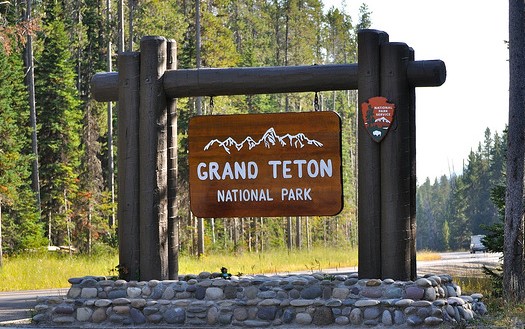
Last month marked the centennial of the National Park Service, which is tasked with preserving natural and cultural resources and protecting outdoor spaces for recreation, like Yellowstone, the Grand Canyon, and Yosemite. The most recently designated park is an ocean park where 4,900 square miles of deep sea volcanoes and canyons in the Atlantic ocean are now prohibited from commercial fishing and other types of resource extraction. While the idea behind the national park system is that everyone should be able to enjoy nature, the reality is that the working class and people of color are less likely to use national parks and the history of the parks has involved the displacement and exclusion of Native American, African American and immigrant communities.

Unequal access to resources – including money for entrance fees and transportation, equipment for exploring the parks, and leisure time – have resulted in race and class differences in who can actually enjoy the national parks.
Beyond access, there are a variety of cultural definitions of “the wilderness,” “the outdoors,” and recreation that are shaped by race. Racial norms and ideologies impact how people perceive leisure time and values of natural beauty, and activities like hiking and camping are often seen as “white hobbies.” Yet, these differences are largely due to a history of exclusion, discrimination, and segregation that kept people of color from using public outdoor space, particularly in the Jim Crow South.
The parks themselves were created through colonialism, as much of the land that is now “protected” was of course taken from Native Americans. The idea of a pristine wilderness is historically linked to white racial purity and the need for Europeans to save the land, which justified U.S. expansion into the West. The conservation movement was also led by white men, such as John Muir, who often overlooked the struggles of racial minorities and issues of equity.
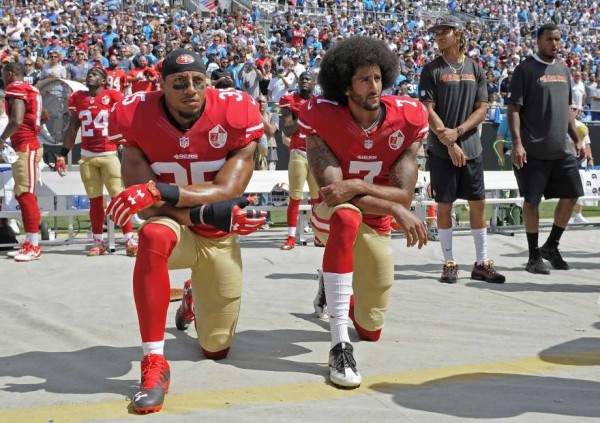
San Francisco 49ers' Colin Kaepernick and Eric Reid kneel during the national anthem. Mike McCarn, Associated Press.
San Francisco 49ers’ Colin Kaepernick and Eric Reid kneel during the national anthem. Mike McCarn, Associated Press.

More and more athletes are joining the San Francisco 49ers’ Colin Kaepernick in kneeling during the “Star Spangled Banner” at the beginning of sporting events. Though this phenomenon has spurred controversy and heated exchanges, sports stars using their celebrity for civic action is not entirely new. After the police shootings of Eric Gardner, Michael Brown, Tamir Rice, and other unarmed black people, numerous members of the NBA and NFL wore hoodies that read “I Can’t Breathe,” (Eric Gardner’s last words); others entered the game while making the “Hands Up, Don’t Shoot!” gesture championed by #BlackLivesMatter. Indeed, today we are witnessing a resurgence of athlete advocacy.

A common criticism of these athletes is that “they should just stick to sports!” or that “they aren’t supposed to talk about politics!” In reality, however, athletes have been at the forefront of protests and civic action for some time now, particularly in the 1960s. TSP Editor Doug Hartmann’s popular book describes how the Civil Rights Movement provided the context for athletes to begin using their celebrity for greater causes. Similarly, Ben Carrington describes how racism has shaped the international black-athlete-experience. Colonialism and contemporary globalization have made sports a site where racism is enacted and solidified, meaning athletes have had to think about these concepts–and fight against them–for a long time.
After the Civil Rights movement, athlete protests became less common, especially as athletes expanded into areas like merchandising and marketing, which meant that they were more likely to avoid “rocking the boat” and jeopardizing their business. But because of #BlackLivesMatter and a greater national focus on police killings of unarmed black people, athletes are once again getting into the fray. As Herbert Ruffin describes, politicizing college sports has led student athletes to protest for their own rights and demands — remember the events at Ole Miss last year? Similarly, Emmett Gill describes actions (and reactions) surrounding the “Ferguson Five” — the St. Louis Rams football players who showed solidarity with protesters in Ferguson, Missouri. 

This research shows that while athlete activism is often met with criticism, it does not mean that their tactics will prove unsuccessful. If history or recent events have shown us anything, the opposite may be truer. One thing is for sure — athlete protest in the contemporary era is just warming up.

For even more readings on race, sports, and athlete activism, check out the  #ColinKaepernickSyllabus created by NewBlackMan (in Exile).

Photo by Shannon, Flick CC

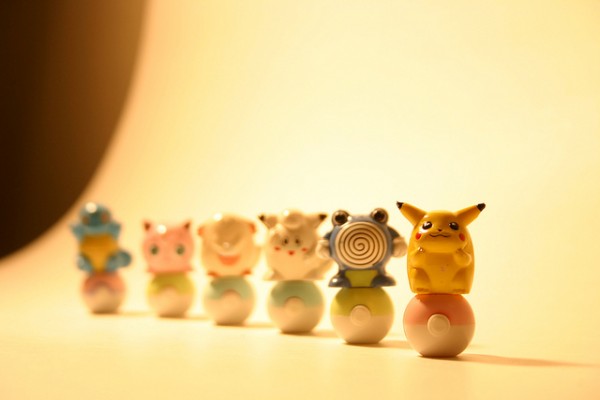
From Brooklyn to Brazil, Pokémon Go has taken the world by storm. And with its popularity has come a media frenzy — Thieves are luring defenseless children! Those troublesome millennials are playing while driving! The game is even banned in Iran.

Popular games have long sparked moral panics and public anxiety about the well-being of our youth and their distinctive cultural tastes and subcultural practices. But we shouldn’t be so quick to panic. In an overview of the game over at Cyborgology, Marley-Vincent Lindsey argues that casting the game as “good” or “bad” ignores important social context. He explains,

Èmile Durkheim would have called it the collective effervescence of the 1990s: an activity as much about the affect and socialization produced as it was about the game. Nintendo may have designed it, but people made it real.”

And in fact, social science research gives us a more measured perspective on the good, the bad, and the Poké. Games create powerful social spaces where people can share a common emotional focus. This draws us in, and it is a foundation for all kinds of human social behavior. Rituals lived out through interactions create powerful shared social experiences that bring people together; we see this in everything from smoking to social media.
And if previous sociological research suggests concerns about games like Pokémon Go, they have more to do with inequality and social control than moral chaos. Too often, we assume everyone can approach public space in the same way, which can blind us to the ways in which patterns of play mirror and reproduce residential segregation. Research also shows how legal systems work to “banish” certain people from public spaces. On this front, it is useful to think critically about who the police allow at the Pokéstop next to that park fountain just after dusk.  

As a woman, summer means more than just bike rides and swimming at the lake. It also means deciding whether or not to shave my body hair. In 2014, some declared that “the bush was back,” and in 2015 armpit hair had its moment in the spotlight as women sported photos of their hair on Twitter and Instagram. While the stigma of being a hairy lady does not seem to be waxing, it is certainly far from over.

Photo by Luca Vanzella, Flickr CC
In the U.S., mass armpit hair removal began only after the introduction of the first women’s body razor in 1915, and shaving pubic hair took off after the bikini was popularized in the late 1940s. Since the 1960s, women’s body hair has come in and out of fashion. For many women in countries like the US and the UK, removal of leg, underarm, and pubic hair is an everyday practice. A recent US survey shows that 84% of women surveyed engaged in some form of pubic hair removal. Women who choose not to shave these areas often face policing from family and friends that reinforces heterosexuality and homophobia. For instance, family and friends promote heteronormativity when they voice concerns over whether potential male partners would find unshaved women attractive.
While people often view men’s body hair as more natural than body hair for women, they also express disgust for “gorilla like” male body hair. Many men–both gay and straight–report removing body hair, citing appearance and attractiveness as primary motivations. Media outlets like men’s lifestyle magazines promote body hair removal as a way to increase sexual appeal, appear healthy, and control nature by controlling the body. Thus, for both men and women, constructions of acceptable and unacceptable body hair are closely linked to cultural norms surrounding sexuality.