culture

Photo by Herry Lawford, Flickr CC

Worries about rapid technological change negatively affecting society abound — the advent of the internet, increased availability of smartphones, and ubiquity of social media have many concerned that people are constantly “plugged in” and, as a result, tuning out the world around them. These concerns were revitalized with the recent publication of psychologist Jennifer Twenge’s new research, which finds that a social media heavy diet is associated with depression and social isolation among teens. However, Twenge explains, “The aim of generational study is not to succumb to nostalgia for the way things used to be; it’s to understand how they are now. Some generational changes are positive, some are negative, and many are both.” Social science research on nostalgia warns against idealizing the past, but also points to varied uses and meanings of nostalgia over time.

Seen as a sickness when it first entered circulation centuries earlier, nostalgia became a common trope in the late 20th century, moving from the medical field to everyday life. Nostalgia is typically defined as a “sentimental longing for the past,” and is often associated with an idealized remembering of “how things used to be.” In this way, nostalgia can be viewed as reactionary and regressive — calls for returns to “traditional families” or “tight-knit communities” are often cast in a language that selectively highlights the positives of previous social forms and ignores the problems associated with them. For example, Stephanie Coontz finds that there has never been a “traditional family” that protects people from poverty or social disruption.
Nostalgia can also be exploited by those in power to further ideological ends. For example, think Trump’s electoral campaign slogan “Make America Great Again,” or Brexit with its “Take back control” discourse — both imply a better past. This type of nostalgia is usually vague in terms of the era and place of longing, yet has an exclusionary vision of society that has strict rules about who belongs.
However, recent research complicates these negative connotations of nostalgia by exploring some of the different affective, sentimental, and ideational roles that various kinds of nostalgia practice perform. Research finds that nostalgia can be both a comfort and a catalyst for change, and some argue that nostalgia can be an important basis for thinking into the future. Sociologist Fred Davis recognizes nostalgia as a tool for identity construction and a lens through which people construct, maintain, and reconstruct their identities. He finds that nostalgia reduces insecurities and self-threat by keeping fears of insignificance at bay and reassuring us that our self “is as it was then.” Similarly, Katharina Niemeyer argues that the process of “nostalgizing” provides a sense of belonging that can increase solidarity and lessen loneliness.
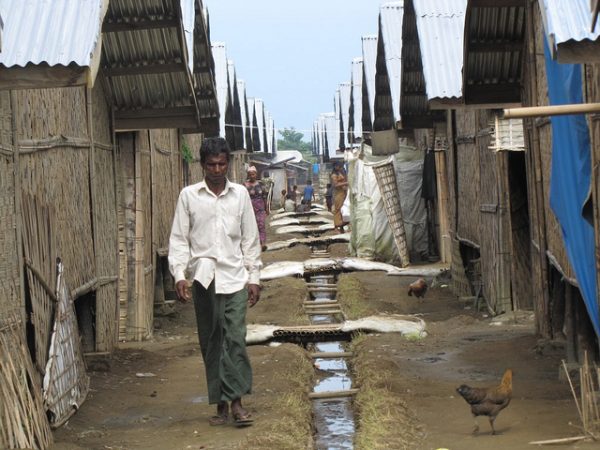
Photo by Mathias Eick, EU/ECHO, Rakhine State, Myanmar/Burma, September 2013. Flickr CC

The Rohingya, a Muslim minority group, have been the target of violence for years in Myanmar, also known as Burma. But in recent weeks, international media coverage has surged following a spike in violence that has led to over 120,000 Rohingya fleeing their homes. The increased media attention, however, has also provided a platform for an anti-Rohingya propaganda campaign that argues the Rohingya are “terrorists” and deserve the violence that befalls them. Sociologists have brought new insight into how propaganda enables the acceptance of atrocities and how it can directly impact rates of violence.

Propaganda campaigns often demonize a group by characterizing them as less-than-human. Refugee communities, for example, are often treated with fear and suspicion by members of their host nation. This can also negatively impact individual-level interactions with the mistrusted group, such as higher rates of expressed aggression and contempt. Studies show that when a group is dehumanized, those outside of the group find it easier to exclude them and assume that they are more deserving of problems in their lives.
Scholars have also examined patterns of violence and how perpetrators make decisions through the use of propaganda. Radio propaganda played a key role in the Rwandan genocide; on hills where radio reception was better, the rate of killing was higher than in areas where reception was limited. Groups such as ISIS use social media to motivate and recruit individuals. With the increasing prominence of social media, understanding how these mechanisms enable the acceptance and perpetration of violence is essential. They also indicate that positive social media campaigns could help to counter propaganda.


Photo by Fighters Hub, Flickr CC

Sports fans and non-sports fans alike gathered in bars and family living rooms to watch the boxing match of the year between Floyd Mayweather Jr. and Conor McGregor last month. In the weeks preceding the match, McGregor, who is white, received widespread criticism for taunting Mayweather with racial slurs such as, “Dance for me, boy” and boasting to black female fans that he is “half black from the bellybutton down.” His slurs fueled racial tensions, leading many fans to support either athlete based upon racial identity, despite Mayweather’s previous allegations of domestic violence. Social science allows us to address the complicated way that race, masculinity, and sexuality collide in sports culture.

Race and sexuality also influence male performances of masculinity within sports. Ben Carrington argues that male dominance in early organized sports relied on presumptions of white superiority and black male emasculation. Consequently, black men have traditionally used sport to assert masculinity, resist racism, and advocate for civil rights.
Gay male athletes often encounter a sports culture that thrives on homophobia. Athletes are expected to act like ‘real men,’ which not only involves physical aggression, but also a sexual desire for the opposite sex. While gay athletes may not always face verbal or physical harassment from coaches and team members, many feel pressure to remain silent about their sexuality. Teammates, spectators, and coaches often still use homophobic language to criticize heterosexual athletes. Interviews with several gay athletes, however, suggest that teammates and coaches are more accepting of gay identities in recent years.
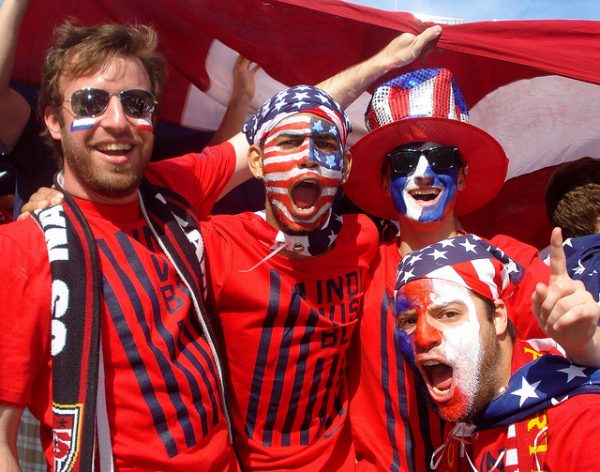
Photo by David Wilson, Flickr CC

While social scientists have long talked about globalization, a new concept called “glocalization” has emerged as a way to highlight the ways that global patterns are accepted and interpreted by localized populations. Sport sociologists have been among the leaders in developing this concept, and the International Champions Cup (ICC), a soccer tournament making its way around the United States, helps illustrate and explain why.

By combining local customs and traditions with global trends, communities engaged in globalization have control over how the global viewpoint is digested. And this combination of the outside world with the inside world has become a highly effective tool of capitalism — jumping on recognized trends while providing a local twist makes glocalizing of certain products more appealing.
When it comes to the ICC, we see American promoters and communities taking the world’s most popular sport and infusing it with traditional American sporting values. Club chants have been replaced by pop music that plays over the sound system like at many basketball and baseball games. Marching to the stadium with team banners and flags is replaced by exclusive fan party zones during tailgating. And players are elevated to celebrity status rather than community heroes.
Glocalization,  however, comes at the risk of loosing those who support what is already established. The ICC, for example, has created an artificial experience for hardcore fans  because of the domination of casual fans — known as “post fans” — as the main spectator group.  Post fans are casual supporters who have a certain expectation of what the event is supposed to entail, and often the experience they seek is very homogeneous with every other Western, middle class sporting experience.  With the event being catered to post fans, hardcore soccer fanatics are left with a watered down experience.  And within the context of the United States, Hispanics, Africans and other minority and immigrant groups are the primary soccer supporters. However, these groups are often at an economic disadvantage, which makes attending these games very difficult, further strengthening the post fan’s position in the glocalizing of the the global product of soccer.
Photo by Jason Howie, Flickr CC

In recent months, Facebook faced intense scrutiny due to the streaming of violent acts on their live streaming service. Beyond the live sharing of violent crimes, the proliferation of social media has transformed criminal activity, ranging from the advent of cyberbullying to the widespread dissemination of terrorist propaganda and recruitment. And social science research also suggests that gang members are also employing social media. These gang affiliates, typically adolescents and young adults, use their online presence to promote their gang identity and gain notoriety, in a phenomenon often called “cyberbanging.”

Gang members use the internet at equal rates and in similar ways to their non-gang peers, but their online behavior serves an additional symbolic purpose: demonstrating a gang affiliation. A survey of 137 adolescent gang members found that 74% reported using the internet to show or gain respect for their gang. Therefore, the Internet does not appear to be a tool that gang members use to further the interests of their group by recruiting members or promoting activities; rather, the web is a space for existing members to demonstrate and solidify gang status by watching videos of gang fights or posting taunts against competing gangs. Gang members are increasingly aware that the police monitor their activity online, so they attempt to avoid posting anything publicly about specific criminal acts, which could threaten the gang as whole.
Like other groups, however, the social organization of gangs determines their behavior both offline and online. Gangs that have been around longer, have an established hierarchy, and have a set of rules and responsibilities are more likely to have a website and organize or post activities online, while newer gangs are more likely to use the internet as a recruitment tool. This pattern would be predicted by sociological research on organizations , which finds that the social context of a group’s founding shapes its future development. Preliminary evidence also suggests that gang members are engaging in more online criminal activity, such as pirating music or selling drugs, than non-gang or former gang members, but this online criminal activity is, as expected, more common among those with higher levels of computer skills. Despite these emergent trends, we still know very little about how gangs use the internet and what role social media plays in gang culture and crime. Gang researchers are therefore looking beyond “gangbanging” on the streets and into the “cyberbanging” on the web.
Photo by keith ellwood, Flickr CC

A stage play inspired by early boxing great Barbara Buttrick recently premiered in the United Kingdom. The play, title Mighty Atoms (after one of Buttrick’s nicknames, “The Mighty Atom of the Ring”), marks a departure in the history of women in boxing, away from condemnation towards acceptance, and has important implications for how we think about gender and women in sport.

Women participating in fights goes back to at least the 1700’s, in the form of Elizabeth Wilkinson, the “European Championess,” who competed in bare-knuckle boxing matches in the streets of London. Her combination of showmanship and fighting prowess made her popular in fighting circles. Still, for many, Wilkinson represented an awful kind of brutalism that lessened the value of the United Kingdom. Meanwhile, in the United States, women boxers were seen as a side-show, forced to compete alongside snake charmers and trapeze artists in American carnivals.
Sport scholars have shown that these ideas are stereotypes about women in boxing continue today. While often used to marginalize or exclude women from the sport, they can also provide a source of identity and meaning for female fighters.
Finally, it is worth noting then even when women’s boxing was finally included in the 2012 Olympic Games in London–the site of this week’s theatrical premier–the addition was met with opposition.
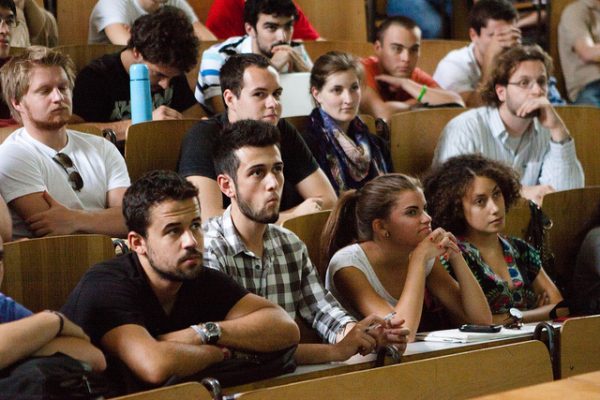
Photo by Jirka Matousek, Flickr CC

Today we are featuring a guest post by students at Oberlin College, who submitted a #TROT post as part of an active learning exercise for their political sociology class, taught by Professor Christi Smith. If you or your students would like to submit a post, please email tsp@thesocietypages.org.    

In today’s contentious political climate, campus political environments have become hotbeds of activism. In addition to the recent slew of (sometimes violent) demonstrations protesting conservative speakers on campuses, some conservative students report that they feel physically endangered by the fervor of their liberal peers. This is leading many to keep a low profile about their political views, or some to even transfer. Others, however, are becoming highly defensive, polarizing, and contrarian in their political views, and are more likely to become a “firebrand” of conservatism as a result of their experience. Sociological research shows how these trends are not entirely new, and a college’s institutional culture can shape conservatives’ attitudes and activism.

We traditionally assume that young adults tend to be more liberal, and then grow more conservative as they get older. Yet political views are more contingent on the act of rebelling versus conforming. Classic sociological research shows that conservative students  in the 60s often followed the views of their parents, while more liberal students said they were actively rebelling against theirs.
More recent studies focus on mobilization in college conservative movements, finding that institutional features of different schools can change how these groups express their beliefs. College professors tend to be more liberal, due to their advanced educational backgrounds, the disparity between their level of education and their income, and their demographic trend towards identifying with more liberal religious chapters. Some schools foster a culture of dialogue where conservative students can engage these ideas as equals, while other, often larger, schools create an environment where confrontational activism is the best way to be heard.
Secular Hall Lamp, Leicester. Photo by Chris Hoare, Flickr CC

President Trump recently signed an executive order that removes the financial threat churches face when their leaders publicly support a political candidate. While many argue that the order is largely symbolic and too narrow to mean any real change, others think it went too far, and the order has sparked discussions about the proper place of religion in what many see as an increasingly secular country. Long-standing discussions among social scientists about the meaning and measurement of “secularization” help put Trump’s order in context and reveals the complexity of religion’s role in American society.

At its most general, secularization is defined as the process whereby the political and/or societal significance of religion and its institutions wane slowly and religion becomes differentiated from the secular public spheres of social and political life. But the way religiosity is measured in studies of secularization matters. For example, while many have pointed to a decline in church attendance, or behavior, in both the U.S. and Britain as indicators of secularization, others argue that this trend has not resulted in a loss of religious beliefs.
Social scientists typically measure religiosity using the “3 Bs” approach — belief, belonging, and behavior. This approach accounts for the different ways that religious individuals hold religious beliefs, belong to and identify with specific religious belief systems and denominations, and enact those beliefs and belongings through behaviors like prayer, religious service attendance, and fasting. Individuals can combine the “3 Bs” in a multitude of ways, and while some “believe but don’t belong,” and others “belong but don’t believe,” an increasing number of individuals eschew religious beliefs, belongings, and behaviors entirely.
Similarly, scholars have identified multiple “levels” of secularization: religious decline, differentiation of secular and religious spheres, and the privatization of religion. While the traditional conceptualization of secularization assumes that each level is linked, some argue that each is a distinct process and that one does not necessarily lead to the other. Trump’s recent executive order is a step towards the deprivatization of religion in the U.S, where religious groups are stepping back into public life and engaging in political and social debates more than they have in the past. But this deprivatization can and is happening alongside trends of religious decline, as the U.S is also seeing increased religious disaffiliation among younger generations.  
Open cut coal mine, Hunter Valley. Max Phillips (Jeremy Buckingham MLC), Flickr CC.

With a group of coal miners standing behind him, President Donald Trump signed an executive order in his first 100 days reversing Obama-era climate change policies and claimed that he would be bringing back coal and putting miners to work. With this move, Trump has tapped into the concerns of rural communities with economies dominated by resource extraction. Yet, can or will coal mining jobs come back, and will this lead to economic and social development in places like Appalachia?

The loss of mining jobs in the U.S. is largely due to increasing mechanization and other labor-cutting management practices –not the result of environmental protections. Thus, placing the blame on climate change policies is an unfounded, but typical, argument used to scapegoat environmentalists rather than industry or changes in the global economy.
Researchers have long argued that economies based solely around mining are prone to booms and busts, lacking resiliency and often becoming dependent on one industry. Contrary to common assumptions, research has found that mining does not always lead to economic growth and well-being. Thus, even if coal mines stay open, this does not necessarily mean wider economic prosperity and well-being. In Appalachia, for example, the counties with coal mines actually have some of the highest rates of poverty and unemployment compared to surrounding counties without active mines.
Nevertheless, the rhetoric of saving coal resonates with strong cultural connections to mining and people’s identities of coming from multiple generations of miners and living in a coal community. The identity of being a miner is interconnected with masculine ideals of hard work and providing for family, and mining companies have played off of these sentiments. Mining companies, particularly in Appalachia, have actively worked to create community support through public relations and other cultural and political tactics. These corporate strategies, such as sponsoring high school football tournaments and billboard ads, have helped to place the blame on outsiders and environmentalists, while providing a cover for the environmentally destructive and cost-cutting industry practices.
Wall Mural in Nogales. Photo by Jonathan McIntosh, Flickr CC

“I will build a great, great wall on our southern border, and I will make Mexico pay for that wall. Mark my words.” These were the words that President Donald Trump said when he first announced his candidacy. Since his inauguration, Trump has continued to talk about his intentions of building the wall, with many companies allegedly bidding for the contract, despite its many obstacles. Many leaders in Latin America have publicly stated that building the wall would not only change the relationship with Mexico, but it would change relationships with the rest of Latin America as well. Trump’s wall would create a physical barrier between the US and Mexico, but it would also intensify what social scientists call symbolic boundaries.

The border acts as the physical manifestation of and “us versus them” mentality by reinforcing differences between groups, which often limits positive contact between groups and can lead to negative stereotypes. For example, physical borders create symbolic boundaries that reinforce national identities by marking the geographic territory where one nationality resides. This often creates tensions by giving further attention to perceived group differences. In the case of Trump’s wall, part of the underlying purpose is to intensify the symbolic boundary between Anglo-Americans in the industrialized world and the Hispanic inhabitants of a developing nation.
Symbolic boundaries use specific cultural distinctions in order to distinguish one group from another, often along racial, ethnic, and religious lines. In the United States for example, Christians believe having religion creates a morality that is the basis for civic society. Atheists, who have no religion, are believed to lack that morality. This has resulted in atheists being unfairly cast as the symbolic representation of anti-American values. Like the physical wall Trump keeps threatening, these same types of symbolic boundaries work to keep many immigrants, refugees, and other religious minorities from being fully accepted in the U.S.