culture

Photo by Wesley Fryer, Flickr CC

Originally published Sept. 16, 2016

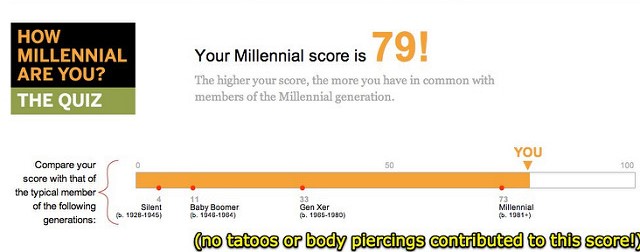
Millennial bashing is back in the spotlight, from #howtoconfuseamillennial to Survivor’s latest season. Satirizing the youths is all in good fun, but when the media casts them as “the most high maintenance workforce in the history of the world,” the shtick can get a little old. So what do we actually know about Millennials?

Social scientists look for “cohort trends”— changes that occur not because individual people are changing their attitudes or behaviors, but because a new generation is coming of age. Pew Research data shows the Millennial cohort, born between 1977 and 1992, are less likely to be married than members of other cohorts at the same age, more likely to be non-religious, and more likely to be living at home despite an improving economy. This seems like a contradiction, but social science helps us understand why Millennials seem to be fiercely independent, but also missing key markers of adulthood. The research shows they aren’t just shallow or selfish—they are responding directly to unique social pressures.

Surveys find the Millennial cohort focuses more on extrinsic goals like achievement and money, and it scores slightly lower on measures of empathy and community concern. We have to put these findings in context, however, because in-depth interviews show many of these beliefs stem from challenges like declining job security, economic inequality, and unreliable social institutions.
These extrinsic and individualistic motives mean Millennials are more likely to question existing institutions, and this has benefits. While they are less likely to be religious and more likely to defer marriage and childbearing, for example, this cohort also caps off a trend toward a society more accepting of difference, and they actually report higher job satisfaction.


Photo by Tim Green, Flickr CC

Over the holidays, many people gave back to their communities by donating goods or services to their favorite charitable organizations. This annual “giving season” is a crucial time for many nonprofits, so much so that a 2011 Nonprofit Fundraising Survey reported that half of the surveyed nonprofits received one quarter of their contributions between October and December. Typically, individual households, rather than private corporations or businesses, are the main contributors. In fact, individual giving to the nonprofit sector amounted to $258 billion in 2014.

Research suggests that people with greater education and financial resources, as well as extended social networks, are more likely to give to charities. However, the appearance of increased generosity among people with large social networks may be the result of simply receiving more solicitations for donations or strong ties to religious social networks that promote charitable giving. Likewise, individuals who are more involved in civic organizations and report higher levels of social (i.e. neighbors, co-workers) and racial trust are also more likely to give.
Religious identification is strongly related to giving to religious charities, as might be expected, but families that increase their religious giving also tend to increase their secular giving. However, some religious denominations are more prone to secular giving than others. People belonging to denominations with centrally-controlled charities (such as Mormons) may be more likely to view their religious donations as a substitution for other secular charities than people who are affiliated with denominations whose charities are less financially structured (such as Baptists). Further, secular and religious causes often compete for our time and resources, and so giving to and volunteering for religious charities can reduce secular giving simply due to time constraints and competing commitments. However, in general, religious and secular giving are complements rather than substitutes for one another.

Want to know more about the social science of charitable behavior? Check out this TROT for a summary of research on the psychological and sociological predictors of volunteering.

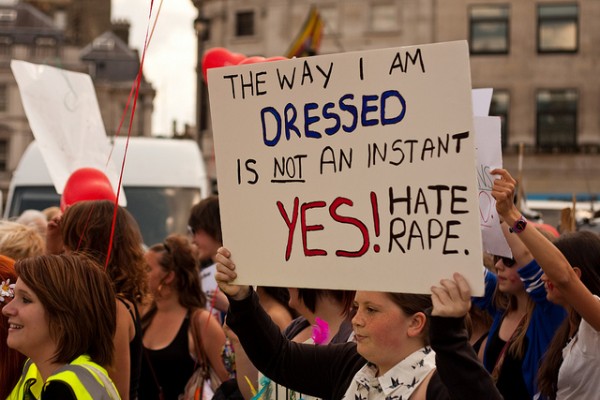
Taken at the Slutwalk meeting at Trafalgar Square in London, June 2011. Garry Knight, Flickr CC

Originally published Sept. 13, 2016

Earlier this summer, a California judge sentenced Brock Allen Turner to 6 months in jail for the sexual assault of an unconscious 23-year-old woman because the judge believed a harsher punishment would “have a severe impact on him.” After Turner’s father referred to his son’s actions as “20 minutes of action,” the survivor detailed the emotional aftermath of her assault and the revictimization during trial in a powerful impact statement. This sentencing decision and subsequent defending of Turner because of his university status, lack of criminal history, and “positive character” continue to strike public outrage, as he was released from jail after serving 3 months. Feminist scholars have long addressed the pervasiveness of rape culture and help us pinpoint how it reproduces notions that only “bad guys” commit “real rape.”

Police and prosecutors often make decisions to arrest and charge suspects based upon characteristics of “real rape” –  rapes that involve strangers, weapons, and physical force. These depictions of sexual assault suggest only “bad guys” rape and that victims must physically resist and show their injuries to prove it. Empirical studies illustrate that acquaintances perpetrate the vast majority of rapes and include little, if any, physical injury. Still, rape and sexual assault continue to be characterized by under-reporting and high attrition rates.
Some men convicted of rape deny their actions by portraying the victim as the true sexual aggressor and themselves as the victim. In one study, men argued that the victim said no when she really meant yes, initiated the sexual contact, and even enjoyed the sexual contact once she relaxed. Other men acknowledged their actions as rape but provided excuses, citing drugs and alcohol, emotional problems, and a brief lapse in judgement from their otherwise “nice guy” persona as the true source of the victim’s rape.
Perhaps one reason myths of the pathological rapist persist within the criminal justice system is the expectation that women and girls should accept sexual violence and aggression from men as normal in their everyday interactions. In a recent study, adolescent girls often described their experiences of harassment and sexual violence with men and boys as normal “because they do it to everyone.”

For more on rape culture and its consequences, see this TROT on the revictimization of rape victims, this piece on pop music and rape culture, and these stats on rape and sexual assault in the U.S.

Photo by Robert Ashworth, Flickr CC

For many people, the holiday season is a time to spend with family. However, for individuals who practice polyamory, the holidays can be difficult to navigate, from having to attend several gatherings, to explaining multiple partners to family members. The term polyamory is generally used to describe consensual, emotionally intimate relationships between more than two people, though it is not the only type of non-monogamy. While poly relationships have certainly existed for some time, media outlets recently started featuring articles on the topic, including helpful terms and describing how poly relationships deal with jealousy.

Social scientists are particularly interested in the fluid nature of poly relationships and how those practicing polyamory define their identities and behaviors. Many people who practice polyamory emphasize love, intimacy, and friendship. Contrary to many monogamous folks, non-sexual relationships like friendships sometimes become more important than sexual relationships for poly folks. Likewise, some people who practice polyamory distinctly differentiate poly from casual sex or swinging, while others consider any non-monogamous behavior to be part of polyamory.
Some scholars and practitioners consider polyamory a sexual orientation or identity, while others argue polyamory should be viewed as a “strategy of sexual expression.” For instance, poly relationships are one way for bisexual women to visibly express their sexual identity to others. While polyamorous relationships are a way for both men and women to explore their sexuality, for women this often means the ability to embrace multiple partners and high sex drives, defying sexual double standards that stigmatize women for having many sexual partners.
Photo by The Kingsway School, Flickr CC

From climate change to stem cell research, public discourse in the United States is highly divided about the legitimacy and authority of science. Depending on your views, it’s easy to dismiss the other side as uninformed or uneducated, but sociologists know that views about science are more complicated than that.

Despite common misconceptions that climate change skepticism is linked to education, trust in science has only a small correlation with educational attainment or scientific literacy.
Rather, distrust of science is closely linked to political and religious affiliations. Conservatives have the lowest level of trust in science; this holds true even among highly educated conservatives. As for religious folks, studies find that it is not necessarily that religious people completely distrust the scientific method, but rather they reject science’s influence on issues they see as a moral concern.
However, research cautions against thinking about trust in science as simply a liberal versus conservative binary. A recent study offers a more complicated analysis, arguing that a third perspective defies this binary. This group, labeled “postseculars,” have more complicated views — they often trust science in certain domains, but distrust it in others, reflecting a much more complicated picture of how cleavages in social, political, and economic attitudes influence public opinion of scientific authority.
Media Missionary Day, San Diego, 2008. Pamla J. Eisenberg, Flickr CC

The recent U.S. presidential election has everyone thinking about the role of media and religion in political life. From fake news to mainstream media spectacle, both the left and the right have been criticizing American journalism. White evangelical Christians also overwhelmingly broke for Trump, despite concern that he was not particularly pious himself. The intersection of politics, media, and religion is clear, but what can research tell us about how they interact?  Some of the best work suggests we can learn a lot by making an unexpected comparison: the role of religion and politics in the media in the United States and Africa.

First, political leaders across the globe use religious media in similar ways. Religious programming and discourse in the media creates new ways for people to use religion to signal their social status. Politicians in both the U.S. and countries like Nigeria have harnessed the power of these shows and their large audience numbers as a tool to publicly cultivate their spiritual image by integrating administrative goals with images of divine will.
Second, religious leaders also use secular media outlets in similar ways. The political economy of the media both in Africa and the U.S. means that secular media organizations are willing to broadcast religious programs because they garner large audience numbers. Additionally, religious leaders embed themselves in the elite, administrative networks that run secular media outlets, political groups, and academic organizations to disseminate their messaging to both religious and non-religious audiences. This also means that religious media personalities are firmly ensconced in today’s globalized media and public culture that is characterized by a focus on media icons, spectacle, and a penchant for dramatization.
Studying media as a central category across different international cases provides fresh perspectives on religion, citizenship, authority, and political engagement.
Photo by William Brawley, Flickr CC

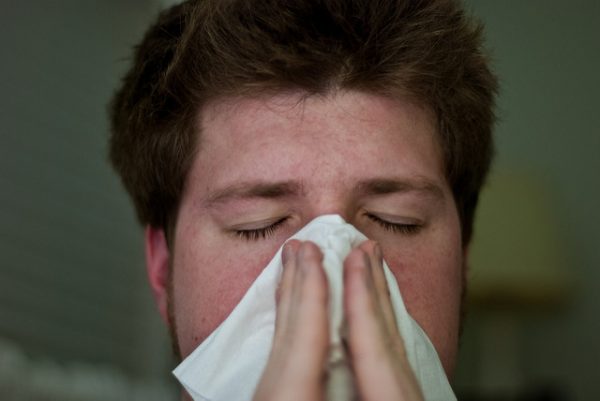
Employees under strict attendance policies face a difficult choice when they are “technically” physically able to be present at work, but may not feel healthy enough to perform their job well. Debating whether or not to call in for the day, employees ask themselves not only if they feel sick, but if they seem sick enough to convince their superiors and coworkers. Talcott Parsons’ classic work on “the sick role” helps us understand why. Sickness inhibits a person’s ability to perform as others expect them to. However, people in the sick role are excused if their symptoms seem to be beyond their control and if they try to get better. Whether or not a person is really sick, taking on the sick role requires those around them to be convinced, granting the sickness legitimacy. Social science research shows how the ease of attaining the legitimated sick role differs depending on gender and class.

More recent and critical research shows why taking the plunge and calling into work can be so difficult. First, a person has to ascertain whether they are truly sick by analyzing how their body feels, and whether or not certain symptoms constitute true illness in the eyes of others. The dripping nose and general malaise of a cold, for example, is never pleasant. Perhaps as children we might think it truly disrupts our daily routines. As we grow older, however, we learn what sociologists of health call illness behavior, which is how an individual interprets specific bodily symptoms (like those of a cold) and reacts to them. Adults learn that the proper reaction to a cold is taking some over-the-counter medicine and heading into work with a box of tissues. This means that learning to interpret the way your body feels is in large part a social process.
Many working-class jobs perpetuate “toughing it out” illness behavior; employees often attribute moral value to being “hard working” and going into work no matter what. This comes with a set of beliefs about what constitutes real illness and what is mere laziness. Research finds that this kind of labor market shapes working mothers’ illness behavior. After developing a worker identity, working mothers often recognize physical symptoms as relatively unimportant compared to building a good reputation with their superiors and defending themselves from job insecurity. The economy, then, is at play when they assess how they physically feel. They then encourage their children to “tough out” common health problems. This learned behavior does not end when a child leaves home either – they are socialized into this practice and are likely to continue “toughing it out” when they are adults.
Photo by Jana Vanden Eynde, Flickr CC

Following successful shows like Daredevil and Jessica Jones, Netflix recently added Luke Cage to their TV Marvel universe. Cage portrays a black super-strong superhero whose skin is bulletproof. Set in contemporary Harlem, New York, the show portrays various black and Latino characters in prominent roles. Despite praiseworthy reviews and mainstream popularity, some critics expressed their disapproval of the predominantly non-white cast, claiming that the show is racist and that Cage’s portrayal is “too black.” While the increase in minority characters has been a major stride for equal on-air representation, previous sociological research suggests other problems and pitfalls remain.

From 1978 to 1989, the number of black characters on prime time television doubled. Yet, minority presence was more likely to be found in comedic roles, such as the Cosby Show, rather than dramas. While there were more depictions of black and white relationships, these relationships were featured in more formalized settings such as the workplace, whereas relationships among whites took place within informal settings such as the home.
Ethnic minority representation in the media has not suppressed the perpetuation of racist myths and stereotypes that further stigmatize these groups. While greater demand for blacks on TV were rooted in demands for social justice, subsequent television programs often over-depicted black criminality or problematized black culture. Latinos are also underrepresented in television, and when they are depicted, these portrayals are more likely to be more negative than portrayals of other racial groups. As a result, under-representation may lead audiences to believe that there are fewer minorities in the actual population.
Even programs like The Cosby Show that featured predominantly positive images of middle-class blacks can produce unintended consequences. Interviews with middle-class black families suggested that many viewed the doctor-lawyer duo between the Huxtable parents as a role model for the black community. On the other hand, many middle-class blacks criticized the show for depicting an unrealistic characterization of a black family that seemingly never endured any racial problems. Furthermore, these depictions of black middle-class families may have suggested to white audiences that blacks could make social and economic strides if they worked as hard as the Huxtables.
Photo by fightlaunch, Flickr CC

They say there is a first time for everything, and after 20 long years, the time has finally arrived. With the state of New York’s legalization of mixed martial arts, New York City will host UFC 205, which has been deemed the greatest fight card in UFC history. Headliners Irishman Conor Mcgregor and Joanna Jedrzejczyk of Poland are expected to attract large numbers of attendees and evoke an emotional connection among fans. Events such as the World Cup and Superbowl are cultural symbols, and UFC 205 is shaping up to be no different.

The UFC is a major attraction in sports right now. The urge to emotionally connect with others in an excited crowd is a compelling reason for buying tickets to major sporting events like this. People who attend a big match-up often experience eustress — positive forms of stimulation that lead to elevated levels of excitement.

Randal Collins. 2004. “Interaction Ritual Chains”. Pp. 75-90 in Micro-Sociological Analysis. 3rd edition, Contemporary Sociological Theory, edited by Craig Calhoun, Joseph Gerteis, James Moody, Steven Pfaff, and Indermohan Virk. John Wiley & Sons, Ltd.

Daniel L. Wann, Merrill J. Melnick, Gordon W. Russell, Dale G. Pease. 2001. Sports Fans: The Psychology and Social Impact of Spectators. New York, NY: Routledge.

Porri and Billings have found that people are drawn to sporting events that differ from traditional, mainstream sports like baseball and football. MMA athletes’ unique personalities and set of combative skills generate interest in a different way than team sports do. Social acceptance and mass popularity of attending an event also influences an individual’s decision to splurge and see the big fight. The bigger the event, the greater the desire to be part of the experience, especially if friends and family think it would be cool to attend.

Seungmo Kim, T. Christopher Greenwell, Damon P.S. Andrew, Janghyuk Lee, and Daniel F. Mahony. 2008. “An Analysis of Spectator Motives in an Individual Combat Sport: A Study of Mixed Martial Arts Fan.” Sport Marketing Quarterly 17: 109-119.

Sarah Porri and Andrew C. Billings. “No Limits: Sensation Seeking and Fandom in the Sport Culture of the X Games.” Pp. 91-100 in Sports Fans, Identity, and Socialization: Exploring the Fandemonium, edited by Adam C. Earnheardt, Paul M. Haridakis, and Barbara S. Hugenberg. Lanham, MD: Lexington Books

As the sport of mixed martial arts continues to grow, so does the research on this new sport that is captivating spectators. Other lines of research into MMA investigate the reworking of masculine identity and reasons why participants choose to participate, whether it is for competition or for health reasons. 

Kyle Green. 2015. “Tales from the Mat: Narrating Men and Meaning Making in the Mixed Martial Arts Gym.” Journal of Contemporary Ethnography 45 (4): 419-450.

Photo by Jon S, Flickr CC

The ways that non-Western victims of violence and poverty are portrayed in the news is problematic. For example, on the 6th of October this year, The New York Times had an above-the-fold image of migrants on its front page. The image was of several dead and dying African migrants on a boat and, troubling as this may be, the image was not an anomaly. Consider the images we have recently seen from Syria — from the drowned child on the beach to the dazed child covered in dust pulled out of a bombed building. Social scientists explains how the choice to use these kinds of images is neither an objective nor an accidental process.

News images are rarely meant to teach us something new, rather, they are meant to reaffirm what we already know while tugging at our heartstrings. Nowhere is this more evident than during instances of instability and violence in the Global South. Even in death and suffering, non-Western victims are denied their privacy; their pain is meant to be consumed by the audience while reaffirming real and symbolic differences.
Images of pain and suffering are less about an increase in “bad” things happening and more about how  we understand the consumption of pain, suffering, and death of victims that are “Other.” They allow us to consume the pain of others from the comfort of our living rooms while reminding us of how “good” we have it.
In the case of Africa and Africans especially, the use of images has a long and troubled history. Research continually shows that images of Africans are often steeped in stereotypes of Africans as simplistic, tribal, “noble savages,” and primitive.
The defining images of 1960s Africa are of starving Biafran children. The image of the 1990s is that of a vulture stalking an emaciated Sudanese child near the village of Ayod in South Sudan by Kevin CarterSuch images often reaffirm stereotypes of the continent and its peoples as ‘starving’, ‘chaotic’, or ‘sick’. This history makes it possible to plaster images of dead and dying migrants on a boat across the front page of an American newspaper with little to no discussion of the structural factors leading to their deaths.