
culture

Photo by Tom Magliery, Flickr CC

According to a recent survey, Americans are having less sex — about nine fewer times per year in the early 2010s compared to the 1990s. In fact, millennials are one of the groups who have sex the least often. If you’re wondering, those born in the 1930s were having sex the most. For anyone who has heard about young people engaging in “hookup culture,” this probably comes as a surprise. But, so what? Why should we care how often people are having sex or who their sexual partners are?

Studying sexual practice can reveal underlying norms and expectations, especially related to gender. For instance, a 2016 study linked egalitarian heterosexual relationships, where the couples share gendered household chores, to greater sexual frequency. In another study, researchers found that the number of women who report ever having had sex with both men and women or just women (and identifying as bisexual or gay) has increased; however, the same study reported same-sex encounters have not increased for men. The researchers speculate that this could be a result of differing norms for men and women where it is more acceptable for women to deviate from heterosexual gender norms.
Studying sexual behavior can reveal how identities are formed, as well. In recent years, research has explored why some people engage in same gender sex but still identify as straight. For some white men, sex with other men does not threaten their heterosexuality, but rather bolsters their masculinity and serves to reaffirm their identities as straight men. On the other hand, some women who had children with men felt that fact foreclosed their possibilities of claiming LGBTQ identities.
Inequalities also appear in sexual relationships. A sexual standard still exists for women in hookups, where men’s pleasure is central. While both men and women agree that women should be entitled to sexual pleasure in relationships, they do not agree that this is the case for casual hookups. Racial stereotypes also follow individuals into the bedroom. For instance, racially ambiguous individuals are often considered “exotic” by romantic interests. For some, women especially, this means they are viewed as more sexually exciting or only considered as hook ups. For some men, this means they are excluded from hook ups because they are considered “babymakers.”
Photo by Mike Beltzner, Flickr CC

Spring is here, and for many that means it’s time for a spring break! However, taking time off work can be a big deal, and taking a break can affect earnings and productivity. Research shows that vacation and leave time are largely shaped by a countries social and political context, but taking time off work can have serious consequences no matter where you live, especially for women.

To start, vacations take place in the context of larger structures of gender inequality and work/family policies. Mothers’ time in and out of work is shaped by institutional and cultural contexts, including paid-leave policies, state support for childcare, and cultural expectations around maternal employment. When women are supported by well-paid leave, affordable childcare, and a cultural expectation that mothers work, women with children ultimately work more weekly hours than those living in countries without these factors. Even so, time off is not without penalty. Country-specific policies also help predict the penalty women face for taking a break from employment to care for children. For instance, in a comparison between Germany, Sweden, and the U.S. — countries with distinct leave policies — researchers found that long leaves meant career penalties for all women. Unsurprisingly, in the U.S., a country known for lagging behind in parental leave, even short periods of time spent away from work can hurt womens’ careers.
When women take vacation days, they tend to take more than men, but this doesn’t mean that women are lounging on the beach or in the ski lodge while the men toil in the office.  Part of the reason for the gender difference is men use fewer vacation days because of anxieties about job security and supervisory responsibilities. Comparisons between nurses’ unions (mostly women) and firefighters’ unions (mostly men) shows that women prioritize negotiating scheduling, including vacation time, while men emphasize the importance of fairness in access to overtime among co-workers. Women who have unused vacation days tend to be more worried about the success of their families, but research shows that family concerns don’t necessarily lead women to take more vacation days.
Photo by Fibonacci Blue, Flickr CC

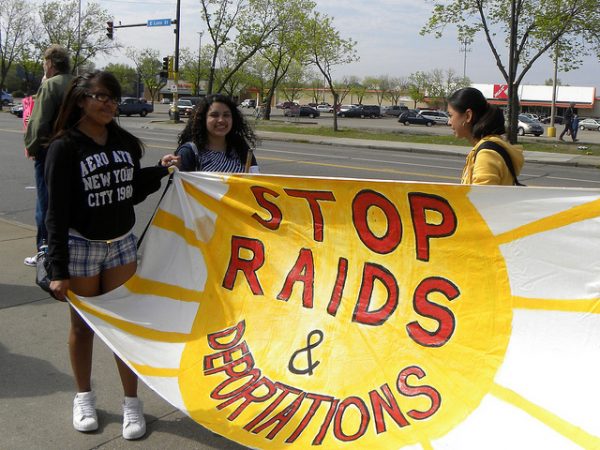
In response to the Trump administration’s crackdown on undocumented immigrants, cities and universities all across the United States have declared themselves “sanctuaries” from the threat of deportation. One aspect of this has been a revival of the sanctuary church movement. Over 800 churches nationwide have declared themselves sanctuaries for undocumented immigrants who fear deportation since Trump took office. While it is technically illegal to harbor undocumented immigrants, immigration enforcement officials have typically avoided raiding “sensitive locations” like churches and hospitals to avoid disrupting institutions that provide social services. Social science shows that protecting sensitive locations like churches is key to providing essential social services to marginalized populations. 

This is not the first instance of religious institutions attempting to shield undocumented immigrants from deportation on moral grounds in the United States. In the 1980s, thousands of refugees fled political violence in Central America, many to the border states of Arizona and Texas. In response, hundreds of religious congregations declared themselves to be sanctuaries for Central American refugees. With the exception of a notable trial in Arizona in 1986 in which several activists were convicted for violating immigration law, most congregations suffered minimal, if any, legal reprisal for their efforts during this period.
Churches are unique from other types of sensitive locations like schools and hospitals because of their long history of offering sanctuary to people in need, a history that goes back to the 1600s. It was not until the late 20th century that states began intervening and requiring churches to hand over people they were protecting. In the U.S. today, churches are a critical resource for low-income, minority, and immigrant communities, especially in small towns and rural areas. They often serve as primary distribution sites for a number of rural social services including food aid, shelter, clothing, basic healthcare, and English language and employment tutoring.
Research studying the long-term effects of ICE raids on hospitals and clinics shows that immigrants stop seeking medical services when they no longer feel safe from law enforcement. If sanctuary churches are no longer recognized as safe from ICE raids, there is some concern that the same problem will make it difficult for churches to reach immigrants in rural places.

It remains to be seen whether the Trump administration will stay out of churches, but social science shows that raiding these spaces could affect all immigrants, especially those in rural areas. And it may very well ignite an intense reaction from the churches and communities trying to keep people safe. 

Photo by NASA, Flickr CC

With the recent discovery of numerous Earth-like planets orbiting the same star, Elon Musk’s promise to send citizens to the moon, and increased politicization surrounding the science of climate change, many Americans are looking to the stars for potential solutions and possible new homes. And the nascent NewSpace movement — made up of entrepreneurs and advocates looking to commercialize outer space — promises to push space exploration forward at a rapid pace. While it certainly requires rocket science to get to space, social science is beginning to weigh in on what it might mean for social life.

The privatization and commodification of public spaces is now moving beyond Earth as governments struggle over control of the atmosphere and outer space. And as new entrepreneurial space companies seek to privatize the sky and profit from new resources and new planets, some worry that existing structures of class and racial inequality will be repeated or even intensified with space colonization. Others, like anthropologist David Valentine, see potential for progressive re-imaginings.
Sociologists highlight how inequalities shape the way people are experiencing this increasing “humanization of the universe.” Wealthy elites relate to the universe as an object to dominate, funding new “space tourism” programs and hoping to extend the workings of capitalism to the Moon and beyond. Less wealthy and marginalized communities, however, experience the universe as a dominating and mystifying force, and many feel that space colonization will only make them more powerless.
Since women and people of color are still less likely to pursue careers in science or technology, they are less likely to have a voice in these new projects. But this is not the only thing keeping them from the conversation. For example, women have historically had a difficult time qualifying for space travel. Fears about menstruation, pregnancy, and hormones in outer space have significantly hindered research into how women’s bodies are affected by space travel. The result is that women’s bodies are constructed as problematic and essentialized in opposition to male bodies, keeping many women from successfully joining space missions.
Caracas (Venezuela), April 19, 2013. Photo by Cancillería del Ecuador, Flickr CC

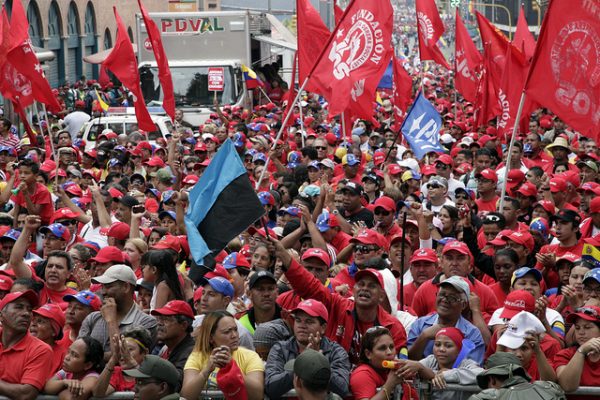
President Nicolas Maduro of Venezuela is doing what many learn at a young age not to do — being a copycat.  Since Hugo Chavez seceded power, Venezuela’s current president lacks Chavez’s beloved “Chavismo.”  Maduro’s own brand of charisma and populist reform has not connected with the people as he expected, which has led him to use more extreme political measures in the hopes of garnering respect. This has led to unrest in Venezuela, highlighting the instability of charismatic-based politics.

As Max Weber famously described in his theories of social and economic organization, charismatic leaders are often able to create a unique bond with their citizens. But if that charisma fades, it can create instability. This is also evident when there is a transfer of power from a beloved charismatic leader to a new leader. 
Research finds that charismatic leaders are often good at mobilizing people to join social movements, but that the charismatic bond is often short-lived and unable to be transferred to other individuals. When charisma fails to motivate support, leaders often turn to more conventional measures to reach their political goals, which can lead to disenchantment and unrest among the citizenry.
Photo by Automobile Italia, Flickr CC

Uber has been having a bad time. From reports that venture capital has been propping up a flawed business model, to evidence of racial bias in pickups, rate cuts during a New York taxi strike leading to the #DeleteUber movement, and recent accounts of sexual harassment alongside conflicts with drivers, the romance of Silicon Valley innovation and “disruption” in the company is on the decline. But while this may seem like a fall from grace, research shows these problems are tragically normal. They often plague a wide range of companies because of their organizational structures, and tech start-ups are no exception.

Classic research shows that when a founder also acts as the CEO, it can cause trouble for a company. While they may have a knack for developing innovative products or services, founders don’t always have the management skills to run a large, successful business as a complex organization.
While teams of entrepreneurs can start a businesses together, they often choose who will ultimately run the company. This process is not neutral. Gender inequality in business leadership can emerge from these decisions because friends and family members in these teams often take gendered assumptions for granted.
Racial and gender discrimination in hiring and promotions plagues a wide range of organizations, especially because opportunities for promotion tend to favor homogeneous social networks. These problems also plague organizations and could indicate other organizational troubles, as firms that engage in hiring discrimination are more likely to go out of business.     
Photo by Alan Levine, Flickr CC

In the wake of the 2016 presidential election turmoil, some groups have turned to storytelling to demonstrate solidarity and to show support for what they see as important issues. In the not-so-secret Facebook group Pantsuit Nation, for instance, members share stories of themselves and others standing up against racism and sexism. Sociologists recognize the power of storytelling in many contexts, especially in building movements for social change by shifting opinions or establishing solidarity, but they also point to some important barriers that come with using stories to change social policy.

Narratives are commonly used to establish a common group identity. For example, public officials might tell stories about a certain group of “dangerous” immigrants, thus establishing solidarity between people in the categories of “citizens,” in opposition to immigrants constructed as “enemies.” Public narratives such as these often follow a recognizable formula with actors who engage in typical behaviors, and plot lines that lead to a predictable moral conclusion.
Without people to listen, stories do not go very far. Thus, in order to make progress toward social change, social movement groups must find a way to speak to a broad public audience. Many groups try to gain public attention through protest, in an attempt to attract media coverage. However, news coverage of protests tends to neutralize or undermine their movement’s main issues, and sometimes ignores them altogether. Likewise, much of the news coverage tends to emphasize individual responsibility, rather than systemic explanations for the group’s grievances (i.e. racism).
But what makes a story effective in the public domain? Against common belief, sociologists have found that the ambiguity of personal stories makes them particularly effective for public deliberation. Stories that can be interpreted in multiple ways allow others to offer new ideas or compromises without seeming divisive. Conversely, personal stories that work well in value-oriented discussions, like remembering victims of 9/11, are not as effective in policy-oriented settings where reason-based arguments typically prove more effective. This is important because often it is the people with the most privilege (i.e., white, male, native-English speakers) who create these types of narratives, while stories told by people in less powerful social positions often have little traction in the policy realm.

In short, stories are not just about the meaning people convey through or derive from them — they have a social organization of their own, and require certain conditions to be taken seriously.

Photo by NASA Kennedy, Flickr CC

The popularity of the movie Hidden Figures has brought attention to the issues that women, and women of color in particular, face when they enter STEM fields (science, technology, engineering, and math). The film has also had what some are calling a “Hidden Figures effect” — it is providing positive female role models and inspiring young girls to pursue their interests in math and science. Actress Taraji P. Hensen stated, “The movie is important, and I don’t want another young girl thinking that math and science is not for her.” Social science shows that positive role models are indeed a significant predictor of interest and success in STEM for women, and that movie stars are not the only ones who can fill those roles.

The term “role model” dates back to sociologist Robert K. Merton, who coined the term to describe the ways that people model sets of behaviors they admire in others. More recent research finds that women rely on and benefit from same-gender role models more than men do. For example, a longitudinal study of high school students found that an increased presence of female faculty and staff had positive impacts on the educational attainment of female students, but there were no gendered effects for males. And while girls often report that they are inspired by female role models, boys are less likely to attribute their career aspirations to a role model of either gender.
More specifically, women who are exposed to successful females in STEM fields are more likely to do well in STEM classes, feel a greater sense of belonging among their STEM classmates and colleagues, and are more likely to have pro-science career aspirations. When women see other women in science, math, technology, and medical fields, they are less likely to associate these fields with masculinity and more likely to have confidence in their own skills.
However, movie stars and career idols are not the only ones who act as positive roles models. Peer groups are especially important for females in STEM. Girls who develop relationships with peers who are interested and successful in STEM classes are more likely to do well in those classes and are more likely to pursue STEM careers. And while males have been found to be less influenced by participation in educational communities like science camps or extracurriculars, the networks and social supports built in these environments help buffer females from the stereotypes and cultural norms surrounding women in STEM.
Photo by Esther Vargas, Flickr CC

As media organizations figure out how to cover the Trump Administration and the first tweeting president, there is soul searching taking place both within the media and among media consumers about media objectivity and the role of social networking sites in the news. The rise of non-traditional online media outlets, tensions between the White House and journalists, and arguments over “alternative facts” has brought new challenges to long-held assumptions about journalistic accountability and objectivity.

Sociologists have long been critics of “objectivity” in the media and have noted the erosion of assumed standards of objectivity in the news room.
At the same time, survey data shows that here has been a loss of trust in the media. This year’s Reuters Institute Digital News Report finds that only 33% of Americans say that they trust the news “most of the time” compared to 65% of Finns. Though declining trust in the media is not necessarily new, the 2016 election cycle saw a sharper decline.
Elections and election coverage often leave audiences with the feeling that media organizations are more focused on partisanship rather than interrogating policy positions. This challenges audiences’ notions of media objectivity when media organizations and journalists are perceive to be picking favorites.
The challenge of objectivity is particularly great when journalists engage with audiences on social networking sites like Twitter, which appear to blur the lines between professional and personal opinion. When journalists tweet, the tension between norms of objectivity and accountability are heightened, but it also provides a way to direct traffic to published artciles. Sites like Twitter provide journalists a platform for engaging audiences in real time and provide a means for journalists to prime audiences for a developing story.
Photo by Mobilus In Mobili, Flickr CC

In one of the largest days of protest in recent history, the Women’s March on Washington and its sister marches drew millions of people out into the streets of major American cities to protest the inauguration of Donald Trump and to call for protecting the rights of women, immigrants, and other groups that are likely to be further marginalized by the Trump administration. A look at research on past women’s movements sheds light on the ways that gender shapes when and how women protest, and the important roles they have played in social movement history.

While some argue that women are too diverse to constitute an “issue group,” women’s social mobilization around issues of reproductive, labor, and voting rights has had an important impact on movement culture in the United States. In fact, women’s groups were some of the first to work outside of the existing political system by relying on changing public opinion, rather than voting, as a movement strategy.
But women have to contend with a social movement culture that is structured around already pervasive gender norms, which means that the strategies used by women’s movements, and women’s roles in social movements more generally, are in many ways reflective of existing gender norms. For example, women’s movements are more likely to rely on nonviolent strategies, like marches, and women are more likely to be recruited into movement groups to perform nonviolent, gendered tasks, such as canvassing or managing the movement’s social networks.
Though women are often relegated to the subordinate roles and more menial tasks of political organizing, research finds that these roles have been a key ingredient to social movement success. A historical analysis of the Civil Rights Movement in the U.S. reveals that African American women acted as “bridge leaders,” making the necessary connections between movement leaders and constituents that helped grow the movement. Women have also played a vital role in the U.S. environmental justice movement and drawn on their grievances and experiences as mothers to challenge pollution and toxic waste.


The success of the recent Women’s March is further evidence that when women mobilize, they can be a powerful force for change.