Search results for embed

Zeynep P. sent in a commercial for Teleflora, a company that delivers flowers, that, as Zeynep points out, combines objectification with the explicit message that women exchange sexual favors for gifts from men:

The ad normalizes the idea that women would manipulate men with sex, and that men would expect that doing things for women (especially spending money on them) should result in sex. It’s a winner all around.

Gwen Sharp is an associate professor of sociology at Nevada State College. You can follow her on Twitter at @gwensharpnv.


In an earlier post we reviewed research by epidemiologists Richard Wilkinson and Kate Pickett showing that income inequality contributes to a whole host of negative outcomes, including higher rates of mental illness, drug use, obesity, infant death, imprisonment, and interpersonal trust.

She summarizes these findings in this quick nine-minute talk at a Green Party conference:

See Dr. Pickett making similar arguments as to why raising the average national income in developed countries doesn’t make people happier or enable them to live longer, why unequal societies are more violent, and how status inequality increases stress.

And see more about income inequality and national well-being at Equality Trust.

Lisa Wade, PhD is an Associate Professor at Tulane University. She is the author of American Hookup, a book about college sexual culture; a textbook about gender; and a forthcoming introductory text: Terrible Magnificent Sociology. You can follow her on Twitter and Instagram.

Today kicks off New York Fashion Week, an important time of year for models.

In these interviews, sociologist Ashley Mears talks about her research on modeling. Modeling, she explains, is a “winner take all” market; most live in very precarious economic circumstances. The value of her product — her body and her ability to use it — is something over which she has almost no control.

Accordingly, modeling requires an incredible amount of “emotion work,” the control of one’s feelings and presentation of emotions for the sake of an employer or customer.

For more from Dr. Mears, see our posts on the invisibility of labor in modeling, the ugly secret behind the model search, thinness in modeling (trigger warning), and contrasting aesthetics for high end and commercial models.

Lisa Wade, PhD is an Associate Professor at Tulane University. She is the author of American Hookup, a book about college sexual culture; a textbook about gender; and a forthcoming introductory text: Terrible Magnificent Sociology. You can follow her on Twitter and Instagram.

The phrase “Magical Negro” refers to the phenomenon in which a white character in a tv show or movie finds enlightenment through the wisdom of a Black character.  It is widely considered an offensive trope in which Black people — imbued with special spiritual, religious, or primitive powers of insight, often ostensibly due to some disadvantage like poverty — serve only to support a white person’s transformation.  The white person, and their ultimate redemption, remains the central story.

I couldn’t help but think of this when I watched the trailer for The Best Exotic Marigold Hotel, sent in by Katrin.  In this trailer, the Magical Negro isn’t a Black person; it’s not even a person.  It’s the entire country of India.

See if you see what I saw:

For examples of the Magical Negro, see our post on The Secret Life of Bees, the Magical Negro at Ikea, and the Magical Aboriginal Child in an Australian tourism ad.

Lisa Wade, PhD is an Associate Professor at Tulane University. She is the author of American Hookup, a book about college sexual culture; a textbook about gender; and a forthcoming introductory text: Terrible Magnificent Sociology. You can follow her on Twitter and Instagram.

Last week, as most of you no doubt heard, the Susan B. Komen for the Cure breast cancer awareness group announced it would no longer fund breast cancer screenings at Planned Parenthood, saying it had a policy against funding organizations that were under investigation (Planned Parenthood is currently under what many see as a politically-motivated investigation about whether it used any federal funds to pay for abortions). The decision drew a lot of attention and criticism of Komen — not just of the decision about Planned Parenthood, but of its role in the breast cancer awareness/research community more generally.

The Komen Foundation is known to many primarily because it’s often listed as a recipient of the funds companies promise to donate when we buy products branded with a pink ribbon. But many critics express concern with this type of marketing-as-awareness, and discussions of the “pinkification” of breast cancer and criticism of the policies supported by groups such as Komen surfaced as part of the debate about the organization over the weekend (which is ongoing, with the VP for Public Policy at Komen announcing her resignation today).

Given this, Dmitriy T.M. thought readers might be interested in the trailer for the documentary Pink Ribbons, which looks at the rise of pink ribbon branding and its impact on breast cancer prevention efforts. I post it with the caveat that I haven’t been able to see the whole film, but would love to hear from those of you who have, or who can speak to the issues it raises:

Feminists have done a powerful job of making the sexual assault of women by men a public issue.  Male victims, though, have remained largely invisible. In fact, one in ten victims of sexual assault is male.  Most of these men are raped by other men.

The Rape, Abuse, and Incest National Network is attempting to raise awareness of this issue.  As part of their campaign, they are sponsoring this really interesting two-minute video made by my colleague, Dr. Broderick Fox, professor of Art History and Visual Arts at Occidental College:

UPDATE: In the comment thread, Umlud posted a provocative paragraph from an article by Christopher Glazek at N+1 that I thought was worth including:

In January, prodded in part by outrage over a series of articles in the New York Review of Books, the Justice Department finally released an estimate of the prevalence of sexual abuse in penitentiaries. The reliance on filed complaints appeared to understate the problem. For 2008, for example, the government had previously tallied 935 confirmed instances of sexual abuse. After asking around, and performing some calculations, the Justice Department came up with a new number: 216,000. That’s 216,000 victims, not instances. These victims are often assaulted multiple times over the course of the year. The Justice Department now seems to be saying that prison rape accounted for the majority of all rapes committed in the US in 2008, likely making the United States the first country in the history of the world to count more rapes for men than for women.

Lisa Wade, PhD is an Associate Professor at Tulane University. She is the author of American Hookup, a book about college sexual culture; a textbook about gender; and a forthcoming introductory text: Terrible Magnificent Sociology. You can follow her on Twitter and Instagram.

In the 3 1/2 minute video below, CGP Gray explains the nonsense behind the word “continent.”  It’s a cultural construct, with some geological rationale, but not enough to rationalize the seven that we recognize.

Also from CGP Gray: What the Bleep is the United Kingdom?! and The Economics of Royalty.

Lisa Wade, PhD is an Associate Professor at Tulane University. She is the author of American Hookup, a book about college sexual culture; a textbook about gender; and a forthcoming introductory text: Terrible Magnificent Sociology. You can follow her on Twitter and Instagram.

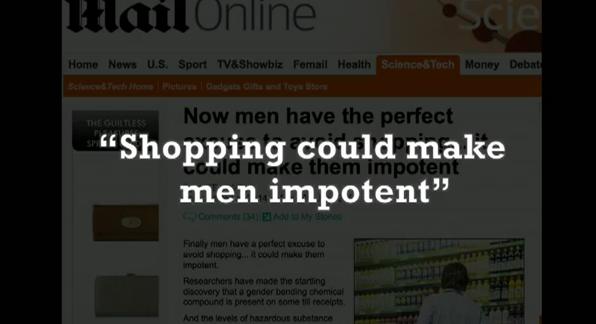
Dmitriy T.M. sent in a TED talk in which Ben Goldacre discusses the problems with many of the scientific findings we hear about in the media, highlighting the importance of scientific literacy and critical consumption of science reporting:

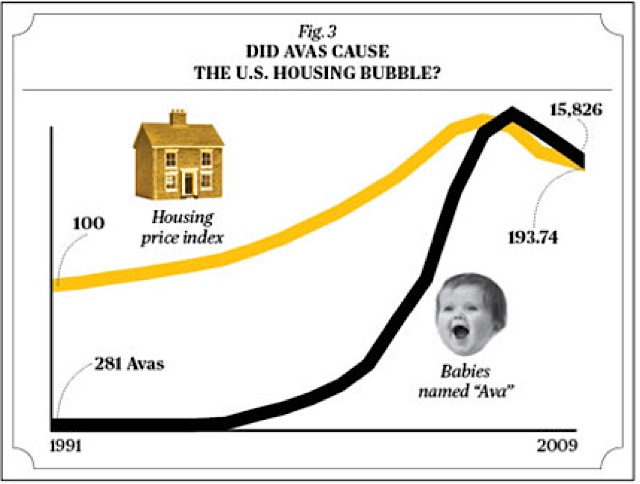
And while we’re on the topic of potentially misleading statistics, Dolores R. and Sarah E. sent in an image posted at boing boing as one of “the best set of infographics ever,” helpfully illustrating the difference between correlation and causation: