
Search results for embed

2 (1)Grab the tissues:

In his book named after the idea, sociologist Stjepan Meštrović describes contemporary Western societies as postemotional. By invoking the prefix “post,” he doesn’t mean to suggest that we no longer have any emotions at all, but that we have become numb to our emotions, so much so that we may not feel them the way we once did.

This, he argues, is a result of being exposed to a “daily diet of phoniness”: a barrage of emotional manipulation from every corner of culture, news, entertainment, infotainment, and advertising. In this postemotional society, our emotions have become a natural resource that, like spring water, is tapped at no cost to serve corporations with goals of maximizing mass consumption and fattening their own wallets. Even companies that make stuff like gum.

As examples, Meštrović describes how our dramas and comedies feed us fictionalized stories that take us on extreme emotional roller coasters, while their advertisements manipulate our emotions to encourage us to buy. Serious media like the news lead with the most emotionally intense stories of the day. Our own lives are usually rather humdrum, but if you watch the news, you vicariously experience trauma every day. A cop killed another kid. An earthquake has killed thousands. Little girls are kidnapped by warlords. Immigrants die by the boatload. Do you feel sad? Angry? Scared? Your friends do; you know because of Facebook, Twitter, and Tumblr. Do you need a pick me up? Here’s a kitten. Feel happy.

Importantly for Meštrović, the emotions that we encounter through these media are not our own. The happiness you feel watching a baby laughing on YouTube isn’t really your happiness, nor is it your sadness when you watch a news story about a tragedy. It’s not your daughter who has treasured your tiny offerings of love for 18 years, but you spend emotional energy on these things nevertheless.

In addition to being vicarious, the emotions we are exposed to are largely fake: from the voiceover on the latest blockbuster movie trailer, to the practiced strain in the voice of the news anchor, to the performative proposal on The Bachelor, to the enthusiasm for a cleaning product in the latest ad. These emotions are performed after being carefully filtered through focus groups and designed to appeal to the masses.

But they are so much more intense than those a typical human experiences in their daily lives, and the onslaught is so constant. Meštrović thinks we are emotionally exhausted by this experience, leaving us little energy left to feel our own, idiosyncratic emotions. We lose our ability to detect our own more nuanced emotions, which are almost always small and mundane compared the extraordinary heights of grief, rage, lust, and love that we are exposed to when the news chases down the latest mass tragedy or the movies offer up never-ending tales of epic quests. Meanwhile, in consuming the emotions of others, we get lost. We end up confused by the dissolving of the boundary between personal and vicarious; our bodies can’t tell the difference between friends on TV and those in real life.

Meštrović is worried about this not just on our behalf. He’s worried that it inures us to real tragedies because our hearts are constantly being broken, but only a little. When we are triggered to constantly feel all the feelings for all the people everywhere — real ones and fake ones — we don’t have the energy to emotionally respond to the ones that are happening right in front of us. His work was originally inspired by the bland global response to the Bosnian genocide in the ’90s, but applies equally well to the slow, stuttering response — both political and personal — to the refugees fleeing the Syrian Civil War and the constant news of yet another mass shooting in America. The emotional dilution that characterizes a postemotional society makes us less likely to take action when needed. So, when action is needed, we change our Facebook profile picture instead of taking to the streets.

Cross-posted at Business Insider and Pacific Standard.

Lisa Wade, PhD is an Associate Professor at Tulane University. She is the author of American Hookup, a book about college sexual culture; a textbook about gender; and a forthcoming introductory text: Terrible Magnificent Sociology. You can follow her on Twitter and Instagram.
2 (1)Singer-songwriter Hozier played “guess the man buns” on VH1, and Buzzfeed facetiously claimed they had “Scientific Proof That All Celebrity Men are Hotter with Man Buns.” Brad Pitt, Chris Hemsworth, and David Beckham have all sported the man bun. And no, I’m not talking about their glutes. Men are pulling their hair back behind their ears or on top on their heads and securing it into a well manicured or, more often, fashionably disheveled knot. This hairstyle is everywhere now: in magazines and on designer runways and the red carpet. Even my neighborhood Barista is sporting a fledgling bun, and The Huffington Post recently reported on the popular Man Buns of Disneyland Instagram account that documents how “man buns are taking over the planet.”

x

At first glance, the man bun seems a marker of progressive manhood. The bun, after all, is often associated with women—portrayed in the popular imagination via the stern librarian and graceful ballerina. In my forthcoming book, Styling Masculinity: Gender, Class, and Inequality in the Men’s Grooming Industry, however, I discuss how linguistic modifiers such as manlights (blonde highlights for men’s hair) reveal the gendered norm of a word. Buns are still implicitly feminine; it’s the man bun that is masculine. But in addition to reminding us that men, like women, are embodied subjects invested in the careful cultivation of their appearances, the man bun also reflects the process of cultural appropriation. To better understand this process, we have to consider: Whocan pull off the man bun and under what circumstances?

I spotted my first man bun in college. And it was not a blonde-haired, blue-eyed, all-American guy rocking the look in an effort to appear effortlessly cool. This bun belonged to a young Sikh man who, on a largely white U.S. campus, received lingering stares for his hair, patka, and sometimes turban. His hair marked him as an ethnic and religious other. Sikhs often practice Kesh by letting their hair grow uncut in a tribute to the sacredness of God’s creation. He was marginalized on campus and his appearance seen by fellow classmates as the antithesis of sexy. In one particularly alarming 2007 case, a teenage boy in Queens was charged with a hate crime when he tore off the turban of a young Sikh boy to forcefully shave his head.

A journalist for The New York Times claims that Brooklyn bartenders and Jared Leto “initially popularized” the man bun. It’s “stylish” and keeps men’s hair out of their faces when they are “changing Marconi light bulbs,” he says. In other words, it’s artsy and sported by hipsters. This proclamation ignores the fact that Japanese samurai have long worn the topknot or chonmage, which are still sported by sumo wrestlers.

x

Nobody is slapping sumo wrestlers on the cover of GQ magazine, though, and praising them for challenging gender stereotypes. And anyway, we know from research on men in hair salons and straight men who adopt “gay” aesthetic that men’s careful coiffing does not necessarily undercut the gender binary. Rather, differences along the lines of class, race, ethnicity, and sexuality continue to distinguish the meaning of men’s practices, even if those practices appear to be the same. When a dominant group takes on the cultural elements of marginalized people and claims them as their own—making the man bun exalting for some and stigmatizing for others, for example—who exactly has power and the harmful effects of cultural appropriation become clear.

Yes, the man bun can be fun to wear and even utilitarian, with men pulling their hair out of their faces to see better. And like long-haired hippies in the 1960s and 1970s, the man bun has the potential to resist conservative values around what bodies should look like. But it is also important to consider that white western men’s interest in the man bun comes from somewhere, and weaving a narrative about its novelty overlooks its long history among Asian men, its religious significance, and ultimately its ability to make high-status white men appear worldly and exotic. In the west, the man bun trend fetishizes the ethnic other at the same time it can be used to further marginalize and objectify them. And so cultural privilege is involved in experiencing it as a symbol of cutting-edge masculinity.

Kristen Barber, PhD is a member of the faculty at Southern Illinois University. Her interests are in qualitative and feminist research and what gender-boundary crossing can teach us about the flexibility of gender, the mechanisms for reproducing gender hierarchies, and the potential for reorganization. She blogs at Feminist Reflections, where this post originally appeared.

2 (1)What creeps us out? Psychologists Francis McAndrew and Sara Koehnke wanted to know.

Their hypothesis was that being creeped out was a signal that something might be dangerous. Things we know are dangerous scare us — no creepiness there — but if we’re unsure if we’re under threat, that’s when things get creepy.

Think of the vaguely threatening doll, not being able to see in a suddenly dark room, footsteps behind you in an isolated place. Creepy, right? We don’t know for sure that we’re in danger, but we don’t feel safe either, and that’s creepy.


They surveyed 1,341 people about what they found creepy and, among their findings, they found that people (1) find it creepy when they can’t predict how someone will behave and (2) are less creeped out if they think they understand a person’s intentions. Both are consistent with the hypothesis that being unsure about a threat is behind the the feeling of creepiness.

They also hypothesized that people would find men creepy more often than women since men are statistically more likely than women to commit violent crimes. In fact, 95% of their respondents agreed that a creepy person was most likely to be a man. This is also consistent with their working definition.

Generally, people who didn’t or maybe couldn’t follow social conventions were thought of as creepy: people who hadn’t washed their hair in a while, stood closer to other people than was normal, dressed oddly or in dirty clothes, or laughed at unpredictable times.

Likewise, people who had taboo hobbies or occupations, ones that spoke to a disregard for being normal, were seen as creepy: taxidermists and funeral directors (both of which handle the dead) and adults who collect dolls or dress up like a clown (both of which blur the lines between adulthood and childhood)

If people we interact with are willing to break one social rule, or perhaps can’t help themselves, then who’s to say they won’t break a more serious one? Creepy. Most of their respondents also didn’t think that creepy people knew that they were creepy, suggesting that they don’t know they’re breaking social norms. Even creepier.

McAndrew and Koehnke summarize their results:

While they may not be overtly threatening, individuals who display unusual nonverbal behaviors… odd emotional behavior… or highly distinctive physical characteristics are outside of the norm, and by definition unpredictable. This activates our “creepiness detector” and increases our vigilance as we try to discern if there is in fact something to fear or not from the person in question.

Re-posted at Mental Floss.

Lisa Wade, PhD is an Associate Professor at Tulane University. She is the author of American Hookup, a book about college sexual culture; a textbook about gender; and a forthcoming introductory text: Terrible Magnificent Sociology. You can follow her on Twitter and Instagram.

2 (1)
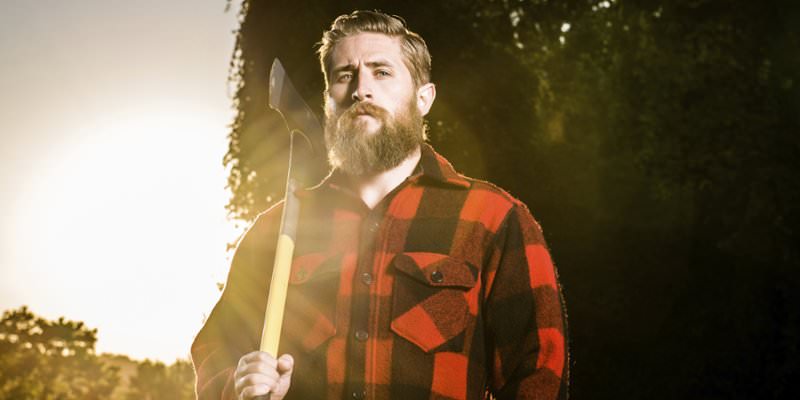
“Lumbersexual” recently entered our cultural lexicon. What it means exactly is still being negotiated. At a basic level, it’s an identity category that relies on a set of stereotypes about regionally specific and classed masculinities. Lumbersexuals are probably best recognized by a set of hirsute bodies and grooming habits. Their attire, bodies, and comportment are presumed to cite stereotypes of lumberjacks in the cultural imaginary. However, combined with the overall cultural portrayal of the lumbersexual, this stereotype set fundamentally creates an aesthetic with a particular subset of men that idealizes a cold weather, rugged, large, hard-bodied, bewhiskered configuration of masculinity.

Similar to hipster masculinity, “lumbersexual” is a classification largely reserved for young, straight, white, and arguably class-privileged men. While some position lumbersexuals as the antithesis of the metrosexual, others understand lumbersexuals as within a spectrum of identity options made available by metrosexuality. Urbandicionary.com defines the lumbersexual as “a sexy man who dresses in denim, leather, and flannel, and has a ruggedly sensual beard.”

One of the key signifiers of the “lumbersexual,” however, is that he is not, in fact, a lumberjack. Like the hipster, the lumbersexual is less of an identity men claim and more of one used to describe them (perhaps, against their wishes). It’s used to mock young, straight, white men for participating in a kind of identity work. Gearjunkie.com describes the identity this way:

Whether the roots of the lumbersexual are a cultural shift toward environmentalism, rebellion against the grind of 9-5 office jobs, or simply recognition that outdoor gear is just more comfortable, functional and durable, the lumbersexual is on the rise (here).

Many aspects of masculinity are “comfortable.” And, men don’t need outdoor gear and lumberjack attire to be comfortable. Lumbersexual has less to do with comfort and more to do with masculinity. It is a practice of masculinization. It’s part of a collection of practices associated with “hybrid masculinities”—categories and identity work practices made available to young, white, heterosexual men that allow them to collect masculine status they might otherwise see themselves (or be seen by others) as lacking. Hybridization offers young, straight, class-privileged white men an avenue to negotiate, compensate, and attempt to control meanings attached to their identities as men. Hybrid configurations of masculinity, like the lumbersexual, accomplish two things at once. They enable young, straight, class-privileged, white men to discursively distance themselves from what they might perceive as something akin to the stigma of privilege. They simultaneously offer a way out of the “emptiness” a great deal of scholarship has discussed as associated with racially, sexually, class-privileged identities (see herehere, and here).

The lumbersexual highlights a series of rival binaries associated with masculinities: rural vs. urban, rugged vs. refined, tidy vs. unkempt. But the lumbersexual is so compelling precisely because, rather than “choosing sides,” this identity attempts to delicately walk the line between these binaries. It’s “delicate” precisely because this is a heteromasculine configuration—falling too far toward one side or the other could call him into question. But, a lumbersexual isn’t a lumberjack just like a metrosexual isn’t gay. Their identity work attempts to establish a connection with identities to which they have no authentic claim by flirting with stereotypes surrounding sets of interests and aesthetics associated with various marginalized and subordinated groups of men. Yet, these collections are largely mythologies. The bristly woodsmen they are ostensibly parroting were, in fact, created for precisely this purpose. As Willa Brown writes,

The archetypal lumberjack—the Paul Bunyanesque hipster naturalist—was an invention of urban journalists and advertisers. He was created not as a portrait of real working-class life, but as a model for middle-class urban men to aspire to, a cure for chronic neurasthenics. He came to life not in the forests of Minnesota, but in the pages of magazines (here).

Perhaps less obviously, however, the lumbersexual is also coopting elements of sexual minority subcultures. If we look through queer lenses we might suggest that lumbersexuals are more similar to metrosexuals than they may acknowledge as many elements of “lumberjack” identities are already connected with configurations of lesbian and gay identities. For instance, lumbersexuals share a lot of common ground with “bear masculinity” (a subculture of gay men defined by larger bodies with lots of hair) and some rural configurations of lesbian identity. Arguably, whether someone is a “bear” or a “lumbersexual” may solely be a question of sexual identity. After all, bear culture emerged to celebrate a queer masculinity, creating symbolic distance from stereotypes of gay masculinities as feminine or effeminate. Lumbersexuals could be read as a similar move in response to metrosexuality.

Lumbersexual masculinity is certainly an illustration that certain groups of young, straight, class-privileged, white men are playing with gender. In the process, however, systems of power and inequality are probably better understood as obscured than challenged. Like the phrase “no homo,” hybrid configurations of masculinity afford young straight men new kinds of flexibility in identities and practice, but don’t challenge relations of power and inequality in any meaningful way.

Cross-posted at Feminist Reflections, Pacific Standard. and Inequality by (Interior) Design. Image borrowed from here.

D’Lane R. Compton, PhD is an associate professor of sociology at the University of New Orleans. Tristan Bridges is a sociologist at the College at Brockport (SUNY).  You can follow them on twitter at @drcompton and @tristanbphd.

The authors would like to thank the Orange Couch of NOLA, Urban Outfitters, the rural (&) queer community, and Andrea Herrera for suggesting we tackle this piece. Additional thanks to C.J. Pascoe and Lisa Wade for advanced reading and comments.

Bentham and Foucault might have been interested in the panopticon but every December we get a view of  true social control in the form of an overweight man at the North Pole. Santa Claus (or Sandy Claws, as he is sometimes called) is just the latest in a long line of beings whose sole purpose is to control children through fear (Krampus is another example, as is the Belsnickel, as Dwight demonstrated on The Office). Recently, though, Santa has been doing his spying by proxy (giving him more time to bully young reindeer).

In Santa’s place are his elves on the shelves, a team of small elves who began taking up residence in people’s homes in 2005. These elves observe the behavior of children and then fly back to the North Pole to report their observations to Santa each night. The magical ability to do so begins when the elves are named (before this point they are apparently in some sort of coma during which they can be sealed in boxes and sent to stores around the country) but the elves are in danger of losing their magic if touched. Upon returning each night, the elves hide in a new place and children delight in finding them each morning. Apparently, some of the elves also like to get into mischief, making them both spies and hypocrites.

Warning: Spoilers Ahead

If you have continued reading, prepare yourself for a shock. The elves are actually inanimate objects with neither magic nor the ability to report to Santa Claus each night. Instead, adults in each household are responsible for moving the elves around (thus touching them and ruining any magical potential that they may have had). As you can imagine, this creates quite a bit of work for these adults, to the point that there are posts dedicated to dealing with the fact that they forgot to move the elves. The elves have also been copied in various ways. Telling children that Santa can see them when they’re sleeping and knows when they’re awake and knows if they’ve been bad or good seems much easier, especially since adults are likely to run out of creative places to hide the elf after about the third day.

Assuming that the intention of Santa, Krampus, the Belsnickel, and the elves on the shelves is social control, it seems that the elves would be both the least effective and the biggest pain in the ass. Imagine if the prison designed by Bentham made it possible that prisoners could be observed at any time unless they touched the prison wall, in which case a door came down that cut off the potential view of the guards. There might be no escaping Santa’s creepy spying or the Belsnickel’s judgment, but if I was a kid and I wanted to get away with bad behavior you can bet that the first thing I would do is touch the damn elf.

John is a pseudonymous assistant professor at a small liberal arts college (SLAC).  He finished his Ph.D. at a top-25 sociology program in the summer of 2009. He blogs at Memoirs of a SLACer, where this post originally appeared.

National Ugly Christmas Sweater Day has come and gone, falling this year on Friday, December 18th. Perhaps you’ve noticed the recent ascent of the Ugly Christmas Sweater or even been invited to an Ugly Christmas Sweater Party. How do we account for this trend and its call to “don we now our tacky apparel”?

Total search of term “ugly Christmas sweater” relative to other searches over time (c/o Google Trends):

Ugly Christmas Sweater parties purportedly originated in Vancouver, Canada, in 2001. Their appeal might seem to stem from their role as a vehicle for ironic nostalgia, an opportunity to revel in all that is festively cheesy. It also might provide an opportunity to express the collective effervescence of the well-intentioned (but hopelessly tacky) holiday apparel from moms and grandmas.

However, The Atlantic points to a more complex reason why we might enjoy the cheesy simplicity offered by Ugly Christmas Sweaters: “If there is a war on Christmas, then the Ugly Christmas Sweater, awesome in its terribleness, is a blissfully demilitarized zone.” This observation pokes fun at the Fox News-style hysterics regarding the “War on Christmas”; despite being commonly called Ugly Christmas Sweaters, the notion seems to persist that their celebration is an inclusive and “safe” one.

We might also consider the generally fraught nature of the holidays (which are financially and emotionally taxing for many), suggesting that the Ugly Sweater could offer an escape from individual holiday stress. There is no shortage of sociologists who can speak to the strain of family, consumerism, and mental health issues that plague the holidays, to say nothing of the particular gendered burdens they produce. Perhaps these parties represent an opportunity to shelve those tensions.

But how do we explain the fervent communal desire for simultaneous festive celebration and escape? Fred Davis notes that nostalgia is invoked during periods of discontinuity. This can occur at the individual level when we use nostalgia to “reassure ourselves of past happiness.” It may also function as a collective response – a “nostalgia orgy”- whereby we collaboratively reassure ourselves of shared past happiness through cultural symbols. The Ugly Christmas Sweater becomes a freighted symbol of past misguided, but genuine, familial affection and unselfconscious enthusiasm for the holidays – it doesn’t matter that we have not all really had the actual experience of receiving such a garment.

Jean Baudrillard might call the process of mythologizing the Ugly Christmas Sweater a simulation, a collapsing between reality and representation. And, as George Ritzer points out, simulation can become a ripe target for corporatization as it can be made more spectacular than its authentic counterparts. We need only look at the shift from the “authentic” prerogative to root through one’s closet for an ugly sweater bestowed by grandma (or even to retrieve from the thrift store a sweater imparted by someone else’s grandma) to the cottage-industry that has sprung up to provide ugly sweaters to the masses. There appears to be a need for collective nostalgia that is outstripped by the supply of “actual” Ugly Christmas Sweaters that we have at our disposal.

Colin Campbell states that consumption involves not just purchasing or using a good or service, but also selecting and enhancing it. Accordingly, our consumptive obligation to the Ugly Christmas Sweater becomes more demanding, individualized and, as Ritzer predicts, spectacular. For examples, we can view this intensive guide for DIY ugly sweaters. If DIY isn’t your style, you can indulge your individual (but mass-produced) tastes in NBA-inspired or cultural mash-up Ugly Christmas Sweaters, or these Ugly Christmas Sweaters that aren’t even sweaters at all.

The ironic appeal of the Ugly Christmas Sweater Party is that one can be deemed festive for partaking, while simultaneously ensuring that one is participating in a”safe” celebration – or even a gentle mockery – of holiday saturation and demands. The ascent of the Ugly Christmas Sweater has involved a transition from ironic nostalgia vehicle to a corporatized form of escapism, one that we are induced to participate in as a “safe” form of  festive simulation that becomes increasingly individualized and demanding in expression.

Re-posted at Pacific Standard.

Kerri Scheer is a PhD Student working in law and regulation in the Department of Sociology at the University of Toronto. She thanks her colleague Allison Meads for insights and edits on this post. You can follow Kerri on Twitter.

Five minutes for fun facts on this almost-Thanksgiving day in the US. Some of my favorites:

  • Stuffing goes back to at least the 4th century CE.
  • Potatoes are truly an American tuber; it’s grown in every 50 states.
  • Corn is a flower.
  • Meat pies preceded desert pies and they were called “coffins.”
  • In case you need a 15th century aphrodisiac recipe: boiled peas and onions sprinkled with cinnamon, ginger, and cardamon.
  • The average American eats between 3,000 and 5,000 calories at Thanksgiving dinner.

Thanks Mental Floss!

Enjoy!

It can be quite difficult to describe what it feels like to be a member of a group that is widely disparaged or hated. I mean really describe it in a way that other people who are not part of that group can understand. It is powerful when it can be done and even more powerful when it is done in a way such that members of other groups, who are disparaged or hated for other reasons, can see themselves in the story.

I think this is accomplished in the 10 minute monologue below. The speech is by Rory O’Neill, a famous Irish drag queen who goes by the name Panti Bliss. She speaks of what it feels like to encounter homophobia — indeed, to have internalized homophobia — and to try to manage life with an identity that some people openly disparage and hate.

She does such a wonderful job describing it, that I suspect that the feelings that she talks about might be familiar to a wide audience: women, people of color, people with disabilities, the homeless and the poor, people who speak English as a second language, and more.

Lisa Wade, PhD is an Associate Professor at Tulane University. She is the author of American Hookup, a book about college sexual culture; a textbook about gender; and a forthcoming introductory text: Terrible Magnificent Sociology. You can follow her on Twitter and Instagram.