Search results for The

…Janet Jackson’s wardrobe malfunction (Superbowl 2003). 

Here’s the video (don’t blink!):

[youtube]http://www.youtube.com/watch?v=eq_N792Bl5Y[/youtube] 

I use this story along with this image to illustrate agenda setting. Because the media made such a huge deal about this, it was something that most people talked about with at least one other person and an issue on which most people formed an opinion. (I like the two-second video because it shows just how quick it was.) I contrast it alongside some genuinely newsworthy event that no one noticed because it didn’t get covered and no one, now, remembers. (Richard mentions, by the way, that there were a ton of erectile dysfunction commercials during the superbowl that year that did not attract media outrage.)Thanks to Ang! I stole the picture and the idea of using this issue to talk about agenda setting from her years ago.
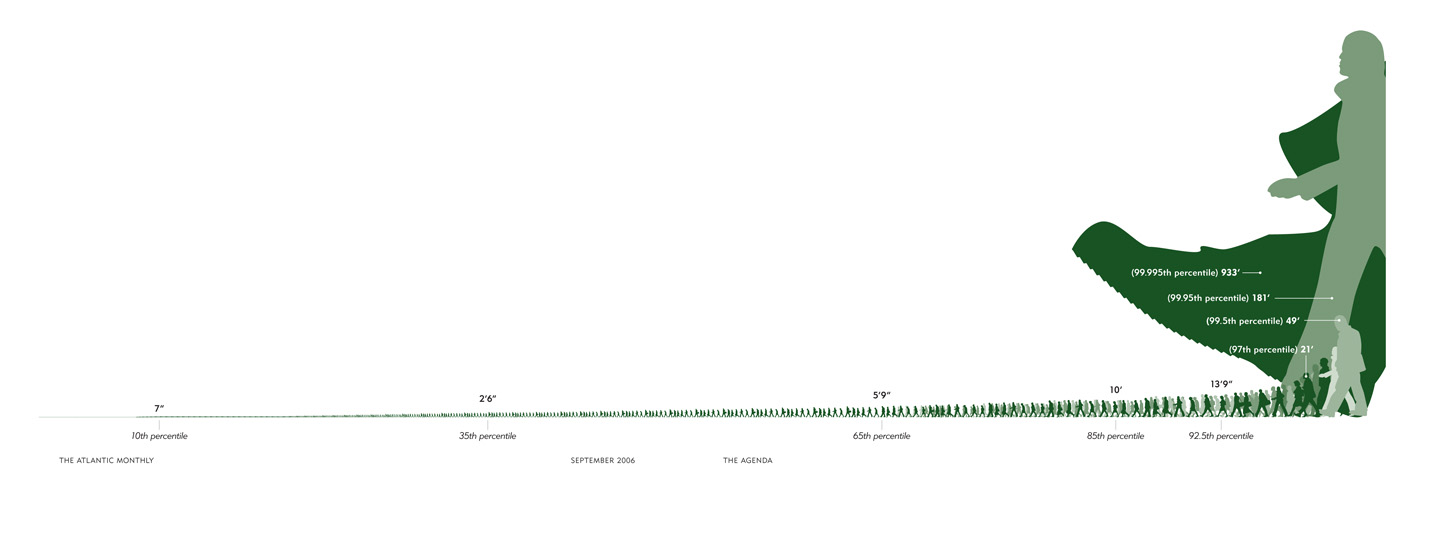
This image illustrates what class inequality would look like if our level of income/wealth were reflected in our height (click to enlarge). Class inequality was first described this way by economist Jan Pen. The image was reproduced for an Atlantic article (view here). Even though the illustration is for 1971 and Britain, it would be useful, especially if we had evidence that income inequality is greater now than in 1971 and greater in the U.S. (or wherever you are) than in Britain (which I think is true… anyone?). An excerpt explaining the illustration is included below. (By the way, what first looked to me like a dark green blob behind the tallest guy is actually the foot of the next tallest guy.)

Excerpt:

Suppose that every person in the economy walks by, as if in a parade. Imagine that the parade takes exactly an hour to pass, and that the marchers are arranged in order of income, with the lowest incomes at the front and the highest at the back. Also imagine that the heights of the people in the parade are proportional to what they make: those earning the average income will be of average height, those earning twice the average income will be twice the average height, and so on. We spectators, let us imagine, are also of average height.

Pen then described what the observers would see. Not a series of people of steadily increasing height—that’s far too bland a picture. The observers would see something much stranger. They would see, mostly, a parade of dwarves, and then some unbelievable giants at the very end.

As the parade begins, Pen explained, the marchers cannot be seen at all. They are walking upside down, with their heads underground—owners of loss-making businesses, most likely. Very soon, upright marchers begin to pass by, but they are tiny. For five minutes or so, the observers are peering down at people just inches high—old people and youngsters, mainly; people without regular work, who make a little from odd jobs. Ten minutes in, the full-time labor force has arrived: to begin with, mainly unskilled manual and clerical workers, burger flippers, shop assistants, and the like, standing about waist-high to the observers. And at this point things start to get dull, because there are so very many of these very small people. The minutes pass, and pass, and they keep on coming.

By about halfway through the parade, Pen wrote, the observers might expect to be looking people in the eye—people of average height ought to be in the middle. But no, the marchers are still quite small, these experienced tradespeople, skilled industrial workers, trained office staff, and so on—not yet five feet tall, many of them. On and on they come.

It takes about forty-five minutes—the parade is drawing to a close—before the marchers are as tall as the observers. Heights are visibly rising by this point, but even now not very fast. In the final six minutes, however, when people with earnings in the top 10 percent begin to arrive, things get weird again. Heights begin to surge upward at a madly accelerating rate. Doctors, lawyers, and senior civil servants twenty feet tall speed by. Moments later, successful corporate executives, bankers, stock­brokers—peering down from fifty feet, 100 feet, 500 feet. In the last few seconds you glimpse pop stars, movie stars, the most successful entrepreneurs. You can see only up to their knees (this is Britain: it’s cloudy). And if you blink, you’ll miss them altogether. At the very end of the parade (it’s 1971, recall) is John Paul Getty, heir to the Getty Oil fortune. The sole of his shoe is hundreds of feet thick.

This graphic from the New York Times illustrates the different environmental costs of meat and vegetable production (click on image to enlarge):

Click here to watch a two-and-a-half minute video on CNN that addresses last year’s spate of race- and ethnicity-themed parties (see here). What is perhaps most amazing about it is the unbelievably impoverished analysis of what is happening and the fact that the video for some reason decides to end on an uplifting note (“their classmates had an important lesson on the danger of stereotyping”).

Thanks to Richard for this lead.

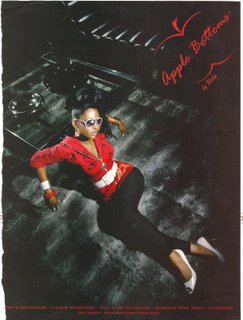
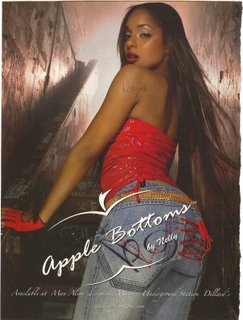
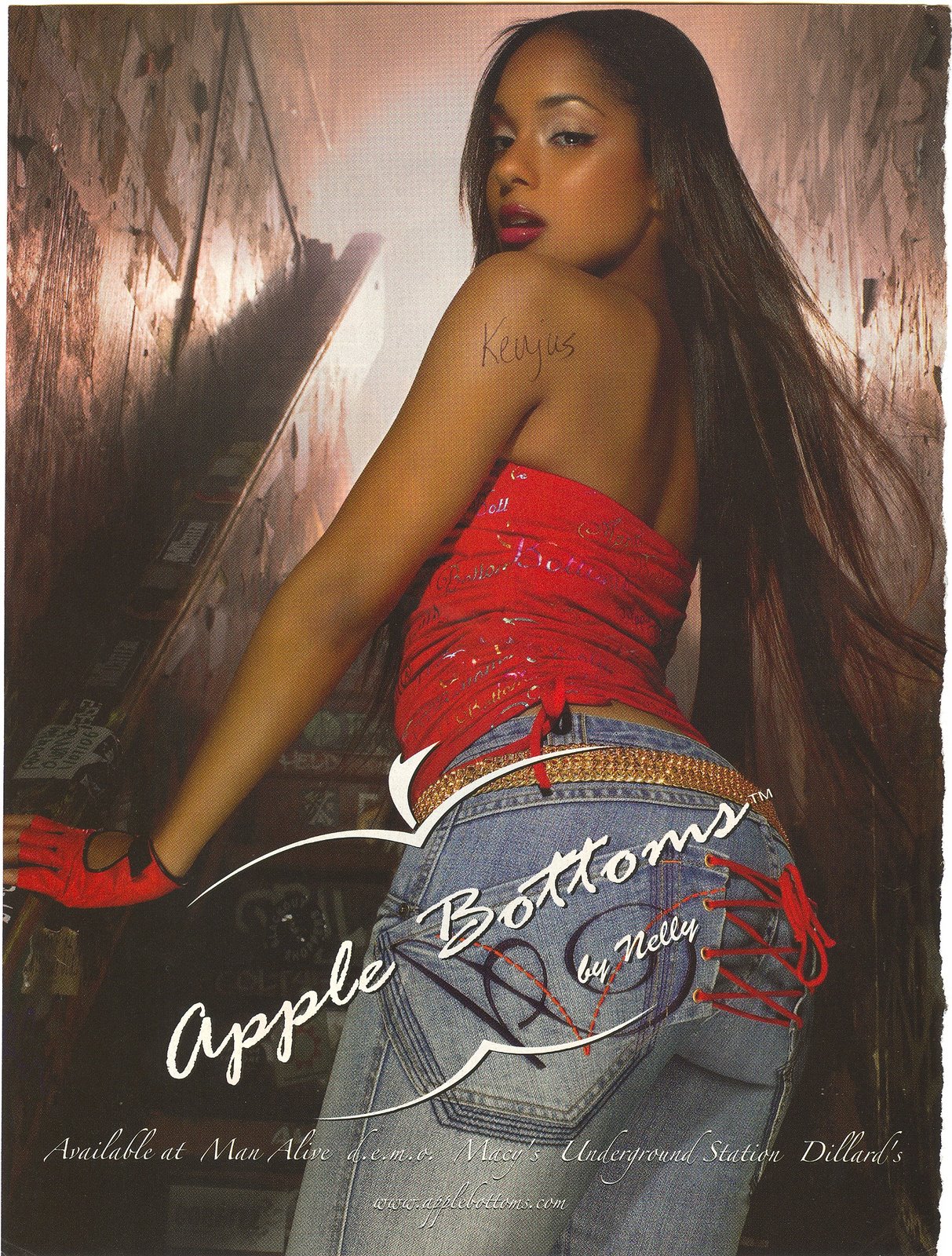
These advertisements, the first two for a brand of jeans called Apple Bottoms, all fetishize black women’s behinds:


Underneath Beyonce’s name it says: “The body, the booty, the backstabbing.”

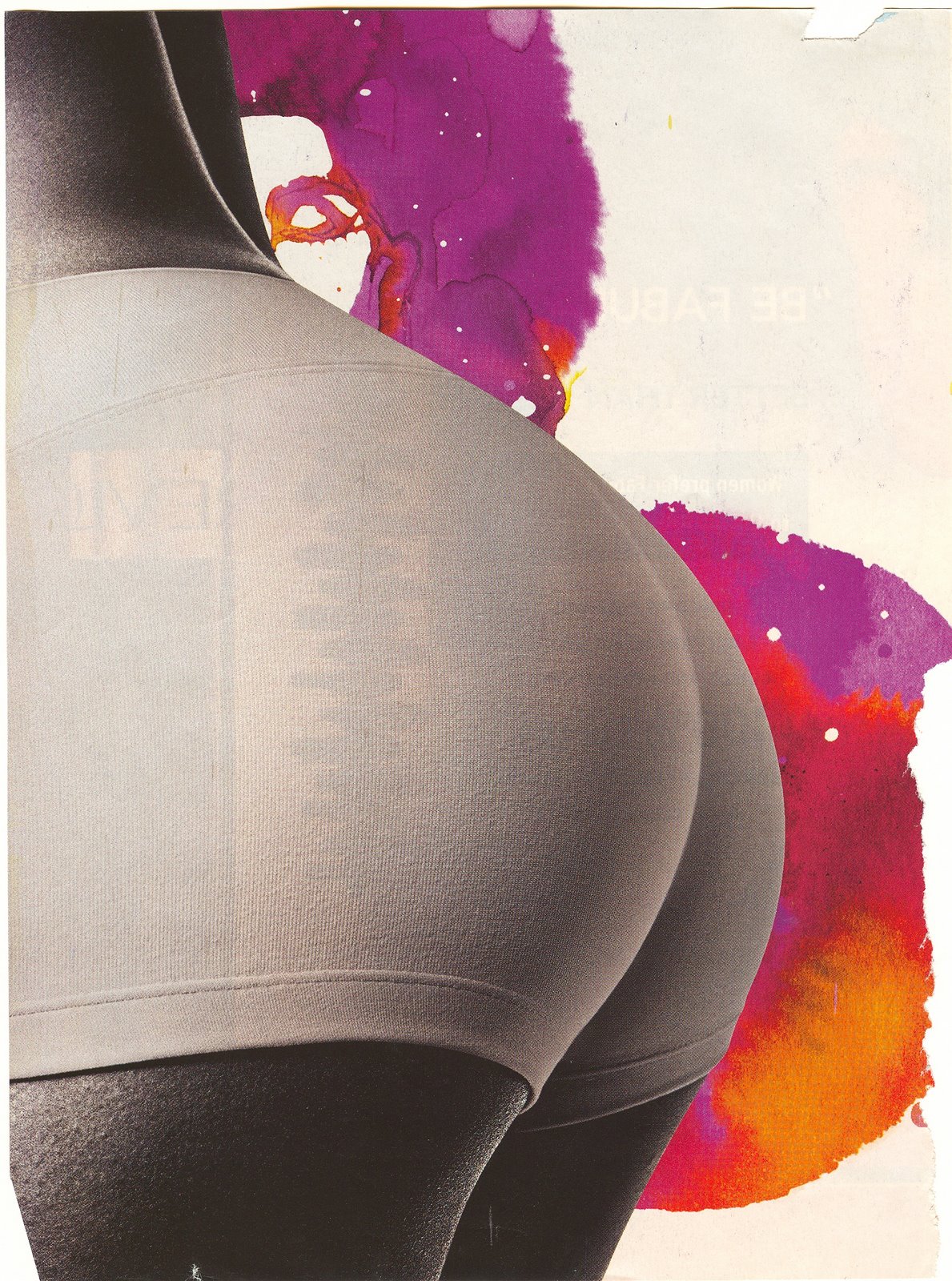
In this two-page spread, the body isn’t necessarily black… but it might be an interesting question as to whether the viewers assume, or might be expected to assume, it is.

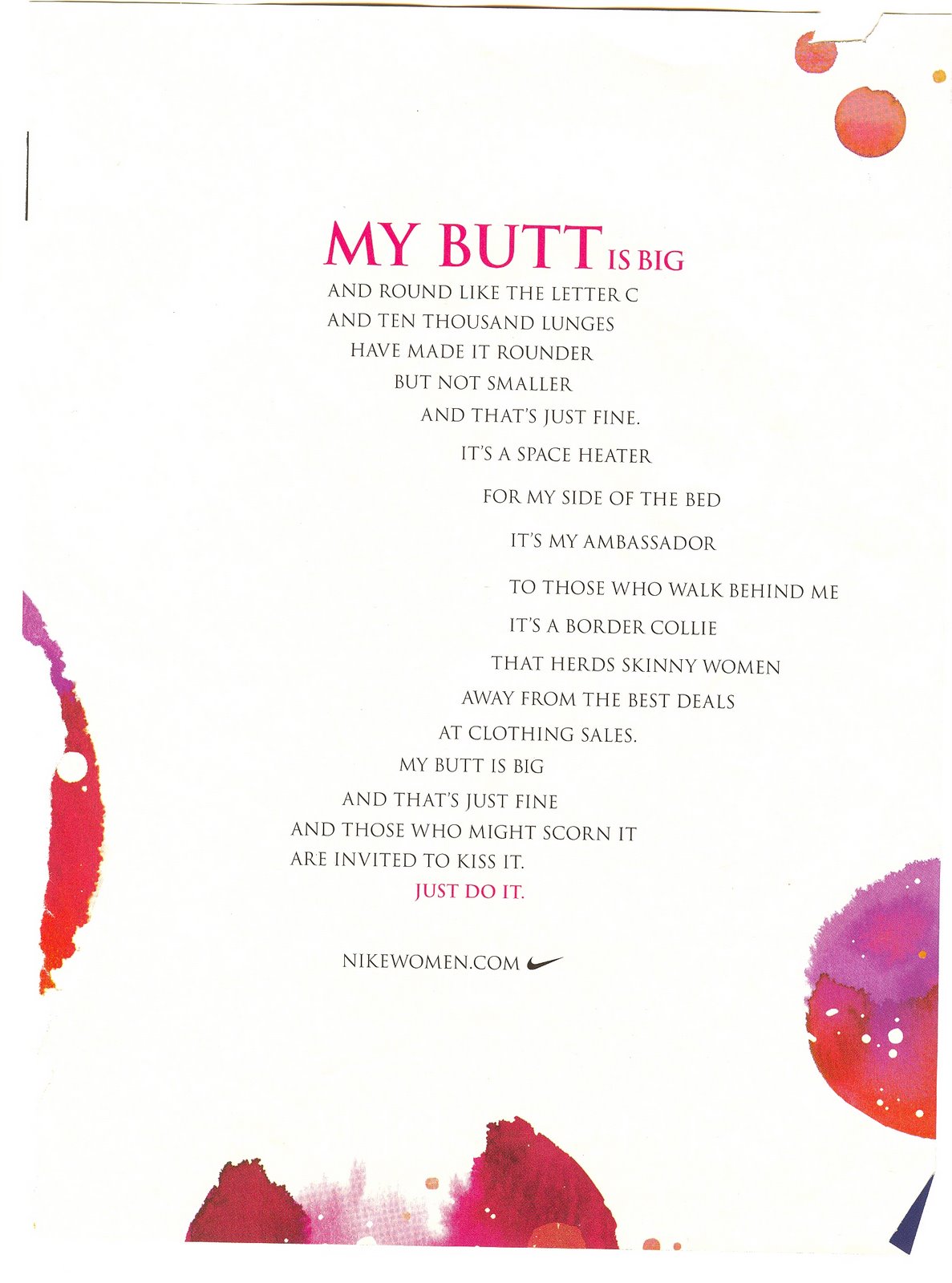
Text:

MY BUTT is big
and round like the letter c
and ten thousand lunges
have made it rounder
but not smaller
and that’s just fine.
It’s a space heater
for myside of the bed
It’s my ambassador
to those who walk behind me
It’s a border collie
that herds skinny women
away from the best deals
at clothing sales.
My butt is big
and that’s just fine
and those who might scorn it
are invited to kiss it.

I think it’s interesting the way this poem pits “skinny women” against women with a big butt… so valorizing the big butt but only by taking down the skinny (white?) girl.

Divide and conquer.

You might pair these images with this post about a Pilates DVD.

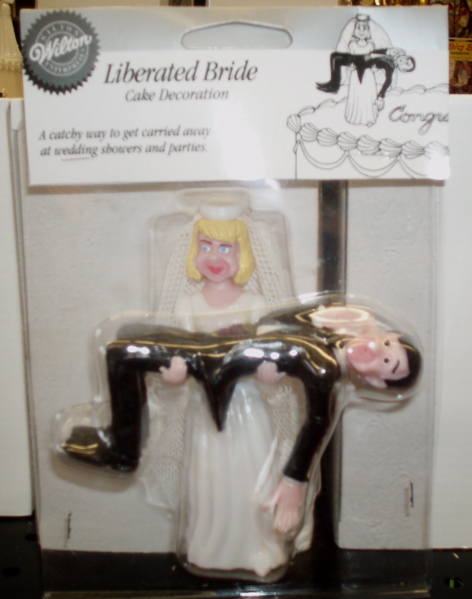
This product nicely captures the fallacious ideas that (1) to be a “liberated” woman is to do what men do and (2) that “liberated” women necessarily emasculate men in a zero sum game.


Thanks to my awesome student, Molly M!


This is an ad for Tao Asian bistro and nightclub in Las Vegas. The tagline is “Always a happy ending.” Note the naked woman’s body with the presumably Chinese characters on her. And of course a “happy ending” is often associated with Asian massage parlors…

Image via: Sports Image Times

The U.S. Border Patrol is focusing its new recruiting efforts in the Southeast, the region that just happens to have had the largest Hispanic population growth over the last few years.

How is the U.S. Border Patrol marketing itself to possible recruits in Southern states? Yup, by sponsoring the #28 NASCAR race car.