Search results for 2008/08/03/white-privilege

A resolution to the matter described below was announced yesterday.  In order to preserve the religious memorial without violating the separation of church and state, the Park Service has agree to give the land it sits on to two private citizens who take care of the monument.  Problem solved?

———————

The Supreme Court is in the process of deciding whether a cross erected 75 years ago as a memorial to war veterans violates the constitutional separation between church and state. The cross sits on the Mojave National Preserve and, therefore, is on public land. After lower court rulings, the cross was covered in plywood.

In deliberations, Justice Scalia tried to argue that the cross is a neutral and universal symbol. He said:

It’s erected as a war memorial. I assume it is erected in honor of all of the war dead… What would you have them erect?… Some conglomerate of a cross, a Star of David, and you know, a Muslim half moon and star?

Faced with an argument that the cross is distinctly Christian, he said:

I don’t think you can leap from that to the conclusion that the only war dead that that cross honors are the Christian war dead. I think that’s an outrageous conclusion.

Scalia’s comments reveal a common phenonemon that we’ve discussed in terms of race and gender, but not yet religion.  As Jay Livingston pointed out at MontClair SocioBlog, one can only think of Christian symbols as non-specific if one thinks of Christianity as somehow normal, neutral, and for everyone.  In the U.S., because Christianity is the dominant religion, many people simply see it as default.  You’re Christian unless you’re something else.  Something else that marks you as different and specific, Christianity does not.

This is one way that dominance works.  It makes itself invisible.

UPDATE! Dmitriy T.M. pointed out that Steven Colbert addressed this issue on The Colbert Report back in 2009:

See our other posts on how whiteness and maleness are the characteristics we attribute to “person,” unless there are reasons to do otherwise, herehere, here, and here.

Lisa Wade, PhD is an Associate Professor at Tulane University. She is the author of American Hookup, a book about college sexual culture; a textbook about gender; and a forthcoming introductory text: Terrible Magnificent Sociology. You can follow her on Twitter and Instagram.
This Course Guide is in progress and will be updated as I have time.

Disclaimer: If you’re thinking about writing a course guide.  I totally overdid it on this one!  It doesn’t have to be nearly this extensive.


Course Guide for
INTRODUCTION TO SOCIOLOGY

(last updated 5/2012)

Developed by Gwen Sharp
Nevada State College


C. Wright Mills and the Sociological Imagination

Intersection of biography and history as illustrated by:

“the capacity for astonishment is made lively again”

Karl Marx/Marxist analysis

Emile Durkheim

[Because the course guide has gotten to be so long, I’m putting the rest of it after the jump.]

more...

In 1989 Peggy McIntosh published an essay that is assigned in nearly every Sociology of Race and Ethnicity course in America.  Titled White Privilege: Unpacking the Invisible Knapsack, the essay included a list of things that white people, but not others in a white-dominated society, can count on.  Here are a few:

I can avoid spending time with people whom I was trained to mistrust and who have learned to mistrust my kind or me.

If I should need to move, I can be pretty sure of renting or purchasing housing in an area which I can afford and in which I would want to live.

I can go shopping alone most of the time, pretty well assured that I will not be followed or harassed.

I can turn on the television or open to the front page of the paper and see people of my race widely represented.

I can be sure that my children will be given curricular materials that testify to the existence of their race.

Whether I use checks, credit cards or cash, I can count on my skin color not to work against the appearance of financial reliability.

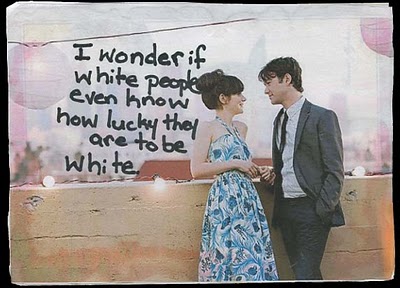
I thought of Peggy McIntosh when I saw this personal confession at PostSecret:

For more on white privilege, see our posts on Colin Powell being called a traitor, Sotomayor’s Supreme Court hearings, the privilege to shoplift, and “flesh” and “nude” colors.

Lisa Wade, PhD is an Associate Professor at Tulane University. She is the author of American Hookup, a book about college sexual culture; a textbook about gender; and a forthcoming introductory text: Terrible Magnificent Sociology. You can follow her on Twitter and Instagram.
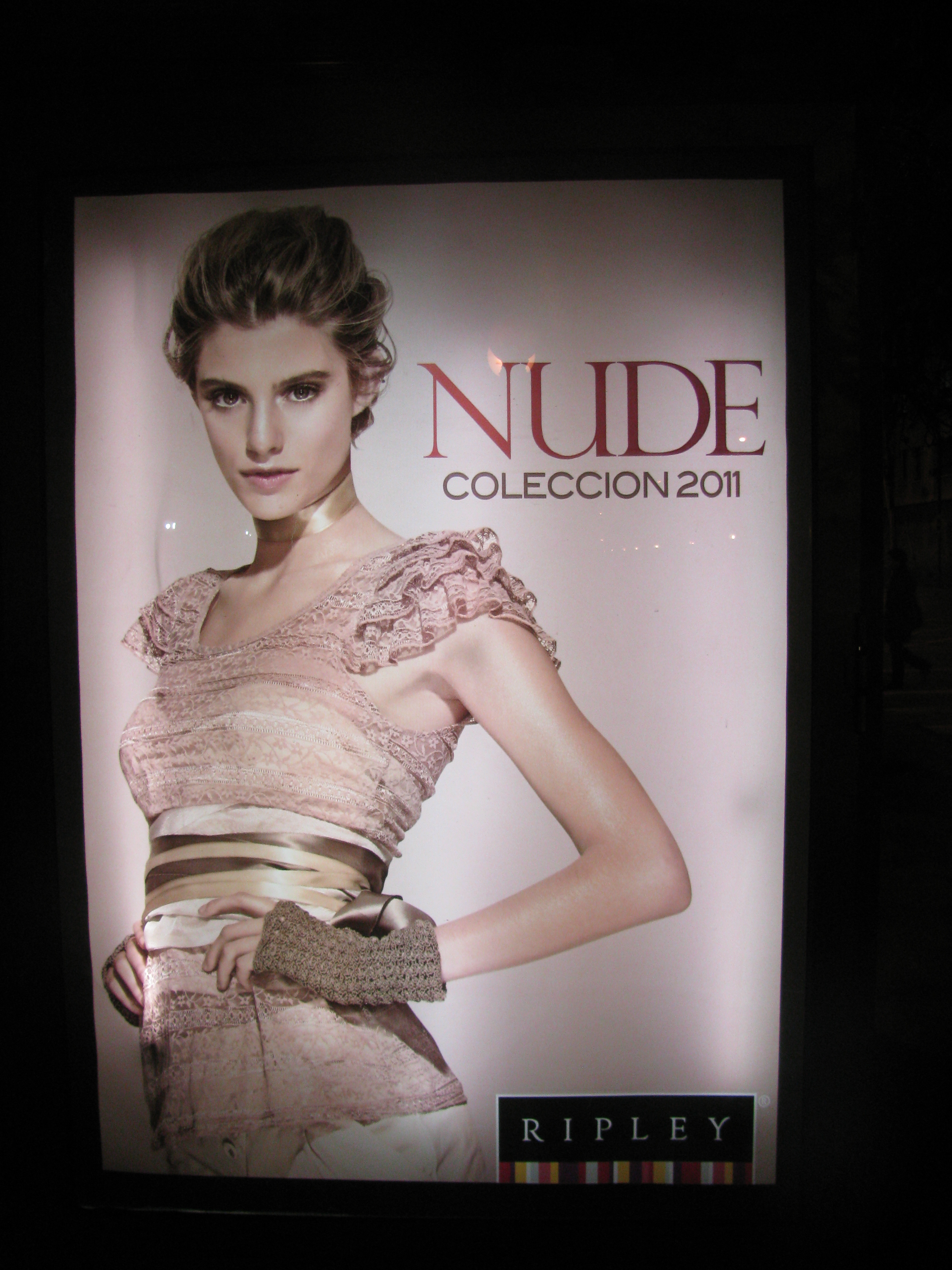
We’ve written several posts about how the words “nude” and “flesh” tend to be used to refer to colors associated with light-colored skin.  For examples, see our posts on “flesh-colored,” Michelle Obama’s “nude” colored dress, the new in-color, “nude is the new black” (and by black we mean white), lotion for “normal to darker skin,” and color-assisted medical diagnosis.  Readers have sent in an additional example and several counter-examples.

Catherine M.P. snapped this photo of an ad for Ripley in Santiago, Chile (she says English is often used to make a product seem “edgy”):

Lisa Wade, PhD is an Associate Professor at Tulane University. She is the author of American Hookup, a book about college sexual culture; a textbook about gender; and a forthcoming introductory text: Terrible Magnificent Sociology. You can follow her on Twitter and Instagram.
Justin A. B. drew our attention to a Marie Claire fashion slide show titled “Nude is the New Black.”  By “nude” (ironically) they mean, “white-person-color.”  Every single picture featured a tan or cream item.  Every. Single. One.

We’ve been covering this phenomenon.  See our posts on “flesh-colored,” Michelle Obama’s “nude” colored dress, the new in-color, lotion for “normal to darker skin,” and color-assisted medical diagnosis.

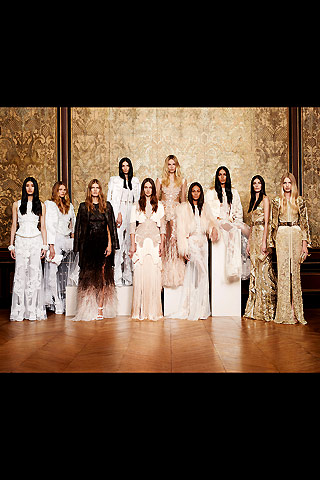
NEW! (July ’10): Anna sent in another example, this time an article about Givenchy’s Fall 2010 collection. According to the article (at style.com), “everything was white, flesh-colored, or gold, with a salon dedicated to each shade.” On the Givenchy website, they use the term “nude.” An example of a “flesh-colored/nude” dress:

A group photo that shows the range of colors; the two in the middle are the “nude” dresses:

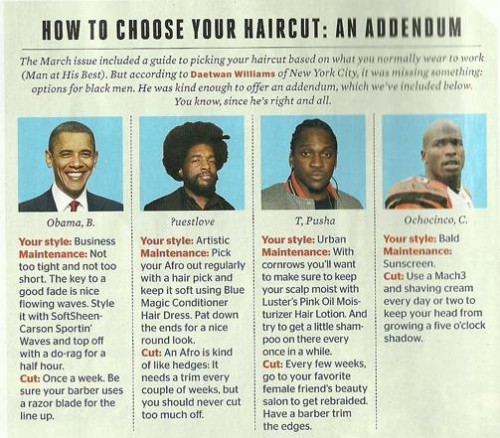
Also NEW! (July ’10): Juliana B. pointed out that in the May 2010 issue of Esquire an article on haircuts completely ignored Black men, who might not be able to use the suggestions on their hair…but in the June issue, the editor responded to a letter from a reader by acknowledging “he’s right.” They then included a segment on haircuts for Black men:

Lisa Wade, PhD is an Associate Professor at Tulane University. She is the author of American Hookup, a book about college sexual culture; a textbook about gender; and a forthcoming introductory text: Terrible Magnificent Sociology. You can follow her on Twitter and Instagram.
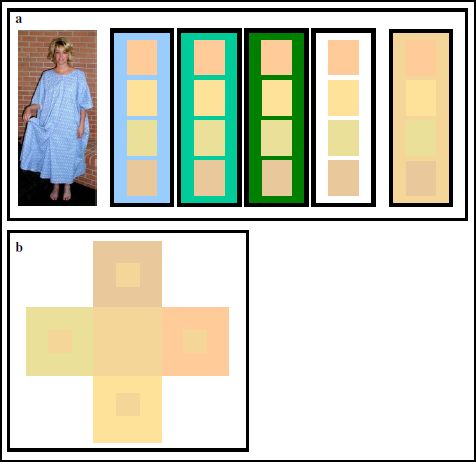
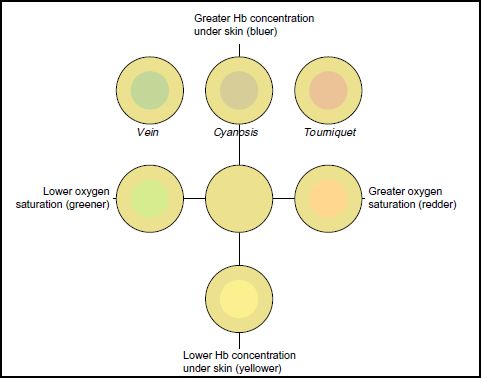
An article in press at the journal, Medical Hypotheses, suggests that detection of underlying medical problems that affect skin color can be facilitated by placing patients in hospital gowns matching their skin. If their skin starts to change color, then the contrast will make it suddenly obvious; without the contrast, it might go entirely unnoticed.

The article, though, includes only illustrations featuring light skin. These are them:

A search for words that might suggest even a nod to the idea that darker-skinned people exist — e.g., black, race, ethnicity, Latino, etc — turned up nothing.

Via BoingBoing.  See also our posts on “flesh-colored,” Michelle Obama’s “nude” colored dress, the new in-color, and this post on lotion for “normal to darker skin.”


Lisa Wade, PhD is an Associate Professor at Tulane University. She is the author of American Hookup, a book about college sexual culture; a textbook about gender; and a forthcoming introductory text: Terrible Magnificent Sociology. You can follow her on Twitter and Instagram.
Elle, at Shakesville, writes:

…sometimes I am struck by how many times, in so many little ways, people of color are reminded that “white,” in terms of race, is presumed to be the default or that white people are presumed not to “have” race in the same ways that we are.

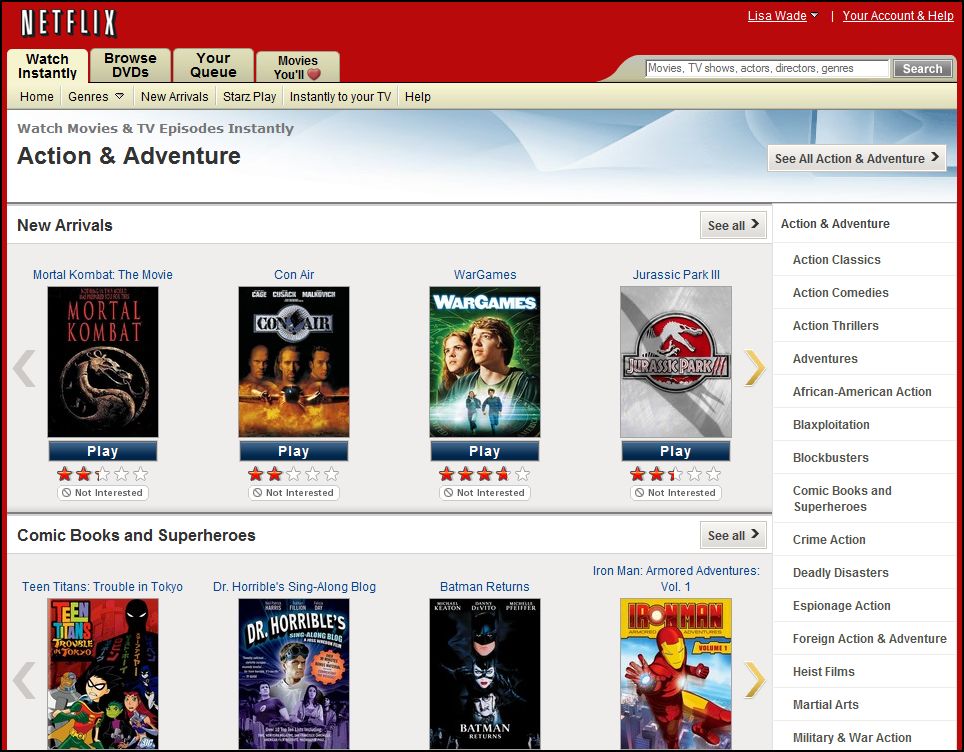
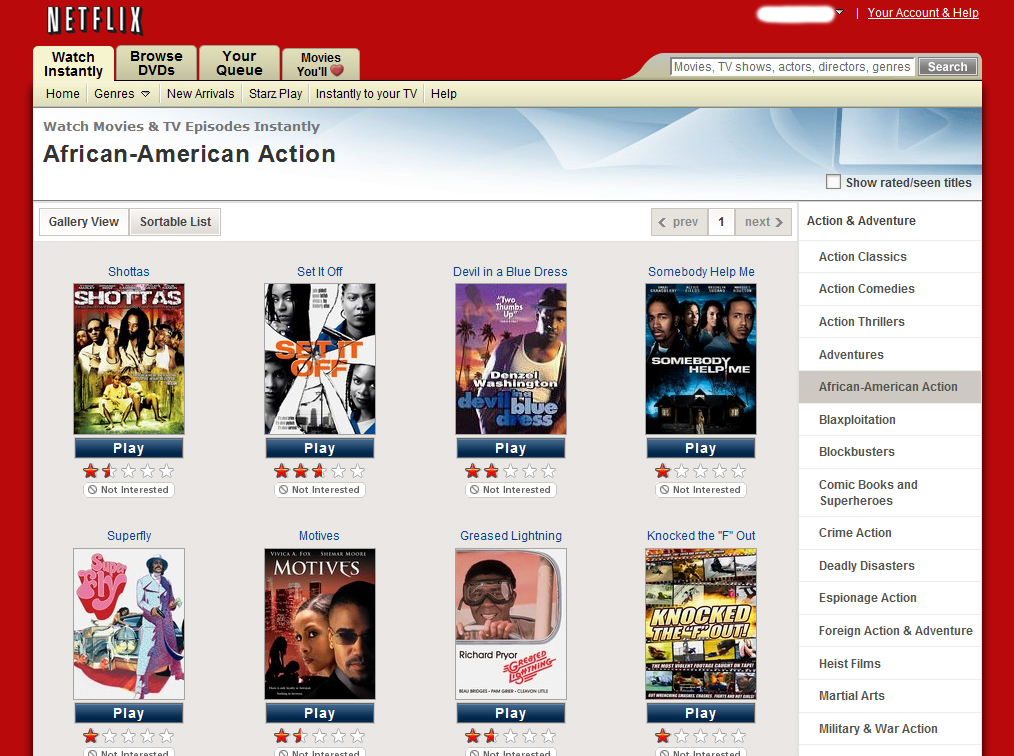
Skada sent us another great example of this phenomenon: Netflix genres include “Action and Adventure” and “African-American Action” (“and Adventure” would be too many As I guess).

For more examples of the neutrality of whiteness and the marked nature of blackness, see our two posts on recent descriptions of beige as “flesh-colored” (featuring Michelle Obama and Beyonce et al.) and our posts on bandaids and other “flesh-colored” items and lotion for “normal to darker skin.”

Lisa Wade, PhD is an Associate Professor at Tulane University. She is the author of American Hookup, a book about college sexual culture; a textbook about gender; and a forthcoming introductory text: Terrible Magnificent Sociology. You can follow her on Twitter and Instagram.

NEWS:

We’re super excited that the print magazine of the American Sociological Association, Contexts, has decided to feature an illustrated essay written by Gwen and I me in each issue.  The first debuted in the Winter 2010 issue!

Also, this is your monthly reminder, you can always follow us on Twitter or friend us on Facebook, where we update with a featured post everyday.

FROM THE ARCHIVES:

Last February I posted a rant about the idea that a person was either a “dog person” or a “cat person.” Oh how I hate that ridiculous idea!  In an effort to forever cleanse the earth of this ridiculous binary, I beg to you to go back and read it!

Two Februarys ago, we posted some data on how IQ correlates with income and wealth.  The pictures aren’t very pretty, but the data is are really interesting.

NEWLY ENRICHED POSTS (Look for what’s NEW! Feb ’10):

Софи А. sent us an ad that gives us an excuse to link to our collection of ads making sexual body parts out of sexually-suggestive fruit.  Enjoy!

Jessica S. sent us a link to a Saturday Night Live skit making fun of the idea of wigs for baby boys.  We added it to our post on wigs for baby girls which is not a joke.

Laura McD. sent us another bizarre, sex-soaked, cringe-worthy Orangina ad.  We added it to the collection.

Megan D. sent us an image of a wall stencil that encourages girls to think of themselves as “just a Bella, waiting for my Edward.” We added it to our earlier post where we discuss whether Edward’s behavior in the Twilight series is romantic or creepy stalkerish.

Wanna show you love her but not have to actually make much of an effort at being romantic? Buy her diamonds!

Andrea let us know about dznuts, a product cyclers use to prevent saddle sores in their sensitive areas. We added it to our post on selling beauty-related products to men.

Remember our post on vintage products containing opium and cocaine? Louise sent us a photo of a hand-written recipe from her great-grandmother’s cookbook that called for “tincture of opium.”

We never like to let a month go by without updating our post on products shaped like boobs, so this time we added a citrus juicer and a lighter.

Previously Axe let guys know that their body scrubber Detailer would help guys sleep with both a woman and her daughter. Now they have some hot chicks illustrating at length how to get your balls clean.

We updated our post on light-colored items described as “nude” or “flesh” toned with a set of colored pencils in “people colors.”

As organizations have figured out, if you can’t actually show racial diversity at your institution, you can photoshop some in. We added an example from an American Petroleum Institute brochure.

We recently posted several commercials that illustrate a stunningly thorough round-up of stereotypes of masculinity. We added a FloTV and Daily Show clip that highlight just how awful men have it these days, what with their controlling wives and lack of power and all.

We also added some of the images of disembodied women’s legs used by the band Chromeo to our post on furniture and other items shaped like women’s bodies.

And we updated one of our posts about retouching with two examples of a photoshopped Demi Moore.

Lisa Wade, PhD is an Associate Professor at Tulane University. She is the author of American Hookup, a book about college sexual culture; a textbook about gender; and a forthcoming introductory text: Terrible Magnificent Sociology. You can follow her on Twitter and Instagram.