Parents, feminists, and cultural critics often express dismay at Barbie, Bratz, and similar fashion-type dolls for girls that are often sexualized and have extremely unrealistic body proportions, leading many to argue that they provide bad models for children and may promote negative body image among girls.

As a result, every so often “anti-Barbie”-type dolls come out. They often have more realistic body proportions and aim to provide a wider range of images of women and girls in terms of activities, dress, and/or careers. One example of this was the Get Real Girl line that came out around 2001 in the U.S. (images found here):


Here’s a description from this website:

While other dolls teeter on feet formed for high-heels, Get Real Girls stand on their own two feet, have posable, fully-articulated bodies and display physical tone and definition for full-action play. The Girls’ faces have soft natural features and are dressed in authentic sports clothing.

And yet, as with so many of these types of dolls, as far as I can tell, these were short-lived. The website is basically defunct–you can go to it, but there are no working links to the supposedly interactive features. I couldn’t find any websites currently selling the dolls.

This brings up some interesting issues, particularly the fact that what parents want their kids to want and what kids actually want often do not coincide. As I’ve discussed before, kids often have their own ideas about toys and how to play with them and may reject the non-traditional toys their parents think they ought to be crazy about. They may shy away from these toys because they aren’t like the ones their friends are playing with or that they see on TV. Or they may come up against one major problem with creating new types of dolls for girls: if they have more realistic body proportions, they don’t fit into the wide array of clothing and shoes designed for dolls with Barbie’s proportions. There’s an inertia in the toy industry because of this–new, differently-shaped dolls don’t fit the clothes and accessories kids may already own and the range of outfits available to put on them is limited because the market for them is so new and small. However, this problem can apparently be overcome, since according to this website Barbie is bigger than the Bratz dolls and so can’t really wear clothing designed for them (the site also helpfully warns against over-brushing Bratz dolls’ hair), and yet they became wildly popular (to the dismay of many parents).

I just thought these might be interesting for a discussion of the toy industry generally, efforts to provide alternatives to Barbie-type dolls, and the difficulties of doing so due to the fact that kids just might not like them.


It might be useful to compare and contrast this ad to more modern versions of anti-drug campaigns, such as this one.

Found here via Copyranter.

The video clip The Olsen Twins Walk Into a Bar might be useful for sparking a discussion of the way in which, once shrouded in humor, nearly anything is fair game.

Found here via Copyranter.

Lisa Wade, PhD is an Associate Professor at Tulane University. She is the author of American Hookup, a book about college sexual culture; a textbook about gender; and a forthcoming introductory text: Terrible Magnificent Sociology. You can follow her on Twitter and Instagram.

Dubi K. sent in these two images (found here) and some commentary. This first image came from an ultra-orthodox Israeli newspaper:

Dubi says,

As you can easily see, it was heavily photoshopped – kids are
duplicated all over the place. Originally, the people who posted this
image on an Israeli forum thought that the publishers of the paper
were trying to make it look more crowded, as it was an event sponsored
by the paper.

But here is the original, non-photoshopped image:

Again, here’s Dubi:

A careful comparison will show that all duplicated children are there to hide girls…It’s commonplace in ultra-orthodox papers that pictures of women are not shown (including Israeli foreign minister Livni and US Secretary of State Rice), to prevent impure thoughts in the minds of the readers. Here they simply took this idea to its logical extreme. It’s the obverse case of the sexualizing of women that you normally discuss in your blog: rather than take women and present them as merely sexual beings, these “traditional” papers assume that women are merely sexual beings in the eyes of men, and so they completely eliminate them from view.

Awesome images and analysis, Dubi! And if you just happen to read Hebrew, you can read Dubi’s original post about this here.

Via Scatterplot.

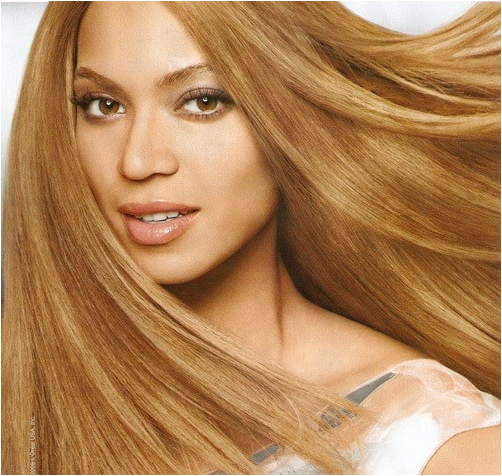
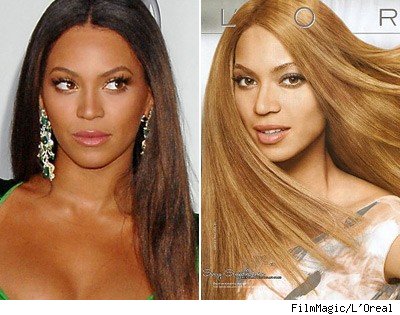
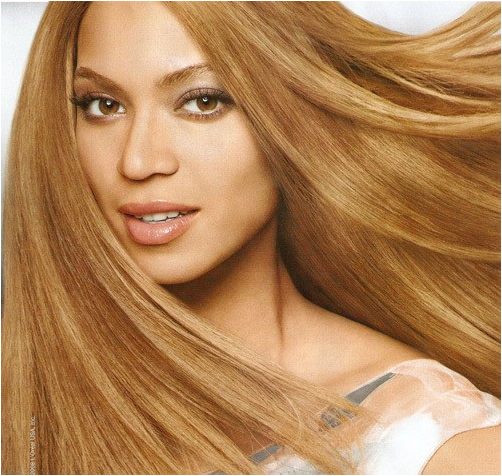
 Behold: Beyonce with white skin and straight, blonde hair.


Click here for a post about the use of black models that are in compliance with white standards of beauty. 

Found at Jezebel thanks to Molly McL!


Can’t make this stuff up.  See also this post on white privilege.

(From Skin Coloured.)

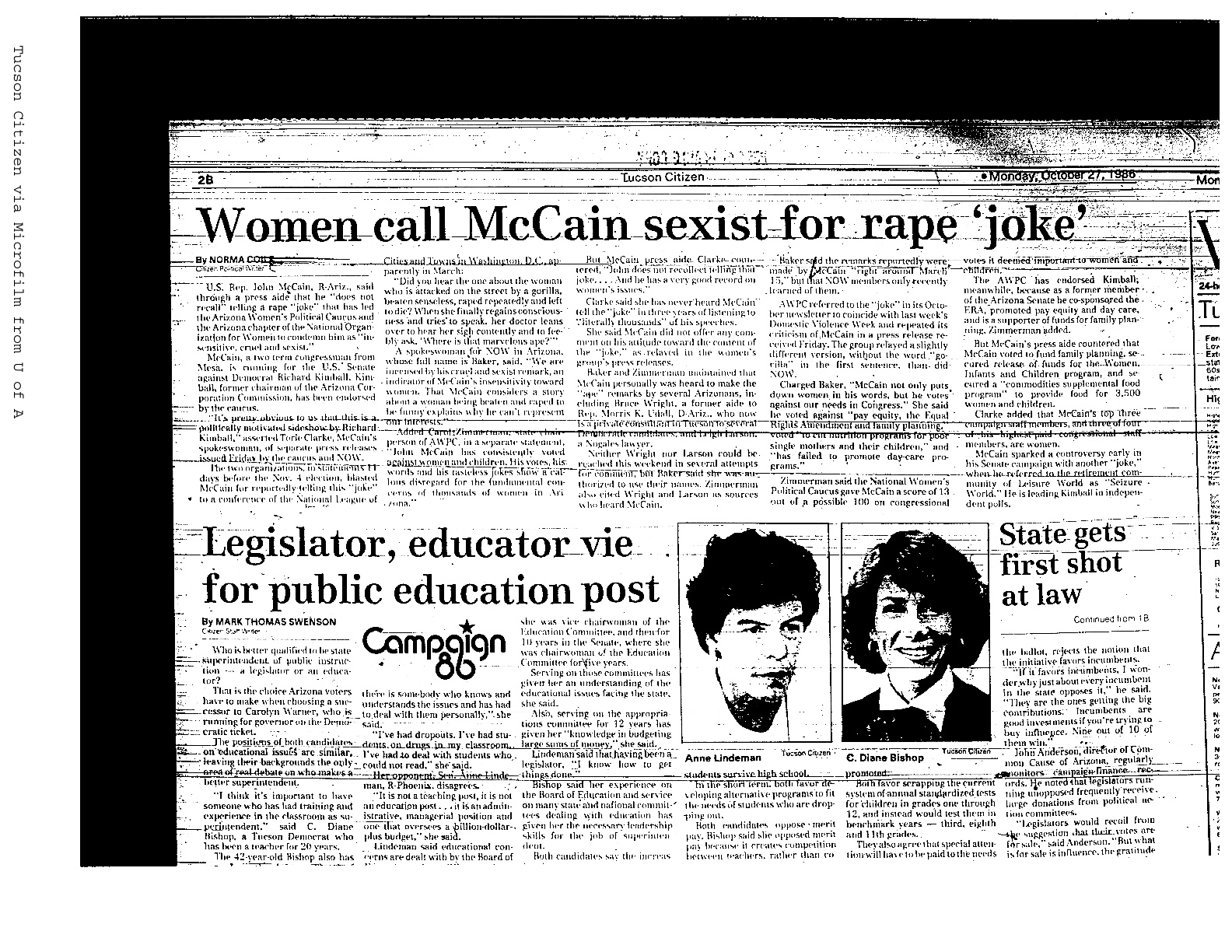
In a comment to another post, Umlud provided a link to this post from Thoughts from Kansas about the following joke allegedly told by John McCain in 1986 when speaking to the National League of Cities and Towns:

Did you hear the one about the woman who is attacked on the street by a gorilla, beaten senseless, raped repeatedly and left to die? When she finally regains consciousness and tries to speak, her doctor leans over to hear her sigh contently and to feebly ask, “Where is that marvelous ape?”

Here is an image of the original story about the incident in the Tucson Citizen (link to image found at Think Progress). I know it’s small and hard to read, but I wanted to provide the original source.

According to Think Progress,

McCain said he did not “recall” telling the joke. More recently, the McCain campaign scheduled a fundraiser with a Texas oilman who compared rape to the weather while running for governor. “As long as it’s inevitable, you might as well lie back and enjoy it,” said Clayton Williams in 1990. After public outcry, the event was “postponed.”

From what I recall, the comment by Williams was widely credited as a major reason Ann Richards won the gubernatorial campaign, becoming the second female governor of Texas.

Huh. I was looking up some information on Ann Richards really quick and discovered this list of the governors of Texas and discovered there have only been 6 Republican governors of Texas, and two of those were right after the Civil War, when the Republican party had quite a different platform and orientation. The other 4 have all been since 1979. And my home state of Oklahoma has only had 4. This shouldn’t be surprising, given that the Southern swing to the Republican party occurred mostly after the Civil Rights movement and Civil Rights legislation signed into law by President Lydon Johnson (who correctly predicted that the Democratic party would lose the South as a result of the policies), but it still surprised me.

Thanks for the link, Umlud!