Archive: Mar 2010

I can imagine a world in which gender difference did not translate into gender inequality… a world in which feminized tasks — nurturing others, creating beautiful and comfortable homes, cooking delicious, nutritious meals, and adorning oneself for the pleasure of oneself and others — were actually valued and, importantly, both respected and compensated in ways that reflected that value.

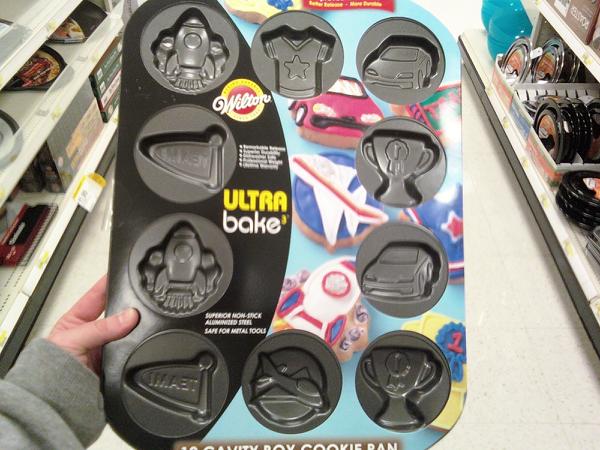
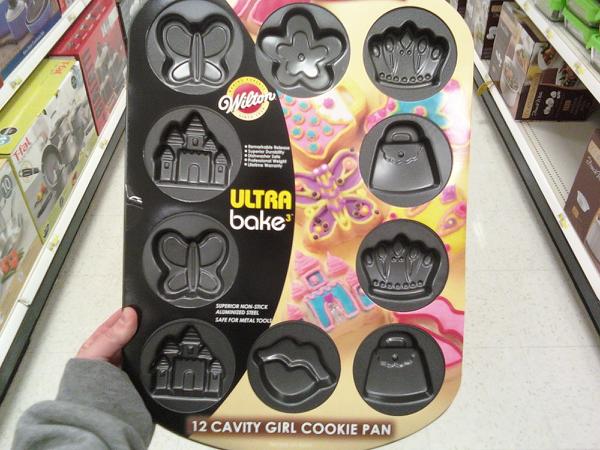
But alas. We don’t live in a world in which gender difference co-exists with gender equality. We live in a world in which boys go to the moon; and girls are princesses…

…at least, according to these “cookie pans” sent in by both Ash and Karen A.:
Lisa Wade, PhD is an Associate Professor at Tulane University. She is the author of American Hookup, a book about college sexual culture; a textbook about gender; and a forthcoming introductory text: Terrible Magnificent Sociology. You can follow her on Twitter and Instagram.

Ada A., Katrin, Filip S., and Missives from Marx all let us know about PinkStinks, a campaign in the UK that “challenges the culture of pink which invades every aspect of girls’ lives”.

The aim is a worthy one: the webpage discusses concerns about girls’ body image, self esteem issues, the sexualization of young women, and so on.

They link to this video, which I thought was neat:

While I totally get the idea and support the effort to provide girls with a wider set of images of what they can aspire to do or be like, the “pink stinks” name, and some of the t-shirts on the site, give me a some pause.

If you read different parts of the site, it’s clear that pink is a stand-in for the socialization of girls into a particular type of femininity, and the campaign is attempting to combat the narrowing of girls’ aspirations and role models. But it brings up an issue I face whenever I’m trying to pick out clothes for my 3-year-old niece: how do you reject the trappings of that socially-approved version of femininity without devaluing femininity, girls, and women themselves? All things equal, I’ll usually pick a green t-shirt instead of a pink t-shirt for my niece because I feel like giving her a pink t-shirt signals to her an approval of all the things we associate with “pink culture”–valuing looks over smarts, worrying about boys, and so on, and because I know she is frequently encouraged to declare pink her “favorite” color by those buying her gifts.

But we often see that in the attempt to provide girls with more options, those who accept elements of mainstream femininity are devalued. My students who are trying to distance themselves from ideas of passive femininity often disparage “girly-girls,” those they see as unambiguously accepting pink culture. Thus, wearing a sparkly barrette or painting your nails pink becomes inherently problematic, a sign that you must be boy-obsessed, dumb, superficial, and so on.

I don’t think this campaign overall is doing that–if you read through it, the message is more complex and clearly about giving girls a wider array of options to choose from as they construct their identities. But much of the online discussion of it seems to miss the nuance and veer more into the simplistic interpretation of “pink stinks” as “empowering girls means rejecting and devaluing everything currently associated with femininity, as well as those who do it,” and the t-shirts seem to play into that a little.

Many of the things associated with femininity–being nurturing, say, or liking to cook–are, in fact, quite lovely, and problematic only when we say that only girls can/should like them, that all girls ought to, and that they’re less worthwhile than things boys do. Adding to the devaluing of women and femininity in an attempt to resist gender norms is, ultimately, counter-productive.

Gwen Sharp is an associate professor of sociology at Nevada State College. You can follow her on Twitter at @gwensharpnv.

Jay Livingston of MontClair SocioBlog, in the tradition of Dan Myer‘s takedowns of TIDE and Aquafresh, tells the tale of his aspirin purchase:

It came in two sizes – 120 pills and 300 pills. The larger size was the better bargain. And it certainly looked much larger on the shelf.

Then I got home and opened the package. The bottle was mostly empty. I had bought a lot of air. The 300 little aspirin tablets were all there I guess, though I didn’t bother to count them. But they would have fit into a bottle one-third the size.

For more marketing tricks, see our post on the meaningless discount and the geography of the menu.

Lisa Wade, PhD is an Associate Professor at Tulane University. She is the author of American Hookup, a book about college sexual culture; a textbook about gender; and a forthcoming introductory text: Terrible Magnificent Sociology. You can follow her on Twitter and Instagram.
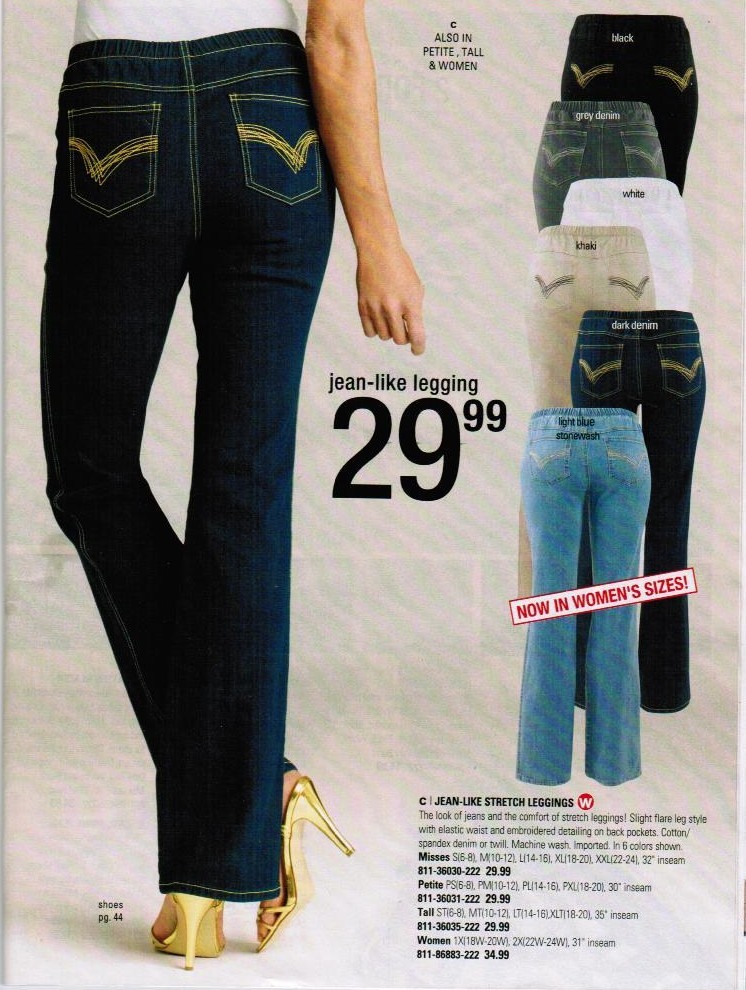
Laura Malischke, a friend and lovely photographer, sent in an ad featuring “women’s sizes”:

The phrase “women’s” is perhaps the most common euphemism used in the U.S. (I’m not sure about elsewhere) to refer to clothes made for women who wear sizes 14 and up.  What’s amazing about the term is what it implies about the “regular” sizes.  If non-“women’s”-sized clothes are not for women, who are they for?

I’ll take hypotheses…

Lisa Wade, PhD is an Associate Professor at Tulane University. She is the author of American Hookup, a book about college sexual culture; a textbook about gender; and a forthcoming introductory text: Terrible Magnificent Sociology. You can follow her on Twitter and Instagram.
Jayna T. and V. sent in a number of commercials for home security systems. They point out that in all the commercials they’d seen (there are many, many, many more than what I have here), the intruders are men (White men, from what I can tell) and the person endangered is a White woman, either alone or with her daughter:

So they’re selling home security systems by playing on the idea of the vulnerable middle-class White woman, easily victimized in her home. Luckily, home intruders are easily frightened away by an alarm system and run for the hills.

Saturday Night Live recently parodied these commercials, and I think the skit sums them up nicely:

UPDATE: A commenter pointed out this Target: Women segment on the same topic:

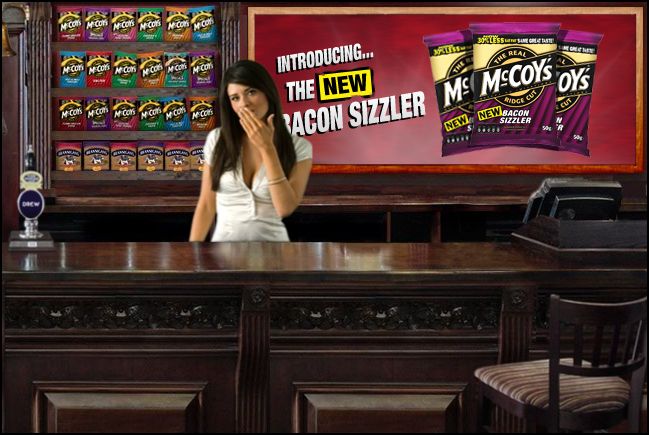
Anna sent in another example of a brand marketing itself as for-manly-men-only.  Add this one, featuring McCoy Crisps, to some of our other examples: Dockers, Klondike Bar, Alpo, Oberto beef jerky, and Ketel One.

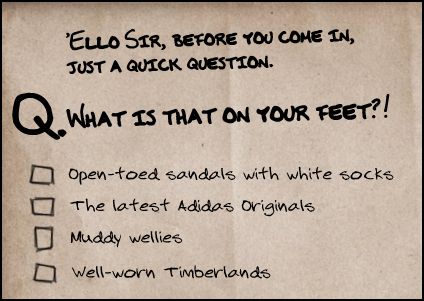
The first thing that the McCoy Crisps Pub site requires is that you tell it what kind of shoes you’re wearing:

If you answer “incorrectly,” the website says: “No, not right.  Get inside and learn how to be a real man.”

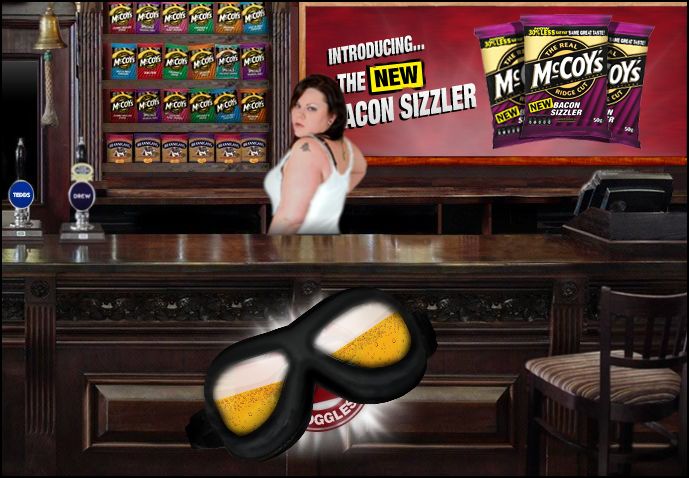
When you enter the online pub, the first thing you see is a woman that you are supposed to be disgusted by.  Immediately a set of beer goggles flies up onto your face (because you wouldn’t want to look at her for more than a split second, apparently):

Then you see this (phew! that was close!):

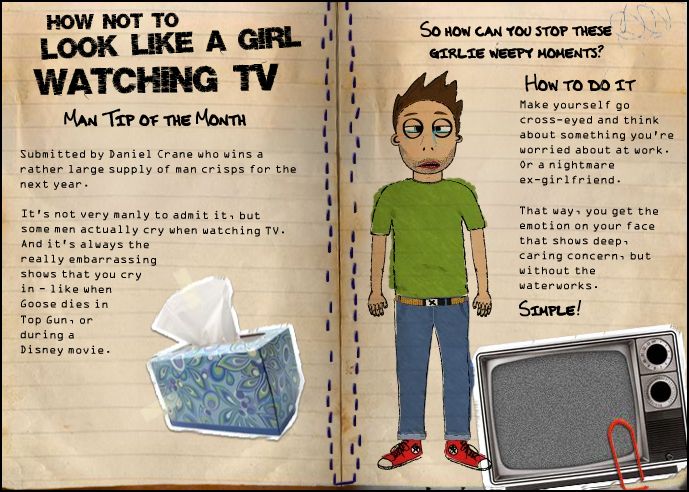
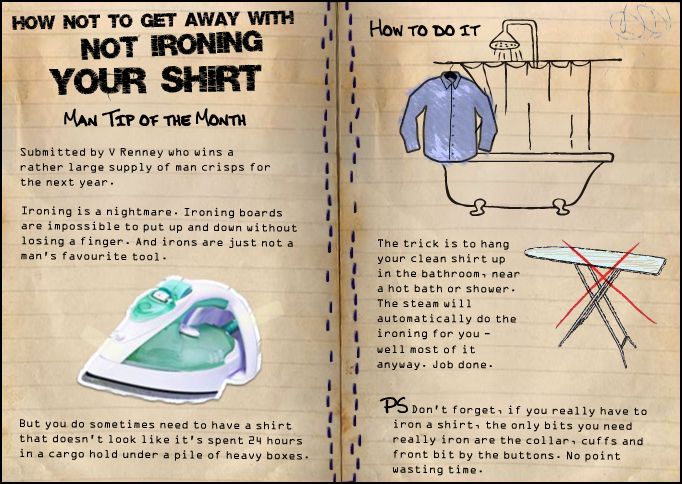
Alongside playing darts, drinking games, and playing manly trivia, you can get tips on how to be more manly.  Such as “How Not to Look Like a Girl Watching TV” and “How to Get Away with Not Ironing”:

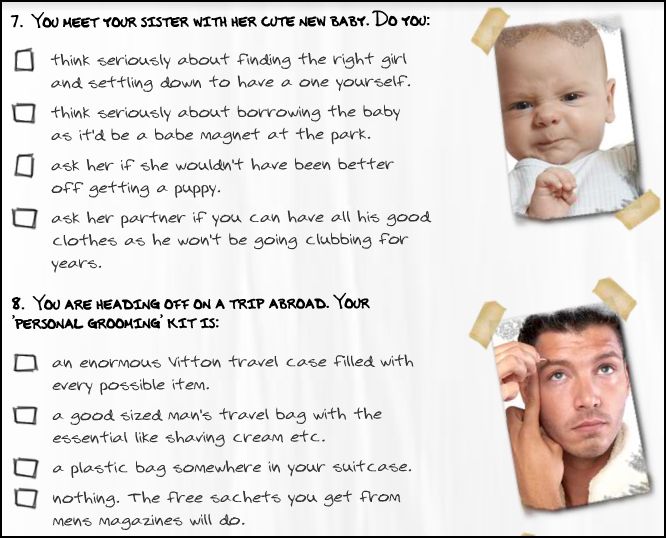
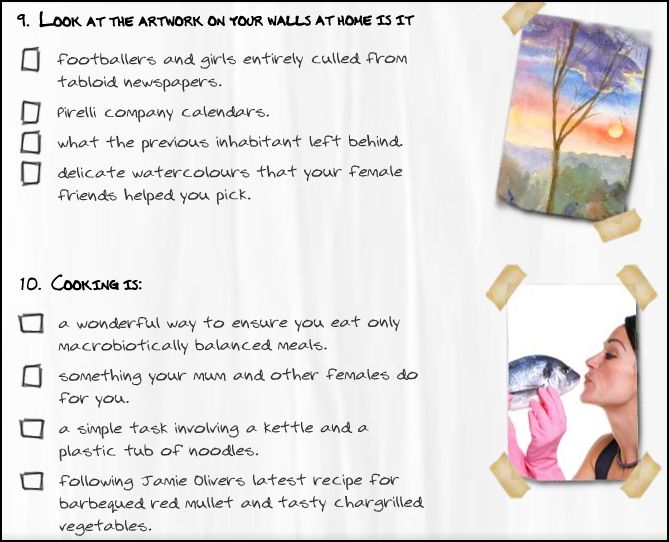
And you can also take a manly quiz to find out how manly you are.  The quiz nicely tells you exactly how you are allowed to behave and what you are allowed to like.  Some examples of questions:


So being a guy means manipulating women with puppies, making fun of your brother-in-law for being a good husband and father, making women cook for you, eschewing personal grooming and healthy eating as much as possible, objectifying women, and enjoying the Pirelli company calender.

Oh, and, if you haven’t seen the Pirelli calendar, you really, really, really don’t want to click here (NSFW; trigger warning).

So there you have it: another marketing campaign that assumes that men are stupid, shallow, sexist, sport-o-holics.  I don’t understand why men tolerate it.

Lisa Wade, PhD is an Associate Professor at Tulane University. She is the author of American Hookup, a book about college sexual culture; a textbook about gender; and a forthcoming introductory text: Terrible Magnificent Sociology. You can follow her on Twitter and Instagram.
Everyone knows phones and other devices are a major source of distraction to drivers, with deadly consequences. Six states — including New York and California — ban handheld phones while driving. The New York Times is running a major series on the danger, reporting that 11% of drivers are on the phone at any one time, causing 2,600 deaths per year.

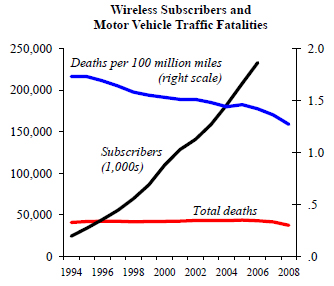
I don’t doubt the danger. But this is my question: Where is the upward trend in traffic deaths and accidents? The number of wireless phone subscribers increased by 10-times from 1994 to 2006, but the rate of traffic fatalities per mile traveled dropped 18% during that time. Here’s my chart based on those numbers.

2010-03-13-cellphonedeaths.jpg

I don’t doubt it’s dangerous to talk on the phone while driving, and texting is reportedly even worse. So I’m left with a few possible explanations. First, maybe cars are just safer. So there is an increase in accidents but fewer deaths per mile driven. Second, maybe distracted driving is more likely to cause minor collisions, because people jabber and text less in high-risk situations. (OK, I checked it out and those explanations won’t do: Accidents causing property damage only, per mile driven, have also declined, by 24%, from 1994 to 2007.)

Or third — and I like this idea, though I have no evidence for it — maybe phone-based distractions are replacing other distractions, like eating, grooming, listening to music, supervising children, or interacting with other passengers.

Can you explain this?

(And no, I don’t work for the telecommunications industry.)

The March, 2010 issue of Details, sent to us by m&k, “stars” Robert Pattinson. Other than Pattinson, the most important part of the magazine is the discussion of “the remasculation of the American man,” but that’s for another day. What struck me was the way that the photo shoot uses naked women as props for Pattinson’s masculine display. Not safe for work, so after the jump…

more...