Archive: Mar 2010

Welcome Guest Poster Brady Potts, who just put together this post about online communities and collective mourning of Alex Chilton’s death. Brady is a PhD student in sociology at the University of Southern California who studies discourse in the public sphere. He is also the co-editor of The Civic Life of American Religion, and an inveterate music junkie.

——————–

Flags are at half-mast today mourning the death of Alex Chilton, former Box Top, Big Star, producer of The Cramps and Tav Falco’s Panther Burns, and truly eclectic solo artist. It got me thinking about the way people use the internet to collectively mourn the passing of public figures, and how online spaces have developed cultures of their own.

In the comments to a New York Times story about Chilton’s death, you’ll find a variety of comments ranging from brief RIPs to lengthy statements about what Chilton’s music has meant to them. Over at the Onion AV Club, which has a robust-yet-often-snarky commenting culture, you find lengthier, more thoughtful comments that are more like a dialogue between members of the site, as members trade stories, recommend songs to each other, and post links to Chilton’s work.  The comments also reveal a shared knowledge of “what kind of place this is and what kind of discussions we tend to have here,” as is the case with “PB,” who writes:

“Seriously, folks……the first person to make a snarky “Who?” comment gets a punch in the mouth.
Not just because this guy was a legend and your ignorance of him should be viewed with pity and disgust. But also because it’s obnoxious and ghoulish.Remember, just because you’re on the internet doesn’t meet you have to say something.”

“PB” acknowledges the speech norms of the site (“Who?” is a frequent, if contentious, comment regarding cult artists on the site) and, given the occasion, suggests that the usual sarcasm would be inappropriate.

On the other hand, if you click over to this Chilton tribute song by the Replacements and poke around the comments, you find mostly one or two lines of “RIP” and “You’ll be missed”. This is about par for the course with YouTube, whose commenters seem to favor mostly brief remarks (and, it should be said, often veer into speech that many would find wholly objectionable).

So are the differences in these patterns of commenting evidence of a shared collective identity (“AV Clubber”), as opposed to the more anonymous “anything goes” posting style of YouTube? I think that many observers would agree that it is, but looking at the different sites, there also appears to be a “group style,” what Nina Eliasoph and Paul Lichterman describe as “recurrent patterns of interaction that arise from a group’s shared assumptions about what constitutes good or adequate participation in the group setting.”* Some online spaces we implicitly understand as places for anonymous commentary (with all that entails) while others we recognize as places where one should comment in a certain way, regardless of the identity we may or may not share as visitors to the site. This would suggest that visitors to web sites draw on collective understandings of what it means to be a good commenter in certain kinds of online spaces and post accordingly.

In any case, discussions like these are a starting point for all manner of interesting conversations about how we negotiate interaction online, and for that matter, how we use spaces like these to collectively mourn the passing of public figures whose life’s work is deeply meaningful to many people. And to that end, here are a few of my favorite of Chilton’s tunes, so feel free to use the comments to commemorate his work, wonder what the big deal is, lament the fact that they’ve been missing from your life thus far, or otherwise muse on the uses of the internet.

* Nina Eliasoph & Paul Lichterman, 2003, “Culture in Interaction,” American Journal of Sociology 108(4):737.

——————–

So there’s your late-night Alex Chilton memorial post and rumination on the creation and maintenance of online communal identities. For a somewhat different example, see Jay Smooth’s discussion of people mourning Michael Jackson’s death.
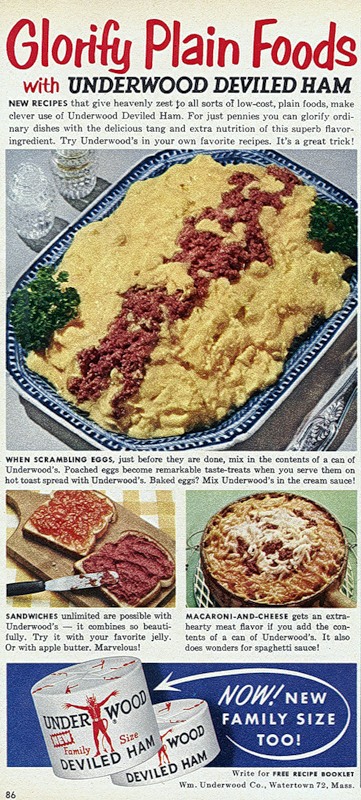
The vintage ad below is another great example of how “tasty” is socially constructed (i.e., culturally- and historically-contingent). If I’m not mistaken, this ad for canned deviled ham is suggesting that it makes a great sandwich when combined with jelly:

For more fun food-related examples of social construction, see our posts on meat-flavored gelatin, savory veggie jell-o, vitamin beer, cucumber flavored soda, soup for breakfast, and 7Up milk.

Source: Vintage Ads.

Lisa Wade, PhD is an Associate Professor at Tulane University. She is the author of American Hookup, a book about college sexual culture; a textbook about gender; and a forthcoming introductory text: Terrible Magnificent Sociology. You can follow her on Twitter and Instagram.

Crossposted at Jezebel.

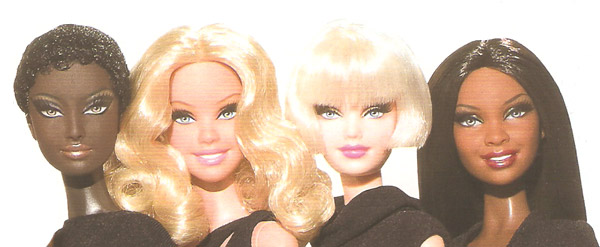
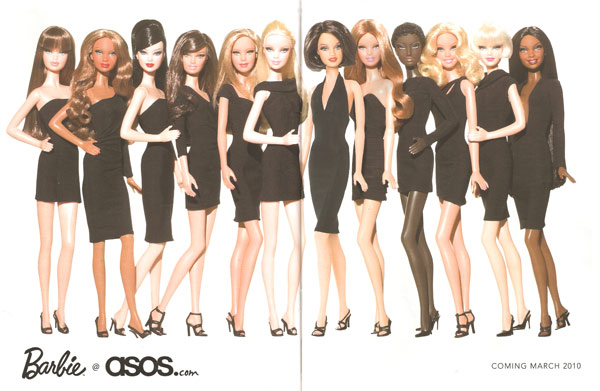
Sarah Barnes, who blogs at Uplift, expressed surprise at seeing the ad below in Grazia magazine:

She found herself surprised, she explains, because it took a minute for it to sink in that the dolls weren’t real people…

She explains:

In a time when everything is photoshopped to such disastrous levels, there really isn’t that much difference between a Ralph Lauren advert using a real model and an ASOS ad using Barbies. When fashion just has to be seen on ‘perfect’ women, we are becoming used to seeing a Barbie-like cookie cutter version of what women look like in our magazines.

So, this is why I screamed. Because, for a second there, I thought the Barbies were real women.

Do they freak you out a bit?

Lisa Wade, PhD is an Associate Professor at Tulane University. She is the author of American Hookup, a book about college sexual culture; a textbook about gender; and a forthcoming introductory text: Terrible Magnificent Sociology. You can follow her on Twitter and Instagram.

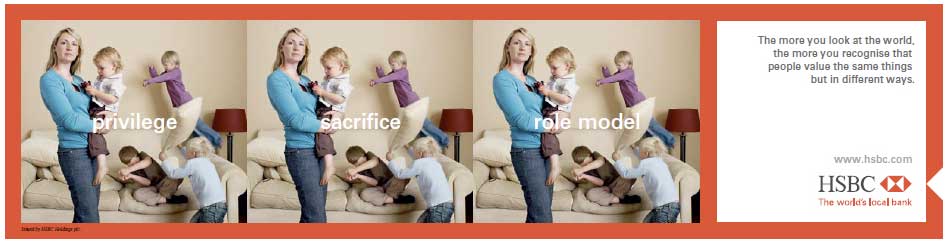
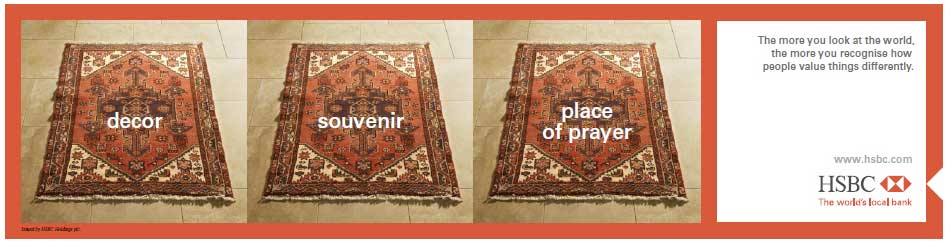
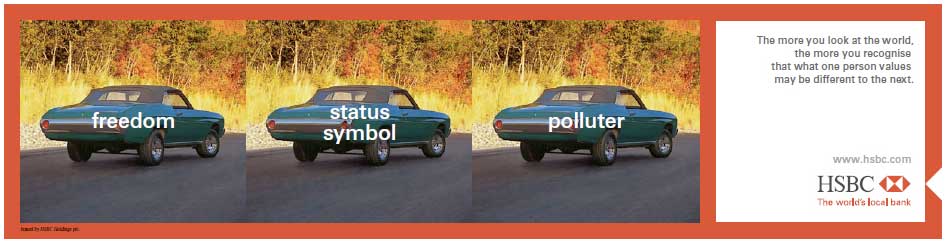
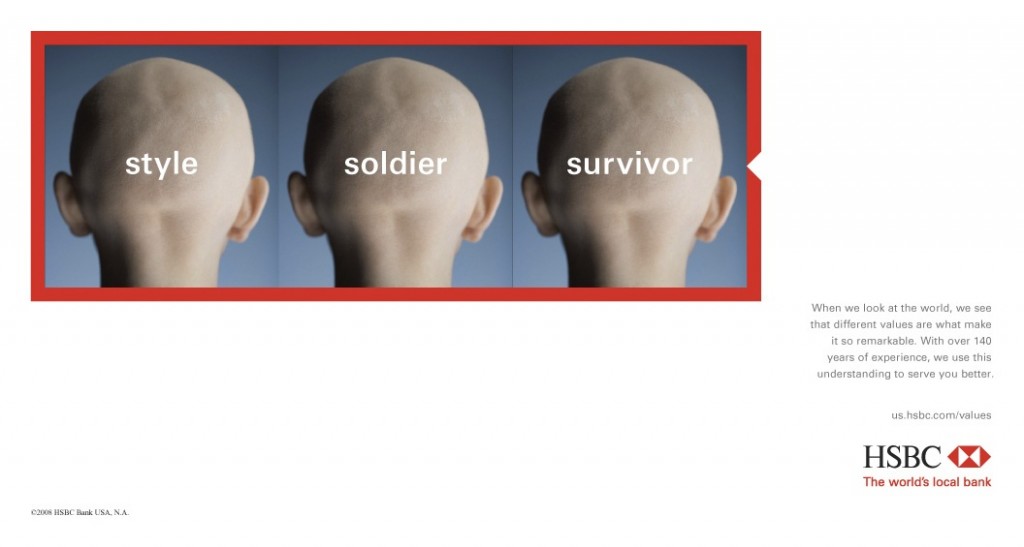
Jay Livingston, who blogs at MontClair SocioBlog, put up a set of ads for a bank that illustrate a basic sociological insight. The message in the ads is “Different values make the world a richer place” and they each feature the same image triply labeled.

Privilege.  Sacrifice.  Role model.

Decor.  Souvenir.  Place of prayer.

Freedom.  Status symbol.  Polluter.

Style.  Soldier.  Survivor.

Glorified.  Vilified.  Gentrified.

They say that a photograph is worth a thousand words, but this exercise reminds us how much words, even one word, can shape our interpretation of an image. The world doesn’t just exist, it must always be interpreted. Those immediately around us have a great ability to influence how we see the world, but the people with power over media do also… and their power is vast.

Lisa Wade, PhD is an Associate Professor at Tulane University. She is the author of American Hookup, a book about college sexual culture; a textbook about gender; and a forthcoming introductory text: Terrible Magnificent Sociology. You can follow her on Twitter and Instagram.

It turns out that reports of white ethnic identification on the U.S. Census shift so dramatically over time, that simple demographic change cannot account for them.  Instead, (especially) white people, who can largely pick which of their ethnic ancestries to emphasize at any given time, are inconsistent.  Accordingly, ethnicities fall in and out of favor.  For example, German became quite unpopular during World War II.  Similarly, American Indian rose in popularity in the 1960s.  Today, many people proudly report their Irish ancestry, but there was a time in American history when one might keep it a secret if one could.

In Blue Collar Bayou, Jaques Henry and Carl Bankston III describe the recent resurgence of Cajun identification in Southern Louisiana.  They explain that, between 1975 and 2000, there was a 300% increase in the number of people who identify as Cajun.

Cajuns are a people who settled in Southern Louisiana after being exiled from Acadia (now Nova Scotia, New Brunswick, and Prince Edward Island) in the mid 1700s.  Mostly poor, for a very long time “Cajun” was a bad thing to be and negative stereotypes abounded.

Henry and Bankston explain that for most of their time in Louisiana, the portrayal of Cajuns was “solidly pejorative” (p. 65). They write:

Their Canadian origin, the dire circumstances of their settlement, and their early status as destitute refugees also set the Acadians apart from other white groups in Louisiana… [who] generally held higher socioeconomic positions… These groups… viewed the Acadian, and later Cajun, community as distinct and of little worth.

At the time, their food was described as “adequate.”

It wasn’t until the 1960s that these negative stereotypes started to change and now Cajun ethnicity, country, music and, especially, food is wildly popular:

5

Today Louisiana’s biggest problem isn’t getting people interested in Cajun food, it’s policing all the imitators.  Products labeled “Cajun” are so profitable today that the Louisiana legislature is trying to combat the “fake Cajun [product] problem” by using a logo on all Louisiana products that says “Product of Louisiana Certified Cajun“:

img9174962bec389b85

The new popularity of Cajun food can be attributed in part to efforts by the Louisiana tourism board and a handful of celebrity chefs, like Paul Prudhomme, who had the resources, skills, and business acumen to transform the food into a cuisine.

A nice example, I thought, of the social construction of both food and ethnicity.

Images here, here, and here.

Lisa Wade, PhD is an Associate Professor at Tulane University. She is the author of American Hookup, a book about college sexual culture; a textbook about gender; and a forthcoming introductory text: Terrible Magnificent Sociology. You can follow her on Twitter and Instagram.

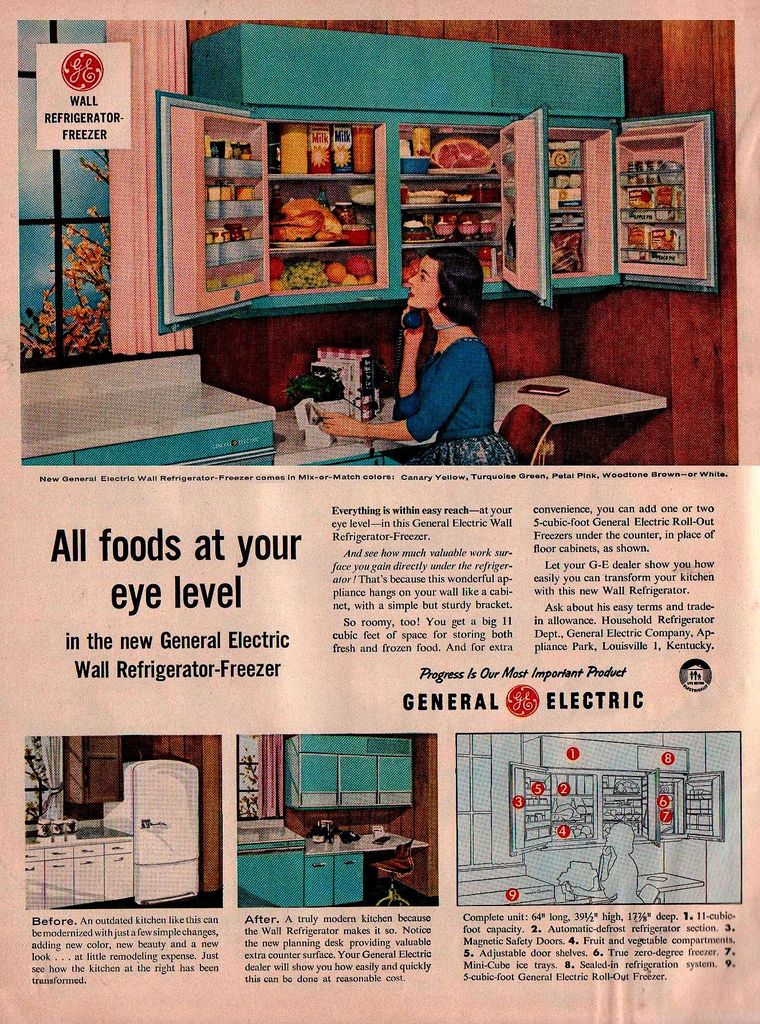
They engineered this, it seems perfectly reasonable (all that squatting for the crisper?), so why does it seem so bizarre!

I postulate that one reason that the cabinet refrigerator never caught on was because of standardization.  Most new homes are built to accommodate a stand-up fridge.  Home builders would have to choose: stand-up or cabinet level?  Whatever home builders chose is what most home buyers would go with, unless they re-modeled their kitchens.  Standardization, while quite useful, can also kill innovation.

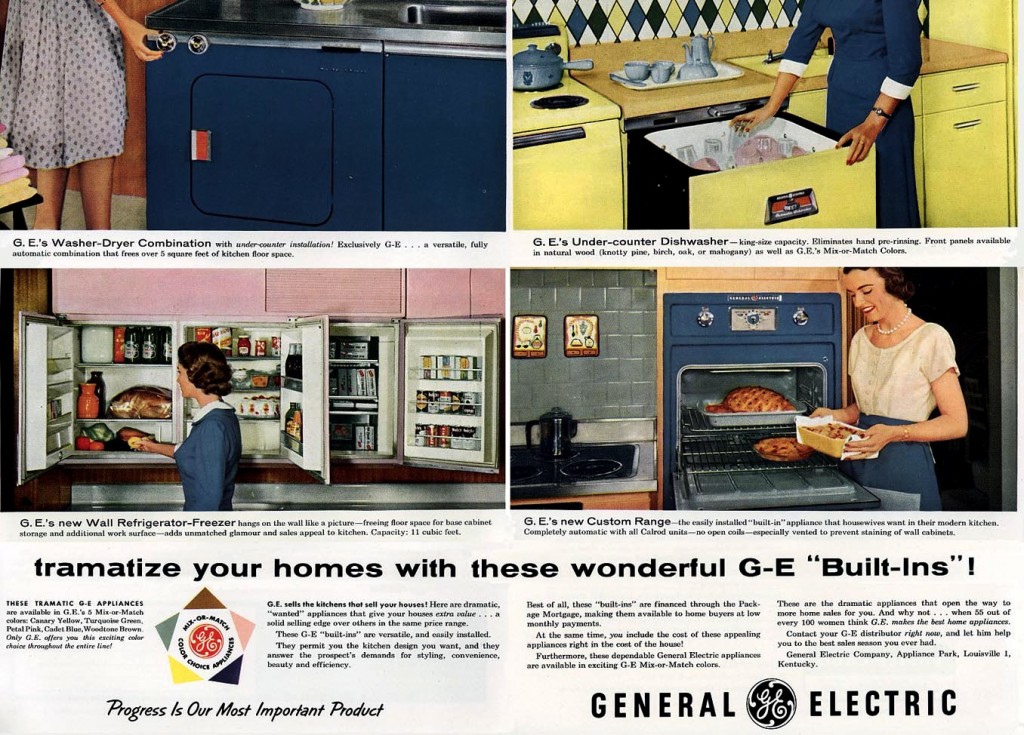
NEW (Apr. ’10)!  Another example (bottom left):

(Both images from Vintage ads: here and here.)

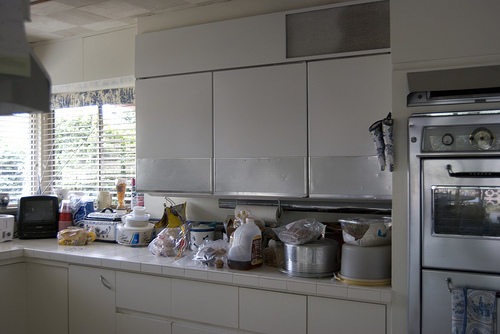
ALSO NEW (Apr. ’10)! In the comments, ckilgore linked to a photograph of her grandma’s kitchen… that totally had, and still has, one of these fridges! People in the comments had lots of good reasons for why it was impractical… but I still think it’s cool:

Lisa Wade, PhD is an Associate Professor at Tulane University. She is the author of American Hookup, a book about college sexual culture; a textbook about gender; and a forthcoming introductory text: Terrible Magnificent Sociology. You can follow her on Twitter and Instagram.

Liz B. sent in a screen shot and some commentary.  She did such a nice job explaining that I’m just going to let her do it:

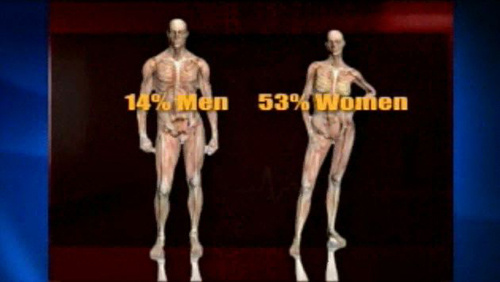
I’m an undergraduate student at a Big Ten school, and today I was perusing the course tracking website that gives students access to their grades, their homework etc. One of the features is that you can change the “theme” of the site… I came across the “physiology and anatomy” theme…

What struck me was not that they had a physiological representation of both sexes, but by how gendered their stances are. The man stands straight, looking ahead, even weight distribution. The female form is almost classically passive, hands held behind her back, weight distribution uneven.

Close up:

Liz continues:

Its striking that these notions about gendered bodies are inserted into even seemingly scientifically oriented things. Its a fair assumption that the designers for the site intended this theme for those who are participating in an anatomically related major, people who are being (or should be) trained to view the body, sans socially constructed gender norms. Yet, here, we see a prime example of gender presentation used in a scientific context… [A]re our doctors and scientists being instilled with these kinds of images throughout their academic lives? If so, its no small wonder why there are doctors and scientists who lend credibility to gender norms by operating on them as if they are nature, or why many people view gender as so fatalistically natural.

More examples:

Jennifer sent in these two anatomy illustrations from a gym. “Surprisingly,” she said:

they had one for both men and women – you would think the two would be practically identical and you could get away with a generic figure.

Then I noticed that there was a big difference in how the two sexes were presented.  The male figure is standing straight up, lifting a heavy weight.  We see him in a simple front, side, and back view. The female figure, however, is posed in a flirtatious manner, and we see her only from the front and back.  Even when she doesn’t have skin or facial features, she’s still presenting her chest and butt and tossing her hair to the side.  She’s also shown lifting what appear to be very light hand weights.

It’s a problematic message: men go to the gym to become functional and stronger, women come to the gym to become sexually attractive but not TOO strong while they’re at it.

Here they are:
1 (3) - Copy 1 (3)

Liz Q. sent us a link to a CBS News video on urinary tract infections (via Jezebel) that included the following anatomical illustration:

Halley M. sent in this image from the Wikipedia entry under “human” and “anatomy.” It presents also presents the female in a decorative, as opposed to illustrative, pose (after the jump because NSFW):

more...

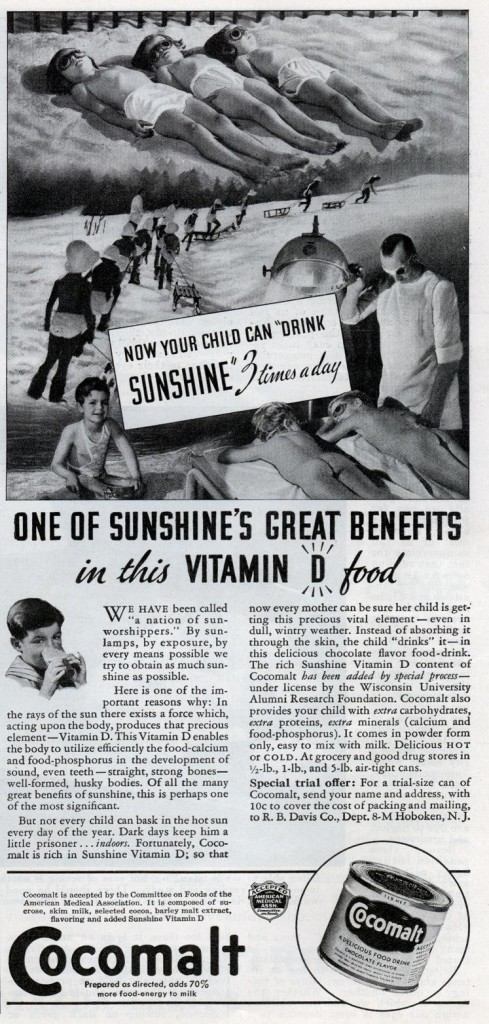
Example One: Is it me, or do the bare buns in this ad seem just a little bit child-porny?  It’s a nice example of how our sensibilities change; these days there is a loud and ubiquitous discourse around children’s vulnerability to sexual exploitation.  A discourse that, I think, would make this ad inappropriate today.

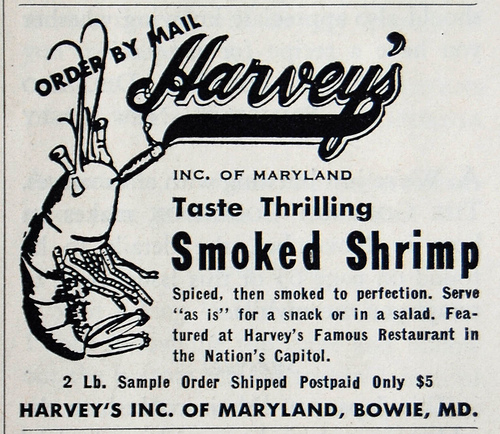
Example Two: After decades of anti-smoking public health initiatives which included, along with health warnings, the association of smoking with bad breath, yellow teeth, and stinking clothes and hair, I somehow don’t think food would be marketed with a cigarette in its mouth (1950).

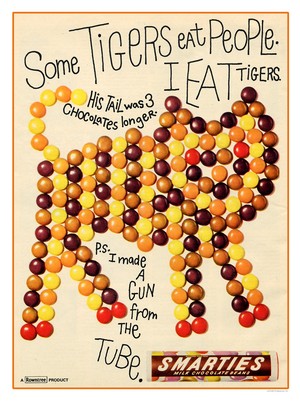
Example Three: This candy ad begins “Some tigers eat people.  I eat tigers.  His tail was 3 chocolates longer.”  Then, it continues, “P.S. I made a gun from the tube.”   Today, in most parts of the U.S., childhood innocence is no longer marketed with firearms.

Source: Vintage ads (here, here, and here) and Found in Mom’s Basement.

Lisa Wade, PhD is an Associate Professor at Tulane University. She is the author of American Hookup, a book about college sexual culture; a textbook about gender; and a forthcoming introductory text: Terrible Magnificent Sociology. You can follow her on Twitter and Instagram.