Archive: 2008

Thorsten S. alerted us to a calendar illustrated with black-and-white nude photographs of Germans who have competed in the Paralympic Games. On the Web site of the photographers, Huenecken & Inselmann [link NSFW!], subjects include people in wheelchairs and people who use lower-limb prostheses.

Compare these portrayals of persons with disabilities to the portrayal of fetish model Viktoria, who was a Bizarre mag cover girl, apparently in part because she has a below-the-knee amputation. Do these calendar photos highlight the German athletes’ disabilities in the same way that the shoot of Viktoria fetishizes her disability? Alternatively, check out our earlier post about Disaboom, a community site whose ads for its dating service feature muscular and attractive people with disabilities. Do these calendar photos challenge the mainstream stereotype that people with disabilities can’t be sexy or strong?

By the way, how do gender expectations and stereotypes play out in these photos? If you go to the gallery linked early in this entry, you can see a man holding a gun in a position that clearly makes it analogous to his penis. You can also see an especially objectified [decapitated = identity erased] woman on horseback, as well as a woman in a stereotypical beach bunny/pinup pose. The tendency of the calendar to revert to dull assumptions of how men and women should be posed and photographed complicates any radical agenda of celebrating the bodies of people with disabilities.

Pictures with artistic NSFW nudity below the cut.

more...

Shirley Ann M. sent in this picture of a car advertising Skill Maids:

She says,

I was blown away by the blatant sexual stereotyping in this picture: the maid in high heels, bent over with knees together, Jessica Rabbit figure.

Well, Shirley, what you don’t understand, and what I can tell you because my mom cleaned houses for a living when I was a kid, is that there is no more better outfit to wear for efficiently cleaning a large house than a dress and heels. See, the heels make you taller, so it’s easier to dust the top shelves!

Thanks, Shirley!

Stephen W. sent us this picture of the “Hispanic” foods aisle at a Walmart in Sioux Falls, South Dakota:

Why is this odd? 

The word “Hispanic” was actually invented by the U.S. government to mean Spanish-speaking.  The government invented it for the census because they wanted to be able to label and identify all Spanish speakers.  “Hispanic,” then, unlike the terms “Latino” or “Chicano,” is not an identity that originated among those to whom it applies.  Further, though it is sometimes used as a euphemism for “Mexican” or “Latino,” Spanish is only spoken in Latin America because of the conquest of parts of Latin America by Spain.

Given the history and use of this term, what would “Hispanic” food be?!  (According to Walmart, it’s salsa and tacos.)

NEW: Another use of the term “Hispanic.”  This time on a bag of peanuts passed out on a Southwest Airlines flight. 

From a press release by Southwest Airlines about their celebration of Southwest Airlines:

Southwest Airlines shares its passion for Hispanic Heritage Month with our internal and external Customers by hosting celebrations in our Hispanic focus markets. Local Employees kick off the festivities by partnering with local organizations, and at airports, with gate games, Mariachi music, authentic foods, and distributing commemorative T-shirts and lapel pins emblazoned with our Hispanic Heritage Month message “Celebremos Tu Herencia,” “We Celebrate Your Heritage.” Hispanic Heritage month posters also are on display during this month-long celebration. Finally, be on the lookout for Southwest’s Hispanic Heritage Month specialty packaged peanuts! (emphasis mine)

Thanks to Stephen W. for this link, too!

My race and ethnicity class is discussing American Indian team mascots today, so I thought I’d put up some images of a few. There are many, many more than what I have here (think of every high school with teams called the Redskins), but these are some of the most often discussed.

This is the logo (found here) of the University of Illinois’s sports teams, the Fighting Illini, named after the Illini tribe (really a confederation of tribes such as the Peoria) originally inhabiting the area:

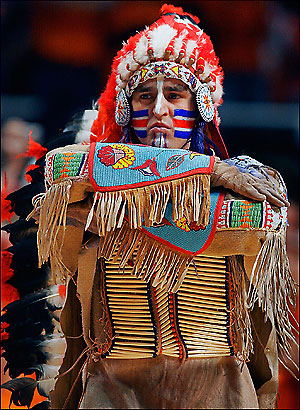
Each year a student is chosen to represent Chief Illini at sports events. The student wears what is described as “traditional” Indian clothing and until recently performed dance routines that have nothing whatsoever in common with anything I’ve ever seen at a powwow. Here is a student dressed up as Chief Illini (found here):

I found this video on youtube of Chief Illini’s “last dance,” meaning his last performance at an official NCAA-sponsored sporting event:

Last I heard the University of Illinois bowed to decades of pressure and has retired the embodiment of the mascot. They apparently no longer have a Chief Illini (a man who dresses up like an American Indian and jumps around), but they have retained the “Fighting Illini” language.

UPDATE: Not so fast.  Resist Racism has a great summary of how the University is keeping Chief Illini around even after retiring him.

The University of North Dakota’s mascot is the Fighting Sioux (found here):

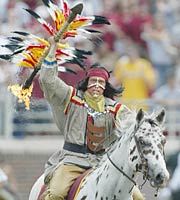
Florida State’s teams are the Seminoles; here is a student representing the team at a game (found here):

Here is the Florida State NCAA logo (found here):

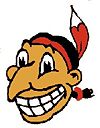
This is the original Chief Wahoo, the mascot for the Cleveland Indians (found at Wikipedia). According to Wikipedia, it was used from 1946 to about 1950.

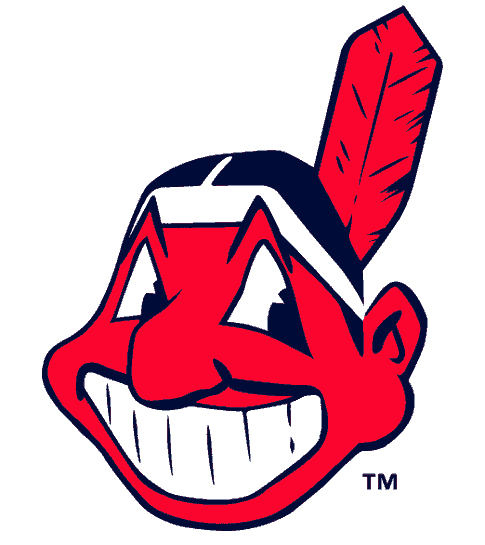
Here is the updated Chief Wahoo (found here):

A quote from the Wikipedia entry on Chief Wahoo:

According to polling results published in Sports Illustrated, “Although most Native American activists and tribal leaders consider Indian team names and mascots offensive, neither Native Americans in general nor a cross section of U.S. sports fans agree.”[9] According to the article, “There is a near total disconnect between Indian activists and the Native American population on this issue.”[9]However, the results of the poll have been criticized due to Sport’s Illustrated’s refusal to provide polling information (i.e. how participants were recruited and contacted, if they were concentrated in one region, if one ethnic group is over represented and the exact wording and order of questions).[10]

Here is a link to an article by King et al. discussing both the discourse in and the methodology of the Sports Illustrated article (in the March 4, 2002 issue).

Here is a website with lots of cartoons related to the issue of American Indian mascots, and the documentary “In Whose Honor?” looks at the protests surrounding Chief Illini.

The February 2004 issue of Journal of Sport & Social Issues (vol. 28 issue 1) has several very good articles about American Indian mascots that I’ve used in both race and sport classes when we talk about the continued use of caricatures and other portrayals of American Indians and why they are viewed differently than, say, an old Mammie-type image of African Americans. We also always discuss discourses surrounding American Indian mascots, particularly the idea that they honor or respect American Indians, and the selective use of certain American Indian voices to invalidate critiques of Indian mascots. Who gets to be Indian for the purposes of speaking about whether or not Indians resent the mascots? Why do non-Indians feel a special attachment to, and often identify with, these images? Does it really matter whether or not most American Indians personally oppose the mascots–is that the issue here?

The Sports Illustrated article could also be good for a discussion of methodology and the scientific method; the fact that the magazine would not release information on their methodology violates the very spirit of scientific inquiry (the ability to replicate others’ work to check its validity, as well as open sharing of information).

For other examples of the use of images of American Indians, see here and here.

This cartoon suggests that the idea that these mascots are a way of honoring American Indians is pretty absurd.

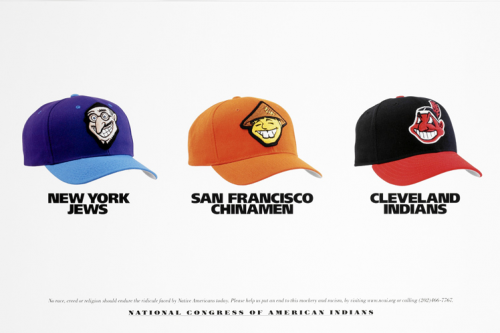
NEW! Brady P. sent in this image that questions why American Indian mascots are acceptable when most people would define the mascots that caricature other groups as patently offensive:

tumblr_koy50a7bIx1qzntqdo1_1280

Of course, there is a Dutch soccer team called The Jews.

Gwen Sharp is an associate professor of sociology at Nevada State College. You can follow her on Twitter at @gwensharpnv.

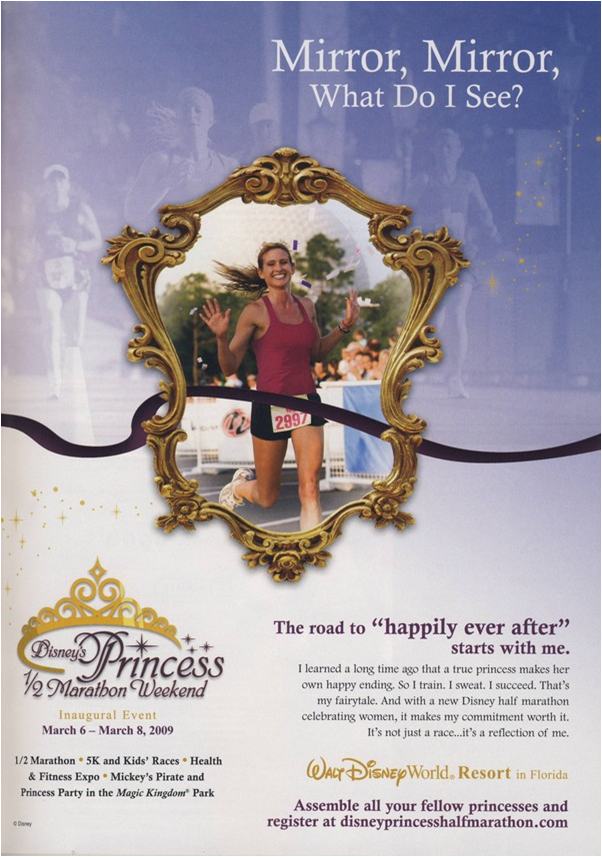
At first I thought this ad (found at Jezebel) creeped me out because of the equation: Disney princess + girl power. But then I remembered that that’s pretty much been the whole Disney princess gimmick since, oh, Sleeping Beauty or so. Then it hit me. It’s the infantilization.  Disney princess + adult woman = shivers up my spine.  Is it just me?

Text:

I learned a long time ago that a true princess makes her own happy ending.  So I train.  I sweat.  I succeed.  That’s my fairytale. A nd with a new Disney half marathon celebrating women, it makes my commitment worth it.  It’s not just a race… it’s a reflection of me.

From the Disney Princess Half Marathon website:

The Inaugural 2009 Disney’s Princess Half Marathon Weekend will bring women of all ages together to participate in a magical event designed just for them. The Disney Princesses are the inspiration for the weekend’s events and will focus on the attributes every princess possesses: commitment, courage, determination, fantasy, perseverance, and strength. Every woman is a princess, which princess are you?

Lisa Wade, PhD is an Associate Professor at Tulane University. She is the author of American Hookup, a book about college sexual culture; a textbook about gender; and a forthcoming introductory text: Terrible Magnificent Sociology. You can follow her on Twitter and Instagram.

Click here if this second video doesn’t come up.

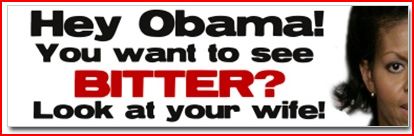
NEW! Bumpersticker for sale at CafePress:

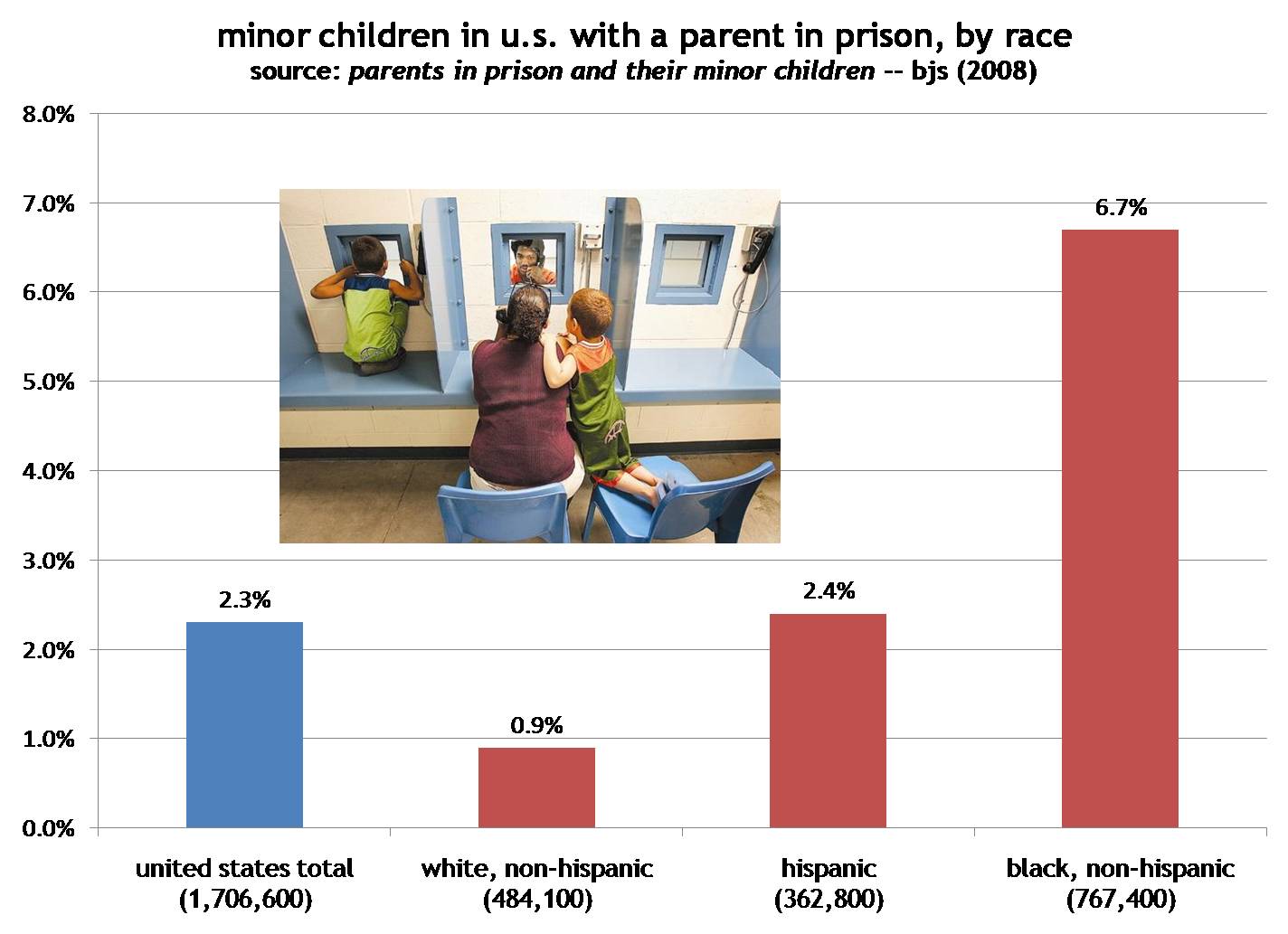
The “war on drugs” that began in the 80s led to a dramatic increase in the number of Black, but not so much White americans in prison and jail (see here).  One of the consequences of disproportionately imprisoning Blacks and Latinos, of course, is disproportionately separating Black and Latino children from their parents. 

Source: Bureau of Justice statistics via Chris Uggen’s Weblog.

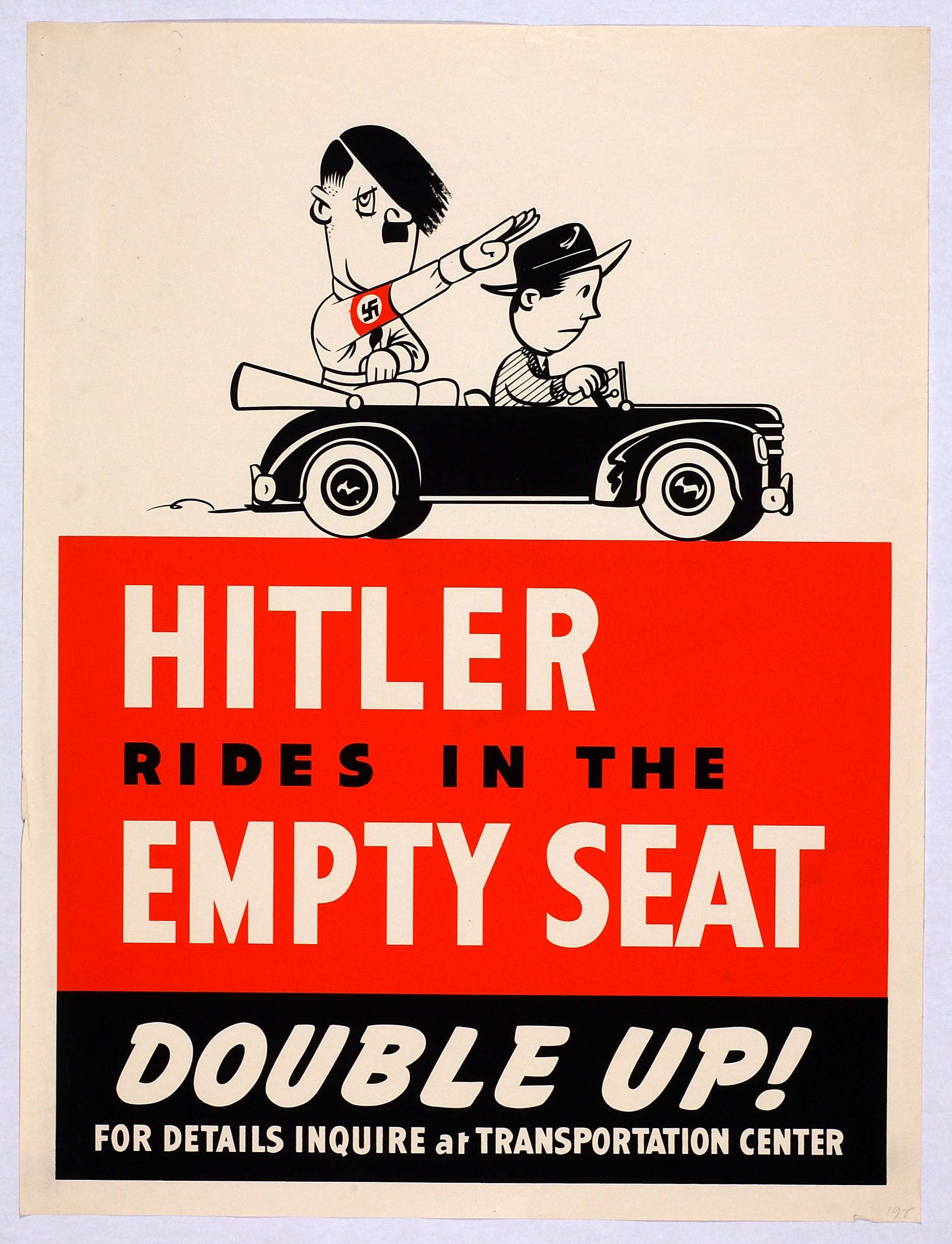
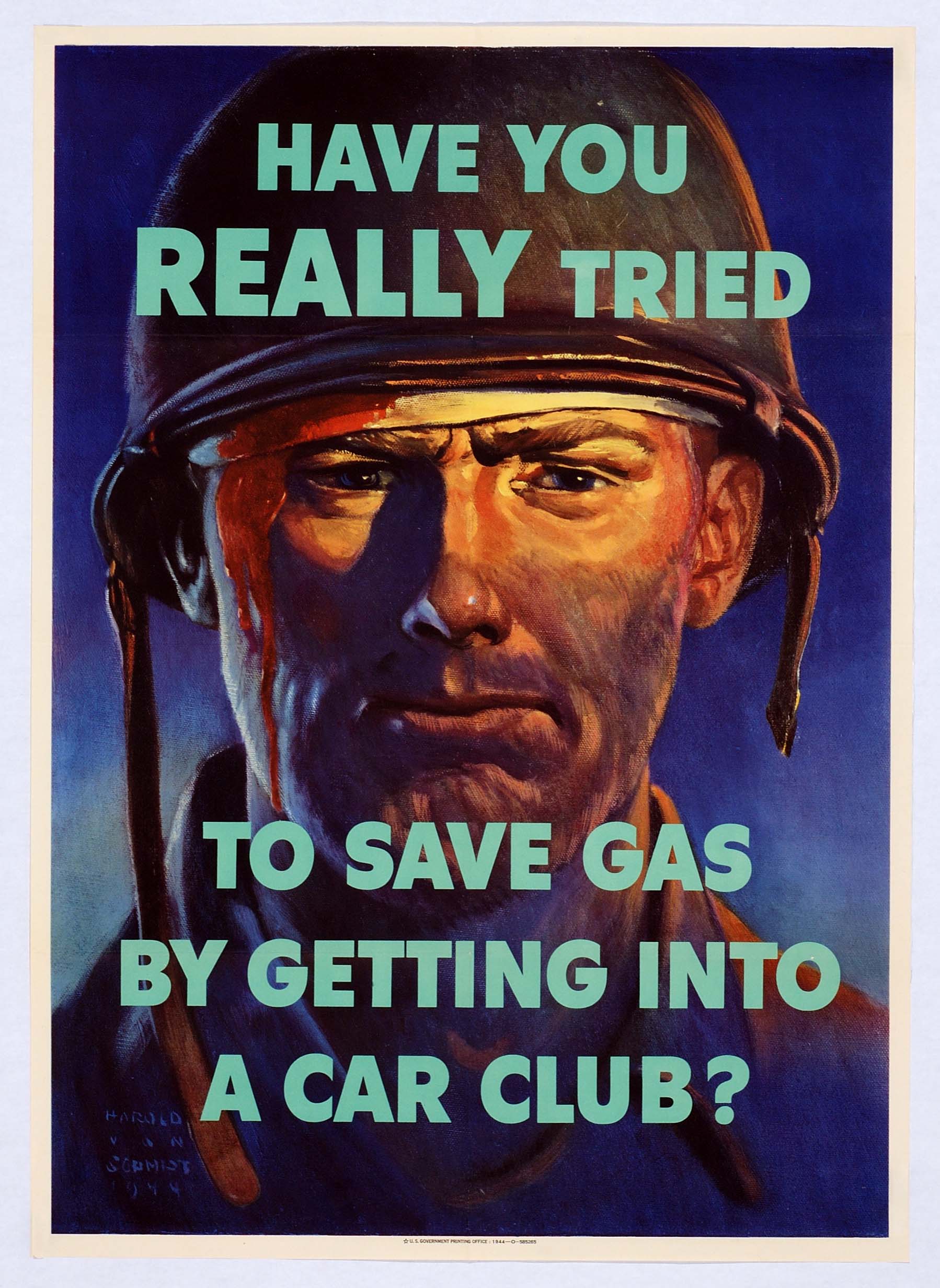
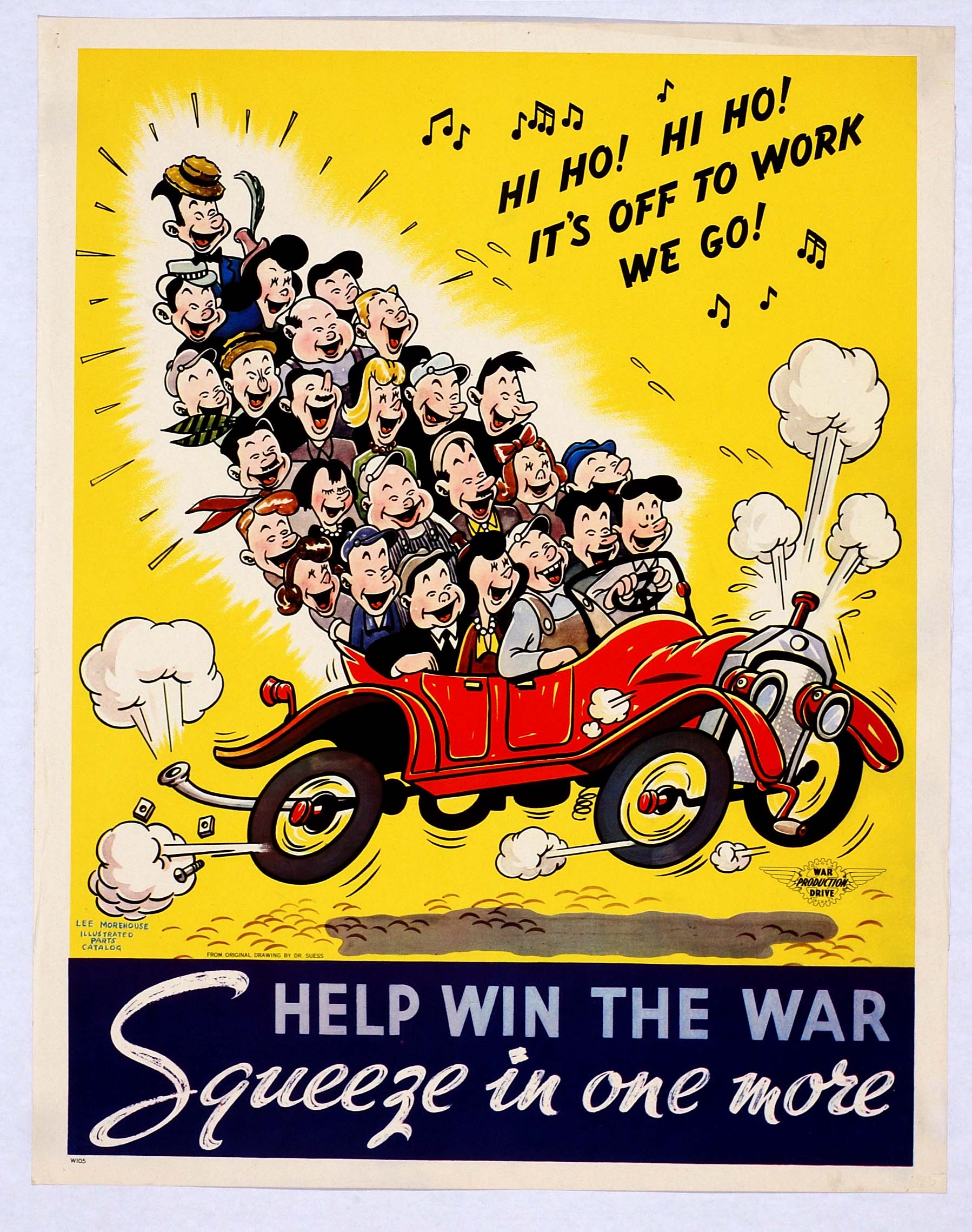
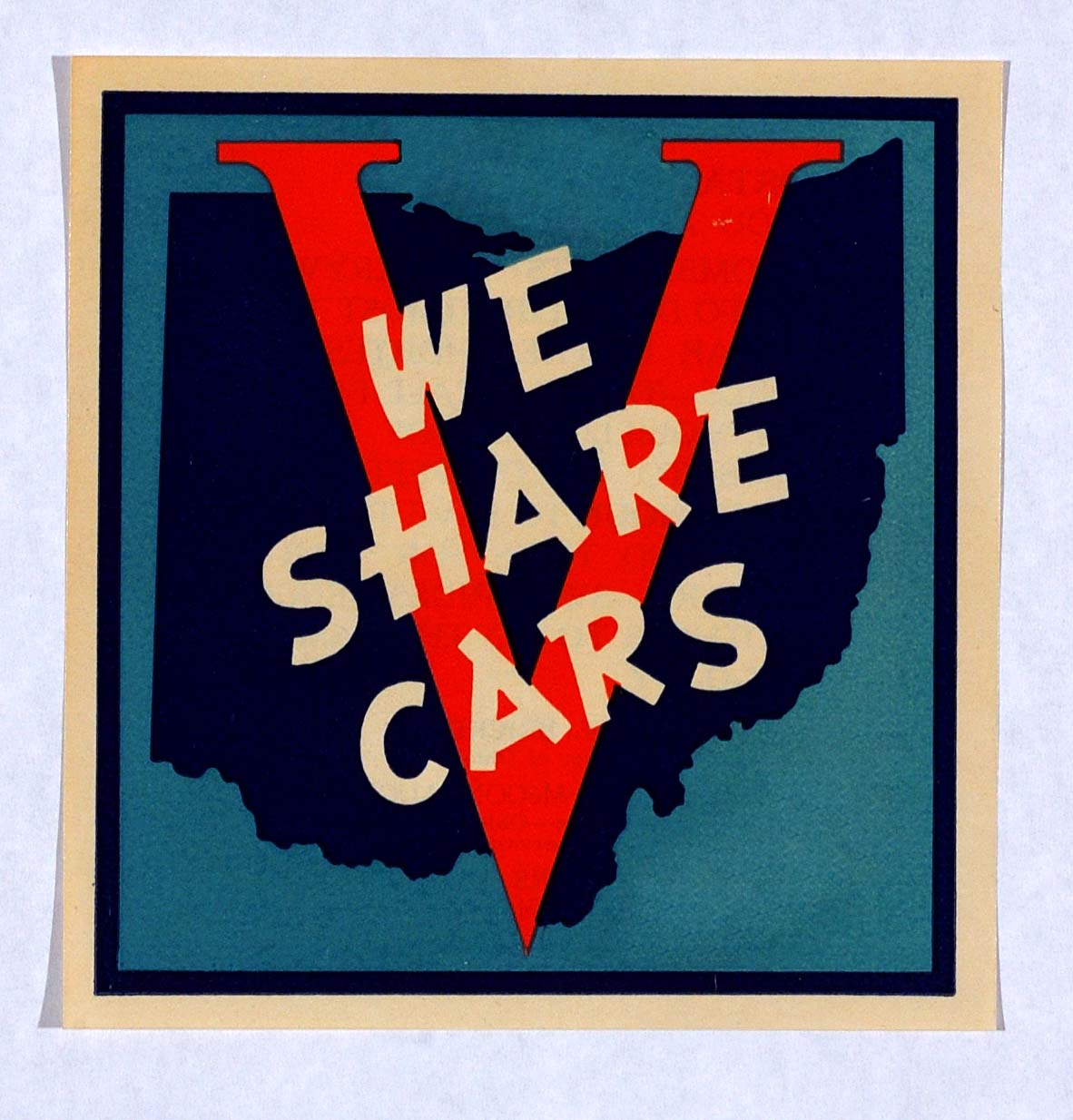
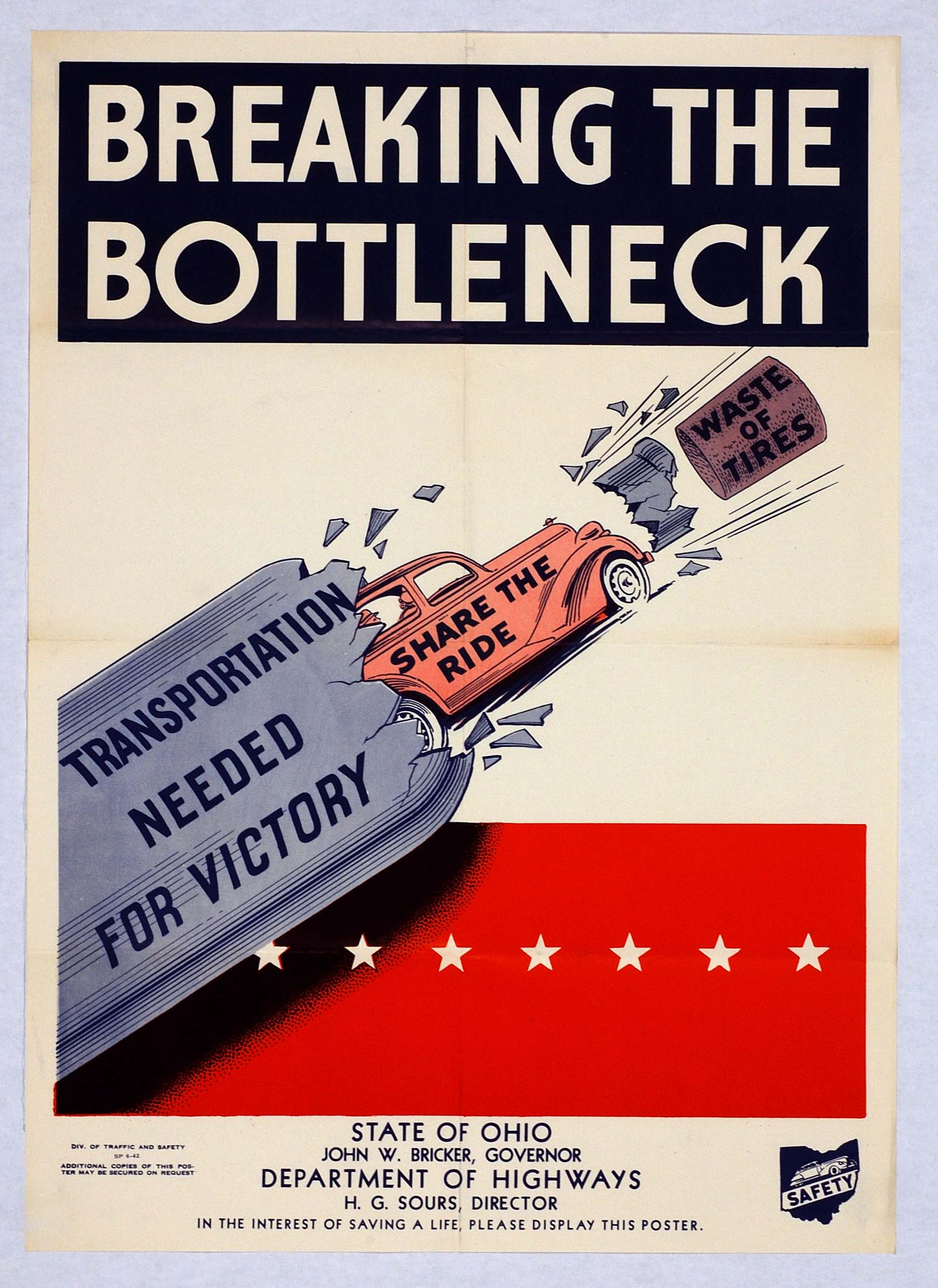
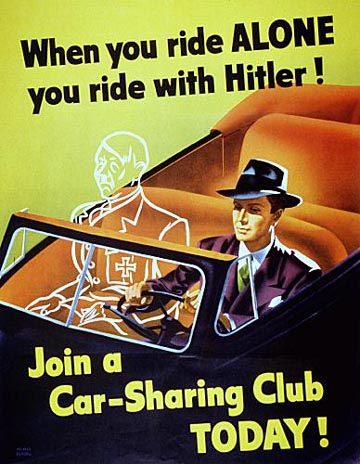
During World War II, the government encouraged carpooling because they needed the gas and rubber for the war (source). Here is a sample of the propaganda:

This one is, as it appears, by Dr. Seuss:

The next two are from the State of Ohio:

In the comments, both Eoin and Toban B. (T.B.) pointed us to this poster (found here).

Lisa Wade, PhD is an Associate Professor at Tulane University. She is the author of American Hookup, a book about college sexual culture; a textbook about gender; and a forthcoming introductory text: Terrible Magnificent Sociology. You can follow her on Twitter and Instagram.