
Have you ever heard of Jonny Buchardt? His name may sound like box office material, but he never made it big, let alone to Hollywood. And still, there is a good chance you’ll run into him these days, on your phone or laptop, because he has gone massively viral. With a funny thing that happened many years ago, not on the way to the forum in ancient Rome but during Carnival season in 1970s Cologne.
Jonny Buchardt was a German stand-up comedian (a rare species, but they do exist) and looks like a puffed-up version of Ricky Gervais. It wouldn’t surprise me if Jonny turned out to be Ricky’s dad.
The video clip that’ll pop up in your Instagram or Facebook feed shows him tricking a whole ballroom full of drunk dignitaries during a live TV broadcast into screaming the Nazi salute “Sieg Heil.” He did it by priming the crowd with several call-and-response cheers like “Hip Hip—Hurrah” and the German “Zicke Zacke Zicke Zacke—Hoi, Hoi, Hoi.” Then finally, he gives them a booming “Sieg” with the entire room roaring back a collective “Heil.” Immediately after that, the camera pans across the audience and zooms in on some partygoers in their 50s and 60s who seem genuinely surprised at themselves and have a dazed look on their face—probably caused by generous pours of Rhine wine and the sudden realization that their Nazi shtick was just broadcast on national television. Which in those days meant that everyone was watching, or better, had to watch, since the number of channels was painfully limited in 1973.
Today’s online community has been going completely bonkers over this clip, as the ultimate evidence of how fragile democracy is and how particularly fragile it was in post-war West Germany. But was it really?
For starters, in 1973, there was no AfD (Alternative für Deutschland), which today stands at 25% in national polls. Nor was there any other far-right political group somewhere waiting in the wings. Parliamentarians wearing gigantic German flag lapel pins and fantasizing about Germany’s glorious contributions to world history would have been laughed out of the Bundestag. Some of the cheerful “Heil” chanters in Jonny Buchardt’s Carnival crowd may have even voted for Willy Brandt and his Social Democrats, who in 1972 scored the biggest ever victory for the political left in West Germany—after signing away substantial chunks of former German territory. Détente and Ostpolitik were in full bloom: the 1971 Nobel Peace Prize had gone to Chancellor Brandt for acknowledging that the former eastern provinces of Weimar Germany had become part of Poland and the Soviet Union as a consequence of Nazi aggression (and, of course, Stalin’s appetite for real estate out west).
Why were the old comrades in Jonny’s crowd content with a decidedly unheroic German government and not busy staging its overthrow? If an utterly baffled Adolf Hitler had asked them how on earth they were happy in a tiny remainder of the German Reich with no countries around it to invade, they would have simply answered, “It’s the economy, mein Führer.”
West Germany had been booming since the 1950s. Granted, the country wasn’t teeming with dyed-in-the-wool democrats, but even the tipsy veterans at the Cologne Carnival did love an economic miracle, and much more so than the ever-declining consumer standards and import restrictions under the Nazis. They were looking forward to curing their hangover with a real cup of coffee instead of its dreaded, barley-based wartime ersatz product that went by the unimprovable name of Muckefuck.
And despite all of today’s belated outrage and virtual pearl clutching, the “Heil” response had a lot to do with uncontrollable muscle memory and not so much with true nostalgia for life in the Third Reich, Allied air raids, and food rationing included.
So, clearly, in 1973, it wasn’t springtime for Hitler in Germany, but spring was about to arrive for Major Heinrich Strasser. Remember him from Casablanca? The notorious Nazi Kapellmeister with his singing SS officers who came in second at the battle of the anthems in Rick’s Café Américain? Strasser had become persona non grata in post-war Germany for fear of causing the same excitement that Jonny Buchardt had managed to whip up at the Cologne Carnival. Sound strange? Here is the full and indeed very bizarre story of Heinrich Strasser’s delayed admission to West Germany: in 1952, ten years after its first release in the US, Warner Brothers created a dubbed and partially rewritten version of Casablanca for West German moviegoers. It was 25 minutes shorter than the original, 100% Nazi-free, and didn’t even mention the war. Victor Laszlo was turned into a Norwegian nuclear scientist on the run from Interpol, not the Gestapo. There was no singing of “Die Wacht am Rhein” by the Strasser choir boys—hence no need for the other customers at Rick’s Café to drown them out with the French anthem, “La Marseillaise.” Apparently, Warner Brothers felt that only seven years after the war, the German audience wasn’t ready to stomach the fact that the French Resistance, and not the Wehrmacht, had the better tunes. Eliminating anything remindful of the Nazi past seemed the best recipe to not trigger nostalgia for Hitler’s Thousand-Year Reich and protect movie goers from relapsing into old totalitarian habits. The last thing the producers needed were theatres full of people with sudden attacks of Alien Hand Syndrome (also known as Dr. Strangelove Syndrome), which can result in repeated and uncontrollable Nazi salutes of the right arm—as conclusively demonstrated by Peter Sellers in Dr. Strangelove.
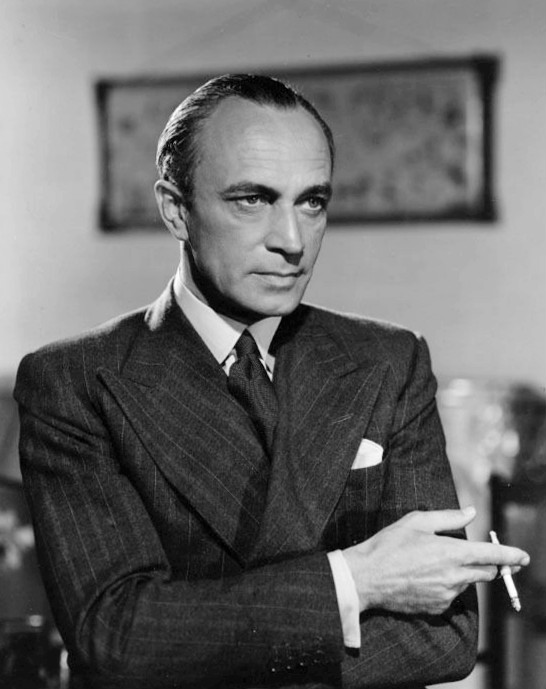
That the Nazi villain Strasser and I were from the same country came like a crushing embarrassment when I was a teenage boomer and watched Casablanca for the first time after its release in West Germany in 1975. Had there been the Internet back then, I could have googled “Major Strasser” and found out that, ironically, he was played by one of the better Germans at the time: Conrad Veidt, who in 1933 publicly denounced the Nazi regime, married his Jewish girlfriend, and left Germany for good, eventually settling on the West Coast. Great story, but hard to come by in the 1970s when it lay buried in some archive in Hollywood or, possibly, the 30-volume encyclopedia you didn’t own.
I am guessing most people in Jonny Buchardt’s Carnival crowd would have had no trouble singing along to “Die Wacht am Rhein” with the Strasser chorus because the Francophobic lyrics were drilled into them at a young age, just like the “Sieg Heil” chant. The song had long been removed from the curriculum during my school days. Instead, youth exchange and city partnership programs between France and West Germany were booming in the 1970s, and we had no trouble admitting that yes, “La Marseillaise” is indeed the better tune.
Henning Schroeder is a professor emeritus who taught in the College of Liberal Arts (German Studies) and the School of Pharmacy at the University of Minnesota. His email address is schro601@umn.edu and his Twitter (X) handle is @HenningSchroed1.
Comments