When I returned to New Orleans in the wake of Hurricane Katrina, I was acutely aware that I was a woman. Families were slow to return and the influx of military and construction workers rebuilding the city and its infrastructure meant that women were severely outnumbered by men. Street lamps were inoperable and police were over extended. Gendered violence was up (see here, here, and here). When I rang in the New Year down in the French Quarter, camo clad military police in Humvees and carrying open automatics patrolled the street—but they did not make me feel safe.
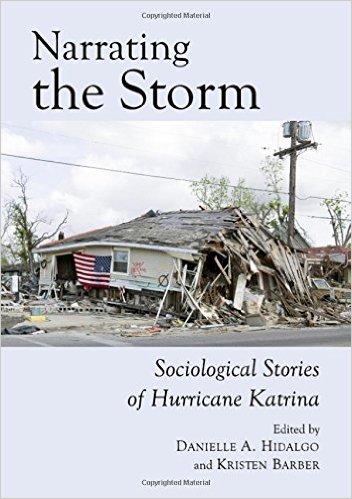
As a sociologist and gender scholar, these experiences made me think more about women in post-disaster spaces. During the ten years since Hurricane Katrina, I have been immersed in the study of gender in the men’s grooming industry. But my new biography shaped my sociological imagination and spurred my now second vein of research. I have explored why it is gender analysis comes second to race and class analyses in disaster work and traced the movement of women as they evacuated and relocated or returned to New Orleans. I am currently working with colleagues at the Centre for Community Disaster Research on analyzing data of single-mothers during the Southern Alberta Flood. Biography, the lived experience, informs scholars’ research trajectories and data, and this is certainly the case with my disaster work.
Sociology is a science, as it is a rigorous and methodical empirical process. Perhaps it is in defense of this that sociologists have a history of prioritizing objectivity as the “gold standard” of research. In the 1980s, though, feminist scholars began a critical conversation about the myth of objectivity, or what Donna Haraway refers to as the “god trick.” The notion that researchers are unattached from their work is only smoke and mirrors and has often silenced already marginalized people. By writing themselves out of their work, many researchers help to veil the fact that very few—privileged white men—were and are speaking for many. It is no coincidence that gender studies grew only as women entered academics, and that scholars of color lead the fight for university race and ethnic studies departments. Diversity of voice, that is the diversity of lived experiences, is key to creating a diverse sociology—or any field for that matter. We need to know who is speaking and move past the dangerous idea that white men represent unbiased authorities—those same authorities whose supposedly objective science led to conclusions like women have smaller brains and thus an inferior intellect than men.
In the classroom I constantly tackle the entrenched god trick in the sciences when students express discomfort or confusion around my requests to write themselves into their papers. “Use the ‘I’,” I say. “Don’t pretend that you don’t exist,“ I tell them. “Why is it that you are interested in this topic? How does being you impact your entrée into your field site? The questions you ask? The data you get? The analysis you do?” In other words, don’t continue the androcentric legacy that the scholar-author should be and can be a disembodied authority and that subjectivity hinders “real” science.
In our article, The Experiential Gap in Disaster Research, my co-author, Tim Haney, and I discuss how the god trick continues to shape sociological work. We argue what is now taken for granted by many gender scholars as obvious but has not yet seriously shaped all fields of sociology: standpoint matters. We should acknowledge and have honest discussions about how researchers’ closeness to or distance from a topic, including disaster, shapes what we know about a phenomenon. In terms of environmental disasters, valuable lessons go missing if we define closeness as bias and bias as bad science.
We sampled and compared work in a modest number of qualitative articles written by researchers who were affected by Hurricane Katrina and others that weren’t. Both did great work, asked important questions, and presented important results. There were a couple of key distinctions, though:
- Scholars who experienced Hurricane Katrina were more likely to focus on localized problems and organizations, while those who didn’t were interested in testing more generalizable theories. This reflects the investment affected scholars have in the wellbeing of their communities.
- There were several cases where the disaster experiences of scholars clearly led to new lines of inquiry, including questions about a women’s studies brain drain from local gender scholars. These scholars worried about what the post-Katrina financial cuts to such programs meant for crucial research on women (see here).
Right now, larger discussions on the epistemic importance of experiential based research is ghettoized in already reflexive-friendly subfields, like gender and ethnic studies. And this is a problem because social scientists in all fields have accepted a significant degree of influence over policy and in litigation cases as experts. That is, we may indeed encounter moments when we can influence the material realities of other people; and so we have a responsibility to be honest about how this influence is unequally distributed among scholars and may continue the colonization of marginalized groups struggling against allegations of bias to be considered experts on their own lived experiences and community needs.

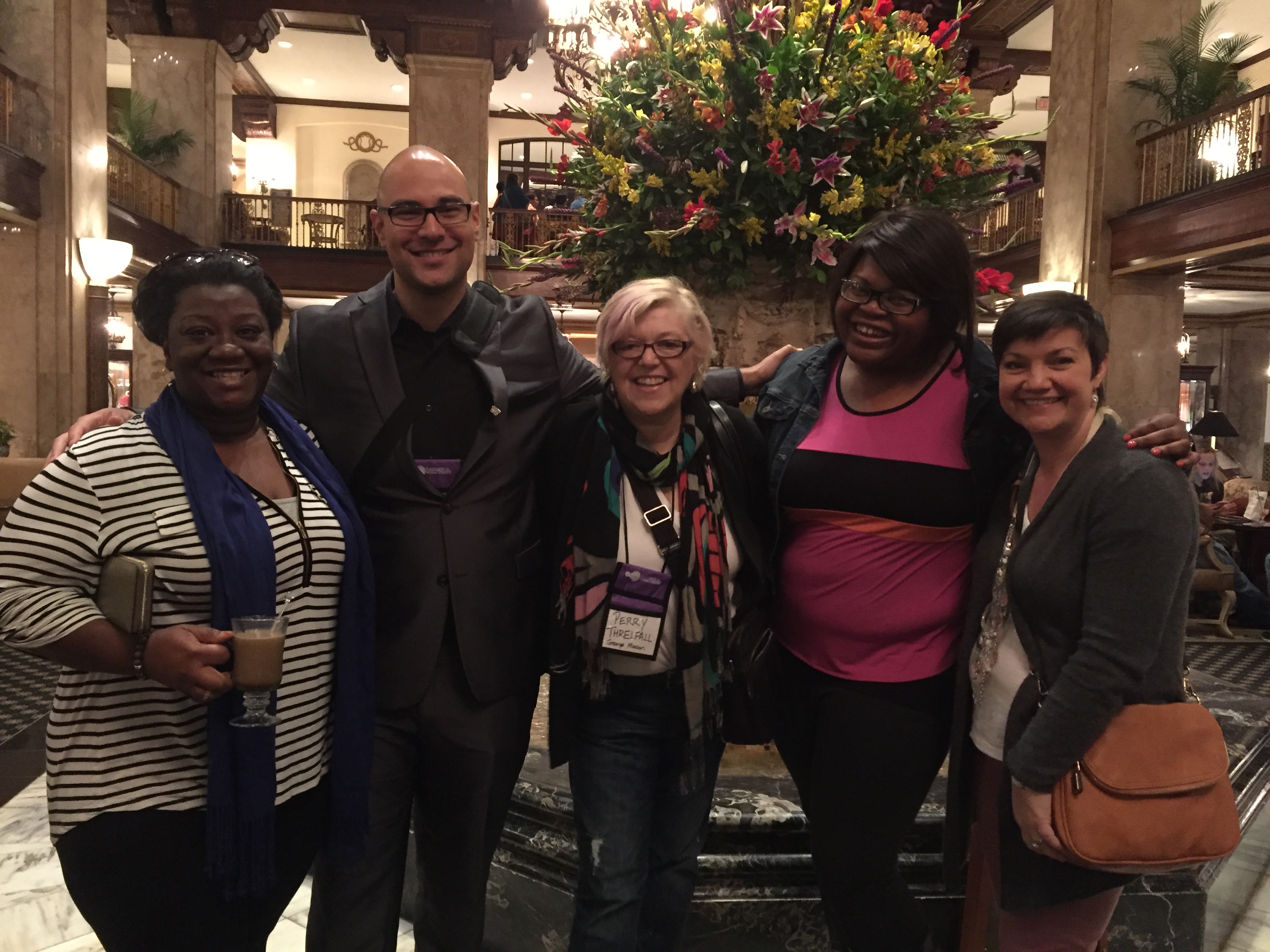 So, back to my first SWS winter meeting. It was amazing, of course. I felt like an academic celebrity, having many people – some whom I knew, many whom I did not – express their appreciation for my blog, Conditionally Accepted. Admittedly, with such visibility as an intellectual activist, there is a lingering twinge of the mentality I was forced to adopt in grad school: “what about my research?” I thought privately. Obviously, these colleagues care about my research, as well. But, I found that the meeting, unlike other conferences I’ve attended, was just as much about research as it was about feminism, activism, and building a community. At what other conference would I feel torn between attending a session on feminist public sociology (hosted by the fine folks at
 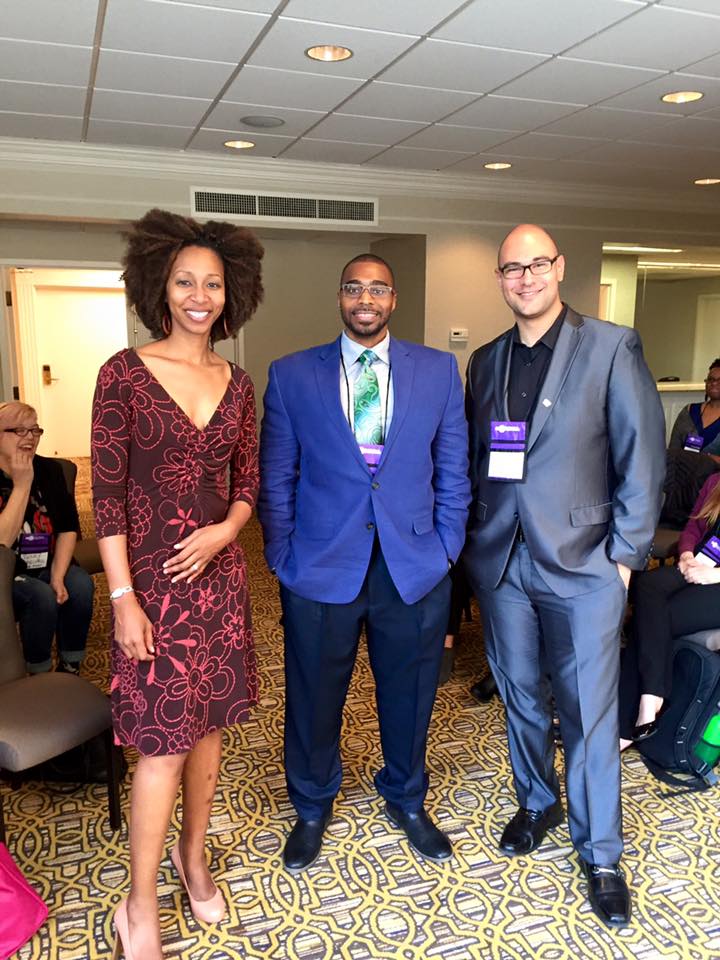 What I take from life’s lessons is that one can really benefit from looking just a little bit further to find what one needs. My program devalued research on my communities – Black and LGBTQ. But, had I attended just one SWS conference, I would have found that there exists an academic space where that work is valued without question. My program sought to “
 Eric Joy Denise is a Black queer feminist sociologist and intellectual activist, and an Assistant Professor of Sociology at the University of Richmond. Their research focuses on the impact of prejudice and discrimination on the health, well-being, and worldviews of oppressed groups, especially those marginalized by multiple systems of oppression (e.g., LGBTQ people of color). They are the founder and editor of the blog,



 don’t feel constrained by their mission to help, but rather are moved to choose jobs based on their individual intellectual curiosities. I am confident that if giving back is in their heart, then they will find a way to help people by becoming social workers, teachers, attorneys, doctors, engineers, chemists, or graphic designers. So, my dear students, be selfish. And while you are at it, do your best in whatever field you choose. I’m sure you will positively impact a life or two or more along the way.
 The 2016 Oscar nominations were just announced. This is the second year in a row that all 20 acting nominees are white–prompting the hashtag #OscarsSoWhite.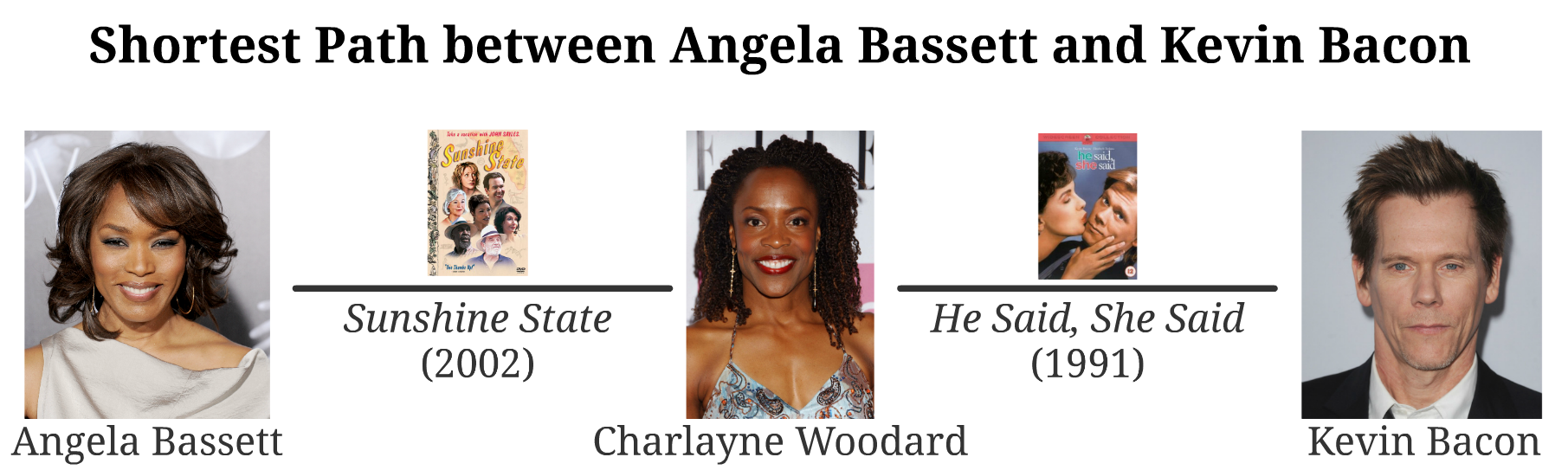
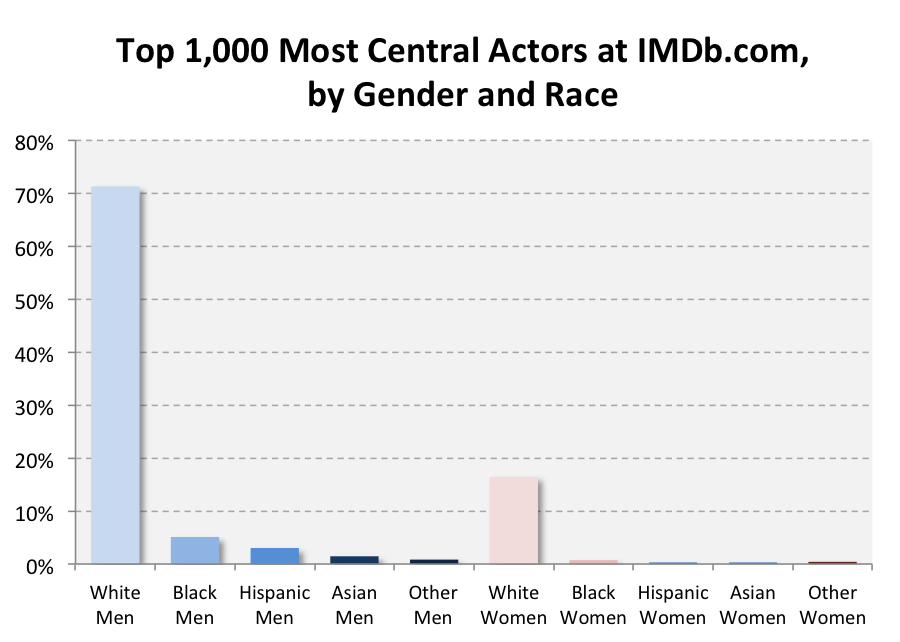 It’s a powerful way of saying that Hollywood continues to be a (white) boy’s club. But they’re also an old white boy’s club as well. I also collected data on birth year. And while the 50’s were the best decade to be born in if you want to be among the 1,000 most “central” actors today, the data for the men skews a bit older.** This lends support to the claim that men do not struggle to find roles as much as women do as they age–which may also support the claim that there are more complex roles available to men (as a group) than women.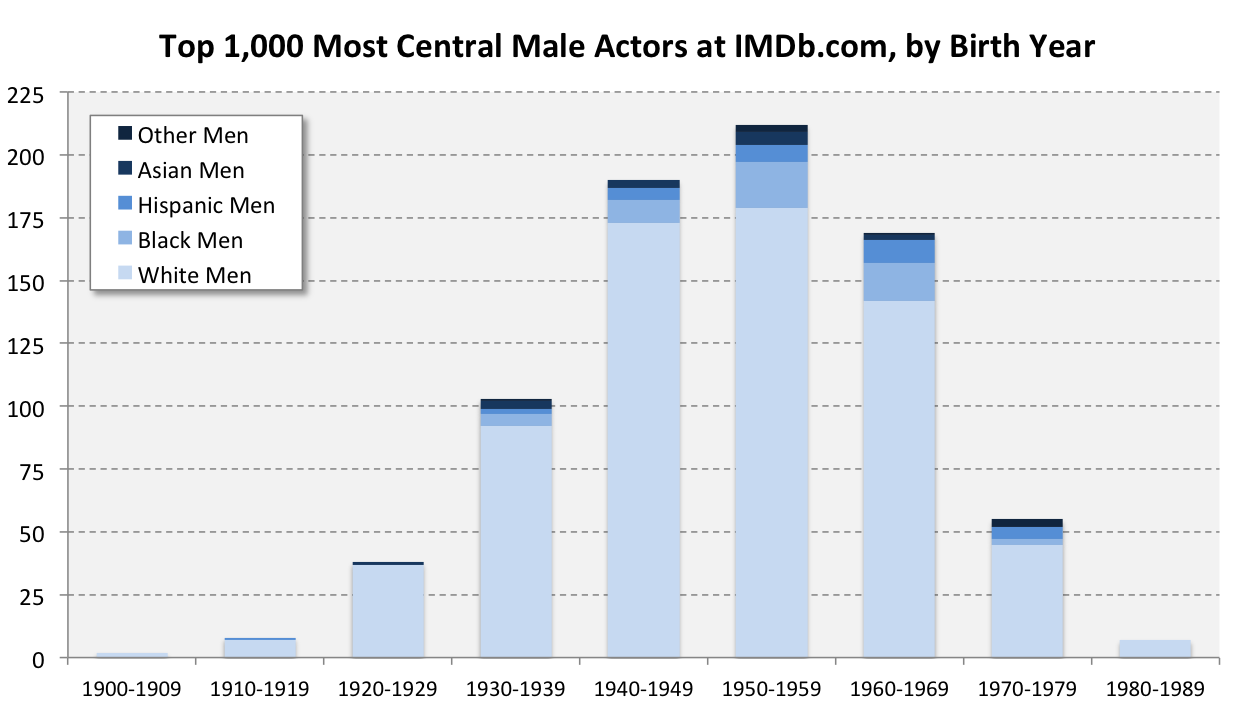
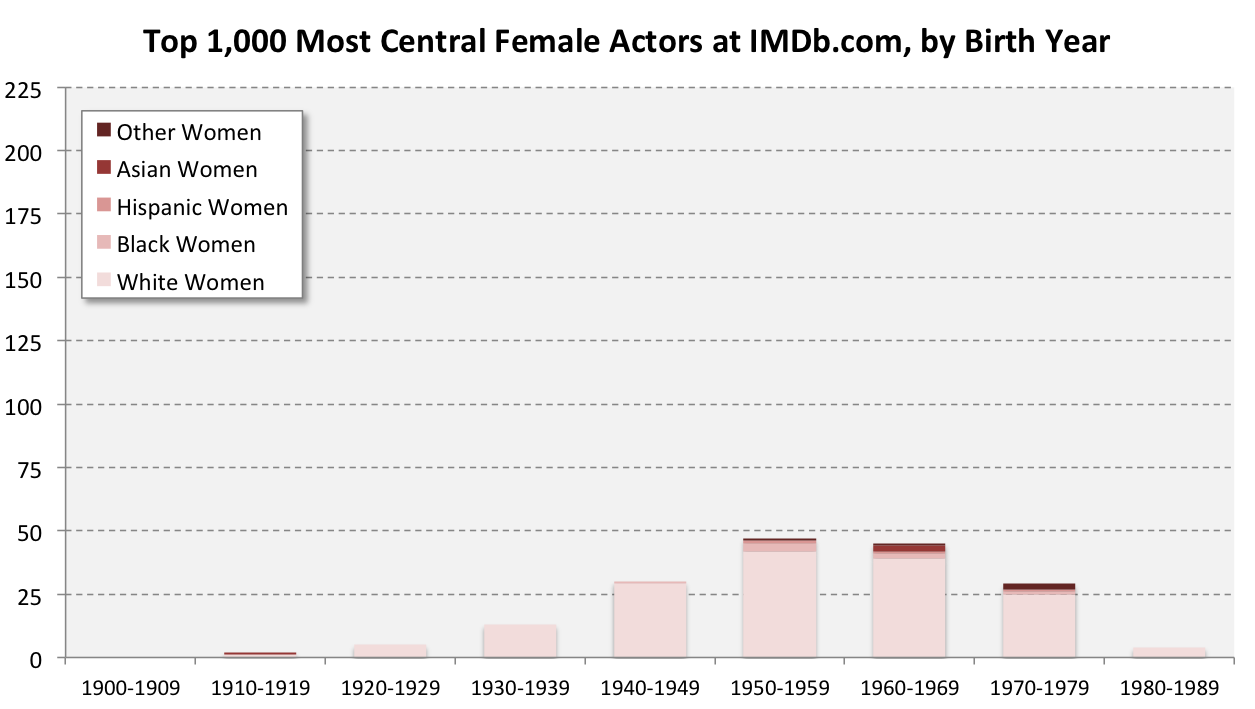 The other things I noticed quickly were that: (1) Hispanic and Asian men among the top 1,000 actors list are extremely likely to be typecast as racial stereotypes, and (2) there are more multiracial women among the top 1,000 actors than either Hispanic or Asian women.