myspace

mass exodus

Over the past few months there’s been a lot of hoopla around the “mass exodus” of teens from Facebook, with particular reference to Facebook’s decreasing cache of cool. Despite several refutations to the mass-exodus hypothesis, people—academics and non-academics alike— still ask me all the time: “So Jenny, what’s up with all the kids leaving Facebook? I hear it’s not cool anymore.”

Now let me be clear; I am not cool. I hold no pretense of being cool, and hence have no business making any sort of objective hipness-rating on anything. Seriously. I just used the word “hip.” I am, however, a social scientist, and I want to take a moment to talk about some data—an area in which I am qualified. more...
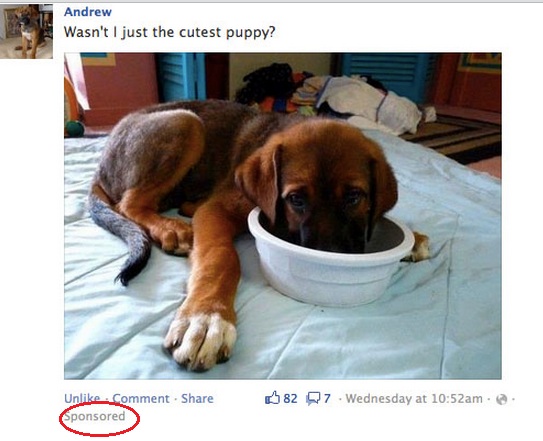

c/o Facebook.com/Help “Where do my promoted posts show up on Facebook? What do they look like?”


Social media blurs private and public, production and consumption, play and work, physical and digital. There. I just saved myself about 500 words worth of work.

Now with this blurring framework in mind, let us take a look at Facebook’s newest feature:  Pay-to-Promote posts. more...

Nothing like a nice post-gentrification stoll!

As if we needed more examples to demonstrate that ‘the digital’ & ‘the physical’ are part of the same larger world, it seems there’s no end to the applicability of demographic metaphors to trends in social media. I wrote about App.net and “white flight” from Facebook and Twitter last month, so you can imagine how my head broke on Monday when I first heard about “New MySpace.” My first question—after, “wait, what?”—was, “Is this like when the white people start moving back into urban cores to live in pricey loft conversions?”

I didn’t do a detailed overview of danah boyd’s (@zephoria) work on MySpace, Facebook, and white flight last time, so I start with that below (though I recommend that anyone interested in this topic check out boyd’s very readable chapter in Race After the Internet, which you can download here [pdf]). I then look at some of the coverage of New MySpace this week to make the argument that there are some strong parallels between the site’s impending “makeover” and the “urban renewal” efforts sometimes called gentrification or regentrification.

more...

In each of the past two Theorizing the Web conferences, I have been present to see an audience member—concerned about the fleeting popularity of online platforms and rapid technological development— question the pervasive use of Facebook as a study site. This is an important question, and one to which panelists (including myself) have not adequately responded.  Absent the pressure of probing eyes and a ticking clock, I work here to craft the kind of response that the question deserves.

more...

I actually discovered it after the project was over. The duckies, the sports racers, world-wide sandwiches, and the ugly MySpace profiles were all finished projects that had been immortalized in this strange, eclectic mix of abruptly (but expertly) edited videos. I don’t remember how I found out about “The Show with Ze Frank,” but it was probably on the recommendation of some podcast host. The web site that housed all of the videos for “The Show” was very strange for two reasons- 1) it had rubber duckies of various sizes, colors, and shapes and; 2) It was not Youtube. Today, the site has undergone only minor changes. The proprietary video player has now been replaced with a blip.tv player and there’s a button on the right that allows you to “like” every video on Facebook. “The Show” drew thousands of viewers before Youtube was the go-to place for video on the Internet. The episodes were shared between dedicated fans while Facebook was only available to people with certain college email addresses. But what is, truly remarkable about “The Show” is that you have either stopped reading this and started watching your favorite videos all over again, or you have never heard of this before but the video above has instant resonance with you. It’s playful, but incredibly honest at the same time. It’s simultaneously goofy and sincere. It’s the ur comedy viral video show and after a very successful run on Kickstarter, it’s coming back. more...

The power of social media to burrow dramatically into our everyday lives as well as the near ubiquity of new technologies such as mobile phones has forced us all to conceptualize the digital and the physical; the on- and off-line.

And some have a bias to see the digital and the physical as separate; what I am calling digital dualism. Digital dualists believe that the digital world is “virtual” and the physical world “real.” This bias motivates many of the critiques of sites like Facebook and the rest of the social web and I fundamentally think this digital dualism is a fallacy. Instead, I want to argue that the digital and physical are increasingly meshed, and want to call this opposite perspective that implodes atoms and bits rather than holding them conceptually separate augmented reality.

In a 2009 post titled “Towards Theorizing An Augmented Reality,” I discussed geo-tagging (think Foursquare or Facebook Places), street view, face recognition, the Wii controller and the fact that sites like Facebook both impact and are impacted by the physical world to argue that “digital and material realities dialectically co-construct each other.” This is opposed to the notion that the Internet is like the Matrix, where there is a “real” (Zion) that you leave when you enter the virtual space (the Matrix) -an outdated perspective as Facebook is increasingly real and our physical world increasingly digital.

I have used this perspective of augmentation to critque dualism when I see it. For instance, more...

On Jan. 8, 2011, Jared Lee Loughner allegedly shot Congresswoman Gabrielle Giffords (D-AZ) and 19 others resulting in 6 fatalities.  This event has drawn attention to a number of new and important roles social media has come to play in our society, including how information is gathered, changed political rhetoric, and how these sites handle the profiles of those involved in high-profile tragedies.

Profiling the Suspect
Media coverage (i.e., cable, network, radio, and newspapers) of the event represented a broader trend in contemporary journalism: almost immediately, news outlets began to piece together a profile of this previously unknown figure using almost exclusively Loughner’s social media profiles (i.e., Facebook, Myspace, Youtube and, most recently, online gaming discussion boards).  Even though his MySpace and Facebook profiles were taken down by the site, screenshots of the sites are available, including one showing a photo of gun on a US History textbook as a profile picture.

The digital documentation of our lives via social media offers an easily-accessible, autobiographical source for journalists and anyone else who is interested. Yet, there is a risk in basing our impressions solely off of this information.  Loughner’s image of himself is certainly not objective and may very well be inaccurate.  News outlets, however, face pressure to “get the scoop” on the story, so they tended to report on Loughner based heavily on this information, as opposed to interviewing a range of people in his life to construct a more holistic perspective.

The Post-Shooting Political Debate
In the wake of the tragedy, a debate emerged over the intensity and tone of contemporary political rhetoric.  The political right in general, and Sarah Palin in particular, more...

YouTube Preview Image

Helvetica, the 2009 documentary about the meteoric rise of a Modern minimalist typeface, chronicles the recent history of design theory and describes a continuing clash between hyper-functional Modern design and expressive post-Modern (“grunge”) design.  Interestingly, the design trends that characterize the field of typeface design seem to directly parallel the history of Web design.

Today, we take for granted the simple, sleek minimalism that has come to define the Web.  It is evidenced in the two-tone, single-logo body of the iPad; the bold, spare, and instantly recognizable typeface of the Facebook “f” logo; or the isomorphic convergence of browsers toward an uncluttered and relatively standardized interface.  Of course, various products have strayed from Silicon Valley’s prevailing design standard of Modernist minimalism, but the dominance of this design aesthetic is only further revealed by the ridicule that these companies and products receive.

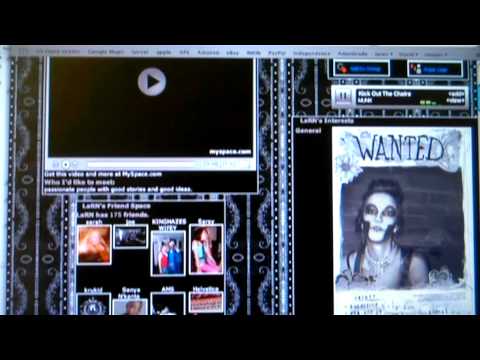
The dominance of Modernist minimalism on the Web was not always a given.  For example, even at its peak popularity, Myspace afforded users a wide range of customizable with respect to this individual profiles.  In fact, profiles on Myspace continue to vary so widely that there is hardly any coherence to the site as a whole.  But, users seem to enjoy the freedom to customize their own profiles.  Beyond the content, the design itself becomes a medium of self-expression.  If you are an outward and expressive person, be sure to have music blaring when a visitor lands on the page.  If you are the dark and brooding type, exhibit this by selecting font and background colors from the bruise palate.  These observations, no doubt, echo the wisdom of Marshall McLuhan, who famously told us that “the medium is the message.” more...

The rant that anything digital is inherently shallow, most famously put forth in popular books such as “The Shallows” and “Cult of the Amateur,” becomes quite predictable. Even the underlying theme of The Social Network movie was that technology trades the depth of reality for the shallowness of virtuality. I have asserted that claims about what is more “deep” and “real” are claims to truth and thus claims to power. This was true when this New York Times panel discussion on digital books made constant reference to the death of depth and is still true in the face of new claims regarding the rise of texting, chatting and messaging using social media.

Just as others lamented about the loss in depth when moving from the physical to the digital word, others are now claiming the loss of depth when moving from email to more instant forms of communication. E-etiquette writer Judith Kallos claims that because the norms surrounding new instant forms of communication do not adhere as strictly to grammatical rules, the writing is inherently “less deep.” She states that

We’re going down a road where we’re losing our skills to communicate with the written word

and elsewhere in the article another concludes that

the art of language, the beauty of language, is being lost.

There is much to critique here. Equating “depth” to grammatical rules privileges those with more formal education with the satisfaction of also being “deeper.” Depth is not lost in abbreviations just as it is not contained in spelling or punctuation. Instant streams of communication pinging back and forth have the potential to be rich with deep, meaningful content. more...

Many worry about the immortality of our behavior on social network sites like Facebook. Regrettable behaviors can become Facebook Skeletons in your digital closet. However, I have argued before that what is equally true is that our online presence is extremely ephemeral. Status updates speed by, perhaps delighting us in the moment, but are quickly forgotton. The innundation of photographs of yourself and others is so heavy that particular moments often become lost in the flow. Our digital content may live forever, but it does so in relative obscurity. Just try searching for that witty status update your friend made on Facebook last month. It is this ephemerality of our online social lives that makes this art/design project by Siavosh Zabeti so interesting. When our Facebook lives are placed in a book, our socialization grasps at the tactile permanence of the physical.

When Facebook becomes a book from Siavosh Zabeti on Vimeo.

If books like this became popular, would we create our Facebook presence any differently given this new, more physical medium? more...