
community organizing


monkey-tiger-2

What Karl Marx’s “The Communist Manifesto” was to the 19th Century, Gene Sharp’s “From Dictatorship To Democracy”  is to our globalized era.The book has spread like a prairie fire since it was written 20 years ago and has been translated by activists into more than 30 languages. It has become the bible of nonviolent revolution in the Ukraine, Tunisia, Eygpt, Serbia, Iran, Burma, Georgia, Belarus, and numerous other locales.

In his manifesto, Sharp quotes a 14th Century parable by Liu-Ju:

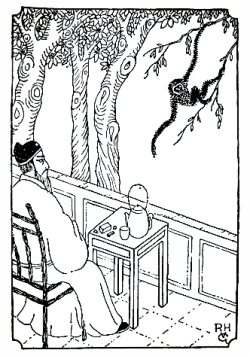
“In the feudal state of Chu an old man survived by keeping monkeys in his service.  The people of Chu called him “jugong” (monkey master). Each morning, the old man would assemble the monkeys in his courtyard, and order the eldest one to lead the others to the mountains to gather fruits from bushes and trees. It was the rule that each monkey had to give one-tenth of his collection to the old man.  Those who failed to do so would be ruthlessly flogged.  All the monkeys suffered bitterly, but dared not complain.

“One day, a small monkey asked the other monkeys: ‘Did the old man plant all the fruit trees and bushes?’  The others said:  ‘No, they grew naturally,’ The small monkey further asked:  ‘Can’t we take the fruits without the old man’s permission?’ The others replied: ‘Yes, we all can.’ The small monkey continued: ‘Then, why should we depend on the old man; why must we all serve him?’

“Before the small monkey was able to finish his statement, all the monkeys suddenly became enlightened and awakened.

“On the same night, watching that the old man had fallen asleep, the monkeys tore down all the barricades of the stockade in which they were confined, and destroyed the stockade entirely.  They also took the fruits the old man had in storage, brought all with them to the woods, and never returned. The old man finally died of starvation.”

Yu-li-zi says, “Some men in the world rule their people by tricks and not by righteous principles. Aren’t they just like the monkey master? They are not aware of their muddle-headedness. As soon as their people become enlightened, their tricks no longer work.”


For most sociologists, the wisdom of Isaiah Berlin is unknown. If one knows anything about him, it is probably the title of his famous essay on Tolstoy, “The Hedgehog and the Fox.” The title comes from a fragment written by the ancient Greek poet Archilochus:

The fox knows many things,

But the hedgehog knows one big thing

For autobiographical reasons, one of my favorite Berlin essays is “Political Judgment.” My appreciation of Berlin came late in life, more as a confirmation of lessons learned than as new revelations. In 1967, I dropped out of the University of Minnesota and spent the next six years as itinerant movement activist. As an aspiring hedgehog, I wanted to know one big thing. The Sixties abruptly expired in 1973. I began a long, and often painful, apprenticeship as a grassroots organizer. I started to master my craft only after confronting the implications of what Max Weber called “inconvenient facts.” In spite of myself, I was becoming a fox.

“What is it to have good judgment in politics?” With that simple question, Berlin proceeds to elucidate the practices of a fox in public life. In addition, his analysis goes a long way toward explaining why the academic left is so ineffectual outside the ivory tower:

To seize a situation in this sense one needs to see, to be given a kind of direct, almost sensuous contact with the relevant data . . . Above all this is an acute sense of . . . what the result is likely to be in a concrete situation of the interplay of human beings and impersonal forces.

Dear Tabitha,

Your description of Winter City demonstrates the fire in the belly that a good organizer needs. You are properly outraged. However, what you wrote in the second part of your message is why you will become a great organizer. A heart without a head leads to many defeats and burnout. A head without a heart leads to a manipulator of people. A heart and a head in tandem is the formula for a lifetime of successful struggle. Authentic passion and strategic thinking are the balance you are now seeking. Remember, many of us went through years of apprenticeship, making every mistake in the book. Then one day, it just jells and you have the chops to take on the impossible battles–and emerge victorious.
Fondly,
Monte

MONTE BUTE ELECTED AS IFO ACTION COORDINATOR

by Russ Stanton, IFO Director of Government Relations

The Inter Faculty Organization (IFO)  Board of Directors has elected Monte Bute to the position of Action Coordinator. The IFO represents faculty at Minnesota’s seven state universities. The Action Coordinator will chair the Action Committee and:

  • Help publicize the valuable work and efforts of the IFO and its members to various external constituent groups.
  • Engage in efforts to build solidarity and community within the IFO and its membership and with various external groups.
  • Coordinate information flow between faculty and the Negotiating Team regarding issues and progress of negotiations.
  • Coordinate actions that will move the negotiation process on and encourage settlement.
  • Keep the Negotiating Team informed of action plans and be receptive to input from the Negotiating Team; and
  • Work with the GRC to encourage efforts at writing letters to legislators and the local press.

Monte Bute is an associate professor of sociology at Metropolitan State University in Minnesota. His opinion essays appear on the editorial pages of daily newspapers in the Twin Cities. Bute also frequently testifies on higher education issues before the Minnesota Senate and House of Representatives.

Bute began teaching at Metropolitan State as a community faculty member in 1984. He finally finished a long-delayed B.A. at the university in 1991. After a 20-year career as a community organizer, he realized that his next mission in life was teaching. To fulfill that calling, Bute began graduate school rather late in life. Professor Bute has been a prolific writer over the years, publishing 65 articles in scholarly publications and the popular press.

Sociologists of Minnesota (SOM) gave Bute the Distinguished Sociologist award in 2004. Bute has received Metropolitan State University’s Outstanding Teacher award and the Excellence in Teaching award. He has also been given awards by Minneapolis Community and Technical College, the Jobs Now Coalition, and the Job Training Partnership Association.

Professor Bute is a past president of both Sociologists of Minnesota and the National Council of State Sociological Associations (NCSSA). Bute has been the editor of Sociograph, associate editor of the Sociological Imagination, and has served on the editorial board of Contexts, a journal of the American Sociological Association. He has been a fellow of the National Endowment for the Humanities (NEH) and the Humphrey Institute of Public Affairs, University of Minnesota.


Some quixotic members of my profession have fostered an image of the public sociologist as a romantic swashbuckler—the sociologist as community organizer, public policy guru or “organic intellectual.” In an article appearing in Academic Matters and Inside Higher Ed, a Canadian sociologist suggests a more realistic alternative to these charades. Robert Brym’s “Why I Teach Intro” is an elegant endorsement of teaching as a genre of public sociology.

The truth is that most sociologists who promote these activist fantasies are wannabes. Self-delusion, however, is not limited to this discipline; these reveries are perhaps even more widespread in departments of literature and cultural studies. When I hear folks who have spent their entire adult lives in academic monasteries prattling on about organizing and advocacy, I recall Marx’s nostalgic utopia:

While in communist society, where nobody has one exclusive sphere of activity but each can become accomplished in any branch he wishes . . . it [is] possible for me to do one thing to-day and another to-morrow, to hunt in the morning, fish in the afternoon, rear cattle in the evening, criticize after dinner, just as I have a mind, without ever becoming a hunter, fisherman, shepard or critic.

Becoming a community organizer or a public policy advocate is not a hobby. Last week I spent two days meeting with legislative leaders. Over the weekend, I exchanged e-mails about legislative strategy with the Speaker of the House. Last evening I testified at a legislative town hall meeting. Yet I harbored no illusion that I was practicing a profession. I was merely being a good citizen—and, by my lights, a public sociologist. I encourage sociologists to engage in citizenship whenever and wherever the opportunity presents itself. However, do not delude yourself by conflating the practice of citizenship with the practice of professional organizing.

Before becoming an academic, I spent 20 years mastering the craft of community organizing. I spent those years learning a skill set: mentoring leaders, building organizations, researching issues, developing strategies and tactics, speaking and writing for public audiences, and exercising political moxie. Drawing upon the work of the philosopher Hubert Dreyfus, I now chart that half of my adult life as an experiential learning process, a slow and anxiety-ridden progression from novice to master.

Dreyfus has spent nearly 30 years refining a typology of skill acquisition that has applicability to everything from basketball and chess to professional practice and intellectual dexterity  (On the Internet, 2nd ed.). He structures the learning process into a useful continuum of six stages. Growth is a gradual transition from rigid adherence to rules to an intuitive mode of reasoning that resembles Aristotle’s concept of “practical wisdom.”

The first three stages—novice, advanced beginner, and competence—are generally accomplished by instruction and practice. To successfully advance through these three stages requires only the limited commitment of a layperson. This first package of skill acquisition describes the civic repertoire of a reasonably competent citizen. To move through the second level of acumen—proficiency, expertise, and mastery—requires a deep allegiance to craft and an apprenticeship to one or more masters.

In other words, if you really want to be a community organizer or an “organic intellectual,” give up tenure, find a mentor or two, and embed yourself in a couple of grassroots organizations for a decade or so. If not, then perhaps a more humble definition of public sociologist is in order.

While there are a variety of venues for this modest rendition of public sociology, Michael Burawoy has identified the one skill that best suits the vast majority of sociologists seeking a more public practice: “Students are our first public.” Anyone with aspirations as a public sociologist should first dedicate themselves to the craft of teaching as a vocational calling. Dreyfus provides a useful guide for those perplexed about the requisite skill acquisition.

A professor of sociology at the University of Toronto, Brym has made a poignant case for humility when professing public sociology—becoming a masterful teacher is virtue enough.

A version of this essay first appeared in Academic Matters.

Why I Teach Intro

By Robert Brym

You probably recall that in George Orwell’s 1984 the authorities bring Winston Smith to a torture chamber to break his loyalty to his beloved Julia. Perhaps you do not remember the room number. It is 101.

The modern university institutionalizes Orwell’s association of the number 101 with torture. Faculty and students often consider introductory courses an affliction.

I suspect that colleagues award teaching prizes to 101 instructors partly as compensation for relieving themselves of the agony of teaching introductory courses—a suspicion that first occurred to me last year, when I shared an award with the University of Toronto’s Centre for the Study of Pain, much praised for its relief of suffering.

Why, then, do I teach introductory sociology? My colleagues have been too polite to remind me of the alleged downsides, but they are well known. First, teaching an introductory course is often said to be a time-consuming activity that interferes with research and writing—the royal road to prestige, promotion, and merit pay. Second, it is reputedly boring and frustrating to recite the elementary principles of the discipline to young students, many of whom could not care less. Third, the 101 instructor performs supposedly menial work widely seen as suited only to non-tenured faculty members, advanced graduate students, and other personnel at the bottom rung of the academic ladder. Although I understand these arguments, I do not find them compelling. For me, other considerations have always far outweighed them.

In particular, teaching intro solves, for me, the much-discussed problem of public sociology. Some sociologists believe that working to improve human welfare is somehow unprofessional or unscientific. They hold that professional sociologists have no business drawing blueprints for a better future and should restrict themselves to analyzing the present dispassionately and objectively. However, to maintain that belief they must ignore what scientists actually do and why they do it. Sir Isaac Newton studied astronomy partly because the explorers and mariners of his day needed better navigational cues. Michael Faraday was motivated to discover the relationship between electricity and magnetism partly by his society’s search for new forms of power.

Today, many scientists routinely and proudly acknowledge that their job is not just to interpret the world but also to improve it, for the welfare of humanity; much of the prestige of science derives precisely from scientists’ ability to deliver the goods. Some sociologists know they have a responsibility beyond publishing articles in refereed journals for the benefit of their colleagues. One example is Michael Burawoy’s 2004 presidential address to the American Sociological Association, a gloss on Marx’s “Theses on Feuerbach”, in which Burawoy criticized professional sociologists for defining their job too narrowly and called for more public sociology. Still, many sociologists hold steadfastly to the belief that scientific research and public responsibility are at odds—largely I suspect, because they are insecure about whether their research is really scientific at all, so feel they must be more papist than the pope.

Setting such anxieties aside, one is left with the question of how to combine professional pursuits with public responsibility. One option is conducting research that stimulates broad discussion of public policy. Some of my colleagues study how immigration policy limits the labour market integration and upward mobility of immigrants; others how family policy impairs child welfare; and still others how tax and redistribution policies affect inequality. To the degree they engage educated citizens in discussion and debate on such important issues, they achieve balance between their professional and public roles.

I have chosen a different route to public responsibility. I have conducted research and published for a professional audience, but I have also enjoyed the privilege of addressing hundreds of thousands of members of the public over the years by teaching Sociology 101 in large lecture halls and by writing textbooks for intro students in several countries. As Orwell wrote, communicating effectively to a large audience may be motivated by aesthetic pleasure and egoistic impulses. Who among us does not want to write clear and compelling prose and to be thought clever for doing so? But in addition, one may want to address a large audience for what can only be deemed political reasons.

In 1844, Charles Dickens read his recent Christmas composition, The Chimes, to his friend William Charles Macready, the most famous Shakespearean actor of the day. Dickens later reported the reading to another friend as follows: “If you had seen Macready last night—undisguisedly sobbing, and crying on the sofa, as I read—you would have felt (as I did) what a thing it is to have Power.” I understand Dickens. I, too, relish the capacity to move and to sway a large audience to a desired end because it signifies that my influence will not be restricted to a few like-minded academics and that I may have at least some modest and positive impact on the broader society. I find most students burn with curiosity about the world and their place in it, and I am delighted when they tell me that a lecture helped them see how patterned social relations shape what they can become in this particular historical context. On such occasions I know that I have taught them something about limits and potential—their own and that of their society. Teaching intro thus allows me to discharge the public responsibility that, according to Burawoy and others, should be part of every sociologist’s repertoire.

In Marx’s words, “it is essential to educate the educators”—especially those who persist in believing that teaching intro bores, frustrates, interferes, and suits only the academic proletariat.