
culture

Photo by COD Newsroom, Flickr CC

Of the many so-called crises in higher ed, University of Wisconsin-Superior recently announced its plan to suspend 25 academic programs (including sociology). Administrators claimed their decision is part of a larger effort in higher education institutions to decrease the time students spend in college in order to increase graduation rates and lessen debt for low-income, first-generation students. Social science research, however, suggests curriculum shifts may not address first-generation students’ needs. 

First-generation students are more likely to come from low-income minority families, delay entry into college, attend college part-time, and work full-time while in school — all characteristics that reduce the likelihood of completing a degree. Only 27 percent of first-generation college students at four-year institutions graduate in four years, compared to 42 percent of students whose parents graduated from college. And only five percent of low-income, first-generation students who begin at two-year community colleges completed a bachelor’s degree within six years. Further, first generation students often have limited access to the “cultural capital” that privileges wealthier students.
The completion agenda — an effort to increase completion rates, especially among community college students — aims to compensate for differences in cultural capital by making graduation requirements clear and accessible. It can also include limiting course or curricular options in an attempt to reduce “wasted” credits. But simply reducing the number of credits taken does not address the fundamental challenge of how to to pay for both tuition and basic needs, a major reason why students drop courses, take semesters off, and leave school. In addition, a completion agenda may limit low-income, first-generation students to low-quality programs, while more prestigious institutions offer privileged students broad selections that are transferable across many professions.


Photo by taylormackenzie, Flickr CC

Church bells ring in England, as the country prepares for the royal wedding between Prince Harry and American actress Meghan Markle next spring. While royal weddings have long stirred excitement among local and foreign regions alike, commentators have been quick to speculate how Markle’s identity as a biracial woman – African American mother and white American father – might shape the future of the British monarchy. The speculation surrounding Markle’s racial identity highlights the complexities of being multiracial in an increasingly diverse, yet still discriminatory, global world. Sociological studies can help us better appreciate how mixed-race individuals navigate the societal perceptions of their identities.

The recognition and visibility of mixed-race individuals and identities has grown in recent decades, yet the histories, meanings, and responses to mixed racial identities vary considerably within and across international contexts. While the U.S. primarily emphasizes “bi-racial” as rooted in a white and nonwhite racial system, in Latin America, mixed-race identities fall within a more flexible “tri-racial”system. For instance, individuals from Brazil and the Caribbean trace their mixed-race origins back to colonial conquest centuries ago, and thus mixed-race people have been considered a central part of the national identity in these locations. Understanding these differences further our understandings of how race is socially constructed.
While some mixed-race people embrace a multiracial identity, others use strategies to appear as monoracial. For black-white biracial individuals, this means attempting to appear as either white or black. Individuals in one U.S. study reported tanning, combing their hair, speaking, and dressing in a certain way to appear as more white or black depending upon the potential social gains in any given context. Nevertheless, as we might expect from the experiences of other people of color, mixed-race individuals often face mistreatment from whites and non-whites alike for their appearance. Biracial women, for example, report receiving frequent mistreatment from non-biracial black women, who often accuse them of thinking they are “all that” because of their light skin and hair texture.
In some contexts, multiracial individuals are preferred above whites. And dating is no exception. Within romantic relationships, sexual and dating partners tend to exoticize biracial individuals. For some, perceived racial ambiguity makes biracial individuals ideal for casual sexual encounters, while others are sought after because their partners believe they will make beautiful babies. One recent study suggested that mixed-race women may be more likely to self-identify as “multiracial” than mixed-race men because the multiracial identity is more associated with traditional perceptions of feminine beauty. Despite individual and systemic preferences for biracial people, this preference often comes at a cost of commodifying their bodies, and many cannot escape discrimination that have historically oppressed people of color.
Photo by Chase Carter, Flickr CC

Originally published Oct. 31, 2017

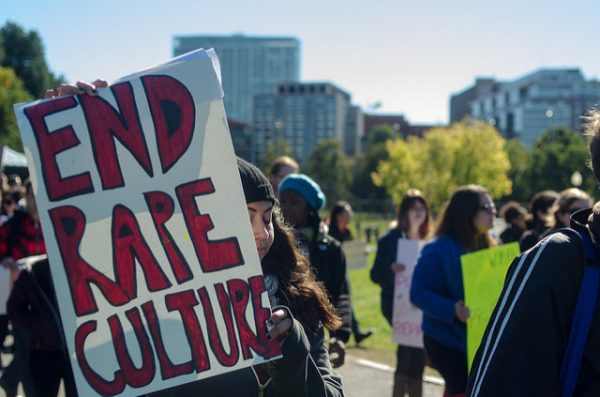
In recent weeks, over 500,000 women and men shared the hashtag #MeToo in response to the following social media tweet: “If all the women who have been sexuallly harrassed or assaulted wrote ‘Me too.’ as a status, we might give people a sense of the magnitude of the problem.” Some participants only shared the hashtag, while others revealed deeply personal stories of sexual harassment in the workplace, child sexual abuse, and sexual assault on college campuses, to name a few. Initially started by activist Tarana Burke, this reinvigoration of the Me Too campaign comes amidst numerous sexual assault and harassment claims against several high status men, including Hollywood mogul Harvey Weinstein, musical artist Nelly, and most recently, House of Cards actor Kevin Spacey. Sexual harassment and sexual assault are certainly not new phenomena. Yet, these campaigns that provide space for survivors to address victimization may signal a renewed public effort to address rape culture – a struggle that social scientists have spent decades trying to resolve.

Consequences of Sexual Violence

Sexual violence frequently results in several psychological and financial consequences for victims and survivors throughout the life course. Many report feelings of depression and posttraumatic stress disorder following the incident, and the trauma that results from sexual violence may alter how victims view themselves. Kaitlyn Boyle argues that assault characteristics like physical injury, perpetrator force, and physical resistance shape one’s self-identification as a “victim” or a “survivor.” Sexual violence may also impact women’s career trajectories. For example, many women that are sexually harassed in the workplace are more likely than non-harassed women to change jobs earlier in their career in order to avoid their harassers and/or employers who failed to fully investigate their claims. These moves often resulted in increased financial hardship.


Defining Rape Culture and Dismantling Masculinity

Feminist sociologists have long pointed out that sexual violence doesn’t simply stem from individual sexual impulses — it emerges as a consequence of masculine ideals that justify men’s aggression and encourage women’s subordination. This is in large part due to rape culture. In their important study on college fraternities and sexual assault, A. Ayres Boswell and Joan Spade define rape culture as “a set of values and beliefs that provide an environment conducive to rape” (133).
Under popular rape myths that suggest “guys will be guys” and “bros before hos,” some men within highly male-dominated peer groups, such as fraternities and athletic teams, engage in acts like harassment and gang rape to connect with and impress their male peers. And while there are many men who openly oppose sexual violence by distancing themselves from perceived rapists and claiming they are “good guys,” they may also reinforce cultural rape myths that only stereotypical “bad guys” — strangers, physically violent individuals, and minority men — commit rape. This ultimately works to cover up the more subtle forms of everyday sexual violence.
Photo by Quinn Dombrowski, Flickr CC

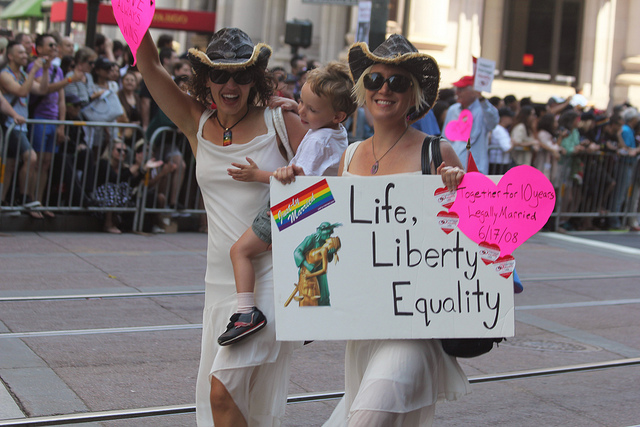
LGBT families are increasingly visible in public life. From famous celebrity same-sex parents like Neil Patrick Harris and David Burtka to same-sex family representations in popular television shows like Grey’s Anatomy and Modern Family, it may be easy to forget the hurdles LGBT families continue to face. For decades, anti-same-sex parenting activists have challenged LGBT parental rights, arguing that same-sex parenting somehow harms the wellbeing of children. Social science research on LGBT parenting has generally refuted  these claims, providing evidence that good parenting occurs under a diversity of family arrangements.

Families have never truly resembled the so-called “traditional” nuclear family, yet LGBT families have indeed expanded definitions of kinship and parenting. Beyond disrupting norms about gender and sexual orientation of family members, many LGBT families use adoption and various methods of assisted reproduction to have children. Some families include two parents, some include one, and others involve co-parenting between more than two people.
Despite a range of options for family structures, LGBT families still face legal challenges to parenting. Legal rights pertaining to adoption and parental rights vary significantly across the United States, as do parents’ understandings of and interactions with the law. In fact, parents’ expectations of what family formation means are often shaped by the legal context in which they live. For instance, if adoption is not an option for the second parent, it may become less important to the parents’ perception of how a family should look.
Over the past decade, research on the well-being and success of children with lesbian and gay (LG) parents has intensified. Evidence overwhelmingly indicates that these children do just as well as children raised by different-sex parents in social and cognitive development, academic performance, and avoiding substance abuse and delinquent behavior. Beyond wellbeing, LG parents may be less likely to enforce rigid gender norms on their children, instead offering a variety of gendered options. Studies have also found that children’s activity preferences are less gendered when parental division of labor is more equally shared between both parents, and this egalitarian form of co-parenting appears to be more common among middle class, white lesbians. However, parents from all backgrounds may be less likely to endorse gender nonconformity with their sons than with their daughters.
While the research base on LG parents and family structures has developed rapidly, we know much less about transgender parents and transgender youth. Similarly, the experience of bisexual individuals has often been ignored or collapsed under LG experiences. This lack of research complicates the notion of LGBT as a comprehensive umbrella term in family studies, as social scientists know far less about the BT than the LG, and even less about queer and asexual identities (QA).
Photo by Cristian V, Flickr CC

Prominent figures in American film, news, and politics are facing a dramatic wave of sexual harassment accusations. In response, the heads of organizations — like the Academy of Motion Pictures Arts and Sciences and various colleges and universities — are not only encouraging victims to voice their allegations, but also re-examining their own institutional cultures. Social science research has explored the social dynamics of sexual harassment in the workplace and the conditions that prevent reporting. 

Individuals who experience sexual harassment often do not report right away — some may not interpret their experiences as abuse at first, but even when they do, many choose not to come forward. And others who are aware of the harassment frequently turn a blind eye. In order for victims of sexual harassment, discrimination, or abuse to come forward, they must first believe that doing so will be effective and not result in their own harm. Lost jobs opportunities and the fear of retaliation are among the most frequent reasons for not reporting, and educational, psychological factors, and financial resources all influence the likelihood of reporting. 
Organizations can also develop cultures of corruption and silence as sexual harassment becomes embedded within the institution. Members normalize and justify these practices, and then socialize newcomers to view such behavior as permissible and even desirable. In doing so, members of the organization legitimize and reinforce the status quo. For instance, women’s success may be interpreted as a threat to men’s masculinity, and in some cases, these men respond through controlling practices like sexual harassment. In order to keep their jobs and avoid conflict with coworkers, many women remain silent and feel they must tolerate unwelcome sexual advances. When coworkers witness harassment and do not respond, victims may internalize negative judgments, which lowers their sense of well-being and reduces opportunities for collective action.
Photo by faungg’s photos, Flickr CC

As the fall final exam season creeps up, students are returning to their notes and — hopefully — recalling everything they learned this semester. But what kind of notes do they have, and will those notes be helpful? We wondered whether taking notes via pen and pencil versus typing made a difference for students. Here’s what we found!   

Technology isn’t going away in the classroom. School districts across the country are getting grants from governments and tech companies to expand their technology options, especially increasing access to technology for traditionally underserved populations and experimenting with new forms of content delivery. But researchers have looked into the potential negative effects of technology on learning, especially the multitude of potential distractions for students using laptops in class. They find that college students who have laptops in lectures are on average less engaged, less satisfied with their education, and perform worse than other students.
In experimental studies, students who used laptops were more likely to write down exactly what was said, which involved less thinking and processing during the notetaking process. Students who took notes longhand were better prepared to answer conceptual questions on the content, even when those who took more extensive notes on laptops were able to study their notes before the quiz.
On the other hand, researchers have argued that technological innovation and changes in classrooms may make notetaking an out-of-date skill altogether. This research focuses on inclusion and the potential ability for technology to assist students with physical or cognitive disabilities.
WE ARE A NATION AND WE HAVE THE RIGHT TO DECIDE! Catalonian Independence Protest. Photo by Paco Rivière, Flickr CC

Recent events in Burma, the United States, and Spain have shown how appeals to nationalism can initiate or heighten violence. Nationalist ideologies, however, look quite different in each of these countries, and many countries with strong national identities do not experience these types of conflict at all. Sociological research helps explain how nationalism develops differently from one country to the next and the consequences that result.

Nationalism is a particularly strong form of identification, as it can surpass personal connections and reinforce a shared bond throughout the borders of a nation. Social identity can help people define their place in the world, and nationalism can provide a positive way through which to do so. It can also be used to advocate for national-scale interests on a global level, promoting diverse perspectives in international institutions. This is especially true when a country was created through a more spontaneous process, where national identity develops simultaneously with the broader identity formation of groups already living in a particular area.
But the path to nationhood isn’t always so organic. Many nations were originally created through decades or centuries of violence and oppression. In other words, national identity works differently when it interacts with different kinds of state power. A majority of countries in the Global South began with ambiguously drawn borders created with the intent of domination. In such states, nationalism stems from (oftentimes violent) renegotiations of identity following foreign rule.
These different pathways to nationhood result in dramatically different forms of nationalism across the globe. Civic nationalism, for example, is based on citizenship as the root of belonging, while ethnic nationalism is grounded in ethnic identity. Ethnic nationalism tends to be more prominent in nations that have experienced more conflict over time. It can also be more exclusionary, with some studies finding lower tolerance for immigrants in more ethnically-nationalist societies. These two forms can also blend together, as civic nationalism can express quieter assumptions about ethnic belonging.
Photo by Gage Skidmore, Flickr CC

Donald Trump was recently the first sitting president to address the Values Voter Summit in Washington, D.C., where he referenced “attacks” on Judeo-Christian values. But what does this “Judeo-Christian” buzzword really mean? Social science research shows us that national identity is a style of political engagement that can change over time, but also that these cultural changes have real stakes for the way Americans think about their fellow citizens. While the U.S. is becoming an increasingly racially and religiously diverse nation, this demographic change comes up against the persistent cultural assumption that Americans share a distinct Christian identity and heritage.

The meaning of “Judeo-Christian” has changed over time. Once referring to progressive political coalitions, it became a rallying cry that designated socially conservative positions in the “culture wars” of the 1980s and beyond. This case shows us how nationalism is a cultural style comprised of different beliefs and identities. This means that political leaders and everyday citizens can draw on different styles of nationalism.
And these styles of nationalism have real stakes. An emerging trend in public opinion literature shows that Christian nationalism in particular is a strong predictor of negative attitudes toward minority groups. For example, respondents high on this kind of nationalism are also less likely to support interracial and same-sex marriage.
Photo by GotCredit, Flickr CC

In oral arguments during the Supreme Court’s recent case about partisan gerrymandering in Wisconsin, political science research was presented to demonstrate the effects of redistricting plans on voting outcomes. In response, Chief Justice John Roberts commented that he was wary of  “sociological gobbledygook,” questioning the data presented. As public figures like Roberts question expert knowledge, social scientists are increasingly concerned about public perceptions of social science research and maintaining trust between the academy, the government, and the public. Examining the relationship between experts and the public helps us understand the role of social science in the public sphere.  

Some scholars have suggested that distrusting experts might be rooted in the American value of an open society that treats everyone equally. According to this explanation, people distrust social scientists –and experts in general– because they believe these experts belong to a privileged and disconnected  “intellectual class.”
Negative views of this intellectual class matter because they lead people to think experts have hidden political biases and that they use scientific knowledge to obtain self-interested political and economic advantages. These views also affect the way people evaluate political movements and politicians.
Social scientists are looking for strategies that could help them bridge the gap between their research and the public, and some recommend social scientists get involved in the public sphere. A study of academic credibility among college students found that students often view faculty who work in the public sphere as more credible because of their perceived personal commitment to the broader community.
A candlelight vigil outside Virginia Tech’s Burruss Hall after the 2007 mass shooting. Photo by Kate Wellington, Flickr CC

The nation remains in mourning as we struggle to make sense of this week’s tragedy in Las Vegas, where 59 people were killed and over 500 wounded. Many are referring to the attack as the “deadliest shooting in modern US history.” Through their grief and shock, some now question how local law enforcement, politicians, and news media outlets will characterize the shooter, a middle-aged white man, who, according to family members and the early stages of the investigation, had no known ties to religious or political groups. Investigative authorities link terrorism to violent acts, the motives behind those acts, and affiliation with known terrorist organizations. Yet, several activists have argued that the media’s characterization of mass shooters depends upon their race, ethnicity, and religious beliefs, noting that “Whiteness, somehow, protects men from being labeled terrorists.” Examining the role of media discourse regarding mass killings might help us make sense of these acts of violence.

Mass shootings have been covered extensively by the U.S. media since the late 1990s Columbine shooting. What began as a focus on the two perpetrators and 11 victims developed into a moral panic regarding youth delinquency, mental illness, discipline, and even terrorism. Yet, the media does not treat all mass shootings equally — several factors come into play, including the availability of iconic images, media access, and the race and socioeconomic status of the perpetrator. Shootings that occur in seemingly quiet suburbs by white youth are more shocking because the perpetrators and victims are considered to be “people like us.” In contrast, shootings where the perpetrators are persons of color or reside in working-class neighborhoods produce less shock, as news producers and consumers presume that violence is somehow normal or inherent to those communities.
One comparative study defined mass shootings as “homicide offenses that require firearms as the weapon of attack, and they often end in the offender’s suicide or orchestration of ‘suicide by cop’.” By this definition, the U.S. has likely had more public mass shootings than other comparable nations over the past 50 years. Mass shootings are more likely to take place in countries with higher levels of gun ownership and, in the case of school shootings, have been linked to aggressive performances of masculinity by predominantly young, white, suburban students. While mass shootings frequently involve multiple casualties, authorities rarely refer to such acts as terrorism — the designation of “terrorist” is generally reserved for “foreign-based terrorist organizations.” 
One concern about the coverage of such events is that the publicity and sensationalization surrounding mass killings may inspire other “copycat” crimes. Potential mass killers may use media reporting as a way to create a fictive bond with other mass murderers as a “comradery-focused fantasy.” Seung-Hui Cho, for example, idolized Dylan Klebold and Eric Harris (Columbine shooters) for several years, before carrying out his own deadly attack at Virginia Tech. Other potential mass murderers intensely scour news clippings of prior mass killings to find the perpetrators’ weaknesses and compete with them. Before killing 20 children and 6 adults at Sandy Hook Elementary School, shooter Adam Lanza’s correspondence illustrates that he critiqued James Holmes, the Aurora movie theater shooter, for what he saw as a weak effort to murder multiple people.