Search results for The

Susanne T. sent in this photo she took at a gym in Bremen, Germany, of two ads for “Multipower Sportsfood,” a sports supplement of some sort:

Susanne writes:

It’s the same product for women and men, but the ad for women says what roughly translates to: ‘This way you look great.’ ‘Eine gute Figur machen’ in German means literally ‘making a good figure’. The ad for men says ‘Strong/powerful tips for your workout.’ Krafttraining means specifically working with weights. And then, of course, the woman looks sexy and flirty and the guy is made to look powerful and in charge. So the same product is supposed to make women look sexy but make men be strong.

Thanks, Suse!
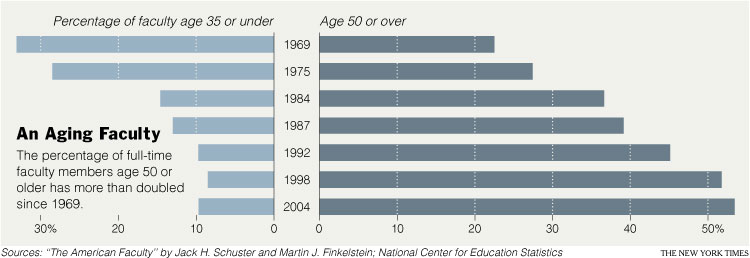
In a New York Times article today, Patricia Cohen describes the changing demographics of the American professoriate. It had two main points:

(1) Profs are WAY OLDER now then they used to be.

(2) The older ones appear to be more liberal than the younger ones, so we can expect academia to be more moderate as the older profs retire. This table shows how “liberal,” “moderate,” and “conservative” professors report being by age and academic field (click to enlarge so you can see it better).

Cohen summarizes this table as follows:

‘Self-described liberals are most common within the ranks of those professors aged 50-64, who were teenagers or young adults in the 1960s,’ they wrote, making up just under 50 percent. At the same time, the youngest group, ages 26 to 35, contains the highest percentage of moderates, some 60 percent, and the lowest percentage of liberals, just under a third.

I’m not sure I buy it.

First, notice that they’re comparing two groups (26-35 and 50-64) and making a claim about a trend instead of a claim about group difference. You can’t do that. Look at the data on the age group between them (36-49), they are all over the place, not neatly sitated between the age groups that sandwich them. (This also points to the always interesting question of how the data looks if you chop up your continuous variables–in this case, age–differently.)

Second, if you stick to group differences, they are comparing the youngest group and the second to oldest group in their data. Why? If you compare the youngest to the oldest group, the data looks a bit different.

Third, their interpretation of the overall “trend”–that is, the average difference across all fields–is obscuring some really interesting variation by subfield! So maybe the overall interpretation works for the social sciences, but wow look at the physical and biological sciences! Again, here we see a choice about reporting that obscures one finding in favor of another. The choice to emphasize averages/means/medians versus ranges/variety has consequences for how we understand our world.

Finally, there is the possibility that what it means to be “liberal,” “moderate,” and “conservative” differs in a systematic way across age groups. The reporter doesn’t address this at all.

There’s are also some really interesting assumptions about what counts as “political” in the article. Cohen points to the fact that quantitative research is somehow thought to be inherently less ideological than pure theory or qualitative research. And she quotes Marxist sociologist Erik Olin Wright saying: “in the late ’60s and ’70s, the Marxist impulse was central for those interested in social justice.” “Now,” Cohen adds, “it resides at the margins.” But it seems to me that it is Cohen who is assuming that quantitative research isn’t justice-oriented. Her example of a not-so-politicized younger professor is Sara Goldrick-Rab, also a sociologist, who says, “My generation is not so ideologically driven.” But whose projects, detailed in the story, include college opportunities for low-income students and the way that welfare reform decreased college attendance by the poor. Goldrick-Rab also complains about the lack of support for women academics who are also mothers. Those all sound damn political to me. But Cohen writes, partially quoting Goldrick-Rab: “They [older professors] want to question values and norms; ‘we [younger professors] are more driven by data.’ ” In this sentence, Cohen puts values and data on opposite ends of a spectrum. (It’s also interesting how she opposes Goldrick-Rab’s quote to her own words, we have no idea what Goldrick-Rab meant to oppose to being data-driven.)

I am troubled by the reproduction of the binary between “objective” and “normative” “science.”

I love, however, seeing the places and people of my alma mater described! Go Wisconsin!!!

Culture-sharing, of course, is nothing new. But with new forms of media, they are intensified and, increasingly, we get to see what “they” do with “our” art forms. Jenelle N. sent in this fascinating music video of artists in Bulgaria appropriating American hip hop and, correspondingly, elements of “Black” culture (highly produced and largely invented by music executives) and blending it with more “indigenous” art forms (please do note all of my scarequotes).

This duet is, as Jenelle explains, “between two of Bulgaria’s hottest chalga performers, Azis and Malina called Iskam, Iskam (I Want, I Want).”

[youtube]https://www.youtube.com/watch?v=Z_uHa8gTyxU[/youtube]

See also the Google sari.

Lisa Wade, PhD is an Associate Professor at Tulane University. She is the author of American Hookup, a book about college sexual culture; a textbook about gender; and a forthcoming introductory text: Terrible Magnificent Sociology. You can follow her on Twitter and Instagram.

In a recent post I discussed ways in which companies market beauty products to men, who traditionally aren’t supposed to worry about things like their pores. Here are a couple more examples.

Axe has a body scrubber for men (pointed out by akamarkman):

To differentiate it from girly body scrubbers, it’s called the Axe Detailer Shower ToolAxe Shower Scrub (or body wash, if you’re female) comes in varieties including Snake Peel, Skin Contact, and Glacier Water (scroll a little less than halfway down to see the varieties).

Here is an ad for the Detailer Shower Tool that shows a man being treated like a car in a car wash (cleaned by futuristically-attired women):

Gillette 2-in-1 Body Wash helps men prevent skin dehydration. And that helps them get hot girls at work:

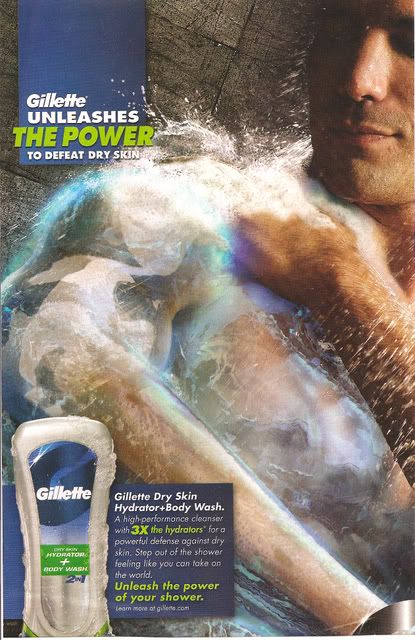
This Gillette ad tells men to unleash “power” to “defeat dry skin:

Notice how buff he is. We also learn that this body wash is a “hydrator” (not a moisturizer) and that it’s “high-performance” to provde a “powerful defense” that leaves you with the sense you “can take on the world.” So macho!

Andrew F. sent in a link to a post at DirectDaily about the Axe Schedule ad. In it, we see that a set of dorm rooms is overlaid with a calendar, the idea being that you get a different girl each day:

preview_600_424


Gwen Sharp is an associate professor of sociology at Nevada State College. You can follow her on Twitter at @gwensharpnv.

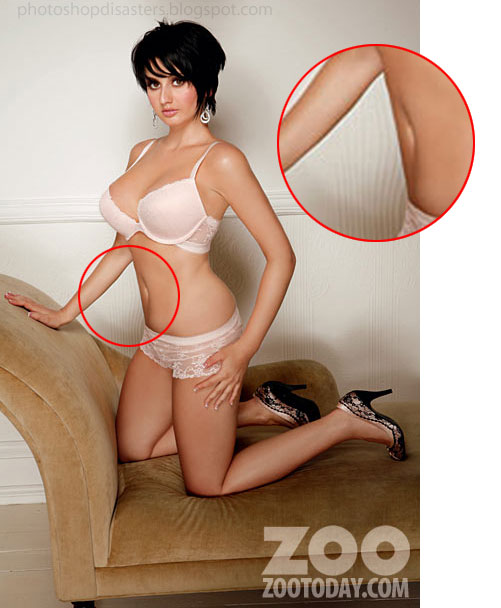
Look for how the striation on the wall bends in towards her belly where they thinned her midsection:

Like in the above photo, here the square tiles in the wall are warped, reflecting where they tapered her waist:

Check out the shadow to see her pre-photoshop profile:

These women are, of course, genuinely thin.  Much photoshopping isn’t about correcting “faults” (like a blemish), it’s about creating an unrealistic image.  These images remind me of Gwen’s post on the “fat” supermodel, Karolina Kurkova.  Kurkova is still incredibly thin!  The problem is that her body is betraying its humanness.  Like in the image above, where her body (god forbid) reacts to the string squeezing her midsection, Kurkova’s body reacts to the way she is moving it (with the squishing of her mid-back and buttocks).  There is no amount of thinness that will make you not human, but this is what we’re supposed to be aiming for.  And, if we get there, we’re not supposed to look skinny!  You might remember this photoshop example in which bones protruding from Cameron Diaz’s body are photoshopped out to make her thinness look more “healthy.”  So it’s not enough to rid yourself of the fat part of you, now they are ridding us of our very skeletons with photoshop. 

In Unbearable Weight, Susan Bordo argues that compulsory thinness for women isn’t just a standard of beauty, it’s literally about making women less.  How much of us do they want to get rid of?

All three found at Photoshop Disasters.

CORRECTION/CLARIFICATION: I am reposting this because I want to make clear that a couple of things that people picked up on in the comments are MY mistakes/confusing wording, not Jackson Katz’s. First, in regards to the Rambo movies, I was confusing Rambo:First Blood Par I, which came out in 1982, with Rambo:First Blood Part II, which came out in 1985, which is what Katz is quoting in the movie. I just googled the movie to find the year it came out and didn’t notice it was for Part I, not Part II. I have corrected that below.

As for the Terminator image, that is entirely my fault. I could not find the exact image Katz used in the documentary, though I searched for quite a while. I just put up an image I meant to be representative of both Terminator movies, and the one I used, as the commenters point ou, was not a good example of what I was saying. Since I can’t find the image Katz used, I have taken the Terminator image out of the post.

I just wanted to a) correct those two things and b) make it clear that they were my mistakes, not Katz’s.

*****

In the documentary Tough Guise: Violence, Media & the Crisis in Masculinity, Jackson Katz discusses how images of masculinity in pop culture have changed over time, and particularly how in the 1980s and 1990s images of male heroes got larger and more menacing, as well as hyper-violent. He uses Humphrey Bogart, Clint Eastwood, Sylvester Stallone, and Arnold Schwarzenegger as examples. I’m basing my discussion of the images from movies on Katz’s analysis.

In this image of Humphrey Bogart (found here) in The Maltese Falcon (1941), his gun is very small compared to his body. His body language is not particularly imposing or threatening. Keep in mind this was during World War II (though the U.S. had not joined yet) and that machine guns had been invented during the Civil War. So Humphrey Bogart conceivably could have been shown holding some sort of automatic weapon instead of a small handgun.

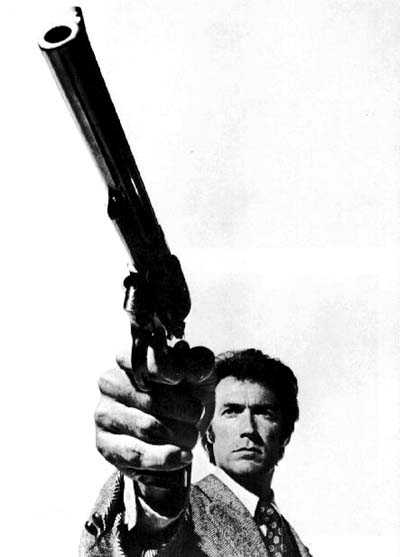
Then we have Clint Eastwood in Dirty Harry, from 1971 (found here). The gun has gotten much bigger and the body posture a bit more threatening.

And in 1985 we get Rambo:First Blood Part II (found here), a military revenge fantasy in which a Vietnam vet gets to finish the war the U.S. military wasn’t “allowed” to win, presumably because of weak, feminized elements that controlled the government. Stallone’s body is huge and muscular, and the gun has gotten larger and more deadly.

Katz attributes these changes in images of masculinity to a growing concern in U.S. culture that we are somehow being “feminized” and becoming weak. He argues that the loss in Vietnam (or lack of an outright win, if you prefer) as well as political and economic gains by women and non-whites caused a cultural panic about the status of white men. As these men were supposedly losing power and status in everyday life, cultural images of them emphasized strength, power, and aggression as a version of ideal masculinity.

Here is a clip from Tough Guise:

And here’s a clip that takes the Tough Guise intro but adds some other images:

I was thinking about this because when I was in Oklahoma, I was around a lot of trucks, and specifically, a lot of old farm trucks. And one day when I was standing next to an old Dodge Ram, it hit me how much less…I don’t know…imposing it was than newer trucks. It seemed like a cute little toy truck. Here’s a picture of a 1985 Dodge Ram (found here):

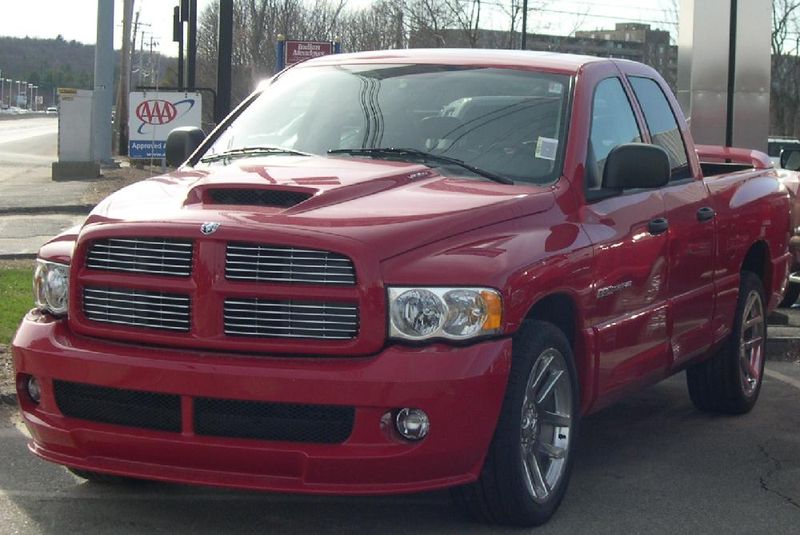
The 2005 version of the Dodge Ram (found here):

Looking at my family’s old farm trucks (and we’ve got a collection of rotting, rusting trucks dating from the 1950s on; I did not post pictures of our trucks because my grandma would kill me for exposing our farm junkiness to the world), I kept thinking, “We used to haul cattle with that?” or “That was considered sufficiently masculine at one point?” And the answer is, yes. Yes, they were.

Now, I’m certain that a lot of the redesigns had to do with advances in safety and efforts to improve fuel efficiency (by making the truck body more rounded, for instance). But there also seems to be a pattern in trucks today to design their headlights and grills to look sort of “mean,” if you will–like they’re snarling or growling.

I’m not necessarily saying there’s a connection between Katz’s work and the way trucks have been redesigned to look meaner and more aggressive…but it just got me thinking.

Of course, as a farm kid, what strikes me about trucks is the way the newer designs make them less functional for the types of things you see people doing in truck ads. While the cabs have gotten larger, making room for more passengers (that is, more like a car), the beds have gotten smaller, so you can’t carry as much (or as long of) stuff in them–and carrying stuff in the back is what you supposedly need a truck for. Yes, you can still stick more stuff in the back of, say, a new Dodge Ram than in a lot of cars, but I’m just sayin’. (Also, you’d be shocked at how much stuff I can get in the back of a Honda Civic if I lay the seat down and am really motivated. And my mom once brought a 130-pound calf home in the backseat of a car–I had the fun job of trying to keep him from attempting to crawl into the front. And we had a woman in my hometown who used to haul pigs around in the backseat of her Caddy.) A lot of things we used to haul around in the back of our trucks wouldn’t fit in the beds of new trucks, or you couldn’t fit nearly as much of them. And of course the majority of people who buy trucks for their big motors aren’t doing the types of things (driving through extremely rocky or muddy country, hauling trailers full of cattle, etc.) that require such a huge motor in the first place. So why not just buy a car?

Just some thoughts that struck me while hanging out on the farm.

Hello Readers!  Welcome to our third installment of Behind Your Back.  Below is a list of posts that we have enriched during the month of June without telling you.  Enjoy!

We added a commerical (found at Feministe) to our post featuring an ad using a male-to-female transgendered person to sell a epilator to women. The commercial is really interesting, as is Holly’s interpretation of why it’s problematic.

The evolving controversy over the Obama Sock Monkey toy led us to make a few updates on our post. If you didn’t notice, the company making the toy aggressively revoked its apology and we’re pretty sure they’re still selling it. Check it out here.

For contrast, we added the posters from the Terminator Trilogy to our post on how female heroines were represented in posters for The Sarah Connor Chronicles, as well as some more images portraying the heroines in The Sarah Connor Chronicles differently and some that feminize John Connor.

We added a Greenpeace video targeting Unilever to this post about Dove and Axe ads.  The video shows how the American beauty industry that is hurting American girls’ self-esteem is destroying the environment of other girls’ lives.  It’s pretty great. 

We found a particularly egregious Nebraska Wakeboard ad and added it to another objectifying ad for shoes.

We added an image showing the actual caption to this post about FOX News referring to Michelle Obama as a “baby mama.”

Matt S. sent us three more PETA posters and a video featuring Alicia Silverstone showing how how PETA sexualizes women in its anti-fur campaigns.  See it here (scroll down).

We found another ad using sex to sell homes and home-related products.  We added it to some others here.

Yikes.  P.J. sent us another doozy from Axe (also sold as Lynx in some countries).

We added a commercial illustrating the bizarreness of yogurt advertising articulated in this post.

Laura L. found another ad that trivalizes women’s rejection of men’s attention.  This Noxzema ad implies that women really like to be catcalled on the street, even if they appear not to.

And we added a fashion ad to this post about ads that use ambiguous images that could imply consensual sex or sexual assault.  Thanks again to Laura L.!

Finally, we added another sexualized image of Condoleezza Rice–as Lara Croft–to this post about differences in how Condoleezza Rice and Hillary Clinton are portrayed.

Don’t forget to check out who links to us!  And if we’re on your blogroll and aren’t on the list, make sure to send us a note!

Happy July!

On-the-road post from Flagstaff, AZ:

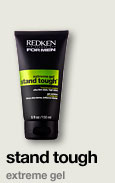
The other day I was standing in a salon and noticed some styling products by Redken for Men. I realized they provide an excellent example of how, when companies try to convince men to buy things traditionally reserved for women (and thus marked feminine), they have to masculinize them. This is particularly true when it comes to beauty products, since men aren’t supposed to worry about things like their skin.

On the Redken website, the products are described as, “Focused technology for stronger hair and balanced scalp.” I’m not sure I’ve ever bought mousse or shampoo described to me as technology before. Notice how the names of these styling products attempt to make them seem manly:

Grip Tight gel.

Men maneuver things, like high-end cars and power tools. And their hair.

Don’t take dandruff lying down! Retaliate!

Tough = masculine.

Men work hard. So does their molding paste.

Bulk Up!

Be smarter and sportier than your hair.

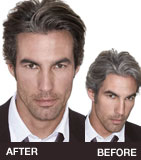
Redken for Men’s gray-hair-covering service is not dye, it’s Color Camo.

It might be useful to compare images of products like these with this verse from the currently-popular country song “I’m Still a Guy,” by Brad Paisley:

These days there’s dudes getting facials
Manicured waxed and botoxed
But with deep spray on tans and creamy lotioney hands
You can’t grip a tackle box
With all of these men lining up to get neutered
It’s hip now to be feminized I don’t highlight my hair
I’ve still got a pair
Yeah, honey I’m still a guy

My eyebrows ain’t plucked
Theres a gun in my truck
Thank God I’m still a guy

I’ve driven from Vegas to Oklahoma and nearly back in the last 10 days. I’ve heard this song several times now.

Anyway, this could be good for a discussion of changing ideals of masculinity (and the idea of the metrosexual) or the gendering of products into men’s and women’s versions even though they’re really the same.

See also Touch of Gray hair dye and another set of beauty products for men.

In the comments, pharmacopaeia mentioned that the New Zealand salon Manscape caters to men and has to work to masculinize its services and products (starting with the name, obviously). Their tagline is “taking the ape out of the modern man.” They also offer clients cold beers while they get beautified. They offer a sports massage, “perfect for pre and post event training.” They reassure men about the eyebrow maintenance service by saying “Shape & tidy – there’s nothing girly about this!” The manicure (Man-I-Cure) is called Handy Work, and the pedicure is described as “manly.”

Thanks for letting us know, p.!

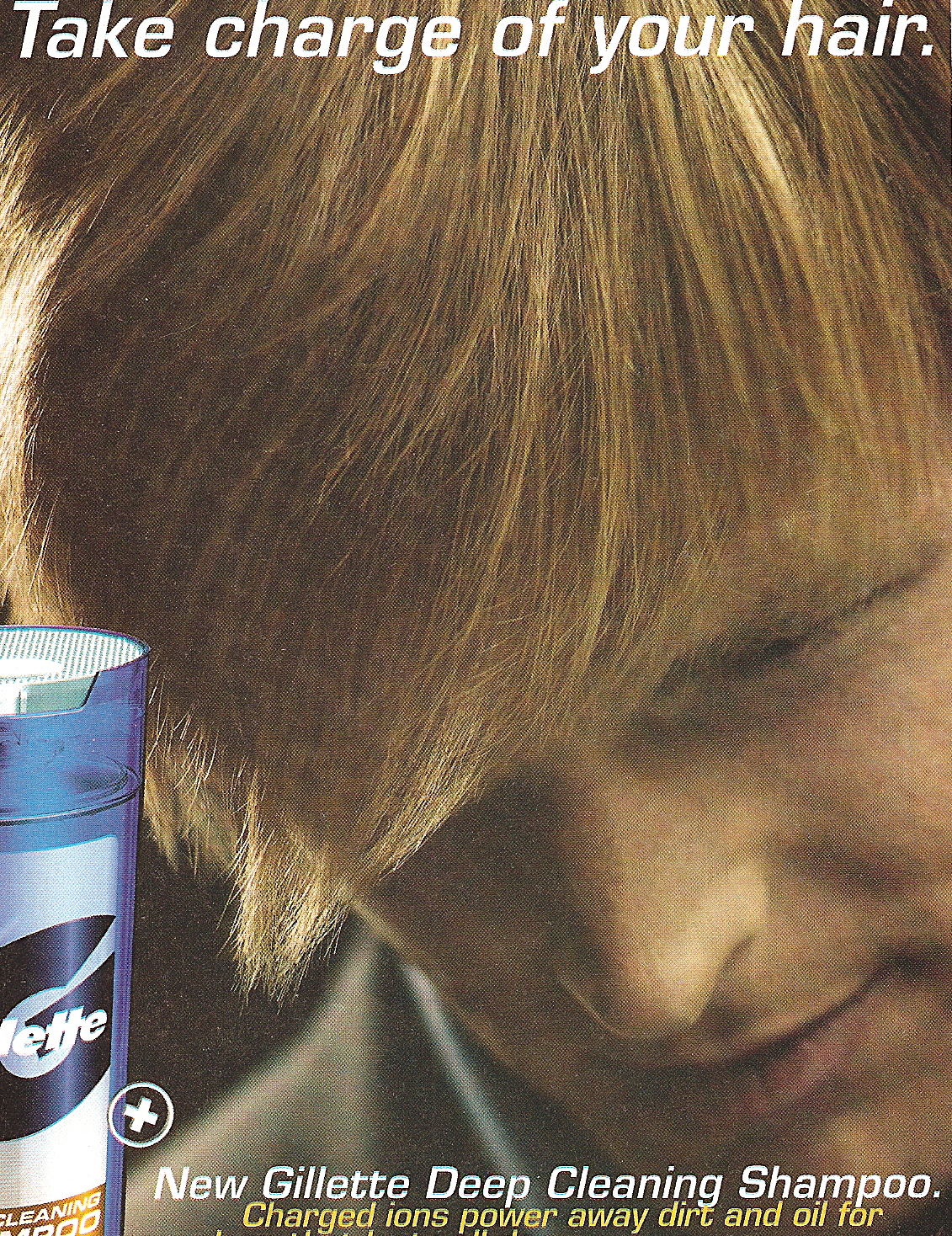
NEW: Here’s another example I found in Rolling Stone, which tells men to take charge of their hair: