Search results for The

NEW FEATURE!

We crafted four sample class assignments using Sociological Images.  One for a lower-division class and three for an upper-division class.  Check them out here.

By the way, if you have crafted assignments using our blog, we’d love to publish them here!  Please send them along!  Email us at socimages@thesocietypages.org.

AND BACK TO THE OL’ BEHIND YOUR BACK:

A series of toys by Playmobil, sent in by Kirsten D., were added to our post illustrating what it means to be a neutral versus a marked social group.  See it here.

We add another beer commerical to the three we posted trivializing love, sex, and relationships in favor of beer. This one was pointed out in our comments by Pharmacopaeia. Thanks!

Daniel B. sent in a picture of the Spanish women’s Olympic basketball team in the infamous “slant-eyed” pose (meant to make them look, um, Chinese) and we added it to this post that showed the Spanish men’s team in the same pose. We added another image he found of the Spanish tennis team in that same pose to this post showing the Argentine women’s soccer team doing it too. Then we sat around and scratched our heads and wondered if every Olympic team felt the need to pose like that before leaving for Beijing.

We added a Budweiser ad in which foaming surf on the beach forms a phallus pointing to a bikini-clad woman’s crotch to our post on “subliminal” sex in ads.  (Somehow a month rarely goes by without a new addition to this particular post!)

We added a Mini Cooper ad that brags about the car’s “carfun footprint” to this post about the commodification of environmentalism. While it would be great if a car’s effect on the environment actually became a major selling point, when you look at the Mini’s gas mileage ratings (which I report in the post), it’s not clear that the “carfun footprint” is much more than a tagline.

We added another commercial, sent in by Corey, to this post about Just for Men’s Touch of Grey line, a product that allows the user to decide how much grey they would like to leave in… something we can’t image a woman’s hair dye company ever offering, since women don’t get to benefit from the “distinguished look.”

We added Paris Hilton’s humorous response to this post about John McCain’s campaign ad that associated Barack Obama with Hilton and Britney Spears in an attempt to portray him as a lightweight with no experience.

Elizabeth sent in a PETA ad that compared slaughtering animals to the beheading of a man on a Canadian bus. We added it to this post about the use of Holocaust imagery in PETA ads and who claims the right to use horrific incidents (both historic and current) in their attempts to frame social issues.

I took this picture of a “rapid weight loss” product at a Walgreens:

I think this product it all-too-clearly illustrates Jean Kilbourne‘s contention that, when it comes to women, “less is more.”  Aspire to be a size zero.  Aspire to be nothing.  Aspire to be defined by what you lack.

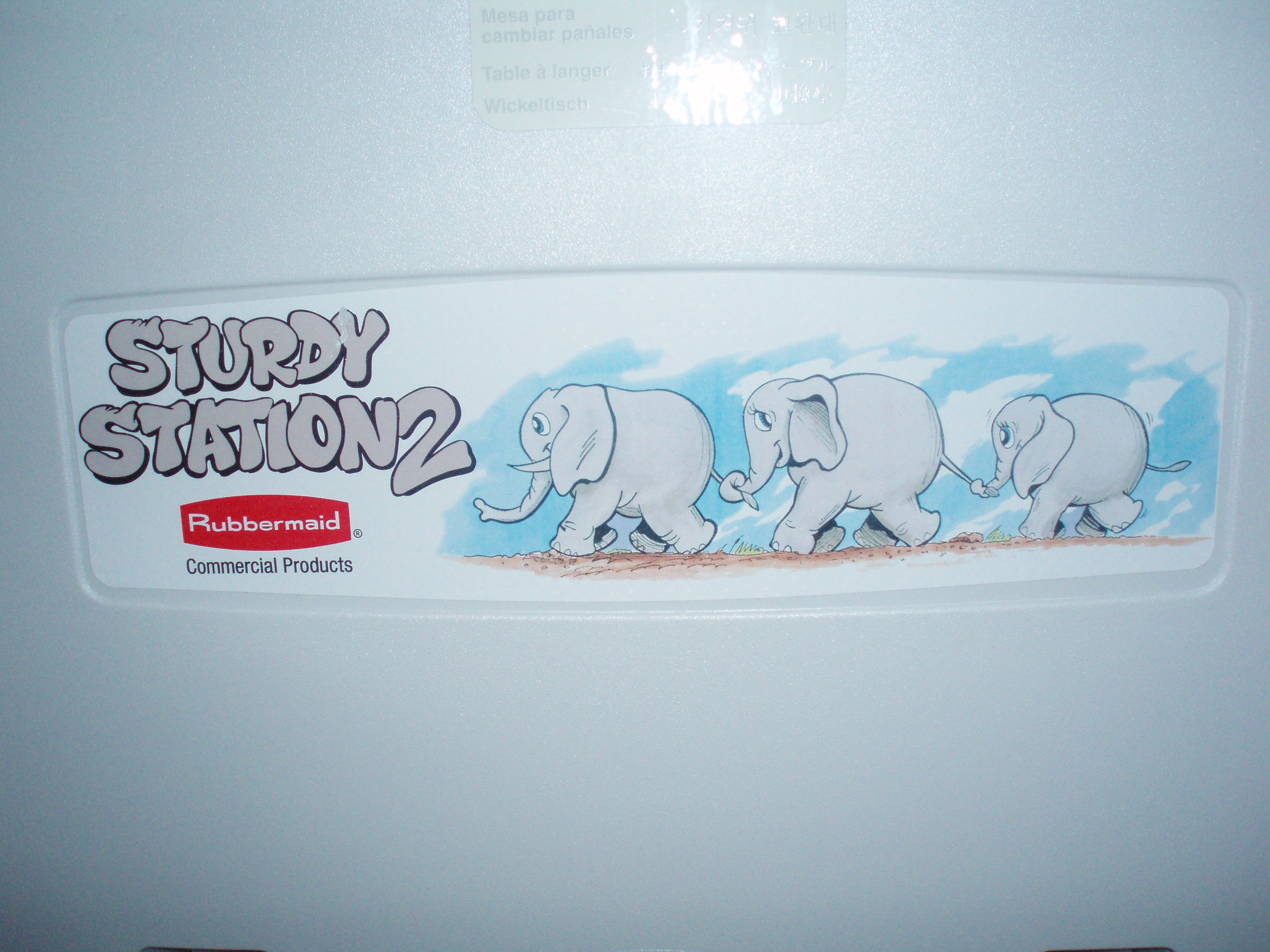
This is a picture of the illustration on a “sturdy station,” an infant changing table I found in a women’s bathroom (click on the image for a closer look).

I thought it nicely illustrated a number of normative expectations/social constructions:

1. Families include two parents.
2. Those two parents include a male and a female.
3. Males don’t have eyelashes.
4. Males are (at) the head of the family.
5. Females are the primary caretakers of children. While the male is looking ahead, the female is either looking at the baby or looking at the person using the changing table (and is, therefore, identifying with the person using the changing table who is, presumably, also female).

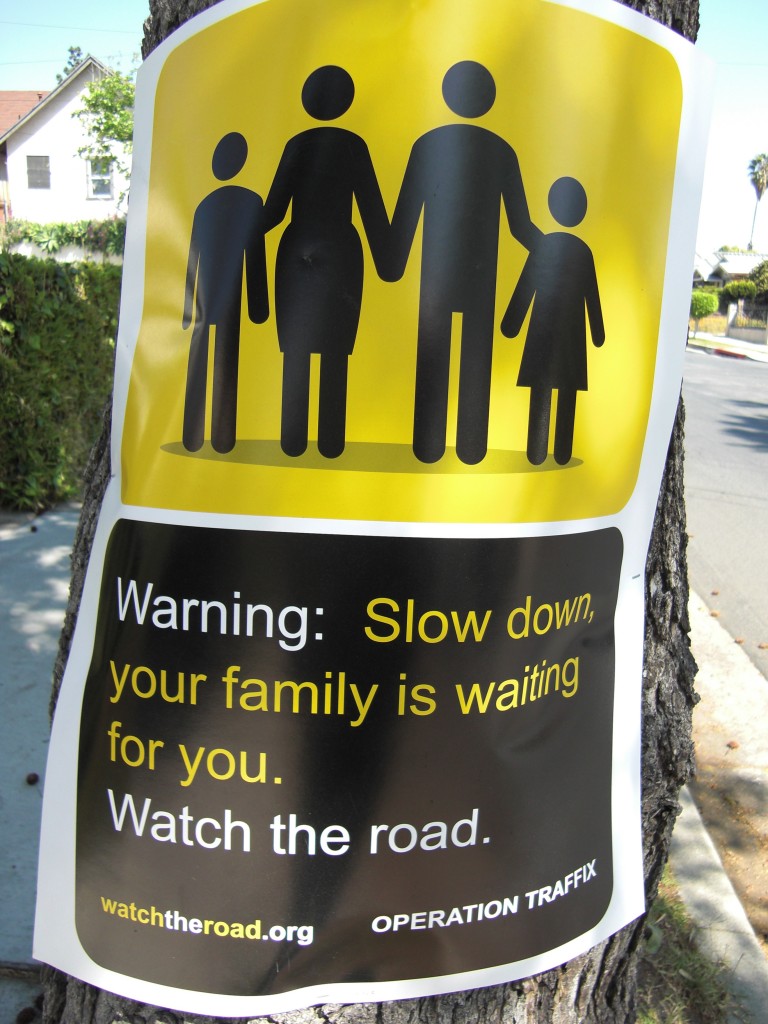
This poster was affixed to a tree on my block:

cimg2263

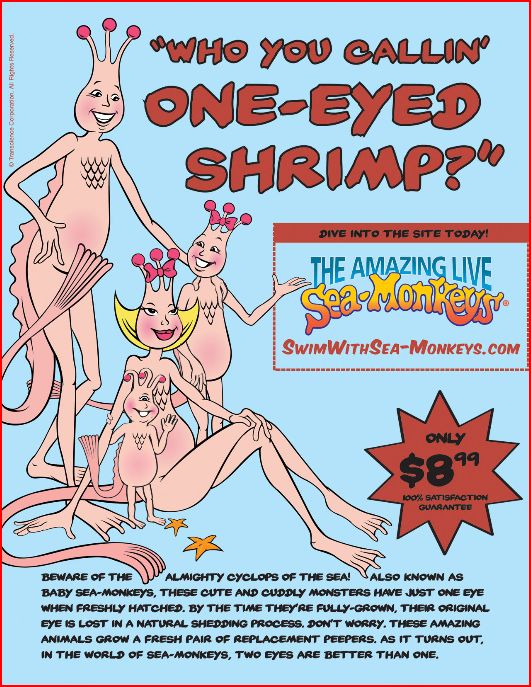
NEW!  This ad for sea monkeys, found at AdFreak, portrays them in a nuclear family (mom and dad, son and daughter):

Capture

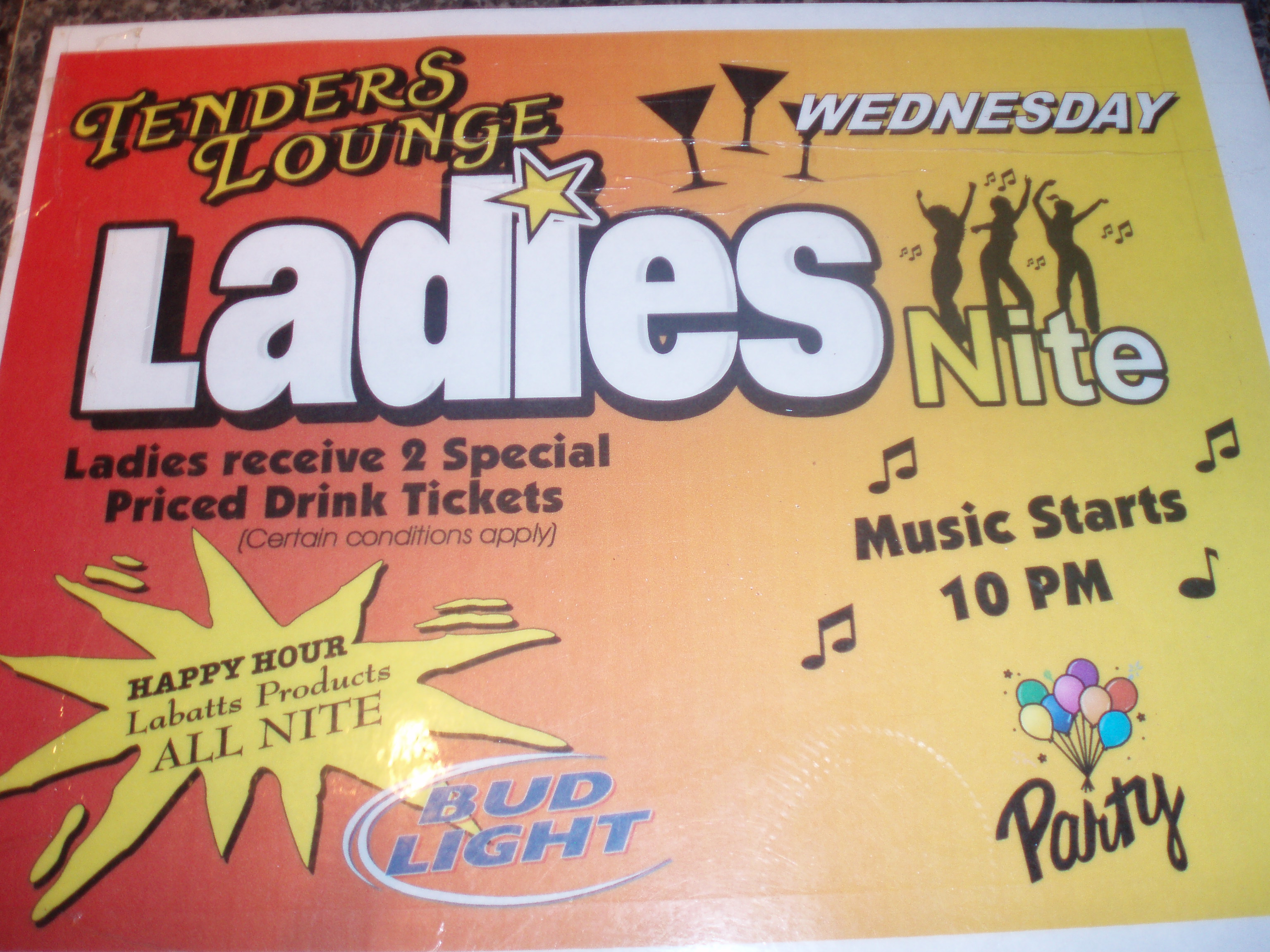
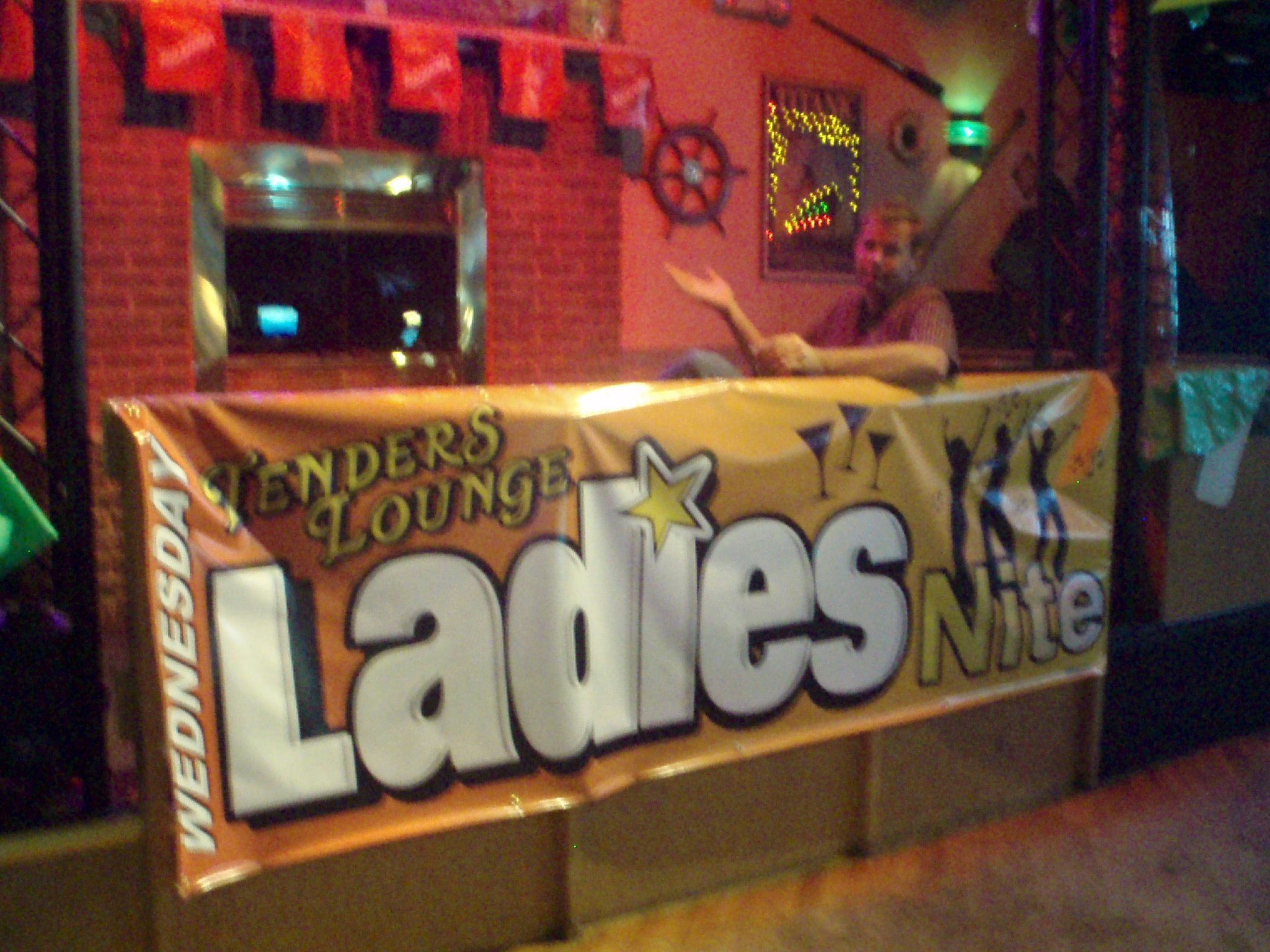
I took these pictures of a flyer and a banner for “Ladies Night” at Tenders Lounge in Goose Bay – Happy Valley, Canada.  I noticed that the word “Ladies” did not include an apostrophe: it’s “Ladies Night,” not “Ladies’ Night.”  That is, it is advertised as a night of ladies, not a night for ladies.  To put it more bluntly, the ladies are not guests, they’re bait.

(That’s Steve.  It was not, in fact, Ladies Night and I asked him to look disappointed.  He is worried that you will think he was really disappointed.  I assure you, he was not.)

I am wondering if this is typical or unusual.  Readers, feel free to send in pictures of advertising for Ladies(‘) Nights.  I’m curious what we’ll find!

In a comment to another post, Max S. pointed out this video of a question-and-answer session where, when asked about policy toward Iran, John McCain makes a joke about the Beach Boys having a song called “Bomb Iran” and sings “bomb bomb bomb” to the tune of “Barbara Ann”:

I’m probably the only person left on earth who hadn’t already sseen it, but anyway. It might be useful for a discussion of militarization and/or foreign policy, or the ways in which we obscure the reality of war such that the idea of bombing “Iran” is separated from any acknowledgement that you’re talking about bombing actual people.

Thanks, Max!

UPDATE: In a comment, thoughtcounts z said that this was probably a reference to the Capital Steps‘ parody of the Beach Boys, which it very well may be–I’m apparently horribly out of touch with…well, everything. McCain said The Beach Boys, so I just took him at his word.

I am writing a lecture about the social construction of race/ethnicity and wanted to show some pictures of people who are grouped into a single racial category in the U.S. but, in fact, show enormous variety in their skin tone, facial features, etc., so I quickly googled the phrase “African American skin tone.” And I found this flyer for a party at a club where light-skinned women would get in free ( found here):

My reactions, in order: “What the f**k???” “This is clearly made up.” [After finding this AP story about it]: “Son of a bitch! It’s real!” Due to the outcry, the event was canceled and the event planner expressed sorrow and dismay that he would have offended anyone. Because who could have guessed this would be problematic?

This image should be perfect for illustrating a number of topics, such as the way hierarchies often emerge within racial groups based on skin tone, facial features, etc., so that racial discrimination does not just occur between different groups, or the way that light skin is still prized in our society, even in racial/ethnic minority populations. You could also focus on the gender angle and compare it to photos of African American women who are often “whitened” or required to have light skin tone in order to be models, actresses, etc. (for example, see this post), or the whole issue of why clubs allow women, but not men, in for free.

I’m going to pair this image with Margaret Hunter’s article “Light, Bright, and Almost White: The Advantages and Disadvantages of Light Skin” (from Skin/Deep: How Race and Complexion Matter in the ‘Color-Blind’ Era, 2004).

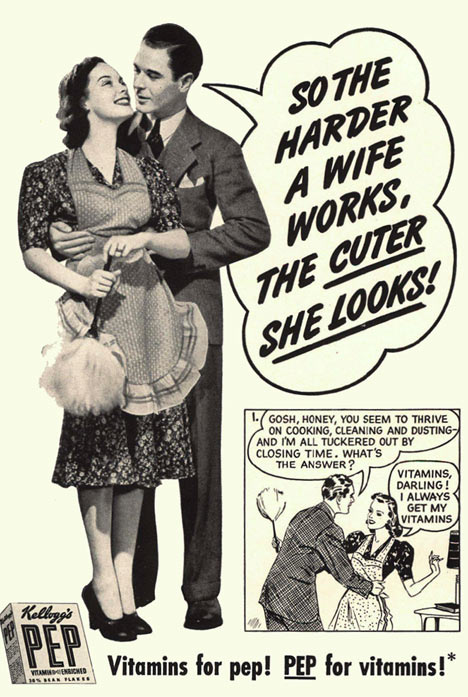
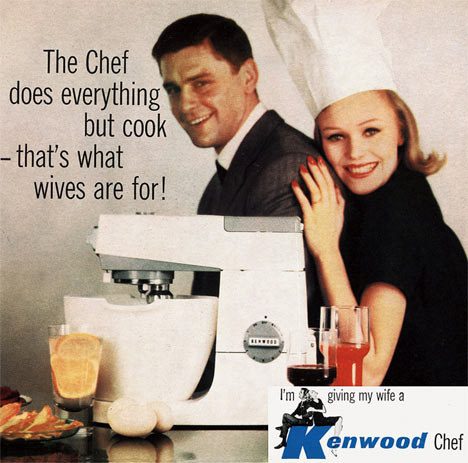
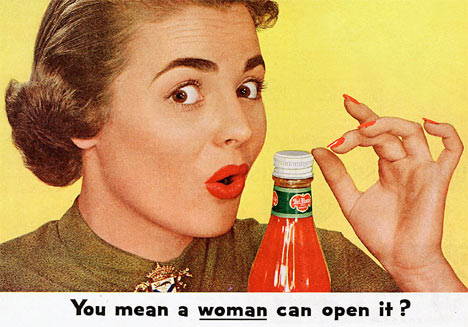
I found this collection of vintage ads at the Mail online:

When I was copying the website link, I noticed that this story was in the “Femail” section. There’s the homepage, of course, and then there’s “News,” “Sport,” “TV&Showbiz,” “Health,” “Science&Tech,” etc. etc., and then there’s “Femail,” the section targeted at women. It seems to be mostly fashion with some mother-daughter stories of various types. I wish sometime I’d see a magazine (or magazine section) aimed at women that didn’t see “women’s issues” and science/technology/news/sport/etc. as completely different topics.

I did like this story about elephants doing math, though.

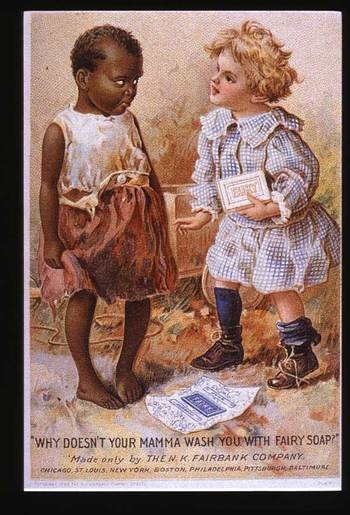
Ben O. forwarded this ad for Fairy Soap (found here). It plays into the idea that African Americans are dirty and either lazy or stupid (since they don’t bother to wash their children), but that enlightened, kindly, clean whites can help them. It would make a good accompaniment to the chapter “Soft-Soaping Empire: Commodity Racism and Imperial Advertising” in Imperial Leather: Race, Gender, and Sexuality in the Colonial Contest, by Anne McClintock.

UPDATE: In a comment, Brendon proposed a reading I didn’t think of:

The second ad is troubling, but my interpretation of it wasn’t that the ad was implying that African Americans are dirty – it’s implying that the young white girl believes the black girl is covered in dirt, which is the only reason why the black girl doesn’t have the white skin she does. It’s about the ‘folly’ of youth – this girl isn’t versed in the discourse of racial difference yet!

Of course, Eric points out that the “cutesy” element is undermined by the fact that the ad was made by adults who, unless we’re both totally wrong, didn’t hold such an “innocent” view of the differences between African Americans and Whites.

Also, as a commenter pointed out, given changes in hairstyles and dress for children over time, it may be those are boys, not girls.

NEW (July ’10)! Monica Y. sent along another example, this one an ad for Vinolia Soap: