Search results for The

Concerns about the use of full-body scanners at airports have been in the news repeatedly in the last week or so, though polls show high levels of support or at least tolerance for them among the American public. The major issue appears to be concerns about privacy, since the scanners provide an image of a person’s body through their clothing, which can be quite detailed, though others also mentioned health concerns and whether or not the scanners actually increase safety.

Amanda C. pointed out that the organization Fly with Dignity, which opposes the use of scans, has three rotating images on their website homepage, two of which clearly connect the scanning process with the idea of women being groped, complete with their tear-stained, distraught faces as they go through a pat-down (the alternative to a scan):

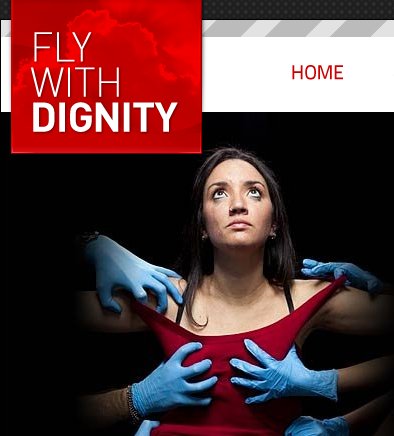
Apparently when trying to make a point about being degraded or victimized, men don’t make suitable subjects.

Amanda finds it disturbing that they’re equating pat-downs (your option if you refuse a full-body scan) with sexualized violence (and using images of traumatized women to do so).

Gizmodo has released a gallery of leaked images from body scans, if you’d like to see some examples (here’s a fuller story about the images—thanks to Alll for the tip.)

Thoughts? Is sexual molestation a legitimate metaphor here?


Last month we posted a clip of a group of Yankee fans taunting two teenage Red Sox fans by yelling a homophobic version of YMCA.  In the comment thread, Amadi linked to another instance in which men mocked other men with reference to homosexuality in a sports context.  At a football game between Eastlake North and Willoughby South High Schools (outside of Cleveland, Ohio), fans were recorded chanting “powder blue faggots!” across the field.  The summary on youtube reports that the other side was chanting, in reply “Halloween homos!”

Video by Heather Ike; graphics, editing, captions, pictures, and screenshots added by Sean Chapin at Joe.My.God.

Thanks to Myaisha for the tip!

Lisa Wade, PhD is an Associate Professor at Tulane University. She is the author of American Hookup, a book about college sexual culture; a textbook about gender; and a forthcoming introductory text: Terrible Magnificent Sociology. You can follow her on Twitter and Instagram.

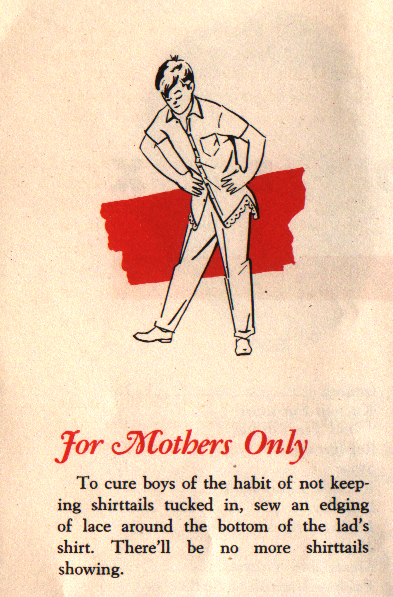
Lauren McGuire sent along a BoingBoing link to this page from a booklet called Hint Hunt (1940s).  It advises mothers to “inspire” their sons to tuck in their shirts by sewing (hideously embarrassing) lace along the bottom:

Lisa Wade, PhD is an Associate Professor at Tulane University. She is the author of American Hookup, a book about college sexual culture; a textbook about gender; and a forthcoming introductory text: Terrible Magnificent Sociology. You can follow her on Twitter and Instagram.

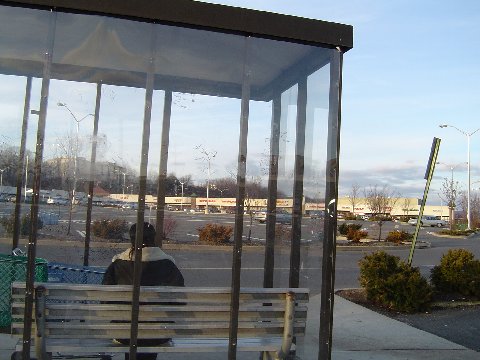
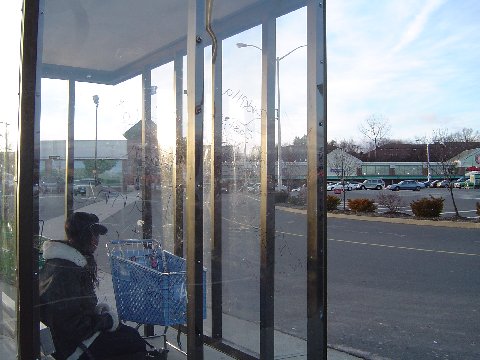
Lynne Shapiro brought our attention to the way that choices to locate bus stops can marginalize their riders, discouraging use of public transportation by those who could choose between the bus and a car and placing a burden on those who do ride the bus to complete errands. Lynne has taken photos of bus stops around Connecticut and the D.C. metro area malls and stores. She points out that they are often far from entrances, and in some cases malls didn’t allow them on the property at all.

Here are two photos, from different angles, of a bus stop at Hamden Plaza, a major shopping center in the New Haven, CT, area:

The result is to create additional burdens on those using the bus for shopping, requiring them to haul or push their purchases a significant distance to the bus stop, a process that would be particularly unpleasant in rain or snow (or, here in Vegas, when it’s 117 degrees), or for those with mobility issues.

When mass transit stops are systematically located in inconvenient or isolated areas, it disadvantages those who are dependent on public transportation and discourages others from choosing to ride rather than driving their own car, and reinforces a common perception of the bus, in particular, as an inferior form of transportation — a topic discussed more fully by Sikivu Hutchinson in Imagining Transit: Race, Gender, and Transportation Politics in Los Angeles.

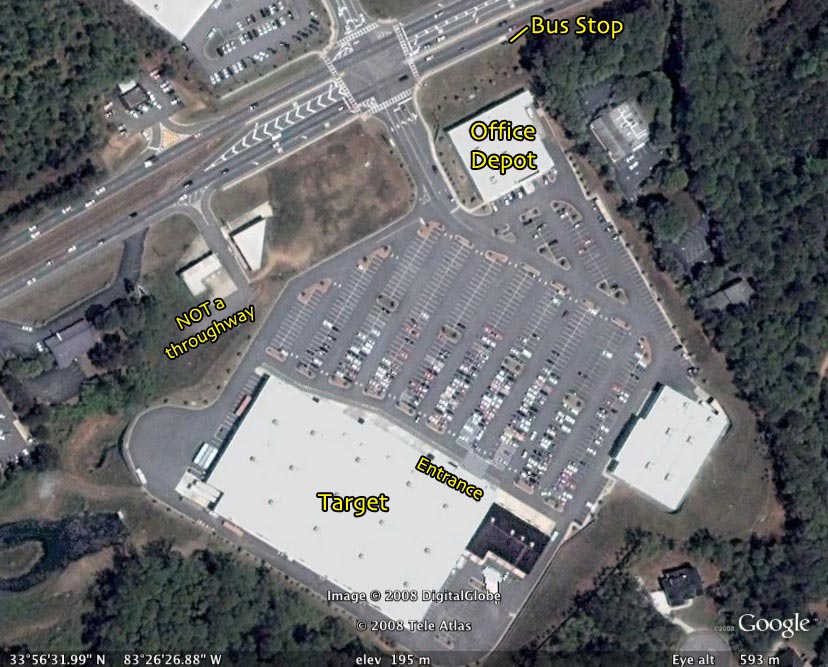
UPDATE: Reader codeman38 provided a link to an image of a Target parking lot in Athens, Georgia, which shows the lack of clear pedestrian paths from the bus stop to the store:

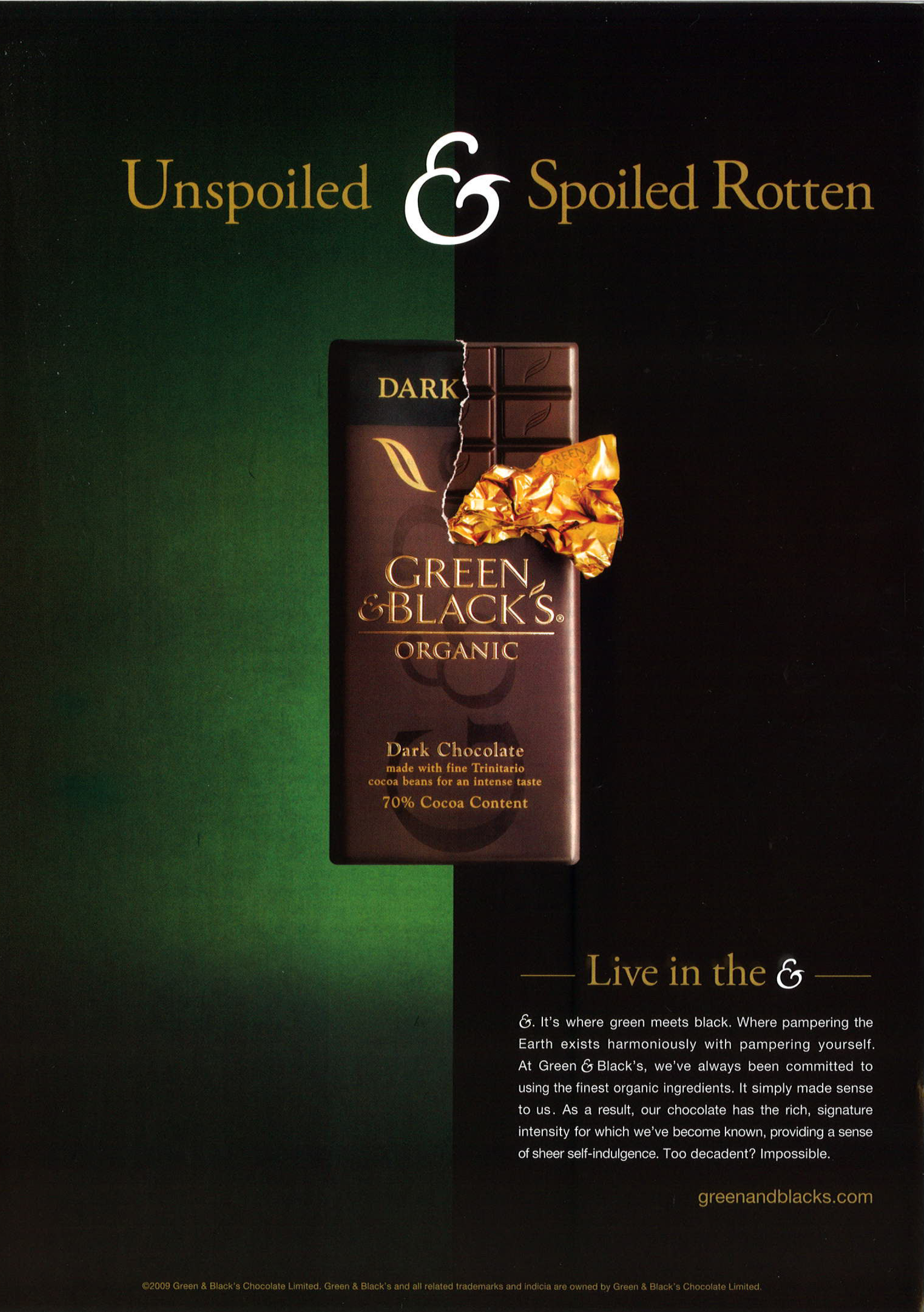
In consumer society, products sell an image of the consumer to others. Chocolate, for example, can bring prestige if it comes from a particular manufacturer and falls within a certain price range.  The design and ideology behind Godiva for example, promotes a sophisticated chocolate and uses powerful imagery to convince consumers that they may attain an unparalleled experience of high-class luxury.

Godiva promotes the idea that consumers of their chocolates are somehow “higher class” and more “tasteful” than people who do not consume them.  As a result, their chocolates have a higher exchange value than the everyday, $1 chocolates meant for middle and lower-class consumers.

Many chocolate connoisseurs argue that Godiva chocolates taste like sugar and candle wax, failing to satisfy the European taste criteria for elite chocolate.  Nevertheless, the reputation of Godiva as luxurious is enough to satisfy many non-connoisseurs and it, accordingly, maintains a high exchange-value.  Hoping to capitalize on the trend, many popular brands have released their own line of “premium” chocolates hoping to reap profits far out of proportion to the cost of production.

From a Marxist viewpoint, status-symbol chocolate advertising exemplifies how fetishization helps maintain capitalism. Such advertising tacitly legitimizes the elite class by reinforcing the image of upper-class superiority and by presenting the luxurious lifestyle as something to aspire to. It also helps foster false consciousness, which lulls the oppressed working class into complicity, even or especially when prices for “premium” chocolates fall suspiciously low.

Is fair trade a resolution to chocolate’s fetishism?

Chocolate’s fetishism is partially resolved through Fair Trade, which redistributes some of those profits back to the working class and makes the consumer conscious of the worker.

The fetishism of chocolate is only partly resolved, however, since the owning class continues to profit from the fetishism of the commodity and from the enhancing status of the “Fair Trade” label.  The purchasing of Fair Trade chocolate, you see, provides the consumer with some emotional comfort; it flatters them just as a high end chocolate product flatters buyers who identify themselves as elite. Therefore, there is an increase in the consumer’s cultural capital with the purchase of Fair Trade chocolate.  It is still fetishism to the extent that the consumer is purchasing a comforting emotion or an image of themselves saving the world, which is encouraged by advertising campaigns and wrapper designs.  However, in an interesting twist, fetishism is used to reverse the effects that it is traditionally guilty of: benefiting the upper-class at the expense of the lower-class.

————————-

Jamal Fahim graduated from Occidental College in 2010 with a major in Sociology and a minor in Film and Media Studies. He was a member and captain of the Occidental Men’s Tennis team. Jamal currently lives in Los Angeles with the intention of working in the film industry as a producer. His interests include film, music, digital design, anime, Japanese culture, improvising, acting, and of course, chocolate!

If you would like to write a post for Sociological Images, please see our Guidelines for Guest Bloggers.

Lisa Wade, PhD is an Associate Professor at Tulane University. She is the author of American Hookup, a book about college sexual culture; a textbook about gender; and a forthcoming introductory text: Terrible Magnificent Sociology. You can follow her on Twitter and Instagram.

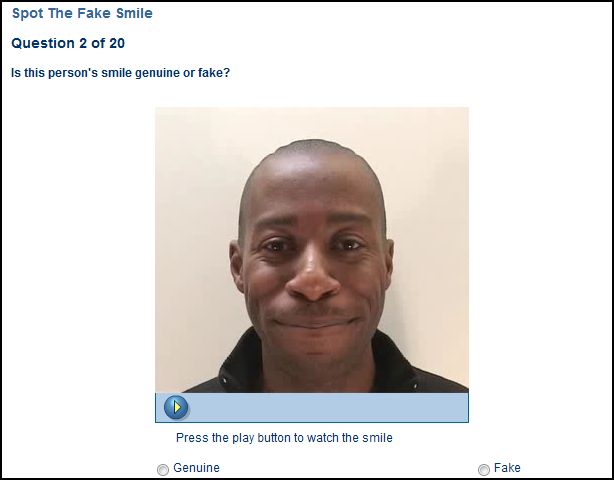
BoingBoing reports on a BBC site, based on research by Psychologist Paul Ekman, where you can test your ability to detect fake smiles. It turns out, most people are “surprisingly bad” at differentiating genuine from fake smiles. Take the test or read more on how to spot fake smiles (after the jump).

more...

In City of Quartz: Excavating the Future in Los Angeles, Mike Davis discusses the ways that public space are increasingly regulated to allow the types of activities preferred by the middle class and exclude those of the urban poor. He says that cities operate under “a rhetoric of social welfare that calculates the interests of the urban poor and the middle classes as a zero-sum game” (p. 224). That is, there are various uses groups might have for public space, but over time, activities or behaviors associated with the poor are being pushed out of public places (say, trying to make money or taking a nap), because they are seen as inherently interfering with more middle-class uses. While outlawing certain behavior in public places is often explained as a way to ensure safety, Davis argues, “…’security’ has less to do with personal safety than with the degree of personal insulation, in residential, work, consumption and travel environments, from ‘unsavory’ groups and individuals…” (p. 224).

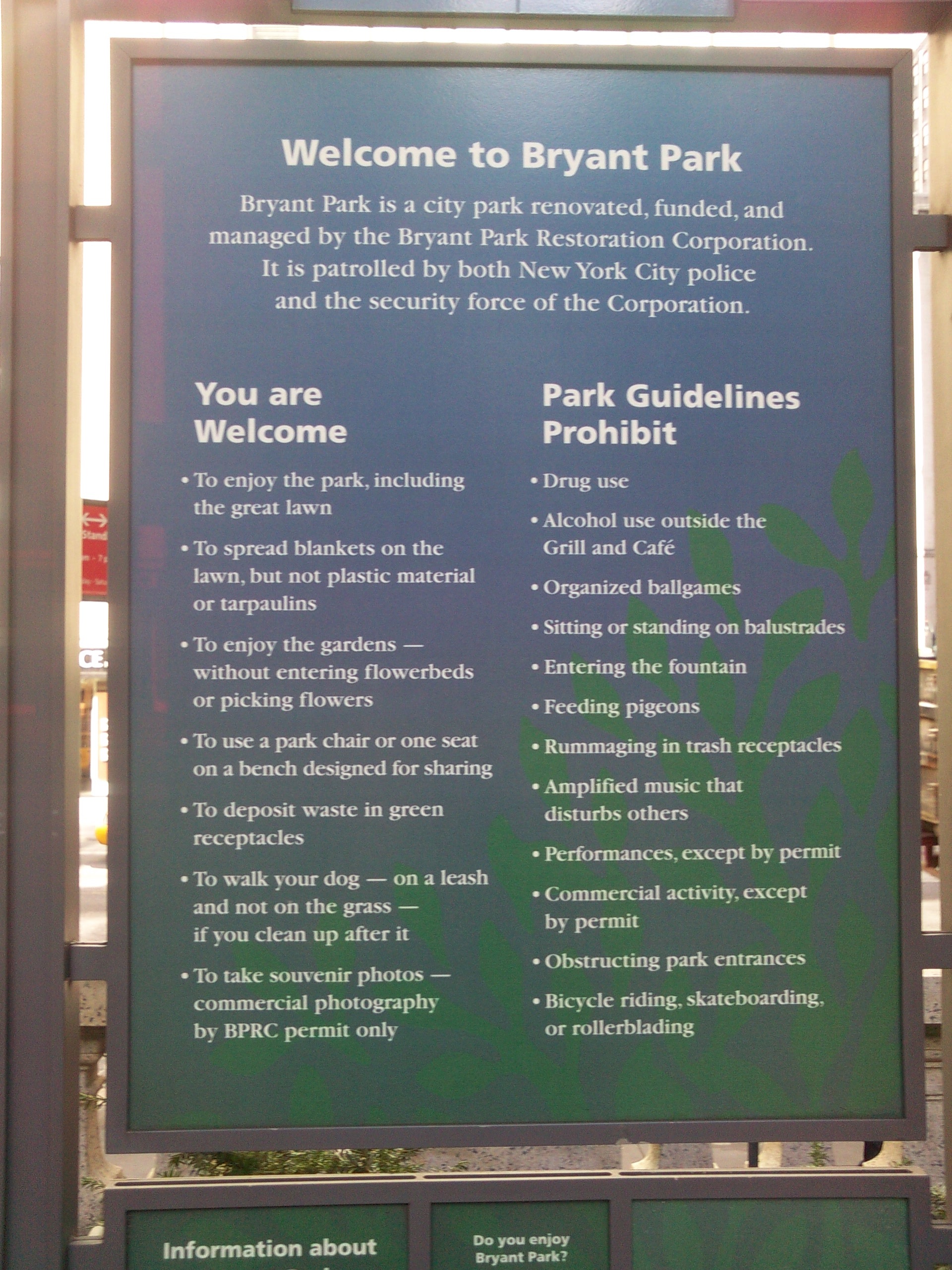
I thought of Davis’s argument when I saw this photo send in by Dino of a sign in Bryant Park, in Manhattan. The sign welcomes visitors to enjoy the park, but under clear conditions:

It’s a good example of the zero-sum idea of use of public space: the acceptable ways of using the park are those that generally meet middle-class preferences, such as taking amateur photos, looking at flowers, walking your dog. But as Dino says, “the poor are punished: alcohol use in the park is illegal unless you can afford to enter the restaurants, rummaging through the garbage for needed food and supplies is illegal, trying to earn money without a permit (that costs money) is illegal.”

Note the second item you are “welcome” to do: “To spread blankets on the lawn, but not plastic material or tarpaulins.” While the sign doesn’t explicitly say why, Dino suspects this is an attempt to allow people to spread blankets for picnics or sunbathing, but not allow someone without a home to spread a tarpaulin to try to create a dry place to sleep.  Similar behavior — spreading a covering on the ground to sit or lie on — is perceived differently depending on the presumed motivation for doing so (because you are temporarily enjoying the outdoors vs. because you don’t have a home).

The end result is to make public places less welcoming to some groups than others. Regulating these behaviors provides an excuse to arrest and remove the types of individuals likely to be seen as, in Davis’s term, “unsavory,” and ensures the rights of other users to be protected from even seeing evidence of homelessness, hunger, or unemployment.

UPDATE: I don’t think I did the best job of explaining Davis’s argument, and a couple of readers have taken great exception to the idea that regulating behavior in public spaces is problematic. My intention wasn’t to imply that having any type of rules about how you can act in parks is automatically awful, but rather to highlight the types of behaviors we do find acceptable and those we don’t, and how that intersects with the stigmatization of poverty. Saying “You can’t harass others in the park” or “you can’t play music so loudly that others can’t also enjoy the park” is one approach. Saying, “We’re going to make public spaces unpleasant for the homeless, regardless of their individual behavior,” is a very different approach, and Davis argues that it serves to concentrate the very poor in areas like L.A.’s Skid Row, increasing their likelihood of being victimized and exacerbating the problems of the neighborhood, while benefiting those in other neighborhoods who don’t want to see visible evidence of inequality or social problems.

Reader R says,

I think this is a really interesting discussion but I think that the Park sign doesn’t help the discussion but hinders it. We are now focusing on this sign as a representation of the ideas that Davis is presenting but I don’t think that it is.It is illegal to have any alcohol in a public space anywhere in new york city.New York City Administrative Code, section 10-125 That law I don’t believe is intended as a means to keep the homeless from drinking in parks, it does let the police enforce that but it also lets the police stop and arrest college students or any person. Fair or not that is what it is.
Also Bryant Park is a public space owned by a private company. The BPC (Bryant Park Corporation) does not get public funding but instead makes it through the venders in the park (cafes and such). This is why I believe that the sign says no commercial activity. With that I do not think many people would count someone asking for change as commercial activity.

I think this is a very interesting discussion and Davis makes very valid points but I think the imagery example could be better.

I think that’s a fair assessment. The sign got me thinking about Davis’s arguments about the use of social policy regarding public places (and the way they can concentrate poverty, risk, etc.), and then I was thinking more about the overall topic, rather than the specific park or sign.

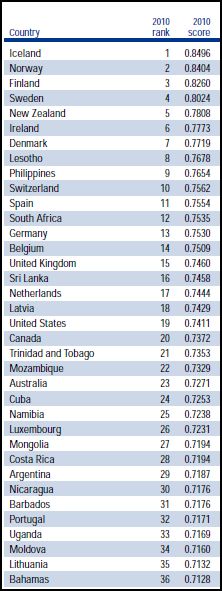
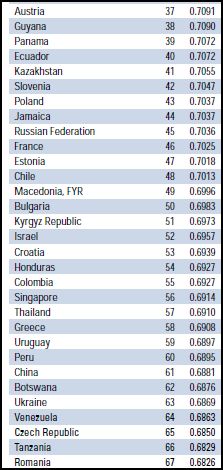
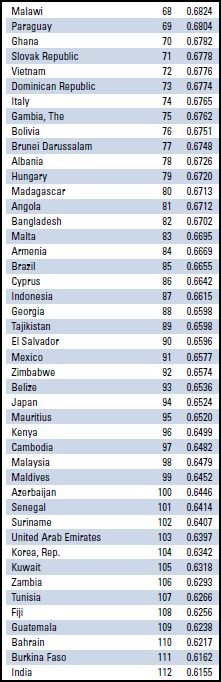
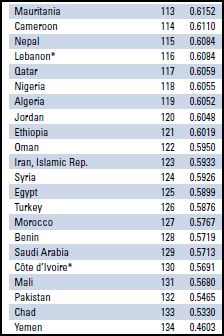
The World Economic Forum recently released its Global Gender Gap Report for 2010, authored by Ricardo Hausmann (Harvard University), Laura Tyson (UC Berkeley), and Saadia Zahidi (World Economic Forum).  The report ranks countries according to concrete measures of gender inequality.  They write:

The Global Gender Gap Index… is a framework for capturing the magnitude and scope of gender-based disparities and tracking their progress. The Index benchmarks national gender gaps on economic, political, education – and healthbased criteria, and provides country rankings that allow for effective comparisons across regions and income groups, and over time.

You can read about their methods, in depth, in the Report.

Here are the rankings:

Lisa Wade, PhD is an Associate Professor at Tulane University. She is the author of American Hookup, a book about college sexual culture; a textbook about gender; and a forthcoming introductory text: Terrible Magnificent Sociology. You can follow her on Twitter and Instagram.