Search results for The

Myrianne J. forwarded us an email she received from Dell advertising a laptop that perfectly illustrates the conflation of thinness with beauty. The email, which came with the subject line “Hello beautiful — introducing the new ultra-thin Vostro V131,” included this image, with the line “Thin and powerful never looked so good” centered over a woman’s hand:


Including the subject line, in fact, the words “beautiful” or “beautifully” appear three times in the ad, lest you fail to make the connection.
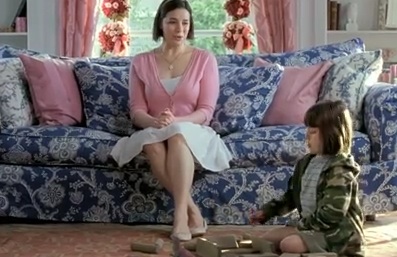
A recent Tide commercial featuring gender non-conformity by a girl has really struck a chord, judging by the ten submissions we got of it. In the ad, a mother wearing a pink sweater, sitting in a room accented in pink, nervously bemoans the fact that her daughter, who is wearing a camouflage hoodie and playing with wooden blocks, doesn’t like the trappings of femininity — specifically, she doesn’t like pink and she does like cargo shorts:

The commercial clearly illustrates the emphasis on gender conformity and the way parents may feel discomfort if their child won’t conform. The mother is clearly distressed that the “pink thing” didn’t work with her daughter, and we’re to assume that she worked hard to try to convince her to act more traditionally feminine but has slowly given up in the face of her daughter’s disinterest. The little girl eschews femininity at the cost of disappointing her mom. As someone who absolutely hated dresses as a kid myself, I remember that feeling that hopeful look on my mom’s face when she’d hold up a dress, hoping that somehow this one would win me over, and the knowledge I was somehow hurting her by rejecting it.

Yet as several of the submitters point out, the commercial also undermines this emphasis on gender conformity, even while presenting having an unfeminine girl as an exasperating situation for a mom. Unlike some ads we’ve seen that present the product as helping you raise a child who meets gender norms, here, the product does just the opposite: it saves the little girl’s clothes, which the mother kind of wishes had been ruined. In the end, the mother, though clearly less than thrilled, praises her daughter’s parking garage. As Melissa M. says,

On one hand, we see a child neither conforming nor being forced to conform to styles attributed to their gender role, though on the other hand we see a mother obsessively sticking to her role and being painted in the light of a harrowed mother, desperately trying to help her child fit in.

Thanks to Miss B., George McHenry Jr. (a doctoral candidate at the University of Utah), Tiffany D., Ulysses H., Leiana S., Sarah R., Melissa M., Felice S., Allison C., and Mary Ann C. for the tip!

Transcript after the jump, thanks to Ulysses.

more...

This week I listened to a Freakonomics podcast featuring Economics PhD-student twins, Alison and Steve Sexton.  They had studied the phenomenon of conspicuous conservation, which I’ve defined elsewhere as “the (often lavish) spending on ‘green’ products designed mainly to advertise one’s environmentally-moral righteousness.”  The Sexton’s studied how much people are willing to pay for the conspiciousness of their conservation.

They found that, in places where being environmentally-friendly is looked upon positively, people will spend more (or gain less) to ensure that their conservation efforts are obvious. For example, people will sometimes have their solar panels mounted on the shady side of their house. Why? It’s the side that faces the street. Why have solar panels if no one in the neighborhood can see that you do?  Likewise, the Prius is so popular in part because it is obviously a hybrid; no other car looks like it, so it can’t be mistaken for a “regular” (person’s) car.

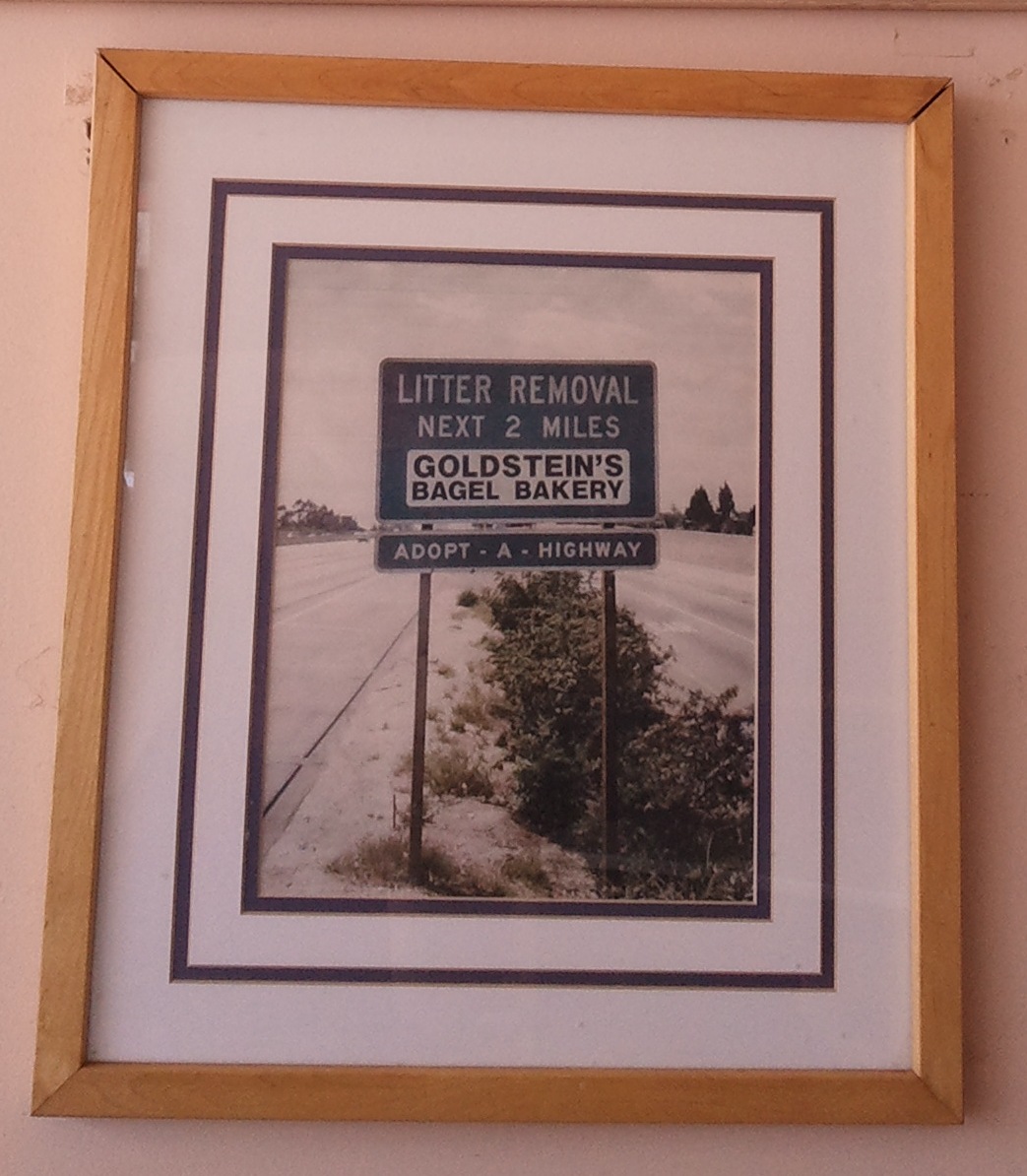
I thought of this willingness to pay to display one’s environmental thoughtfulness while visiting Goldstein’s Bagels in La Cañada, CA this week. They had this photograph proudly displayed:

I just love how not only are they paying to keep the highway clean, they’re being rewarded with a big advertisement for their store alongside the freeway, AND they get to take a picture of that sign and put it up for all to see.  It’s win-win-win; a win for the environment and a double win for Goldstein’s.

The Sexton’s argue that all of this conspicuous conservation is probably good.  Competing to be environmentally-friendly translates into more conservation, no matter what the motivation. (Especially as compared to conspicuous consumption; remember the Hummer?)  Accordingly, they suggest that public policy should focus on incentivizing the types of conservation efforts that aren’t visible, like insulation and weather-proofed windows, and leave the showy stuff to the market.

For another example of conspicuous conservation, see our post on faux-oil slicked shoes purchased to benefit the Gulf; on conspicuous consumption, check out the Louis Vitton mommy diva birthday cake; and see this post on conspicuous intellectual consumption.

Lisa Wade, PhD is an Associate Professor at Tulane University. She is the author of American Hookup, a book about college sexual culture; a textbook about gender; and a forthcoming introductory text: Terrible Magnificent Sociology. You can follow her on Twitter and Instagram.

While men have always had sex with men and women have always had sex with women, the idea that a person could be of a particular homosexual type (as opposed to someone who did homosexual acts) only emerged in the late 1800s (in Western culture anyway).  Even then, it took a very long time for the idea that gay people might be among us to filter through popular culture.  Only after an active gay liberation movement made homosexuality more visible did people actually start to look for it in people they knew.

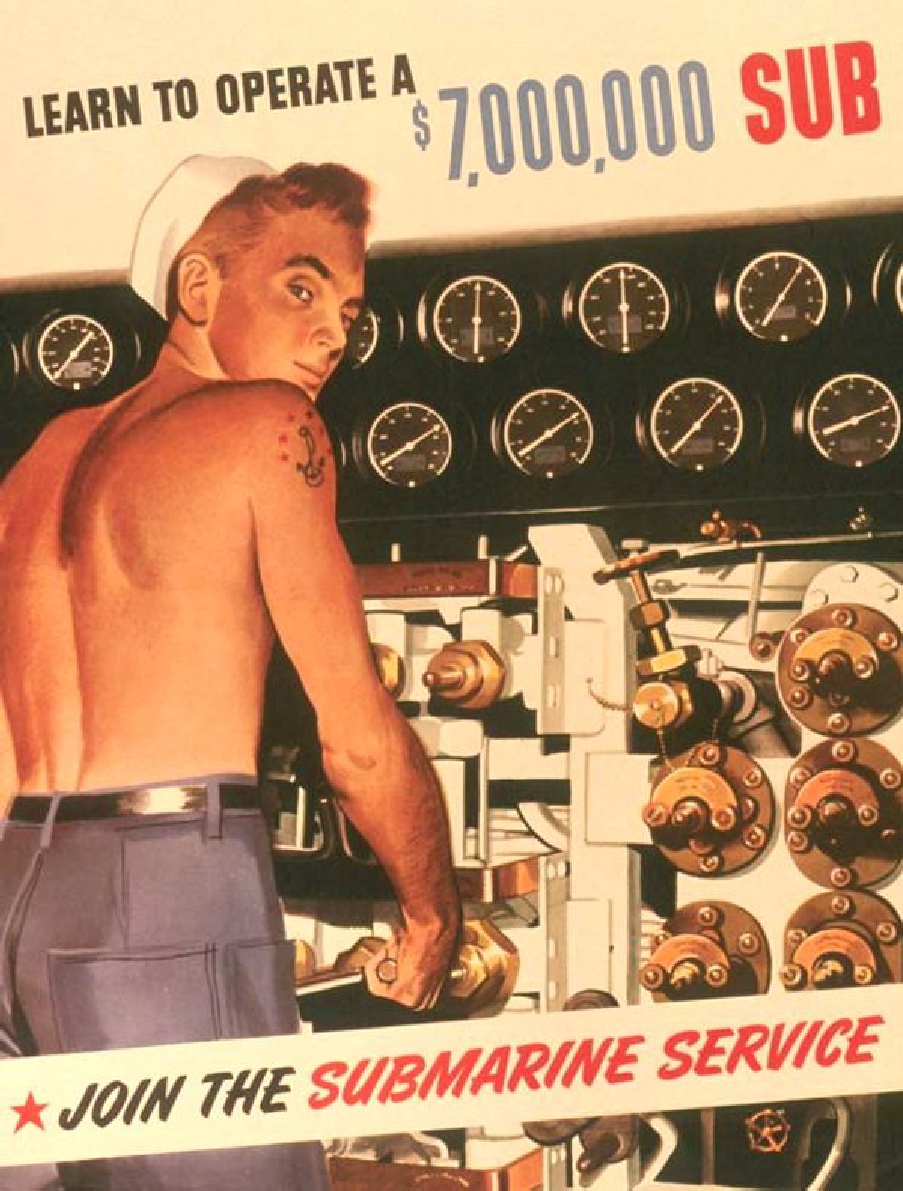
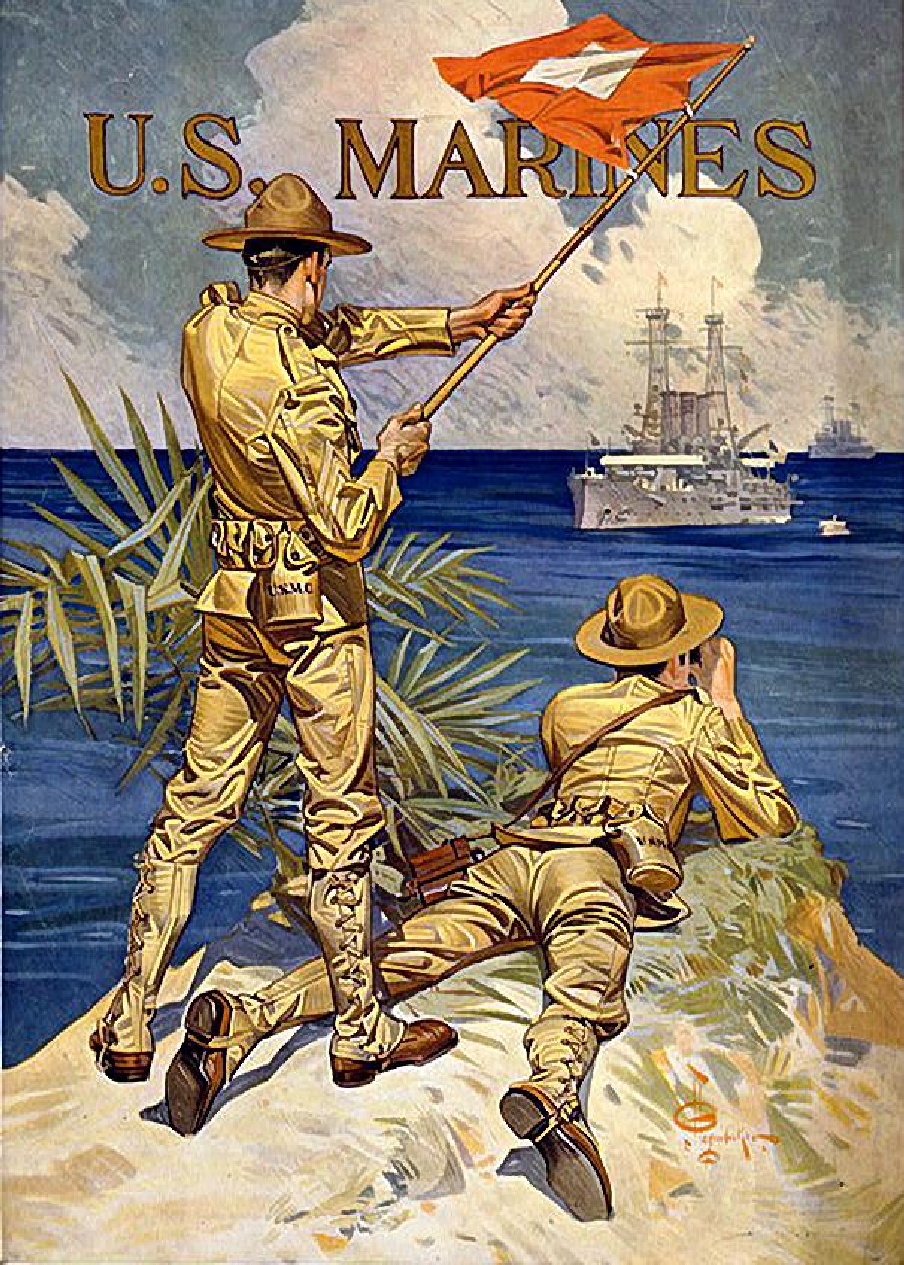
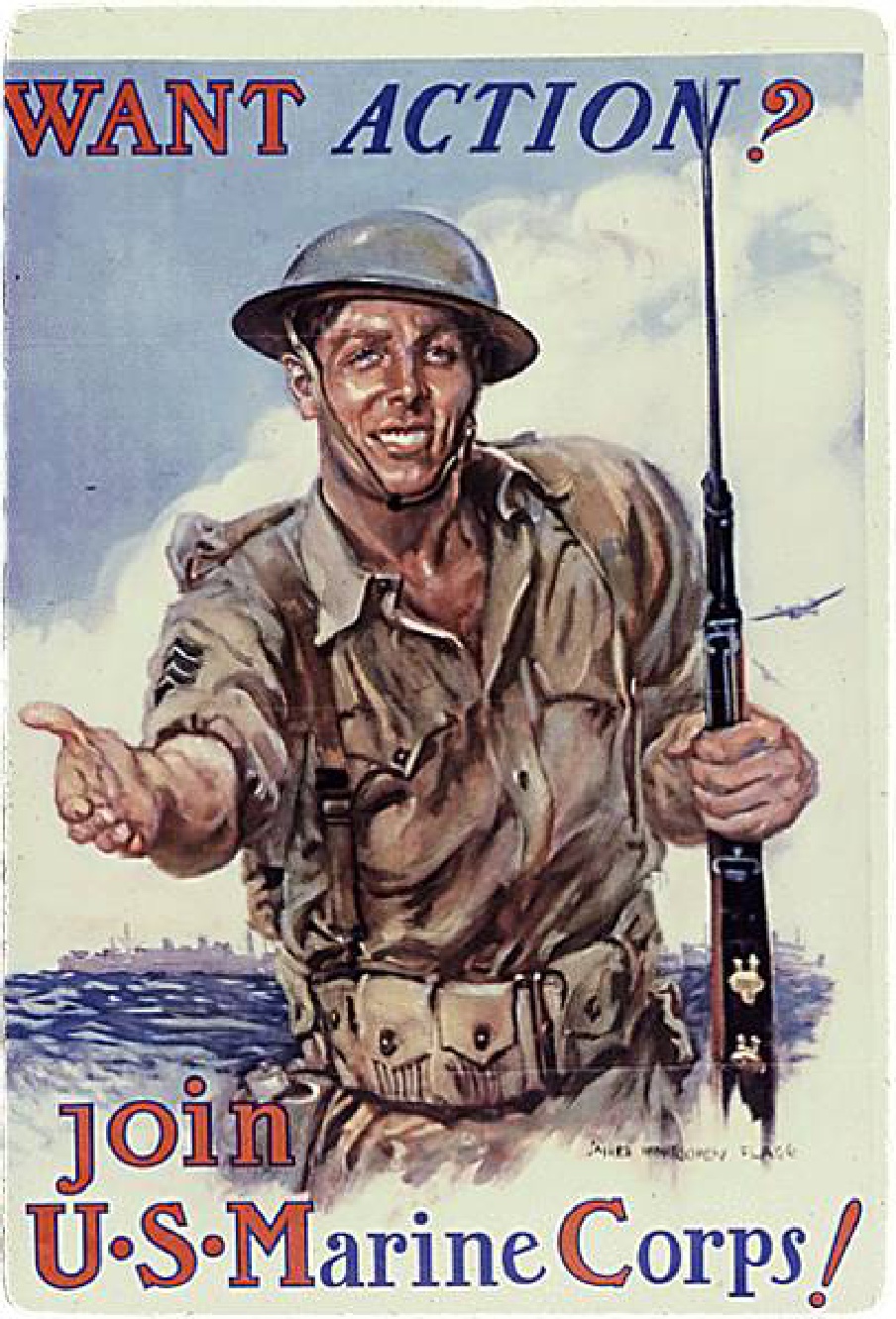
Accordingly, things that look very “gay” to us today, didn’t look that way before homosexuality became part of our consciousness. In a previous post on this topic, I discuss a vintage soap ad in which two naked men in a public shower have a conversation about “hard” water and “lathering” up.  It seems to have clear gay undertones today (maybe overtones), but it wasn’t meant to suggest homosexuality then.  Likewise, a series of military recruitment posters, sent in by Katrin, might very well trigger the “specter” of homosexuality today, but likely would not have inspired giggles at the time.


More at Scribd.

Lisa Wade, PhD is an Associate Professor at Tulane University. She is the author of American Hookup, a book about college sexual culture; a textbook about gender; and a forthcoming introductory text: Terrible Magnificent Sociology. You can follow her on Twitter and Instagram.

What happens after we throw something in a garbage can? From the user’s perspective, it disappears once the trash collectors pick it up (if you live in an area with municipal trash collection, of course; I grew up in a rural area where everyone had to deal with their own trash). Where does it go? Sometimes items are taken to a dump not far from where it was thrown away and either buried, bulldozed into large heaps, or incinerated.

But Carlo Ratti, an architect who works with the SENSEable City Lab at MIT, directed a project to find out just how far garbage can travel, with the goal of helping us understand the “removal chain” that conveniently disappears our trash for us as well as we’ve come to understand the global supply chains that bring us items in the first place. His team asked 500 people in Seattle to tag items they would be throwing out anyway with small tracking chips. They tagged a total of 3,000 objects, everything from tin cans to cell phones to sneakers. And the results showed that some of the items we get rid of can go on a rather dramatic journey, traveling thousands of miles:

The Trash Track website contains information about the methodology and ideas behind the project.

Thanks to Dmitriy T.M. for the tip!

Cross-posted at The Oreo Experience.

With the summer over, it’s time for Hollywood to pull out a new season of films. Here’s some of what’s coming up this fall and winter. For each trailer, I note what white people get to do and what non-white people get to do.

Let us begin:

Bucky Larson: Born to Be a Star

Things White People Get to Do: Be part of a loving family, be content with simple things, be blissfully unaware, be sweet, be naive, be oddly cool, progressive parents, live in a small town, live in a big city, parody Almost Famous, be hot, be regular looking, be super hot with a regular looking boyfriend, be the hero.

Things Not-White People Get to Do: be threatening, drive a car.

Contagion

Things White People Get to Do in This Movie: Play craps, have a family, be an expert, cry convincingly, deliver bad news, be unable to accept bad news, probably be the focal point of a conspiracy, populate towns.

Things Not-White People Get to Do in This Movie: Play craps, provide and clarify exposition.

Main Street

Things White People Get to Do: Fake an American accent, come up with a plan, be taken advantage of by the boss, be savvy about the boss, believe a stranger, be troubled, look out for the troubled, work in an office.

Things Not-White People Get to Do: Believe a stranger.

Warrior

Things White People Get to Do: have tattoos, cage fight, announce fights, reconnect with parents, gamble, join the military, lose a home, offer help, make up for lost time, walk around the house in matched undies and undershirt, throw tires around, be an adorable father, kiss the girl, be a war hero, cheer supportability, go head to head.

Things Not-White People Get to Do: walk through frame, lose a fight

I Don’t Know How She Does It

Things White People Get to Do: Have a career AND a family and be totes supes adorbs about it.

Things Not-White People Get to Do: n/a

Straw Dogs

Things White People Get to Do: Watch old movies, be in old movies, be way too aggressive, terrorize innocents, be a cheerleader, have sex, have a nice date, disrespect their partners, sexually harass women, fight back against bullies, go to church, rise to the challenge, wield a tire iron, use boiling water effectively.

Things Not-White People Get to Do: n/a

Drive

Things White People Get to Do: be really good at driving, set up dirty deals, be mobsters, live in a big city, meet guys in elevators, be a stunt person, be a loving single mom, get their hands on more money than they were expecting, kiss the girl, bash someone’s head in, wear freaky masks, slit some throats, be the dad the dad couldn’t be.

Things Not-White People Get to Do: be a felon.


30 more movie trailers after the jump:

more...


Last month I posted a video from the PBS series on U.S. inequality, showing the misperceptions many Americans have about the level of economic stratification in the U.S. In a new segment in the series, PBS looks at the often hidden health impacts of this economic inequality:

Watch the full episode. See more PBS NewsHour.

Full transcript available here.

Post under “No comment” by Sarah Richardson at Ms.:

Lisa Wade, PhD is an Associate Professor at Tulane University. She is the author of American Hookup, a book about college sexual culture; a textbook about gender; and a forthcoming introductory text: Terrible Magnificent Sociology. You can follow her on Twitter and Instagram.