Search results for The

Cross-posted at Jennifer Carlson’s Blog.

In national gun debates, we often think about America as “divided” geographically along the issue of guns. USA Today recently reduced the American gun debate to “urban vs. rural,” saying that “[o]ne of the biggest factors in where you stand on gun ownership and gun violence depends, literally, on where you lay your head at night.” This captures an important truth about American gun politics, but relying too much on the rural/urban divide across states obscures how this plays out within states.

The urban/rural divide in gun cultures suggests that guns are a necessary and practical tool for rural Americans who need them for the purposes of hunting, self-protection, and so forth. But these same factors should become irrelevant in the urban setting: between supermarkets and public services (combined with denser living), urbanites should see guns either as a hobby (for some urbanites) or a hazard (for most urbanites) rather than a practical tool of everyday life.

Following this logic, public law enforcement officials in urban areas should also oppose gun rights, and in fact, many do. Ken James, police chief of the Emeryville Police Department and head of the firearms task force of the Police Chief’s Association of California, recently called the notion that guns are defensive weapons a “myth” has said in the past that he prefers that his officers do not carry guns off-duty. Likewise, a number of national police associations have come out in support of Obama’s gun control proposals.  In contrast, over 400 county sheriffs have publicly stated that they will not enforce any “unconstitutional” laws signed by the Obama administration.  Perhaps the rural/urban divide is driving gun politics.

But maybe not.  Let’s take a closer look at the county-level politics of gun control attitudes in California, a state with some of the most restrictive gun laws in the US, and Arizona, a state with some of the most permissive laws.

1

Interestingly, both states have roughly the same number of counties with sheriffs that have aligned themselves with this pro-gun platform: in Arizona, 40% of county sheriffs have signed on, while in California, this figure is 31%. These numbers aren’t that different, considering how different their gun laws are. But here’s where it gets interesting: the expected urban/rural divide appears in California, but not Arizona, where urban counties have more pro-gun sheriffs.  What this means is that the rural/urban divide — at least in terms of sheriff support for gun rights — is flipped between gun-phobic California and gun-crazed Arizona.

No doubt, these two maps raise the question of how other issues intersect with, and structure, gun politics: for example, the politics of immigration likely have much more to say about the differences between Arizona and California than any straightforward divide between rural and urban America. Indeed, these maps suggest that there are logics about the role of guns in the pursuit of social order and policing at work in California versus Arizona that are not captured by neat dichotomies between “rural” and “urban” Americans.

Jennifer Carlson, PhD is an assistant professor of sociology at the University of Toronto. She is working on a book manuscript entitled, “Clinging to their Guns? The New Politics of Gun Carry in Everyday Life.”
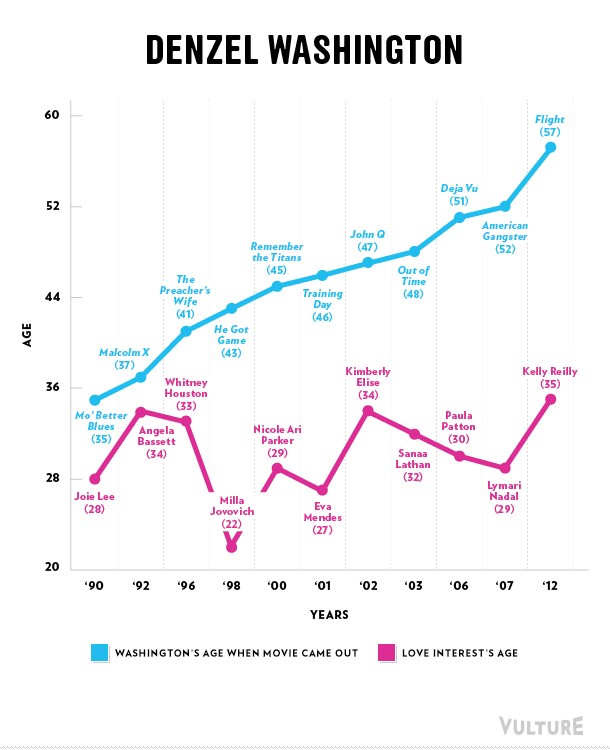
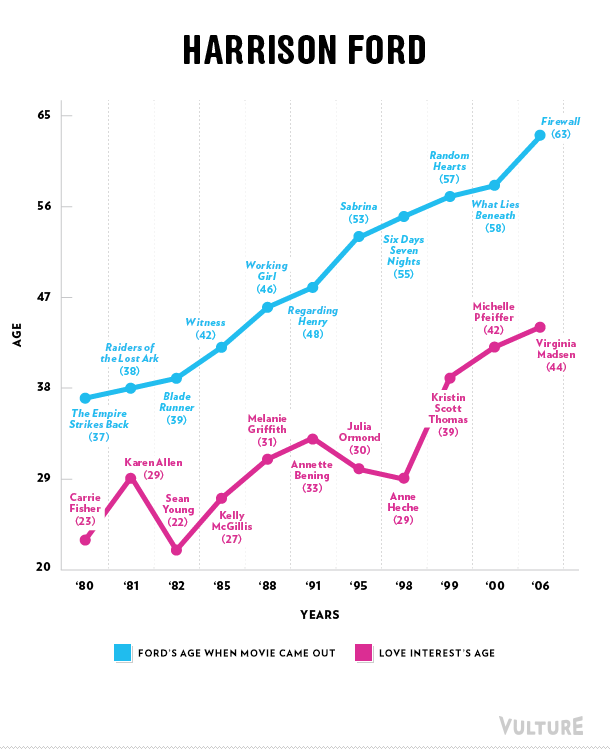
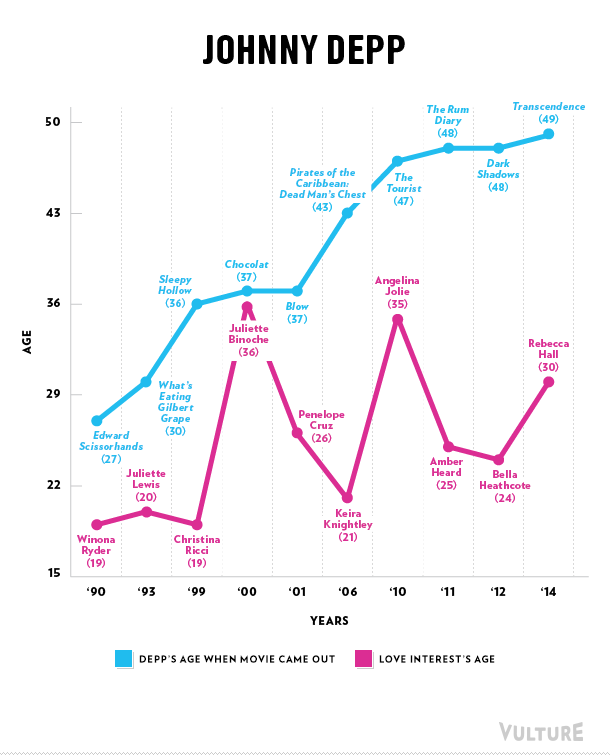
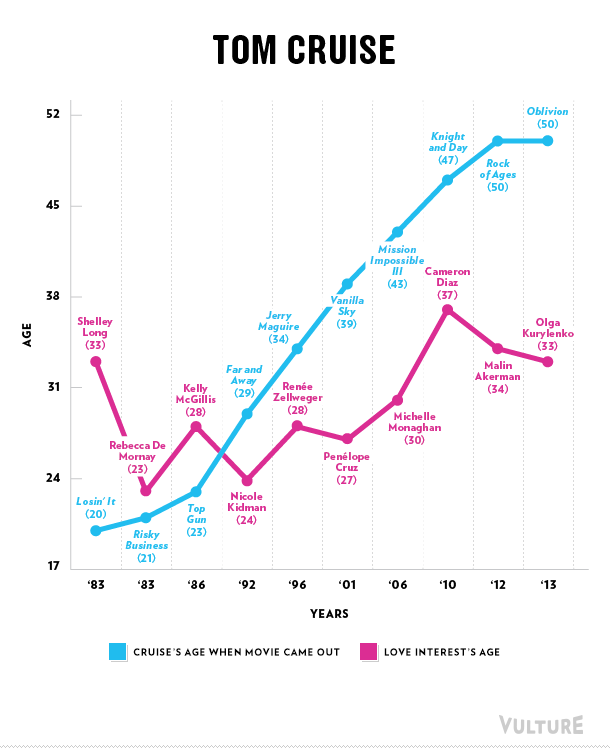
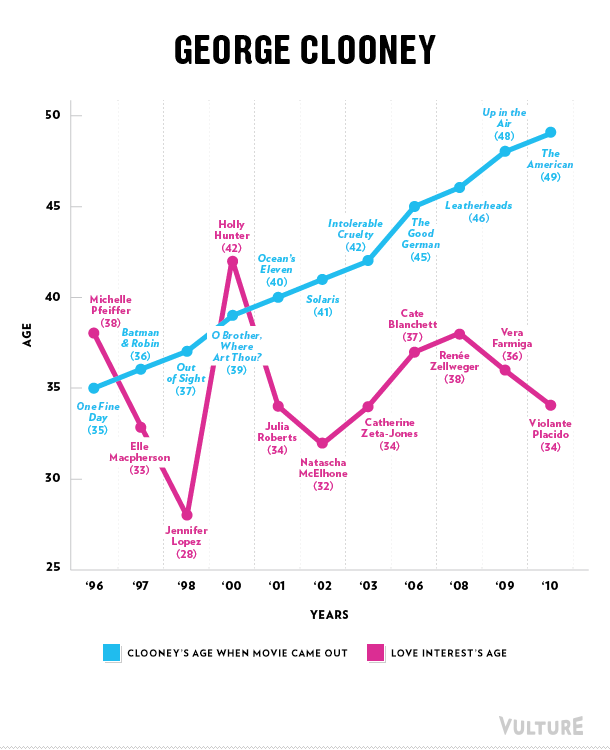
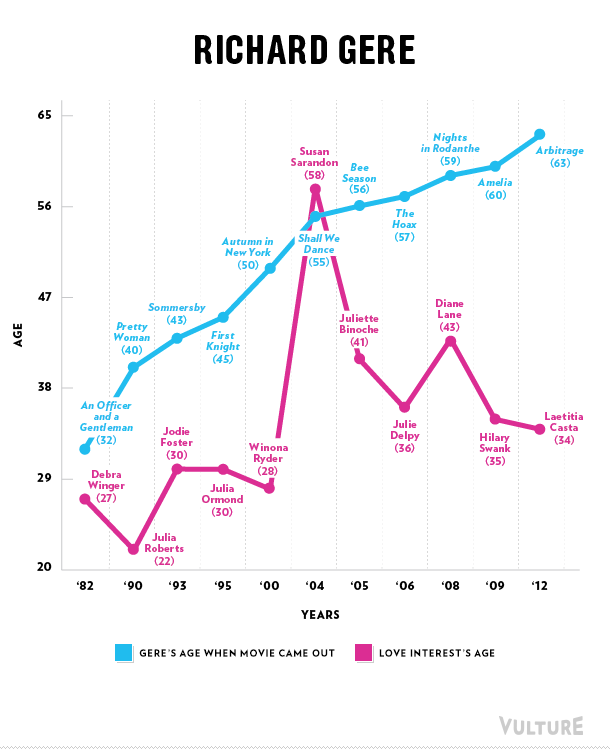
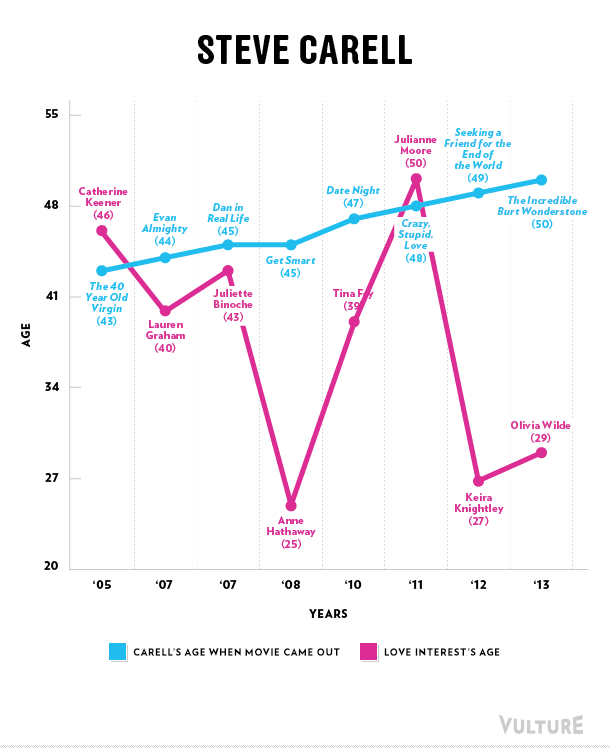
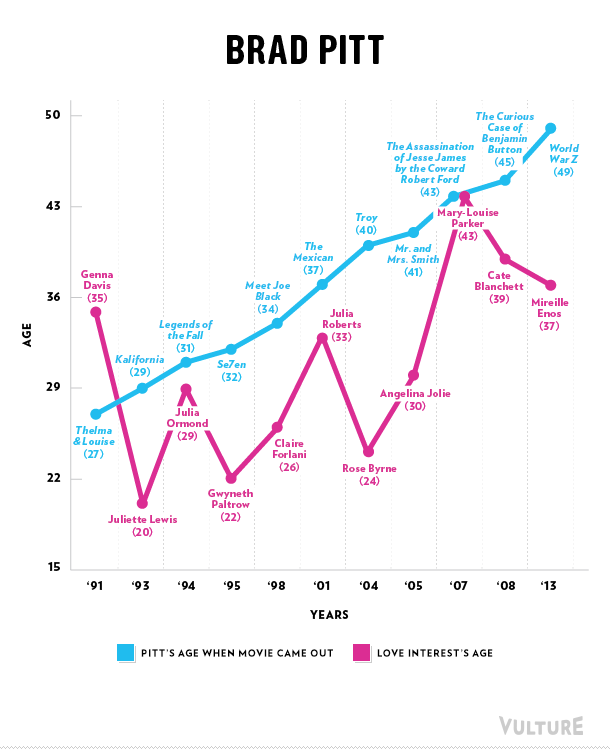
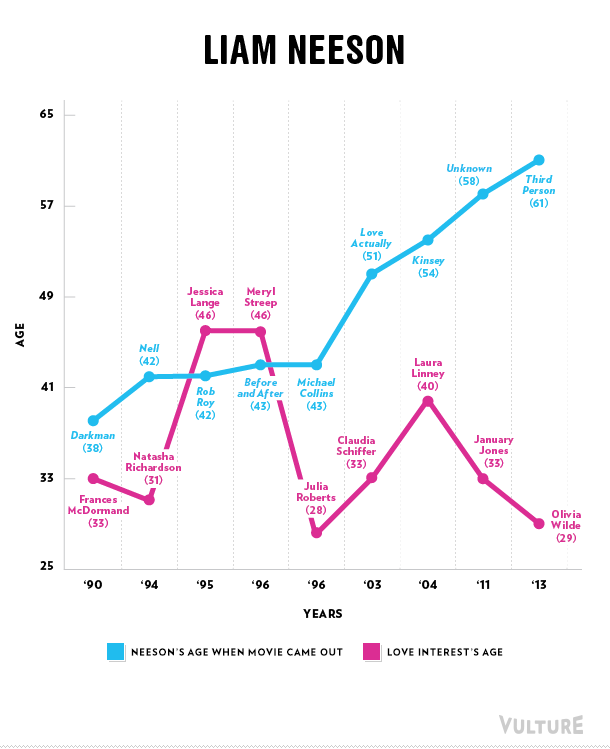
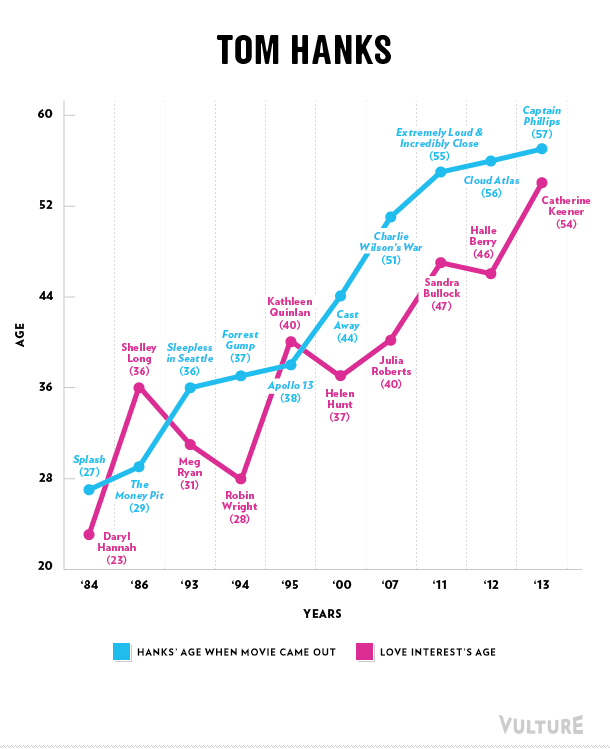
Robb S. sent along a great set of images from Vulture.  Using case studies of individual leading men in Hollywood, they show that the love interests cast in their films don’t age alongside them over the course of their careers.  Not convinced?  Here’s nine examples and one exception.  For fun, try to guess which leading man bucks the trend?  I’ll embed it last.

1 2 3 4 5 6 7 8 9
And the exception is!
10

Lisa Wade, PhD is an Associate Professor at Tulane University. She is the author of American Hookup, a book about college sexual culture; a textbook about gender; and a forthcoming introductory text: Terrible Magnificent Sociology. You can follow her on Twitter and Instagram.

Cross-posted at Asian-Nation.

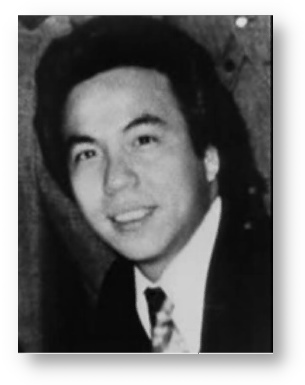
Today, June 19, marks the anniversary of the day Vincent Chin was beaten into a coma because he was Asian. As summarized in my article “Anti-Asian Racism,” Vincent Chin was a 27-year-old Chinese American living in Detroit, Michigan. On this date in 1982, he and a few friends were at a local bar celebrating his upcoming wedding. Also at the bar were two White autoworkers, Ronald Ebens and Michael Nitz.

1Ebens and Nitz blamed the Japanese for the U.S. auto industry’s struggles at the time and began directing their anger toward Vincent. A fight ensued and eventually spilled outside the bar. After a few minutes, Ebens and Nitz cornered Vincent and while Nitz held Vincent down, Ebens repeatedly bludgeoned Vincent with a baseball bat until he was unconscious and hemorrhaging blood. Vincent was in a coma for four days until he finally died on June 23, 1982.

Ebens and Nitz were initially charged with second degree murder (intentionally killing someone but without premeditation). However, the prosecutor allowed both of them to plea down to manslaughter (accidentally killing someone). At the sentencing, the judge only sentenced both of them to three years probation and a fine of $3,780. The sentence provoked outrage among not just Asian Americans, but among many groups of color and led to a pan-racial coalescing of groups demanding justice for Vincent.

Vincent’s supporters got the U.S. Justice Department to bring federal charges against Ebens and Nitz for violating Vincent’s civil rights. In this trial, Ebens was found guilty and sentenced to 20 years in prison while Nitz was found not guilty. However, the verdicts were thrown out because of a technicality and a second trial was ordered. The defense successfully got the trial moved away from Detroit to Cincinnati OH. In this second federal trial, an all-White jury acquitted both Ebens and Nitz of violating Vincent’s civil rights.

Vincent’s death and the injustices he, his family, and all Asian Americans suffered still stand as a stark and sober reminder that, in contrast to the image of us as the “model minority” and the socioeconomic successes that we have achieved, Asian Americans are still susceptible to being targeted for hostility, racism, and violence. We only have to look at recent incidents in which Asian American students continue to be physically attacked at school, and other examples of Asian-and immigrant-bashing and White backlash to see that we as society still have a lot of work to do before Asian Americans (and other groups of color) are fully accepted as “real” or “legitimate” Americans.

The silver lining in Vincent’s case was that it was a watershed moment in Asian American history because it united the entire Asian American community like no event before. For the first time, different Asian groups began to understand that the discrimination committed against other Asians could easily be turned towards them. In other words, for the first time, Asians of different ethnicities, cultures, and nationalities united around an issue that affected them all.

As a result, the Asian American community mobilized their collective resources in unprecedented ways and Vincent’s death was the spark that led to the creation of a network of hundreds of non-profit organizations working at local, state, and national levels to combat not just hate crimes, but also other areas of inequality facing Asian American (i.e., housing, employment, legal rights, immigrant rights, educational reform, etc.). Vincent’s death has had a powerful legacy on the Asian American community — as a result of the collective action demanding justice, it contributed to the development of the “pan-Asian American” identity that exists today.

This is why it is important for all Asian Americans, and all of us as Americans, to remember Vincent Chin — to mourn the events of his death, to reflect on how it changed the Asian American community forever, and to realize that the struggle for true racial equality and justice still continues today.

C.N. Le is a senior lecturer and the director of the Asian and Asian American Studies Center at the University of Massachusetts, Amherst.  He is the founder and principle writer for Asian-Nation.   You can follow him on Twitter.

Lisa Wade, PhD is an Associate Professor at Tulane University. She is the author of American Hookup, a book about college sexual culture; a textbook about gender; and a forthcoming introductory text: Terrible Magnificent Sociology. You can follow her on Twitter and Instagram.

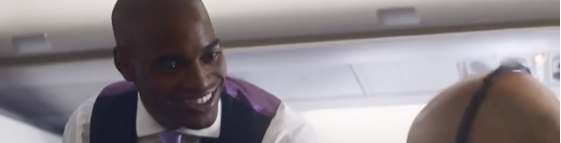
Screenshot_1While the flight attendant might be a quintessentially feminized occupation today, the first “stewardess” was, in fact, a “steward.” Pan American had an all-male steward workforce — and a ban on hiring women — for 16 years.  It was forced to integrate during the male labor shortage of World War II, when female flight attendants were considered as revolutionary as “Rosie” riveters and welders.  By 1958, their ban on hiring women would be reversed. There was now a ban on hiring men.  This is just some of the fascinating history in Phil Tiemeyer‘s new book, Plane Queer, a history of the male flight attendant.

By the 1950s women dominated the aisles in the sky.  Airlines accepted this.  Women (1) were cheaper to employ, (2) domesticated the cabin, making commercial travel seem suitable for women and children, and (3) sexualized the experience for the business men who still made up the bulk of travelers.

By the time Celio Diaz Jr. invoked the 1964 Civil Rights Act and sued Pan Am on the basis of gender discrimination, white male flight attendants were seen as downright queer.  Servile behavior — the cooking, serving, nurturing, and aiding behavior characteristic of the job at the time — was both gendered and racialized.  When black men or white women performed domestic duties, it was seen as natural.  (The gender dimension might seem obvious but, from slavery to the early 1900s, black men were also concentrated in domestic occupations: coachmen, waiters, footmen, butlers, valets  etc.)

So, when white men served others — but not black men or white women — it challenged the supposedly natural order on which both hierarchies were founded.  This is why male flight attendants caused such a stir. The airlines wouldn’t hire black men or women, so they hired white men and women. The men, as a result, were suspected of being not-quite-heterosexual from the get-go and have suffered the ups and downs of homophobia ever since.

The double-definition of servile behavior as simultaneously racialized and gendered absolutely leapt out at me when I saw a commercial for Virgin Atlantic, sent in by Grace P.  It captures both the race and gender dimension of a segregated workforce. The two women and single black man play the role of service worker, while the two white men are a pilot and an engineer.  Each is framed as being literally born to do these jobs, thus the insistent and troubling naturalization of these hierarchical roles.

Lisa Wade, PhD is an Associate Professor at Tulane University. She is the author of American Hookup, a book about college sexual culture; a textbook about gender; and a forthcoming introductory text: Terrible Magnificent Sociology. You can follow her on Twitter and Instagram.

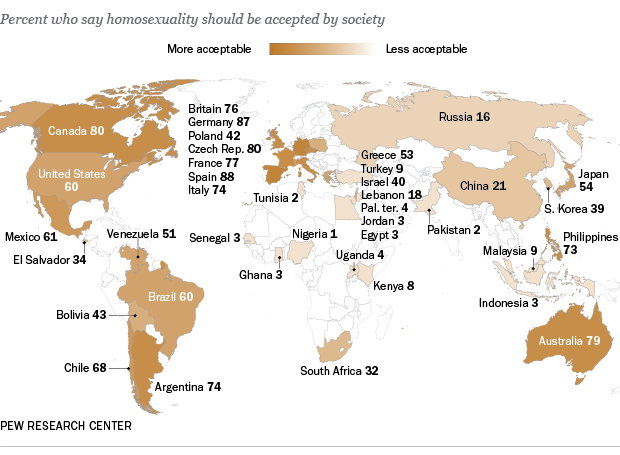
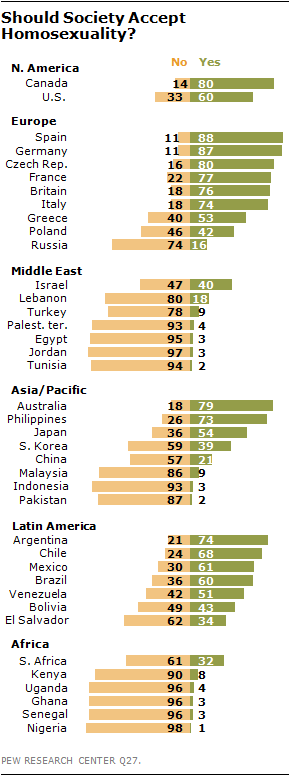
The Pew Research Global Attitudes Project recently released data on attitudes about homosexuality in 39 countries. Generally, those living in the Middle East and Africa were the least accepting, while those in the Americas, Europe, and parts of Asia (the Philippines, Australia, and to a lesser extent Japan) were most accepting:

PG_13.06.04_HomosexualityAccept_620

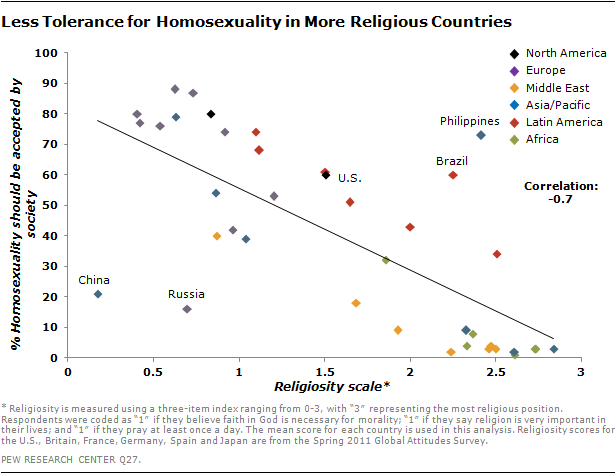
Generally, the more religious a country, the less accepting its citizens are of homosexuality:

2013-Homosexuality-03

The proportion of people who support social acceptance of gays and lesbians ranged from a high of 88% in Spain to a low of 1% in Nigeria:

2013-Homosexuality-05

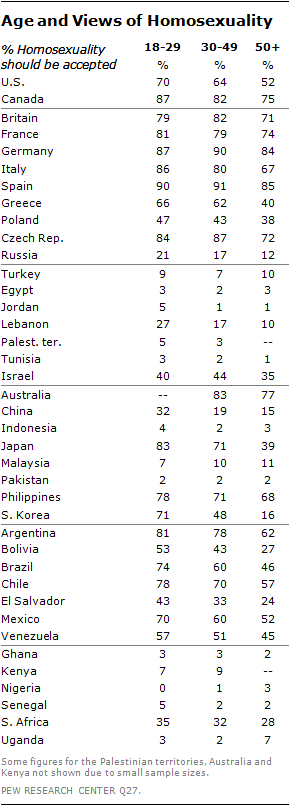
Attitudes about homosexuality vary widely by age. There is a pretty consistent global pattern of more positive attitudes among younger people, with a few exceptions:

2013-Homosexuality-01

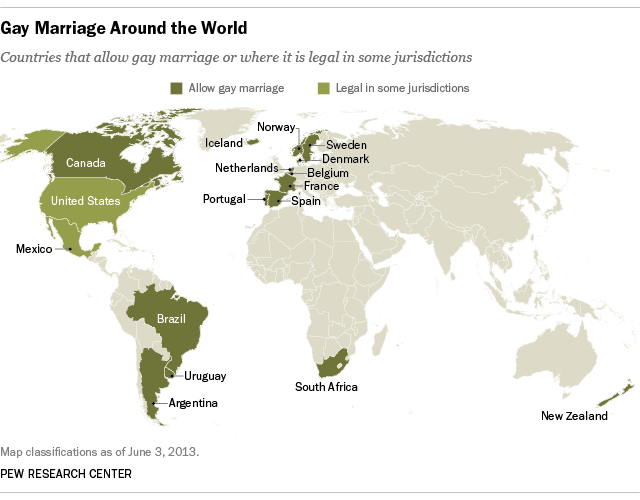
Thus far, legalization of same-sex marriage has been largely confined to the Americas and Europe; New Zealand and South Africa are the two outliers:

FT_13.05.31_gayMarriageMap

The Pew Center points out that of the 15 nations that have fully extended marriage rights to same-sex couples, 8 have done so just since 2010. In the U.S., we’re currently awaiting a Supreme Court’s decision, which should arrive shortly, to know if we’ll be joining the list sooner rather than later.

Thanks to Peter Nardi at Pitzer College for the link!

Gwen Sharp is an associate professor of sociology at Nevada State College. You can follow her on Twitter at @gwensharpnv.

Screenshot_2As our society becomes increasingly technological, I love stories that remind us of the value of simpler ways to solve problems, like a faux bus stop to catch escapee nursing home residents or dogs that are trained to sniff out cancer (both stories here).

This weekend we were treated to another such story, this time by Google. The company has announced a plan to bring internet to the whole world… with balloons.  The very first launch of a gas balloon was in 1783.  Two hundred and thirty years later, the company aims to deliver what is arguably the defining feature of our age — the internet — with helium-filled balloons.  That technology will then bring almost countless other technologies, such as medical advances and agricultural information, to people who are largely excluded from them now.  A fantastical plan.

Here’s how it’ll work:

Lisa Wade, PhD is an Associate Professor at Tulane University. She is the author of American Hookup, a book about college sexual culture; a textbook about gender; and a forthcoming introductory text: Terrible Magnificent Sociology. You can follow her on Twitter and Instagram.

@plouie01 snapped these two pics of the suggested gifts for Mother’s and Father’s Day at Chapter’s Bookstore in Vancouver. You might notice an interesting difference:

1
Yep, that’s right. Men get books, interesting books even!  And women get… pink stuff.  Mostly paper products, but without words and ideas on them, and also candles and soap..  You know, pretty good-smelling things meant to please the daft. Forgive me, perhaps I’m being overly harsh towards stationary. All I’m saying is, not a single book for ladies at the book store? Alas.

Lisa Wade, PhD is an Associate Professor at Tulane University. She is the author of American Hookup, a book about college sexual culture; a textbook about gender; and a forthcoming introductory text: Terrible Magnificent Sociology. You can follow her on Twitter and Instagram.

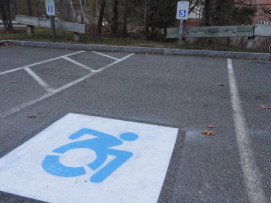
A new symbol to represent people with disabilities is being introduced in New York City. The symbol, designed by a team at Gordon College, looks like this:

1

We’ve posted previously about the politics of the symbol and its history. The notable changes here are the moving of the arms to the wheels of the chair, suggesting that the person is pushing themselves, and the forward-leaning angle, suggesting active motion.  It tells a story about independence and ability, instead of dependence and disability.  A very nice change.

Lisa Wade, PhD is an Associate Professor at Tulane University. She is the author of American Hookup, a book about college sexual culture; a textbook about gender; and a forthcoming introductory text: Terrible Magnificent Sociology. You can follow her on Twitter and Instagram.