Search results for The

On January 1st, the minimum wage increased in Arizona, Colorado, Florida, Montana, Ohio, Oregon, Vermont and Washington. These eight states all have laws which require them to automatically increase their respective minimum wages by the rate of inflation. Nevada also indexes its minimum wage but its increase takes place in July.

The state of Washington has the highest state minimum hourly wage at $9.04.  Oregon has the second highest at $8.80.

Eighteen states plus the District of Columbia have minimum wages above the federal minimum wage which remains at $7.25 per hour.  A full-time worker making the federal minimum wage earns just $15,000 a year.

There are those who argue against state laws requiring an inflation adjustment to the minimum wage.  Their most common argument is that such government mandated increases are a threat to business profitability and the health of our capitalist, free-market economy.  This is an interesting argument.  At one time, the conventional wisdom was that capitalism was a means to an end, the end being a better standard of living.  Now it appears that capitalism has become the end itself, and to sustain a healthy capitalism workers will have to make sacrifices.     

Actually, those arguing against increasing the minimum wage are really arguing for the necessity of a declining real wage.  The minimum wage has not kept up with inflation. This is true even in states that currently index their minimum wage.  The reason is that indexing began after years of real wage decline. For example, Oregon’s January 2012 increase to $8.80 from $8.50 still leaves the real inflation-adjusted Oregon minimum wage below what it was in 1976.  In 2011 dollars, Oregon’s 1976 minimum wage was $9.09.

The federal government does not automatically index the federal minimum wage and the chart below highlights the extent of the decline in its real value. The blue line shows the actual or nominal dollar value of the federal minimum wage; increases are the result of a vote by Congress.  The red line shows the real value of the minimum wage in 2010 dollars.  In real terms the federal minimum wage remains considerably below its value in the 1970s.

wage-trend.png

A second common argument against inflation adjusted increases in the minimum wage is that it is just a training wage for young teens and therefore not important to family survival.  This argument misses the mark for several reasons, the most important being that, as the chart below shows, 80% of minimum wage workers in the eight states with mandated increases are over the age of 20, and more than 75% work more than 20 hours per week (just over half work full-time). In fact, according to an Economic Policy Institute study of national data, families with a minimum-wage worker rely on their earnings for nearly half the family income.

table-on-increase.png

For the last week of December, we’re re-posting some of our favorite posts from 2011.

————————

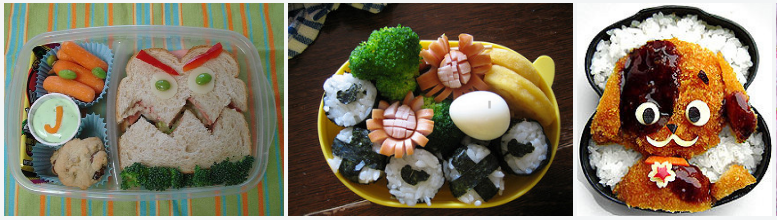
Flickr creative commons by Sakurako Kitsa, Roberto De Vido, and Stella Hwang.

In her article “Japanese Mothers and Obentos: The Lunch-Box as Ideological State Apparatus,” Anne Allison discussed the meaning of obentos. The Japanese educational system is highly centralized, with the national Ministry of Education determining the curriculum and approving textbooks. Nursery school, though overseen by the Ministry, is generally private and isn’t compulsory, though attendance is high. According to Allison, it functions much like kindergarten in the U.S., focusing less on content than on how to be a student. Of particular importance are the ability to transition from home life to the public sphere of a bureaucratic state institution and socialization into norms of group life, including cooperation and emphasis on the collective rather than the individual.

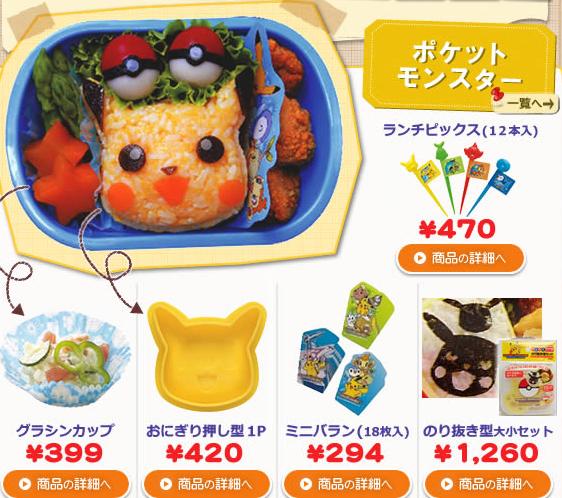
The obento was seen as an important element of this process. It was a token of home, and more specifically, of mom. The willingness to make elaborate, creative obentos was used as a measure of a woman’s commitment to the mothering role. The lunches, as you can imagine from the photos, could be very time- and labor-intensive to make. During her time in Japan, Allison says she and the mothers she talked to spent 20-45 minutes each morning on a single obento, in addition to the time spent planning and shopping for ingredients. Tips for making obentos were a frequent topic of conversation among moms, and whole magazines were devoted to the topic. Stores sell a range of obento items, including containers, decorations, molds and stamps to cut foods into various shapes, and, increasingly, pre-made food:

Nursery schools carefully oversaw lunch. The entire obento must be eaten, and everyone had to wait until every child had finished — an important lesson in the importance of the group over the individual. Thus, part of the mother’s job was to make the food appealing and easy to consume, in an effort to encourage her child to eat and avoid the embarrassment of holding up the rest of the class from after-lunch recess. Making food brightly-colored, in various shapes, and in small portions helped with this process. If a child failed to eat the entire lunch, or ate slowly, both the child and mother were held accountable. More than just a lunch, then, Allison argues that obentos served as a form of socialization into ideas of what it meant to be Japanese, particularly the emphasis on the collective and the importance of meeting expectations. Indeed, her son’s teacher viewed him as successfully assimilating to Japan not when he learned the language or made friends, but when he began routinely finishing his obento.

Talking to Japanese mothers — and making obentos for her own young son — Allison found that designing obentos was often viewed as a creative outlet, a way to express themselves and their love for their child. The small group she spoke with generally described it as a fulfilling part of motherhood. But the stakes were also high, since making a sub-par or merely utilitarian obento could stigmatize them as bad mothers. The quality of a mother’s obento became a symbol of the quality of her mothering and her commitment to her child’s educational success.

Of course, this served to institutionalize a form of intensive mothering that is difficult to balance with work life or outside interests. The women she spoke to generally could not hold even part-time jobs and fulfill the expectations placed upon them; those who did often tried to keep it secret to avoid negative judgment from their child’s teacher. In fact, a 2007 Japan Today article said that 70% of Japanese women leave the paid labor force when they have a child.

Allison’s article was published in 1991. I’d love to hear from readers with more recent experiences with expectations surrounding obentos in Japan.

UPDATE: As I had hoped, some of our readers have some great insights about obentos, including questioning whether the really elaborate obentos are most common among wealthier families while most make do with less intricate versions that don’t require as much commitment to intensive mothering. Be sure and check out the comments!

[Full cite: Anne Allison. 1991. “Japanese Mothers and Obentos: The Lunch-Box as Ideological State Apparatus.” Anthropological Quarterly 64(4): 195-208.]

Gwen Sharp is an associate professor of sociology at Nevada State College. You can follow her on Twitter at @gwensharpnv.

For the last week of December, we’re re-posting some of our favorite posts from 2011.

————————

Last week Lisa posted about the racist “Asians in the Library” video from UCLA student Alexandra Wallace, and how the responses to it have often drawn on very sexist, demeaning language, as though the only way we know to combat one type of stereotyping or prejudice is to use another. Yuki T. send in a video response by slam poet Beau Sia that, as Yuki says, “stands out as a real examination of the white privilege and fear that underlies the racism that Alexandra Wallace displays,” rather than just trying to degrade or mock Alexandra in whatever way possible:

UPDATE: I found a transcript at dandelionchild, via Common Pitfalls of the Amateur Poet, though it appears the first place the transcript was posted was Madame Thursday. It’s after the jump. Thanks for reminding me, WellWheeled!

more...

For the last week of December, we’re re-posting some of our favorite posts from 2011. Originally cross-posted at Jezebel and Owni.

————————

A few years ago my mom took a short-term nursing job at a hospital in the Sacramento area. This was a huge deal for her. She had never been to California, hadn’t lived outside of our rural area of Oklahoma since she divorced my dad when I was a baby, and had never worked at a “big city” hospital. She feared she wouldn’t be able to make it, that her rural hospital experience just wouldn’t translate.  There were a lot of firsts for her, but it went well and the hospital administration told her they’d be happy to have her back. She was incredibly proud of herself, both for doing a good job and for being able to survive in California, a location trumped in the Big Scary Places sweepstakes only by New York City. It was an enormous confidence builder: she could leave her small town and she could make friends and keep a job.

And then, a few days before she was set to leave, she called me. Some of the staff had a little informal going-away party for her, and she was baffled by the card they’d all signed for her. It featured Jeff Foxworthy, the comic who made a name with his “You might be a redneck if…” schtick in the ’90s. The joke on the card was something about being a redneck if you used Hefty trash bags for luggage. But why, my mom asked hesitantly, would they give that to her? She’d never told them she liked Jeff Foxworthy; what made them think she’d want a card with him on it? And finally, in a plaintive voice that still just breaks my heart when I remember it, she asked me if it was possible they were implying she is a redneck, and that the people she thought were her friends were laughing at her.

Of course they did, and were. That doesn’t mean they didn’t genuinely like her or didn’t think she’s an excellent nurse, or that they meant to be hurtful; they probably assumed she’d get the joke, what with her accent, unusual colloquialisms, and openly-expressed awe and  complete lack of irony or cynicism. But in fact, the idea that her new friends might view her as a redneck or a hick was a shock. She didn’t know what she might have done that would make other people think she’s a redneck. And I could tell she was terrified — afraid that instead of “making it” in California, she was actually a joke, and too clueless to know it.

I lied to her. I said I was sure it wasn’t anything specific to her, but was just because she was from Oklahoma, and Jeff Foxworthy is from the South, so they probably just thought everybody in the South or South-adjacent region likes him. I knew it would break her heart and totally destroy her new-found confidence to think that to a lot of people, she represented stereotypes of backward rednecks, not the hard-working medical professional she’d been working so hard to portray herself as.

I thought of that experience when I saw this postcard from Post Secret:

I’ve built up a lot more cultural capital than my mom, going to grad school and being socialized into the norms of academia. I mostly eradicated my accent when I was an undergrad, I figured out that Velveeta cheese was not an acceptable addition to a cheese plate at an upper-middle-class dinner party, and I learned that most people don’t view skunks, squirrels, opossums, or raccoons as animals you might potentially turn into pets, if you’re brave and really dedicated.

I don’t feel ashamed of my background any more, because I’ve achieved enough proof of upper-middle-class success — a Ph.D., a tenure-track job, the knowledge that Brie is fancy cheese and not, as my grandma thought upon seeing it for the first time, fish bait — and some useful theories, like the idea of cultural capital, to help me make sense of what’s going on.

But I recognize the sentiment expressed in the postcard — the ever-present possibility that you’ll un-self-consciously mention something from your childhood and be met with gleefully horrified looks and giggles, and not know what’s so funny about shrugging and off-handedly saying, “I don’t know if I really need to see a movie about it, I’ve watched my relatives do it tons of times” when someone suggests watching the documentary Okie Noodling. It’s an extra little mental effort you have to expend as you navigate social encounters, trying to imagine whether something as small as honestly answering a simple question like what was your favorite food when you were a kid might open you up to ridicule. It’s not really the laughing itself, which is often good-natured and comes from people who do honestly like you, that’s so bothersome; it’s the realization that you still don’t know the cultural rules, and thus can’t necessarily protect yourself from being laughed at even if you wanted to — or in my mom’s case, that you don’t know what it is you’re doing that makes you a redneck in other people’s eyes.

For the last week of December, we’re re-posting some of our favorite posts from 2011.

————————

The US economy faces a number of challenges—among them a lack of job creation and an ever-growing trade deficit. Many policy-makers believe that encouraging business innovation is the best response to these particular challenges. Sounds plausible but experience suggests otherwise.

The best example of why simply encouraging business innovation is not the answer for our employment and trade problems is Apple and its iPhone.

The iPhone was introduced in 2007 and has been incredible successful.  U.S. sales soared from 3 million units in 2007 to over 11 million in 2009.  Global sales topped 25 million in 2009.

While the iPhone is designed and marketed by Apple, almost all the phone’s components are produced by foreign companies operating outside the United States.  These components are then shipped to China where Foxconn, a Taiwanese company, oversees their assembly and their export to the United States and other countries.  As a result, the iPhone generates few jobs in the United States.

Two economists, in an Asian Development Bank working paper, examined the iPhone 3G production process in some detail.  The table below, taken from their study, highlights the main suppliers and the costs of the components they produce for a single phone.  Most of the components are supplied by Japanese, South Korean and German firms, although there are also some U.S. suppliers (although who knows where they actually produce their compnents).

The total component cost of an iPhone in 2009 was $172.46.    Workers in China assemble the iPhone, but because their wages are low the assembly cost per phone (labeled manufacturing costs in the table below) is quite small, only $6.50 a phone.  The total production cost per phone is $178.96.

costs.jpg

Because the iPhone is assembled in China all sales in the U.S. mean an increase in Chinese exports (even though the phone is largely composed of inputs produced outside of China) and an increase in U.S. imports.  In 2009, China exported more than $2 billion worth of iPhones to the United States.  Thus, the iPhone, because of the Apple’s production strategy, also adds to the U.S. trade deficit.

Apple is not alone in embracing China as its production base.  China is now the world’s largest exporter of manufactured goods. And, as the chart below shows, the share of Chinese exports that are labled high technology is growing.  This trend has encouraged many analysts to claim that the U.S. is now locked in fierce economic competition with China.

hitech.jpg

However, as we see next, more than 80% of China’s high technology exports are actually produced by foreign companies operating in China.  Moreover, these foreign companies have significantly increased their control over this production.  In 2002 foreign owned firms that were 100% foreign owned (which means that they had no Chinese partner) accounted for only 55% of Chinese high technology exports.  In 2009 they accounted for 68%.

foreign-owned.jpg

Why do so many transnational corporations choose to locate production in China?  The answer is obvious: profits. Apple again serves as a good example.  The table below, taken from the Asian Development Bank working paper cited above, shows Apple’s profit-margin on the iPhone.  In 2009 it was a whopping big 64%.

profits.jpg

Struck by the size of Apple’s profit-margin, the authors of the Asian Development working paper considered whether the iPhone could reasonably be made in the United States.  As they note:

The role of the PRC in the production chain of iPhones is primarily the assembly of all parts and components into the final product for re-shipment abroad. The skills and equipment required for the assembly are very basic and there is no doubt that American workers and firms are capable of assembling iPhones in the US. If all iPhones were assembled in the US, the US$1.9 billion trade deficit in iPhone trade with PRC would not exist. Moreover, 11.4 million units of iPhone sold in the non-US market in 2009 would add US$5.7 billion to US exports.

For the sake of discussion, they assumed that assembly line wages in the U.S. are ten times higher than in China.   Given that Chinese production workers earn roughly $1 an hour, that is not an unreasonable assumption.  The higher wages would mean that the total assembly cost per phone would rsie to $65 and the total manufacturing cost would approach $238.  If Apple continued to sell the iPhone for $500, the company would still earn a very respectable 50% profit margin.

Moreover, as the authors point out:

In this hypothetical scenario, iPhones, the high-tech product invented by the U.S. company, would contribute to U.S. exports and the reduction of the U.S. trade deficit, not only with the PRC, but also with the rest of world. More importantly, Apple created jobs for U.S. low skilled workers; those who could not be the software engineers needed by Apple. Giving up a small portion of profits and sharing them with low skilled U.S. workers by Apple would be a more effective way [than depreciation of the exchange rate] to reduce the U.S. trade deficit and create jobs in the United States.

Of course, shifting production to the United States would mean that Apple would earn less money and there is little reason to believe that the company is prepared to sacrifice its profits for the good of the country.  If we want to tackle our employment and trade problems were are going to have to do more than promote more attractive conditions for business.


For the last week of December, we’re re-posting some of our favorite posts from 2011. Originally cross-posted at Scientopia.

————————

I came across this fascinating poster advertising tea at The Coffee Bean in Irvine, CA.  The ad features tea leaves balled up into small tea “pearls” and spilled into a person’s palm (text and analysis below):

Text:

Three minutes to fragrant perfection.

It takes a full day to hand-roll 17 ounces of our Jasmine Dragon Pearl Green Tea.  But in just three minutes you can watch these aromatic pearls unfurl gracefully into one of the world’s most soothing and delicious teas.

This ad suggests that others’ toil should enhance one’s experience of pleasure.  The fact that it takes a significant amount of human labor to “hand-roll” tea leaves into balls — an action that is in no way asserted to change the taste of the tea — is supposed to make the tea more appealing and not less.  We are supposed to enjoy not just the visual, but the fact that others worked hard to produce it for us.  A whole day of their labor for just three minutes of curly goodness.

This is a rather stunning value pervading U.S. culture.  Luxury may be defined not only as pleasure, or as the consumption of the scarce, but as the “unfurling” of others’ hard work.  What could be more luxurious than the casual-and-fleeting enjoyment of the hard-and-long labor of others?

Lisa Wade, PhD is an Associate Professor at Tulane University. She is the author of American Hookup, a book about college sexual culture; a textbook about gender; and a forthcoming introductory text: Terrible Magnificent Sociology. You can follow her on Twitter and Instagram.

Time for another round-up of gendered kids’ items!

Will L. noticed something interesting recently at Old Navy. The boys’ section offered two styles of jeans, Skinny and Regular:

But when he looked at the corresponding section in the girls’ clothing, he found not Skinny and Regular, but Skinny and…Super Skinny:

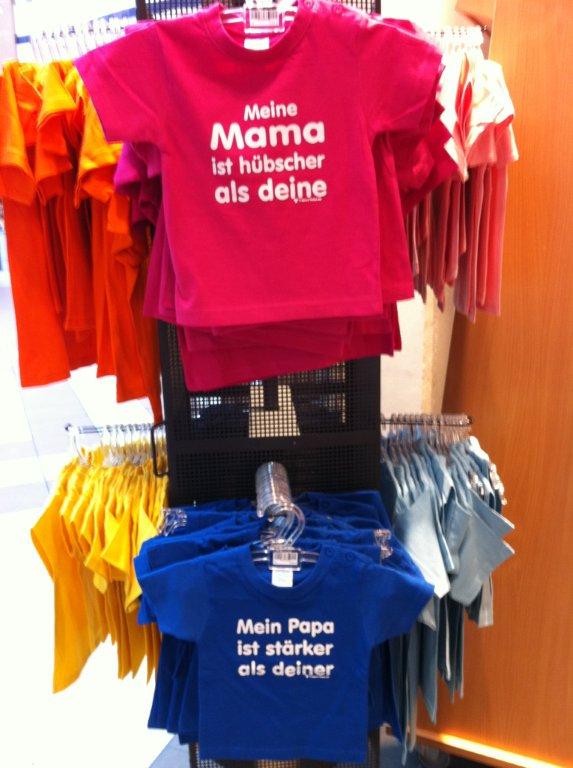
Caro Reusch sent us an example of kids;’ t-shirts with messages about what we value for men and women. She saw the following at a mall in Berlin:

The blue one says “My daddy is stronger than yours,” while the pink announces, “My mommy is prettier than yours.”

Similarly, Lindsey B. saw two themed bibs for sale at Target. The blue bib is a doctor and the pink one is a ballerina:

Shantal Marshall, a postdoc student at UCLA with a Ph.D. in social psych and blogger at Smartie Pops, noticed that Crayola has a new product out, the Crayola Story Studio.  It lets you upload a photo of yourself, have it turned into a cartoon, and then it’s inserted into one of 3 themed templates: Disney Princess, Spiderman, or Cars. You can then print off various versions of coloring books based on those templates. The commercial for the Spiderman version shows a boy excitedly becoming a superhero:

For the Disney Princess version, we see a girl excited to become a princess, then dancing in the background with her very own Prince Charming:

As Shantal said, it’s a bit dispiriting that Crayola’s slogan for these items is “give everything imaginable,” but the pre-existing templates, and their marketing, don’t seem to include an imaginable alternative to the “boys = superheroes” and “girls = princesses” division we see so often in kids’ toys.

Madelyn C. saw a store in Warsaw, Poland, that just goes ahead and makes the gendered division of the toy industry explicit:

Finally, Jessica M. sent in a link to a GOOD post by Christopher Mims about the Toy Industry Association’s 2011 Toy of the Year Awards. There are general categories of toys, such as educational, innovative, and action, but of course also girl and boy categories (also, I personally can’t think of “boy toy of the year” without thinking of Madonna’s outfit in her “Like a Virgin” performance at the first MTV Video Music Awards, but maybe the ’80s are sufficiently behind us that the phrase resonates differently for most people). Anyway, Mims discusses the gendered messages in the commercials for the nominees in the two categories. Among other things, the categorization is rather confusing. Hexbugs are nominated in the boy category, even though commercials for them show girls as well:

Also, Mims points out that the boys’ category “includes a strong undercurrent of Beyond Thunderdome via WWE.” Exhibit A: The commercial for Beyblade Metal Masters, “performance tops” to be used in “strategic battles”:

Playing with tops has gotten super hardcore, I guess. Probably they should look into a sponsorship from an energy drink.

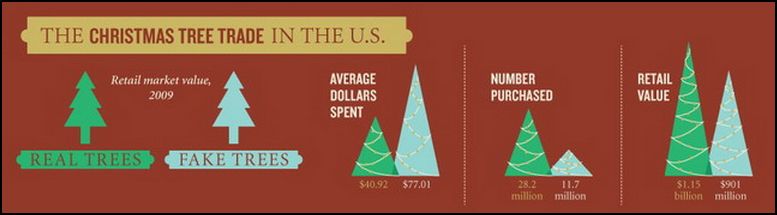
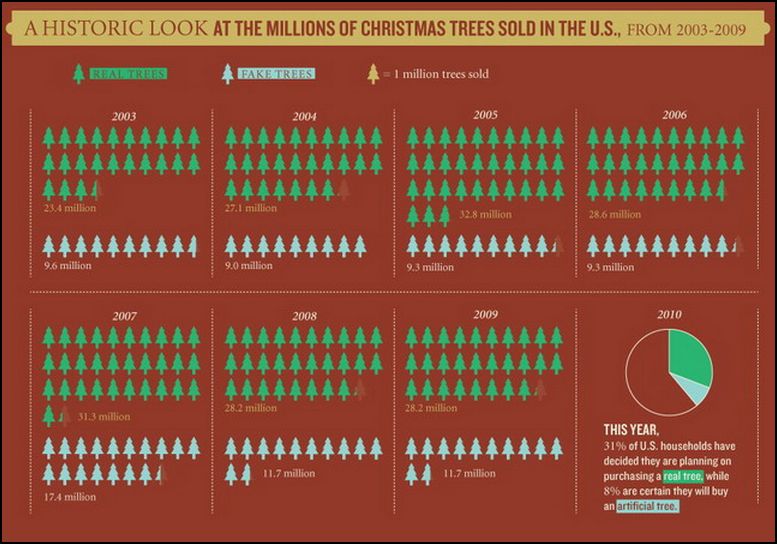
Billions of dollars are spent on christmas trees — real and fake — each year.  The data for 2009:


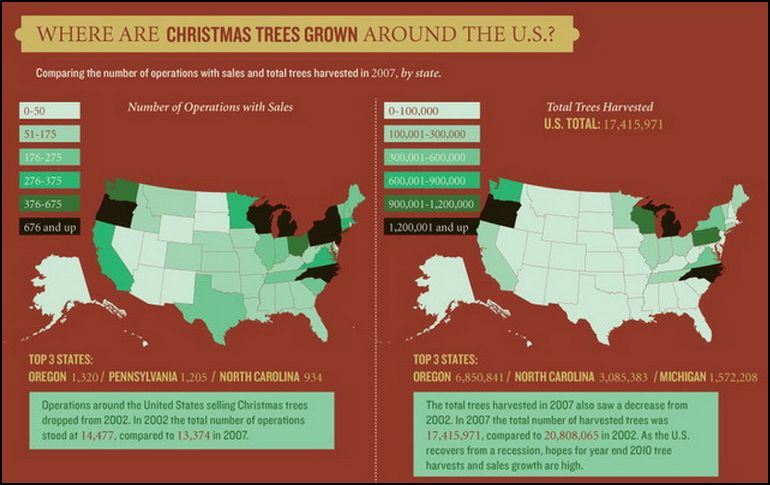
Most of the companies benefiting from this spending are small businesses:


Fake trees appear to be growing in popularity, but the sales of real trees do not appear to be slowing:


The states that benefit most from Christmas tree sales include Oregon, Michigan, North Carolina, New York, New Jersey, Ohio, Pennsylvania, and Washington, and Wisconsin:

Found at Intuit.

Lisa Wade, PhD is an Associate Professor at Tulane University. She is the author of American Hookup, a book about college sexual culture; a textbook about gender; and a forthcoming introductory text: Terrible Magnificent Sociology. You can follow her on Twitter and Instagram.