Flashback Friday.

When I was in grad school studying sociology of agriculture, one thing we talked about was organic agriculture and the difference between “organic” and “sustainable.” Most consumers think of these words interchangeably.  So, when many people think of an organic dairy farm they imagine something along the lines of these images, the top results for an image search of “organic dairy farm”:

2

So happy! So content! And, we assume, raised on a small family farm in a way that is humane and environmentally responsible. Those, are, after all, two of the things we expect when something is defined as “sustainable”: it is environmentally benign and humane. We also usually assume that workers would be treated decently as well.

But there is no reason that those elements considered essential to sustainability have to have much to do with organic agriculture. Depending on who is doing the defining, being “organic” can involve very little difference from conventional agriculture. Having an organic dairy mostly just requires that the cows not have antibiotics or homones used on them, eat organic feed, and have access to grass a certain number of days per year. In and of itself, organic certifications don’t guarantee long-term environmental sustainability or overall humane treatment of livestock.

A great illustration of how little the modes of production on organic farms may differ from conventional agriculture is the Vander Eyk dairy. It is an operation in California with over 10,000 dairy cows. Here are some images (found here and here):


feedlot

cow_standing2

546173011_0a1034757e_o

As the caption to the last image makes clear, the Vander Eyk dairy had two herds on the same property, but segregated from one another: the majority of the herd produced conventional milk, while 3,500 cows produced organic milk for sale under the Horizon brand:
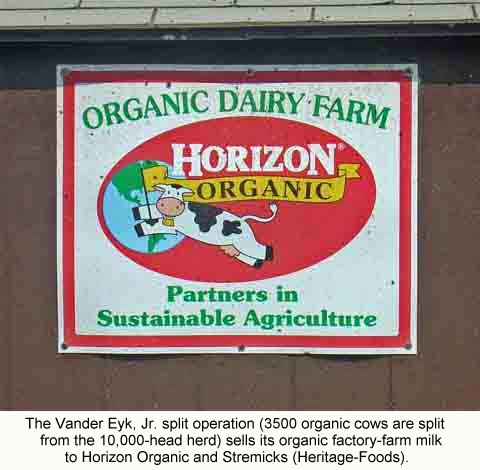
horizon_sign

In 2007 the Vander Eyk dairy lost its organic certification for violating the requirement that organic dairy cows spend a certain amount of time on pasture. They had cows on pasture, but they were non-milking heifers, not cows that were being milked at the time. What we see here is that the label “organic” doesn’t guarantee most of the things we associate with the idea of organic or sustainable agriculture (and in cases like Vander Eyk, may not even guarantee the things the label is supposed to cover).

This isn’t just in the dairy industry. As Julie Guthman explains in her book Agrarian Dreams: The Paradox of Organic Farming in California, many types of organic agriculture include things you might not expect. For instance, organic producers in California joined with other producers to oppose making the short-handled hoe illegal — the bane of agricultural workers everywhere (and most infamously associated with sharecropping in the South in the early 20th century) — because they want workers to do lots of close weeding to make up for not spraying crops with pesticides. So, though we often assume organic farmers would be labor-friendly, in that case they opposed a change that agricultural workers supported.

Many organic crops are grown on farms that are the equivalent of the Vander Eyk dairy; most of the land is in conventional production, but a certain number of acres are used to grow organic versions of the same thing. Often the producer, which may be an individual farmer or a corporation such as Dole, isn’t very committed to organics; if a pest infestation threatens to ruin a crop, they’ll just spray it and then sell it on the conventional market rather than lose it. They may then have to have the land re-certified as “in transition,” meaning it hasn’t been pesticide-free long enough to be declared completely organic, but many consumers don’t pay too much attention to such distinctions.

The Vander Eyk dairy — and lots more examples of large containment-facility operations selling to Horizon and other brands at the Cornucopia Institute’s photo gallery — are interesting examples of how terms like “organic,” “green,” and “eco-friendly” don’t necessarily mean that the item is produced according to any of the standards we often assume they imply.

Originally posted in 2009.

Gwen Sharp is an associate professor of sociology at Nevada State College. You can follow her on Twitter at @gwensharpnv.

Football fans like me have undoubtedly heard about the indictment of Adrian Peterson on child abuse charges for striking his 4-year-old son with a thin tree branch. Pictures revealing multiple lacerations on the child’s thigh have surfaced, and exchanges regarding another of his children show Peterson has used physical discipline more than once. The case has further ignited intense debates about the use of corporal punishment. While many of us may recoil at pictures and wonder how an adult could inflict physical harm on a child, views of corporal punishment are not uniform. They have changed over time and vary by racial group.

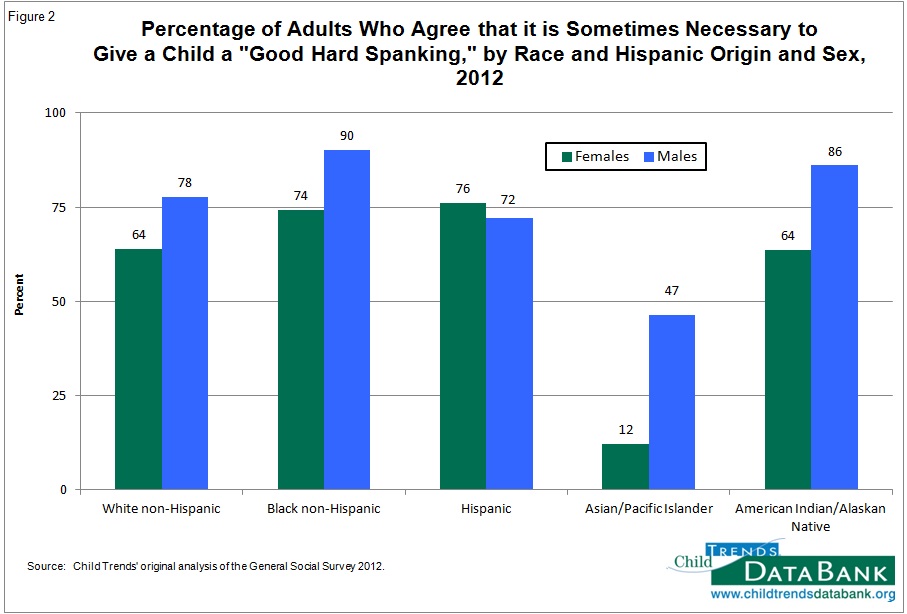
Take American attitudes about spanking over the past 50 years. In 1968, 94% of American adults approved of spanking a child, but by 2012, the figure dropped to 70%. While the majority of American parents still spank their children, some are more likely to spank than others. According a recent study of 20,000 kindergartners and their parents, black parents are the most likely to spank their children (89%) and Asian parents, least likely (73%). White and Hispanic parents fell in between, at 79% and 80%, respectively.

1 (2)

That Asian parents are less likely to use corporal punishment has led to speculation that there must be something unique about East Asian culture that promotes discipline without relying on physical force.

If this were the case, we would expect to see corporal punishment banned in East Asian countries, since national bans on corporal punishment reflect cultural norms and are associated with a decline in its support and reported use. Currently, 24 countries have banned corporal punishment; nineteen are in Europe. There are no national bans in Asia.

That no Asian country has banned the use of corporal punishment and that it remains an accepted form of discipline reveal that differences in the use of corporal punishment cannot be attributed to culture alone.

So how do we explain the differences across racial groups? Parental education and socioeconomic status are stronger drivers of parenting strategies than differences in race or culture. Highly educated, middle-class parents are less likely to use corporal punishment to discipline their children than less-educated, working-class, and poor parents. Asian Americans are, on average, more highly educated than other Americans, including whites.

This is a result of the hyper-selectivity of Asian immigration from countries like India, China, and Korea, in which immigrants from these countries are not only more highly educated than their counterparts who did not immigrate, but are also more highly educated than the general U.S. population. Hence, Asian immigrants are not a random sample of all Asians. Rather, they represent a highly educated subgroup, which explains why they are the least likely to use physical force to discipline their children.

In my research with Min Zhou, we interviewed the adult children of Chinese and Vietnamese immigrants in Los Angeles about their experiences of growing up American. As expected, those with more highly educated parents were more likely to have been disciplined with socioemotional strategies. Rather than use physical force, their parents would verbally express their disappointment or give a stern facial cue that signaled their disapproval.

Moreover, these parents praised the positive behavior of other children, both in front of their children and in front of other parents and children. By lauding positive behavior privately and publicly, these parents indirectly reinforced their expectations and provided concrete role models for their children to emulate. This dual socioemotional strategy of internal disapproval and external praise provided their children with a clear-cut portrait of model behavior, in spite intergenerational and linguistic differences between immigrant parents and their U.S.-born children. While the second-generation Chinese and Vietnamese admitted that the constant comparisons were “irritating,” they acknowledged that their parents provided a clear signal of what behavior to follow.

Still, some of our interviewees admitted experiencing physical abuse that would rival that experienced by Adrian Peterson’s young son. In fact, some told us the abuse continued into their teenage years and stemmed from severe intergenerational conflicts that exploded over which college a child should attend or what career trajectory he or she should follow.

A third group of parents took socioemotional strategies to an extreme, telling their children that they were so disappointed that they could not face other parents. They were just that embarrassed about their child’s behavior or lack of accomplishments. So, the use of socioemotional strategies may help reinforce certain positive behaviors, but used carelessly or as a manipulation, it can leave children feeling just as powerless and despondent as any physical punishment.

Jennifer Lee, PhD, is a sociologist at the University of California, Irvine. Her book, The Diversity Paradox, examines patterns of intermarriage and multiracial identification among Asians, Latinos, and African Americans.  

Cross-posted at The Society Pages Specials.

Breast Cancer-Themed Pink Sexy Leopard-ish Costume Blows Our Mind » Sociological ImagesSocial Psychology

Inequality and Breast Cancer Care

Pinkwashing

Sexual Objectification in Breast Cancer Awareness

Breast Cancer and the Social Construction of Gender

Simply Absurd

Lisa Wade, PhD is an Associate Professor at Tulane University. She is the author of American Hookup, a book about college sexual culture; a textbook about gender; and a forthcoming introductory text: Terrible Magnificent Sociology. You can follow her on Twitter and Instagram.

SocImages news:

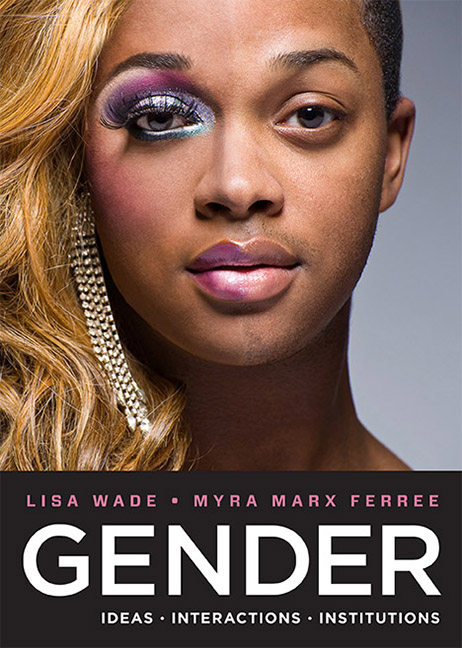
On the heels of the release of Philip Cohen’s new textbook — The Family — comes one from yours truly and the extraordinary sociologist, Myra Marx Ferree: Gender: Ideas, Interactions, Institutions.

Thanks to Leland Bobbe, the photographer; Crystal Demure, the model; and the talent at W.W. Norton for the truly stunning cover!

Gender, by Wade and Ferree

Here are some ways to order, sample, and follow the book:

At SocImages this month…

You like!  Here are our most appreciated posts in September:

Thanks everybody!

Editor’s pick:

New Pinterest board!

  • Sexy what!? A collection of advertisements for products that shouldn’t be sexy, ever, but are. So help us God.

Social Media ‘n’ Stuff:

This is your monthly reminder that SocImages is on Twitter, Facebook, Tumblr, Google+, and Pinterest.  I’m on Facebook and most of the team is on Twitter: @lisawade, @gwensharpnv, @familyunequal, and @jaylivingston.

In other news…

Founder Gwen Sharp is the second SocImages sociologist featured at Cute Overload! Three kittens less than a week old were found nestled under a tire in the parking lot at Nevada State College. She’s been raising them ever since and documenting their progress at the NSC kittens tumblr.

2

Lisa Wade, PhD is an Associate Professor at Tulane University. She is the author of American Hookup, a book about college sexual culture; a textbook about gender; and a forthcoming introductory text: Terrible Magnificent Sociology. You can follow her on Twitter and Instagram.

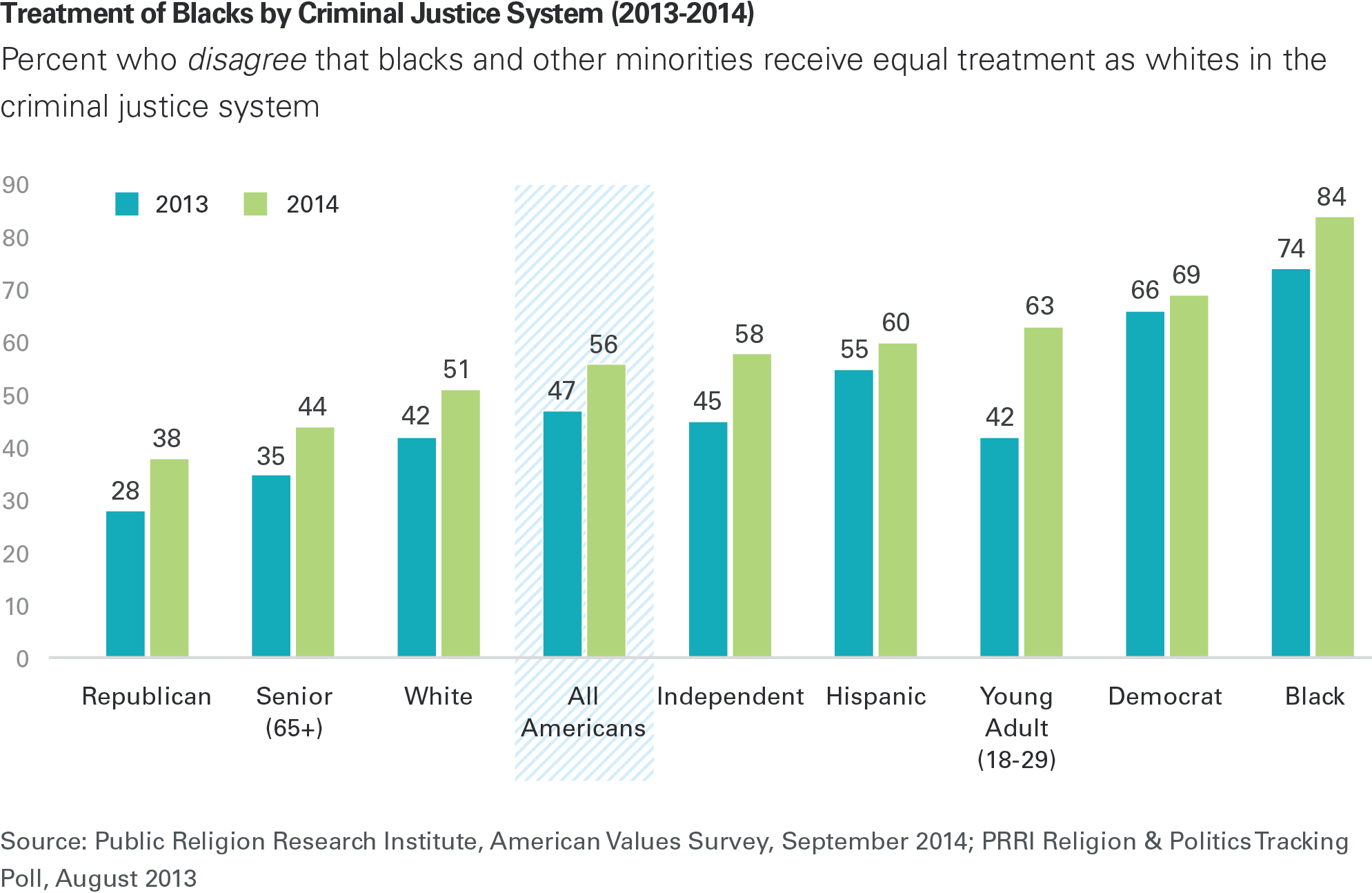
According to polling by the Public Religion Research Institute, the percent of American who say that the criminal justice system treats black people unfairly rose by 9 percentage points in just one year.  In fact, every category of person polled was more likely to think so in 2014 than in 2013, including Republicans, people over 65, and whites.

The biggest jump was among young people 18-29, 63% of whom believed the criminal justice system was unfair in 2014, compared to 42% in 2016.  The smallest jump was among Democrats — just 3 percentage points — but they mostly thought the system was jacked to begin with.

2

America has a history of making changes once police violence is caught on tape and shared widely. One of the first instances was after police attacked peaceful Civil Rights marchers in Selma, Alabama. The television had just become a ubiquitous appliance and the disturbing images of brutality were hard to ignore when they flashed across living rooms.

The death of Mike Brown in Ferguson, MO, and the aftermath is the likely candidate for this change. If you do a quick Google Image search for the word “ferguson,” the dominant visual story of that conflict seems solidly on the side of the protesters, not the police.

Click to see these images larger and judge for yourself:

2

H/t @seanmcelwee.

Lisa Wade, PhD is an Associate Professor at Tulane University. She is the author of American Hookup, a book about college sexual culture; a textbook about gender; and a forthcoming introductory text: Terrible Magnificent Sociology. You can follow her on Twitter and Instagram.

Great comic by xkcd.

Originally posted in 2009.

Lisa Wade, PhD is an Associate Professor at Tulane University. She is the author of American Hookup, a book about college sexual culture; a textbook about gender; and a forthcoming introductory text: Terrible Magnificent Sociology. You can follow her on Twitter and Instagram.

The graph below represents the share of the income growth that went to the richest 10% of Americans in ten different economic recoveries.  The chart comes from economist Pavlina Tcherneva.

1 (2)

It’s quite clear from the far right blue and red columns that the top 10% have captured 100% of the income gains in the most recent economic “recovery,” while the bottom 90% have seen a decline in incomes even post-recession.

It’s also quite clear that the economic benefits of recoveries haven’t always gone to the rich, but that they have done so increasingly so over time. None of this is inevitable; change our economic policies, change the numbers.

Via Andrew Sullivan.

Lisa Wade, PhD is an Associate Professor at Tulane University. She is the author of American Hookup, a book about college sexual culture; a textbook about gender; and a forthcoming introductory text: Terrible Magnificent Sociology. You can follow her on Twitter and Instagram.

Flashback Friday.

p10100814

Flipping through Safari magazine, something that struck me as odd.  Because the magazine is aimed, primarily, at selling hunting safaris, the vast majority of the pictures were people posing with their kills.

What I noticed was that, in nearly 100 percent of the pictures, the animals were posed so as to look alive: resting or sleeping. Most often, the animal was on its belly with its legs folded naturally beneath it and, even, its head held or propped up. The hunters posed behind the animal, often with a hand on it, as if they were simply petting the animal.  Further, there was almost never any evidence of the wound: no holes, no blood (though sometimes the weapon is included in the picture). It is almost as if the people are at a petting zoo and the animal is blissfully enjoying the human attention. A more systematic analysis of hunting magazines found the same pattern.

Imagine for a minute how challenging this must be to pull off.  If you shoot an animal, it likely falls into any number of positions, many of which make it look like it’s just been shot (legs akimbo, head at an awkward angle, etc).  The hunter and his or her companions must have to wrangle this 500, 1,000, 1,500 pound dead weight into the position in which it appears in the images.

Why do they do it?

I don’t know. But maybe it has something to do with the relationship to nature that hunter culture endorses.  Instead of a destructive, violent relationship to nature that would be represented by picturing animals in their death poses, these pictures suggest a custodial relationship in which humans take care of or chaperone a nature to which they feel tenderly.

That is, they don’t destroy nature with their guns, they tame it.

Originally posted in 2009.

Lisa Wade, PhD is an Associate Professor at Tulane University. She is the author of American Hookup, a book about college sexual culture; a textbook about gender; and a forthcoming introductory text: Terrible Magnificent Sociology. You can follow her on Twitter and Instagram.