Archive: Mar 2014

11Congratulations to the amazing Gwen Sharp!  She won a state-wide teaching award from the Nevada Board of Regents!  She’s the best teacher in the whole state!  This is no surprise to me, of course.  Dr. Sharp co-founded and wrote for SocImages for many years.  I’m so grateful to have worked with her for so long.  You can read her posts here or follow her on Twitter.

I’m also honored to report that SocImages received this year’s award for Exemplary Online Learning Resources from the Multimedia Educational Resource for Learning and Online Teaching. Thank you so much to Jane Moore and the team at MERLOT!

Best of March:1

Social Media ‘n’ Stuff:

This is your monthly reminder that SocImages is on TwitterFacebookTumblrGoogle+, and Pinterest.  I’m on Facebook and most of the team is on Twitter: @lisawade@gwensharpnv@familyunequal, and @jaylivingston.

Lisa Wade, PhD is an Associate Professor at Tulane University. She is the author of American Hookup, a book about college sexual culture; a textbook about gender; and a forthcoming introductory text: Terrible Magnificent Sociology. You can follow her on Twitter and Instagram.
1 (2) - Copy
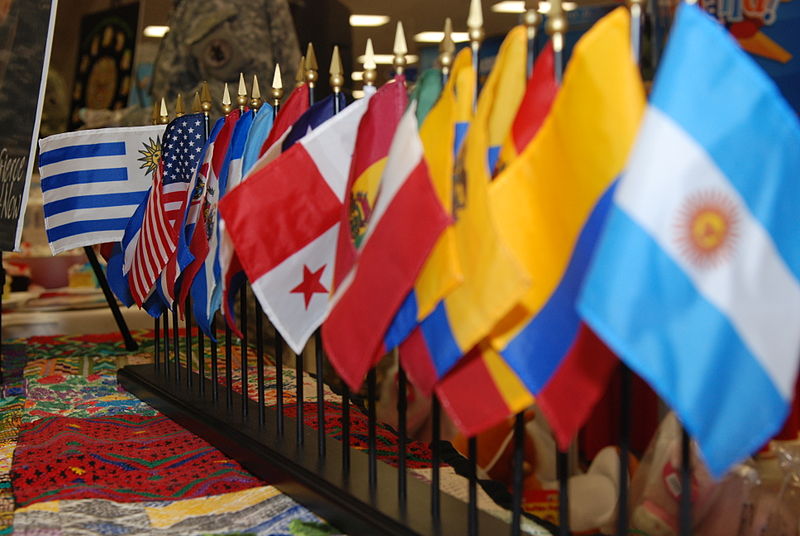
U.S. Army celebrates “Hispanic Month” (source: wikimedia)

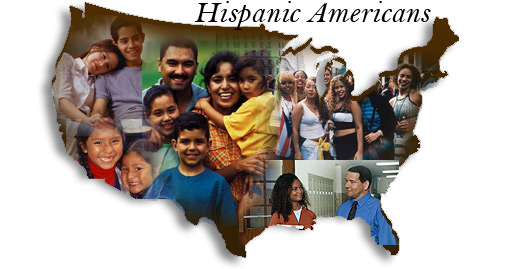
One may well wonder where the term “Hispanic,” and for that matter, “Latino,” came from. The press and pundits are all abuzz about the Hispanic vote, Hispanic organizations, and Hispanic cultural influences. Back in the mid-twentieth century, however, they wrote about Mexicans or Puerto Ricans or Guatemalans, not about Hispanics. Of course, people of Latin American origin have become far more numerous in the United States since then and the immigration itself brings more attention. Nonetheless, the labels have changed. Starting in the 1970s, the media rapidly adopted the “pan-ethnic” term Hispanic, and to a lesser degree, Latino, and slowed down their use of specific national labels.*  So did, organizations, agencies, businesses, and “Hispanics” themselves.

As recounted in her important new book, Making Hispanics, sociologist (and my colleague) G. Cristina Mora tells the story of how people as diverse as Cuban-born businessmen in Miami, undocumented Mexican farm workers in California, and third-generation part-Puerto Ricans in New York who do not even understand Spanish were brought together into one social category: Hispanic-Americans.

Politics, Business, and Government

Mora describes an alliance that emerged in the 1970s among grassroots activists, Spanish-language broadcasters, and federal officials to define and promote “Hispanic.”

Activists had previously stressed their national origins and operated regionally – notably, Mexicans in the southwest (where the term “Chicano” became popular for a while) and Puerto Ricans in the northeast. But the larger the numbers they could claim by joining together, the more political clout, the more governmental funds, and the more philanthropic support they could claim. Pumping up the numbers was particularly important given their latent competition with African-American activists over limited resources and limited media attention. Some pan-ethnic term promised to yield the biggest count.

Spanish-language television broadcasters, notably Univision, looked to expand their appeal to advertisers by delivering them a national market. Although the broadcasters faced obstacles in appealing to Spanish-language viewers across the country differing significantly in programming tastes and dialects, they managed to amalgamate the audiences by replacing content imported from abroad with content developed in the United States. They could then sell not medium-to-small Mexican-, Cuban-, or Puerto Rican-American audiences to advertisers, but one huge Hispanic-American audience.

Making the term official as a census category helped both activists and entrepreneurs. Previously, the Bureau of the Census classified Latin Americans as whites with distinct national origins, usually poorly measured. The activists pressed the census bureau, as did some politicians, to provide as broad a label as possible and count everyone who might conceivably fit the category, including, for example, the African-origin Dominicans (although not the French-speaking Haitians nor the Portuguese-speaking Brazilians). This pressure led to the 1980 formulation, used ever since, in which the census asks Americans whether or not they are “Hispanic” separately from whether they are white, black, Asian, or Indian.

Univision social media ad (source):

Univision-Social Media Ad

The three interest groups worked together to publicize and promote the idea and the statistical category of “Hispanic.” As Mora explains, leaving the label’s meaning somewhat ambiguous was useful in both expanding the numbers and in selling the category – as a large needy population to the government and as numerous, affluent consumers to advertisers. The three parties also campaigned to get other institutions, such as state vital statistics bureaus and big businesses to adopt Hispanic as an official category. Many so-called Hispanics preferred and still prefer to call themselves by their national origins; Mora quotes a 1990s bumper sticker, “Don’t Call Me Hispanic, I’m Cuban!” But the term has taken over.

And, so Hispanic-Americans matter a lot now.

Identities

Categories of people that we take to be fixed – for example, our assumptions that people are old or young, black or white, male or female – often turn out to be not fixed at all. Social scientists have documented the way the definition of Negro/African American/black has shifted over the generations. There was a time, for example, when the census bureau sought to distinguish octoroons and a time when it could not figure out how to classify people from the Indian subcontinent. In Making Hispanics, Mora lets us see close up just how this new category, Hispanic, that we now take to be a person’s basic identity, was created, debated, and certified.

Direct Marketing Ad

One lesson is that it could have been otherwise. If the pace and sources of migration had been different or if the politics of the 1970s had cut differently, maybe we would be talking about two separate identities, Chicano and “Other Spanish-speaking.” Or maybe we would be classifying the darker-skinned with “Blacks” and lighter-skinned with “Whites.” Or something else. Making Hispanics teaches us much about the social construction of identity.

* Based on my analysis of statistics on New York Times stories and the nGram data on words in American books. Use of “Chicano” surged in 1960s and 1970s, but then faded as “Latino” and, especially, “Hispanic” rose.

Claude S. Fischer is Professor of Sociology at the University of California, Berkeley and the author of Made in America: A Social History of American Culture and Character.  This post originally appeared at his blog of the same name.

We’re previously featured great examples of resistance to sexist advertising, but this example takes it up a level.  Clownify describes itself as a “street art project to turn everyday ads into ads for clowns.” I’m not sure what political message they intend to send, but what I see is a super easy, I would even say graceful, way of knocking us into consciousness. If advertisements typically occupy our lives as a taken-for-granted source of psychological coercion, this campaign reminds us to (1) actually look at what we’re seeing and (2) remember not to take ads, their messages, or their products too seriously.

Here are four examples, but there are lots more at the site:

17

H/t copyranter.

Lisa Wade, PhD is an Associate Professor at Tulane University. She is the author of American Hookup, a book about college sexual culture; a textbook about gender; and a forthcoming introductory text: Terrible Magnificent Sociology. You can follow her on Twitter and Instagram.

Economic policies often rest on assumptions about human motivation.  Here’s Rep. Ryan (Republican of Wisconsin):

The left is making a big mistake here. What they’re offering people is a full stomach and an empty soul. People don’t just want a life of comfort. They want a life of dignity — of self-determination.

Fox News has been hitting the theme of “Entitlement Nation” lately. This Conservative case against things like Food Stamps, Medicare, welfare, unemployment benefits, etc rests on some easily understood principles of motivation and economics.

1.    Giving money or things to a person creates dependency and saps the desire to work. That’s bad for the person and bad for the country.
2.    A person working for money is good for the person and the country.
3.    We want to encourage work.
4.    We do not want to encourage dependency.
5.    Taxing something discourages it.

Now that you’ve mastered these, here’s the test question:

1. According to Conservatives, which should be taxed more heavily:

a.    money a person earns by working.
b.    money a person receives without working, for example because someone else died and left it in their will.

If you said “b,” you’d better go back to Conservative class. A good Conservative believes that the money a person gets without working for it should not be taxed at all.

Not all such money, of course.  Lottery tickets are bought disproportionately by lower-income people.  If a person gets income by winning the PowerBall or some other lottery, the Federal government taxes the money as income. Conservatives do not object.  But if a person gets income by winning the rich-parent lottery, Conservatives think he or she should not pay any taxes.

What Conservatives are saying to you is this: working for your money is not as good as instead of inheriting it. This message seems to contradict the principles listed above. But, as Jon Stewart recently pointed out, Conservatives apply those principles of economics and motivational psychology only to the poor, not to wealthy individuals or corporations.

Cross-posted at Montclair SocioBlog and the Huffington Post.

Jay Livingston is the chair of the Sociology Department at Montclair State University. You can follow him at Montclair SocioBlog or on Twitter.

There are now more people working as private security guards than high school teachers.

Samuel Bowles and Arjun Jayadev offer the following graph, highlighting the number of “protective service workers”* employed per 10,000 workers and the degree of income inequality in the year 2000 for 16 countries.  The United States is tops on both counts.

17greatdivide-img-tmagArticle-v3

Two things stand out from this graph beyond U.S. “leadership.”  The first is the relationship between the share of protective service workers  — or “guard labor” — and inequality.  As Bowles and Jayadev comment:

In America, growing inequality has been accompanied by a boom in gated communities and armies of doormen controlling access to upscale apartment buildings. We did not count the doormen, or those producing the gates, locks and security equipment. One could quibble about the numbers; we have elsewhere adopted a broader definition, including prisoners, work supervisors with disciplinary functions, and others.

But however one totes up guard labor in the United States, there is a lot of it, and it seems to go along with economic inequality. States with high levels of income inequality — New York and Louisiana — employ twice as many security workers (as a fraction of their labor force) as less unequal states like Idaho and New Hampshire.

When we look across advanced industrialized countries, we see the same pattern: the more inequality, the more guard labor. As the graph shows, the United States leads in both.

The second is the rapid rise in the U.S. share of guard labor and inequality from 1979 to 2000.

One can only wonder in what ways and for whom this large and growing dependence on guard labor represents a rational use of social resources.

* For those who like definitions: The category protective service workers includes those employed as Private Security Guards, Supervisors of Correctional Officers, Supervisors of Police and Detectives, Supervisors of all other Protective Service Workers, Bailiffs, Correctional Officers and Jailers, Detectives and Criminal Investigators, Fish and Game Wardens, Parking Enforcement Workers, Police and Patrol Officers, Transit and Railroad Police, Private Detectives and Investigators, Gaming Surveillance Officers, and Transportation Security Screeners.  A broader measure of guard labor might include members of the armed forces, civilian employees of the military, and those that produce weapons to those employed as protective service workers.  That total was 5.2 million workers in 2011.

Cross-posted at Reports from the Economic Front.

Martin Hart-Landsberg is a professor of economics at Lewis and Clark College. You can follow him at Reports from the Economic Front.

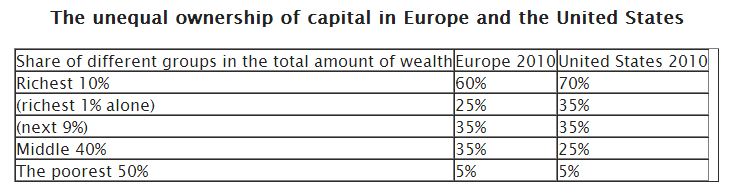
Thomas Piketty has just published a massive new book tackling the explosive growth in income inequality.  Here’s what it looked like in Europe and the United States in 2010 (source):
14
A New York Times review of the book, Capital in the Twenty-First Centurybegins as follows:

What if inequality were to continue growing years or decades into the future? Say the richest 1 percent of the population amassed a quarter of the nation’s income, up from about a fifth today. What about half?

To believe Thomas Piketty of the Paris School of Economics, this future is not just possible. It is likely…

His most startling news is that the belief that inequality will eventually stabilize and subside on its own, a long-held tenet of free market capitalism, is wrong. Rather, the economic forces concentrating more and more wealth into the hands of the fortunate few are almost sure to prevail for a very long time.

Piketty’s pessimistic view is based on his argument that income generated from capital normally grows faster than the economy or income from wages.  This means that the private owners of capital benefit disproportionately from growth, which makes it easier for them to increase their asset holdings and by extension future income.  And, since wealth and income translate into political power, we face a self-reinforcing dynamic leading to ever growing inequality.

This suggests that embracing a system based on maximizing the returns to private owners of capital is a mistake for the great majority of working people. A recent study by the investment bank Credit Suisse provides more evidence for this conclusion.  As Michael Burke explains,

The study… shows that long-term growth rates of GDP in selected industrialized economies are negatively correlated with financial returns to shareholders.

That is, the best returns for shareholders are from countries where GDP growth has been slowest, and vice versa. Where growth has been strongest, shareholder returns are weakest…

The negative correlation [seen in the chart below] does not prove negative causality. But it does support the theory which suggests that the interests of shareholders are contrary to the interests of economic growth and the well-being of the population.

mb

All this information is worth keeping in mind the next time business and political leaders tell us that the key to our well-being is boosting business confidence, the market, or private returns on investment.

Cross-posted at Reports from the Economic Front.

Martin Hart-Landsberg is a professor of economics at Lewis and Clark College. You can follow him at Reports from the Economic Front.

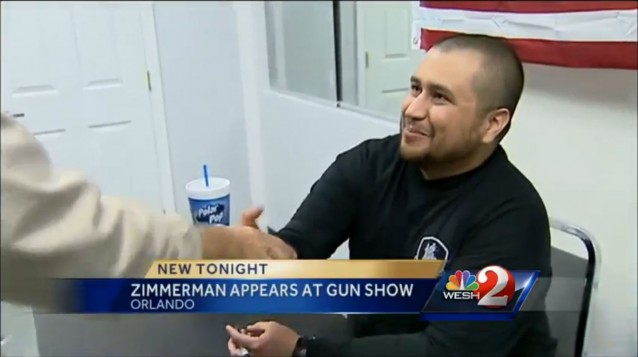
16George Zimmerman was signing autographs at a gun show in Orlando this week. Only 200 showed up for the meet-and-greet, but Zimmerman has many supporters around the country, and, as Jonathan Capeheart says:

This leads to what should bean inevitable question: Who are these people glorifying the killer of an unarmed teenager in one of the most racially polarized incidents in recent history?

I keep wondering how Jonathan Haidt — with his theory of the differing values of liberals and conservatives — would explain this embrace of Zimmerman. The liberal reaction presents no problems. Haidt says that liberal morality rests on two principles:

  • Care/Harm
  • Fairness/Cheating

Killing someone certainly qualifies as Harm, and, almost literally, getting away with murder is not Fair.

The Zimmerman side is that he shot in self-defense. That argument persuaded the jury, or at least created sufficient reasonable doubt. But it doesn’t explain why some people on the right see him as a hero. What moral principle does he represent?

In Haidt’s schema, conservatives take Harm and Fairness into account but balance them with three others:

  • Loyalty/Betrayal
  • Authority/Subversion
  • Sanctity/Degradation

(A sixth foundation – Liberty/oppression – underlies both the liberal and conservative side.)

It’s hard to see how any of these describe the autograph-seekers.  What else might explain that reaction?

The obvious candidate is racism. If the races had been reversed — if a Black man had confronted a White teenager, killed him, and then been acquitted on self-defense grounds — would the left have hailed him as a hero? I doubt it. Would those same autograph hounds in Orlando have sought him out? I doubt it.  And if Black people had then turned out to get his autograph, can you imagine what the reaction on the right would have been?

But it’s not just racism. It’s a more general willingness to do harm, great harm, to those who “deserve” it.  The liberal view (Harm/Care) is that while in some circumstances killing may be necessary or inevitable, it is still unfortunate.  But over on the right, killing, torture, and perhaps other forms of harm are cause for celebration, so long as these can be justified. In 2008, Republicans cheered Sarah Palin when she stood up for torture. In 2011, they cheered Rick Perry for signing death warrants for record numbers of executions. When Wolf Blitzer hypothsized a young man who had decided not to buy medical insurance but now lay in the ICU, and Blitzer asked “Should we let him die?” several people in the Republican audience enthusiastically shouted out, “Yes.”

My guess as to the common thread here is a dimension Haidt doesn’t include as a foundation of morality: boundary rigidity. In those earlier posts, I referred to this, or something similar, as “tribalism.”

Morality is not some abstract universal that applies to all people.  Tribal morality divides the world into Us and Them.  What’s moral is what’s good for Us.  This morality does not extend to Them.

Could it be that as you get farther out on the right, you find more people whose boundaries are more rigid?  They are the hard liners who draw hard lines. Once those lines are drawn, it’s impossible to have sympathy — to extend Care — to someone on the other side. If you imagine that you live in a world where an attack by Them is always imminent, defending those boundaries becomes very important.

That seems to be the world of gun-rights crowd lionizing Zimmerman.  Their cherished scenario is the defense of boundaries against those who are clearly Not Us.  They stand their ground and defend themselves, their families, their houses and property, even their towns and communities.  It is a story they never tire of, repeated time after time in NRA publications.  Zimmerman is a hero because his story, in their view, embodies the narrative of righteous slaughter.

Cross-posted at Montclair SocioBlog.

Jay Livingston is the chair of the Sociology Department at Montclair State University. You can follow him at Montclair SocioBlog or on Twitter.

This week Meredith Kleykamp tweeted us a photo of a comment written on her 3rd grade son’s cursive homework.  The teacher wrote: “beautifully written! for a boy!”

1a

So what’s the message here?

Some argue that boys are slower than girls to develop the fine motor coordination that facilitates beautiful handwriting.  I’ve never interrogated that research, but let’s assume, for sake of argument, that that’s true.

If it’s true, then maybe Kleykamp’s son’s handwriting really is beautiful “for a boy.”  But does that make the teacher’s comment innocuous?

Kleykamp observes: “‘Beautifully written’ is sufficient to convey praise.”  Then what additional message does the extra commentary send?  Given a social context in which boys are encouraged to be unlike girls, Christopher Knorr thought the subtext might be: “you will be forced to choose between your penmanship and your masculinity.”

Scholars call these kinds of lessons the “hidden curriculum.”  Here’s another shocking example.

Lisa Wade, PhD is an Associate Professor at Tulane University. She is the author of American Hookup, a book about college sexual culture; a textbook about gender; and a forthcoming introductory text: Terrible Magnificent Sociology. You can follow her on Twitter and Instagram.