sociology

New & Noteworthy

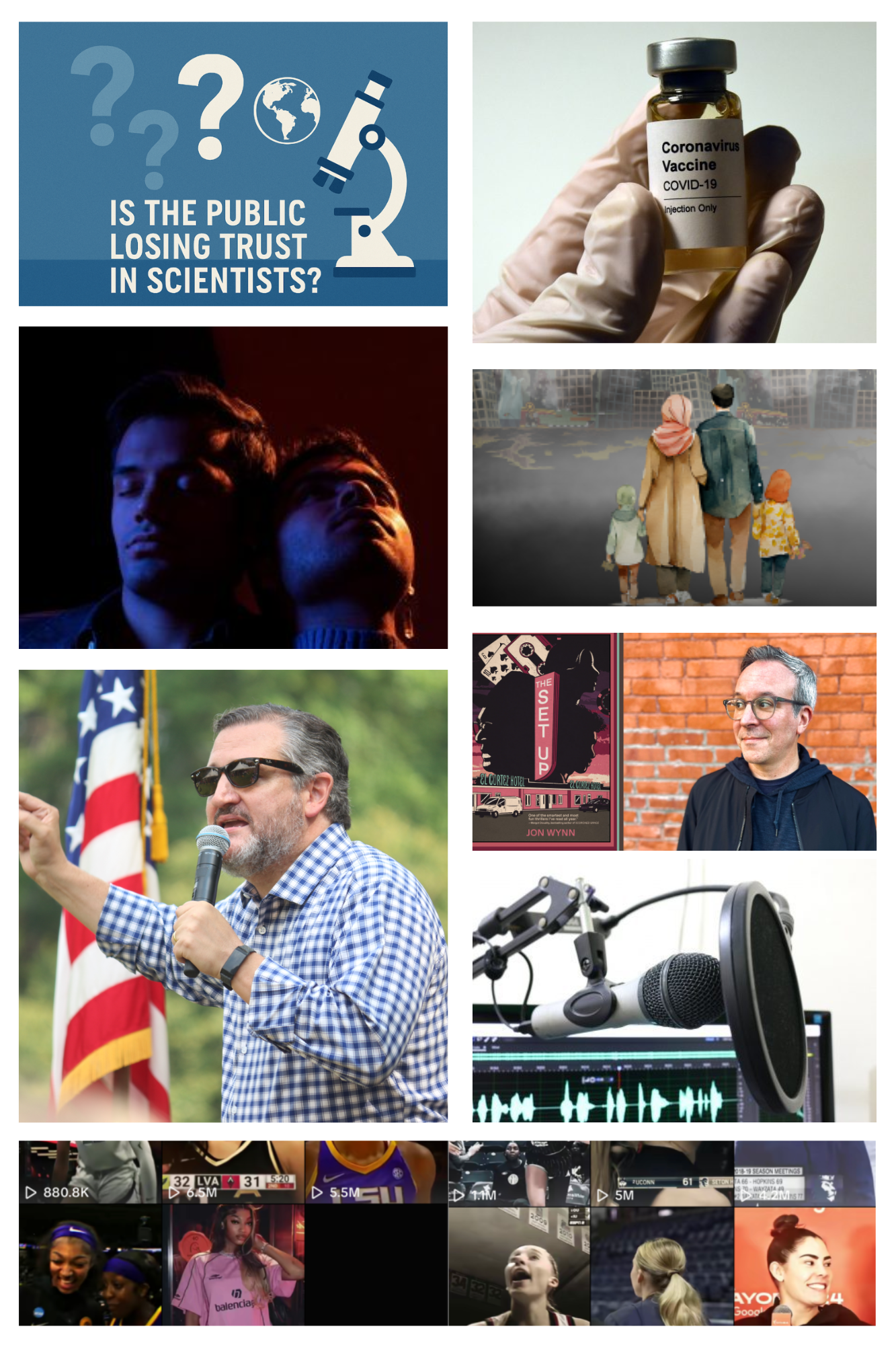
  • In Science We Trust? by Jordyn Wald covers global research by Viktoria Cologna and colleagues. Surveying over 70,000 people across 68 countries, the study found that trust in scientists remains high worldwide. Most respondents see scientists as competent, public-minded, and believe they should help solve major issues like health, clean energy, and poverty. However, some distrust persists—especially among conservatives and those who view scientists as elitist—raising concerns about the outsized influence of vocal skeptics.
  • The Sticks and Stones of Christian Nationalist Rhetoric by Forrest Lovette highlights research by Nilay Saiya and Stuti Manchanda on how political speech can incite violence. Analyzing statements from all 100 U.S. senators, the study found that states where senators endorsed Christian nationalist views were up to 1.5 times more likely to experience violence against religious minorities. The authors argue this rhetoric legitimizes hostility by framing other faiths as threats—underscoring the real-world dangers of political language rooted in religious supremacy.

From the Archives

  • Rubber bullets and other less-than-lethal projectiles have been used on Los Angeles residents in recent confrontations. This archive piece during the 2020-2021 protests covers some research on the harm that these projectiles used by police and the military can cause. And it highlights one study that found that 3% of people hit by rubber bullets actually die from these injuries, so “97% non-lethal”.
  • RFK is reported to have planned the termination of all members of the CDC’s vaccine advisory committee, with skepticism that grew during the COVID-19 pandemic being cited as a catalyst. In 2020, Contexts published this piece, the coming vaccine battle, which although now in hindsight, served as insight into today’s climate.

More from our Partners & Community Pages

Contexts

  • Novel/Sociology: An Interview with Jonathan Wynn by Amin Ghaziani spotlights UMass sociologist Jonathan Wynn’s genre-bending debut novel The Set Up. Known for his academic work on cities and culture, Wynn describes the “terrific fun” of writing fiction as a way to smuggle in sociological insights. Blending mystery, marketing, and microsociology, the story follows a rogue Vegas firm that hires actors to influence behavior—raising ethical questions in a Goffman-meets-Ocean’s Eleven plot.

Council on Contemporary Families

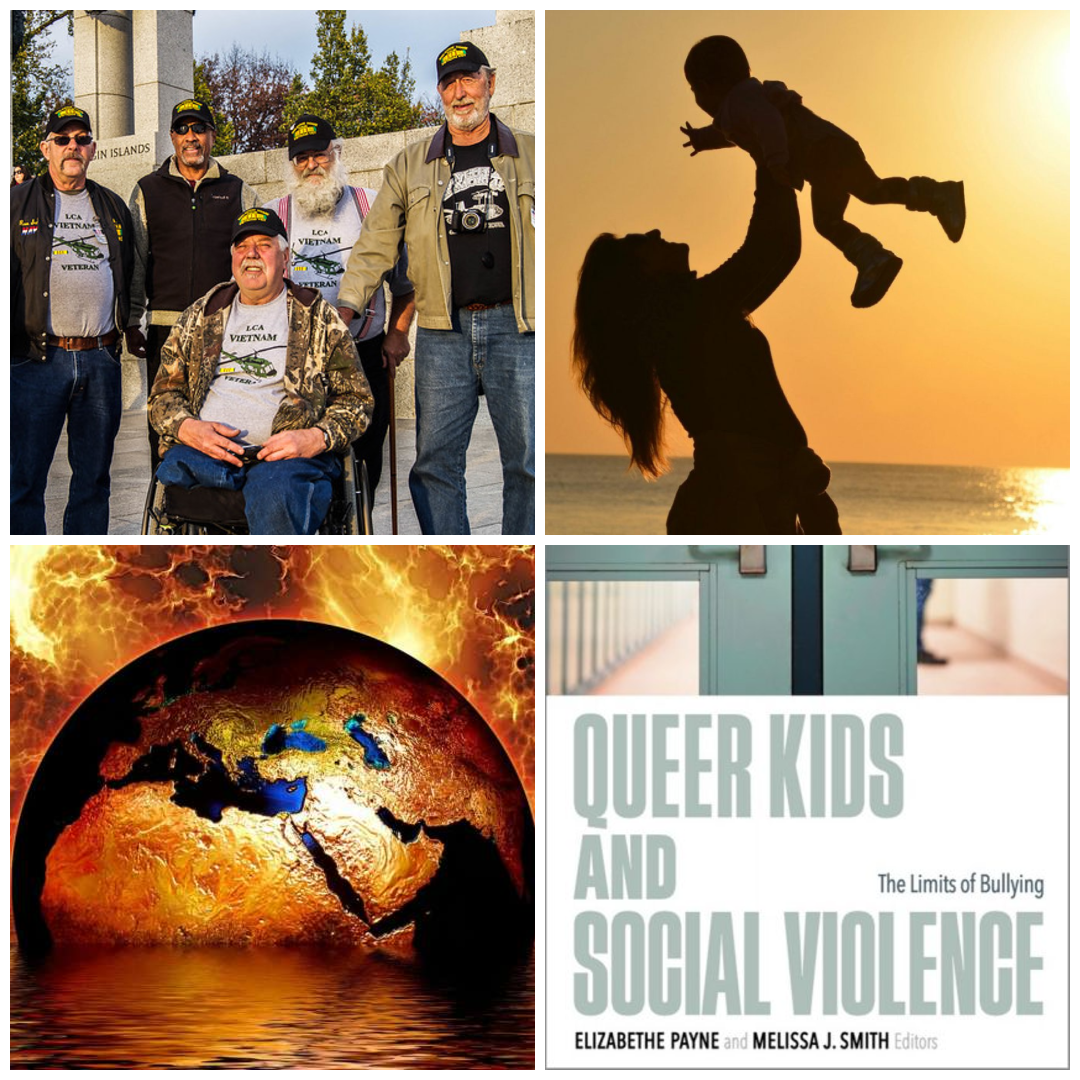
  • The Importance of Sexual and Romantic Exploration for LGBQ+ College Students by Ellen Lamont and Teresa Roach explores how college can offer a crucial space for identity development among LGBQ+ youth, especially those raised in conservative Christian environments. Based on interviews with 26 students, the study finds that beyond supportive communities, the ability to explore sexuality through relationships was key to affirming identity and building self-understanding. Yet students still faced barriers—including limited queer social spaces and conflicting expectations about campus organizations.
  • From Kin to Unit: How Refugee Resettlement Reshapes Family Itself by Neda Maghbouleh draws on a seven-year ethnographic study of 52 Syrian families resettled in Canada. The research reveals how state policy fractured extended kin networks by enforcing a narrow, nuclear definition of “family.” Most families faced protracted separation from vital caregivers, while a few navigated costly sponsorships or strategic marriages to rebuild kinship ties. Maghbouleh and co-author Laila Omar argue that these exclusions are not incidental, but institutional—reshaping daily life and identity.

First Publics

  • Subverting a Subject: Marketing as Sociology by Sam Chian explores how teaching marketing through a sociological lens turns business education into critical inquiry. Instead of training future marketers, Chian encourages students to question how marketing reinforces inequality, commodifies identity, and shapes desire. By treating marketing as a social institution, he helps students see it not as a neutral tool, but as a force worth interrogating—and potentially transforming.
  • Flattening Theory: Kyle Green on the Give Theory a Chance Podcast highlights how sociologist Kyle Green is reshaping theory education through podcasting. In Give Theory a Chance, Green invites guests to share how big ideas—from Du Bois to Deleuze—shaped their thinking and research. His goal? To demystify theory and make it accessible, especially for students daunted by jargon or academic gatekeeping. By “flattening” the canon and emphasizing lived experience, Green transforms theory from something to fear into something to feel, encouraging listeners to engage with ideas that illuminate the world around them.

Engaging Sports

New & Noteworthy

This week’s Clippings by Mallory Harrington includes:

  • Herbert Gans: The influential urban sociologist and public intellectual passed away at 97; remembered for The Urban VillagersThe Levittowners, The War Against the Poor, and Deciding What’s News, as well as for his anti-war activism, press-freedom advocacy, and push for publicly accessible sociology—coverage appeared in New York Times, the Washington Post, and ABC News.
  • Laurie Essig: In a Ms. Magazine interview and the “Feminism, Fascism, and the Future” podcast, Essig linked authoritarianism in the U.S. and Russia to anxious masculinities, warning that “gender ideology” rhetoric masks fears of failed masculinity and urging the creation of mutual-aid “parallel societies.”
  • Stephanie L. Canizales: In Sin Padres, Ni Papeles, Canizales exposes how unaccompanied undocumented youth in California are exploited in low-wage jobs and politicized as scapegoats, lamenting that when they aren’t useful for agendas “the population is completely forgotten” (UC Berkeley News).
  • Craig Considine and Landon Schnabel: Argue Pope Francis widened the Church’s global reach while enacting careful reforms—outreach to the Global South and blessings for same-sex couples—demonstrating how ancient institutions can “bend without breaking” (Rice & Cornell news outlets).

Our latest Discovery by Eleanor Nickel covers research by David Jonathan Knight on African American and Afro-Latino men who spend their formative years cycling through U.S. prisons, and how growing up behind bars fuses identity to confinement, turning adulthood milestones into carceral experiences that constrain life chances long after release.

From the Archives

It has been twenty years since the first video “Me at the Zoo” was uploaded to YouTube. Since then, the site has become the second most visited site in the world behind Google. It is also on track to become the largest media company by revenue in 2025, beating out Disney. YouTube is also first for the amount of TV viewership time. Check out this archive 2017 piece on the evolution of YouTube in relation to “Legacy Media”.

The Trump administration floated a set of proposals this week aimed at boosting the U.S. birthrate—ideas that include things like a $5,000 “baby bonus” for new mothers after delivery and a “National Medal of Motherhood” for women with six or more children. The proposals highlight a familiar political tension: encouraging childbirth without meaningfully supporting families. This piece from our archives looks at the challenges contemporary mothers face—underscoring how policy often overlooks the realities of parenting.

Backstage with TSP

The Spring 2025 academic semester is coming to a close. The TSP board is now shifting to “summer hours” and will be posting less frequently to accommodate schedules, but, no need to fear. We will continue to bring you the latest and greatest social science to a device near you! Make sure to follow us on X, Bluesky, and Facebook to stay updated.

More from our Partners & Community Pages

Council on Contemporary Families

  • Landon Schnabel covers their research on how many young adults walk away from their parents’ churches—especially when rigid doctrines clash with inclusive values like LGBTQ+ equality—yet keep or reinvent a personal, DIY spirituality.

First Publics

New & Noteworthy

This week’s Clippings by Mallory Harrington includes:

  • Musa al-Gharbi (Stony Brook University): Argued that the Trump administration’s crackdown on higher education backfired—universities that complied, like Columbia, were punished, prompting others like Harvard to resist instead.
  • Madonna Harrington Meyer (Syracuse University): Described how grandparents are increasingly parenting their grandchildren, often sacrificing retirement or taking on debt, despite attempts to set boundaries like “fun days” or fixed schedules.
  • Aarushi Bhandari and Parul Bhandari (Davidson College & University of Cambridge): Discussed the Hermès Birkin bag as a symbol of elite status, and how Walmart’s “Wirkin” sparked conversations around wealth, accessibility, and anti-elitist sentiment.
  • Rebecca Sandefur (Arizona State University): Highlighted that most civil court users lack legal representation; the system is built for legal professionals, making it inaccessible to the general public despite its importance.
  • Michelle Janning (Whitman College): Explained that dishwashing arguments reflect deeper meanings—our home rituals symbolize control, identity, and resistance to automation in increasingly tech-driven domestic spaces.

Our latest Discovery by Anastasia Dulle covers research by Ken Kamoche and Kuok Kei Law on bamboo scaffolders in Hong Kong, and how they navigate dangerous work and social stigma by embracing a macho identity that emphasizes toughness, risk-taking, and informal expertise in a declining and highly scrutinized industry.

From the Archives

Coinciding with holidays like Passover and Easter, spring cleaning used to have a religious significance. Today, spring cleaning is more about practicality. In this article, Sarah Catherine Billups discusses the gendered division of housework and the sociological significance of dust.

Peter Dutton, the leader of Australia’s conservative Liberal Party, has said that he believes in climate change. He was accused of minimizing the issue during a recent political debate. In 2015, Erik Kojola wrote about social science research into climate denial.

More from our Partners & Community Pages

Council on Contemporary Families

First Publics

New & Noteworthy

Our latest Discovery, summarizing recent academic article publications, by Emma Goldstein highlights a recent study by Annika Pinch and colleagues which found that while BeReal initially encouraged authenticity through time-limited, unedited photo sharing, users gradually began to game the system by delaying posts and retaking images to appear more curated.

This week’s Clippings from Mallory Harrington includes:

  • Tom Juravich examines how the residential construction industry has undergone a “race-to-the-bottom” since the Great Recession, with contractors increasingly offloading work to subcontractors and misclassifying employees to cut costs in a recent The New York Times piece.
  • Christian Smith argues that traditional religion in America hasn’t just declined—it’s become culturally obsolete. In his new book Why Religion Went Obsolete, Smith explores how shifts in social life have rendered organized faith less relevant, even as some individuals continue to find it personally meaningful, featured in Religion News Service, and picked up by The Salt Lake Tribune.
  • Paul Starr and Nancy Foner analyze Trump’s historically high support among Hispanic voters, arguing that some Hispanics identify with the white mainstream and are drawn to conservative cultural values, in a recent The New York Times opinion piece.
  • Justin Farrell in GQ explored how the ultra-wealthy are remaking the American West by purchasing rural land and building exclusive ski clubs, all while adopting the aesthetics of working-class life.
  • Arlie Russell Hochschild in Nonviolence Radio maps an “anti-shaming ritual” at the heart of Trump’s appeal, where public transgressions are followed by backlash, victimization, and emotional identification from his supporters.

From the Archives

  • As the Trump Administration continues intentions to slash education funding, this 2013 piece from the Scholars Strategy Network archives underscores how financial investment in schools directly shapes outcomes—especially for the most marginalized students.
  • Prices of a variety of grocery items are expected to increase if President Trump’s proposed 10% tariffs are implemented. In 2019, Allison Nobles surveyed the state of the research and found that poor Americans tend to spend a greater portion of their income on essentials like housing and food.
  • RFK reported that the government has launched a research effort to identify the cause of “the autism epidemic,” with the goal of eliminating the “exposures” he believes are behind the condition in a short timeline. This piece from 2019 covers research on the social factors that contribute to increased recognition and diagnosis of autism, as well as the ways autism is differently understood across cultures.

More from our Partners & Community Pages

Center for Holocaust & Genocide Studies

Council on Contemporary Families

  • Leave Laws Support Equity by Jeff Hayes and H. Elizabeth Peters write on how aid family and medical leave policies reduce inequality and support working caregivers, but access remains uneven, especially for low-wage workers, people of color, and those needing eldercare.

New & Noteworthy

  • Jordyn Wald’s latest Discovery covers a recent study by Marcus Brooks on colorblind nationalism, examining how online conservatives reshape racial discourse by rejecting “woke” narratives, emphasizing traditional American values, and reframing Black Americans as allies against liberalism.

From the Archives

  • This 2016 piece from the Scholars Strategy Network covers the Supreme Court’s 4-4 deadlock on United States v. Texas on deferring deportations, which left Obama’s deferred action programs blocked, affecting up to five million immigrants. This decision maintained the then legal uncertainty for mixed-status families, limiting their economic opportunities, mobility, and access to education and healthcare.

More from our Partners & Community Pages

Council on Contemporary Families:

Center or Holocaust and Genocide Studies:

New & Noteworthy

  • Our new piece, Social Isolation and “Loneliness” of Young Adults by Jacob Otis, examines how economic insecurity, mental health struggles, and shifting social norms contribute to young adults spending more time at home while still participating in public life. The piece explores the role of stigma, technology, and declining civic engagement in shaping social withdrawal, questioning whether this trend reflects a crisis or an evolving cultural preference.

From the Archives

  • 2025 has seen a number of airplane incidents and tragedies. In this Cyborgology piece, PJ Patella-Rey extends Anthony Giddens’ work to discuss how we are living in an era within which we cannot all be experts on the technologies that we rely on every day, from our phones to airplanes. This requires extreme “trust that the institutions that deliver these devices to us have designed, tested, and maintained the devices properly.” Yet, seeing the amount of plane crashes and other incidents we’ve seen related to air travel, this trust is certainly being tested in the public sphere.
  • In Germany, 5 members of a far-right group have been arrested for allegedly plotting to kidnap the health minister. They are associated with the “Citizens of the Reich,” conspiracy theorists who believe that the German government is illegitimate. Last year, S Ericson summarized research on conspiracy theories, check it out here, “What “They” Don’t Want You to Know About Conspiracy Theories“.
  • March 8th was International Women’s Day. This post from the Council on Contemporary Families highlights research on family wellbeing around the world.

More from our Partners & Community Pages

Council on Contemporary Families

New & Noteworthy

This week’s Clippings includes: Jonathan Rauch wrote in The Atlantic on how Trump’s administration embraces “patrimonialism,” a loyalty-based governing style that breeds corruption. Karyn Vilbig explained in The Conversation how improved views of Black Americans from 2012 to 2020 drove increased support for social welfare programs. The ASA and AFT sued over a federal directive banning race considerations in education, with ASA President Adia Harvey Wingfield warning it harms research and public understanding. Meanwhile, Gallup reports 9.3% of U.S. adults now identify as LGBTQ+, with Jessie Ford telling The New York Times that younger generations see sexuality as a spectrum.

Our new Discovery, Gendered Division of Labor Among the Elite by Daniel Cueto-Villalobos, covers new research by Dr. Jill Yavorsky finding that traditional gender roles remain dominant among the super-rich, shaping broader cultural norms.

From the Archives

Fans have taken to the internet to mourn the deaths of actors Michelle Trachtenberg and Gene Hackman this week. This 2016 piece by Amber Joy Powell explores how the public mourns the death of celebrities, including with online tributes.

A child in Texas died of measles a couple days ago, the first U.S. death from the disease in 10 years. This follows an outbreak of measles in rural communities in West Texas, where rates of opting out of vaccines are high. This piece from 2015, written during a measles outbreak in southern California by Caty Taborda, covers research on the politicization and distrust surrounding vaccines and vaccine refusals.

The imprisoned leader of a Kurdish militant group has urged its members to lay down their arms, potentially putting an end to the organization’s decades-long war with the Turkish government in which 40,000 people have died. Back in 2017, the Kurdish Region of Iraq held an independence referendum. At that time, Dr. John Kendall wrote for the Center for Holocaust and Genocide Studies about the history of Kurdish nationalism.

More from our Partners & Community Pages

Contexts

  • The Winter 2025 issue is available for viewing, covering some soc takes on Trump’s second term, corporations and conservation, VA privatization, and much more!

Council on Contemporary Families

  • A must read opinion reprint from Newsweek by Kirsten Stade, arguing Trump’s expanded Global Gag Rule is the extreme end of a widespread pronatalist ideology that pressures women into childbearing for political and economic gain.

New & Noteworthy

This week’s Clippings includes: Robert Putnam discussed the link between social isolation and populism on PBS News Hour, highlighting how civic engagement can drive moral revival. Florence Becot appeared on The FarmHouse podcast to examine the invisible labor of women in agriculture, including the expectation of raising children while performing farm work. Battle for Tibet, a new FRONTLINE documentary, features Tibetan sociologist Gyal Lo’s research on Chinese boarding schools and their role in reshaping Tibetan identity. Meanwhile, Willam Robinson spoke at Peoples’ Platform Europe 2025 about the deepening crisis of global capitalism, warning of economic stagnation, rising authoritarianism, and environmental collapse in Medya News.

Crowdfunding Gaps for Female Gun Violence Victims by Dylan DiGiacomo-Stumm writes up research by Catherine Burgess and Jennifer Carlson. They found in their study of 535 GoFundMe campaigns that race and gender shape how victims are portrayed and the financial support their families receive, with white women and girls raising significantly more money than Black and Latinx victims.

Sociology in the News | Ep.8 | Elizabeth Bruch and Amie Gordon’s Dating App “Revel” of our TSP Podcast produced by Forrest Lovette includes TSP Board members Jordyn Wald, Emma Goldstein, Mason Jones discussing Elizabeth Bruch and Amie Gordon‘s recent coverage in The Pulse on “Revel“, a dating app for students at the University of Michigan that doubles as a research tool to uncover college dating patterns.

From the Archives

SNL just celebrated 50 years of comedy, including decades of political satire. From presidential impressions to Weekend Update, the show has shaped how audiences engage with politics. But humor isn’t just entertainment—it reflects and shapes social norms. Learn more about how comedy and politics intersect in this TSP Roundtable.

Recently, the IRS cut 6,000 jobs as we come up on tax season. This NPR article suggests these job cuts mean that American taxpayers will have a harder time getting information about taxes this year. This Discovery from 2019 covers how some policies place the burden of taxation unfairly on the socioeconomically disadvantaged, while perceptions of the fairness of tax heavily depend upon whether people view the government as competent.

Earlier this week, Trump called Ukrainian president Zelenskyy a “dictator”, accused him of corruption and misuse of foreign aid, and blamed Ukraine for starting the war with Russia. A piece published by the Center for Holocaust and Genocide Studies after Russia’s invasion of Ukraine in 2022 emphasizes the importance of upholding and remembering truths about past violence. Additionally, this Sociological Images piece written right before Trump’s first presidency discusses similarities between the leadership and rhetorical styles of Trump and Putin, and is interesting to return to over eight years later.

More from our Partners & Community Pages

Contexts

Council on Contemporary Families

First Publics

  • Teaching the Sociological Multiverse by Jonathan Wynn explores the “sociological multiverse,” emphasizing the importance of teaching multiple theoretical perspectives to foster critical thinking, resist one-dimensional explanations, and challenge assumptions in an increasingly polarized world.

New & Noteworthy

This week’s Clippings includes: Zeynep Tufekci comments on the Trump administration’s NIH funding cuts, warning they endanger America’s biomedical research infrastructure. Elizabeth Bruch and Amie Gordon launched Revel, a University of Michigan dating app that doubles as a research tool to study relationship dynamics. Meanwhile, Ruby Lai examined Hong Kong’s subdivided flats, Musa Al-Gharbi commented on corporate responses to anti-D.E.I. efforts, and scholars mourn the passing of Michael Burawoy.

Accents are Seen and Heard by Eleanor Nickel writes up work by Ethan Kutlu, who found that visual racial cues influence how listeners perceive accentedness, with participants more likely to rate speech as accented when shown an image of a South Asian woman, regardless of the actual accent. This research highlights how racial biases shape not just visual judgments but also auditory perception.

From the Archives

As of February 11th, 2025, 27 religious groups are suing the Trump administration over mandates allowing ICE agents into sensitive locations like places of worship. This 2018 Contexts piece by Genesis Torres and Kim Ebert highlights how institutions manage immigration control, claiming increased security while immigrants face extreme threats.

On January 8th, thousands protested in Union Square against Trump’s order to withhold federal funding from hospitals providing gender-affirming care. A similar protest in 2017 opposed his policies on women, immigrants, and marginalized groups. Read this 2017 piece by Jacqui Frost to explore how gender shapes protest and the vital roles activists play in social movements.

Last week, Pope Francis condemned Trump’s mass deportation plans, citing biblical calls to “welcome the stranger” and opposing JD Vance’s use of Catholic theology. This 2015 piece by Jack Delehanty explores divisions in the U.S. Catholic Church on social justice.

More from our Partners & Community Pages

Contexts

  • michael burawoy: an absolute gem by Marcel Paret honors Michael Burawoy, a groundbreaking Marxist sociologist and passionate advocate for social justice, passed away early this February, leaving behind a legacy of transformative scholarship and mentorship.
  • 23 and we? by Parker Muzzerall write up research by Amina Zarrugh and Luis Romero, who studied 568 YouTube videos to see how genetic ancestry tests affect people’s ideas about race. They found that many test users define race by DNA percentages instead of culture or history, which may bring back traditional ideas about race based on bloodlines.

Council on Contemporary Families

Center for Holocaust and Genocide Studies

New & Noteworthy

This week’s Clippings by Mallory Harrington includes Raka Ray and Geoffrey Pleyers’ reflections on the passing of Michael Burawoy, a towering figure in public sociology whose work shaped labor studies, ethnographic methods, and the discipline as a whole. Max Besbris commented on the rapid rebuilding of the Palisades after California’s wildfires, noting that wealthy residents will dictate the terms of recovery; Aldon Morris and Harry Edwards weighed in on the state of the U.S. under the Trump administration, warning of potential unrest; Ulrike Bialas discussed the crisis of young, homeless migrants in Paris; and George Kassar applied Norbert Elias’ theories on the “civilizing process” to digital norms and Netiquette.

This summary of pieces by us and our partners by me explores the Super Bowl’s cultural significance, covering topics like politics in sports, racial disparities in NFL coaching, the concussion crisis, nationalism in football, sexism in fandom, the 2016 Take a Knee movement, masculinity in commercials, corporate influence in ads, and Super Bowl consumer habits.

I also published a new Discovery from research by Sarah Lageson and Robert Stewart on the inaccuracy of private background checks, revealing widespread false negatives and positives that impact employment, housing, and education, while calling for stronger regulation and privacy protections.

From the Archives

Trump recently signed an order, to go in effect immediately, that bans transgender women from competing in female sports, specifically targeting the 2028 Olympic Games to be held in Los Angeles by denying Visas for transgender athletes. This Special Feature from 2023 by Chris Knoester highlights how the anti-trans movement in sports focus on reinvigorating sex and gender binaries, often conflating the two, while also obscuring the need for higher support for womens’ and girls’ sports.

On Wednesday, the CDC released a new report about U.S. maternal mortality. They found that pregnancy-related deaths declined for every race or ethnic group tracked in the report except Black women. In this 2019 piece summarizing research on the topic, Amy August and De Andre’ Beadle discuss how Black Americans, especially women, experience worse health outcomes than white Americans, and Black women are over three times more likely to die from pregnancy-related causes.

More from our Partners & Community Pages

Contexts

Council on Contemporary Families