
health

Photo by Nate Grigg, Flickr CC

When we talk about reproductive choices and regulations, women are generally at the center of these discussions. However, this hasn’t always been the case. In post-war India, the government changed its approach to population control by targeting men in birth control campaigns. Using archival materials from 1960-1977, Savina Balasubramanian analyzes this shift in family planning strategies. The government’s strategy relied on specific conceptions of masculinity, fatherhood, and men’s roles in families.

Balasubramanian explored archival records to show how social scientists, doctors, research donors, and state officials discussed population control.  The “clinic model” of 1950s India primarily targeted women, but at the end of this decade scientists began to focus on men because they saw men as the decision-makers in families. They assumed that men were more likely to be literate and educated in rural and poor communities. Further, because men held more power in many families, officials worried there could be backlash if women were approached before their husbands. Their concerns were not just about men, though. Stereotypes about poor women as irresponsible led some scientists to argue that women could not be trusted to take contraceptive pills that required time-tracking.

To get men on board, scientists and state officials used masculinity norms — specifically  associating men with rationality — to promote what Balasubramanian calls, “reproductive rationality.” In other words, contraception was framed as an economic issue that required calculation and forethought by the head of the family, assumedly the husband. The government also led “mass vasectomy camps,” which were festival-like affairs, and those who participated often received household items or money as incentives. However, due to political circumstances, this approach to birth control did not last. This approach — in which policymakers viewed men as responsible for birth control and gave them the power to make choices for their families — is particularly interesting when compared to current approaches to birth control. Today, policymakers are far more likely to assign primary responsibility to women, yet regulate their choices through legislation.

Katelynn Bishop, Kjerstin Gruys, and Maddie Evans, “Sized Out: Women, Clothing Size, and Inequality,” Gender & Society, 2018
Photo by kelly, Flickr CC

While consumers are aware that sizing for women’s clothing varies by company and even item, women still use clothing sizes to assess how their bodies meet cultural beauty standards. Rather than writing off the anxieties about buying that perfect dress with statements like “size doesn’t matter,” or “nobody can see the tag!” it is important to take the material and psychological consequences seriously that women experience when navigating clothing choices. Clothing not only communicates the latest styles, but also whose bodies are “in” or “out.” In order to understand how clothing sizes impact women’s identities and inequalities between them, Katelynn Bishop, Kjerstin Gruys, and Maddie Evans combined their three existing research projects on women’s clothing.

The researchers observed brick and mortar stores and conducted interviews with consumers and store employees at three different sites — a specialty bra boutique, a bridal salon, and a chain ready-to-wear store specifically for plus-sized women. Because this project grew from three separate initiatives, the data for the bra store comes primarily from interviews, the data from the ready-to-wear-store comes mostly from ethnographic observation and the data from the bridal salon comes from a mix of the two methods.

Depending on what sizes women could wear, they experienced different consequences. Plus-sized women were more likely to feel stigma for having to wear larger sizes. They also had fewer choices of merchandise in stores than “straight-size” (non-plus size) women and sometimes had to shop at different stores entirely. Further, bras and bridal wear in plus sizes often cost more money, increasing the economic barrier to purchase these. Women who were between size categories, particularly between a “straight” and plus size, sometimes avoided even trying the larger size item because of the stigma of wearing a plus-size. When these inbetweeners were able to wear the non-plus size options, they reaped material privileges of more clothing choices and psychological benefits of distancing themselves from the stigmatized plus-size category. In short, clothing sizes are more than just numbers, they mark women as in or out, and women use sizes strategically to avoid stigma. 

Debra Umberson, Julie Skalamera Olson, Robert Crosnoe, Hui Liu, Tetyana Pudrovska, and Rachel Donnelly, “Death of Family Members as an Overlooked Source of Racial Disadvantage in the United States,” Proceedings of the National Academy of Sciences, 2017
Photo by Quinn Dombrowski, Flickr CC

Losing a family member can be hard emotionally and physically. Previous research demonstrates that grief and bereavement negatively impact socioeconomic status and a variety of health outcomes, but research has not considered the effect of multiple experiences of loss or potential racial disparities on who is more likely to lose family members. Recently, Debra Umberson and her colleagues tackled whether Black Americans experience more and earlier family deaths than White Americans. Their striking findings illustrate that Black Americans are more likely than White Americans to experience the deaths of mothers, fathers, siblings, spouses, and children. In addition, Black Americans are more likely to experience the death of multiple family members and to experience loss at an earlier age.

The researchers used two nationally-representative datasets to look at the experiences of two different cohorts of Americans. One dataset included 7,617 individuals born 1980-1984 and the other dataset included 34,757 individuals born 1900-1965. Researchers calculated how likely an individual was to experience a death of a family member, as well as differences in age when individuals experienced specific deaths.

Black Americans are more likely to experience the death of multiple family members and to experience the death of a family member at an earlier age than White Americans. Blacks in the older sample were about 90 percent more likely than Whites to have experienced four or more deaths by age 60. And Whites were 30 percent more likely than Blacks to have never experienced a family loss by the same age, even when researchers controlled for several social factors. For those born 1980-1984, Blacks were three times more likely to experience the death of two or more family members by the age of 30. 

Disparities begin young and continue throughout much of the life course. In the younger sample, Blacks were three times more likely than Whites to lose a mother, more than twice as likely to lose a father, and 20 percent more likely to lose a sibling by age 10. All disparities level off at later ages, except the likelihood of losing a child, which continues to increase for Blacks after age 50. This earlier and more frequent exposure to death is a “distinctive stressor” that almost certainly drives cumulative disadvantage by increasing stress and harming social ties.  

Photo by Tony Alter, Flickr CC

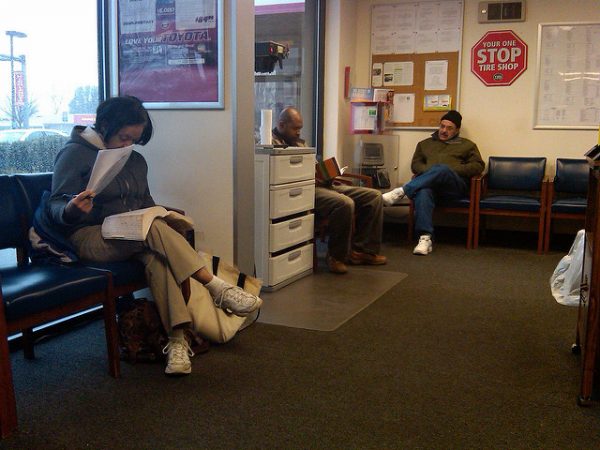
What happens in a hospital waiting room? From one perspective, not a lot. But from another perspective, medical waiting rooms are emotionally-fraught spaces where individuals constantly identify and play out social scripts. Individuals follow sign-in procedures, wait on doctors, choose how to interact with strangers, and care for family members. Margaret Waltz spent four months observing one aspect of these mini social dramas: gender. Her study examines whose time is valued, as well as how the social interactions within medical waiting rooms reinforce gendered expectations and hierarchies.

To conduct this research, Waltz observed in five hospital waiting rooms. She recorded when patients entered and left and took notes on their behavior within the room. The result includes both basic demographic information — such as the fact that all the home health care workers were women, while all of the drivers and other transport personnel from nursing homes were men — and patterns of interaction. Her writing is sprinkled with anecdotes of privilege, such as when a White man, holding coffee and a donut, asked a nurse to open the door for him — prompting laughter from the women in the waiting room.

On a basic level, the logic of medical waiting rooms is (mostly female) caregivers waiting on (mostly male) professionals. According to Waltz, “women are doing gender by waiting in medical waiting rooms, and men are doing gender by not waiting.” In addition to more women working as home health care workers, women were also more likely to accompany a family member to the hospital, making them a more constant presence in medical waiting rooms regardless of whether men were the majority of the patients. Waiting was, therefore, part of their work, whether that work was paid or unpaid. And once in the waiting room, women were more likely to use the waiting room as a social space to bond with other individuals.

Men, by contrast, were more likely to be in positions where they did not need to wait (such as serving as drivers), to arrive late to an appointment or leave before their family member was seen, and to expect to be served immediately. Men were also more likely to take up what Waltz called “physical and auditory space,” spreading out over multiple chairs, talking loudly on the phone, or assuming that nurses had the time to speak with them. Waltz’s research reveals that even the structured and bureaucratic spaces of American health care are places where gender is recreated. Men and women in these spaces interact in ways that conform to gendered expectations and reinforce the conception that men’s time (and work) is more valuable than women’s.

Photo by Candida.Performa, Flickr CC

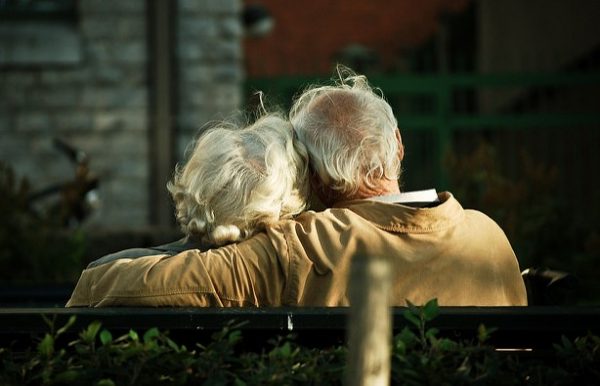
As the United States ages, more and more older adults are adjusting to the lifestyle changes that coincide with changing work and family roles, limited mobility, and chronic health conditions. For older adults who are married, cohabiting, or in another type of long-term relationship, this means that many of these relationships will include a partner who is living with a long-term disability or other impairment. In recent research, Deborah Carr, Jennifer Cornman, and Vicki Freedman investigate how intimate relationships affect the ways people experience disability, finding that support and strain in relationships affects the emotions of men and women in strikingly different ways.

The authors used data from the 2013 Disability and Use of Time supplement to a longitudinal study, which included over 1,100 adults over the age of 60 who were married, cohabiting, or in a romantic relationship. Researchers used 6,603 activity reports from time diaries in the supplement to analyze feelings of happiness, calm, frustration, sadness, and worry. They broke down the results by gender, presence of a disability (43% of the sample), and level of impairment. 

The study found that support from partners buffered negative emotions for women and men with low levels of impairment. Support was especially beneficial for the most highly-impaired women. In a marked contrast, however, support increased all four negative emotions in highly-impaired men. These men also responded to relationship strain with negative emotions, while the effects of strain were negligible for other men and all women. The researchers suggest that these findings point to gendered attitudes about independence. While women may understand support as a way to maintain autonomy, highly-impaired men may feel that both criticism and support threaten their independence and competence. These findings provide insight into the experiences of the older disabled and their caregivers, while also contributing to our understanding of how gender has important effects in all stages of life.

Photo by University of Michigan School for Environment and Sustainability

Consumer genetic-testing is now available through several companies in the U.S, but can these tests actually explain your medical conditions? Sociologist Stefan Timmermans goes behind the scenes of a clinical genetics laboratory and explores how experts study a section of the genome – called the exome – to discover the genetic causes (genotype) of a certain disease (phenotype).

After three years attending the board meetings at one of the first U.S. academic centers to offer whole exome sequencing, Timmermans found that clinical scientific teams encounter great difficulties when trying to establish the causal connection between genes and symptoms. Sometimes the process is short and clear (what they call a scientific “slam dunk”). For instance, while studying the exome of a 35-year-old woman with retinitis pigmentosa, the team found a variant in her USH2A gene. The gene’s location, its rare frequency in the population, and previously published reports indicated that the team had “nailed” a molecular case. 

But most of the cases Timmermans witnessed were not that straightforward. He found instead that laboratory geneticists have to balance the information at hand (such as gene sequences and patients’ clinical records), with their disciplinary background, cultural beliefs, and institutional limits. Because they are doing a clinical study, scientists need a quick and accurate diagnosis, which means there is little time for long-term research or speculative debates. Professionalization also plays a role. Scientists are usually trained under the “one-gene-one-trait” tradition, which compels the team to choose one possible cause and exclude other genetic causes from their report, even when they might think that multiple genes are causing the disease. Finally, personal and moral considerations matter. For example, in spite of the absence of a clear genetic path, the team decided to report a gene only slightly associated with the disease, in part because they felt morally obligated to the family of the patient. 

Patients expect that exome sequencing will define the proper treatment and prognosis, but the process of genetic sequencing is not as clear-cut as it seems. Institutional, moral, and personal circumstances all influence how scientists understand the relationship between genotype and phenotype. In short, even science is a very social activity.

Photo by William Murphy, Flickr CC

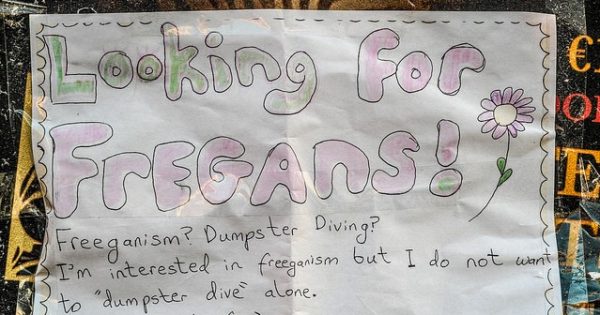
Most people think of garbage with disgust, as it recalls images of filth and dirt and smells of rotting food. So, it’s not surprising that dumpster divers – people who salvage thrown away food – are often seen as “dirty” by mainstream society. As sociologist Erving Goffman famously argued, stigmatized groups are scorned by wider society who see them as outsiders and deviant.

Gianmarco Savio, a professor at St. Lawrence University, spent months hanging around dumpsters behind grocery stores in Manhattan, sorting through trash himself, and attending events coordinated by a dumpster diving organization. He got to know people in the community and got an inside view of what motivated people to dumpster dive. Savio found that many dumpster divers in New York City reject the label “dirty”. They are pushing back against stigmatization by creating an organization to promote “dumpstering” and developing a supportive community and collective identity.

Dumpster divers create a sense of community by sharing knowledge about where and when to find the best food, developing their own informal code of ethics, and looking out for each other’s safety. They realize that the practice is stigmatized, but don’t express guilt or shame for participating. People who are active in the dumpster diving organization even seek to actively change public perceptions. They try to promote the practice, making it more visible and acceptable to the public by doing things like inviting people to take trash tours, running a website, and getting media attention. Group members assert that dumpstering is a political act and part of a broader environmental sustainability or a “freegan” lifestyle that avoids buying things as a way to boycott capitalism.

Spending time with freegans and dumpster divers in New York City can shed light on how stigmatized groups can resist being labeled and change their public image. Savio suggests that informal communities can help people reduce the negative effects of stigma by creating a positive identity, while formal groups and public actions can go even further in challenging the stigma itself.

Photo by Olgierd Rudak, Flickr CC

In a new study investigating bicycle commuting across the U.S., Derek Burk poses a sort of “chicken or egg” question: does the presence of bike paths and bike lanes encourage more bicycling, or does increased rates bicycling encourage the creation of more bike paths? In other words, which comes first — infrastructure or practice?

Burk proposes two perspectives that might explain the relationship between bikeways (paths and lanes) and bicycle commuting — the demand-driven perspective and the political perspective. From the demand-driven perspective, the argument is that increased bicycling leads to more bicycling infrastructure, like bike paths. The political perspective asserts the opposite — the creation of bike paths and lanes is what induces bicycling. To test which perspective is more accurate, Burk uses longitudinal data on bicycle-commuting in 62 U.S. cities from 2000 to 2014, combined with longitudinal data on the number of bikeways in each city, to determine the relationship between bicycling infrastructure and practice.

The results offer support for both perspectives, but with one important caveat — local environmentalism. Burk finds that more bikeways leads to more bicycling, and that more bicycling can lead to the creation of more bikeways, but both effects depend on the number of environmental organizations within a city. He finds that in the most biked cities, including Portland, OR, Minneapolis, MN, and San Francisco, CA, there are a high number of environmental organizations that fight for the creation of bikeways and promote bicycling as a positive lifestyle choice. In the least biked cities, like El Paso, TX, Omaha, NE, and Oklahoma City, OK, the effect of increased bicycle-commuting on bikeway construction is negligible because there are few environmental organizations to support bicycle commuters. In short, the relationship between infrastructure and practice is always influenced by political processes.

Photo by Master Steve Rapport, Flickr CC

The recent increase in hate crimes and normalization of public anti-immigrant attitudes have contributed to undocumented immigrants fearing family separation and deportation. For the roughly 2.5 million undocumented children and adults living in the U.S., socioeconomic resources like physical and mental healthcare services, employment, and education are limited. Under these conditions, “ontological security” – or the degree to which one feels secure within their social environment – becomes vital. A new study by Elizabeth Vaquera, Elizabeth Aranda, Isabel Sousa-Rodriguez provides new insight into the ways in which young undocumented adults develop a sense of security and attempt to cope with their precarious legal status.

The authors interviewed 53 undocumented and formerly undocumented young adults residing in Florida that were recruited through immigration advocacy organizations. Participants’ ages ranged from 18 to 33 and at least half migrated from Mexico. Interviews addressed several topics related to emotional and psychological well-being, including background immigration stories, family life, educational history, and racial/ethnic identity.

The researchers find that undocumented young adults experience a variety of emotions related to their status. For example, many participants reported low self-esteem. Other participants reported feeling frustrated that their status limited access to a number of colleges and jobs for which they could participate. Additional feelings included isolation, fear, anxiety and insecurity. One person described the constant fear of public officials who could potentially remove them or members of their family, saying, “Growing up it was any person that looked official. You just stay away from them … mall security guards, anyone that looked official. They terrified me!” For some, retaining Deferred Action for Childhood Arrivals (DACA) provided some temporary relief, though many still struggled with sadness and depression.

To cope with these feelings, the interviewees were found to engage in both positive and negative coping strategies. Positive coping mechanisms included engaging in charity work, confiding in close family and friends, playing sports, and listening to music. Others reported feeling little hope in improved circumstances and turned to more disruptive behaviors. These participants resorted to things like drinking, smoking, harming themselves, displaying anger, and pondering suicidal thoughts. Yet despite these feelings, the authors note that networking with peers of similar legal statuses helps create strong peer networks and may help empower young undocumented adults to develop positive coping strategies and solutions. As we move forward in the current political climate, pro-immigrant advocacy organizations will be an important piece to supporting undocumented individuals and families.

Photo by Emanuel Leanza, Flickr CC

Research shows that both race and class can influence health, physical activity, and exercise, yet little is known about how multiple identities intersect to influence fitness habits. If middle-class adults are more likely to exercise than low-income adults, then why are middle-class blacks less physically active than middle-class whites?

To examine how race, class, and gender all intersect to shape physical activity, Rashawn Ray designed “The Barriers and Incentives to Physical Activity Survey,” which asked 482 respondents questions about their physical activity habits as well as about how they perceived the racial composition of their neighborhood. The study only included black men, black women, white men, and white women, oversampled for black men and women, and used demographic factors like occupation, education level, and income to identify middle-class respondents.

Ray found that the perceived blackness of a neighborhood had a remarkable influence on who participates in physical activity. Most notably, he found that “black men’s level of physical activity significantly decreases in neighborhoods perceived to be predominantly white whereas black women’s physical activity significantly decreases in neighborhoods perceived to be predominantly black and urban.” Unsurprisingly, white women and white men are more likely to be physically active when living in neighborhoods that are predominantly white. 

 Ray draws from intersectionality and feminist literature to make sense of the findings. Women’s concerns about safety and street harassment, Ray suggests, may influence black women’s reduced activity in neighborhoods perceived of as less safe, which are typically urban and predominantly black. Safer, more affluent neighborhoods are also more likely to have resources like childcare and women’s-only fitness spaces that could increase the likelihood of physical activity. On the other hand, black men experience frequent criminalization and may avoid physical activity in predominantly white neighborhoods where they are perceived as threatening. They may opt to exercise in predominantly black neighborhoods, even though these neighborhoods were identified as having fewer resources than white neighborhoods. 

These findings highlight the complex relationship people have with their bodies, their activities, and their communities. It also suggests that for many black men and women, the risks associated with physical activity may outweigh the benefits of exercise.