
health

A close-up photo of a gavel as a judge signs a document in the background. “Judge Signing on the Papers” by Katrin Bolovtsova is licensed under CC BY 2.0 in pexels.

As U.S. states pass increasingly strict abortion laws, debates often focus on legal rights and restrictions. But what other messages are these laws sending about gender and power? To explore this question, researchers Luna J. Slater, Brooke A. de Heer, and Emily M. Schneider analyzed the language of 18 of the most restrictive state abortion bans enacted between 2018 and 2022. Their findings reveal how these laws portray abortion seekers as victims, prioritize physical health over mental health, and create bureaucratic hurdles for pregnant people who’ve experienced sexual violence – ultimately reinforcing unequal power dynamics and diminishing women’s autonomy.

Of the laws analyzed, most bans avoid criminalizing people seeking abortions and instead outline punishments for doctors and clinics. The authors argue that this enforces a narrative of abortion seekers as coerced or incapable of making independent medical decisions. Many of these bans also describe abortion procedures as being performed on the pregnant person, rather than as choices made by them. For example, Missouri’s HB 126 (2019) describes the pregnant person as the “woman upon whom an abortion is performed or induced.” The authors argue that such wording ultimately portrays women as innocent, subordinate, and passive recipients of care rather than decision-makers.

While all analyzed bans include exceptions to save the pregnant person’s life, nearly every state limits them to physical conditions, not psychological ones. The authors argue this reinforces the view of pregnant people as vessels for birth rather than individuals whose overall well-being – including mental health – matters. This approach further diminishes the autonomy and rights of pregnant individuals by restricting their access to care based on a narrow definition of medical necessity.

Fewer than half of the bans analyzed included exceptions for cases of rape and incest. Of those that did, 75% required the pregnant person to formally report the rape to law enforcement or a medical provider to qualify. Some laws went even further – such as Iowa’s SF 359, which demands that the rape be reported “within forty-five days of the incident.” These legal conditions place an additional burden on pregnant people who have experienced sexual violence, forcing them to navigate complex bureaucratic and legal systems to justify their need for reproductive healthcare. In doing so, such laws reinforce patriarchal control by limiting reproductive rights and forcing pregnant people to engage with systems that may disregard their safety, dignity, and well-being.

The restrictive abortion laws analyzed in this study go beyond policy – they shape public perceptions of autonomy, health, and justice. By framing abortion seekers as victims, excluding mental health considerations, and imposing burdensome requirements on those who have experienced rape or incest, these laws reinforce gendered inequalities that extend far beyond the issue of abortion.

A woman sitting on the edge of a dock looking out onto the water. Photo by Keenan Constance and licensed under Pexels License.

What happens in a romantic relationship when things turn violent? The common reaction is “just leave him” or “call the police” – but there are often many other ways female victims resist. A recent interview study by Lynette Renner, Carolyn Hartley, and Knute Carter explored the strategies of resistance taken by 150 different victims of intimate partner violence.

The study identified six common strategies that victims used to cope with or respond to abuse. These included seeking formal support, such as staying in a shelter or calling a hotline, or informal support, such as turning to social networks by talking with family or friends. Some pursued legal assistance by contacting the police or filing charges, while others engaged in safety planning behaviors like hiding money or keys in preparation to leave. Acts of resistance, such as fighting back or ending the relationship, were also common, as were placating strategies, where victims tried to keep the peace or avoid the abuser to reduce conflict. Victims often engaged in one or more of these strategies simultaneously.

After reviewing the data, they concluded there were 4 different “types of victims” based on different patterns of use of the above paths:

  • High Strategy Users (took all or almost all the above paths)
  • Moderate Strategy Resisters (took primarily the resistance path)
  • Moderate Strategy Placators (took primarily the placating path)
  • Low Strategy Users (least likely to commit to one path, especially safety planning)

In short, women experiencing relationship violence navigate different paths when faced with critical decisions about their safety. To offer meaningful support, advocates, service providers, and policymakers must recognize each survivor’s unique combination of risks, resources, and responses.

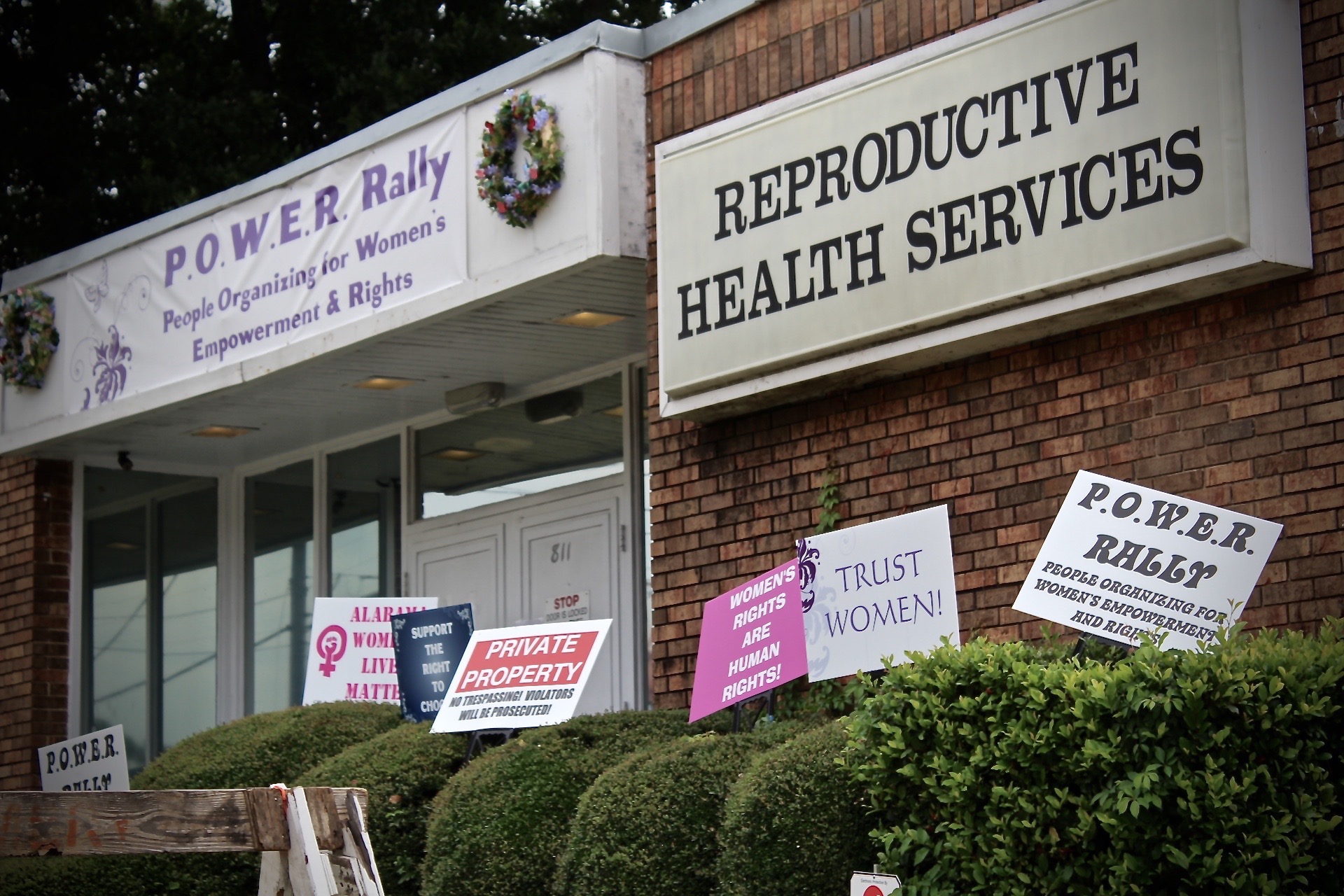
Reproductive Health Services Montgomery” by Robin Marty is licensed under CC BY 2.0.

Decades of research show that becoming a mother often leads to lower wages and fewer job offers, a phenomenon known as the “motherhood penalty.” Less attention has been given to how access to abortion – and the right to decide whether to carry a pregnancy to term – shapes women’s financial futures. A recent study by sociologists Bethany G. Everett and Catherine J. Taylor fills this gap by examining how abortion access – or its absence – influences women’s economic outcomes over time.

Using data from the National Longitudinal Study of Adolescent to Adult Health, Everett and Taylor tracked participants over 24 years to analyze the financial effects of growing up under more or less restrictive state abortion policies. Their study found that women who lived in states with more restrictive abortion policies as teenagers were less likely to graduate from college, had lower incomes, and experienced higher levels of financial instability in adulthood. For instance, women from states with more restrictive abortion policies were more likely to report falling behind on bills, facing eviction, and accumulating debt compared to those from states with less restrictive abortion policies.

Everett and Taylor also compared the economic trajectories of women who had abortions as teenagers to those who carried pregnancies to term. The researchers used a matching technique to pair women with similar characteristics to estimate how abortion affects socioeconomic outcomes. The results were stark: those who had abortions as teenagers were more likely to graduate from high school and college, had higher incomes, and reported greater financial stability in adulthood.

Everett and Taylor’s research shows that limited access to abortion is linked to long-term declines in education and economic stability. As the fight over abortion continues, their findings make clear that restricting abortion access isn’t just a threat to people’s health and autonomy – it can also impose hardship and deepen economic inequality.

Arpit Shah, Sneha Thapliyal, Anish Sugathan, Vimal Mishra, and Deepak Malghan, “Caste Inequality in Occupational Exposure to Heat Waves in India,” Demography, 2025
A black-and-white photo of a construction site in Kolkata, India, in July 1993.
Site Office Under Construction – Science City – Calcutta 1993-07-26 212” by Biswarup Ganguly is licensed under CC BY 3.0.

As average temperatures rise around the world, more and more people are being exposed to heat waves. From 2000-2016, the number of people exposed to extreme and unusual temperatures grew by 125 million. And while temperature doesn’t discriminate, people do. In a recent paper published in the journal Demography, a team of authors found that in India people from marginalized caste groups were more likely to be exposed to heat at work than people from dominant caste groups. They call this “thermal injustice.”

Caste is a complex social phenomenon found in many countries around the world which sorts people into social groups based on their ancestry. Researchers have long known that a person’s caste can influence many social opportunities and outcomes, such as what types of jobs they can get, how much money they can make, where they live, how long they live, and the quality of health care available to them. Now we can add risk of exposure to heat waves to the list.

The authors combined heat data from satellite imagery with data from a large survey. They focused on the heat waves that hit India during the summers of 2019 and 2022. While India is a large country with many climates, the temperature in Delhi, the national capital, reached 49°C (120°F) in May 2022. The authors found that people from more marginalized caste groups were more likely to be exposed to heat stress. This association was still present after they controlled for age, gender, education and economic status.

The likelihood of being exposed to extreme heat can depend on many social factors, including your job. If you spend your days in an air-conditioned office, for example, you will be cooler than someone who works on a construction site. But the bottom line is that while the influence of caste on India’s job market may be decreasing, most people who do physical labor outdoors come from marginalized caste groups. Thus, as heat-related public health initiatives in India are developed, caste and thermal injustice should be front and center.

A small pile of piles next to a stack of money, by Kaboompics.com is licensed under Pexels License

Over the past two decades, insurance coverage for gender affirming healthcare has rapidly expanded. Gender affirming care includes surgical, hormonal, or other care that enables patients to physically present as the gender they identify with. For example, genital modification, facial feminization surgery, chest reconstruction, hormone replacement therapy, voice modification, and more. However, insurance generally only covers care that is “medically necessary” (allowing the individual to be perceived as a certain gender), rather than “cosmetic” (enhancing attractiveness). So how do insurers decide what care is medically necessary?

To study this process, Tara Gonsalves examined national health insurance plans published between 2002 and 2022. The plans detail which gender-affirming care procedures are considered medically necessary vs. cosmetic, along with the insurer’s reasoning for that decision. Individuals who undergo a procedure defined as cosmetic—and subsequently denied coverage—can submit an appeal to a review board to argue that the procedure was medically necessary. Gonsalves also examined 225 of these appeals that were filed between 2009 and 2019.

Starting in 2009, no appeals were approved. But, 6 years later more appeals were approved than denied—signaling a substantial shift in what counted as “medically necessary.” Gonsalves found that, in order to distinguish between medically necessary and cosmetic procedures, insurers started defining which parts of the body are gendered and what features are masculine or feminine.

However, Gonsalves also found that the decision-making processes for appeals relied heavily on stereotypes of an ideal male or female body. For example, in a case involving facial feminization procedures, a reviewer described “softer” noses, prominent cheekbones, and narrower chins as feminine features. Reviewers tended to judge individuals against the ideal of a white, thin body, ignoring differences across age, weight, race, and other variations. 

Expanding insurance coverage has made care more affordable and accessible for transgender individuals. The increasing visibility of transgender and nonbinary individuals can challenge the male/female gender binary. At this same time, this study highlights how using gendered stereotypes as the justification for gender affirming care is also reaffirming societal gender norms. 

Two parents sitting watching their child play in a box. Image by cottonbrostudio under Pexels license.

There never seems to be enough time to sleep nowadays, even more so for parents – and especially for mothers. This is one of the findings of new research by sociologists that examines how paid work and parenting impact health and physical activity among married or cohabitating adults. 

Patrick Krueger and his colleagues’ study analyzes patterns of sleep duration and physical activity from the National Health Interview Survey (NHIS), a huge and ongoing project that has data on a wide variety of health-related topics for a vast cross-section of America. They were especially interested in how women’s and men’s ability to sleep and exercise is impacted by their work and family lives.

The research revealed two main findings. The first relates to work. The researchers found that when parents worked over 40 hours, their sleep duration expectedly decreased but their physical activity stayed steady or even increased. The researchers suggest that the reason for this may be that as men and women worked full time, they made more intentional efforts to make time for physical activity to try and offset the health risks of long working and parenting. 

The second finding is that parenting children at any age group tends to decrease sleep duration, with those with children aged 2 and younger having the greatest sleep losses. However, having children doesn’t mean parents get less exercise. Parents sometimes simply shift their exercise routines to do physical activities that work well with their kids, like walking or playing with little ones, or playing sports and biking with older kids.

Among other things, this project emphasizes the importance of improving policy efforts to support parents by improving workplace parental leave policies and improving spending on and access to services that support parents caring for dependent children.

A pharmacist wearing a white coat working at their lab station. Image by Polina Tankilevitch under Pexels license.

Over 500,000 Americans have died as a result of opioid overdose since 1999. Policymakers, police, and medical professionals are all trying to understand and prevent overdose. For example, pharmacists now use computer programs that track how often patients refill their prescriptions called ‘Prescription Drug Monitoring Programs’ (PDMPs). 

Because these prescription tracking programs were designed for law enforcement, some worry they might be subtly pressuring pharmacists to be more focused on policing than providing patients with care. Supporters of these PDMPs say they can eliminate biases by automating decisions about prescription eligibility and giving pharmacists a formal justification to turn patients away.

Elizabeth Chiarello interviewed 118 community-placed pharmacists to learn how the new PDMP databases affected their work routines and relationships with other professionals.  

Chiarello found that as pharmacists used the PDMPs, they reoriented their work around crime and the legal system, rather than health care logics. This shifted their treatment of prescription misuse from a rehabilitative one to a more punitive one. She therefore describes PDMPs as ‘Trojan Horse Technologies,’ based on the classic story of the soldiers hidden inside the giant horse that the Greeks gifted to the Trojans; 

“Whereas the Greeks leapt out of the horse to massacre their enemies,” Chiarello writes, “the criminal-legal logics embedded in the PDMP emerge slowly as pharmacists use PDMPs in daily practice,” which gradually transforms the pharmacy field.  

Pharmacists are now expected to act as an extension of law enforcement,  

Through the adoption of PDMPs, law enforcement may have subtly deputized pharmacists to criminalize prescription misuse. Although pharmacists have historically resisted this role, PDMPs have become systematized and made pharmacists more comfortable policing their patients. Chiarello concludes that pharmacists would be less inclined to police patients, and more inclined to care for them, if they had access to different treatment tools, such as the ability to provide medications for substance use treatment under a physician’s supervision. 

A woman holding a phone, with a black and empty screen. Image by Tirachard Kumtanom under Pexels license.

In a world where a connection is just a click away, many are looking for love online. While digital dating platforms have made dating more accessible for all, they are not without risk. Due to the anonymous nature of the internet, scammers and fraudsters have infiltrated the online dating world and taken advantage of vulnerable people. And new research from Timothy Dickinson and Fangzhou Wang helps unravel how these fraudsters manipulate their victims into sending them money. 

Dickinson and Wang sent a set of scripted emails where they posed as fictitious victims to 87 real online romance fraudsters. They then analyzed these exchanges and looked for patterns. What they found was that fraudsters encouraged their victims to overcome or “neutralize” their hesitancy about sending money in four different ways.

First, fraudsters say that they need money for something important, such as bills or rent, which casts the victim into the role of “caregiver” or “supporter.” Second, they appealed to the intimate nature of the romantic relationship by making statements such as “You are the person I will spend the rest of my life with” or “I promise to love you more and more with every passing day and be there by your side till my last breath.” This helps them reframe the monetary transaction as something that is normal to do in a real relationship. Third, the fraudsters “deny susceptibility” by persuading victims that they hold more power in the relationship. This can be done subtly through language such as “it’s up to you” or “if you want to”. Fourth and lastly, they report that some fraudsters appeal to religious duty since most major religions emphasize helping those in need. 

This research shows how the vulnerability within dating makes room for fraudsters to manipulate and scam victims, and to be wary of the above 4 fraud tactics.

Laura K. Nelson, Alexandra Brewer, Anna S. Mueller, Daniel M. O’Connor, Arjun Dayal, and Vineet M. Arora, “Taking the Time: The Implications of Workplace Assessment for Organizational Gender Inequality,” American Sociological Review, 2023

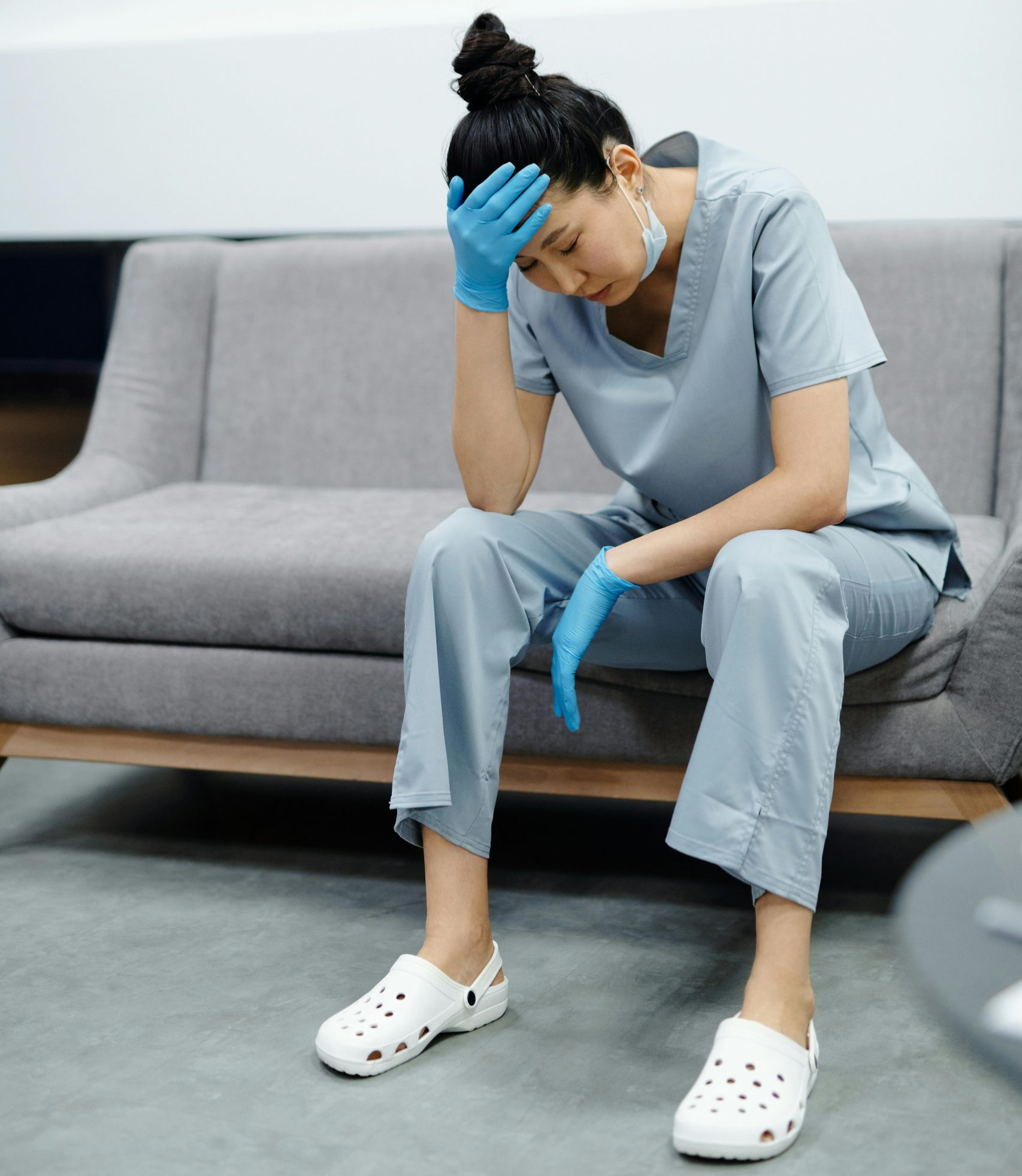
An overwhelmed woman in gray scrubs resting on a gray couch. Image by Cedric Fauntleroy under Pexels license.

In the United States, women on average earn less than men in their lifetimes (the gender pay gap). One of the various explanations for this pay gap is that women tend to do tasks that involve nurturing or helping others, and these tasks often don’t lead to promotions (or higher pay). Scholars argue that such labor is integral to organizations even though it doesn’t lead to promotions and is undervalued. But do such patterns hold in the medical field? 

To see if women doctors do more of the unrewarded but crucial work of nurturing others, Laura Nelson and her colleagues used data from an app used by doctors to evaluate students in residency (medical school). Their study examined 33,456 evaluations of 359 resident physicians by 285 attending physicians across eight U.S. hospitals. Within the app, doctors were required by their employers to at least leave a numerical rating of the students’ performance, however, reviewers could go beyond what was required and leave comments for the student. The researchers were specifically interested in this comment option and wanted to see if women were more likely to make comments to students within the app.

They found that women doctors do more work that involves helping or nurturing medical students than men. Women provided more written feedback to medical students in residency, whereas men were over twice as likely to give only numerical evaluations, without adding written feedback. Furthermore, comments written by women often provided targeted and specific feedback, including reassurance to residents who made mistakes. 

This research confirms that one of the causes of the gender pay gap is that women do tasks, such as going above and beyond in training medical students, that don’t lead to them getting promoted. This research also encourages people to not just think about time spent at work but also think about who is doing more caring and nurturing tasks at work.

A hospital room with three empty beds. Image by Pixabay under Pexels license.

People who cough or sneeze in public may receive disgusted glares. Addiction recovery programs are often anonymous. And many types of patients face isolation, negative stereotypes, and even verbal or physical abuse. All of these are examples of disease stigma, the negative meanings or stereotypes that we associate with a disease. Such stigmatization can lead to discrimination against people with health conditions. It can also cause people with health conditions to “self-stigmatize,” internalizing negative beliefs about themselves and their disease. Understanding how these processes work can help us create more effective ways to reduce stigma and its impact.

A recent study by Rachel Kahn Best and Alina Areseniev-Koehler aimed to understand why some diseases are more stigmatized by analyzing how different diseases were discussed in American media from 1980 to 2018. Media can reveal stereotypes that are widely recognized and publicly discussed. Even when individuals do not believe these stereotypes, they are likely aware of them and may be influenced by them. Best and Areseniev-Koehler used word embedding (a computational text analysis method) to examine 4.7 million newspaper articles and transcripts from TV and radio programs. The study considered 106 different diseases, including behavioral health conditions (addictions, eating disorders, and mental illnesses), infectious diseases (sexually transmitted infections, influenza, hepatitis, malaria, etc.), and chronic conditions (cancers, autoimmune diseases, genetic diseases, hypertension, etc.).

Previous research on disease stigma suggests that there are two main drivers of stigma: contagion avoidance and norm enforcement. Contagion avoidance happens when people, in an effort to stay healthy, avoid other people who look sick. Norm enforcement happens when a disease becomes associated with a personality trait or behavior that society views as deviant or as a violation of social norms. For example, some may view addictions as a sign of weakness and sexually transmitted infections as a sign of promiscuity. Over time, however, advocacy efforts can help to reduce both types of stigma. 

Testing out these theories, Best and Areseniev-Koehler find that behavioral health conditions generate the most judgmental language in the media, connected to discussions of immorality and negative personality traits. Among the infectious diseases, sexually transmitted infections generated the most judgment. Overall, infectious diseases were connected to meanings of disgust. These results support the idea that norm enforcement and contagion avoidance drive stigma. Best and Areseniev-Koehler also found that overall disease stigma has declined over time, but only for chronic physical illnesses. Stigma remains high for behavioral conditions and infectious diseases. 

Best and Areseniev-Koehler observed a somewhat lower stigma for diseases connected to stronger advocacy efforts. However, further research is needed to determine whether such advocacy causes a decrease in stigma.