
health

Supervisor by Tripp, Flickr CC, https://flic.kr/p/7899Ge
Supervisor by Tripp, Flickr CC

Anxiety, depression, and other mental health issues plague Americans across socioeconomic lines, but those in the lowest rungs of the socioeconomic ladder are most likely to suffer depression and anxiety. Now research from Seth J. Prins, Lisa M. Bates, Katherine M. Keyes, and Carles Muntaner finds that those stuck in the middle—not only the middle class—are at the most risk.

Usually sociologists use household income and education level provide sufficient measures for socioeconomic status, but the authors assert that these metrics miss crucial information about mental health when used alone. Using a nationally representative survey, the researchers investigate the relationship between depression and anxiety with additional socioeconomic indicators including income, education, and the presence of what these authors call “contradictory class location.”

As opposed to the business owner or the person who does the manual work for the company, someone with a contradictory class location falls in the middle, usually as a supervisor or manager. They have authority over other workers, but still answer to the big cats upstairs—positions that can feel contradictory.

Contradictory class location, the authors write, helps explain why depression and anxiety affect the middle-class in a specific way. In part, the increased risk may come from competing stressors: the feeling of being dominated by superiors and the responsibility of managing others. People in these supervisor and manager positions are more likely to blame themselves for issues in the company, whereas those in non-contradictory class locations tend to look toward external factors.
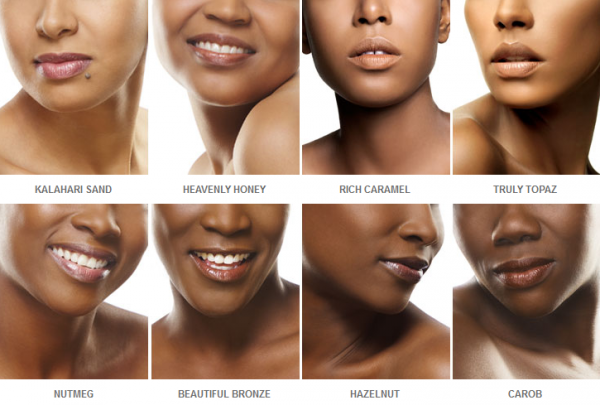
Makeup company Black Opal's foundation colors.
Hope “carob” isn’t the color of cardiovascular problems. BlackOpalBeauty.com.

Skin color has long shaped the lives of blacks, as the advantages of being “light skinned” extend far beyond the socioeconomic. It even plays an important role in health outcomes. Health disparities between blacks and whites are well documented, and blacks often maintain higher rates of negative health outcomes such as mortality and morbidity than whites. The predictors of health disparities within the same racial group, however, remain largely unexamined. Thus, Ellis Monk investigates skin color as a form of discrimination in health outcomes between blacks.

So, how does one’s skin tone influence health disparities through discrimination? Monk uses various measures to investigate perceived discrimination and skin color through the National Survey of American Life (2001-2003) and face-to-face field interviews with respondents aged 18 and older. To assess perceived discrimination, Monk examines both perceived discrimination from whites and perceived discrimination from other blacks, in addition to the frequency of such discrimination. Monk measures skin color by first analyzing how the interviewer rates respondents’ skin tone, and second, how the respondents rate their own skin tone. Perceived discrimination and skin color are then examined in relation to four self-reported health outcomes: physical health, hypertension, mental health, and depression.

Monk concludes that the darker one’s reported skin color, the more discrimination they perceive from whites. Perceived discrimination among blacks, however, depends upon their placement in one of three categories: light skinned, medium-toned, and dark skinned. Blacks in the medium-toned category actually maintained more positive rates in mental health and were less likely to perceive discrimination from either white or black peers.

Still, the magnitude of the health disparities among blacks with various skin colors was found to be often equal to or greater than health disparities between blacks and whites. Monk also notes that blacks who reported higher levels of skin tone discrimination from other blacks also had higher rates of poor physical health. Monk argues that the study challenges common methodological practices that homogenize minority populations, demonstrating more nuanced life experiences affected by skin tone.

Photo by Ted Eytan, Flickr CC

The alarmingly high rates of suicide among transgender people have received national attention, prompting larger questions about health-harming behaviors among the transgender population. When one’s gender expression strays from cultural expectations, how does it influence discrimination and health?

Using data from the National Transgender Discrimination Survey, Lisa R. Miller and Eric Anthony Grollman examine this relationship. Survey respondents answered a number of questions about how their gender is perceived by others, what types of discrimination they have faced, and whether they have attempted suicide and/or abused alcohol or drugs. Miller and Grollman find that transgender adults report substantially higher rates of health-harming behaviors than cisgender (that is, non-transgender) adults report in other surveys.

A staggering 44% of transgender respondents said they had attempted suicide. Those who thought others saw them as transgender were significantly more likely to have attempted suicide than those who “passed” (were perceived to be cisgender) and reported higher rates of discrimination. Taken together, Miller and Grollman suggest that transgender adults perceived as gender nonconforming face more types of both daily and major discriminations; this may increase self-harming behavior.

Being transgender, the authors write, does not necessarily lead to health-harming behaviors; rather, being visible as transgender (or gender nonconforming) increases health-harming behaviors. It seems to be the social responses to gender nonconformity that negatively impact transgender health and wellbeing.

Feeling better already. Wohnai, Flickr CC.

Higher education, whether it’s taking a few classes or earning a four-year degree, decreases the likelihood of individuals developing depression. Shawn Bauldry investigates whether college is a one-size-fits-all prescription, finding that higher education offers more protection from depression for people with lower incomes than it does for those already financially well-off.

Using nationally representative survey data that tracks individuals’ health from adolescents to adulthood (Add Health), Bauldry measures responses that indicate mental depression for individuals who have completed a bachelor’s degree, finished some college, or have not attended college and who are from either advantaged or disadvantaged backgrounds. The analysis controls for other factors like race, gender, and substance use. The results show that obtaining a college degree and attending some college provide similar levels of protection against depression across social strata, but these effects are magnified among those from disadvantaged backgrounds.

Bauldry explains the difference in effects with an idea called “resource substitution.” According to this theory, higher education can compensate for preexisting disadvantages by providing the means to access more health, social, and economic resources. Compared to peers from similarly disadvantaged circumstances, those who attend college have better outcomes in the job market, resulting in more financial stability and greater access to health and mental health resources. Additionally, finishing college (or even making it to college) may provide a sense of self-mastery that aids in overcoming the obstacles of a poor background.

A Whole Foods marketing brochure aimed at college students. Todd Eytan, Flickr CC.


Even though people tend to think of pizza, beer, and the “Freshman 15” when they think of college students’ health, attending college seems to promote healthy behaviors that decrease the likelihood of obesity. Healthy habits developed during the college years tend to last a longtime. Furthermore, people with a college education tend to have better resources and habits for preventing obesity. But if college can curb the chances of obesity, does the timing of a higher education matter?

Researchers Miech, Shanahan, Boardman, and Bauldry test whether completing a college degree before or after getting married or having children impacts obesity outcomes. They report that, overall, having children or marrying before attending college are strong predictors for obesity; those who attend college first are less likely to become obese.

The researchers use nationally representative survey data that follows the same people from adolescence to young adulthood. First, they categorize the Body Mass Indices (BMI) of the survey respondents who went to college as either “Obese” or “Not obese.” Then they compare whether respondents were obese during adolescence versus adulthood to account for respondents who were already obese before making a life course transition. Finally, they compare both sets of BMIs for those who were married or had children before going to college with those who attended college first.

As predicted, respondents who married before completing college had 65% higher odds of becoming obese than those who went to college first. Additionally, those who had children before college were more likely to become obese than those who waited until after completing a degree. Interestingly, the order of events mostly impacts black males, which skews the results and makes the association look more predictive across race and gender. The researchers find that the sequencing effects of college and marriage and parenthood are the strongest for black males.

Young adults who have formed their health habits in college seem less prone to change diet and exercise during marriage and parenthood. The authors give several possible explanations, including the notion that transitioning to the new role of “spouse” or “parent” can make young people more likely to eat regular meals, exercise less, and quit smoking—all of which contribute to weight gain.

Image by Shannon Golden for The Society Pages.
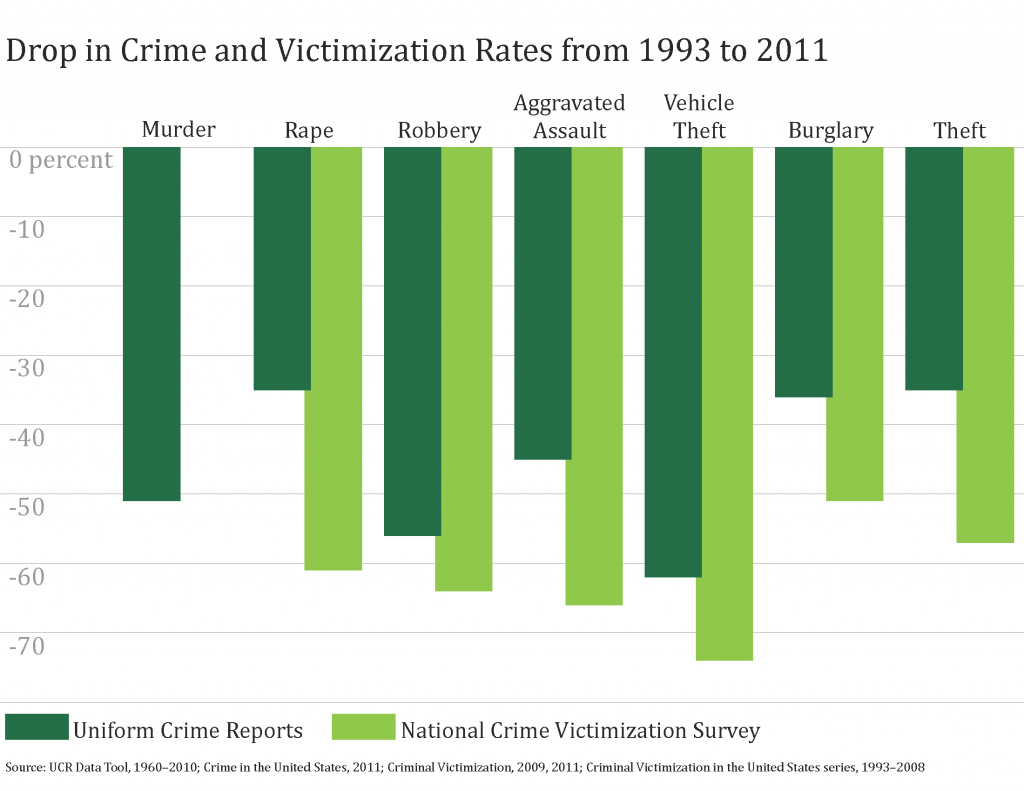
Image by Shannon Golden for The Society Pages. U.S. data as indicated.


The homicide rate has been steadily, albeit slowly, declining in the United States and Western Europe for several decades. Researchers have pointed to various social and economic factors that account for variations in the homicide trends, including “decommodification”: the extent to which individuals are protected from market forces. In particular, Robert Merton’s strain/anomie theory predicts that the murder rate is dependent on the extent to which cultural expectation and social structure are in balance. Here, a society in which social life is heavily dictated by economic pressures would likely have a higher prevalence of criminal activity.

Following this theory, social welfare support, an attempt to buffer individuals from the economic turmoil of the market, could function to decrease the prevalence of crime. Patricia L. McCall and Jonathan R. Brauer empirically examine this possibility using homicide (one of the most reliable measures of criminal activity—underreporting is a less pressing issue than in other types of crime) and economic data from 29 European countries from 1994 to 2009.

McCall and Brauer find that levels of welfare support within a country (measured by an index that incorporates total welfare expenditure per capita, health care, and unemployment support) is associated with a decrease in the homicide rate, controlling for numerous other economic indicators and the age structure of the country. Further, the researchers find that the effects of these changes are not apparent right away. The effect of increased social welfare support has a 2-3 year lag, meaning that an increase in welfare spending in 1990 would not be reflected in lower homicide rates until 1992-1993.  

McCall and Brauer’s analysis suggests that protecting individuals from the forces of the market via robust a robust social welfare net may not only decrease the extent of inequality in a nation, but also the prevalence of homicide. This finding highlights how the anti-austerity measures many European nations have implemented have not only changed economic conditions, but also the social conditions of many citizens. While McCall and Brauer caution that welfare spending is not a solution to a nation’s homicide problem, increased social support won’t hurt.

A photo for World Suicide Prevention Day. Ashley Rose, Flickr CC.

Suicidal behavior has been found to cluster in and around certain areas and groups. For example, the nine western states that make up the “suicide belt” in the United States, including Arizona, Oregon, and Wyoming, consistently report higher suicide rates than the rest of the country. Research also finds that suicidal behavior can “spread” between individuals; when someone experiences a friend or loved one’s suicide, he is much more likely to attempt his own suicide. If suicide is contagious, how and why does it spread?

In their analysis of suicide contagion among young adults, Anna Mueller and Seth Abrutyn use network data from a national survey of adolescents to analyze how the disclosed and undisclosed suicide attempts of one adolescent affects the suicide attempts and ideation of that adolescent’s friends one year later. They find that when an adolescent knows about their friend’s suicide attempts, they are more likely to think about and attempt suicide themselves. However, they find that undisclosed suicide attempts and ideations do not result in suicidal attempts or ideation among their friends.

Mueller and Abrutyn conclude that when an individual shares their suicide attempts with their friends, it “transforms the distant idea of suicide—as something that other people do—into something that people like them use to cope with distress, sorrow, or alienation.” They argue that suicide spreads when it becomes a “cultural script” for coping with emotional distress; the more someone is exposed to suicidal behavior among their peers, the more likely the generalized idea of suicide will become an acceptable option for how that individual deals with her own distress. When suicide becomes prevalent enough in a peer group or culture to qualify as an option, it is much more likely to spread.

Photo by woodleywonderworks via Flickr.

In Social Forces, Megan Andrew examines how being held back in grade school affects kids’ high-school completion, college entry, and college completion. Students can be held back for a variety of reasons, many of which are well intentioned. But as Andrew shows, such jarring incidents and processes can be “scarring,” leaving lasting impacts on young people’s lives, moreso depending on its timing.

Andrew uses two national, longitudinal studies in her work: the National Longitudinal Survey of Youth 1979 and the National Educational Longitudinal Study 1988. Each consists of repeated surveys of thousands of students from grade-school into adult life. Even when she uses a method called “sibling fixed-effects” to control for family, birth-cohort, and demographic characteristics within families, retention still has clear consequences for high-school completion. Andrew finds that any grade-school retention greatly decreases a child’s odds of high school completion; however, the effect is dampened when the retention occurs earlier rather than later. That is, repeating the second grade isn’t as harmful as being held back in the eighth grade. Luckily, once Andrew controls for high school completion, the scarring effect seems to go down; if kids graduate high school, a past retention has less impact on their college entry and completion.

Drawing on sociological understandings of performance and self-esteem, Andrew theorizes that stigma and students’ doubts about their capabilities (raised by being held back) explain the scarring effects. So when educators and parents hope to better prepare students for transitions to junior high or high school with an extra year of grade school, the move can paradoxically lower a child’s chances of educational success. Now teachers and parents can better address children’s needs with the knowledge that, if it is necessary to hold a child back in school, it’s far better to do so earlier rather than later in the educational process.

The decline in marriage in the United States over the past five decades is well documented. Young people marry at later ages than they used to, and many more people will never marry. This can worsen existing inequalities because more advantaged people (whites, those with higher education) are more likely to marry and gain the health and wealth benefits of marriage. Over a similar period of time, labor union membership has also declined dramatically, especially among American men. Might the decline in marriage be partially caused by the decline in union representation?

Daniel Schneider and Adam Reich decided to find out. In their article, they ask whether union membership is related to first marriage for a group of men and women who were ages 14 to 22 in 1979 and have been followed since then. They found that men in a job covered by a collective bargaining agreement were more likely to get married, but women’s odds of marriage did not differ by their labor union status. Both men and women with health insurance coverage were more likely to marry in this cohort (although that may change for future cohorts due to the Affordable Care Act).

What is it about union membership that makes men more likely to marry? Is it that union jobs tend to pay more and have better benefits now? Or is having a union job a signal of job stability and future income? Schneider and Reich argue that it is largely present job stability and benefits that make men in union jobs more likely to get married, rather than union membership as a signal of future benefits.

The decline in the availability of good jobs, especially for those without a college degree, over the past 50 years may have contributed to the decline in marriage. It has certainly contributed to increasing economic inequality. In the U.S., new union jobs may support families with two markers of stability: marriage and steady income.

In Western societies, girls are starting to outperform boys at all levels of schooling. At the same time, many families are immigrating to these countries from areas of the world where boys still have the educational advantage. This means that there’s likely a difference in the educational expectations for boys and girls held by immigrant parents and those held by the receiving country. So what matters more for a kids education – the homeland or the new home country? To find out, a research team led by Fennella Fleischmann and Cornelia Kristen investigates whether second-generation immigrant girls are benefiting from the Western patterns of female success they encounter after the move.

The team draws on nationally representative data from nine receiving countries. They focus on outcomes including test scores, choice of major, college-going, and completion. To analyze this data, they use a twofold strategy, comparing gender outcomes within racial and ethnic groups. Then they compare the size of each ethnic group’s gender gaps to those of other immigrant groups and to those of the Western host country’s majority population. This tells them not only whether immigrant children have assimilated to majority trends by the second generation, but at which stage of their educational careers this happens.

The research team finds that, with very few exceptions, the female advantage in education extends to second-generation immigrant girls, regardless of their parents’ country of origin or the male advantage in that society. While those who choose to immigrate may have more progressive gender views, which may help explain these trends, the takeaway is an important one – when given the opportunity to succeed, girls will take it.