
health

Photo shows a protester holding a sign that reads, "welcome asylum seekers and refugees," over top of a red heart.
Photo by John Englart, Flickr CC

Refugees seek to start a new life in an unfamiliar place because of persecution, war, or violence. On arrival, they face challenges as they learn to live in a new society. New research shows how social ties affect refugees’ quality of life as they navigate these challenges. Specifically, it highlights the importance of what sociologists call strong and weak ties, and how the types of relationships matter greatly.

R. Neil Greene used quantitative and qualitative data from the Refugee Well-Being Project, a 5-year community-based study of refugees from Afghanistan, Iraq, Syria, and the Great Lakes region of Africa who had recently resettled in the United States. Refugees answered questions about their mental and emotional well-being, as well as their support networks. 

Strong family ties were associated with a higher quality of life for refugees. These ties were especially important for emotional support and comfort. In addition to strong family ties, refugees reported relying on weaker ties for their more practical needs, like finding work and navigating new systems. 

Refugees who settled in the United States long ago played an especially important role as “cultural brokers” because they were able to provide both emotional or psychological support, as well as help new refugees with more practical tasks, like how to find a job or get a driver’s license. In other words, settled refugees represented the best of both strong and weak ties.

For more data on refugee resettlement in the United States, check out the Migration Policy Institute or read the Pew Research Center’s “Key Facts about Refugees Coming to the U.S.

Photo of two steaks on a grill with an open flame.
Photo by Gabriel Saldana, Flickr CC

Originally published April 17, 2019.

Men are less likely than women to consider becoming vegetarian. And in the United States, where men have higher rates of life-threatening health conditions than women — including uncontrolled high blood pressure and heart disease — changing eating habits may be important for their health. To learn more about meat and masculinity, Researchers Sandra Nakagawa and Chloe Hart conducted a study examining how gender identity influences eating habits.

Nakagawa and Hart conducted experiments to test whether a threat to masculinity influences men’s likelihood of eating meat. In one experiment, the researchers told some men their answers from a previous survey fell in the “average female” range, while others fell into the “average male” range. For the men who received “average female” results, the authors expected them to feel like their masculinity was in question.

Men who experienced a threat to their masculinity showed more attachment to meat than those who did not experience the threat. They were also more likely to say they needed meat to feel full and were less likely to consider switching to a diet with no meat. This study shows that masculinity does matter for how men maintain their health. Importantly, it is not masculinity itself that is the problem here, but the high standards men feel they must meet — and eat.

Photo by Pablo Varela, CC

Originally posted November 5, 2019.

The term ‘gaslighting’ earned its name by way of the 1944 film, Gaslight. In the film, an antagonist secretly brightens and dims his home’s lights, making his wife doubt her sanity and sense of reality. Despite the cinematic origins of its label, this form of abuse is experienced by many women. Though psychologists have extensively investigated the subject, little attention has been paid to the role that underlying social characteristics may play. In new research, Paige Sweet fills this void by revealing how social characteristics affect individual experiences of gaslighting within domestic abuse.

Through a series of life course interviews, Sweet finds that abusers mobilize gender stereotypes, racial stereotypes, and victims’ institutional settings in order to manipulate their victims’ sense of reality. Women of different racial and social backgrounds experience gaslighting in different forms; whereas an abuser might prey upon a black woman’s fear of becoming a stereotypical “baby mama,” another might threaten an undocumented Hispanic woman with deportation. Despite differences, abusers in Sweet’s study utilized “crazy-making” tactics for all women — drawing on stereotypes that men are rational, while women are irrational.

Sweet’s argument that “micro tactics of abuse are situated in macro conditions of inequality”  helps us to understand why gaslighting can be so effective at stripping down one’s sense of reality; by drawing attention to existing power structures and inequalities, abusers are able to gain a greater sense of legitimacy and tailor their tactics to a victim’s personal social experiences. It is crucial that we understand the forces that underlie gaslighting in order to more effectively recognize symptoms of abuse, and subsequently support the victims who experience it. 

Photo of a bronze cast of an intrauterine device (IUD). Photo by Sarah Mirk, Flickr CC

Originally posted February 5, 2019.

Throughout history, concerns about women’s sexual behavior and reproduction have often been tied to mental health. For example, in the Victorian era, doctors believed that women’s bodies were incapable of physical exertion and mental activity, and they diagnosed many women — typically white women– with “hysteria.” Hysteria was a catch-all term often used to police women’s sexuality and bodies, and was characterized as a mental disorder in the American Psychiatric Association’s Diagnostic and Statistical Manual until 1980. While diagnosing women with hysteria may seem like an outdated practice today, mental health professionals still exercise control over women’s sexuality and reproductive choices. A recent study finds that clinicians today use both coercive and non-coercive techniques in facilitating reproductive decisions for their clients — especially female clients — diagnosed with mental illnesses like schizophrenia and major depression.

Using interview data with 98 patients at two state hospitals and three community mental health centers, Brea Perry, Emma Frieh, and Eric Wright examine clients’ interactions with service providers and family members regarding their sexual behavior and contraceptive use. The authors find that mental health professionals use strategies ranging from full client participation (what the authors call “enabling”) to no input by the client (what the authors called “coercion”).  

Providers used coercive techniques more frequently with women than with men. In the most extreme cases, this took the form of unwanted and traumatic sterilization procedures. More frequently, providers and female clients’ family members did not include women in key decisions, provided misinformation, or did not gain consent for the birth control medications prescribed. For male clients, providers used education through classes or group therapy more frequently. While these sessions often framed sex as risky for male clients, this technique allowed men much more reproductive freedom than many women experienced. The researchers also found that providers used “enabling” strategies (those that included full client participation), like  providing condoms or sex starter kits, for both genders at similar rates.

These findings demonstrate that women’s mental health remains inextricably linked to concerns about women’s bodies and their sexual behavior. Gender norms and expectations, especially those regarding sexual behavior and reproduction, have enduring impacts on our understanding of mental illnesses, as well as the medical decisions made for or by people diagnosed with a mental illness. To avoid these patriarchal patterns in the the future, Perry and colleagues suggest providers focus more on sex positivity rather than risk avoidance for their clients.

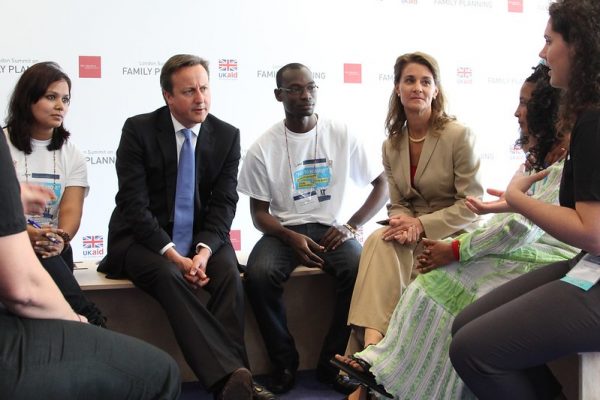
The 2012 London Summit on Family Planning resulted in Family Planning 2020 Initiative (FP2020). Photo by Russell Watkins/Department for International Development, Flickr CC.

Supporters of global family planning initiatives argue these programs can empower women in (mostly) low-income countries by giving them options to control their reproduction. New research shows that the structure of these programs may actually constrict women’s choices. 

Leigh Senderowicz conducted 49 in-depth interviews with women in a low-income sub-Saharan African country that is engaged in a variety of family planning initiatives. These initiatives are part of the global FP2020 initiative  — its goal is to add 120 million contraceptive users worldwide by the year 2020. The focus and structure of these initiatives shape how health clinics operate and how providers interact with patients. For example, health centers are evaluated based on national- and district-level quotas for contraceptive uptake. Providers can only get “credit” towards these quotas if a patient accepts a form of contraception, not if providers inform the patient about contraceptive options and the patient declines. In other words, the structure of the programs incentivize providers to convince patients to use contraception.

Senderowicz 2019

In turn, providers use a range of coercive tactics to convince women to use contraception. On one end of the spectrum, providers offer a limited selection of contraception options to patients. In this study, the most common forms were contraceptive pills, implants, and injectables. Instead of tailoring the method to a patient’s specific needs, providers primarily emphasized the advantages of a few long-term contraceptive methods without giving other options, and sometimes even failed to disclose risks of use. Few women in this study were ever told about barrier methods, IUDs without hormones, or fertility-based awareness methods. 

Providers also used more overt forms of coercion, like threatening to deny women future care and refusing to remove an IUD at one woman’s request. These actions do the opposite of empowering women through introducing contraception as one option of many. Instead, these family planning initiatives’ focus on quotas meant that contraception was the only option.

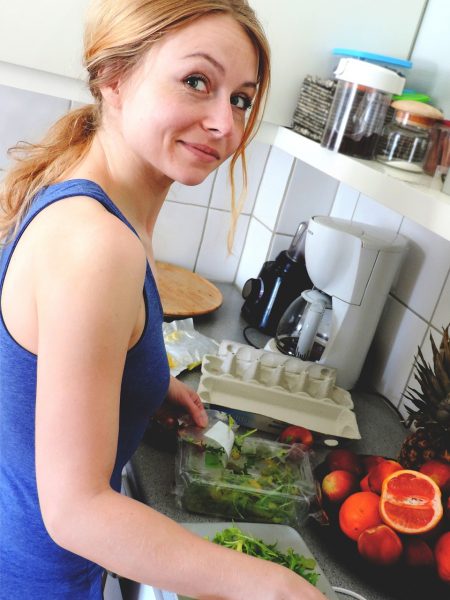
Picture of woman prepping healthy meals for her family
Photo by monicore, Needpix.com CC.

Married couples are sharing household chores more than ever before, but women still do more than men. While sociologists already know a great deal about gender differences in couples’ physical and emotional work, new research shows that there’s even more to gendered differences in household labor. Women are often responsible for the lion’s share of another form of invisible household work: cognitive labor.

Allison Daminger interviewed middle- and upper-middle class, married couples living in the Boston area. All were between 35-50 years old, had at least one Bachelor’s degree, and were living with at least one child younger than 5 years old. Most of the couples were heterosexual. Daminger interviewed each partner separately to encourage respondents to share their honest perspective. 

Respondents discussed the typical chores of household labor: cooking, cleaning, shopping, mowing the lawn, etc. But many couples also talked about a sort of “project manager” category of family responsibilities, which includes anticipating the needs of family members, identifying options for meeting those needs, deciding among the options, and monitoring the results. Daminger labeled these tasks “cognitive labor,” and identified nine domains in which cognitive labor occurs: food, childcare, scheduling and logistics, cleaning and laundry, finances, social relationships, shopping, home and car maintenance, and travel and leisure. Cognitive labor in the food domain, for instance, includes responsibilities like deciding what meals to cook and ensuring a consistent supply of groceries. These responsibilities are added on to the work that must be done, for instance, soothing a tantruming toddler displeased by the dinner menu.

Daminger found that, like emotional labor, cognitive labor is often invisible and is a frequent source of conflict. Overall, the women in the study were responsible for a larger amount of the anticipation and monitoring work than their male partners. But when it came to decision-making — the part of cognitive labor most closely linked to power and influence — partners shared the work of decision-making much more equally. Daminger argues that cognitive labor is thus an overlooked, yet potentially consequential, source of gender inequality at the household level. 

To read more about emotional labor, check out these posts here and here.

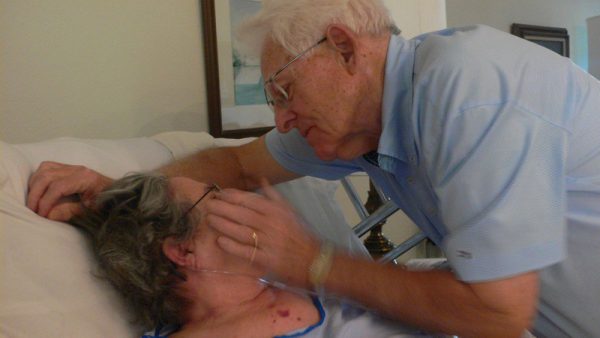
Photo of a man touching his wife's face while she lays in a hospital bed.
Photo by Kelly Sue DeConnick, Flickr CC

Nearly two-thirds of Americans support doctor-assisted suicide laws. These laws — also known as death with dignity or aid-in-dying laws — allow people with terminal illnesses to request medical assistance to hasten their deaths. Eight states and Washington, D.C. have death with dignity laws and 19 more are considering similar policies. Yet, only about half of Americans believe doctor assisted suicide is moral. New sociological research shows that understandings of a “good death” may help explain these competing views. 

Cindy L. Cain and Sara McCleskey conducted focus groups with 39 people shortly after California’s aid-in-dying law passed. Participants considered the aid-in-dying law good when it eases suffering, takes a burden off family members, and results from an individual’s choice. This is consistent with previous research documenting Western ideals for a good death: pain relief, acceptance, mending of familial and other important relationships, and not being a burden to others. In line with these ideals, participants characterized aid-in-dying laws as bad when their use is seen as suicide or “a way out.”

Not all participants viewed aid-in-dying laws the same way. African American and Latino participants expressed concerns that aid-in-dying laws could mean worse medical care, especially for people who already struggle to access medical institutions, knowledge, and treatment. Some specifically voiced concerns that discrimination would make them targets for an early death.

Death may be a physiological process, but how we understand death is social. Cultural conceptions of what a “good death” entails shape how people make sense of new options for end-of-life care. But even when these options align with understandings of a “good death,” discrimination and resulting distrust of medical institutions can mean that marginalized people do not see aid-in-dying as a safe option.

For more on racial disparities in mortality, check out the Center for Disease Control’s 2017 report.

A student sits in a booth crouched over a laptop with a hand in their hair.
Image by Tim Gouw from Pixabay

In a recent interview, Hollywood superstar Tom Hanks confessed: “No matter what we’ve done, there comes a point where you think, ‘How did I get here? When are they going to discover that I am, in fact, a fraud and take everything away from me?’”

Some highly successful people frequently feel like impostors—that they have attained their status through luck, not merit. Psychological research on impostor syndrome has treated it as a durable personality trait that comes from within and does not change based on context. Sociologists counter that imposter syndrome should be thought of as a social process. The social environment — such as organizational rules, incentives, and culture — structures interactions between people and affects the development of impostor syndrome.

Researchers Emma Cohen and Will McConnell surveyed 1,476 graduate students at a midwestern university to examine the relationship between the graduate school environment and impostor syndrome. They discovered three factors in the graduate students’ perceptions of their departments that influence feelings of impostorism:

  • Mentorship: Survey results showed that students who experience higher-quality mentoring report lower fears of impostorism. Because grad students are often expected to excel in research and teaching while completing their studies, objective metrics like test scores and letter grades give only a narrow view of student performance. A quality mentor fills the gap by giving a graduate student specific and helpful feedback to identify strengths and areas for growth. Lacking a mentor, or having a strained relationship with a mentor, opens space for self-doubt.
  • Competition: Unsurprisingly, the researchers found that students who perceive greater funding competition score higher on the impostor syndrome scale. Some graduate departments guarantee funding for all admitted students. In others, students must compete for assistantships and fellowships. The latter type of department leads many students to feel inferior to the few students who are awarded funding, even if they may be successful by other metrics.
  • Isolation: The study showed that students who feel isolated are more likely to feel inadequate. When graduate students are able to talk openly with others in their program, they may realize that feelings of self-doubt are common. This can help them to persevere and form more realistic self-evaluations.

Graduate schools can do more to help their students than offering individual strategies to overcome self-doubt. Training faculty to be good mentors, celebrating a variety of student achievements, and creating opportunities for students to connect with each other, can reduce feelings of fraudulence among their talented students.

A group of seven vietnam veterans, wearing vietnam t-shirts. one is in a wheelchair, the others stand around him.
Photo by deveion acker, Flickr CC

Veterans Affairs (VA) has had it’s fair share of scandals — including 2014’s scandal about massive wait times in its healthcare system. A new policy now allows U.S. veterans to seek care outside of traditional VA hospitals in an attempt to reduce the wait time — still a month or more — for veterans seeking treatment. New research explores the long-term consequences of combat experience for veterans’ health and finds that worsening physical and mental health outcomes later in life are not directly related to combat experience (i.e., a physical injury suffered during combat or PTSD that directly results from combat). Instead, poor health can result from a variety of social and psychological processes in veterans’ lives after returning home.

Jason Schnittker used data from the 2010 National Survey of Veterans to understand how combat experience relates to poor health. Respondents reported their physical health (whether they needed help with basic activities) and mental health (whether they had been treated for a psychiatric disorder in the past six months). Schnittker restricts the analysis to veterans who served during the draft era (prior to 1974) and excludes veterans with service-related disabilities.

Veterans who had combat experience (service in combat or a war zone) and had contact with  dead and wounded reported worse health than those who only reported combat experience. Further, those with combat experience reported worse health than those who only served during years of active combat operations.  

Psychiatric disorders explain part of the relationship between exposure to the dead or wounded and poor health outcomes. Not all health effects are the result of trauma, though — feeling unprepared for the transition back to civilian life, social relationships, and smoking behavior also explain a significant portion of the relationship between combat experience and poor health.

This research demonstrates that veteran’s health outcomes — especially physical health — involve a variety of psychological and social processes. For example, veterans whose experiences in civilian life diverge significantly from their experiences as a service member may find it difficult to reconcile their military service with their new roles and identities in civilian life. Schnittker believes this research can also help inform transitions out of other “total institutions,” like prisons, or even out of significant social roles. Understanding the unique experiences of veterans will be even more important as veterans begin seeking care outside of veteran-specific hospitals. 

Photo by Sarah-Rose, Flickr CC

Party animals are finally proving their point. Meeting the love of our lives, forgiving a friend, or even rethinking the way we experience ourselves are more likely to happen at a party than when washing dishes at home. In a new study, Alice Goffman casts her sociological eye on how social occasions — from drinks in a bar to birthday parties — can turn into transformative experiences.

Like a kaleidoscope, the nitty-gritty details of how people organize their events, their motivations to attend, the proper social norms, and what is required for social occasions to succeed follow intricate patterns. To interpret their complexity, Goffman and her research team deployed several strategies:

Goffman started to take notes and interview attendees when she attended social occasions in 2009. In addition, during the fall 2017 semester, 15 undergraduate students wrote weekly event journals as part of a college course and shared these diaries to be analyzed in the study. Finally, Goffman’s research team turned to The New York Times’ marriage section, online websites, and literary work for accounts of turning points and transitions in people’s lives. Goffman’s notes, undergraduates’ diaries, and people’s experiences helped her to understand social occasions as platforms for the emergence of life-changing moments.

Social occasions range from a visit to the doctor to the celebration of a bar mitzvah. Some of these events — parties especially — represent a special realm where people design exceptional atmospheres by decorating, dressing up, or displaying outstanding cooking. The ambiance aims to relax existent social boundaries and release attendees from the mundane pressures of everyday life. Likewise, gatherings bring together disparate people who share similar social connections, interests or activities, and create a sense of communion. The combination of heightened energy, social commonalities, and collision of divergent words gives people an opportunity to perceive things differently and think differently about themselves. Parties reinvent friendships, launch marriages, and boost professional careers by prompting people to revisit their personal plans and discovering new social connections.

Social occasions do not always run smoothly. As energy and relaxation go up, people become more vulnerable to moments of acute disrespect or embarrassment, causing lasting damage for social relationships. Social occasions also force participants to reveal their social preferences and personal rankings, so gatherings become de facto popularity contests based on, for instance, who is included in the guests lists or who gets social attention. Social norms around greetings, proper topics of discussion, or how to dance competently challenge guests to perform a complex’ choreography that others will watch and judge. People in parties thus discover their and others’ social relevance.

Social occasions have a flip side too. Racial discrimination, lack of economic or social capital, or not having an able body generate invisible restrictions to accessing and experiencing social occasions. Future research is required to identify how structural inequalities limit access to these transformative experiences.